the fundamental problem is that the structure of argument is not the same as the structure of prose prose is one sentence after another yes you can break it up into paragraphs and chapters and so forth but it's fundamentally one sentence after another argument is not one premise after another argument has a deeply different structure it has a kind of network structure if you like a kind of graph structure in in in technical terms the argument the structure is a high graph structure so it's it can't be represented by any uh any simple graph structure you
what we do in argument mapping is is we approximate the high graph structure of argumentation with variations on on tree structures but uh but we're quite aware at least you know the theorists of argent mapping i think are quite aware that the the actual underlying structure of argumentation of complex arguments is is not strictly reducible to tree structures even if it was tree structures can't be mapped directly onto prose which is one you know a sequential structure of one sentence after another so the reason it's so hard to understand arguments as ordinarily presented in prose
is that what you have to do is reconstruct in your mind a a set of relationships that is presented in a way in prose that disrupts those relationships this is very challenging to do people do it very very badly uh to give an anecdotal example of this in workshops we've often used to run a series of workshops uh three-day workshops on the john f kennedy assassination using the oliver stone movie where he's got about a half an hour sequence at the end where he lays out the case that there was a conspiracy uh to kill
jfk so we have uh participants who are often you know quite uh you know high level academics or lawyers you know quite public servants you know professional people well trained well you know compared with you know the general population in in argumentation we say okay well you've just you've just heard this argument laid out in verbal prose right in speech form what do you think the argument is and we get them to actually try to replicate the argument to lay it out to tell us what are the bits and how they fit together and it's
a total mess there is no clear understanding of the argument that was being presented you can go from group to group and see fundamentally different renditions of the argument and uh and also you can see that huge amounts of the argument is just missed out completely people just don't get it people the enormous parts of the argument are just lost not in translation but it is lost in communication so so standard ways of presenting arguments are very inefficient they impose enormous cognitive burden on ordinary human minds and consequently our performance is very poor our disagreements
are endless and sometimes this can have utterly catastrophic you know consequences if we can't come to rational resolution you know there are other reasons why we can't i'm not saying this is the only reason but but this is certainly an important factor so argument mapping tries to get closer to the actual in a visual form closer to the actual structure of argument to relieve the mind of the pressure of trying to maintain this complex structure in short-term memory which it effectively can't do yeah there's certain superficial similarity between target mapping and mind mapping but i'd
say two points one is argument mapping has arguments have it have a distinctive structure they're not tree structures so a mind map is basically a kind of a distinctive kind of tree uh and in a computer science sort of jargon and you can do a simplistic representation of um of arguments using tree structures but you can't actually adequately represent the real structure of of what we call compound arguments in your multi-premise arguments you can't adequately do that in a simple tree structure so that's one point there's a fundamental limitation in in the tool but secondly
argument mapping has you know distinctive set of concepts and rules and principles that you observe so mind mappings are very general you know you can mind map just about anything right but but are you mapping is for mapping arguments and and to get arguments right you need to understand the structure of arguments and one of the principles that make the difference between a good representation and a poor representation of arguments so it's much more rule-bound or principle-bound than mind-mapping the single biggest challenge is understanding how multiple premises fit together to form a compound argument so
i can you know to use the classic example say socrates is human all humans are mortal therefore socrates is mortal i've got two premises leading to a a conclusion it's in that example it's straightforward enough to see how those two premises relate to each other and how the two together relate to the conclusion so there are some rules that elucidate that kind of those kinds of relationships and the single biggest hurdle i would say for most people is getting a good feeling for how those rules work uh and applying them to uh you know a
more diverse range of arguments and uh surprisingly you know this is this is really very difficult for a lot of people and even for we've found even for analytic philosophers for trained philosophers to actually get the hang of of how informal compound arguments actually hang together uh even despite the fact that kids start forming these kinds of compound argument structures really quite early i've i've got recorded an example of my daughter at age three in making a multi-promise argument and so this is intuitive in some intuitive level we we can handle these things quite quite
early but making it making these things explicit and rigorous um is a lot harder and that i would say is the single biggest problem yeah so to illustrate that suppose i just gave you a simplified version of that classic argument if i said look um you know socrates is immortal and you said well why is that and i said well socrates is human and that's all i said now very often in ordinary argumentation that's what happens is i i will present a single claim or single idea in support of of another claim uh but if
you look carefully what's going on there you've got um the word mortal appearing in the in the conclusion but it doesn't appear in in the premise that i gave you i you know i said well socrates is human and suddenly we've got this word mortal appearing in the conclusion so it's emerged in a sense out of nowhere so one one terminology for that kind of situation is is that um we call it that word immortal a dengue because it hasn't been tied in properly it's dangling it hasn't been tied in properly into the argument uh
if we add that other premise that all humans are mortal now we'll see that that word is the word mortal is coming in as part of the premises and as long as the structure is is appropriately uh you know related um then then we say well that dangler is now you know eliminated it's not dangling so so basically this notion of dangler is a a term or a concept which is appearing as part of an argument the way it's presented but um but isn't properly uh um sort of incorporated by the presence of other other
terms and and danglers is is the presence of bengal is almost always a sign of some fairly substantial incompleteness or possible flaw in your in in the in the articulation of an idea so conversely the ability to recognize danglers when you see them is a very useful skill because it's a it's a it's like a red flag saying look you know there's there's a problem here there's uh you might be missing something so tremendously useful notion that yeah there's a pair of rules that are really elaborations of this no danglers principle and um my friend
and colleague neil thomason came up with these cute you know terms for these principles in fact he he really articulated the principles and came up with these terms for them the rabbit rule basically saying there should be no rabbits pulled out of hats that is anything that any rabbit that comes out of a hat had to be in the hat in the first place and so likewise any term that appears in the conclusion of an argument has to appear somewhere in the premises that you're provided it's it's a it's a very simple principle you know
i stated that way um but you're amazed how challenging people find it to um to observe that rule because it requires a level of um explicitness about argumentation that that's uh that's not standard so look it's it's uh that's one of the most useful rules um the the you know the rabbit rule and the handing holding hands rule is very similar but it applies to the way the premises relate to each other and to the conclusion so yeah those those principles are covered in a in a set of online tutorials that are freely available i
should say that this these kinds of principles apply to a certain form of argument mapping there are there are various different types of aggregate mapping and and to some you know people sometimes map arguments at different levels of granularity where these rules don't necessarily come into play concept mapping is is different again it actually goes at a substantial level of granularity it relates you know one concept to another whereas mapping at the at the lowest level relates one one proposition to another proposition it doesn't sort of break it up into individual concepts uh and there
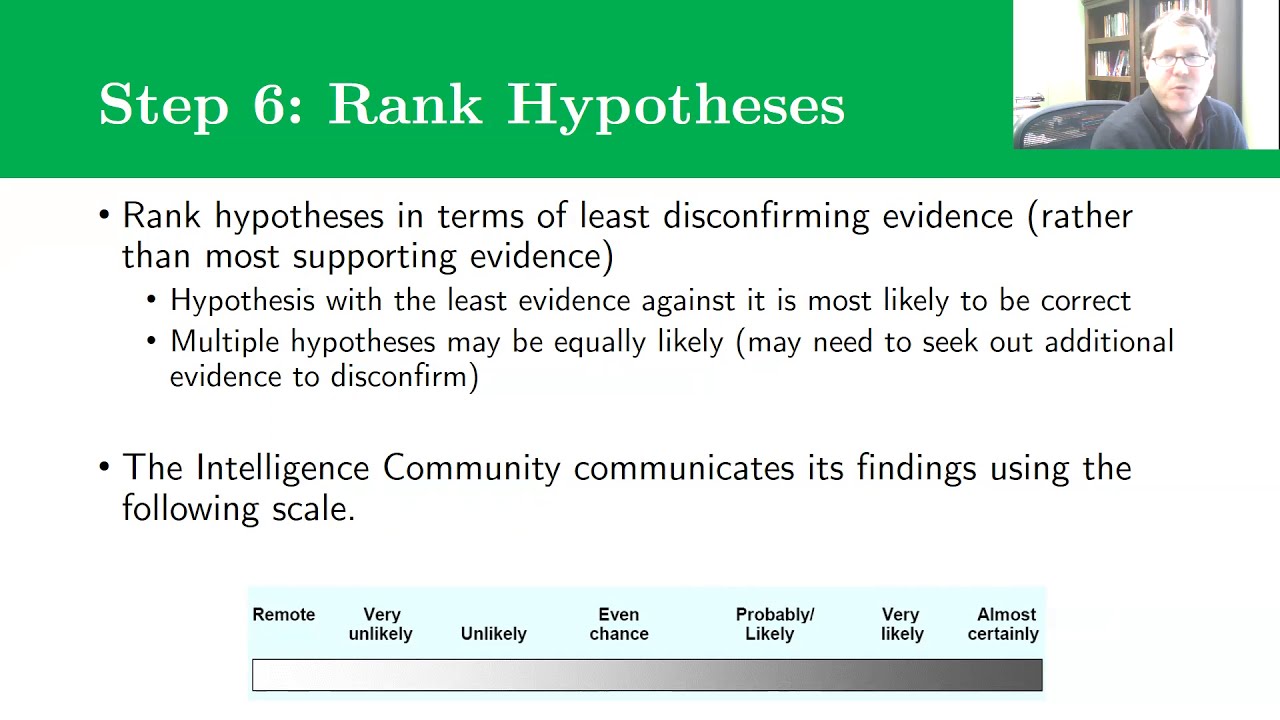
are other forms of mapping which are um related to argument mapping i think there are three main varieties there's argument mapping decision mapping and hypothesis mapping corresponding to diagnostic judgment as i like to call it decision making and and what you might call debate or liberation aimed at proving propositions true or false i think these are three broad areas of deliberative judgment and different forms of mapping apply to these these different areas decision mapping hypothesis mapping being you could think of them as extensions of argument mapping to apply it to these these other types of
of judgement situations yeah so it's fairly fluid there's a lot there's a lot of different varieties of mapping activity which are closely related to each other and as in so many areas of life it's um you know it's choosing the right tool for the job it's horses for courses you know that sort of thing we subsequently developed the decisive software for uh to handle the three main varieties and a few other things thrown in there as well but your decision mapping hypothesis mapping and uh and argument mapping are all there are all um things you
can do with the with decisive software so it's a more more general in in that sense a more powerful soft software package does besides do everything that rationale can pretty much look there are some fine nuances of the functionality in in the way rationale handles allows you to manipulate argument structures um but but to a first approximation i'd say decisive is kind of a superset a rationale look earlier i i i laid out the the fundamental proposition here's why i get mapping you know ought to augment human intelligence because of the complexity of arguments and
you know the power of visualization to help us cope with complexity the reality is uh that there has been no great uptake of vacant mapping methods uh and if they were as as wonderful as you know they they seem to be then you'd think that people would uh take them up a lot more and so what's you know what explains this partly it's that the tools aren't still aren't that great and i talked about that earlier but partly it is also that argument mapping requires a distinctive skill set just as there's a distinctive skill set
involved in using excel to do complex calculations uh built on a more generic skill set involving you know understanding numbers and you know numerical operations and so forth so there's there's a skill set associated with with argument mapping it overlaps but it's not the same as the skill set involved with being good at argumentation and in order to get the benefits of argument mapping you actually have to acquire enough of that skill set and what argument mapping tends to do is that it exposes just how sloppy and ill-understood arguments generally are and for a lot
of people this is a bit of a revelation and and also really quite disquieting there's a way of engaging in argumentation certain level of skill at which people engage in this which is the way people are accustomed to to do it all their lives they they know how to play that game and uh to be for a methodology to come along and say well actually you know this is the the level of the game could be lifted you know a whole level but you'd have to actually be a lot more clear and precise and analytical
and yeah that is is often not a welcome message to a lot of people but even to somebody who who is positively inclined in that direction there's uh a problem of of getting sufficient level of skill and my favorite example here is windsurfing i don't know if you've ever tried windsurfing but there's there's basically beginner boards and there's advanced boards and a beginner board is a nice big board that you can stand on in flat water and you can sort of pull your your sail up and you know in a gentle breeze and you can
get going and because they're big enough to support you they tend to be slow and you can't get you know a good performance out of a out of a beginner board if you're at all serious about windsurfing you've got to graduate to to more advanced boards uh ones that won't support you if you just stand on it and where you have to be actually moving just like a water ski you actually have to be moving for a water ski to support you and the problem there is that it's it's very difficult to actually get going
on an advanced board you have to do something called water a water start where you're you're basically in the water and the wind picks up your sail and pulls you up onto the sail and it's all in one motion you get going water starting is the fundamental gateway skill in in windsurfing it's you know a lot of people learn it but it's really very very uncomfortable business because you're half drowning when you're when you're a clutch you know when you're when you're a basic uh wind surfer uh in the water start and um and a
lot of people just never get beyond they never make it past that grade they they're perennially in the beginner phase on the beginner boards and and i think that there's a reasonable analogy there with argument mapping that there are certain kinds of skills and concepts you've got to master in order to to actually get the benefit out of the out of the tool uh and it's it's uh about as much hard work as learning to water start in in water skiing i think you know to to pick up those skills you've got to have a
similar sort of level of dedication um but there's a big difference which is that if you're a water a wind surfer you can see advanced wind surfers and you can see them speeding along and having a great time you say wow i can see what it would what i could do if only i could get on on my board you know on if i could do water starting and and that's very inspiring whereas in argument mapping um it's not so obvious it's not as immediately visible right what what the benefit is uh from having the
this higher level of um of facility you know that comes from mastering the tools and so um it's not as easy for people to get inspired and a lot of you know a lot of people don't they never actually really acquire the skills and the tools just fall by the wayside so that's the deep problem for argo mapping it's uh it's a um it's a challenge it's a real challenge and and combine that with the um the level of discomfort that people often feel when people find it very often find it very hard to map
out their own arguments and the problem there is that i like to say that the difficulty of mapping an argument is simply a measure of the lack of clarity you have as to what the argument is if you if you are clear about an argument it's trivial you know ordering a set of boxes and arrows you know to represent an argument if you know exactly what the argument is right is is really straightforward but it's almost never straightforward in practice and that's because most of the time our level of understanding of arguments is much less
than than we think it is so uh so it becomes difficult and and uh when people find that something they used to think was relatively straightforward um is is much more difficult than they thought they tend to blame at all not you know not their level of understanding so so again mapping faces a lot of hurdles a lot of challenges which is you know one reason you know we use it ourselves we use it we use these methods in our consulting business for example but um we we rarely these days do any training in our
mapping we used to do a lot of there was bread and butter for us but you know we don't do much anymore uh because um it's not a very um sort of satisfying business you