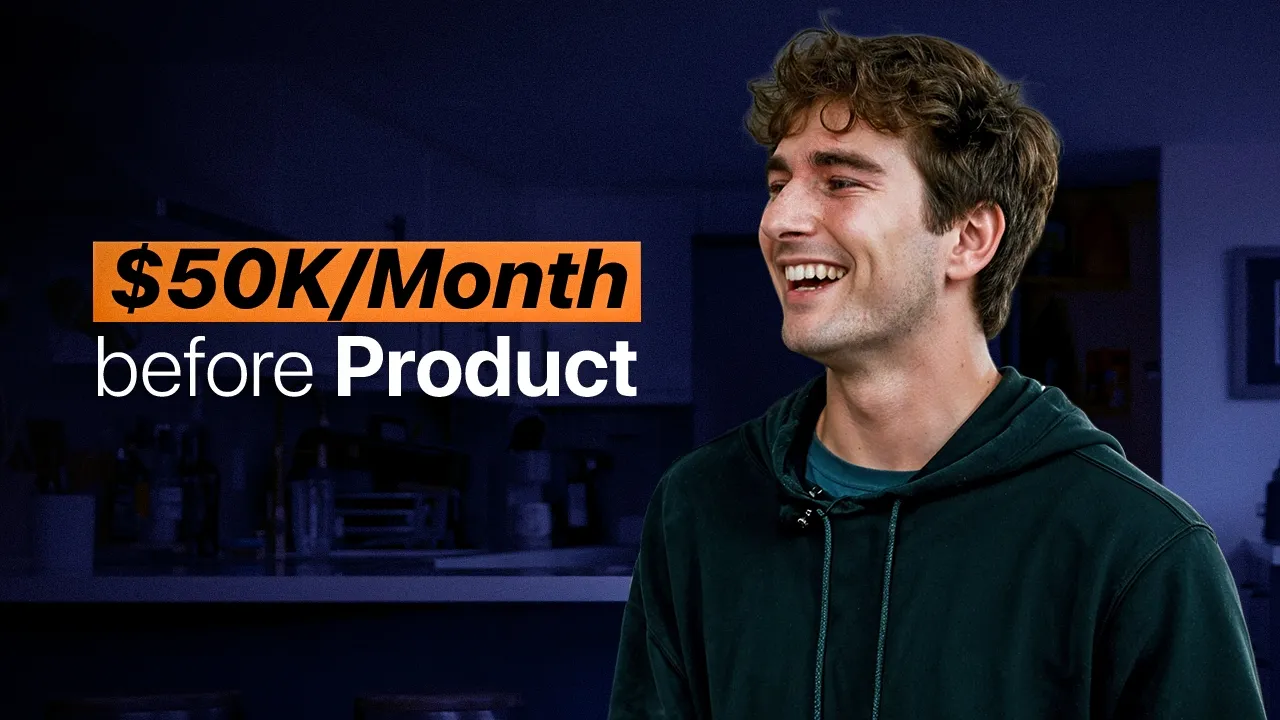
You went from zero to 50K your first 50,000 in revenue very quickly and then what happened and then we had to build out our team after that you know we needed a lot more people in engineering people on sales help with operations customer success etc and that was the period where it's just me and Kenson and we kind of scaled the first customers you had what was the product at that point we were selling spreadsheets for Our first 30k of of monthly revenue we were literally giving teams a new spreadsheet every single week we asked
them what data they wanted and then we went and we were the agents and a week later we gave them a spreadsheet where Did you find those first customers? When we first got started, we had no stack at all. So, I would I was taking calls randomly on Saturday and Sunday. It was miserable, you know, and take, you know, 14 hours of calls and then stay up all Night coding with Kensson and it was absolutely miserable because like you just can't stop. You can't say no when people are interested in your product. Have you ever
had to fire one of your friends? I have. It was super unfortunate. It's just super painful because they trusted you and they took a bet on you and they know that you knew them very well. It's just 100% your fault if you want to achieve greatness with bringing friends onto your team And, you know, build something with your best friends for years to come because it's not all, you know, sunshine. I put out a tweet like a couple days ago saying that I had a list of really cracked builders, designers, developers, growth people, and I
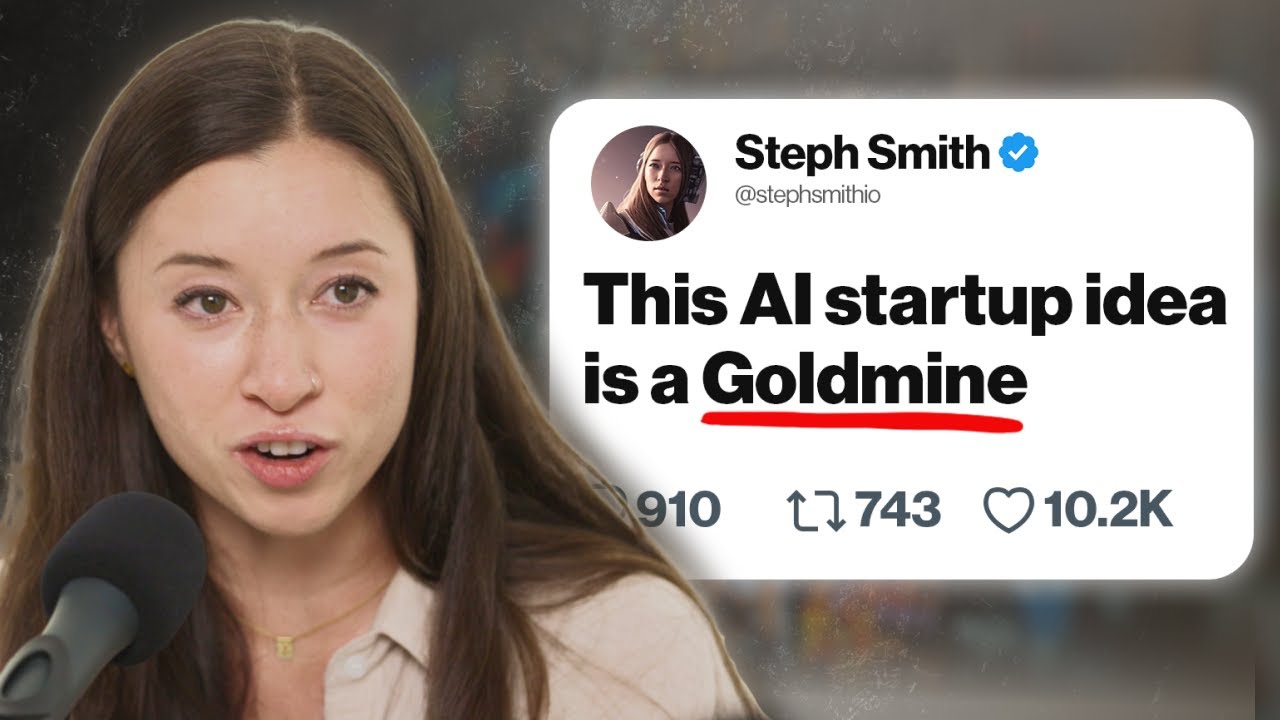
asked who's hiring, and I realized from the comments that there are a lot of people who are hiring. And so if you are someone that wants to get into startups, whether you're a developer or a designer Or a growth hacker or you vibe code on the weekends, there is a link in the description where you should apply so that we can send your resume to all of our friends who are hiring including Fid. All right, Finn, welcome to the podcast. Yeah, thanks for having me. I'm going to read out your tweet just to get started
here. POV, you left Stanford after the first day of class to build an AI startup. Eight months later, your 10 most cracked friends all moved to SF to Help you build it, and it was seen 9.5 million times. So ridiculous, man. I I think that was my Mona Lisa of cringe startup posts. You can't get better than that now. I really can't do better. So, for context, you're building Origami and Origami is why it's an AI agent startup. Yeah. AI research agents purpose-built for sales teams. I think the cool thing is like we talked a
little bit about how you actually came up with the idea and it Was rooted in like your actual history of stuff that you've worked on in the past versus the typical I don't know what I'm going to build. I hope I get into YC so I'm going to throw a dart at a wall and end up with a AI agent startup. Um so what was the backtory of kind of how you started working on it? Yeah, so it kind of goes back to originally when I started at college. Um I had no idea what a
startup was. I'd never coded or anything like that in my Life. Um, and when I joined at Stanford, um, I like joined my school's marketing club, uh, and ended up running our marketing club. And one of our first projects was a company called B Real that had just raised $30 million in France and was trying to launch in the US. Well, you worked on B Real? I didn't work on them. I just like Stanford was the first campus that they wanted to launch at. Okay. Uh, and you know, we were in the marketing club, so
they came To us. That's incredible. Yeah. Um, and so we helped them pretty much expand, get in front of all the students there. Um, you know, do the ambassador programs and the inerson events, kind of show them what would work well in the US because it's, you know, they're French founders and wanted to understand what the American college scene looks like. Everyone knows it's the best place to build a social network. Um, and so when I was doing that, um, I met these other Guys at Stanford that were building their own social network and that
was called Fizz. Um, and at that point, you know, these guys, Teddy and Ashton were freshmen. They had been upset with current social media and they wanted to remove the idea of like the social profile entirely. So, there wouldn't be any sort of thing like clout uh or status or anything like that. Um, and when they launched it at Stanford, um, they got 400 downloads on their very First day. And I joined them after that. And over the next two and a half years, pretty much took over college campus after college campus. They dropped out
uh at 19 and then raised over $40 million. So now it's you know the biggest college social network since Facebook. Oh wow. Yeah. Um and so that was how I got introduced to startups. Um I was there for about two years and then I left and you know started working with a lot of different sales teams. Um Pretty much doing consulting for them. Ran my own agency and that was kind of how I understood the problem space. It's so interesting. Well, there's a lot of things to talk about just from that short story, but agencies
are very slept on in San Francisco. Like, it's interesting because, you know, I own a few. Uh, but if you were to introduce yourself to anyone in SAP was like, "Oh, I have an agency." They instantly think you're trying to sell them, which is Hilarious because everyone in SAP is building B2B anyways, so technically everyone is trying to sell to each other. Um, but it's like agencies are one of the few startups or one of the few like business models where you learn everything. It's like a crash course into like startups as a whole because
you're learning about sales and you're learning about marketing and building a website and fulfilling products and hiring and firing and dealing with Rejection and um what was it specifically about the agency that you were working on that led to starting Origami? Yeah, great question. So, yeah, I couldn't agree more. Like a SAS company is actually just an agency with a product, you know, to provide you higher leverage with the type of work you can do. Um and so the thing about u the agency I ran so we worked directly with sales teams and we built
custom products for them you know so we'd build Them data enrichment products or an AI SDR or you know whatever they were looking to have um and what you kind of find there is like the process of actually delivering value for a customer comes from talking to them repeatedly figuring out exactly what they want and customizing your product to be purpose-built for them and even at greater scale you know when you have a SAS product and you're serving hundreds uh or thousands of customers customers, It's the same exact thing, right? You want to figure out
what's going to be best for every single customer, what's going to be the best experience, and you know, you look at customer success. They're literally meeting with their customers every week. It's just an agency on steroids in so many ways. That's interesting. And um you know, to take a step back again, what was it like to work on be real or like what was it like to take them or like bring them Basically to America? Yeah. No, it it was crazy. They had a a ridiculous budget for expansion. So, um, you know, they're paying people,
the ambassadors were getting $8 a download. Um, I'd never seen anything like that. I mean, this was the peak of 2021, right? Um, and they were blowing up, you know, like people were going crazy on TikTok with it. They had all these viral marketing tricks that were just like the user growth numbers were were going crazy for A while. What were some of those tricks? Um, so a lot of what they did was they focused on like the in-person marketing, you know, and I think a lot of what's there's very few new large social networks,
but a lot of what differentiates a social network now from at the very beginning when they were popping up left and right, I think is their go to market. Um, not necessarily, you know, the product is super important, but to win you actually need An amazing go to market and amazing product. And so they were taking college campus by college campus and they would do these events, you know, so everyone would know what it was. It's like this is the real life in-person social network. And you know to have the capital to be able to
do that and to show people that your platform is something bigger than what it actually is outside the app. It worked really well for them on top of the fact that They had a great product. Um and I think that's you know a lot of the other social networks I've seen that have done well have taken a similar approach of focus and build a community one at a time or if you're doing at scale make sure that every single community has you know proper community health. That makes sense. And so right now with Origami, you
guys had a similar kind of like very interesting GTM story, which is that you went from zero to 50K, your first 50,000 In revenue very quickly. And then what happened? Yeah. So we did that and then we had to serve our customers. Um you know, we continued to scale. So to back up a little bit, um we did, you know, I was going to I was running my agency. Um and I was going to start my masters at Stanford. Um and I talked to my best friend, Kenson. Um and at the time Kenson had been
he was started as an engineer in an enterprise sales startup. Uh had become the CTO his second year of College and you know he was just like the most smart talented person I'd ever worked with. I'd met him years prior at a hackathon and anytime I had like really difficult technical problems or challenges like I would go straight to him and he always knew immediately. I mean he was doing some crazy stuff. Um and so I told him about you know the product that we were working on and we agreed to work on it together
and so I left my masters. he dropped out. Um you Know he was a university student and then we did Y Combinator. Um and then yeah during Y Combinator um we you know were barely sleeping at all. We we did go 0 to 50K very very quickly. Um and then we had to build out our team after that. You know we needed a lot more people on engineering, people on sales, help with operations, customer success, etc. And that was kind of the genesis of the company. You know that was uh our YC batch lasted two
and a half months. Um And that was the period when it was just me and Kenson and we kind of scaled. And so the entire YC was just you and Kenson. Yeah. Yeah. Yeah. Is that when you got your first 50,000 revenue? Yeah. Yeah. We we went zero to 50K, the two of us, and then immediately after that, we were like, "All right, we raised our seed round. Now we need to hire. Um, we need to make sure that we can give these customers the best experience possible and continue to scale up our our Product,
our team, and our our mission." And what were you selling to these first like the the first customers you had, what was the product at that point? Yeah. So um essentially the genesis of our product was you know when I'd worked with these sales teams I saw that they were using kind of like the first level of the generative AI transformation which is they're using things like Chad GBT they might be using some level of AI agents to you know access the internet And autonomously go and grab information um but is very primitive right and
so they're doing all their research and getting all their information with using LLM and agents that are kind of going after a static snapshot of the internet you know when you when you query chats BT even if it's the most up-to-date version of the internet, it's just going out looking at that snapshot and bringing you back information. And so the issue was live information is Extremely valuable, right? Um and so we decided to build a system of agents that live on the internet, every corner of the internet. So whenever things change, you know, say in
the comments of Twitter, um you know, or in government data or in announcements about certain things, the agents are detecting it and giving it back to the sales team. So that's the first part, agents that live on the internet. The second part is the fact that chat GBT is kind of like one Thread, right? You're getting one response. Whereas, if you have thousands of agents, you can run thousands of threads at once. So, you can be getting all sorts of different data points and people can getting thousands of different replies and answers for your things.
You're not having to ask it a million different things. Um, and so we wanted to build a system of internet agents that lived on the internet and ran in threads of thousands and purpose Build them for sales teams. So then they were, you know, level three, you're above agents. It's a team of agents and you're much beyond you know the LLMs that that came out a couple years back. And so can you maybe share what one of like the early customer types uh of like what type of company was one of your first customers? Yeah.
So um one of our first customers was uh a healthcare company. Okay. Um and so for them you know they had their sales reps Essentially going out and trying to find really niche pieces of information like what um like let's say you want to find the readmissions rate for a hospital. I see. And to do that, what you're going to need to do is you're going to need to look up the name of that hospital and you're going to need to look up, you know, their readmissions rate and look through Google, look through 10 different
links, look through LinkedIn, look through pages, look through posts. And so essentially what the agents are doing is they know that this is their core goal, find this data point. Now, they're going to look through all these different links themselves, click through different things, read through different things, and if any of them finds a good data source, it'll communicate with the other agents that, hey, maybe the other data sources can be found here. Um, and if it can't find good data, it might go back and, you Know, try to find a better proxy for that
data. So they're kind of like autonomous, you know, SDRs, entry- level sales reps that are doing this research for the team. And so when you sold it to them, what did you have built out at that point? Was it just a demo? Uh, no. So we had nothing. Oh, yeah. Yeah. So we what we had is we asked them what data they wanted and then we went and we were the agents and a week later we gave them a spreadsheet. And by that you manually Went for a week and and Yeah. Yeah. Yeah. Yeah. So,
we were we were selling spreadsheets for our first 30K of of monthly revenue. We were literally giving teams a new spreadsheet every single week. Um, we you know, we had literally nothing. And do things that don't scale. Exactly. Exactly. Um, and then, you know, we had Google Sheets as our backend, you know, uh, a little bit longer than that. Um, you know, we're now off thankfully. Thank God. Where did You find those first customers? Yeah. So, cold email is 100%. Yeah, absolutely. By cold email, do you mean you sent out 10,000 a month or did
you meet like, you know, manually find like your ICP and then target them? Yeah. So, we we manually found our ICP and we targeted them. I ran like, you know, a cold email agency. So, I with my agency that I ran before, I got all of my customers, every single one through cold outbound um the initial ones and then, You know, referrals, etc. But by far the greatest channel for us was cold email. So, what was your script for you to get like for your agency? Yeah, for for my agency. So, you try all different
sets of things, right? So, it really depends on the customer profile. Essentially, what my process is first and most importantly, identify your customer profile that you want to sell to. Um, and it doesn't necessarily need to be, you know, the final profile that you're Looking for. So, early on, by far the best people to talk to are like early stage founders, right? Like they want to talk to other people and help them out like kind of one one that they're one above. Um, and they are actually willing to take the time with you to go
through the process of you trying to solve their problems. And so oftentimes, you know, I would find early stage founders, maybe zero to 10 people that have, you know, the companies exactly like I'm trying to Sell to. I can tell that they have a large budget that they're selling large contracts. How could you tell that? I can tell by looking at their website. So, so you're manually looking at all these, you know, companies. You start, so the process is you start off by doing it manually. You start off manually going through and looking through what
types of things do I need to see on their website? What types of things do I see on their profiles that makes them a Good fit? You kind of manually build your your perfect list of 50 targets. And then you use AI agents to do that. And like I said, that's our entire product. And so I already been doing this for a while. Interesting. So you weren't going the route of like using Apollo um to like build, okay, 0 to 10 companies, enter keywords, send to like one of those Google sheet scrapers where they take
your Apollo, you know, URL and give you back a spreadsheet. Absolutely Not. No. Um if I were to go on Apollo, you know, the other 99% of the data that's out there, you know, does this does this company have a real life product that I can use? You know, do they have a gated demo? there are issues with their marketing, things like that that I could actually sell them on. None of that stuff is in Apollo. And so you're using first you manually go and find these companies and then you use AI to like create
a lookalike audience That's much larger than your first 50. Yeah. So I pretty much will train the AI on the on the different steps that I would take to do it. So I'd say go on Google and look through and find me 50 companies that are early stage healthcare companies that you know are most likely targeting companies that want this different data point. And they would do that by reading through clicking through the website looking through this the you know the history of The sales reps at that company etc. So all these different data points
and essentially building that list and you can kind of go in and retrain the agents based on things that you think aren't fits and you really just want a really targeted list and a really targeted campaign as possible because outbound is just such a mess. Like that's the only way you're breaking through. So how many cold emails would you send in a week? I'd probably send between uh 50 to 100 Cold emails a day. So yeah. And that's again with your AI like with your agents. Yes. Yeah. Exactly. I mean so agents to builds enrich
the list etc. And then you know you can just use a cold email center. So we don't do any automated outreach. You can just use like instantly or something like that once you put the leads inside it. Yeah. Exactly. Very interesting. What do you think the ceiling is on cold email? There's no ceiling. I mean so there There's there's a few different ways to answer this question for an individual person trying to benefit their own life. you know, network, get their first early customers. It will always be a channel. It will always be a great
channel. For a business that's trying to find a reliable channel to get great ROI, the ROI in cold email is dropping every year. Um because there's so much spam. The deliverability gets worse every year. So there's spam filters are Improving. Yeah, exactly. Uh and so less and less people respond to cold emails every year. It's just a fact. And so if you're trying to build cold email as one of the core channels of your company, you should be doing it in a way that doesn't involve just hypers scale, right? Got it. You need to kind
of stay ahead. And so did you do any organic marketing outside of, you know, that tweet that I open this episode with? Um, all of our marketing has been through Making the posts on LinkedIn and Twitter and cold outbound from your personal account, not from company accounts. Correct. Yeah. No company for you. Like what's been working from a personal brand like B2B funnel? Yeah, I mean it works fantastic, right? Like we can book out our sales calendar truly with hundreds and hundreds of calls from one tweet. From one tweet. Yeah. Um I think I made
a tweet that got like less than 100,000 views um you know 3 to six Months ago and we booked a that was the very first announcement of our company. Oh wow. It was like a selfie of me and Sam Alman. Oh nice one. Yeah. Yeah. Yeah. And that booked out our calendar. I think we booked like 300 demos. 300 demos from a selfie with Sam. Yeah. It was my calendar was 8 a.m. to 8:00 p.m. every single day of the week. like filled for like three or four weeks. It it could have been more to
be honest with you. And if you were to like Reverse engineer why that was, what would you say outside of okay, let's say take a tweet that didn't involve Sam Alman, right? Like how do you actually u make it such that you know when you make a tweet or you make a LinkedIn post, you're going to make sales calls off of it. Yeah. So the biggest thing is just like the audience that you're going after and what the call to action is uh in my experience. So what I my kind of framework for this is
content is the Most powerful channel in 2025, right? Like you've seen people like Mr. Beasts. This was not possible 5 10 years ago, right? Like this is the new news. It's the new way people consume and the new way that people perceive the internet. So if you're not doing content for your company, you're losing out on the most valuable channel. The way that we think about it is there's there's two things that are infinite leverage and those are code and content. And so content is is Extremely important because you get to tell the the story
of your company. Um, and so what I my kind of approach to content is you want to, you know, get in front of as many people as possible that are within your audience. I'd rather have like 50,000 of the right views than 9.5 million of the wrong views. Um, and so a lot of it is like, you know, engaging in the communities you're trying to engage with, making content that those people care about. So I only Ever make content around founder lifestyle, early stage company, etc. I wouldn't post about, you know, anything else even if
I thought it was funny, whatever, because no one following me cares about that stuff. Really, you don't think? So, so one of the things that like when we give advice to people in our bash, for example, we'll say there's like two types of content. There's like, you know, your your call to action frame, like your hook, and Then there's like just like random filler stuff that makes you not look like a bot. Um, and so, you know, one of one of our companies, his name is like Founders Arm, right? Ryan, he posts the most random
egregious things on Twitter sometimes. Uh some like I'll see his tweet sometimes I'll text him and I'll be like, "Yeah, you should probably delete this." He he never does. Uh but he's booked more sales calls that like converted where they've like mentioned Like, "Oh, you know, I follow you on Twitter. I think your stuff is funny." Versus like the uh you know, obviously the professional tweets do really well as well. Um but have you experimented at all with with like the the random more like funny personal tweets? Yeah, I mean we don't really talk about
our company on my Twitter. Like we never say what we do, whatever. And it works perfectly well. like, you know, we've had sales reps, we've, you know, closed companies That have hundreds of hundreds of people. Um, and they were like, I was like, "How did you find out about something?" I think I saw a post about a triple bunk or something. That's so funny. Like, it doesn't really matter once they, you know, it's like you see this thing for 5 seconds, it gets your interest, you book a demo, and then you're talking to this guy
for like 30 minutes. You're like, "Oh, you know, this is actually really useful. I Actually really like this guy." Like the the initial channel didn't matter at all. Are you still the one doing the sales calls? Uh, no. I don't do the sales calls. And so do you find that like the whole personal brand, people kind of being down to talk to you because they follows you, does that fall off once now they get on the call with someone else? Uh, I don't think so because you can see when you're booking the call who the
call is going to be With. Um, and honestly, I think, you know, 99% of the people that are seeing it are not booking calls. So, it really only would be the people that are like interested enough to go to the profile, look at the website, and be like, "Okay, you know, this is actually worth 30 minutes of my time a week later." And when you're setting up like your calendar or your calendarly, are you doing anything around like only 48 hours into the future or like you know you Can't book calls next week or have
you optimized it at all? Yeah, absolutely. So what is your what is your stack? Yeah, so I mean the first when we first got started we had no stack at all. So I would I was taking calls randomly on Saturday and Sunday. It was miserable, you know, and I was just take calls all day. I'd take you know 14 hours of calls and then stay up all night coding with Kensson. Um, and it was absolutely miserable because like you just can't Stop. You can't say no when people are interested in your product. Um, but what
you realize is you would actually rather take onetenth as many calls and go in better prepared and have those be better calls. Um, you know, more qualified customers. So, we qualify religiously now. Um, we have very regimented time blocking. You know, we have days where we don't take calls where we focus on customers. Um, we only take calls on days where, you know, people we're Trying to talk to are likely to book. Um, and they have to book a certain amount out usually cuz you know we already have stuff planned for like the rolling 2
three days out, right? Interesting. And so now then like shift over into like what it's actually like to build this company from like a culture perspective. When you started the company it was like you and one of your homies, right? Like Hensson because you guys are are friends. Yeah. Um and You were it was just you two all throughout Y Combinator like all through your batch. And then what happened? Yeah. So after that um you know we got our we really we needed help the most on sales you know like we had too many sales
calls. Um and so I got introduced through one of our investors to a guy named Luke. Who who did your seed round? Uh we r we raised from angel investors. Yeah. Um and I talked to Luke immediately I knew I was like this guy Is fantastic you know he is going to kill it. Um and then through Luke and the rest of my friends like we just started adding more and more people. You know we still had more sales calls that needed to be taken. We need to do a lot of engineering etc. And so
I just started calling my friends um and essentially telling them like, "Yo, like I really need help with my startup right now. Like we're blowing up and like you're the smartest person I know for Product designer or for engineering or or for front end, etc." Um and I would fly them out here, get them working on it for a couple days, and then once I felt the energy and the passion there is there's just no turning back. Oh. And so you you close all your friends basically. Uh yeah. Yeah. Yeah. That's exciting. What what broke
then? Because, you know, I've worked with friends. I I I still do it. Majority of our our company/ people we work with are all Just like friends I've had for for years now. And what that leads to is like the highest of high in terms of like, you know, it's like the highest highs and then occasionally, you know, once every few months is like a really low low that comes from doing business with friends. Yeah. It it's really difficult to uh to balance a lot of the time and it really depends on the personality. So
even a lot of my best friends that are super smart I could never work with, you know, And so the most important thing I found is like very much like non-over overlapping skill sets, orthogonal skill sets, you know, working on two completely different things so that you're just going to trust their judgment on that because they're just better. I think where you start having challenges is when two people are taking kind of the same domain, you know, because then you're actually competing with your friend on the idea and then You might think that you have
more credibility and telling them no. Um whereas you know if my friend is insanely good at this thing that takes a lot of the potential for conflicts off the table. Of course there's still the conflicts but in my experience that's where the the most out of hand ones become. And so what does your actual like week look like as a company? Are you doing Monday standups or are you using notion? Like how do you actually Lay it out? Yeah. So um we have standups on the engineering team every morning. Um, we work six days a
week and we work from essentially from 10 to 10 or 11 every day. Um, and so, you know, sales teams in early, sales team's in at like 6:00 or 7. Um, and so I'm in with the sales team and then, you know, we've got sales calls all day in the sales room. Um, we've got customer calls all day in the customer success room. Uh, and then on engineering, you know, they're just Pushing out new products, new features, testing new stuff. Um and there's a lot more engineering you know most of it's very engineering and product
focused company. So um that room is a lot more like quiet focused dedicated. Interesting. And who leads the engineering team? Uh that's my co-founder Kson. Yeah. And you're leading like the sales, marketing, everything else. Yeah. Sales, marketing, operations, customer success. Interesting. And so you have you have daily standups on engineering the rest of the company? Yeah. And the rest of the company it's just you know uh one-on- ones as needed. Um we don't have any scheduled recurring meetings. We have an all hands on Friday. Um on Friday. Uh it's kind of like you finish the
week, you know, kind of recap and it's it's very brief. It's just like a few shout outs and what everyone got done in one minute. Um and so that Meeting might be 30 minutes and that's it. One once a week meeting for 30 minutes with the whole team. Engineering standups for 10 15 minutes. All the rest of the time everyone's just executing. And right now you have 10 people on the team. How fast did you go from two to 10? Probably about 50 days. Explain that. Yeah. So, at the time that we had two people,
like I don't think it was possible to be physically working more than me and uh Kenson were, um, you Know, I would take sales calls from 6:00 or 7 a.m. till 8 or 9:00 p.m. uh, every single day and then stay up working with him on product and he would just be working on product all the time. So, we were, you know, sleeping, you know, one or two hours a day uh, all the time. You know, looking back, you shouldn't do that. You should just take less of the sales calls, but you just can't stop
sometimes. Um, and so we knew that we needed people so badly. Um, and so as Soon as we raised our seed round, um, and kind of got like a couple days where we could get organized, we just started trying to spin up a recruiting pipeline, talking to as many people as we could and just we lined up work trials essentially for the next two months. What goes into a work trial? Uh, work trial essentially means that they went through the first stages of your, you know, interview, second round, third round. Um, and you thought that
they Could be a a great potential fit. So you got them out to your office. Work trials, you know, experimented between 1 to 5 days. Um, and they work with the team and then after that you can make a decision on their offer. And as you're a company that's like hiring people so quickly and it's, you know, you're literally going from zero to one from a hire perspective. What did onboarding look like? Because as the founders, you guys are still drowning in everything Else you have to do as founders. Yeah. But the onboarding is arguably
like one of the most important parts of bringing someone on to the team. Yeah. There's very little onboarding. I I would probably argue that some people would say there was no onboarding. Um like once they came I was just like all right man like yeah not even sometimes you know it's just like all right like you're working on this like one sentence essentially about what you're working on Like you're taking customer calls you're getting on sales calls and then they kind of figure out the rest. So that's why you really need to optimize for high
agency people that are just going to teach it to themselves and then by like 3 days they've essentially created their own crash course and trained themselves. Uh and that was really the only thing we were capable of doing. I think it was interesting. I forget who I was talking to this about. It was last week. I think It might have been the Walk guys. And um what they were basically saying is like, you know, when you're a super early stage company, you're optimizing for the top 1% and nothing less than that. Versus if you're a
Stripe or a Google level company, you're just trying to get like the top 20% of the market. But especially if you're like sub 10 people, every single person you add onto the team will either make or break the company with the culture that they Bring. Yeah. Uh, but everyone kind of like knows this and then they go try to build their own company and they're like, I don't know what good culture is. I don't know how to determine if someone, you know, should or shouldn't be on the team. Have you had to fire anyone recently?
Um, we have had to fire someone before. What goes into that decision? Uh, it's the worst thing that you ever have to do, hands down. It makes you regret starting a company. Um, It's, you know, when you're moving really, really quickly and you're hiring a lot of people, mistakes are going to be inevitable. And the hiring mistakes are the most difficult ones because there's nothing you can do to correct it oftent times. Um with things with product customers, etc., there's always usually some sort of fix, but with with people things, there's some things that you
can't take back or change. Um and so it just makes things really difficult. Have you ever had to fire one of your friends? I have. Yeah. Was that like uh it was super unfortunate. um it's just super painful because they trusted you and they took a bet on you and they know that you knew them very well. And so it's, you know, it's just 100% your fault, right, for the the whole situation. Um and so that's the that's the double-edged sword, right? Like you need to be willing to break friendships and feel insane amounts of
pain and Regret and loss if you want to achieve greatness with bringing friends onto your team and, you know, build something with your best friends for years to come. cuz it's not all, you know, sunshine. Yeah. You know, I remember um with Founders Inc., we hosted this conference like two or three years ago now called AISF, right? And I think it was one of the first conferences we ever hosted. And you know, with the team, especially at that point, it was very Small. It was only like five or six of us. At that point, I
had someone on the team who like one of my boys. He still works there today. He lived on my couch at that point. And I remember like vividly we came back from the conference and like at the very end of it and um you know we're all just kind of like sitting in like the empty office and it was one of those moments of like this like this moment is so much deeper because of the people that I'm Experiencing it with versus if it was just like a random company and it's you know we had
strummed together a bunch of people last minute we met like a month ago. Um, and like that was like a very defining moment I think for me as I for for for what kind of became like the rest of my career up until this point because it showed me like, oh, like you really want to build stuff with people you care about because that makes every moment that you go through just that Much more meaningful. What was that moment for you? Yeah. I I think there's been so many. I mean, what you kind of realized
is like building a company is just at the end of the day such a fundamentally human and people and like endeavor, you know, it's not about the product or the technology. It's all about just a group of people trying to do something, right? Um, and so I think there have been so many times so many times where like, you know, someone just Like has an insane win on the team, you know, it can be completely outside of the company, right? Um, or when someone just moves there, like pretty much everybody moved to San Francisco for
this company, right? Like they were all over. Um, and so like you know helping people move in like get their lease like you know set up their life around this like you know knowing nobody in the city and then watching people become friends through your company and through like The culture and watching it build and kind of the butterfly effect come from that from something that didn't exist more than eight months ago. Uh is is crazy to watch. That is very interesting. Especially like the what you mentioned was that stuck out to me was like
watching people that you bring onto the team then make their own friendships and then like become their own characters in the city. Yeah. Yeah. 100%. But San Francisco's back. San Francisco is very back. Um when you think about your time at Stanford versus your time in the city, how do you think about like the differences between the two of them? Yeah, completely different cultures around building companies. Um, I would say like in San Francisco, everyone's pretty allin, you know, like you came to San Francisco, you came here for a reason and there's usually no going
Back, you know. Um, and so you have to make whatever you're doing work. And it's a very different culture from Stanford where Stanford people don't like failure. You know, you feel like you've already achieved a lot and you don't want to be seen as a failure by the people around you. And so, you know, even though a lot of people are interested in startups and will in the future years into their career do startups, the prospect of failing super Early on in their career is is definitely very scary thing. It's interesting you mentioned that because
it's like startups have been so much more commercialized in the last 5 or 10 years, especially with like, you know, now that everyone's focused on content, which is a great thing. A lot of it becomes more accessible, which is also a great thing. And so, I saw this tweet earlier today. I forget who posted it, but she was basically talking about how There's this well-known founder that's like going around SF and his metric and his background and his revenue and everything is made up. And like especially in the last two years, there have been a
lot of cases of that. Um, just because it is like one of those things where if you hear enough people talk and pitch and talk about their company, you can kind of figure out like pretty simply like how to what to say such that someone will meet you for the First time and think you're someone that you're not. Have you dealt with a lot of that at Stanford? Oh yeah, there's a lot of charlatans and people talking more because you know kind of the culture of the school is like to get what you want next.
Everyone's trying to optimize for the next thing on their resume, the next line on their LinkedIn. And to do that they feel like they have to keep you know building that stack of things. It's just you know a bunch of exaggerations Or outright lies. Um and so well you know at the end when you come out of it you have no real experience at all. you know, you've just done things to put on your resume and then as soon as you got accepted or started the job or whatever, you were looking at the next thing
and not invested in it whatsoever. You know, it's interesting because the tweet that you put out, the one that got nine million views, we were like, I dropped out of school on my first day or I Dropped out of Standard on my first day and that is true. But is it true? Uh, yeah, I dropped out of my masters. Um, so I did graduate from my bachelor's and then I was about to start um, you know, a year-long program at Stanford. Um, and you know, I was not very fired up about it to be honest.
I love building things. I'd been building things for the last 3 years. Um, and you know, it was really only a matter of time until I I decided to Leave. So, what was the thought process first in like staying at school? Cuz you said your friends that you were you were working on a company with them. It got a bunch of traction. It went on to be relatively successful, but you didn't drop out with them versus eventually then you you ended up doing it for yourself. Yeah. What was like the thought process throughout? Yeah. So,
at Fizz, I mean, I had been on campus when, you know, they they ended up dropping Out. I've been on campus for a couple weeks. Um, and so is the best one. Yeah. I mean, it's it's crazy to be on campus for a couple weeks, right, in person and, you know, people are dropping out. There's this company that's taking off like, you know, what are you going to do? Um, you know, what are you going to tell your parents? Um, and so it was a really different position than I was four years later after having
experienced it, seen it, seen it's Possible, seeing that I know what to do and feeling, you know, this is absolutely what I love doing. There's no better feeling than trying to do this thing. This is what I want to do. But you wrote it out like till the end, right? You graduated versus like, you know, dropping out after one year or two years or three years. And so what was that like decision-m process? Yeah. So I I was very productive in school with respect to running my agency uh and Working at startups. Um, you know,
I did very little class. I was traveling around working on stuff. Um, but at Stanford it's pretty easy. They kind of give you ways that there's a lot of great inflation, right? Um, and so you can do a lot of things on the side. That makes sense. That's very cool. If you were to think about like do you have any younger siblings? I do. Yeah, I have two. How old are they? Uh, one's two years younger than me and my sister's Four years younger than me. And so when you're giving them advice as to like
what career path they should go down, especially with everything that's changed in the last two or three years, what are you telling them? Yeah, so I'm very biased. Okay. Um, and it doesn't have to be a startup, but I do think that having agency over your life is very important to establish early on. And agency is pretty synonymous to risk. So, it's like the most cliche stuff ever To be like take risks, right? But like you have to convince people and show them other people that take risks and that it failed and like nothing happened
in order to have them embrace that type of mindset. And so I have absolutely been super proud like take as many risks as you possibly can. Like you know take a semester off or go travel do whatever. Just try to get off like the most common path because that will funny you towards the thing that everyone's telling you That you need to do that you think you need to do that maybe there's something else that you'd rather be making onetenth as much money and having a way more fulfilled life if you did. That's interesting. And
so are you suggesting that they graduate or you telling them to take a semester off? No. No. No. That's just an example. Yeah. Everyone's path is different. Everyone's path is different. Yeah, it is cool because like depending on which school you go to, There is like a very easily reversible decision of like whether or not you should drop out. Like for me, it started off as, oh, I'm just going to take a gap semester after my freshman year of college, uh, which turned into a gap year cuz I joined Founders Inc. in that gap semester
and then that was like, okay, I don't think I want to go back to school for a while. Um, versus like, you know, when you tell someone that you dropped out, they think one day you, you Know, got up and told the university, I'm leaving. I hate you. I'm never coming back. versus like most people had the ability to like go back even to this day four or five years later. Yeah. And um I think it's cool like especially when I was at Founders Inc. you would see so many more people taking gap semesters because
they were just like startup curious like oh I think it's build something and then they come out and four months later they're either Back in school or they've raised like a seed round. Yeah. No, seriously. I mean are you going back? Not for a while. But you will. I don't think I would. You don't think you would? I don't think I would. I think it's just like the only reason I wanted to go back before was Phil I was like oh it'd be interesting to like finish out college and like you know do a degree
in neurology like you know something like in in bio but um I just think there's there's so much of Like an opportunity cost that comes with like there's a lot of good in college but I would argue that like the best part of college is the fact that you are now on a walking radius with a bunch of other people your age and you're all trying to figure out life together and you learn a lot about yourself and you learn a lot about the different routes in life that you have from that like you know
like shock like exposure shock of like being in a place like that and I Think that like those rewards or like those benefits kind of diminish as you get older because you see so much of it by not you know just by experiencing life. Yeah. No, I agree. And you'd have like three more years to do anyways. Fact. Oh man, you're going to see me do one of those six month figures just to get it over. Yeah, seriously. I might go back and get my associates. Fact. So I go back to get my associates and
oh I saw this tweet today was from uh what's Her name Anna Ratho Arthuro she was like um YC sentiment check and it was like YC is a great YC is not good or some version of that and when I clicked on it the the bottom tab which is YC is not good was resoundingly you know higher so you went through YCH what's it like it it was fantastic um like we would not have accel it's it's literally a startup accelerator in the most literal sense we would not have accelerated to the degree that we
did had we not done YC and I Don't know that if there's anywhere else that you you could have uh accelerated uh you know taken your company and seen a different outcome entirely um than YC um but it's very dependent on your company right and so if you're in B2B and particularly in B2B SAS um and you want your earliest customers are other AI early stage companies like being in that network and having you know people that have done it literally thousands of times before is so helpful. Um, if You're doing something else, you know,
it might not be that helpful for you to be honest. Um, and of course, a lot of the philosophies, you know, that YC kind of pushes and teaches for people in it are actually really counterproductive for many many companies. Like what? Um, for example, I think that there's a really, of course, there's a really big focus on B2B and so if you're consumer, you know, um, you're probably going to feel very alone there. Um, but I think That there's a very big focus on like productled companies versus this kind of what we referenced before like
running your company like an agency at the beginning. Uh, going salesled and building custom software. I think a lot of YC's philosophy was shaped by their early wins. So companies like Reddit and Door Dash and Airbnb that like, you know, they've built the first amazing product of its category. Um, and the product, you know, absolutely took off And now there's so much software on the internet that if you're trying to just put something out there, um, and you know, you have some people using it, you're looking at analytics and tweaking stuff to try to make
it better for them, it's going to be really difficult for you to stand out. And we see big examples, companies like cursor, etc. that did, you know, win with productled growth. But in this day and age, I think it's easier for 99% of people to run Their startups very much like agencies and build custom software and really get to the bottom of what's useful for any given customer and to do that salesled thing. Essentially, sell before you build. Um, and I don't think that that's, you know, very much the ethos of YC, but it's it's
very much something that I'm I'm very proud. Very interesting. I think you know your point about it being great for B2B makes sense because yeah one of the biggest Advantages of being in YC is similar to what we talked about with like being on a college campus. you just get thrust into this environment where everyone around you is like sharing their learnings and like trying to navigate the space and if all of you are in B2B or if all of you are building software there are so many like like you know almost truths where like
90% of the time you should do this thing like 90% of the time you should have post hog amplitude Mix panel set up 90% of the time you should be you know selling before you have a product built out you should be you know posting online and sharing what you're building in person and sharing your wins online because that turns into more growth and I think by going into any program that is you know has a high enough quality bar, you will probably learn a lot from it. Yeah. No, I I 100% agree. And there's
a bunch of really great accelerators. I think, you know, For example, Olive is, you know, the best of what they do. I would uh I definitely think that's that's much significantly better in so many ways for so many different types of companies, right? Go after what you're looking for. Seek it out and embrace it. Awesome. So, I'm going to ask you the question that I ask everyone uh at the end of these episodes, which is if you were to do this podcast again in a year, what would you have want to accomplish by then to
Consider the past year a success? Yeah, it's a great question. So, I would love to, you know, have our product being used by the largest companies in the world. Um, have an even bigger and more amazing team. Um, most importantly, I would really like the culture that we've built to be preserved. if we can preserve and build on the culture that we've established here, like there's no way that we could possibly fail. Um, just to focus on getting the most high Agency people and letting them do their thing, like if you can find a way
to scale that up, like your company's going to make it no matter what you're doing. And so, I really hope a year from now, like we have the same exact ethos and culture and we just have more people doing it. Nice, man. We'll see you in a year. Yeah. Thank you and thanks for having