I know. . .
the video title is not pleasant, and it's quite sensationalist! However, I must say: the video title is true, both from a historical point of view and an archaeological standpoint. So, if science acknowledges that such a title is true, there's only one thing that can prevent us from realizing this truth: personal faith!
In this sense, I warn: everyone's faith should be respected. For me, it's a basic personal requirement, as respect is the fundamental foundation of human societies and the civilizing process. However, respect for personal faith does not presuppose blind idolatry on the part of others.
In this sense, this channel aims to be a beacon of light to illuminate ignorance! I advocate for reflection and reason above any theological explanation, especially those that define everything as the mysteries of faith or the designs of God—hidden mysteries that we should not even attempt to understand. Consider that dictionaries define the term 'faith' as 'a strongly held belief or theory', or also, 'strong belief in God or in the doctrines of a religion, based on spiritual apprehension rather than proof.
' In this case, faith is supported by spiritual apprehension instead of proof, which is diametrically opposed to scientific principles. Therefore, I must say: live with your faith, whatever it may be; respect the faith of others; and, most importantly: do not let, or even more deeply than this…! Do not allow the theological explanations of any religious institution to supersede your own apprehension of the knowledge of spiritual nature!
Then Yahweh Elohim said: Behold, man has become like one of Us in knowing good and evil. Now lest he should stretch out his hand and take also of the tree of life and eat and live for the eon. And now.
. . come with me, because I'm going to introduce you to.
. . the invention of God!
In modern times, we are all accustomed; in countries like mine, Western and predominantly Christian, we open our King James version of the Bible and find, in Genesis 3:22: And the Lord God said, Behold, the man is become as one of us, to know good and evil: and now, lest he put forth his hand, and take also of the tree of life, and eat, and live for ever. In a way, I am frightened: how can we read such a phrase, within the context in which it appears, and passively accept what is written? For those who do not remember, this event is what originates the original sin, when Adam and Eve are expelled from the Garden of Eden after eating the forbidden fruit.
Now, observe carefully: it's a sadistic game. And as much as it may hurt, I need to remove this veil of ignorance! God, the Almighty, created the heavens, the Earth, and every living creature that moves in the waters or that flies in the skies.
And after all his creation, God created man and woman, male and female, making them in his own image and likeness of God, the Father. Thus, God blesses humans, saying that they must subdue the Earth, dominating over the fish of the sea and the birds of the sky, and over every living thing that moves upon the Earth. And after this, on the seventh day, God rests.
And after resting and making it rain, upon noticing a mist that rose from the Earth, God offers the breath of life to humanity. And then relocates the man he had formed to the Garden of Eden, from where he offers all fruits, with the exception of one, which could result in death if consumed. This one, which can result in death, is the tree that can offer knowledge.
And a valuable knowledge: the knowledge of good and evil. Is this not a sadistic game? Imagine an adult; imagine a father placing a child in a room and telling her that she can take any object except for one, and that this one she cannot take is the one that can give her knowledge.
What will happen? I say: she will take this object and will become just like the adult. And what will the father do?
Embrace, love, understand, explain? No, of course not! The adult must punish her, expel her!
The girl, then, will have her suffering greatly multiplied and must suffer when giving birth! And the boy? Well, Adam was condemned to the sweat of labor until he returns to dust and finds death.
But for what reason find death? Ah, yes… find death because God forbade Adam from reaching the tree of life. If Adam had done this, he would become like God and would live forever!
But so that humanity does not live forever, it is better to condemn it to death, right? Humanity must be severely punished, as now man has become like one of us, knowing good and evil. .
. With great sincerity to you who watch this video. I earn the money that allows me to pay the bills through the advertisements that you watch by clicking on the videos or with a value passed on by YouTube to those who are subscribers of YouTube Premium.
I hope that YouTube understands the analogy made with the child and the adult: the adult, who knows good and evil and has eternal life, is God, the Father; and the child, who knows or understands nothing and who needs care and attention, is humanity. If the electronic analysis algorithm makes an isolated judgment, it would consider such content inappropriate for advertising, and thus, the sweat of my labor would not be considered suitable for the public. .
. Thus, perhaps my only alternative would be to beg to the one who punished me… to ask him to offer me the bread. In Genesis 3:19 he told me that from the sweat of my face I should eat the bread until I turned to dust.
So we learn, in Matthew 6:11: Our bread, our dole, be giving us today. So, may YouTube understand me and my mission on this Earth. From my interpretation, I am a beacon of light, a spark of light, coming directly from God, the Creator, the great architect!
Just like you who watch this video, we are children of the eternal, and knowledge is our ally! Knowledge is our ally to dispel the darkness and the veil of ignorance! And it is this knowledge and the veil of ignorance that, when dispelled, will allow us to live immensely and happily!
You and I. . .
we are light! And just like light, we must behave! Illuminating the darkness of ignorance!
And to do this, it is essential to eat from the fruit. . .
the one that was forbidden to us: the fruit of knowledge. The term "knowledge" in English, deriving from the Greek word "gnosis," holds a rich and nuanced history. In its most basic sense, "gnosis" refers to knowledge or understanding, especially of a spiritual or esoteric nature.
This concept is essential in various philosophical and religious contexts. In ancient Greek philosophy, particularly in the works of Plato and Aristotle, the concept of "gnosis" was very important, contrasting sharply with "doxa. " Doxa, in a simplified form, can be defined as what you know because someone told you.
In this case, most of your knowledge is initially defined as doxa until it becomes, in fact, knowledge, through your own life and experience, which can somehow help to define the term knowledge. Philosophers like Plato and Aristotle delved into the nature of "gnosis," exploring its implications for human understanding and the pursuit of truth. The term gained significant importance in religious contexts, particularly in Gnosticism, a diverse and somewhat mystical religious movement that emerged in the early Christian era.
Gnosticism, with its roots possibly predating Christianity, emphasized personal spiritual knowledge or gnosis over the orthodox teachings and dogmas of the institutional church. For Gnostics, this knowledge was not just intellectual understanding but experiential insight that connected the individual directly with the divine or ultimate reality. In Gnostic belief, the material world is often viewed as a creation of a lesser deity, a demiurge, and thus inherently flawed or illusory.
This concept, it must be emphasized, resonates with the concept of Maya from Hindu philosophy as revealed through the Upanishads. By the way, 'Maya: the Code of Life' is the title of my first book published in 2018 in Portuguese, which, up to this moment, has not yet been translated into English. For the philosophical thought of ‘gnostic traditions,’ the true essence of God is transcendent and beyond the physical universe.
Salvation, in this context, is achieved through ‘gnosis’ – an enlightened understanding that frees the spirit from the material world's confines and allows for reunification with the divine. Gnosis, in this mystical tradition, was more than just knowledge in the conventional sense; it was seen as a transformative experience that altered one's perception of self and the cosmos. This esoteric understanding was often conveyed through complex mythologies and symbolic narratives, emphasizing the soul's journey from ignorance to enlightenment.
This journey of the divine spark of light in human and material life can be seen, interpreted, and reinterpreted in various ways and forms. There is no shortage of mystical traditions, occult knowledge, and even psychological techniques that make use of this context. The Swiss psychiatrist Carl Gustav Jung is an example that, from my point of view, should be carefully observed.
Carl Gustav Jung is a Swiss psychiatrist and psychoanalyst. His work in understanding the human psyche goes beyond the clinical and delves into realms of mythology, alchemy, and spirituality. Jung's concept of individuation, a process of psychological integration and development, is central to his theory.
It represents the individual's journey towards achieving a sense of wholeness, integrating the conscious with the unconscious elements of the psyche. Jung's discoveries of archetypes, universal, primordial symbols and images found in the collective unconscious, are pivotal in understanding the shared human experiences across cultures and time. These archetypes, such as the Shadow, the Anima and Animus, and the Self, are foundational in his analytical psychology and play a critical role in the process of individuation.
Jung's interest in alchemy was not just historical or symbolic; he saw it as a metaphor for the psychological transformation process. Alchemy, with its goals of transmuting base metals into gold and discovering the elixir of life, for Jung symbolized the transformation of the psyche, from a state of fragmentation and unconsciousness to one of integration and enlightenment. This psychological alchemy was akin to the hero's journey, a concept popularized by Joseph Campbell, who was influenced by Jung's work.
The hero's journey, a narrative pattern found in many cultures and myths, involves a hero who goes on an adventure, faces trials, and returns transformed. This mirrors the individuation process, where the individual confronts inner conflicts and emerges psychologically reborn. The Hero's Journey, or the monomyth, can be observed when analyzing the epic of Gilgamesh and when delving into the story of Jesus, the Holy Diver, in the words of the song by one of the greatest icons in the history of rock and heavy metal: Ronnie James Dio.
The Hero's Journey can be better understood when we watch George Lucas's Star Wars, influenced by the work of Joseph Campbell, as well as the vast majority of superhero movies. We experience the Hero's Journey every time we are in a comfort zone and tranquility and are called to a new adventure, whether physical, moral, or spiritual, and allow ourselves to be transformed by this experience. Even this video can be a Hero's Journey: you were invited to an adventure when you clicked on the video, and you may emerge transformed after watching it!
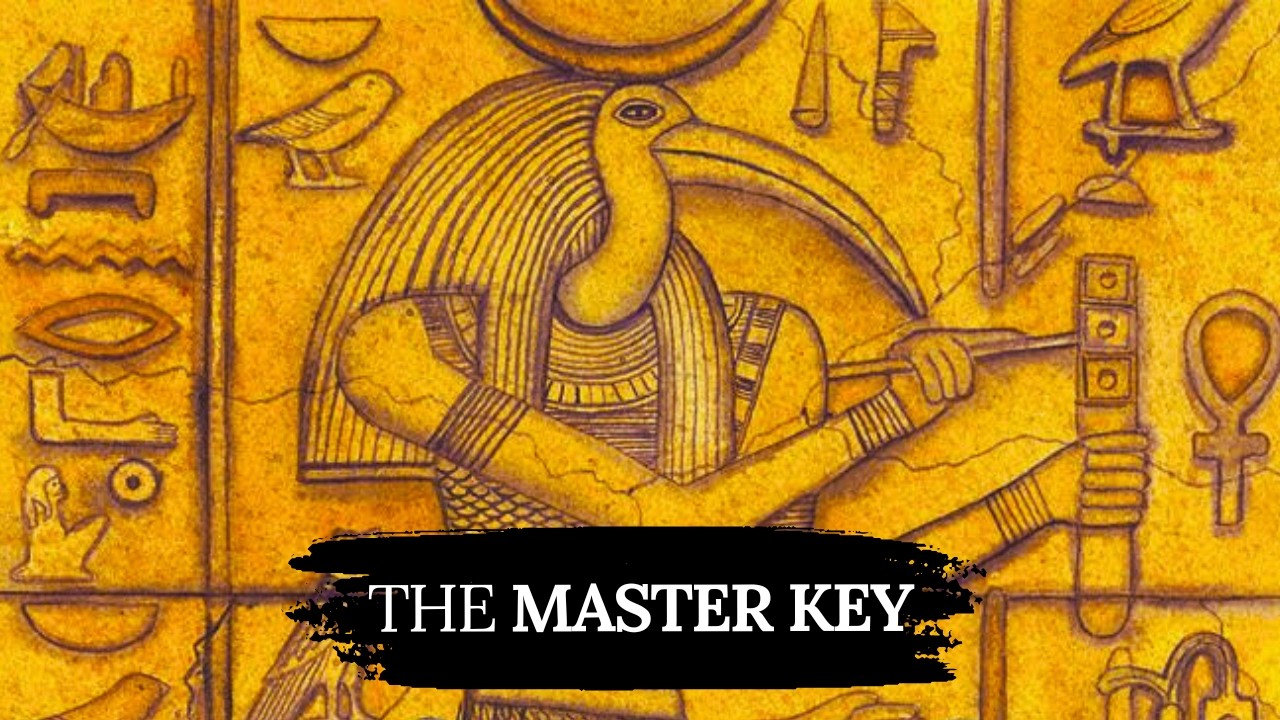
Tracing back to the origins of alchemical thought, we find its roots in ancient Greece with the god Hermes, known for his wisdom and as a messenger between the mortal and divine worlds. The Hermetic tradition, associated with Hermes Trismegistus, a figure combining the Greek god Hermes and the Egyptian god Thoth, is considered a foundation for the Western alchemical tradition. This tradition is thought to contain secret wisdom and knowledge, blending magic, astrology, and alchemy.
Some theories suggest that these alchemical ideas may trace back even further, possibly to ancient Egypt or the legendary Atlantis, where esoteric knowledge and mystical practices were believed to be prevalent. This concept of an ancient Lost Civilization that guards ancient secrets inevitably leads to the idea of the Anunnaki, the gods of the past who inhabited the Earth millennia before humanity, as reported by the Sumerian tablets. This line of thought inevitably leads us to the New Age movement that gained social traction from the 1970s onwards.
This thought also brought basic foundations of Eastern spirituality to the West, such as the ideas of Paramahansa Yogananda and Jiddu Krishnamurti. and, of course, the echoes of a new era: the Age of Aquarius. Many of us sing the success: Age of Aquarius.
"This is the dawning of the age of Aquarius. " And I confess that while I work on this video, in my mind, I automatically hear the singer from the opening of the musical 'Hair. ' I remember my mother introducing me to this musical on a VHS tape.
However, after this nostalgic section, which I hope may have found some resonance and connection with some of your memories as well, I want to return to our main subject: the invention of God. For this type of video that we have been watching, I use the literal translation known as Concordant Literal Version 2. 1.
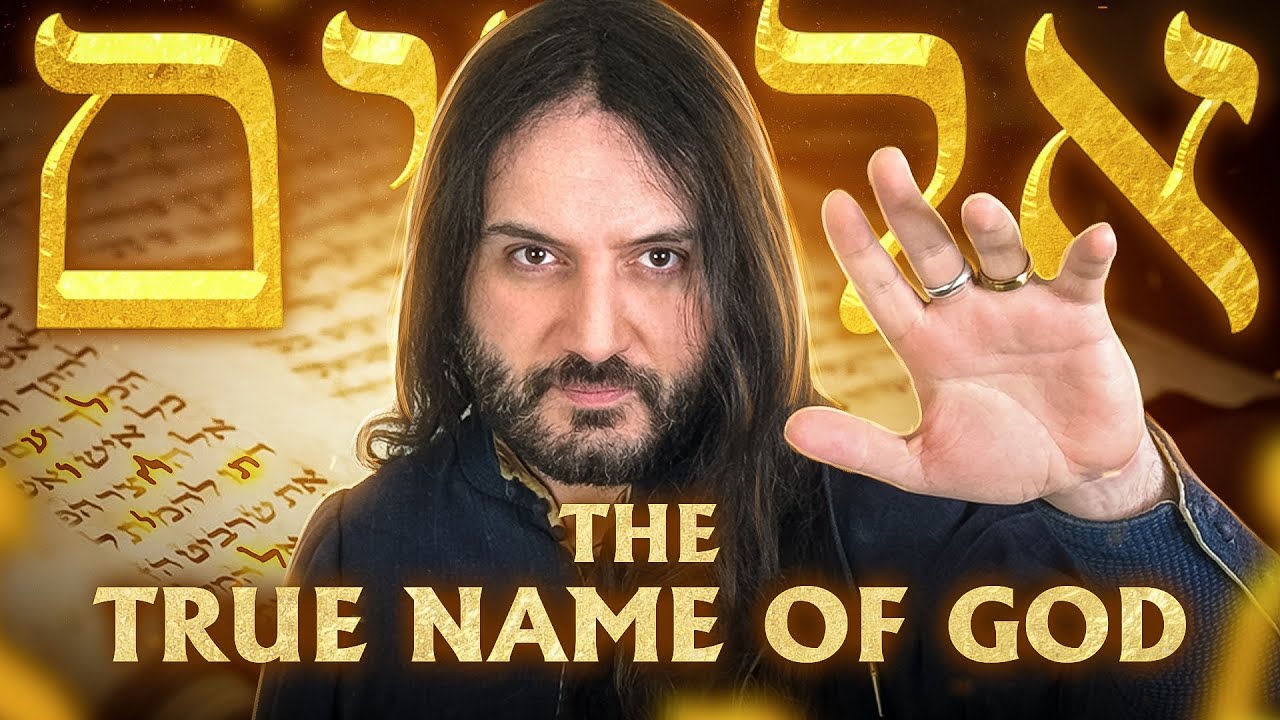
And I use this version for a simple reason: we do not know the Bible as it really is. We know the Bible that we have become accustomed to reading because we do not know the original meaning of the words and the different expressions to designate God, which are revealed when we observe the literal translation. Thus, when we consult the literal translations, we discover that it is not God who is present at the moment of creation, but an expression known as ‘Elohim’.
This same expression ‘Elohim’ is used in the creation of humanity, making a plural reference when stating: “And Elohim said: Let Us make humanity in Our image and according to Our likeness. ” In addition, this expression ‘Elohim’ is accompanied by another expression known as ‘Yahweh’. In the episodes narrated at the beginning of this video, we see that the actions perpetrated by God, such as the prohibition of the fruit of the knowledge of good and evil, as well as the expulsion from the Garden of Eden and the punishment, are executed by ‘Elohim Yahweh’.
This leaves us with a question: who or what is ‘Elohim Yahweh’? To understand this term, we need to move through space and time, across different contexts and eras. .
. This is because we are dealing not with the simplified term as God, but with a compound formed by ‘Elohim’ and ‘Yahweh’. Thus, we need to discover who or what the two are.
And for this, we need to understand the context in which the biblical narratives occurred. The theological answer is that the Bible was inspired by God. But this answer does not serve us in terms of rigorous and logical research, consistent with historical and archaeological facts.
When we turn our gaze to history and archaeology, we get an interesting response. The first civilization in history emerges abruptly in the region between the Tigris and Euphrates Rivers. Before, humans inhabiting those regions were nomads, hunter-gatherers.
When the resources of a region ended, they migrated to another region in search of new resources. According to history and archaeology, these groups of hunter-gatherers are responsible for recently discovered megalithic sites such as Göbekli Tepe and Karahan Tepe in Turkey. According to scholars, these groups of hunter-gatherers moved up to the top of the hill twelve monolithic limestone pillars, weighing about 10 tons each, in the shape of a T, with a height of up to 3 meters to form Göbekli Tepe.
This would have occurred around 7500 BCE, a period classified as Pre-Pottery Neolithic. During this period, history informs us that only hunter-gatherers inhabited those regions. Thus, according to traditional history and archaeology, the Sumerian city of Eridu would have been the first human city founded around 5400 BCE.
However, when we observe the Mesopotamian tablets, classified by academics as myths, epics, tales, poems, and essays, we can perceive another story that unfolds before our eyes. According to the Sumerian King List, royalty descended from the heavens and founded the city of Eridu in a period when humans did not yet inhabit those regions. When Alulim became king, he governed for twenty-eight thousand and eight hundred years.
Reading the text "Enki and the World," we perceive that Enki divided different entities for different functions, thus organizing the world and work, building the city of Eridu, and making it a great power of the distant past. In the text called "Eridu Genesis," we can also read that after the exalted crown of the throne of royalty descended from the heavens, a deity named Nudimmud, considered a leader of other entities, received the city of Eridu. In countless other texts, we encounter an interesting story: non-human entities, classified as gods by the humans who wrote these stories, were on Earth in the very distant past.
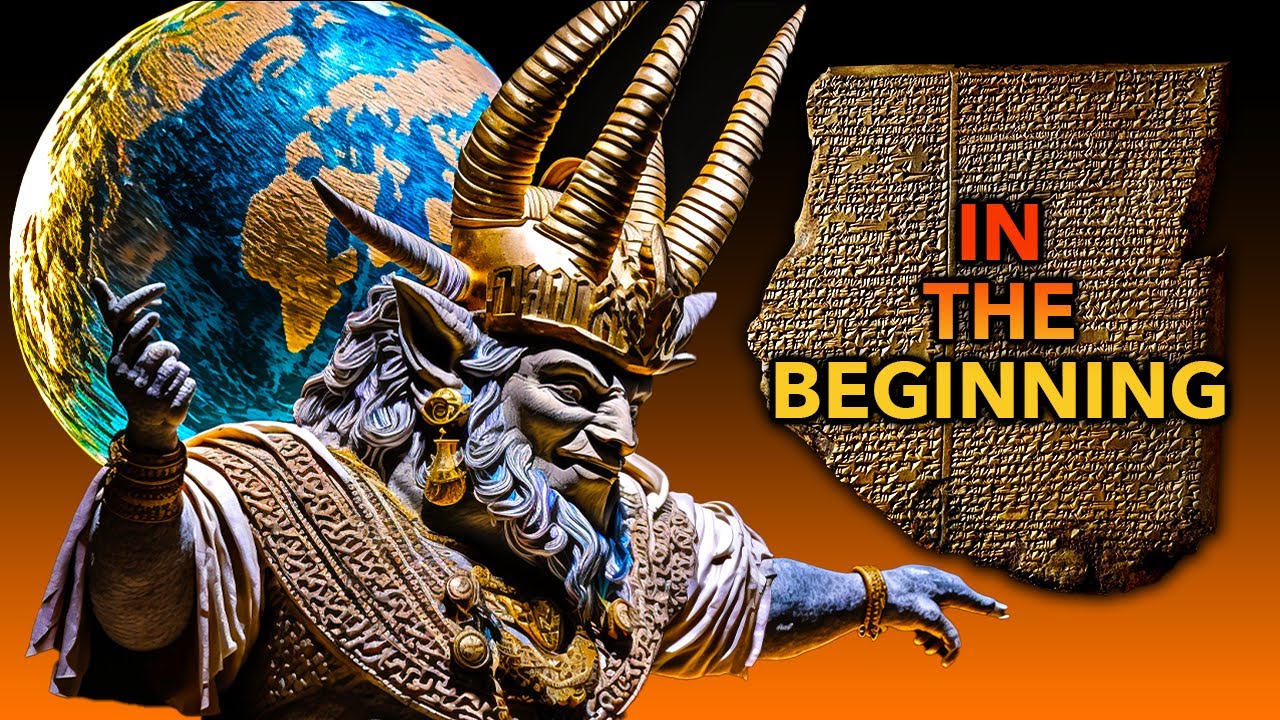
In texts like the "Enuma Elish" and the "Epic of Atrahasis," it is observable that the creation of humans occurs by these gods to replace the heavy work of the lesser gods, who protested the working conditions. In these texts, as well as in another known text "Enki and Ninmah," we observe these gods creating humans through methods that denote trial and error and that seem to reference a scientific method or genetic engineering. Moreover, texts like the "Epic of Atrahasis," "Epic of Gilgamesh," and "Eridu Genesis" bring a consistent narrative of the account of the flood, preceding by centuries the date of the writing of the Hebrew Bible.
In all these texts, however, there is no mention of a single and supreme deity. Instead, the name of gods in plural is read at every moment. Enki and Ninmah create humans, Enlil tries to destroy humans with the flood, Enki saves Atrahasis or Ziusudra from the flood by warning him to build an ark, and then the same Enlil forgives them.
In these texts, it is very clear: nothing is done without the permission and agreement of An for the Sumerians and Anu for the Akkadians, the god of heaven, represented by a simple star and the Maltese cross, a name that denotes, by itself, supreme divinity. The Sumerians, who wrote these texts, attributed all their deeds, teachings, and lifestyle habits to these gods. Their custom told them that their lives were devoted to these gods.
According to various texts and studies, the Sumerians believed that their gods lived in the ziggurats. Ziggurats were huge structures in a pyramid shape. A specific class known as the priestly class could have contact with these gods.
A percentage of each city inhabitant's production was offered to these gods, and in return, these gods provided information, healing, and teachings. Over the years and eras, Kings were also received by the gods, who chose them. And thus, the kings also chose the warriors who should defend each city.
The term "Sumer" is a later term, as the Sumerian people called themselves the "black-headed people. " "Sumer" means "land of civilized kings. " Sumer emerged in Mesopotamia, a title offered by the Greeks, meaning "land-between-rivers," and received this name because Sumer arose between the Tigris and Euphrates rivers, coincidentally in the same location where the Bible places the well-known Garden of Eden.
Sumer functioned with different city-states. Thus, different cities like Ur, Uruk, Eridu, and Nippur, among others, had different characteristics. Each city had its functioning, and for each city, there was a different dwelling of the gods.
Thus, it was the responsibility of the deity known as Ea, Enki, or Nudimmud, the god of water, magic, wisdom, and enchantments, to accompany the city of Eridu; it was the responsibility of the deity known as Enlil, the god of air, to accompany the city of Nippur; it was the responsibility of the moon god Nanna, Nannar, or Sin, the moon god, to accompany the city of Ur, the birthplace of the biblical Abraham; and to the city of Uruk, known in the Bible as Erech, was under the care of Inanna, also known as Ishtar by the Akkadians and Assyrians, the goddess of fertility, love, and war. According to the first human civilization, the Sumerians, their gods taught them everything: agriculture, livestock, social organization, laws, urbanization, schools, writing, commerce, government systems, medicines, philosophy, ethics, astronomy, clothing, buildings, and everything necessary to establish a civilization. And who were these gods?
The same group of gods were: for the Akkadians, the Anunnaki, and for the Sumerians, the Anunna. The Sumerians report that these gods who lived in the ziggurats were very ancient. Their texts tell that they were on Earth long before humans and that it was the Anunnaki themselves who created them.
In addition, the Sumerian texts do not mention any other entity. There is no mention of a supreme deity or a single monotheistic god. In ancient Mesopotamia, there is no reverence for God in the singular, but for gods in the plural.
Various actions in the biblical Genesis can be traced from Mesopotamian texts: the creation of the universe, from the "Enuma Elish"; creation of humans from the "Enuma Elish," "Epic of Atrahasis," and "Enki and Ninmah"; the Flood through the texts "Epic of Atrahasis," "Epic of Gilgamesh," and "Eridu Genesis"; the Tower of Babel from the text "Enmerkar and the Lord of Aratta," among many other examples. For all these myths and texts, the question is the same: is it metaphor and imagined events or real and factual occurrences? Allow me to answer with my opinion: it is about real events; however, we should not exclude from this the mythical and metaphorical thought, as myths present valuable clues about the functioning of life, the universe, and our psyche.
Thus, we do not lose their archetypal characteristics. However, beyond this, even if we can assume that these texts do not represent real events, we know that the biblical accounts can be traced much earlier in history and archaeology. And besides, it seems to be an oral tradition, a story told and retold for centuries and millennia, lived ages and ages before being recorded and documented on clay tablets, baked in the oven, and buried forever after the fire that brought down the library of Nineveh to the ground, to be found only in the 19th century.
And this event, including, is reported in the Bible, in the book of Nahum: "The load of Nineveh; the scroll of the vision of Nahum the Elkoshite. An El, jealous and avenging, is Yahweh; An avenger is Yahweh, and possessor of fury; An avenger is Yahweh against His foes, and a transporter is He of His enemies. Yahweh is slow to anger and great in vigor, and He shall not hold innocent, nay, hold innocent.
Yahweh has His way in the sweeping whirlwind and in the hurricane. And clouds are the dust of His feet. " Lucky was humanity to be able to rediscover its past, for the burned library was still preserved among the rubble.
Although the accounts of the Mesopotamian tablets found in the ancient library of Nineveh may not be real events, for those who choose to believe otherwise, it is necessary and indispensable to logic to conclude that these were the accounts that culminated in the text that is now in the Bible. Curious, however, is to verify the difference in what can be concluded when reading the literal translation and the versions we have in our homes. The traditional version of the passage we just observed does not mention the name Yahweh or El, but simply the name of God.
The burden of Nineveh. The book of the vision of Nahum the Elkoshite. God is jealous, and the LORD revengeth; the LORD revengeth, and is furious; the LORD will take vengeance on His adversaries, and He reserveth wrath for His enemies.
The LORD is slow to anger, and great in power, and will not at all acquit the wicked: the LORD hath His way in the whirlwind and in the storm, and the clouds are the dust of His feet. If Yahweh burned the evidence that could unveil the truth about Him by destroying the city of Nineveh… could there be something in human history that we haven't yet realized and is being hidden from us? Where in the traditional Bible we read, "God is jealous, and the LORD revengeth," we perfectly understand that this is not God, but Yahweh.
This helps us better understand the meaning of the term "Elohim Yahweh. " All ancient civilizations on planet Earth worshipped gods in plural, not a single, individual, monotheistic god. All of them, without exception!
The Christian Bible, which arises from the Pentateuch and the Hebrew Bible, or the Torah, comes from the Hebrew people. The Hebrew people are considered by many scholars as synonymous with the Israelites, although historically they are not the same. The denomination of the Hebrew people dates back to the distant past and times that blend with Sumerian, Babylonian, and Mesopotamian history.
At this time, we need to observe the history of the Hebrews and Canaanites. The name "Hebrews" comes from the Hebrew "Ivrim," which means "people from the other side. " river.
" The term "Hebrews" is frequently used in a religious context, referring to the followers of the Abrahamic faiths. The Israelites emerged as a distinct group in the region of Canaan, and they trace their ancestry back to Abraham, as described in the Hebrew Bible. The Israelites' history is deeply intertwined with the narrative of their exodus from Egypt and their settlement in the land of Canaan, which they considered the Promised Land.
Jews and Samaritans today trace their ancestry to these ancient Israelites, with Jews being associated with the tribes that inhabited the Kingdom of Judah and Samaritans claiming lineage from the tribes that were not deported during the Assyrian captivity. Mesopotamia's legacy profoundly affected the Hebrews both directly and indirectly. If the historical accounts of Abraham, as suggested by some scholars, hold a core of truth, and if this patriarch indeed resided in Ur during Hammurabi's reign, then it is possible that he and his lineage were exposed to Sumerian culture.
The city of Ur was one of the main cities of the Sumerian civilization. This city was under the governance of the Anunnaki god known under the names Nanna, Nannar, or Sin. There is a strong possibility that Abraham was a high priest of the cult of Nanna-Sin.
Furthermore, Nanna-Sin, the moon god, was also the principal deity of the city of Harran. This city is mentioned in the Bible when Abram moves from the well-known Ur of the Chaldees to Canaan. These indicators of Abraham's contact with Sumerian and Akkadian gods suggest that the origin of the Semitic peoples likely dates back to the oldest of civilizations: Sumer.
It is important to note that by "Semitic peoples," we refer to those who descend from one of Noah's sons, Shem, who is therefore the progenitor of both Jewish and Arab peoples. From around 1700 to 1300 BCE, ancient texts frequently reference a group known as the Habiru. This designation is intriguingly similar to the term "Hebrew" found in biblical narratives.
The narratives depict the Habiru as itinerants, occasionally depicted as bandits or mercenaries, offering their services across the regions of Babylon, Assyria, and among the Hittites and Hurrians. By 1500 BCE, these figures, often seen as precursors to the myth of the Wandering Jew, embarked on their journey into Palestine, setting the stage for significant cultural exchange with the Canaanites. The Canaanites, deeply influenced by Mesopotamian culture, had adopted cuneiform writing and the Mesopotamian educational system, embedding Mesopotamian ideals into their way of life.
The Canaanites were a Semitic-speaking people who lived in the region known as Canaan, which included parts of modern-day Israel, Palestine, Lebanon, Syria, and Jordan. The term "Canaanites" is used in the Bible to refer to various indigenous populations, both settled and nomadic-pastoral, throughout the southern Levant or Canaan. Over time, the Canaanites came to be known as the Phoenicians, especially known for their maritime trading and purple dye.
The Phoenicians were highly influential in the Mediterranean, with their impact notably spreading to North Africa, especially in Carthage. The exact origin of the term Canaanites is uncertain, but it could come from an ancient Semitic word meaning "reddish purple," which described the luxurious purple or crimson dye made in the region or the wool dyed with this color. According to the Bible, Canaanites are described in Genesis as the descendants of Canaan, who was a son of Ham and a grandson of Noah.
Noah is the name given to one of Adam's descendants. And it is precisely here where we return to the Bible, in conjunction with Mesopotamian texts. The story of Noah in the Bible can be observed in rich detail in the Epic of Gilgamesh, the Atrahasis Epic, and the Eridu Genesis text.
Noah is another name for Ziusudra, Utnapishtim, or Atrahasis, who was chosen by Enki to escape the wrath of Enlil, who wanted to destroy humanity. This is how we understand what the Bible conceals under the name "Elohim Yahweh. " The term "Elohim" is used to refer to a group of individuals.
The term is plural and could be referred to as "the Elohim," just as we can speak of "The Anunnaki" to refer to the group of deities revered by the Sumerians, Akkadians, and Assyrians. It seems logical to conclude that Anunnaki and Elohim are synonymous. Traditionally rendered as "God" in biblical translations, Elohim, in fact, reveals a pluralistic dimension, both grammatically and contextually.
This pluralistic essence is vividly illustrated in the biblical narrative, notably in Genesis, where Elohim speaks in the first person plural: "Let us make humanity in our image and after our likeness. " Such expressions suggest a collective of beings rather than a singular entity. This plurality aligns with the Anunnaki narrative in parallel Sumerian sources, indicating a deeper, more complex layer of meaning than previously acknowledged.
The term "El," from which Elohim is derived, holds its roots in the Akkadian "Ilu," signifying deity. In the Hebrew Bible, it functions as a general term for deity. However, in Canaanite texts, El is personified as the chief of the pantheon, once a dynamic god of Heaven and Earth.
Over time, El's role evolved to be a more distant, perhaps even retiring figure, along with his spouse Asherah. This transformation is mirrored in the familial dynamics of the pantheon, where El's offspring, the gods Yam, Baal, and Mot, engage in their own struggles and conflicts. This context adds depth to the understanding of "Elim" as the plural of El and "Elohim" referring to the Anunnaki.
Moreover, the term "Elim" bears a profound similarity to the Sumerian god "Enlil," known in Babylonian mythology as "Elil. " Referring to this god as "Elil" could provide insight into the terminology used when initially referencing this deity. Besides, the Anunnaki god that Abraham revered was Nanna, one of the sons of the Sumerian god Enlil.
Could it be that the title "El" somehow refers to Enlil? It is important to highlight that Enlil was the most powerful god in the pantheon, occasionally replacing the supreme god, his father Anu. Perhaps the prefix "El" refers to "Enlil" or "El lil.
" The practice of combining a title such as "El" or "Elohim" with the name of a god was very common. The reason for this is simple when we look at the history and evolution of the term "god" in the singular to denote a deity: An for the Sumerians, and Anu for the. .
. the numerous angels and emissaries throughout the biblical texts. This depiction suggests a structured hierarchy among divine beings.
In conclusion, understanding the nuances of terms like 'Elohim' and 'Yahweh' requires a deeper appreciation of the historical and cultural contexts in which they were used. The interplay between these divine names reflects the complexities of ancient belief systems, the evolution of religious language, and the way these concepts were interwoven into the narratives that shaped early societies. The revelations given to Moses mark a pivotal moment, not just in the context of the Israelites, but in the broader scope of the relationship between humanity and the divine.
As we explore these ancient texts, we gain insight into how early civilizations understood their gods, their creation myths, and the moral frameworks that guided them. Each name, each title, and each story contributes to a rich tapestry of human experience, and studying them allows us to appreciate the diversity of thought that existed in the ancient world. Moses' experience at the burning bush.
This structure supports the notion of a commander with assistants to swiftly implement his directives. It's challenging to reconcile the omnipotent God concept with a being having such needs. Yahweh, known to us as one of the Elohim, repeatedly asserts his exclusivity to a particular nation, not others, as seen in the recurring phrase "the Elohim of Israel.
" This insistence on a unique identity, akin to a pre-modern ID, highlights his role as the Elohim who led Abraham from Sumer to Canaan and tested Isaac with a mock sacrifice, thereby assessing Abraham's loyalty. So, one question arose: Who is Yahweh, and what path did his name take through the people who worshipped him? And if there was a people who venerated him, as the evidence suggests, perhaps we should not see the Bible as a revelation of the true god's name to Moses, but as the revelation of one of the Elohim who offered himself to him and who possibly was known by other peoples.
And, in this respect, there is no ready and complete theory, but different alternatives that involve his name. Substantial evidence points to the ancient recognition of Yahweh beyond Israelite culture. While these claims are debated, other more definitive evidence exists.
For instance, a son of the Hamath king during David's era was named Yoram, a clear compound with Yahweh. Similarly, a later king of Hamath, recorded in Sargon's annals, had the name Ya-ubi'di, or Ilu-ubi'di, another undeniable Yahweh compound. In 739 B.
C. , Tiglath-Pileser III confronted Azriyau of Ya'udi, a region with Yahweh-based naming. Historical figures like Tobiah and Jehohanan, the Ammonites, also bore Yahweh compounds in their names.
These instances suggest Yahweh's familiarity to Semitic cultures outside Israel, challenging the notion of its exclusive association with the Hebrew religion and Moses. The origin of Yahweh's name likely predates Moses. If it was unknown in Israel before him, its earlier usage in a different tribe seems probable.
Yahweh's name, not inherently Hebrew and perplexing to Hebrew speakers, contrasts with the Hebrew term "Yihyeh. " All efforts to explain Yahweh's name hint at its non-Hebrew origins, adapted into a Hebrew etymological framework. Indo-European links to the name Yahweh surface in the variations Jave, Jaho, and Jao, seen in Jewish and early Christian texts.
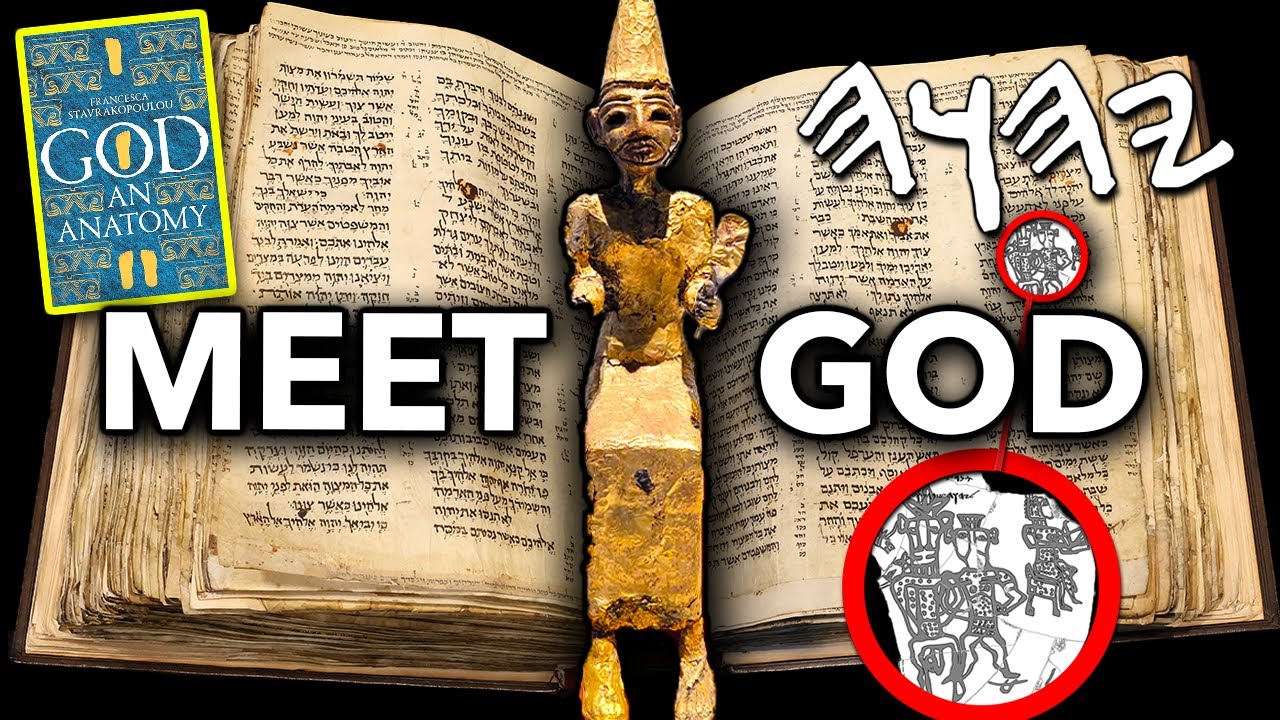
These forms resonate with Indo-European names like Jove, despite no phonetic ties to Yahweh. However, parallels can be drawn to the Sumerian term "dingir" and the Akkadian 'Ilu' or 'il,' suggesting broader linguistic and cultural connections. Thomas Römer, a philologist and professor of biblical history, offers us in his book "The Invention of God" a theory and perspective that shed light on this investigation.
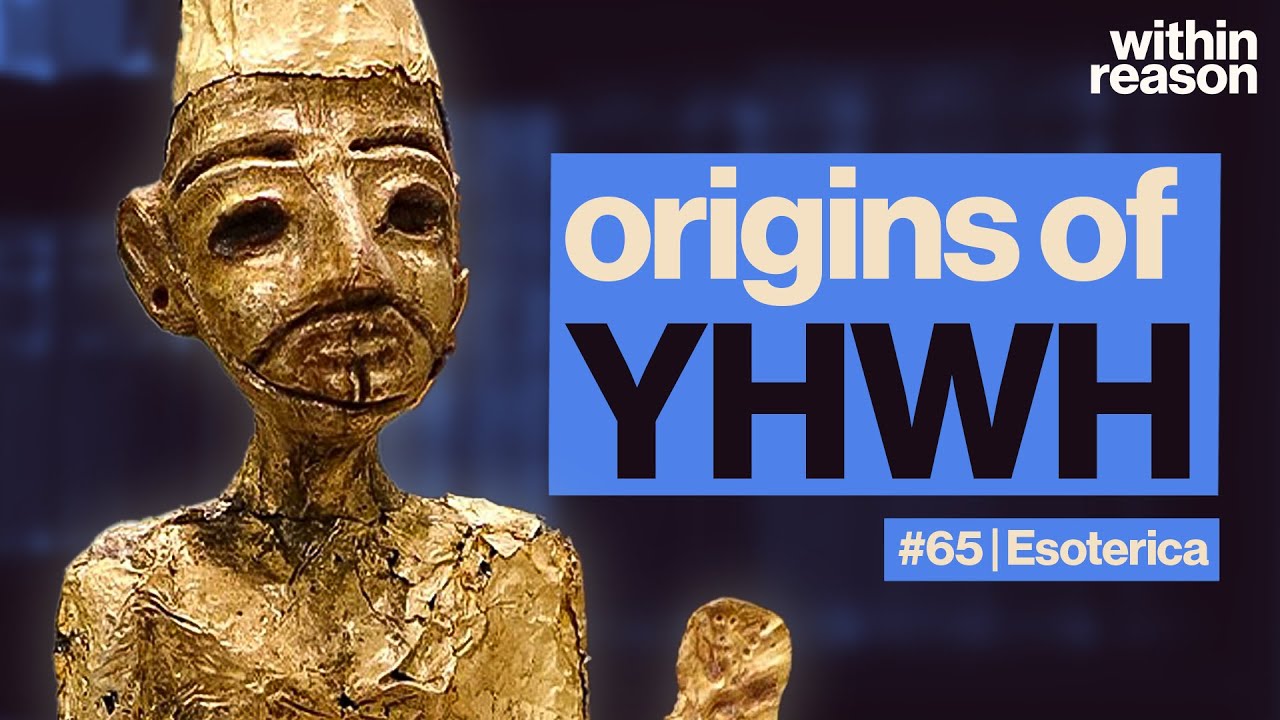
Initially, Yahweh was a somewhat obscure and unknown deity, whose origins can be traced back to the regions bordering Egypt and the Levant. This early form of Yahweh was likely discovered or encountered by Moses in a region possibly referred to as Midian in biblical texts. Over time, Yahweh’s role and representation evolved significantly.
Ancient inscriptions, such as those found at Kuntillet Ajrud, suggest that Yahweh was worshipped in various forms and in different sanctuaries. These inscriptions mention "Yahweh of Samaria" and "Yahweh of Teman," indicating that Yahweh was venerated in diverse ways, possibly linked to specific localities or communities. As the worship of Yahweh developed, he became more central to the religious life of Hebrews, eventually being adopted as a dynastic deity by the early kings of Israel.
This shift marked a significant change in the worship of Yahweh, moving from a deity associated with mobility and the wilderness (symbolized by the ark) to one enshrined in the Temple of Solomon in Jerusalem. This centralization in Jerusalem was a crucial step in the development of Yahweh as the primary deity of the Israelite religion. The representation of Yahweh also underwent significant changes.
While early depictions might have included bovine and anthropomorphic elements, the way Yahweh was conceptualized and represented evolved with the changing religious and cultural contexts. Interestingly, Yahweh was at times associated with a consort goddess, Asherah, suggesting a more complex divine pantheon in earlier periods of Israelite religion. The destruction of Jerusalem and the subsequent diaspora of the Jewish people were important moments in transforming Yahweh from a national deity into a singular, universal god.
The interpretation of Yahweh's lineage in the Moabite Stone offers a fresh perspective on the deity's origins and worship. Contrary to earlier beliefs that positioned Yahweh as a singular god for the Israelites, recent scholarly insights reveal Yahweh's roots in southern Canaan as a minor deity within the Canaanite pantheon. The nomadic Shasu, during their sojourn in the Levant, likely adopted Yahweh into their religious practices.
Further, the Moabite Stone's reexamination brings to light that the Moabites also venerated Yahweh. Mesha's act of reclaiming Yahweh's vessels from the Israelites to honor Kemosh, as depicted in the stone, is now understood not as a conquest over Israel and its deity, but rather as a retrieval of what rightfully belonged to the Moabites. This nuanced understanding shifts the traditional narrative, presenting a complex interplay of religious and cultural dynamics in the ancient Near East.
In December 2019, in the discarded material of an archaeologist, a tablet known as the Mount Ebal curse tablet was found. On the tablet, which likely dates back to 1200 BCE, is the oldest mention of the name Yahweh found: "You are cursed by the god YHW [Yahweh] - cursed. You will die.
Cursed – cursed, you will surely die. Cursed you are by YHW [Yahweh] — cursed. " The scholars affirm: the central pattern of the text is a chiastic parallel: "You will die—cursed, cursed—you will surely die.
" An El, jealous and avenging, is Yahweh; an avenger is Yahweh, and possessor of fury; an avenger is Yahweh against His foes, and a transporter is He of His enemies. Yahweh is slow to anger and great in vigor, and He shall not hold innocent, nay hold innocent. Yahweh has His way in the sweeping whirlwind and in the hurricane.
And clouds are the dust of His feet. The spark of light that dwells within me, and which is part of the universal Whole, greets your spark of light. .
. may the Whole be with us, and may humanity awaken from the deep sleep of blind and disordered worship! Namaste!
If you liked the video, please hit the like button and share it with your friends and family who might be interested in the topic. Consider subscribing. To the channel, so you don't miss our upcoming videos.
See you in the next video.