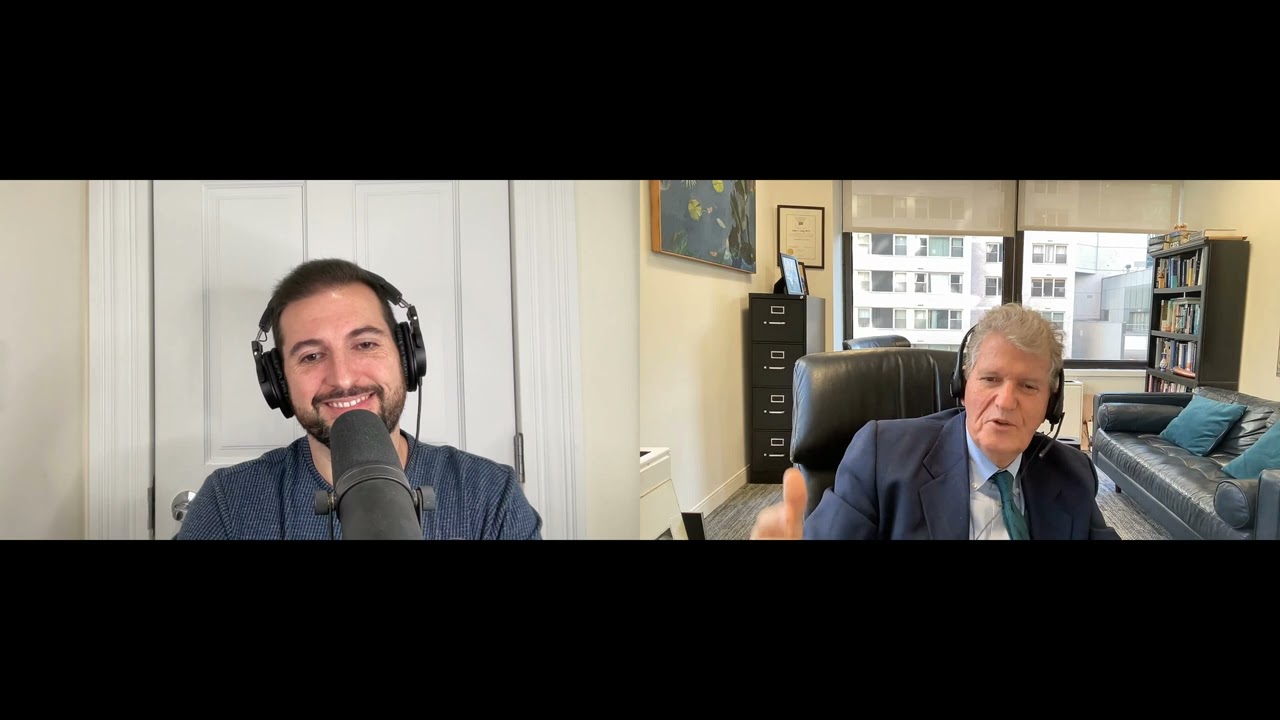
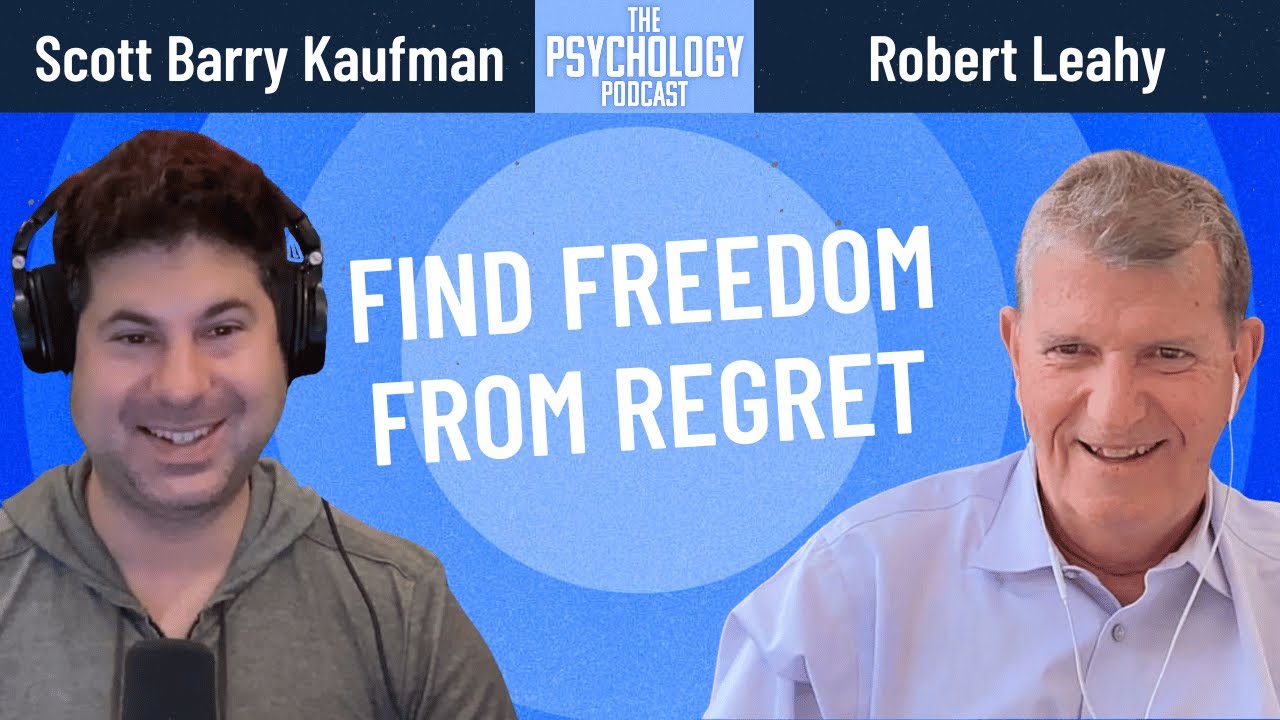
[Music] welcome to the psychology podcast where we give you insights into the line the brain behavior and creativity I'm dr. Scott Barry Kaufman and in each episode I have a conversation with a guest who will stimulate your mind and give you a greater understanding of yourself others and the world we live in thanks for listening and enjoy the podcast so it's great to have dr. Robert Lahey on the podcast today dr.
Lahey completed a postdoctoral fellowship in the department of psychiatry at the University of Pennsylvania Medical School under the direction of dr. Aaron Beck the founder of cognitive therapy dr. Elahi is the past president of the Association for behavioral and cognitive therapies past president of the International Association of cognitive psychotherapy past president of the Academy of cognitive therapy director of the American Institute for cognitive therapy in New York City and a clinical professor of psychology in psychiatry at Weill Cornell University Medical School dr.
Lahey has received the Aaron T Beck Award for outstanding contributions in cognitive therapy and he is author and editor of 25 books including the word cure which received critical praise from the New York Times and has been selected by self magazine as one of the top eight self-help books of all time his latest book is called the jealousy cure learn to trust overcome possessiveness and save your relationship thanks so much for chatting with me today dr. Lakey thanks god it's a pleasure to be talking to you today total pleasure wow that's one of the longer BIOS I read I intentionally I mean I you know selected the bio but I felt like in coming up with it it didn't do full justice if I didn't include all those elements to it I wanted to give the listenership an accurate reflection of all that you do for the field so thank you for all that you do for the field and she so I wanted to start off by saying personally that your book the word cure really helped me a lot during my more anxious moments particularly about 70 years ago what year did the book come out it must have been more than seven years ago yeah I think it came out about $0. 02 toward into 2005-2006 that makes a lot of sense that makes a lot of sense that's around the time I was in England and just suffering from generalized anxiety disorder you know whatever they're calling it these days and and the therapist I was seeing handed me you know your book and she used your book and in her practice and we went through the workbook and it was incredibly helpful so thank you I mean why um you know that book was an amazing synthesis of lots of research from lots of different psychologists well as your own research what's Bernie to write that book before we get into your new one obviously yeah it's sort of an interesting origin of the book my wife and I were in Istanbul Turkey on 9/11 2001 and I was watching the second plane hit the building on CNN and when we got back to New York everybody was worried including me and all my staff so a few months later I thought I could either worry like everybody else or I could write a book on worry and what was interesting is that in terms of contemporary CBT that really wasn't anything out there that reflected you know the research and the theory and the clinical tools and CB tape I'm worried that I thought you know would be helpful to people so that was sort of the motivation to write it yeah it was amazing there was really nothing like it out there so it really did break some ground now there's so many books and meditation and how that your cures your anxiety but I think your book went a bit deeper then it's not just saying just meditation and saying they're always here kinds of it there's things so I want to back up second so I noticed that you did your PhD at Yale who did he study with a Yale well he study with a number of people it study didn't with Sigler with Kissin or even child time Achenbach whole bunch of people so yeah I have a pretty general background through a lot of different areas which I tried to integrate in my writing I think a lot of the work that people do in clinical psych often does not reflect the research and theory from other areas of psychology so you know for example there's a lot of research on social cognition and social psychology was a lot of research on cognitive processes that affect decision-making that know people in fact behavior therapy often don't seem to talk about and to integrate into their work yeah I couldn't agree more and you know it's so interesting that you mentioned at Ziegler I did my PhD at Yale as well and he was there and I found out you know he's still kicking this guy is amazing this guy is like expands how many generations of students yeah yeah I think he's he's probably been at Yale since maybe the late fifties I know he's been there for a long time yeah so yeah how's your work informed by like developmental policy for instance well I don't know about policy but my work just development in general yeah yeah I mean looking at for example I'm interests and how people how people learn about emotion and other kind of rules they have about emotion you know which emotions are okay how do you express emotions how families teach people about emotion I've certainly moved away from it from a developmental orientation that Ziggler and acaba can Susanne order will help me understand back many years ago fair enough but you know they planted some seeds yeah well you know actually actually what's interesting to me is that I was it was a time I was very much interested in the piaces approach and the child construction finality whatever it is I thought that next work was kind of very much in the Piaget Dean tradition now looking at individuals destruction of depression and anxiety you know how people's thought processes affected what they felt and what they did and so when I got interested in the issue of jealousy I thought well let me take a look at how the jealous person constructed the world wouldn't the assumptions they have apana they process information what are the rules for themselves and other people so I guess that sort of constructed this model has influenced my thinking in terms of cognitive therapy doctors here yeah I can certainly see that and I'm thinking of his you know ideas of accommodation seem relevant as well for some reason you know in terms of importance of kind of having to adapt and change your cognitive structures sometimes radically sometimes our you know I like if I'd have a really good meditation session I find it fascinating that when I opened my eyes the whole world just looks different than it did ten minutes ago where I would say what's that all about how is that possible I find it so fascinating phenomenon yeah yeah yeah the thing that's interesting is that if you get in the head of somebody who's anxious a lot of them exciting makes sense in other words if you adapt the assumptions that the anxious person has and you collect information in the manner in which they collect information we know which logically follows that things are going to be catastrophic the cognitive approach in other ways is a very much an empathetic cognitive strategy to try to understand how things make sense heightens hopelessness makes sense how the suicide makes sense and how to make sense of the alternative yeah a jealous person may start off with some assumptions that people can't be trusted that people are going to betray them that they have to constantly hyper-vigilant and that if anything bad happens then these relationships gonna fall apart so if you approach any intimate relationship with those assumptions you're gonna probably end up being jealous and distrustful they're like some to use the word assumptions they're also like the world views or they're like their beliefs they're yeah I'm trying think about what they really are these kind of like beliefs that we've internalized through lots of you know interaction of processes so yeah but you're absolutely spot-on and changing those beliefs can literally change our outcomes of our relationships and the linkage the commonality there between your word cure book and your jealousy cure I mean it's a lot of parallels and some overlap in terms of this sort of non-judgmental acceptance so to speak of the situation seem to be in common across both books this could be a whole like really famous series like Chicken Soup for the Soul err but I mean you could just go every year you could have a different cure like the sexual cure could be the next one that would sell a lot of fun a lot yeah well when I begin thinking about your jealousy there is a number of patients who tend to struggle with jealousy and I thought gee you say is there something I can recommend and I couldn't think of anything I could recommend to read that Norma from a contemporary CBT approach and then I became looking at the research I mean there is research by evolutionary psychologists like David buss and other people on jealousy there's research on what factors make people more glad to be jealous but in terms of contemporary CBT there really was very little out there if anything I mean there were kind of somewhat naive approaches that's sort of equated jealousy with low self-esteem and it's not really clearly related to look self-esteem you could have high self-esteem and feel jealous like you can think no one can treat me that way so you can be assertive because you're feeling jealous but there really wasn't anything out there and I think it was like a blind spot there are certain kinds of emotions Scott that I think you know people kill people over or they really have difficulty with and like emotions like jealousy or envy or ambivalence or boredom or dissent meant or the desire for revenge and there's very little of the CBT field that addresses these kinds of emotions that people are told they should not feel that way my view is that all emotions have evolved because they're useful in certain contexts and jealousy is one of those emotions that from an evolutionary point of view is quite useful oh that's so interesting so is it still useful from a proximal point of view like you're not advocating to get rid of jealousy completely right no I think that it's unrealistic to think that people are gonna have happy emotions all the time that they're gonna feel good all the time my old friend David Burns sort of excellent book called feeling good I'd like to write a book called feeling everything which i think is kind of reflect the reality of human existence that we're going to go through life or have feelings like NZ where we think that other people are getting ahead feeling that jealousy that people are threat to our relationship we're gonna have feelings for boredom tense anger shame guilt and all these emotions and to sort of tell people I'm not saying anybody is saying that that's not saying that that CBT says you shouldn't have nice emotions a lot of times when people had these emotions other people say oh you shouldn't feel that way and that's invalidating and that it makes people feel bad about having an emotion that doesn't feel good it's like feeling bad about feeling bad yeah and the whole shoulds just should be taken out of the vocab with everyone's mental lexicon right right well I think I just did here what I just said I just said right the words should should be taken out it'll be taken out right yeah I mean I think like my view I mean some people think Oh like shame and guilt those really bad emotions but think about it this way let's imagine if you were single and you started dating somebody and she said yeah really like esky really terrific don't spend a lot of time with you but I think I should tell you that the module in my brain that allows me to have feelings of shame and guilt is missing I'm incapable of shame and guilt I don't think he would trust the person so these emotions have some adaptive value if you like if you believe that people you work with would feel guilty or ashamed if they betrayed you you're more likely to trust them if someone's good at convincing you that they feel guilty you're more likely to trust them in the future jealousy if somebody said to you to have an intimate relationship someone said to you you know something go out and have sex with anybody why I would be jealous I don't think he would trust the person some people thinking and some some may think all I want to all that freedom and it sounds good until you begin thinking what would it mean if somebody actually say that to you would probably mean that they didn't love you you weren't special to them and that they wanted freedom to pursue other options so the emotion of jealousy is one of these disparaged emotions and of course it gets to the extreme with people for example jealousy is the leading cause of homicide and more couples and the man kills the woman it's overwhelmingly believe in cause it's and so jealousy is a killer and people kill themselves over jealousy so obviously it can get extreme but you don't want to say I want to get rid of jealousy completely right because jealousy in a way is a way of no way taking the temperature you can have a temperature that's too low or too alright hi everyone I just wanted to take this moment to thank you for your support of this podcast over the years it's been a lot of fun doing this podcast for over the past three years if you'd like to further support the podcast I wanted to let you know a few things you could do to make it a better experience for you all first I'd really appreciate it if you could subscribe to the show on iTunes this would help make the show more prominent on iTunes and increase our listenership I believe you can subscribe both on your phone and on your computer second it'd be great if you could give the show a rating and review in iTunes I definitely read all the reviews another thing you can do is donate some money to the show like under the Psychology podcast calm and clicking on the link support the podcast at the bottom of the page that's the psychology podcast calm some of you had been noting that the audio quality was less than optimal thanks to the donations that we've been receiving I'm really excited to announce that in the next couple of weeks we're gonna have a completely revamped audio structure to the show and you should notice a huge improvement in the audio quality thanks for your patience with that thank you for your support of the show over the years it's been a real labor of love for me ok back to the show just going back to the evolutionary approach a second they make a big do about sex differences in what they're jealous about like the content of verse cheating versus you know sexual versus emotional intimacy etc so you make that distinction in your book yeah so that's an important distinction of course you know both men and women are jealous about those things but women tend to be more jealous about emotional closeness it mentioned to be more jealous about the sexual infidelity so from an evolutionary point of view the model is called parental investment theories developed by Robert rivers at Cambridge back in the 1970s that the apprenticed matteri is that the woman always knows the babies were a baby the man doesn't really know for sure so I was like you know he has the maybe baby he's like quite sure but this is a lot that's his baby so the male is very very threatened by any sexual infidelity with a female because you know he doesn't his evolutionary adaptation he's not going to want to protect the or take care of the genes of offspring that are not his offspring so I mean it sound like a very dark view but evolution is about competition about survival so now the female wants to have the part of the male and so if the male is directing his emotions toward another female and the support and his resources and his protection then he's not going to be available to take care of the offspring so it's really about the genetic fitness of the pattern to particularly investment the genes in the next generation yeah I got the that distal perspective but there's huge individual differences in you know people who were jealousy is an issue for them like it's whether it's a hair-trigger sort of thing for them or not attachment style seems to be relevant there yeah absolutely anxious yeah so you know what the research shows is exactly that that individuals who have an anxious attachment style are far more likely to be jealous but what's also interesting Scott is that people differ in terms of they feel in a close relationship some people with want to have a close relationship and some people don't want to have a close relationship so people who have this sort of distant scene in an intimate relationship who don't want to be close or far less likely jealous this interesting research showing that they actually make a stable long-term relationship the anxious and the avoidant even though there's constantly drama in the relationship it lasts a long time because each one is kind of like what the other person it's kind of an interesting dynamic there when you mix the avoidant with the anxious attachment person right exactly I've actually seemed it sure yeah I have you have a the same particular case thinking of a woman who wants a very close relationship and who wants to at constant contact with her partner and a man who values freedom and spontaneity doesn't want to be tied down so her approach to try to connect with him and be close to him triggers his desire for autonomy pushes back which then triggers for jealousy and right anxiety vice-versa yeah yeah so it's a self-fulfilling prophecy the more she pushes the more he avoids but interestingly the research suggests that kind of relationship works it works better than an avoidant avoidant one doesn't it never works but an anxious anxious a that works better than even an anxious anxious one for instance yeah so it's just interesting to you know think how these can come together so having a hair-trigger for jealousy is that correlated with a hair-trigger for rejection sensitivity well you know what happens with some people is that they had these triggers like if you know the trigger could be you're at a party and your partner was talking to somebody else and think it's a suddenly trigger the idea that they're going to chase after that personal events or the trigger could be retrospective jealousy it could be your partner is thinking about or talking rather talking about an experience with a former partner and that can trigger it and so I think part of it Scott is that people who are prone to jealousy often have rules about relationships a lot of these are really perfectionistic rules about the way people should be for example one rule that people have said I should be the only person in the world that my partner finds attractive first several billion people the world started to imagine the only person in the world that's attractive I wonder if I'd partner to find somebody attractive we're going to leave me or if my partner had a good time with somebody else in the past that means they can never be happy with me or that I should be interesting and exciting to my partner all the time or I should know everything my partner was thinking and some people equate trust with this sort of like existential merging of two people which is just so unrealistic as people push for more and more you know demands for certainty and interrogate and control they drive to the other person away but personal pushes back what's interesting Scott is the kind of things that the target of jealousy might say you know to try to defend herself or himself let's say for example if a man is feeling jealous and the woman says no well you shouldn't feel that way you should trust me in order otic that's your problem that don't bother me you must have low self-esteem all of these sort of dismissive and critical in the contemptuous statements actually feed into the jealousy because jealousy is about a threat to attachment so if the man is expressing his jealousy and when partner is rejecting him that this sort of feeds into his sense that his attachments threatened and then he upses his demands for certainty and reassurance which then through the prospect it's an interesting dynamic to see one of the problems I think that people have in their relationship is the difficulty in accepting the emotions that the other person has so if you keep telling your partner they shouldn't feel jealous they're jealous he's not going to go away I've never seen somebody say well my partner told me to stop feeling jealous I might jealousy just disappeared alternatively if we validate the person say - you really understand you feel that way you must feel really connected to me I feel really flattered that you care enough and that to me that much that must be a difficult emotion that you're having you should feel free to talk with me about it I can accept those feelings I care about those feelings I have passion or you in other words if you go into like an attachment compassion validation mode of the person who tell us that's going to be reassuring in a very emotional fundamental way they still may feel the jealousy but they also believe that you have the room and you're accepting those emotions and it you still respect them so they're not rejected as that it's just like having a baby that's crying and yelling at the baby that's not crying that never works if you pick up the baby and just sue the baby the baby feels that there's a secure place so in some ways even though my approach is cognitive behavioral it's very much three months she'll grounded an attachment or that's great and yeah they do seem one to be such good bedfellows so to speak yeah there is a I'm just sort of like and right now but there is a recently developed training for attachment style for couples to be more sensitive to show that he's good like emotion focused there appears I think that have you heard of it right right you're thinking about listed green birds at work I think that's thinking about this emotional focus therapy which is good and also John Gottman's work yeah ganas yeah quite good I think one of the fundamental things in a relationship is the sense that the partner really cares about their feelings and when a partner expresses the jealousy thing I really feel jealous when you're flirting with that person we tend to do when somebody says that we tend to become defensive and we go on the counter-attack which you know may be a perfectly human thing to do but what it does is it feeds Winton's jealousy because it makes the person feel more insecure we have a very hard time normalizing and validating emotions that a person has when we feel the person's angry with us we want to win we want to defeat them we wanna even humiliate them and that just makes the jealousy insecurity worse David buss one of his works describes research where they found that couples were they had issues about jealousy were more likely to stay together five years later and if it stands to reason is yeah because jealousy indicates you care enough you know right like if you think about people who have very superficial relations you know just shallow one-night stand no dry tinder whatever those don't lend themselves to by jealousy so you know people feel they have something invested and they care enough for more likely to express the jealousy and sometimes people will intentionally try to get the partner to feel jealous that sort of test them out to be care enough you know to really care enough to be jealous and you know if the person doesn't you know Purcell you can do whatever you want I don't care yeah it's thinking well maybe he's not that into me maybe was the Cure that much Wow you know steven pinker in how the mind works refers to love as a doomsday device I wonder if jealousy is a doomsday device as well to help kind of do you know what I mean like evolved alike as a binder as a way of protection if like someone like the hot guy next door moves and you know that you don't just go on to them right yeah so there's you know I think I think I think the reality is that we do live in the competitive world and you know as a result I think one of the most universal emotions that really hasn't been examined that well the cognitive behavioral field is the feeling of ambivalence and you know I've seen so many people who struggle with ambivalence because they think they should not be ambivalent and you know like some people have this kind of idealized view of of love that it should be like Romeo and Juliet think about like you're 15 years old and I still be roaming your Juliet say oh my god this is wonderful how wonderful to applause all idealized is so perfect and everything but can you imagine like if you and I sat down and we wrote a television script for the Romeo and Juliet television series that would be about Romeo and Juliet when they're in their 40s living in Queens New York and they're both quite a bit overweight and a little bit pissed off at each other yeah yeah yeah this idealize romance right ending on for more than a couple of weeks probably yeah that's a really good point I mean is it dopamine get saturated no matter what it is eventually you know yeah in and so what what happens I think you know I think people have a you know I think a lot of people have this kind of emotional perfectionism like I should feel excited all the time my partner should never be attracting anybody else and that wasn't she well if it doesn't is gonna fall apart as opposed to thinking that at a patient years ago who said he was divorced and was starting a relationship with somebody was a bit rocky and he say so Bob what's the key to a good long-term relationship I said well let me tell you you know about ten years ago there's still a lot of wind surfing and I was down in the Virgin Islands of st.