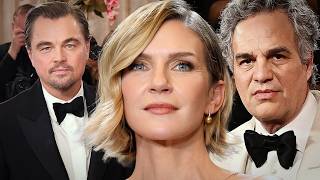
We came, we saw, WE KICKED ITS ASS. >> Bill Murray was 33 when he shot Ghostbusters. That's >> right, boys.
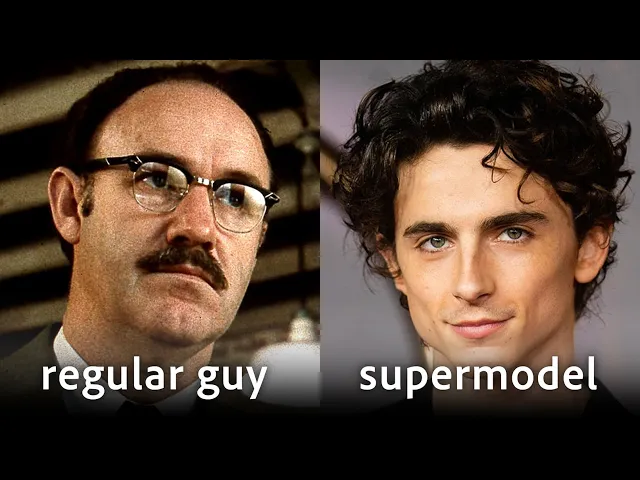
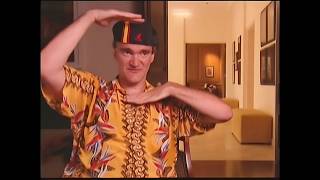
>> And in the 70s and 80s, this is what actors in their 30s and 40s look like. But something has changed since then, because actors that age today don't look like this anymore. >> I LOST MY HAND.
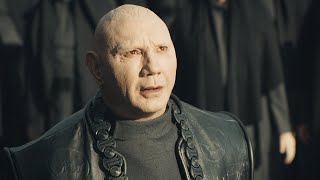
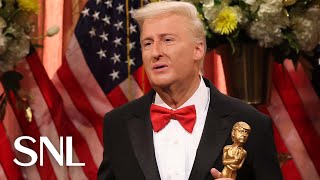
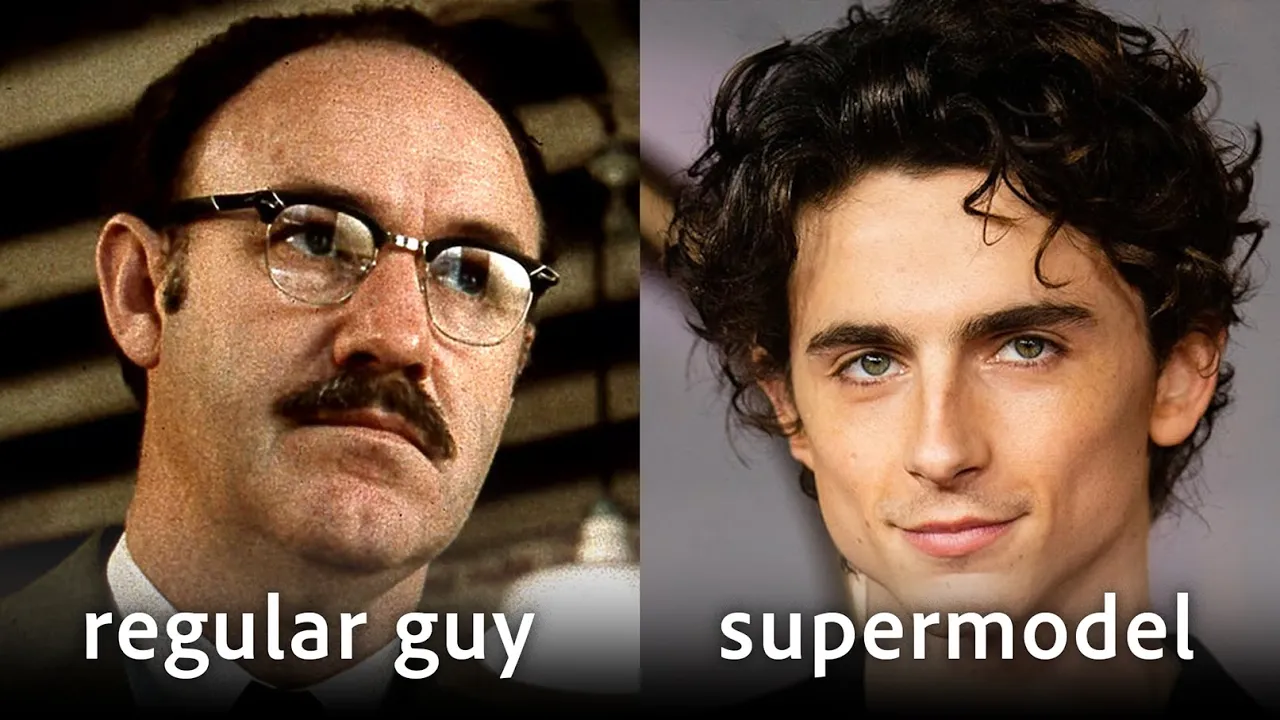
>> THEY LOOK LIKE this or like this. Actors today need to have great hair, perfect skin, and be in flawless shape. >> They don't look like regular people anymore.
They look like supermodels. This isn't every single actor, but it's clear there's been an overall change in how A-list performers look. And it's also how they're shown to the camera, like in low lighting and with more vibrant colors.
They're surrounded by other people and on an actual set rather than a green screen. >> Everything's under control, situation normal. >> You're probably going to say this is because of a wider trend of movies looking bland and flat nowadays.
And things like bad lighting, dull colors, and the Netflixy look make basically everything in modern movies look worse. And also, we can't ignore cosmetic surgery. >> My plastic surgeon always said, >> but if you look at movies from before the millennia, it's hard to deny that the actors looked more like regular people.
>> Keep it still back there, lady, or else we're going to have to to shoot you. >> Okay, so the word ugly is a bit harsh, and I'm not trying to objectify or body shame anyone. Most people who are cast in movies aren't unpleasant to look at.
I just mean that they have bodies and faces that could theoretically belong to a normal person without the aid of personal trainers, [music] dieticians, and plastic surgeons. They look like normal everyday people you could see walking down the street. >> I need a man who has powerful [music] friends.
>> Bruce Willis, Bill Murray, and Jack Nicholson aren't badl looking guys, but they have a sort of everyman appeal that we just don't see in today's stars. >> Saw it on the television. >> And a big part of this is that today people just generally look younger.
>> Physical age 26. There's a great Vsauce video from a few years ago that goes into this in more detail. Essentially, the clothes and overall style has [music] changed and combined with better medical care, nutrition, and less smoking, people are healthier and better looking.
>> Guess I started smoking when I was about four. >> So, here's a few age comparisons that highlight this in action. >> My mom was already dead from lung cancer.
>> Gene Hackman is 44 here. Actors in their mid-40s today look like this. >> Are we soul mates?
>> Or like this. There's quite a big difference. >> Just a little slap.
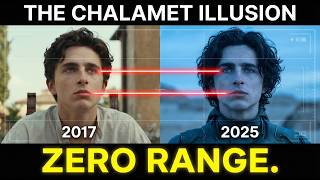
Sylvester Stallone was 30 when he first shot Rocket. Look at his face. >> A comparable actor today would be Timothy Shalamé at 29.
You >> play very different types of characters. If we want to be fair, let's compare two all American action stars. >> [ __ ] >> Glenn Powell, 35 in Twisters, and Bruce Willis, 33 in Die Hard.
Robert Patson was 35 when he played Batman and Michael Keaton was only 2 years older. >> Bruce Wayne, >> are you true? >> Well, Katon has visible lines around his mouth.
His hair is receded a bit and he has a subtle 5:00 shadow that doesn't feel purposeful. But Patson, even though dressed up to look sleepd deprived and reclusive, has a chiseled jaw and perfect skin. Overall, he looks a lot younger.
>> That's interesting. >> But there's something more at play than actors simply looking older in the past. >> Frank, they're not here for you.
>> It's the kind of faces that have changed, too. >> Weird Al Yanovic is on the plane. It's the everyman look, receding curly hair, or imperfect skin.
And it's because of these distinct [music] features that characters had a stronger sense of personality just by looking at them. >> Do you have any hobbies? >> I collect spores, molds, and fungus.
>> But before we continue, let's take a moment to thank today's sponsor, Opera Browser. With Opera's integrated tools, I can easily organize my research. I just press command slash or control slash, and a command line pops up.
It can answer questions, generate or recognize images, and even group my research tabs. Look at this. Group all of my film tabs.
And just like that, Opera's tab islands are formed. Each article neatly organized by the films it discusses. I can also create tab islands manually by dragging one tab over another and even expand or collapse them to stay organized and save space.
When I'm comparing two articles or watching a behind-the-scenes clip, I can use split screen. Simply drag one tab beside another. Now both pages stay open side by side without jumping between multiple browser windows.
If I ever lose track of which source I open last, tab traces quietly mark the most recent ones with these lines. A small detail, but surprisingly helpful when juggling multiple tabs. The darker the underscore, the more recently I visited it.
Opera is a browser that makes working on videos like this feel composed. You can download it for free using the link in the description in the pinned comment. And now back to ugly actors and aesthetic personalities.
Do you have any hobbies? >> In the opening of Once Upon a Time in the West, we meet three characters who don't survive the end of the scene, but they all have an interesting look. Al Mullik has long hair blown across his face and vibrant blue eyes.
Jack Elam has a long eyebrows and beard that goes down his neck. And then Woody Strode looks completely different with a square jaw and a piercing look. From their faces alone, we can get a level of understanding to their character.
It's hard to put into words, but we get a feeling that this guy is going to behave differently to this guy and then compare them to the station manager. We can understand the dynamic just from the way they look. [laughter] >> You can say this is down to great casting, and to some extent it is, but ultimately it's just these guys' faces that carry the entire 15-minute opening.
>> Oh, well, I suppose it'll be all right. >> It's the same with the heads of the five families and the Godfather. Sure, they all look like mob bosses, but they have small differences in their appearance.
>> You're all grateful to Don Corleone for calling this meeting. >> How they style their hair, the type of suit they wear, and how fat they are all goes a long way to tell us about their character. >> He had all the judges and politicians in his pocket.
>> And this isn't just limited to side characters. Even the leads in the past had a more interesting look. They didn't all look like supermodels.
>> They look like 40 mi of rough road. >> This is people like [ __ ] Spacer, Leslie Nielson, and Sher. They simultaneously look like a normal person, but also have a unique look.
>> Completely normal individual. >> Kurt Russell in Escape from New York was big, but in shirtless scenes, his abs have little definition. Bruce Willis was handsome, but his receding hairline and modest muscles retain a sort of everyman look.
And compare how Hugh Jackman looked in the first X-Men film in 2000 to Deadpool Wool. [screaming and groaning] So, what is the effect of this? What is the effect of seeing these regularl looking people on screen?
And how does seeing interest in faces work to make a movie better? Let's take a look at a few examples. >> What have you DONE TO IT?
WHAT HAVE YOU DONE TO ITS EYES? >> THIS IS Mia Faroh in Rosemary's Baby. >> I'm Rosemary Woodhouse.
>> As the film progresses, she cuts her hair shorter and begins to look paler and thinner. Visually, we understand the transformation the character is undergoing. >> You're not changing.
I just want to go to Dr Hill and get a second opinion. >> Would this work if she was played by someone like Margot Robbie? I don't think so.
It's Mia Farah's unique look that helps make the character feel like an actual person that could exist somewhere, which makes us empathize with her more. >> Dr Hill, please. >> It's the same with John Travoltter in Blowout, Shelley Dval and Jack Nicholson in The Shining, and Malcolm McDow in a Clockwork Orange.
>> It was [music] horrible. >> In Star Wars, Luke and his family look like fairly ordinary people, whereas Grand Moff Tarkin in the Imperial Officers have a much more austere look to them. >> Fear will keep the local systems in line.
In the 20th century, the pool of actors [music] to choose from seems to have been much more aesthetically varied than it is today. There was actors with big noses. >> I got it.
Go ahead. >> Big foreheads. >> He's going to prove it to the whole world.
>> Heavy set eyes. >> Did you know that? >> And receding hairlines.
>> But you and me together, that'd be tops. >> We subconsciously infer things about people's personality based on their features, which in turn helps them create a richer character without much heavy lifting. >> Mentally, you picture my dog.
In Taxi Drver, Dairo's buddies look like real cab drivers you could actually find in New York. This guy, completely bald on top, but with a flow at the back. This guy with his scruffy beard and round glasses.
And even Dairo himself with his 5:00 shadow and redness around his eyes. If he got into a cab and this was a driver, you wouldn't think twice. >> Did I tell you [music] to do that with the meter?
>> All of these actors look like they actually belong in the setting rather than just walking out of a dressing room. >> Can I talk to you for a second? >> And this is environmental immersion.
And there's the bell for round one. >> In 1976, after Sylvester Salom went 15 rounds in Rocky, his face was soaking wet, his hair sticking to his head, and he's covered in blood with his face fully contorted with bruises. [screaming] >> But in 2015, after Michael B.
Jordan fought in Creed, he's just got a subtle sheen of sweat and a small bruise around one eye. >> Stop. It's me.
At the end of Spider-Man, Tobey Magcguire's suit is ripped to hell, revealing his bruised, dirty, and sweaty face in this chaotic tear across his mask. >> Mr Osborne. >> But for Tom Holland, he's got a couple of cuts that seem very intentionally placed, and his suit isn't ripped at all.
His mask hasn't been torn open, but just neatly taken off. >> Hey, Blondie. Water.
>> After Clint Eastwood walked 70 mi in the desert, his face is completely scarred and burned. We can barely recognize him. But today, there aren't many examples of actors looking scarred like this.
It seems like everyone has to look perfect all the time. It's as if somewhere along the way, almost every actor has taken the substance and transformed into a kind of picture perfect version of themselves. Not a single wrinkle, not a hair out of place, and completely smooth skin.
The best we'll get is maybe a small smear of dirt or a tiny cut. And they look great. But when everyone looks perfect, things start to get a bit stale.
And sure, this isn't every single actor working today. You can still find distinct looking people, but it seems like it is the majority of them. In an article from 2021, Raquel S.
Benedict likens our body to become an investments in which we have to maximize our value through looking good. We're reduced to a collection of features like perfect skin or a strong jawline. The body is no longer the vehicle through which we experience joy and pleasure, but a status symbol that needs to be constantly presentable to the world.
>> Put your greasy tits away, you pining [ __ ] For actors, this is taken to the extreme, especially for women. They can never age or show any imperfection. They need to be a bankable star, and a big part of this is looking good on camera.
>> Pretty girls should always smile. >> Let's take hairlines as an example. Sure, Andrew Garfield probably got a hair transplant because he thought it would improve his appearance, but also because it's better to have a smaller forehead as a leading man.
And with modern technology, if you can fix this, why wouldn't you? >> Yes, Sergeant. >> This just wasn't the case in the past.
Hence a wider spectrum of hairlines and a bigger aesthetic variety. >> I wouldn't touch one hair on his god damn rule. >> But today this is becoming increasingly noticeable and more and more people are commenting on it.
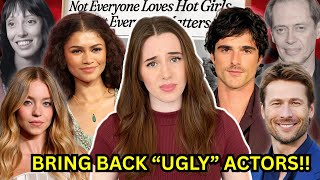
And here are a few things they've said. [music] I miss actors having normal teeth. And then a picture of Tom Cruz from The Outsiders.
>> Check this out, buddy. >> It's so annoying and just plain boring that everyone has the same teeth, the same body. I miss people looking different and interested.
>> And make sure my hair is perfect. I watched Invasion of the Body Snatchers last night and it stood out to me that while Southernland is hot, he's also clearly in his 40s. Like, if Hollywood wanted to make a movie of a 40something A-list to playing a middle-aged health inspector, who would they cast?
Ryan Reynolds, Chris Evans? >> I got this. >> We no longer have leading men who are good-looking and charismatic, but also don't look like they wake up at 5:00 a.
m. to hit the gym. On Twitter, someone was talking about the 1974 movie Taken of Pelum 123.
They said it's weirdly invigorating to watch a movie where every actor has an incredible face and they all look normal, like no veneers inside. >> This is supposed to be a democracy. >> Old actors have more grace than current ones.
We can't have a truly accurate cast for the Beatles because they just don't make weird crusty looking young men actors like that anymore. I miss casting movies that weren't all A-listers or trying to [music] be. Sometimes just having normal ass people in your movie makes it feel more realistic.
To which someone replied, convinced this will be the downfall of the Odyssey? Which brings us on to perhaps a good label to put on this kind of perfect looking alist that we see today. iPhone face.
It's hard to define, but I think it's basically this kind of pristine look that most actors seem to have. It's why some people look out of place in period pieces because they've got a modern haircut or their teeth are too wide. They're striving for a kind of look that didn't really exist before the 21st century.
And this speaks to a kind of aesthetic that many modern movies have. They're perfectly lit, the set perfectly designed, the actors in perfectly clean clothes, but this kind of perfection just makes it all look boring. It's the messiness of a normal kitchen or the dirt kicked up from horses, the color of the set, and the way it's lit.
We're losing a sense of personality, not only in how actors look, but in how films in general look. >> Digital cinematography has given everything the same kind of Netflixy feel. Look, this isn't every movie, and it's not every actor.
If you look for it, you can find interesting looking people in modern movies. But this whole change in how actors and by extension movies in general look is a natural result of an industry that's afraid to take risks. Movies need to make money, so they minimize anything that could theoretically make the film less successful, but in the process remove what makes it special.
Both films and actors aren't ugly anymore. They're not dirty anymore or bruised anymore. No one looks normal, and everyone looks perfect.
And this is a problem.