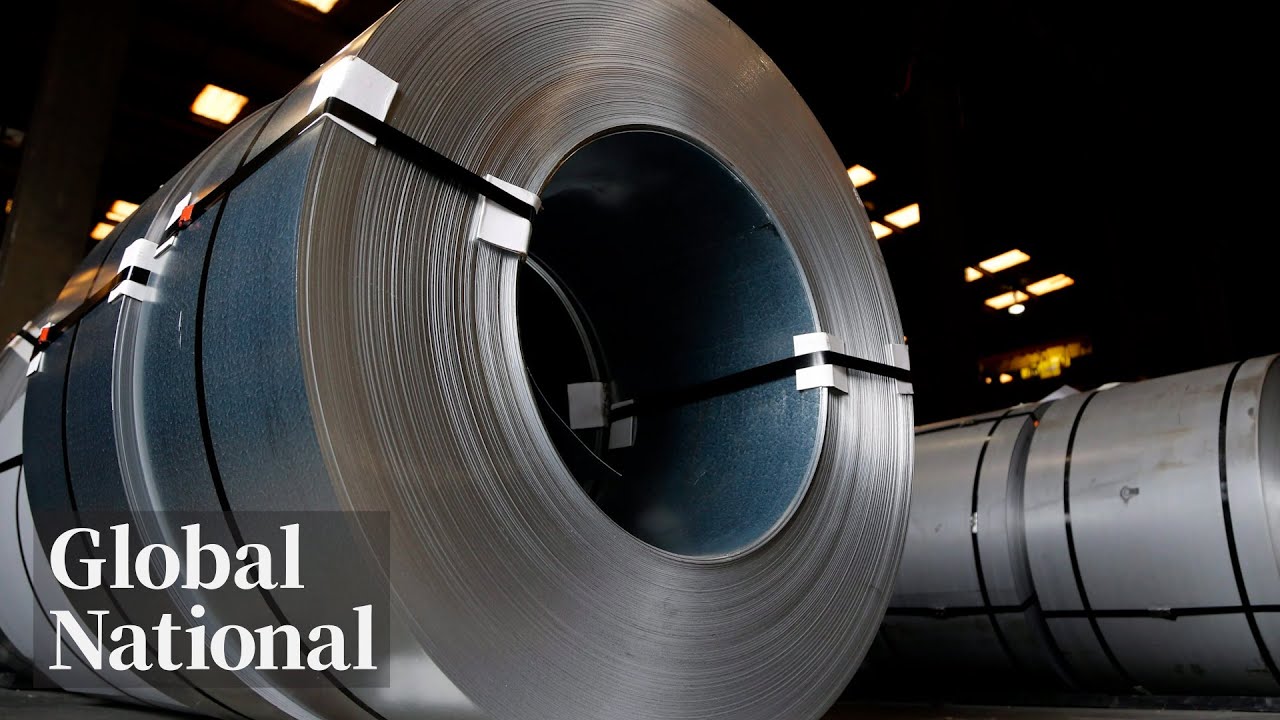
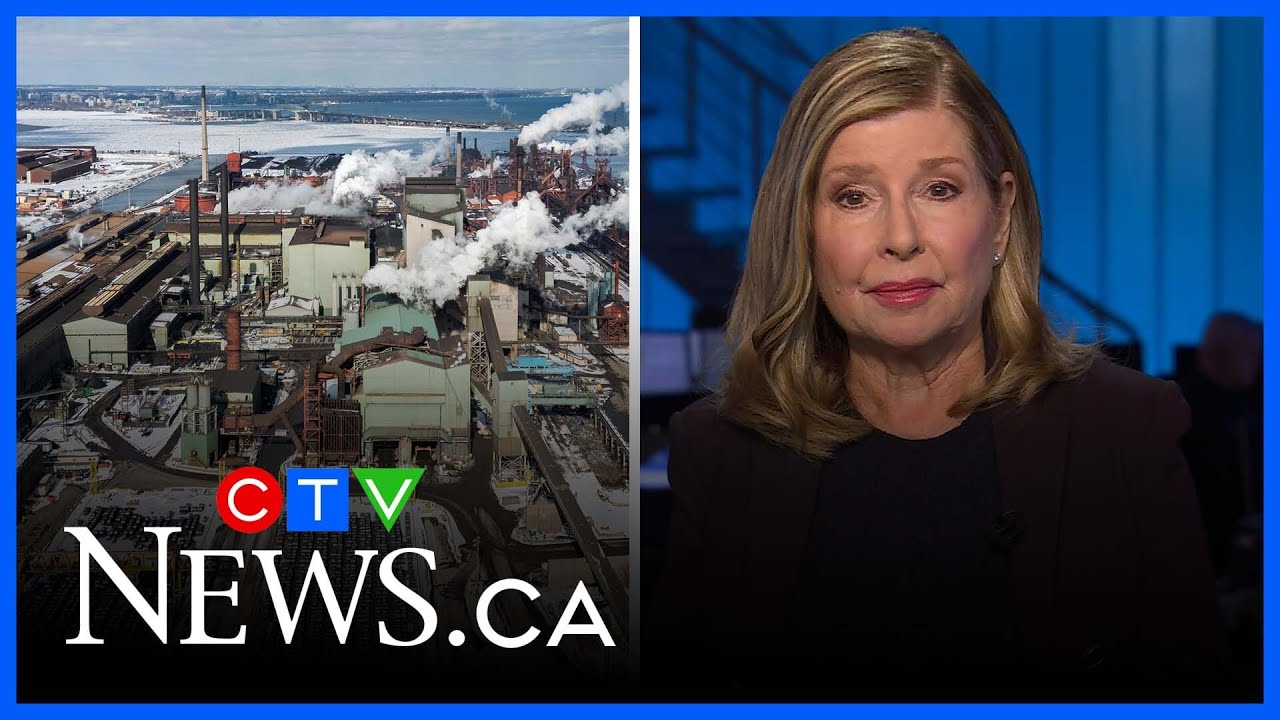
for some reaction about what these tariffs could mean for Canada I'm joined by Katherine cobon she's the president and CEO of the Canadian steel producers Association thank you for coming into studio so I have to start obviously by asking you what what is your reaction to what you just heard obviously we're disappointed we thought we should and could and might still if the if the March 4th date holds seek an exemption to these tariffs Canada is a very unique trading partner on steel with the United States so we expect and hope that our government is
explaining again our business case or our rationale for why we should be Exempted um and so if that date can be confirmed uh we haven't seen the executive order yet but if that date is confirmed then perhaps that gives us more opportunity to do that um and then I'll say the the other the other reaction I have is well it's if this is going forward Canada it's time to act okay so a few things I want to I we all want to hear what what does its time to act mean but I think first it's
probably important for folks to understand if these tariffs come into effect what does that look like for the businesses you represent what does it mean for Canada so I want to I want to say that um in 2018 we had tariffs of 25% uh for a year and these tariffs were actually devastating to the industry on both sides of the Border that's how we got you know how did we Canada successfully get out of uh tariff regime back then well it's because there was enough pain on the American side as well to compel now why
is that well we have $20 billion doar of trade between our two countries you have steel moving back and forth we're highly integrated for Transformations for Market uses so we are their largest uh definitely their largest import market share into the United States but so are they to us they're our largest steel supplier that's outside of our country I think that could be confusing for some Canadians who would say well then like why can't could everybody just play in their own sandbox and everything would be fine explain why that is The Simple Solution is is
not it's not it does sound it does sound great but that's not actually in Practical terms the way it works because we have steel that they need and they have steel that we need and why make it why make it here if we can get it you know there we also um so you know there's many examples of that of different types of products that we make that they don't make and that's that sort of thing we need each other is we need each other exactly the other comment I wanted to make about our previous
experience was we saw a price surge we saw you know prices go up by 38% you know maybe that's helpful or maybe that isn't right depending on the circumstances I think in this economy that is a challenge that will come back I think uh through the American people of concern um but for now that's so that's a bit of a reflection on history and I'm hopeful that those you know but the other really important point is we're not in 2018 anymore since that time we have done substantial things in Canada to keep Pace with the
United States trading regime on steel specifically and so that's you know also I think part of the business case to pursue an off-ramp I noted uh this this afternoon Australia is engaging in those kind of conversations and I presume Canada will be as well um you you say you talk about prices going up I mean does this again presuming it goes ahead and we'll put a big asterisk next to that given the amount of time that uh according to reports is it remains to be um but presuming this goes ahead does does it mean loss
of bus do Canadian businesses move to the United States are there job losses like what what are some well all of that's already started I will say for sure um but I think the degree how far it gets and how damaging against to the Canadian steel um production capacity will very much depend on how Canada reacts so excuse me that's where the time to act piece kicks in because uh you know there are things we could be doing a whole lot better in Canada to support our domestic steel industry and I think this is a
crisis that's going to command that attention to adjust our policies and our approaches to ensure that domestic steel has a a better chance of succeeding in our own market so you've got a wish list uh which presumably you have shared with the government what's at the top of the list so the most important thing is we have to get unfair trade out of our Marketplace so for example let me share you a fact we everything we send up up to everything 97% or more of what we share with the United States has been melted in
in usmca region so either United States Mexico or Canada here in our own country we don't even have that track record we have a significant volume of Steel coming in from offshore import locations that are proven to be unfair Traders are we talking primarily about China here we're talking about China but there's many other countries there's there's a wide range of cases against steel producers globally I will say as a result of Chinese overcapacity but lots of Steel moves from China to other countries before it comes here so job one if it isn't to get
out of the tariffs if we're facing the tariffs we have to retaliate and then we also have to do more to protect our domestic Market from unfair trade now I I um I note that the government has taken action since 2018 on this there are tariffs I believe on on Chinese steel why why is that not good enough well that's just China direct so China does a lot to move steel through other countries I mean that's part of the concern I think that the Trump Administration has with some of our other trading allies is how
much Chinese steel is moving through there the great the great news is this fact that I'm telling you not 7% so we are not D we're not a back door to China that number tells you we are usmca you know Fair Traders and that's what we do so um but those other measures that you mentioned are really critical and I think that's you know we took so we took China direct tariffs and we've taken transparency of Supply so now every import that comes into the country whether it's you know from China or rerooted you will
know exactly where it was made and that's really important to the United States and to ourselves to have that kind of visibility so my thoughts are you know these are really strong points to get out of this but if we don't get out of this like we need to retaliate hard and fast and then we need to look to what can we do in our own Market cuz that's all we'll have left when when you talk I I paused there because obviously that's a significant Point um when you talk about we need to retaliate do
we to your mind do we copy and paste the Playbook from last time are we back to Florida Orange Juice in Kentucky bourbon and maybe we make some alterations based on where the political power is now or is this a whole new ball game so I think there's a lot of uh utility to some of the previous approaches um we I will say however we were quite concerned last weekend when the Canadian government did not have steel tariffs in the first initial reaction so one of the things we're very actively pursuing right now is steel
must be part of the very initial retaliation so so my understanding um there there was going to be a second set of products where they wanted to consult is it that you believe that they would want a consultation process and you're saying that's not the case or you're worried disappointed that they decided to put us in that second TR in what happened last weekend I know it's just a few day just days AG who can keep track anymore but um but honestly we don't believe that's necessary there's a lot of knowledge about steel trade and
you know steel uh inputs across this country and between our two Nations so we think we can act now and we're asking the government to do so uh again when it comes to the question of counter tariffs like all of this is economic pain for Canadians so what case would you make to folks who maybe don't feel very personally invested in the steel industry they think okay well this is obviously bad for Canada but um how would you how would you explain to them why this kind of economic pain is necessary well I want to
mention that first of all I'd like to appeal to Canadians and by the way I don't feel like I need to appeal very much I am shocked and really um you know Blown Away by the support we have received right across this country over the last 24 hours from people citizens uh organizations like all sort uh obviously you know political parties Etc like a wide swath of Canadians have been today stand United with us and we really are grateful for that um so oh no I forgotten what the point is is it is it comparable
to last time no it's more yeah and you because we're in this moment of so much chaos and uncertainty you know we just don't know what and and some of the broader context of what um the president is saying about our country that's kind of you know inflamed this interest of standing up for Canadians and and Canadian industry I I wonder um you and I spoke on CBC radio as the house which is the host the show that normally host uh right as president Trump was reelected the days after the election and you said you
know I'm not highly optimistic but I'm cautiously optimistic that we have done work since last time uh you felt like the scenario that we seem to be on the precipice of was avoidable now with that you know two months plus of time H how do you make sense of the fact that that optimism seems to have been misplaced yeah well I don't I would you know again I'm I'm hopeful that we're going to push to the wall to get this out and to get ourselves out and you know I I will point to usw International
the United Steel Workers Union a very powerful Union in the states and in Canada came out just today moments before I walked in to say that Canada should be exempt from this tariff that's powerful so I'm not ready to give up we're going to fight this fight because we must for the sake of the domestic industry oh I wanted to say you were asking me how do I appeal to Canadians first I said I don't think we need to do that they're there but I would ask that you know Canadians need to think about or
hopefully will think about not need to but hopefully will consider the Strategic nature of the steel industry if you are a country that needs you know um steel for your Automotive sector your energy sector your defense sector your critical infrastructure sector like we're very strategic we don't want to be reliant on other nations for these types of you know Solutions like you know we need to build a bridge or we need to build a nuclear power plant or we need to build a a new tank we want to know that we have some Canadian Supply
we don't want to be Reliant entirely on other nations for that those really core things uh it it is interesting to note this date of March 4th and I know you want to be cautious with this because neither neither you nor I have seen the executive order but as being reported by Bloomberg is of course the same day that the 30-day reprieve is also supposed to be up um I said a moment ago that when you and I spoke the days after Donald Trump was elected you said you were cautiously optimistic how would you describe
how you feel now with these few weeks ahead of us all I'll say is uh we are the Canadian steel industry United in our fight against this Challenge and that we are ready to work with our government with all these stakeholders and Canadians right across the country to ensure this doesn't happen so rather than being cautiously optimistic I'll say we're ready for the fight okay well we are going to leave it there thank you very much for being here to react to this news just as is breaking appreciate it C very much for having me
it's Katherine Cobden president and CEO of the Canadian steel producers Association in moments of uncertainty who should who can we turn to well it's the power panel Rob brusso is the Canada correspondent for The Economist Jenny Roth is a former conservative campaign strategist and here with me in studio vatar is a former adviser to prime minister Trudeau and Jordan lits is a former NDP strategist hello everybody uh Rob I want to start with you so here we are once again sort of teetering on this moment you know it was only a week ago that we
got the reprieve from the tariffs now across the board tariffs and now we're sort of wobbling wondering if we're about to fall into another tariff pit how are you making sense of This Moment by not trying to make sense I I actually think that uh silence in this instance by the government is wit silence is wisdom uh what what have we got uh we've got a president who said he's going to bring in 25% tariffs um you you wait you wait to make sure that this is not U part of the roller coaster Whimsical ride
that the president likes to take us on gut turning as it might be you pay no heed to what he says but you do go over legal documents if there are documents that are accompanying this and so far there aren't what do the documents say what is the basis for any kind of tariffs um what what part of US law is he using in order to bring in these tariffs now when do they take effect none of these questions are answered now we don't know that they're coming in so uh what else do we do
well we count on the US consumer I I think with the uh the adventure that we had in the first weekend of February when he was talking about bringing in across the board tariffs on Canada 25% and 10% for energy uh the US consumer came to our rescue in a way by cowling on their members of Congress senators and congressmen and telling them we don't want to pay more for gasoline we don't want to pay more for uh other Goods coming from Canada fur Lumber and other things count on the US consum consumer get your
ducks in a row and remember to tell them that their cars their airplanes their missiles will cost more money but for now for now silence is wit and wisdom Vonda now we heard the argument earlier on the show from Saskatchewan Premier Scott Mo um talking about the fact that a response you know counter tariffs hurt Canadians so talk to me a little bit about the calcul around calibrating a response to Rob's point we don't know what's coming but as as we think of the bigger picture and how to respond uh what comes to your mind
we're going to navigate a few things I think one um and something that Favio buy said on social yesterday is stop reacting to everything he says that's what he wants it's the way he tries to negotiate try way tr get what he wants from this and you know cause fear amongst K concerns and and force politicians their hand right or to show their hand so I think that's one aspect of it so keep calm carry on and be prepared um be prepared that this is most likely going to happen or it may not happen or
he'll turn to something else or on Wednesday something else will happen well and on that note as the executive orders come in plastic straws are back no word on tariffs yet but but something else has come in well there we go I'm sure some people will be very happy with that but uh you know this is going to be the next four years he's going to say one thing say something else he's going to change the goal post over and over again so that's one piece I think for for Scott Mo and you didn't quite
outright say it I think for a lot of these economies um these terorist will definitely hurt you know I think of Ste aluminum aluminum in in Quebec um you know like there's oil energy in like the cross the Prairies like there's so so they're going to protect their own economies too but I respect that he also was trying to keep a national front a national Unity front like I got to work with federal government I heard him say that to you so I think that's good um it's it's I I think that needs to continue
but just be mindful that some people might say isn't it easier and because they have to respond to their electorate too like how am I protecting you Jenny I wonder about Pier PV in all of this um when there isn't a lot of daylight between the federal leaders obviously he's out there he's today putting out a position um in terms of what could be done in Canada's North to to firm up Canada's position in the Arctic but on the fundamental question of the day which is about tariffs if all the major Party leaders seem to
be more or less in agreement where does that leave Pier po of in terms of the argument that he is trying to make to just get himself in the conversation well let me talk about a few big differences maybe um one is I think especially on steel Trump's issue is clearly with China and frankly Canada should be too um that is where we know the steel dumping is coming from that's what's distorting markets that's the market that no one can trade freely with because uh they're not fair um and so I think that's why you
saw PV come out with tariffs against China before our government did because he was trying to show to the us that he was serious about not being a back door to China I I'm going to jump in here Jenny just because we have the new news that we have been spending much of the day waiting for uh the alerts coming out on the wires right now Trump signs two proclamations that extend original 2018 section 232 investigation says White House official aluminum tariffs are being raised to 25% from 10% White House official proclamations will reinstate 25%
tariff on steel Imports for all countries and of course that is the important part um for Canada not necessarily coming as an enormous surprise to anybody who's been paying attention to the news today but um given all the back and forth important to know that it looks like we the action we've been waiting to see is actually happening now I apologize Jenny I I did interrupt you if you want to talk a little I'd like to if you want to weigh in a little bit more on Mr pv's next steps here please go ahead yeah
so I think look the tariffs are on all countries but I think ultimately the end game here is to really ice out China and PF has shown that he's more serious about that I would argue than the current government the second thing is how we treat steel production domestically we currently have a huge carbon tax um and you know the leading Contender for the liberal leadership Mark Carney has said he wants to have a carbon tax in the form of an industrial price so um does that suggest Mr PV doesn't want industrial carbon pricing Jenny
well he doesn't want carbon's plan um which sure but but but whether he wants industrial carbon pricing is I think unto itself very signicant proba if I said it's up to the provinces um and that he doesn't think there should be a carbon tax so I take that to mean that he doesn't want to add costs um both in the form of carbon price and also in the form of insane regulation right like ask ask steel producers in Canada about the extent to which they've been taxed and regulated by their own country um and so
there are things we can do like these comp country these companies don't produce Steel in a vacuum um you have to push back on tariffs which as you said po of there's not a lot of daylight between the leaders on retaliation and I think that's good I think the US needs to understand that we will retaliate um and that to Rob's Point consumers in the US will will feel the the impact of this because they buy so much of our steel today um but we also have to think about what we do for Canada and
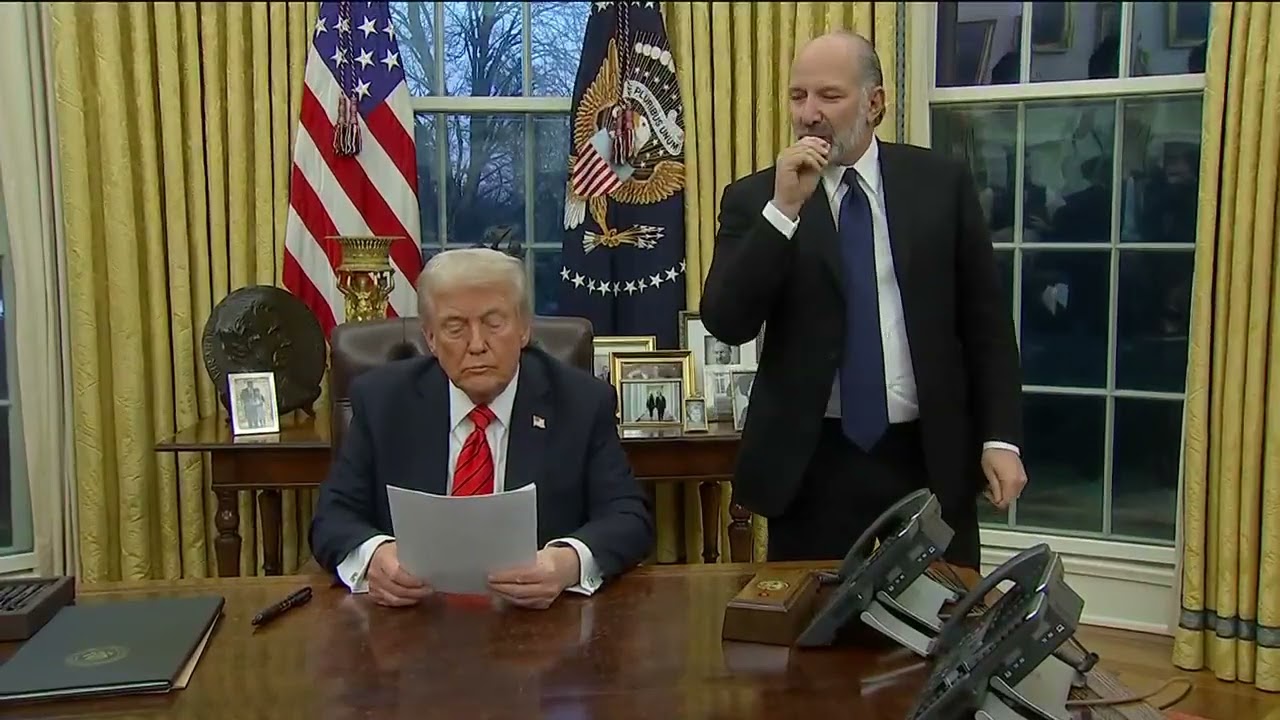
within Canada and the policies that um have led us to this point where our steel producers are so much more vulnerable to these tariffs because of domestic policy to date okay so a couple of things to say here uh Donald Trump making comments in the white house obviously as soon as we have tape of these comments uh we will put it to air we're just waiting for that tape to be returned Jenny raised the point of questions about steel dumping and the alerts coming over the wire suggesting that Peter Navaro is talking about how Trump's
will end foreign dumping boost domestic production secure steel and aluminum Industries as a backbone of US security now it is worth noting that Canada does have measures in place um to counter the presence of Chinese Steel in this country measures that have come into place since the last time we had this particular discussion with the United States and folks in Industry have talked about the idea that Canada has shored up its efforts on that front that that ought to have perhaps protected us Jordan from the situation we now find ourselves in obviously that wasn't the
case um and I guess it brings us back to this fundamental question of when these are core values for Donald Trump and his administration um you know as Canadians potentially sit through counter tariffs and and feel the squeeze and the pain of some of these things how do politicians ask them to make sense of the fact that their lives are getting harder and we just we don't know if we're throwing spaghetti at the wall or not here yeah it's a really tough one because I think the operating mission of trump as president is chaos right
and and it's the instability and his desire to keep uh those he views his his opponents which includes unfortunately Canada as his closest Ally uh off balance and so I think one of the things you know and Rob talked about this as well is that jumping at every word he says does feed into that cycle of chaos so I think you did see a fairly restrained response kind of across the political Spectrum in Canada today not a whole lot of daylight between people on retaliation because there is a sense that the only way to make
a meaningful push back to this type of action is with strength with a show of force now unfortunately of course that does mean that that is going to put some burden on Canadian industry and I think that that's where some of the things that you saw J sing and the NDP talking about today are going to be really important uh and the labor movement was out talking about this as well the need for greater supports for workers to shore up things like our employment insurance system which we know does have major gaps in it ahead
of time ahead of knowing that there's going to potentially be layoffs not just in these two sectors but perhaps more broadly as as we see bigger tariffs coming in uh maybe later in the month so there's there's things that can be done right now there's things that can be done in the medium and the long term around diversifying our trade relationships um arguably this is a conversation that we had in the first Trump term that we did not maybe follow all the way through uh under the liberal government and so that's something that needs further
attention for sure and so those are steps that can be taken here in Canada but I think one of the biggest challenges that we're going to face is that the the the sort of pain here at home for any counter tariffs that happen um is not going to be felt equally across regions and industries and so that's going to be really I think one of the biggest challenges for this federal government or any future federal government to manage is some of those Regional inequities Rob that raises such an interesting point I will also just note
we're getting these alerts coming out uh across the wires primarily from our colleagues at Reuters waiting still to get the tape in which again we will play the moment that we have it uh Donald Trump saying no exceptions or exemptions uh certainly there were some in Canada that hoped that there and still I'm sure hope that there is a path forward for Canada where Canada could secure an exception or exemption although as we've been discussing all through the program Canada is uh the biggest source of imports for both aluminum and steel so exemptions on that
front would be quite significant um Rob I think what Jordan was talking about there is so interesting because of course we just heard David MCN talking a few minutes ago about this this sense of feistiness the sense of unity that we feel in the country right now and trying to put that to good purpose and yet you can imagine that kind of Smashing up against the sense of regional difference that uh Jordan is talking about that might sort of get pulled at as folks some folks feel um the pressure of these tariff this tariff pain
I suppose talk to me a bit about what comes to your mind when you think about the path forward for Canada and all trying to stay on the same page and and maximize our our sense of unity and nationhood right now sure I mean I I think there are a couple of things we need to clarify first I don't know if the alerts make this clear but are the tariffs effective immediately or is there a an active date when they do come into effect there's an active date no date available to us yet yeah okay
because uh if there's a a a later date that leaves time for the kind of horse trading that we saw that led do an extension for Canada that's an important thing to do look the the reality is the United States does not have the capacity to uh to to supply its own steel let alone its own aluminum in aluminum alone it would take the construction of six more Hoover dams for the United States to supply its own uh aluminum that would take decades okay it's not going to happen so again Canadian consumer comes to uh
or American Consumer comes to our Aid uh the uh the other thing that we need to do is uh the last set of tariffs was punitive against Canada and Mexico they were aimed to be punitive this is Broad across the world so we need to coordinate with our allies to make sure that we don't get into a dumping war with them that that would be important to make sure that a bad situation doesn't get worse I think the next thing that Canada needs to do or is thinking about doing uh is uh uh start thinking
about big infrastructure projects that need to be uh um developed here in Canada and get them up on the board quickly in order to deal uh with what could be a and steel in aluminum the other thing that I think everybody is probably aware of is the Canadian government has in place and they had in place ahead of the last tariff threat a fairly robust package of uh supports for workers and businesses affected by this everything from supplying credit for businesses that are might face a credit crunch if this happens to waving the waiting period
for EI if all of a sudden you're an aluminum worker in arvida Quebec and you're thrown out of work you won't have to wait the the usual period so there there are things already that are sort of in in the Catapult waiting to be shot out that way but there's going to be some quick thinking that needs to be done to prevent dumping and also to get infrastructure projects to get that Surplus used for worthy projects here in Canada that's interesting BC has in fact identified uh projects to Fast Track although to my mind they
were not specifically about steel and aluminum but just this broader conversation about Canada standing on its own two feet um it feels almost cartoonish to keep reading these uh red alerts off the wires as we talk about remaining calm uh but additional uh comments from Donald Trump that they are also looking at tariffs on cars chips and pharmaceuticals obviously all of those things would be of concern to uh Canadians and uh we heard Donald Trump talking about reciprocal tariffs last night we're still trying to get a sense of the the shape of that and what
that would mean he says those uh will we will do reciprocal tariffs in the next two days so obviously what does do mean we will try to figure that out um could I could I just jump in Katherine with one more more figures because I work for a magazine that fills my head with with figures um and I think an important figure for Canadians to realize is um $36 trillion in debt that's what the United States has for debt we have a debt to GDP ratio of around 40 42% they have a debt to GDP
ratio of 120% if they want to cut taxes and do it in a way that doesn't have the IMF knocking on their door they're going to have to raise money so I think the world is going to have to realize that tariffs are going to be part of our future uh and American consumers might have to realize that as well well and interestingly perhaps in that vein uh Trump asked what if other countries retaliate says he does not mind um which is I think an interesting contrast to the situation we found ourselves in just recently
with these across the board tariffs when it was suggested that if Canada were to retaliate that there would be further retaliation um jinny I want to go big picture with you for a sec because as we talk about you know remaining calm not freaking out understanding that Trump is perhaps trying to uses destabilizing people and and you know this this sort of scattershot chaos of information as a means of keeping the people he's dealing with destabilized do you think that means for Canadians on this question of our sovereignty that we are just going to have
to eat these comments that we are you know like not a viable country that that the United States wants to absorb Us in some function for the next four years should Canadians sort of wrap their brain around the fact that we just have to suck it up well I don't think we should just miss it as a joke as the government initially did I think we should take it seriously but I also don't think we should light our hair on fire like we have to be reasonable about what we can do um we have to
push back on pun tariffs and we have to do things that frankly many of us thought we should have already been doing um strengthening our border strengthening our ports um strengthening defense spending strengthening our presence in the Arctic all the things that a serious country would and should do um I I think we should do that anyway regardless of what Trump thinks Trump happens to have raised it uh recently and so my hope is that um it causes Canadians to take that a little more seriously um and and want that in a future government and
I think you're hearing a bit of that from POV and even you know on this question of our GDP and the GDP hit we could sustain it caused us to have a serious slightly more serious conversation about interprovincial trade suddenly you have um cabinet ministers who were opposed to pipelines and transferring oil and gas across the province say maybe we do need an East West Pipeline like these are the kinds of things that a serious country would do and pursue and maybe this is an opportunity to finally do that a question I I really wonder
about though jinny like when we talk about being serious about the Border this $1.3 billion border plan the things like that the leasing the Blackhawk helicopters like where is the line between what's serious and what is a show for Donald Trump I you know I I'm obviously not a personally an expert in border security and I I don't deny that helicopters could serve a purpose but I I think I also have some question of where the line is between what's in Canadian's best interest and what is about um making a point to the Americans I
think that's a reasonable question I mean like you have incumbent government that and in a liberal party that um you does seem to be doing these things for show I think because they're sort of like flailing from one end to the other trying to respond to what Trump wants of people um when you had like immigration surge totally out of control to really really high levels you had roxom Road as a problem um for for for serious parts of the last nine years liberals been in power just like not taking the Border seriously um and
then you have um uh Pier Po and the conservatives who have been talking for years about um how we have to um be more serious about um uh uh cars auto theft and how cars get chipped out at our ports um immigration levels and what's the right mix for what our economy needs and what we can absorb like all those things are not responses to Trump they're just serious policies about um what we need to do to be a sovereign country and have secure borders when it comes to both the the movement of people and
goods criminal behavior um all that kind of um thing that that a reasonable government would do and then frankly this even her government was quite serious about um and so I agree we shouldn't be you know the the the helicopters like I'm not an expert I don't know the specific role that they're playing but we shouldn't be um aiming for the TV Clips or like the Fox News hit we should be doing what's right for the country yeah I I mean I I know someone is going to point out that Steven Harper did Make Some
Cuts to border security but at the broader point the cbsa agent specifically uh Vonda now though um Jenny has raised some questions about the seriousness with which Canada has dealt with a a whole multitude of issues what do you say to that yeah I mean I feel like we have been dealing with the government has dealt with those issues there has been money at the border before all this has happened um and yet this significant increase seems to be necessary right so there's a bit of a challenge there saying well we were doing the thing
but also we're going to do$ 1.3 billion dollar more of the thing sure we were doing the things and then someone else comes and says but I want more of the things so you need to add more to the things right in order to help save Canadians um Canadians are also also like able to lift and shift as the environment changes so you know roxom Road you know there was a renegotiation of safe third- party agreement like those things do get fixed do do they get the air time on the day-to-day basis the way they
are now absolutely not right so you all people not unless you're tuned into those issues may not have notice them but I would say on this point yes like if Trump is saying there's a border issue you're going to put more money into it even if you put money before it saying oh I did this already isn't going to be enough for him so you're going to Showcase okay what else do you need we're going to put more money into the Border we're going to help alleviate any concerns you have but this is the Border
there'll be something else tomorrow okay uh Jordan what do you think about this question of how can the the positioning Canada now finds itself in as it tries to show both its sovereignty its seriousness as a country and just push back against Trump generally well I'm I'm an old-timer so my mind reaches back to the Harper government and you know look clearly we have problems with our military capacity we have issues with our border security but those issues also didn't arise yesterday and I think you know it's important to acknowledge that underfunding of the military
is a problem that existed during the Harper government in fact the lowest spending in terms of GDP per capita was under the Harper government in modern history so it's a I I I don't think you can really tie that to one uh specific government in in recent history there's an ongoing problem there um Canada is going to need to look to its own Security in a new way now that much is clear we have the capacity to make investments that benefit our communities as well as helping to meet that 2% Target uh premier new in
Manitoba has been out talking a great deal about the way that some of those investments in Canadian defense can also Shore up communities and I think that there's a lot to be taken from that but I did note with some interest today that Pier PV as much as he was up in Nev it making his announcement appeared to do it without having had any conversation with the premier of cowt who actually issued a letter saying I'm sorry but when you come to the north you speak with Northerners you don't tell us what to do with
Southern priorities so I think that there's certainly uh maybe something to be learned there for him and his team about how to approach some of these issues it's not just symbolic it is about working with the different regions of the country and bringing people together around some of these threats in a serious way Rob I do think you know there's this instinct to um keep coming back to we talked about it earlier right Canadians coming together and some of these solutions that get talked about as means of Canada um musling up for this moment be
it creating uh an East West Pipeline diversifying trade with other countries um you know interprovincial trade and I've said this on air a few times somebody's going to write me a letter at some point but like I have trouble even saying interprovincial trade barriers without rolling my eyes because you I'm sure were the one who assigned me as soon as I got here to covering uh some of those issues which was cough cough a decade ago um like how realistic are these solutions that we're talking about uh or these measures I suppose Solutions is perhaps
not the right term but these measures that we're talking about to try to sort of solidify Canada's footing right now well there are interm measures and there are longer term measures interim measures there's still some capacity in the TMX pipeline uh Canada I believe is already making the case to the United States that if you don't um want more of our energy and uh that would be a way for instance to very quickly deal with what Mr Trump calls the the trade deficit if we sent less energy to the United States we have more capacity
to send it to TMX and send it to Asia that would deal with the trade deficit very very quickly it would also uh result in a um an increase in the cost of gasoline Midwestern drivers um the longer term thing I think it makes more sense to build pipelines from uh the oil fields to the West Coast that's really where the growth in oil and energy is going to be um you know I I heard Jordan speak about um U being an Oldtimer then that that's an opening for me allow for our Grandpa Simpson moment
because whenever I hear Talk of the Border um I'm reminded of the Thundering baritone of Derek Bernie uh who greeted me when I was a not wet behind the ears but soaking behind the ears as a reporter during the 88 Free Trade Agreement uh and his thundering voice is yelling right now what about our interests On the Border who is asking for something on our side of the Border because the truth is the United States is a net exporter of crime of guns of drugs to Canada uh so what are we asking for them to
do on their side of the Border as well is anybody asking them for reciprocal hardening uh in terms of security of their side of the Border I don't hear a lot about that I was really hoping it was the uh when I was your age I used to wear an onion on my belt Grandpa Simpsons quot that was much more thoughtful frankly Rob Russo um Jenny I'm curious I was struck seeing jug meet Singh on uh CNN today making the case for Canada we've seen a lot of Canadian cabinet ministers we've seen premieres where are
the federal conservatives in terms of um being out there making the case for Canada to Americans I mean Pier PA was in the Arctic today making the case for Canada but two Americans I'm talking about I I I mean every time Pier P opens his mouth he says Canada first and I think that's a message for Canadians he's running to be prime minister of Canada um and you know I think to Rob's point Point um the impact of tariffs on American consumers will make itself very very clear very very quickly um and I think though
that impact will speak way louder than um frankly a lot of like Johnny come lately false Newfound patriotism on the part of a lot of left of center leaders whether it's liberal or NDP who were recently calling Canada a genocidal State uh postnational the hotel of the world all of a sudden now we're these Grand Patriots and to go on CNN or whatever it is and spelled off about how we have to fight back with like no real substance behind it um all I think to kind of Cur favor with a frankly a leftwing audience
uh in Canada back home I just think is like um kind of grandstanding and doesn't really drive it serious Solutions and a real plan so I'm glad to see Paul have speaking to Canadians and speaking about a specific plan about what he would do vond and I could see that you had some feelings about that would you like to respond I think two things can be true I think Kanda could have have done genocidal cultural impacts on indigenous communities and still be a can can a place that you're proud of like my parents came to
Canada in the 70s they never taught me to be not proud of it but like it like many countries there's a history and you can learn from that history and there's Beauty to the history and there's bad things to the history the point is you learn about it I don't think that was the only thing we talked about in Canada we've always said Canada is diversity is our strength we've always talked about you know the people in Canada and how you know everyone Canadians love us you know I mean people around the world love Canada
um and there's there's I disagree with the fact that just because you can bring up wrongs that have happened doesn't mean you can't be proud of your country in fact it makes you more proud of your country because you can learn from that and and do better um so I think that's shortsighted I think the issue is is that uh Mr PV that is one thing to talk to K insure but to actually get the job done and make the impact and make the conversation to Americans to Rob's point the American Consumer can come to
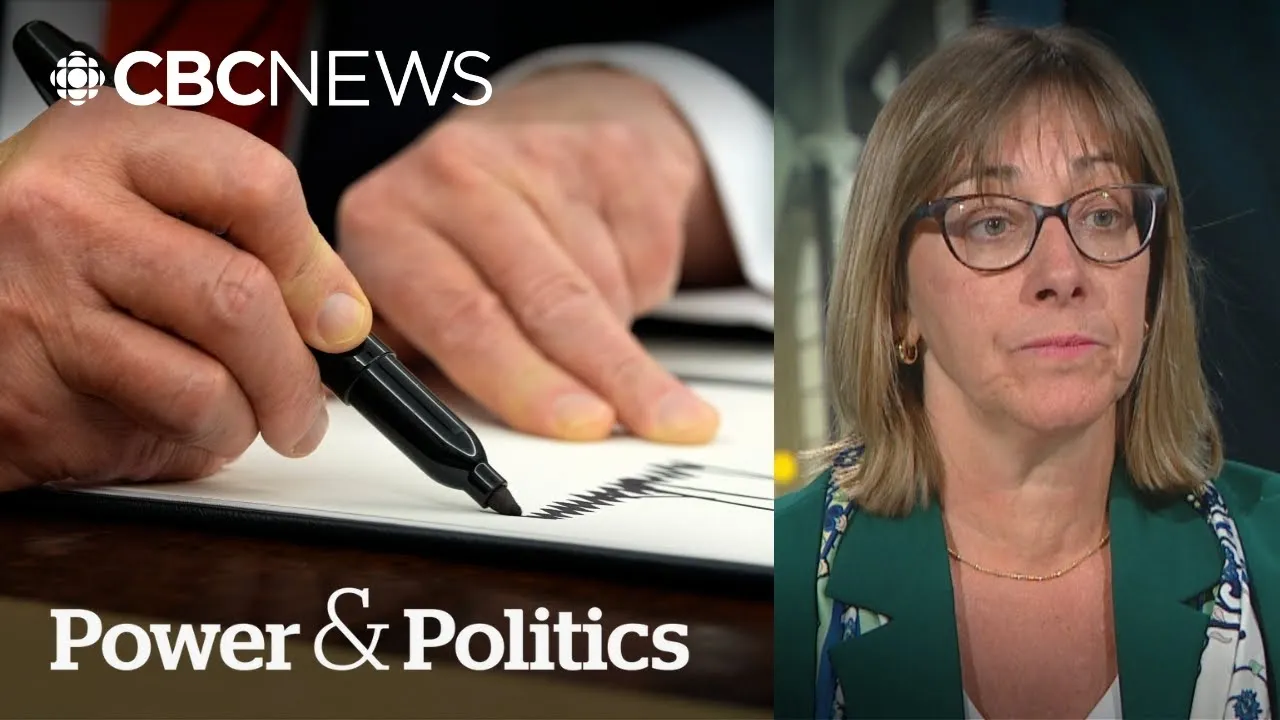
our rescue Governors and other Congress people can come to our rescue and help make the case for why this is a bad idea I think that is something he's falling short on okay I I will just say for folks who are just tuning in we are still waiting for uh tape from the White House Donald Trump has indeed um announced uh plans for tariffs he signed the executive order going ahead with tariffs for steel and aluminum for countries across the world but of course Canada being the biggest uh exporter of both steel and aluminum to
the United States is going to have a particular impact on this country we are still waiting for that tape we are going to bring it to you as soon as it is available right now though you get uh the best analysis and insight from your friends at the power panel Jordan I'm going to turn to you here um and maybe just just reflect a bit on the path forward you know there's been so much like Canada kind of coming to the edge of the cliff worrying about things and we haven't actually felt the impact again
I don't have the piece of paper to put in front of you um but but it seems as if Donald Trump has gone ahead with this so talk to me a bit about what you see as the path forward for Canada now well I mean I I think of course the most iMed mediate thing is support for the affected Industries for the workers who may be impacted by layoffs very shortly that's going to be the the very first thing that I'm sure is on the minds of not just the federal government but particularly the governments
of Ontario and Quebec I mean the timing is also interesting because of course we're in the midst of an Ontario election um steel tariffs have the biggest impact in Ontario and Doug Ford is headed down as a as Premier but also simultaneously as candidate to Washington tomorrow to have some of these discussions so it'll be interesting to see what impct there is I'm sure he's actually in some way probably not unhappy to have something fresh to kind of talk about there to underline the urgency of that trip in the middle of a campaign but I
think more broadly there needs to be ongoing work uh on the part of the federal government to bring the premier together to continue those discussions the risk of that Regional fragmentation is going to increase as the pressure increases and as time goes on um you know holding provinces like Alberta like SAS when like Quebec ons side is going to be a continuous uh I think Challenge and there's going to need to be those discussions it has been interesting to see for example some new openness on the part of folks in Quebec to the idea of
an East West Pipeline something that would have been a complete political non-starter just a few years ago and you know and I think to Jenny's point you know that was a challenge that even the Harper government had even in in arguably more favorable regulatory circumstances for the industry they were still not able to get through those major projects so things are changing on the ground very quickly but what's going to be hard is to sustain that over the long term and if we accept that tariffs are a part of the the economic reality in our
trade relationship with the United States not just for the short-term but maybe more for the medium- term because they need it as a revenue generator the challenge will be to hold people together across the country over that longer time period as things get a little bit harder and more expensive here at home too and Rob one of the things that makes um what is happening right now interesting is the fact that it does not just affect Canada or Canada and Mexico although again as I keep saying Canada is particularly hard hit can you reflect a
little bit on um the willingness of the world uh to sort of come together and push back against some of the things that Donald Trump is doing right now be they um just about sort of the economic might as he perceives it of The American Nation or his expansionist attitudes towards uh Greenland uh the Panama can canal and perhaps Canada too well we'll see um we didn't get a lot of very Stout support anywhere um when we were threatened with tariffs in the last round it'll be interesting to see uh if there is some sort
of coordination there are other markets for our steel and our aluminum uh we will be able to displace Chinese and Russian steel and aluminum if we uh do get some sort of coordination with our allies but look the reality is even with um uh reduction of internal trade barriers even with um uh greater trade agreements with our our allies um there is a a sort of magnetic pull to the South it's because of geography and it's also because with Mexico there is a market of 500 uh million people Overland without the need to ship without
the need to fly that magnetic pole is irrevocable so I think while we continue to work on other options um and build up our own infrastructure and build up our own internal Market not a bad thing right that market to the south of us is worth billions and billions of dollars right now it's just to the us alone it's it's 1.3 billion dollars a day okay so we're not going to be able to replace that by going overseas the I think the Strategic objective of Canada remains to try and maintain lowcost access to the most
lucrative Market Market in the world and that's south of our border while we do those other things yes go ahead and do it but we cannot negate the reality of that magnetic pole okay uh my thanks very much to the power panel for this conversation today as we get the breaking news that Donald Trump is indeed going ahead with these tariffs 25% on steel and aluminum he has signed the executive orders uh there will be no exemptions that will include Canadian products as well thank you to the power panel Rob Russo Jenny Roth B catar
and Jordan likits [Music]