Hello heroes. Well, here we are. Lecture 12 wrap up in Acts chapter 29.
Some students have scratched their heads and wondered when they have read Acts 29. They asked themselves, "What is he talking about? " The book of Acts has only 28 chapters.
The point is that all of church history has to do with living out the 29th chapter of Acts. The church age is that chapter. You are part of that chapter.
As you live out your obedience to God, you are living out part of that chapter. Let others know that they are also. It will be different for you.
But notice how open-ended is the conclusion of Acts 28:es 30 and 31. For two whole years, Paul stayed there in Rome in his own rented house. He was under house arrest and welcomed all who came to see him.
Boldly and without hindrance or without let and hindrance. He preached the kingdom of God and taught about the Lord Jesus Christ. So chapter 29 verse one, where you live, you fill in the blanks.
So here's the introduction. I shared with you in church history 1. I could not possibly squeeze500 years into 12 lectures.
Similarly, I cannot do so with 500 plus years that directly affect you even more. individuals, organizations and issues that are part of whom you are need to be presented and analyzed. In this lecture, I will add more material that is important.
I encourage you to read broadly. Two helpful books in that area are by the same author. He was a professor at used to be called Trinity Seminary.
David Larson's The Company of the Creative, A Reader's Guide to Great Literature and Its Themes, and his Company of the Preachers, volumes one and two. Also, over the months and years, read as much of Letterrett and Null, as well as suggested readings as possible. Most items in church history involve individuals, organizations, and issues.
I present them here in roughly chronological order and you can see the pages where you find them in null. The Edinburghough missionary conference. I find the Wikipedia article to be somewhat slanted against it and I'm only going to be sharing part of it with you because uh I want to uh get onto the Urbana Missionary Conference more.
The 1910 World Missionary Conference or the Edinburghough Missionary Conference was held on June 14th to the 23rd in June 1910. Some have seen it as both the culmination of 19th century Protestant Christian missions and the formal beginning of the modern Protestant Christian ecumenical movement. after a sequence of interdenominational meetings that can be traced back as far as 1854.
Wikipedia looks at previous conferences. The first major missionary conference occurred from June 9th to 19th, 1888 in London with 1,579 delegates from European, North American, South American and African with 1579 delegates from Europe. Um, I already mentioned that the ecumenical conference included representatives from 139 different Protestant denominations.
The conference exemplified desires to unite Protestantism while spreading the gospel and civilization with it. To me, the most important part was the gospel. The next international missionary conference occurred in New York at Carnegie Hall.
Held from April 21st to May 1st, 1900. This was the highest attended international conference to date with up to 200,000 attendees. It boasted prominent attendees such as William McKinley and New York Governor Theodore Roosevelt.
William McKinley would not be president for very long and Roosevelt would become his uh vice president and McKinley would die of an assassin's bullet and Roosevelt would become president. But this signified the cultural prominence of missionary efforts and its connection to imperialism and the white man's burden as western countries tried to mold foreign nations in their image through this civilizing process. And again, I believe this to be a slanted article.
the spread of what is called western civilization during that time whether you like it or not was inevitable. So we come to Edinburgh 1910. Major Protestant and Anglican which were also Protestant denominations and missionary societies predominantly from North America and Northern Europe sent 1,215 representatives to Edinburgh, Scotland.
The delegation was usually based on the annual expenditure of the missionary societies. 100 additional special delegates were appointed by the British, Continental, and American executive committees. There were no Eastern Orthodox or Catholic missionary organizations were invited.
Only 18 delegates were from non-westerners. Anglo Catholics agreed to participate only after the British Executive Committee agreed to add the subtitle to consider missionary problems in relation to the non-Christian world to the conference title and to define the non-Christian world as excluding areas of the world that were Christian but mostly non-eangelical such as Latin America. Lord Balffor of Burle who would later uh divide up the Middle East such as Israel and other areas of the church of Scotland.
A former unionist cabinet minister was the president of the world missionary conference. American John Armott who was a great leader, an American Methodist lay person and leader both of the student volunteer movement for foreign missions which was a great group and the world Christian federation chaired its proceedings. The main organizer was Joseph a leader in the student Christian movement.
The conference was held in the assembly hall of the United Free Church of Scotland. The formal title of this conference should be called the third ecumenical missionary conference because the first and second had already taken place in London in 1888 and New York in 1900 respectively. Before the conference convened, eight assigned commissions each with 20 members conducted two years of research on their assigned topic.
Each commission produced a single volume report which was distributed to all of the delegates before they headed to Scotland and discussed at the assembly during the conference. The eight commissions and their date of presentation at the conference are as follows. Carrying the gospel to all the non-Christian world, June 15, 1910.
The church in the mission field, June 16, 1910. Education in relation to the Christianization of natural life, June 17, 1910. Missionary message in relation to the non-Christian world, June 18, 1910.
The preparation of missionaries, June 22nd, 1910. The home base of missions, June 23rd, 1910. Missions and governments, June 20th, 1910.
Cooperation and the Promotion of Unity, June 21st, 1910. I cover most of this in my dissertation. A ninth volume containing the proceedings and major speeches was published after the conclusion of the conference.
For one, a notable German medical missionary got Alp described, "The work has commenced auspiciously in Germany and ended his address with reverence to the great missionary living stone and our Lord Jesus Christ. " The spirit of the conference was driven by the watchword of the Protestant Christian community at the time, the evangelization of the world in this generation. Thus, sentiments of obligation and urgency drove the commission reports, commission discussion, and speeches of the conference.
A call to unity among Protestant missionaries was also a common desire expressed at the conference, although no common liturgy was celebrated among the delegates while in Edinburgh. In his 1947 book, What Must the Church Do? Robert S.
Billheimer used the phrase new reformation to refer to the ecumenical movement that resulted from the conference and this usage became common place thereafter and you might recall Jesus's words in the gospel of John chapter 17 I believe uh verse 21 that they may all be one but that is grounded in uh the sanctity of God's word and holy ess uh anything besides that is not true unity. I urge you to read the rest of the lecture about the Edinburghough conferences but I go now to the Urbana Missions Conference which was affiliated with Interarity Christian Fellowship. It started in Toronto Canada.
Then for many years it was at the Urbana Illinois campus. Then it moved to be called it moved to St. Louis and this year I understand it is going to be in Phoenix but it continues to be called Urbana.
The following is from the uh urbana. orgstory. So this is by interverarsity and you will notice the development and um to a certain extent I think uh they're giving in a bit to culture not at the beginning and not for most of the decades but it says a new era of global missions begins inception and vision in 1946 which would have been right after World War II responding to worldwide needs after World War II.
Students from the student foreign missions fellowship and interarsity USA and Canada gathered in Toronto for a groundbreaking convention that would become Urbana. This gathering called young people to count the cost of following Christ in global missions. By 1948, Urbana had found its home at the University of Illinois, Urbana Champagne, drawing students from 100 universities under the rallying cry from every campus to every country.
And I joke that they did not want to call it Champagne 48, so they called it Urbana 48. Young people don't follow Christ lightly. He gave his life for the world.
He wants you to give yours said box singing 1946. They have quotations from each decade. Uh for instance, Billy Graham at Urbana 57 said, "The time has come for students to take a place of leadership in a spiritual awakening in a world that is so desperately in need of Christ.
" In the 1960s and 70s, they rose to meet global and social social turmoil and were revitalizing missionary purpose. As the post-war missions boom slowed, Urbana adapted to meet a generation facing unprecedented social upheaval. There were interactive sessions, question and answer times, electives, and spaces for networking with mission agencies were introduced to help students deepen their understanding of scripture, disciplehip, and the gospel's relevance in a changing world.
There were tables set up with information. Uh, that's what they met as far as networking with mission agency or places where you could go sit and talk. Tom Skinner, uh, a black Christian leader, said, "Go into a world that is enslaved.
Proclaim liberation to captives. The liberator has come. " I also read a book by Tom Skinner that asked, "If God is entering the city, why are Christians leaving the city?
" And that might be one of the reasons why I spent my second year at seminary living, studying, and serving in the inner city of Boston. John Stodd at Urbana 76 said, "Become global Christians with a global vision for we have a global God. " I attended Urbana 76.
I attended a pack workshop. I stood at the doorway because there were so many and because I didn't completely hear him some things I exchanged mail with Dr Scott. He actually wrote me back in an inner varity multimedia presentation.
Sto quotes Jesus why do you call me Lord Lord and do not the things that I say? And Elizabeth Elliott gave a powerful message. In the 1980s, Urbana was addressing the great commission's new frontiers.
They were focusing on the unreached and urban ministry. The 1980s brought new missional challenges and opportunities such as unreached people groups, Bible translation, international student ministry, God bringing the world to our doorsteps, and urban outreach. Urbana 81 saw the launch of the perspectives course and I think I told you I was the first to complete it by correspondence actually in the fall of 1978 mobilizing thousands with a structured framework to engage with global missions.
Ajet Fernando said in Urbana 87, "God is a missionary God. His followers therefore must be missionary people. And Robera H said, "The most important thing in our lives is not to find the best job, the best salary with the most prestige, and the most perks.
The most important thing in our lives is to find our place in God's plan for a needy world. " In the 1990s, Urbana was about embracing a global multiethnic church. At Urbana 1990, I represented a church renewal organization and I was able to attend as well and I rejoiced to hear God's praises sung in the beautiful Zulu language.
There was cross-cultural engagement and personal transformation seeking to reflect the diversity of the global church. Urbana in the9s welcomed multithnic speakers and led musical worship experiences that drew from around the world. Topics relevant to generation X such as family brokenness and healing were addressed along a renewed call to global mission.
God uses ordinary people in this great challenge of world mission said George Verv. I write that when I inscribe my book on Titus con the mission area to Hawaii. God uses ordinary people in extraordinary ways.
You and I have been called by God to serve him. Right now, wherever we are, in the campuses throughout the land, in the universities throughout the world, in the byways, and the alleys and the main streets of whatever cities, "You and I have been called to take the gospel of Jesus Christ all over the world," said Isaac Canalis in Urbana 90. In the 2000s, they were about expanding Urbana's global influence, training a new wave of global leaders.
In 2006, Urbana moved to St. Louis, drawing a record-breaking 23,000 students who responded to the call to join God's global mission. Urbana also supported the development of international student mission conferences across Africa, Asia, and Latin America, broadening its impact globally.
Rick Warren said, "Significant comes from knowing your purpose, knowing your calling. " You must be ready to say, "Whatever, wherever, whenever. " And Rick Warren did that when he started Saddleback Church in Orange County.
which at the time had very few churches. He started his church with himself, his wife, their real estate agent, and their first child who was a baby. That church grew to 20,000 or more and now has some satellite campi as well.
He has since retired and is working on other projects. Patrick Fun said, "We need one another, east and west, north and south. That's God's global community.
We're called to be God's people, bringing the gospel to the world from everywhere to everywhere. " In the two, urbana was about challenging a new generation, the overflow of life and love with Christ. Amid the rise of social media and growing awareness of global and domestic issues, Urbana called students to align their lives with Christ's mission by diving deeply into scripture, partnering with the global church, and being sent into a hurting world.
Tom Lynn said, "Surrender your plans and allow God to surprise you. God's invitation may be unexpected. " David Platt said, "Missions was never intended to be your c your life.
Christ is intended to be your life. " The world bombards us with opportunities that distract us from the priority of the great commission. I pray a new generation rises up that can ignore draction and devote their lives to God's global mission.
That was Francis Chan. 2025 coming up is about mobilizing Gen Z for God's global mission. A new generation is rising.
At Urbana 25, Gen Z will be invited to see firsthand what God is doing globally and discover their role in his mission. with a fresh location, Phoenix, Arizona. Innovative programming and the same vision to inspire young people to love Jesus and go into the world as this witness witnesses.
We're praying for God to work powerfully at Urbana 25. The website says, "Join us and be part of the next chapter. Follow God wherever he leads.
" take a look at that website and see if you might be interested. However, regrettably, Innerarsity has delivered developed some liberal aspects. So, some students have started attending another mission conference.
I think I mentioned that other one at the end of church history one. I have forgotten its name. uh but it's got 25 in its name.
A Catholic meeting that involved individuals development statements and belief and in turn affected many non-atholics to this day is called Vatican 2. The second ecumenical council of the Vatican. This is from Wikipedia.
Commonly known as the second Vatican council or Vatican 2 was the 21st and most recent ecumenical council of the Catholic Church. The council met in St. Peter's Basilica in Vatican City for four periods or sessions, each lasting between 8 and 12 weeks in the autumn of each of the four years 1962 to 1965.
Although it had been anticipated initially that the work of the council would have been complete after three sessions, Pope John the 23rd called the council because he felt the church needed updating in Italian a nomento in order to better connect with people in an increasingly secularized world. some of the church's practices needed to be improved and presented in a more understandable and relevant way. Support for a nomento won out over resistance to change and a res as a result the 16 magisterial documents produced by the council proposed significant developments in doctrine and practice.
You can read about each of them uh in the lecture material that you have. Uh the council had a significant impact on the church due to the scope and variety of issues it addressed. Some of the most notable changes were in performance of the mass including the vernacular meaning the languages of the people could be authorized as well as Latin.
You see the Catholic mass having communion or the eukarist presented all the time had been in Latin since uh uh the fourth century, fifth century if not before. And by the time of the Middle Ages, only the priests and not even all the priests knew Latin. um for the most part they had to read it.
Um and that was a big part that led to the Protestant Reformation. People wanted their worship services including communion to be in their own language. Understandably, they wanted the Bible in their own language.
And that led to a biblical movement. And this is from Wikipedia. Pope Pius I 12th 1943 encyclical deino aante spiritu gave a renewed impetus to Catholic Bible studies and encourage the production of new Bible translations from the original languages.
This led to a pastoral attempt to get ordinary Catholics to rediscover the Bible to read it to make it a source of their spiritual life. good idea. This found a response, but only in very limited circles.
By 1960, the movement was still progressing slowly. Close quote. The Wikipedia article is very long.
You may read the legacy section at the end, including the controversies and how some traditionalists did not accept it. There was some good such as allowing people to have the mass in their own language and having Bible study in their own language and interacting with Protestants and Orthodox believers. But the bad involved a descent into liberalism and what might be progressivism by some in other words departing from the historic Christian faith.
And the whole structure is part of the difficulty I have with the Catholic Church because it's hierarchical. Why do I have to have permission to have a worship service and communion in my own language? Why do I have to have permission to study the Bible in my own language?
Why do I have to have permission to have a Bible study with other people? Let's just do it and enjoy it and have fun. Null says that the Lucan covenant has some similarities to Vatican 2.
He says it is smaller. I would say it for the most part has stayed faithful to the historic Christian faith. Here is what Wikipedia has to say about it.
The Lucan Covenant is a July 1974 religious manifesto promoting active worldwide Christian evangelism. One of the most influential documents in modern evangelicalism. It was written at the first international congress on world evangelization on Lusanne Switzerland where it was adopted by 2300 evangelicals in attendance.
You might remember that I talked about it when I discussed the majority world Christians taking the lead in uh taking the Christian faith to the world and how John Sto played a major role in the writing of the covenant. In July 1974, the Lucan Conference brought together approximately 2700 Christian leaders from over 150 countries and was called by a committee headed by the American evangelist Billy Graham. His organization helped pay the airline and hotel rooms to for the evangelists who didn't have a lot of money, but he helped bring them together and they met and they talked and they grew and they prayed together.
I'm adding to the Wikipedia article. The drafting committee for the 15-point document, as I said, was chaired by John Sto. In addition to the signing of the covenant, the conference also created the Lousan Committee for World Evangelization.
They continue to meet over the years. The covenant is in the form of an ecumenical confession in which the signitories profess their shame at having failed to spread the gospel of Jesus. I think I gave you the introduction in Portuguese or maybe it was another document.
The covenant specifically affirms the beliefs in the Nine Creed. The signitories express their intention to be more committed to spreading Christianity throughout the world. The original document is in English and it has been translated into at least 20 different languages.
In 1989, 15 years after the original Lusan covenant, the second international conference on world evangelism, sometimes called Lusan 2, convened in Manila, Philippines. So you see from the what used to be called the first world, was in a majority world country in the Philippines and adopted the Manila Manifesto, which was an elaboration of the Lucan Covenant. And you've already seen the introduction.
The point is that it was evangelists from around the world. Meetings continue to be held. And now I'd like to look at Calvary Chapel.
You can learn about it a great deal by seeing the origins movie Jesus Revolution. It is about three people, one church, an organization, and some more people. I was involved at the periphery on the edges of Calvary Chapel.
One of the two 20some leaders of the high school Bible study leaders where I became a Christian was one of the first guitar players at Harvest, which was Calvary Chapel in Riverside, California. I occasionally attended harvest on Sunday evenings during the 70s and very rarely after that because I was living different places. It meant at least four places before it built its own campus.
It calls itself harvest but when I attended a summer Sunday evening service there was a fillin for Greg glory. Who was it? The pastor of Albuquerque Calvary Chapel.
So it fit my definition of a denomination where two or more churches have the same belief system or outlook. The origin story is that of the following individuals. The pastor of a struggling church really wasn't a mainline denomination.
It was a four square church, but that's a group of churches. A hippie evangelist and a teenager who would become a pastor and evangelist. Chuck Smith was a pastor of a foursquare church in Santa Ana when a hippie Pentecostal evangelist Lonnie Frisbee came into his home.
One of the people Chuck started to mentor was Greg Lori. The young Lori would would become the pastor of Harvest in Riverside. Lori wanted to be an evangelist, but God established him as a pastor first.
God grew harvest using Lor's evangelistic gift to the point where there was a human infrastructure that could support the Harvest Crusades. As of this first lecture, Lori continues to have annual crusades that fill Angel Stadium in Anaheim, California. Here is what Wikipedia says about the Crusades.
It's an evangelical Christian organization based in well the Los Angeles area in the United States that organizes evangelistic conferences. The conference has its origins in a public evangelistic event in the Los Angeles area founded in 1990 by the senior pastor of Harvest Christian Fellowship, Greg Lori. The event has been renamed Harvest Crusades.
In 2005, 100,000 people attended at the conference. Harvest Crusade shifted to an online only format in 2020 in response to the CO outbreak. So, it was flexible.
In 2022, 21,000 people attended at the conference in Boise, Idaho, and 144,000 people online. And Harvest is back to being, and this is at the Carvest Crusade website. Harvest is back to being in person as well as online.
You can watch with friends. The website says, "Jesus changes everything. Whether you are seeking, doubting, or suffering, the Harvest Crusade is a place to discover God's love for you in a real, meaningful way.
Join us for this one night special event with musical performances by top Christian artists and a gospel message of hope that could change your life forever. The Harvest Crusade is free for everyone thanks to the faithful support of participating churches and partners, our donors and harvest partners. The translations are in Spanish, Thai, French, Vietnamese, Mandarin, Tamil, Romanian, Korean, and American Sign Language.
And I have written them and asking them to add Portuguese. The event begins at 700 p. m.
Pacific time. I don't have the date. And it talks about Greg Lori.
Now he's the featured speaker. And back to Dr Core now. And um a spin-off or breakoff from Calvary Chapel was the vineyard which is a strongly charismatic denomination that believes in signs and wonders.
You can read about signs and wonders in the Gospels in the book of Acts. Leaders and followers in the vineyard believe very much that the Holy Spirit brings about signs and wonders in the present day. Believe this is okay.
Yeah. Detractors believe that the focus is too much on signs and wonders and are not balanced enough on all the aspects of the Christian faith. And now the following is from Wikipedia.
You will notice that the vineyard has developed its views over a 10-year period. Every group develops. It is now part of church history as are you.
My you views have deepened and grown over the decades like a tree. See Psalm 1. But I think the vineyard churches have taken too much time to develop its views and they still are kind of bouncing around.
So this is from Wikipedia. The Association of Vineyard Churches, also known as the Vineyard Movement, is an international neocarismatic evangelical Christian association of churches. The Vineyard movement is rooted in the charismatic renewal and historic evangelicalism instead of the mainstream charismatic label.
However, the movement has preferred the term empowered evangelicals. You see how it's kind of bouncing around? It can't even make up its mind about what to be called.
I mean, I I'm not that big of a fan. A term coined by Rich Nathan and Ken Wilson in their book of the same name to reflect their roots in traditional evangelicalism as opposed to classical Pentecostalism. So, where are they?
members also sometimes, so we're still kind of coming up with more names, describe themselves as the radical middle between evangelicals and Pentecostals, which is a reference to another book, The Quest for the Radical Middle, a historical survey of the vineyard by Bill Jackson. It has been associated with the signs and wonders movement, the Toronto blessing, the Kansas City prophets, and a particular style of Christian worship. The vineyard offers operates a publishing house, Vineyard International Publishing.
The vineyard has its origins in the founding of a Calvary Chapel church by Ken Gulixson and his wife Joanie, members of Calvary Chapel Costa Mesa in 1974 in Los Angeles in the United States. In early 1975, 13 groups met at the Beverly Hills Women's Club. These Bible studies and other like them were attended by many popular actors, actresses, and musicians including Bob Dylan about whom, well, there was a movie made about him.
I haven't seen it. Uh, yes, Bob Dylan had a Christian phase. That's when he wrote the song that goes like this.
You're going to serve somebody. It might be the devil. It might be the Lord, but you're going to serve somebody.
Gullixson's vineyard had spun off sister churches. In 1977, John Whimber, an evangelical pastor and teacher on church growth, founded a Calvary Chapel in Yur Belinda, California. Whimber's teaching on healing and the ministry of the Holy Spirit led to conflict in a meeting with Calvary Chapel leaders.
It was suggested that Whimber's church stop using the Calvary name and affiliate with Gullixson's Whimber Gulixon's Vineyard Movement. In 1982, Whimber's church changed its name to the Anaheim Vineyard Christian Fellowship. Gullixson turned over the churches under his oversight to Whimber, beginning his leadership of the vineyard movement.
Yeah, like I said, Evangelist Lonnie Frisbee, who was involved with the start of Calvary Chapel, liked um the vineyard movement. Um but I don't really want to end with um another schismatic group. Uh you can read more about the vineyard movement.
So, um I will say yeah, I don't want to talk about that group anymore because they really have trouble knowing what they believe. Uh and um you know there are different groups within Catholicism. Remember there were split peas among Presbyterians.
But um the uh vineyard group really had trouble even knowing what to call themselves, let alone knowing what they believe. By contrast, the early schismatic Protestant groups, the Lutheran and Calvinistic reforms, had no difficulty in developing robust belief systems. I hope you know it and why you believe.
There are books with those names by Paul Little, published by Innerarsity Publishing. But my heroes, this is what I want to leave you with. Seek the face of God.
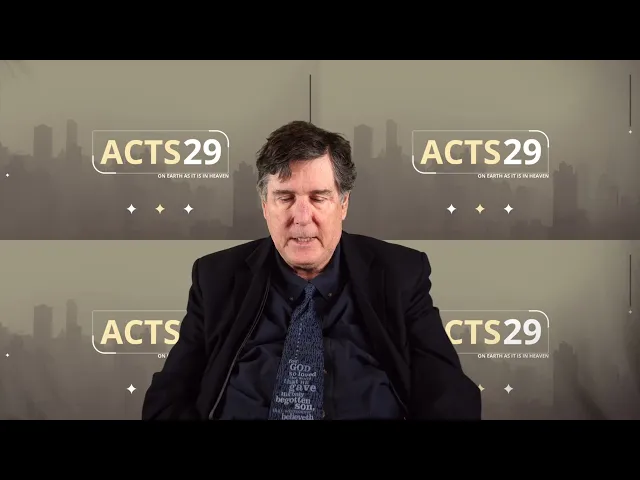
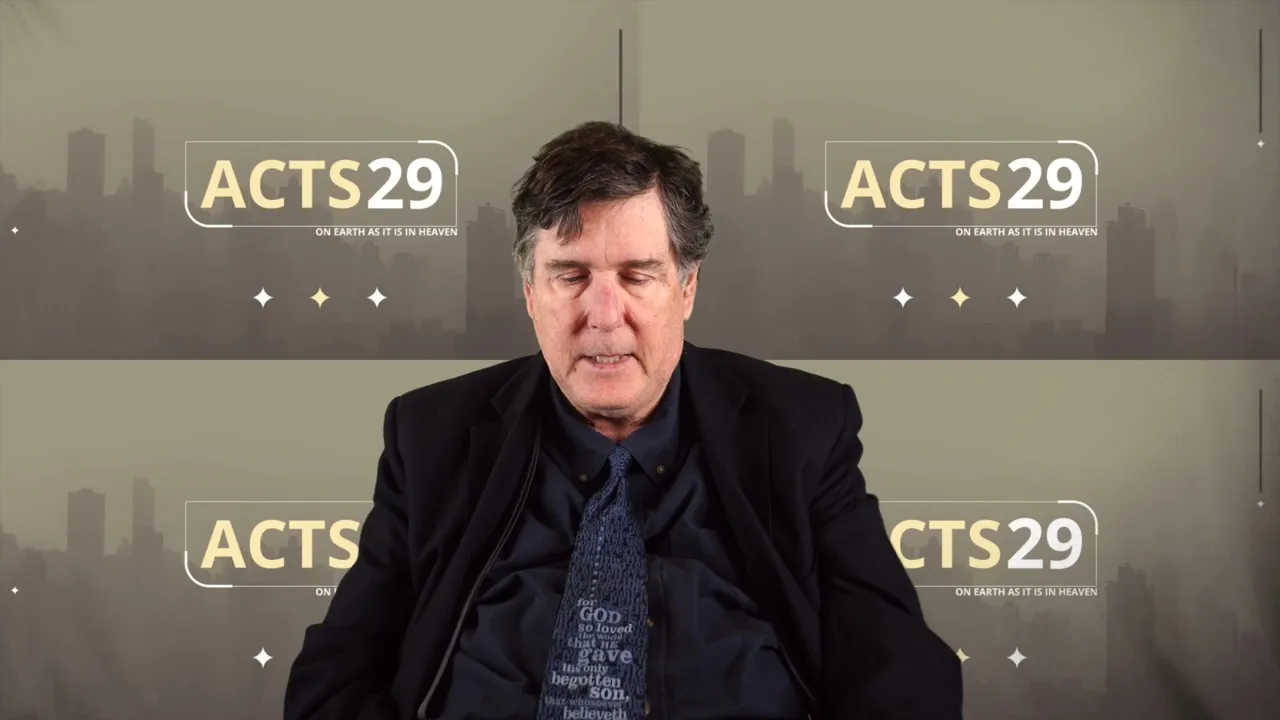
Adore and worship God. Some of you at the in-person conferences really like this tie, so I wore it. Again, remember that it's not a cliche that God so loved the world that he sent his one and only son to die.
Just meditate upon the depth of John 3:16. Read God's word. Live out Acts 29.
Follow the clearly revealed will of God in the Bible. And as you do so, those parts that are not clearly revealed, where to go to school, who you're going to marry, what your jobs are going to be, or what God is calling you to do and to be. As you follow what the Bible teaches as God's will, he will guide you into those areas.
God be with you. God bless you. Go forth, my heroes, and may you help God's kingdom come on earth as it is in heaven.
Amen.