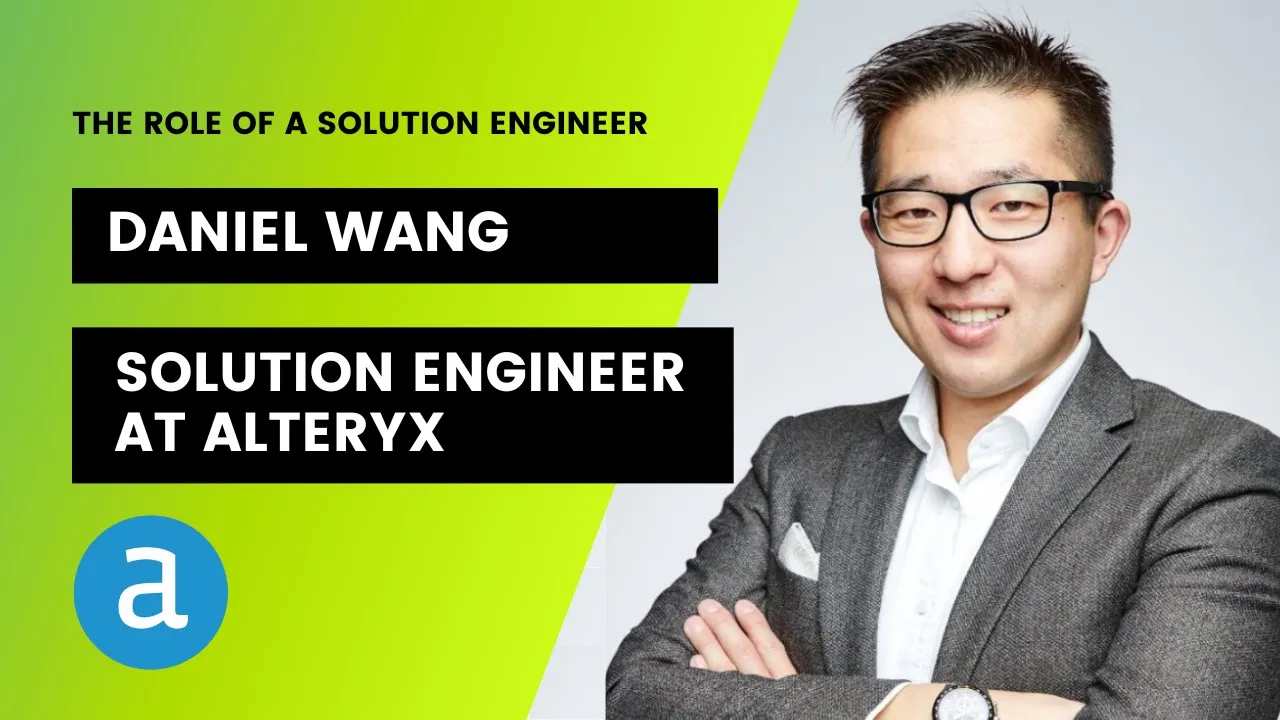
thank you Daniel for joining us today so we can just Dive Right into things are you able to give us a bit of an introduction provide a brief overview of your background and how you got into the field of analytics and software sales yeah yeah of course thanks for having me on the show excited to be here so my name is Daniel and I'm a sales and engineer at elri elri is an endtoend analytics platform and our goal is to allow everyone to leverage data and analytics regardless of knowledge or expertise so my background I
graduated from University of Toronto with electrical engineering and then I did four years of Professional Services so implementing softwares working with customers to implement the software that I was working with then I went and did my MBA after which I went to Consulting and then sales engineering and some other related sales roles so I got into software sales because I was just looking for something a little bit different after Consulting and then a friend suggested I look into sales engine engineering and as I did my research I realized that for me it would be a
perfect blend of working with the business side of things as well as the technology side of things and I had the right amount of challenges I was looking for and when elx Came Calling I realizer analytics in AI company and I really wanted to get into that field was a no-brainer for me awesome that's great and specifically at your company what are some of the key highlights from your role and some of the primary responsibilities and challenges that you face so for this company for me personally one of the most interesting things I've done one
of the most biggest highlights of my career is I got to give a whole demo of the entire platform I think it was the first or second months I was at the company and then so we had to go to a conference and then there was no one to present because the person got sick last minute and then so I stepped up to present that that was very very exciting as for responsibilities my main responsibility is to be the first point of technical contact and sales process so when people have any technical questions like what
does your product do how does it integrate with this other piece of technology showing them a particular use case showing them how the software Works Etc that's where I would leave the conversations I think the biggest challenge I would face overall is especially in the beginning is I need to realize and balance when do I know the answer to a technical subject versus when I really don't because as the first line of technical expert I'm supposed to know the answer but having such a vast platform it's very difficult to know everything about it I'm still
learning new things about it all the time I need to realize when I really just don't have the answer and call the other technical experts in the company who really really do know the answer so that balance is very difficult to strike because I can't just say oh I don't know to every question then nobody will trust me but I also need to know when I don't know something so that to me is one of the biggest challenges I face as as sales engineer overall yeah it seems like it's definitely a job that has its
pros and cons and you get to learn a lot so with that can you walk us through the process of conducting product demos to senior leadership so how do you tailor your presentations to ration with the decision makers and what are some of the key features of alt tricks that you find the most impactful yeah yeah of course so when it comes to product demal we always start with the audience we try to understand and hypothesize what the audience needs from our product what the audience wants to hear what their interest in doing why have
they come to us to ask to see the product and to get their motivations behind it in addition to that elx has Decades of experience and use cases to draw from from that experience we have a general idea of what most roles want with our software so for example we know the people under the CFO what they want from our software we know what it teams what they want from our software Etc and then to refine that sometimes we would have discovery meetings with the senior leader subordinates to understand what the leadership thinks or wants
or sometimes we just have those meetings with those leaders themselves once we understand what they want or what they're looking for then we tailor the demo to those topics those areas are important to them those Concepts those goals and motivations out we have a huge library of use cases and demo asset are built over time so we're able to customize those tailor it to their specific teams their specific daily functions their specific motivations so for example one of the more impactful demos have done recently was to an internal audit team at a bank their leadership
wants to be more automated in their daily work instead of doing everything manually with spreadsheets um and then they want something easy so Auditors without a lot of technical programming backgrounds can easily and quickly start to use it so I prepared a demo with an audit use case that drives home those points how easy alric it is used how it Sports audit methodology and how much faster the whole team can be when using all tricks and instead of using Cel for example overall I think the key message that really resonate with senior leaders is just
how easy it is for altic to pick up and how fast it is to see value so for example typically we see people being able to use ALR after maybe five hours of training to start to build some of the basics after five hours and the workflows they build would save them tens of hours every week hundreds of hours every month Etc so the impact is huge so that kind of message is senior leadership really loves because it's very fast to get their teams up to speed and we are seeing massive benefits from using the
software yeah that's great so that kind of leads me into my next question which is Elric is aimed to make analytics accessible to everyone so how do you approach Bridging the Gap between technical details and the broader business context to a different audiences so again we always start with ad audience so with a group of diverse audience which typically try to explain the concepts as basic as possible in business terms that everyone can understand so that would be to establish a baseline level of understanding in either the software the benefits the technical topic whatever it
is we're discussing usually then when people have questions those questions tend to be more technical more specific to their needs their indust their functions Etc then once they ask those questions I would gauge a technical expertise and experiences from that question and then tailor my response back accordingly or I tried my best to do it sometimes it's kind of hard to do it on the spot but I try to do that as best as I can and then so I would add more technical depth and then when answering those questions I'm more answering just to
that person and that person's technical expertise and level so I get typically more technical than what I'm talking to a broader audience ultimately whatever the question is an answer I always try to focus on the business benefits of using altrix and then when I talk about the technical details it's usually directed to those technical people in the room and so I go a bit more in detail and then I conclude the point with again business benefits so that everyone can understand again and so the key still is try to make it as simple as possible
so that everyone can understand and when you need to go deeper when you need to go get more technical then you do that got it so with that is there a specific experience or success story that you have in mind where your technical expertise played a huge role in closing a deal there was one instance so there was a deal that I took over when we switched the sales engineer to account executive alignments once and that deal the technical side was being handled by a partner and they weren't performing that well so when I came
on board the customer wasn't really engaged the training was a bit flat nobody's really used using the software that much as far as we get tell so what I did was I got to know some of the key users I took time with them and ask them to tell me their most painful processes that they have to do every week and then I asked them to think about those processes and keep in mind that those are the processes I'm thinking elri can help with and then I started helping them build it out with alrix to
Pro our about so because I am pretty good at using Al after a year is of being in this job I was able to resolve their use cases I was able to build a workflow that saved them a lot of time that did something that they previously couldn't do with itself and it's so they were very happy now most importantly I noted down a couple things one what was that use case that they were struggling with without objects to what was the value of of being able to tackle this use case so for example one
of the use cases was they had a list of back orders and the list of back orders was starting to Total about a million dollar they were never able to reduce the amount of dollar value in the back orders because there's a lot of items in there and it takes very long to look through each line and figure out what to do with it so they couldn't really reduce that but with elx because everything was so automated just click a button and the pre-build processes are able to run they were able to reduce that million
doll to $800,000 in just the first week of using alrix to solve it and then after it just gradually went lower and lower and lower so I noted all that down and then I presented those findings to the decision makers saying hey look you have this list of back orders without checks you're able to turn this $1 million back orders into like 100,000 or something so that's $900,000 more of revenue for you look at that return on investment from using alrix right and that was one of the processes that really seal the deal so in
this case it was less my technical expertise but it was more finding out what the value of the software was to them through my technical expertise and once I found out the value I was able to quantify capture it and then show the decision makers and that ultimately sealed the deal so that whole deal really taught me that value selling is very important so value selling is about showing the prospect the value of our software and even better if you can quantify it so for example turning million dollars of back orders down to 100,000 so
that's $900,000 of value just gained so that was very important that is ultimately what buyers look for when they buy software yeah it definitely makes sense so since you work a lot with clients it's obvious that building relationships is key in sales so how do you Foster strong collaborations with them and do you have an example of an exp experience that you've had throughout the sales process yeah of course so building relationships I think personally the most important thing with customers it's to deliver results so I promise something I will deliver and two so that
you care so that you have empathy about their problems showing that their needs are your own needs their challenges are your own challenges when the things go wrong their issues are are your own issues so consistently delivering on what you said you would deliver consistently Sol their problems for them and showing that you do care about those you do care about them that's ultimately what gets good relationships that's ultim what wins their trust you know for example once one of my customers had a a component of the software that just really was not working as
they need to and so I I Hound might not be the right word but I started bugging everyone I could in the organization so solution Architects they're more technal and more knowledge I am product managers the product team and ultimately the product team realized oh where we really need to make an upgrade to this component so that this customer can do what they need to do so by kind of hounding them by kind of pushing our internal resources I was able to get that delivered to the customer and the customer really appreciated that effort so
ultimately it's about solving their challenges issues problems whatever it may be and show that you care that's what builds strong relationships yeah I definitely agree with that that's why I think sales is really interesting because it's also that relationship aspect and not just the selling piece which is awesome and an rapidly evolving Tech landscape obviously staying up to date is crucial so how do you keep yourself informed in the industry yeah that's a great question so I think first one of the things I really love about sales engineering is that through my job I am
exposed to these discussions as I'm talking to prospects I'm talking about people who who are interested in anation software everyone's talking about the latest trends and advancements in the space and everyone wants to know more so I'm constantly Expos to these kind of conversations so that's one way second elx also has a team that does specifically their job is to do competitive intelligence so the latest trends what our competitors are doing with with these latest trends how we stack up against our competitors all that kind of stuff that's what they do and then routinely hear
from them oh this is the latest is this what's going on this is what our competitors are doing this is what we're doing to address those third our product team also incorporates the latest trends in Technologies and our product as best and as quickly as they can so for example one of the latest trends is generative AI it's absolutely one of the hottest topics right now and we are building those features into our platform and we're keeping up with our competitors in adopting generative AI in our platform so through those information sessions internally I'm able
to learn more and more about generative AI learning more about how other people are using generative Ai and how customers are seeing that so I mean I am fortunate to work with a company whose product is at The Cutting Edge of new trends and constantly try to incorporate those and get ahead of the competition that way yeah that was a great answer and that actually leads me right into the last question which was looking ahead how do you think that the space is going to change and evolve especially with AI and emerging technology right so
I think there's going to be two Trends and more things will start to be analyzed more and more people will start to leverage data analytics regardless of the roow and expertise so analy could be simple as moving data from Place A to B with some Transformations or doing machine learning Etc and so all that more and more people are going to do and whether your job is a data scientist or whether your jobs going to be a finance analyst can be ask to do more and more of that or to get ahead in your goal
you're going to be asked to you the more you do some of that the more you will stand out and number two is I think AI will start to play a huge part in analytics as well so we know the power chat gpg you ask a question it gives you back an answer so for example how do I write code to analyze this piece of data it will give you some scaling code to get started I myself have done something similar to that so AI will help make the most repetitive and simplest aspects of Analytics
they will start to automate that and so then it's up to people to finish what the AI started so AI will give you Foundation to get started and then the people refine that code that process whatever and finish it off so I think those are just the two biggest Trends and as for how the role would evolve so the sales engineer role it's evolved to have more scope and responsibilities over time so even as far back as when I first started there's still the thought that some sales Engineers all they did was product demos and
that's really not the case in what I do anymore in addition to product demos now I do training architecture security just to name a few things so as SE sales Engineers we need to be better at the business side and just to know more about not only the product but all the periphery Technologies around it surrounding the product I think that's how the role was will involve and it will only get more in that direction yeah that was great so with your role what's the number one piece of advice that you would give to someone
looking to get into the industry so I think there are three things that makes a successful sales engineer one is technical knowledge two it's being conversational and excellent and three it's about driv and determination so One technical Excellence so ultimately we are meant to be the technical experts so we need to know about the technology we need to know about what technology we're selling we need to know about the technologies that surround our technology we need to know about current trends Etc we need to know all that in order to be knowledgeable and be able
to speak to customers second being conversational action now you know all these things you need to convey them to your customers you need to be able to speak to their circumstance you need to speak at their technical expertise whether that's very technical or now not technical at all you need to be able to hold those conversations just with anyone who are interested in your product that's a right fit so you need to be conversational excellent and third being driven and motivated so sales is at the end of the day we're responsible for a company's reeven
the more we sell the more money a company makes this role does come with some pressure to succeed so you do need that drive and determination 260 sometimes it is a high stress environment with at the end of the quarter we need to close more deep deals we need to make sure that these deals close so there is that level of pressure so you need to be driven and determined to succeed so those three things personally I think are what sc's really need in order to be successful now I think for people trying to get
into these roles there are a few things so like I said the first two things knowledgeable of of technology and being convers excellent so in your roles that you're doing today that's not sales you want to build up those soft skills towards those Direction being able to influence people is a great one because sales right we conving people to buy our software you want to be able to influence their decision making we want to be able to convince them you want to be able to discover what they're thinking you want to guide their decision Mak
right so being able to influence people is a big one the technology if you're not in a very technical role you can always read about it there's countless articles on the internet about every field there is today so you can always read more and more about it understand the latest trends Etc so typically a lot of the entry sales engineer roles you it's not necessary to be knowledgeable about that software when I first interviewed with alrix I didn't know even know that was a company okay so I to learn it on spots and they don't
really care as much about that the software the product it's easier to train but the conversational Excellence part that is a piece of muscle that you can start building in your daily yeah that was great thanks so much Daniel and that concludes all of the questions we had for you today so just wanted to say thanks again for joining us my pleasure thank you for having me