Hey everyone, hope you're doing okay today. So, there's been a pretty big announcement that quietly affects almost every grocery trip, every meal you cook, and honestly, how a lot of us think about food in general. The federal government just announced a brand new food pyramid.
And yeah, it's not the one you grew up with. What's surprising here is that this isn't just a small tweak. It's a full reset of how the government says Americans should eat.
and it directly pushes back on advice that's been around for decades. One thing that really caught my attention is that foods many of us were told to avoid for years are suddenly being welcomed back. And that raises some important questions about what actually works for health long term.
This matters because these guidelines don't just live on paper. They shape school lunches, food assistance programs, and even what doctors recommend. [music] So yeah, stick around because understanding this could genuinely change how you look at your plate.
Before we get into it, I'm curious. When you think about the old food pyramid, did it ever actually match how you eat day-to-day, or did it always feel a little off? Let me know in the comments.
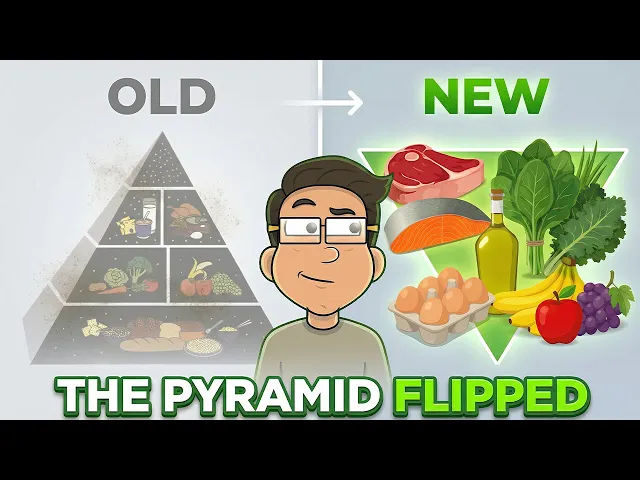
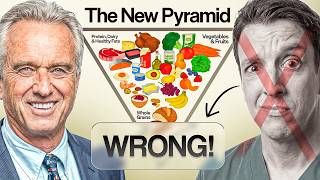
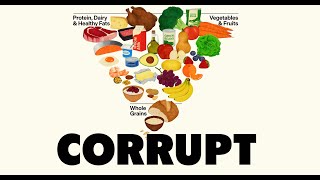
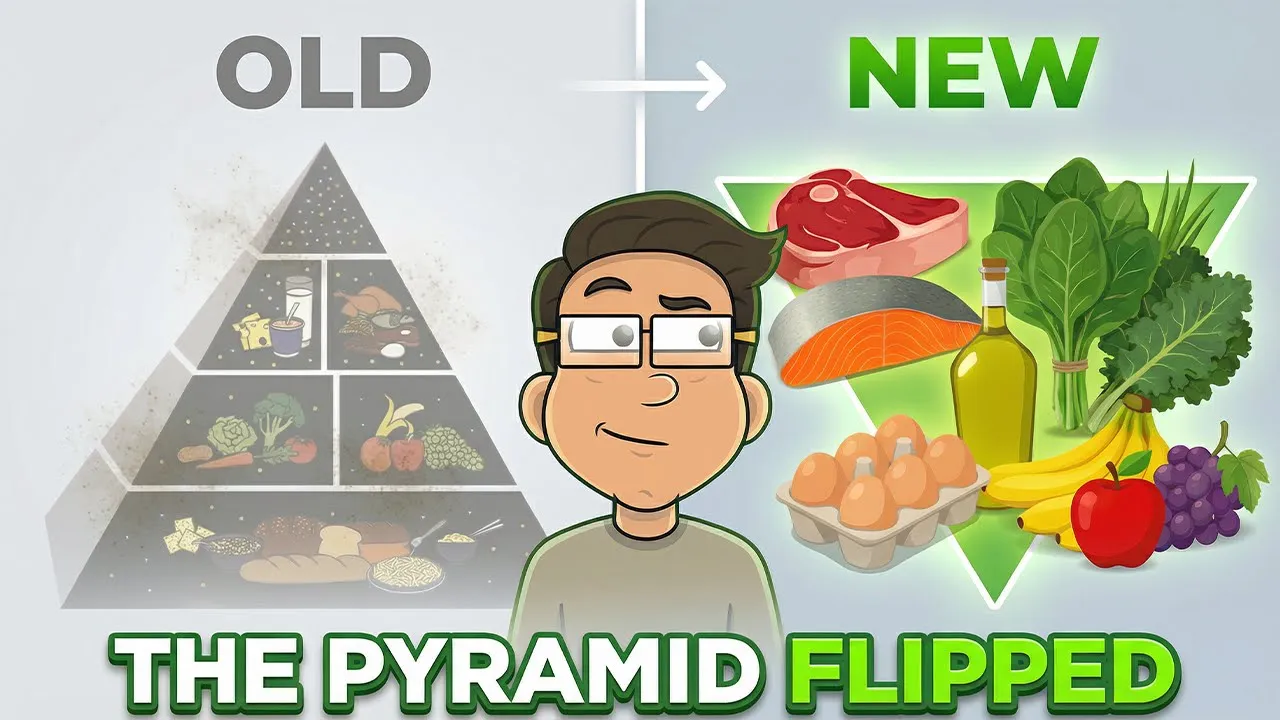
So, now let's talk about what actually changed. The first thing that stands out is that the food pyramid is back. It had been replaced years ago by that plate graphic, but now the pyramid has returned [music] and it's literally flipped upside down.
Foods that used to be at the bottom like bread, cereal, pasta, all that stuff are now at the smallest section. And foods that were once limited or even discouraged are sitting front and center. The big message behind all of this is simple.
Eat real food. That phrase shows up again and again in the new guidelines. And when officials talk about real food, they're talking about things you recognize as food without needing a chemistry degree.
meat, eggs, dairy, vegetables, fruits, nuts, seeds, and fats that come from actual sources. Not powders, not lab flavored snacks, not ultra packaged stuff. Now, this change didn't happen in a vacuum.
The administration under President Trump framed this as a response to decades of rising chronic disease. Obesity rates climbed, diabetes [music] became common, and health care costs exploded during the same time period when lowfat, high carb eating was heavily promoted. The argument [music] they're making is that something clearly wasn't working.
And it was time to rethink the foundation. And one of the biggest shifts is protein. [music] Protein is no longer just a side note.
It's now a core part of the diet according to these guidelines. The recommendation is higher than what many of us learned growing up. For a lot of adults, that means aiming for noticeably more protein each day, whether that comes from meat, fish, eggs, dairy, beans, or even tofu.
And this is where I want to slow down for a second because protein can sound intimidating. People hear higher protein and think extreme diets or bodybuilders, but that's not really the point here. Protein helps with muscle, yes, but it also helps with feeling full, maintaining strength as you age, and stabilizing blood sugar.
Especially for older adults, higher protein intake has been linked to better mobility and less muscle loss. I'll share something personal here. When I started paying attention to protein, [music] not obsessing, just being aware, I noticed I stayed full longer and snacked less without trying to.
That's not a miracle. That's just biology. So this change may feel dramatic, but for a lot of people it could actually feel more natural.
Now along with protein comes something that might surprise even more fat. For years, fat was treated like the villain. Low-fat labels were everywhere.
Butter was bad. Eggs were questionable. Whole milk was frowned upon.
The new guidelines openly say that the war on healthy fats went too far. So fats are now encouraged, especially when they come from whole foods. >> [snorts] >> Think olive oil, avocados, nuts, seeds, eggs, full fat dairy.
Even butter and animal fats are mentioned as options. That's a big mental shift for a lot of people. But here's where nuance matters.
And this is something people can miss if they only read headlines. Saturated fat still has a limit. The guidelines still say keep it under a certain portion of your daily calories.
So, while butter and red meat aren't banned, [music] they're not a free for all either. This is more about balance than permission to eat unlimited steak. And that balance is where things can get confusing.
On one hand, real foods are encouraged. On the other hand, some real foods are calorie dense. That means portion awareness still matters.
Full fat dairy can be helpful, but it's also easy to overdo if you're not paying attention. So yeah, the message isn't eat everything, [music] it's eat intentionally. Now, let's talk about sugar because this is where the guidelines draw a very hard line.
Added sugar is basically out. The new guidance says there's no recommended amount of added sugar or artificial sweeteners as part of a healthy diet. That's a much stronger statement than before.
For kids, it's even stricter. Parents are encouraged to avoid added sugar entirely for younger children. And honestly, if you've ever looked at how much sugar sneaks into foods marketed to kids, this makes sense.
Cereals, drinks, snacks, even things that look healthy on the front can be loaded with sugar. And it's not just sugar that's under scrutiny. [music] Highly processed foods are directly called out.
These are the foods that come in boxes and bags, [music] designed to be hyper tasty and easy to overeat. chips, cookies, sugary drinks, frozen meals with long ingredient lists. The guidelines don't mince words here.
These foods are linked to chronic disease, and there's something to limit as much as possible. And this part of the guidelines actually has broad support, even for medical groups that don't agree with everything else. There's strong evidence that diets heavy in processed foods lead to worse health outcomes over time.
And what's interesting is that these foods often show up most in lower inome households, not because people want them, but because they're cheap and accessible. Which brings us to something bigger. These guidelines affect more than personal choice.
School lunches, military meals, hospital food, and assistance programs all follow these standards. So when the pyramid changes, entire systems have to adapt. Supporters say this could improve health long-term and reduce costs tied to diabetes and heart disease.
Critics worry about whether schools and programs can realistically provide fresh whole foods with limited budgets and staff. That's a real concern. Cooking from scratch takes time, training, and [music] money.
The administration argues that processed food only looks cheap upfront. The real cost shows up later in medical bills, loss mobility, and chronic illness. It's a long-term argument, not an overnight fix.
Another layer here is trust. Some experts have criticized how these guidelines were created, saying the process lacked transparency and relied on a smaller group of advisers. Others argue that the old system was stuck in outdated thinking and needed disruption.
This back and forth matters because nutrition advice only works if people believe it. [music] And here's where I want to pause and reflect with you. A lot of people feel whiplash with nutrition advice.
One decade fat is [music] bad, the next decade sugar is bad, then carbs are bad, then everything is confusing. It's frustrating, and I hear that in comments all the time. What this new pyramid seems to be saying is that the basics still matter.
Eat foods that look like food. Prioritize protein and plants. Don't fear fat, but don't ignore portions.
Avoid added sugar. Limit processed stuff. That's not radical.
Even though the visuals and tone feel new, and what I'll show you next might surprise you. Even though grains were moved to a smaller role, they're not gone. Whole grains are still included.
They're just no longer the foundation. This challenges the idea that we need a big base of carbs at every meal [music] to be healthy. For some people, especially those with blood sugar issues, that could be a relief.
I've seen this play out personally with family members who swapped refined carbs for more protein and vegetables and felt better within weeks. Not because carbs are evil, but because balance shifted. Now, does this mean everyone should eat the same way?
No. Dietary needs vary by age, activity level, health conditions, and culture. The pyramid is a guide, not a rulebook.
That's important to remember. What matters most is that this guidance nudges people away from ultrarocessed convenience and toward intentional eating. Even small changes can add up.
Swapping sugary drinks for water. Adding protein to breakfast. Cooking one more meal at home each week.
These aren't dramatic, but they're powerful over time. The big takeaway is this. The focus is back on real food.
Not perfect food, not trendy food. Just food that supports your body instead of confusing it. Higher protein, sensible fats, lots of fruits and vegetables, and far less sugar and processing.
If you walk away remembering one thing, let it be this. You don't need to chase extremes to eat well. You don't need to fear every ingredient.
You just need to be a little more aware of what you're choosing and why. That awareness alone can make a difference.