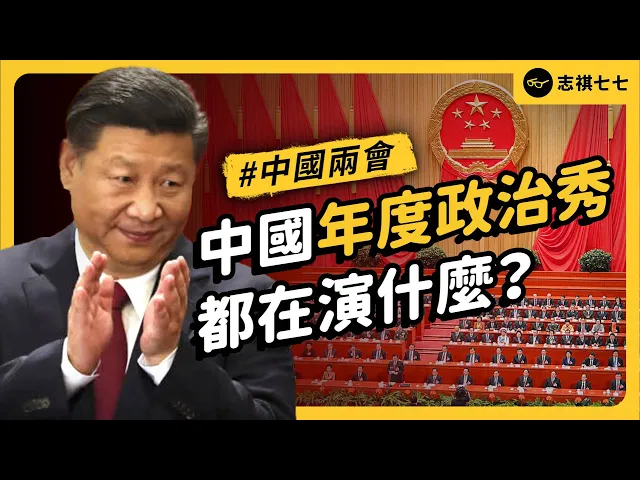
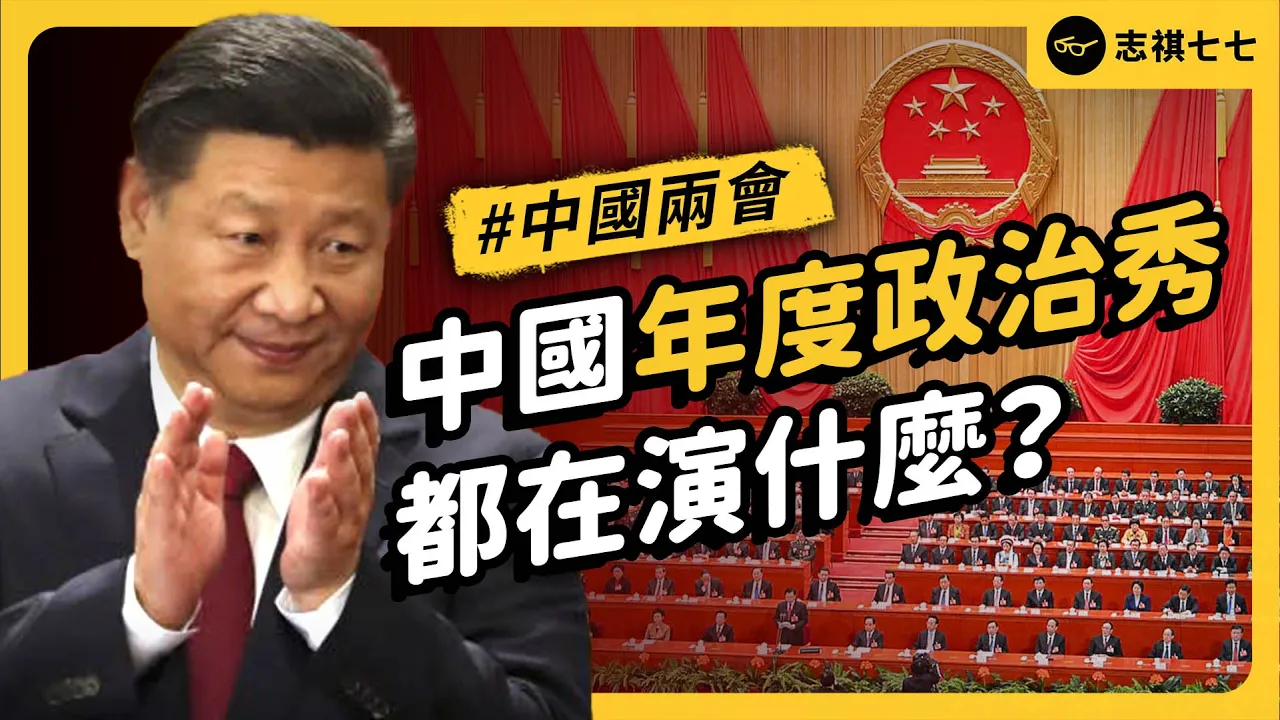
Recently, China held its annual Two Sessions. What the outside world is most concerned about is whether China has responded to the domestic economic crisis and changes in its Taiwan policy. Today, let us talk about the "China Two Sessions"!
Hiho~ Hello everyone, I am Zhiqi! Speaking of China, everyone may think that they are a one-party dictatorship , but did you know that China actually has its own "Parliament". At this time every year, China holds the "Two Sessions", where they review the "Government Work Report", amend legal provisions, etc.
In March this year, the Two Sessions will be held as scheduled. In today's video, in addition to introducing what the Two Sessions are, we will also take a look at China's Two Sessions this year from the two directions of "economy" and "Taiwan" that most people are most concerned about. what?
But before we start today’s discussion, let’s go into some business service time! [China’s Grand Two Sessions] China’s Two Sessions are held at the same time every March. At this time, important Chinese politicians including Xi Jinping will go to the Great Hall of the People in Beijing to deliver speeches and read out During the government work report meeting, the social atmosphere in the capital Beijing will also become more tense.
The government will mobilize hundreds of thousands of police, military police and citizen volunteers to "maintain order. " Ordinary people may be subjected to physical harassment when walking on the road or entering and exiting subway stations. If you go near Tiananmen or the Great Hall of the People, you will be subject to strict body inspection.
Every piece of paper you carry will be read . However, the so-called "two sessions" are actually two different "national level" conferences . One is the "National People's Congress", abbreviated as the National People's Congress, and the other is the "Chinese People's Political Consultative Conference" abbreviated as the CPPCC .
People who can participate in the two meetings have different things to do. [Two sessions: "People's Congress" and "CPPCC" are very different. 】 Those who participate in the National People's Congress are "National People's Congress deputies".
According to the Chinese government, voters first elect "township and county people's congress deputies" at the township and county levels, and then the "township and county people's congress deputies" elect the "provincial people's congress deputies" at the upper level. , National People's Congress deputies" and the powers and responsibilities of this National People's Congress are actually quite large! Not only can they legislate , they can also appoint and remove the President of the State Council, Premier of the State Council, etc.
As for the members of the CPPCC , they are not elected by "election". Instead, various parties and groups first negotiate and propose candidates, and then they are selected by the Communist Party and finally the "CPPCC Standing Committee" There are fewer Communist Party members approved and confirmed than "Deputies to the National People's Congress" and "Members of the Chinese People's Political Consultative Conference". Some of them may be from other parties such as the Democratic Alliance for the Promotion of Democracy, and the power of this "Chinese People's Political Consultative Conference" is relatively small.
They cannot decide on matters and can only participate in consultations. , make suggestions on policies . Although this system looks quite democratic , in fact, no matter which meeting it is, almost all proposals of the Communist Party are unanimously approved .
Therefore, some people describe China's two sessions as just "rubber stamps", which are meaningless . From another perspective , this also means that the outside world may be able to get some clues about China's political trends through the Two Sessions , because many important legal policies were announced at the Two Sessions in the past . [These important events are all related to the "Two Sessions" ?
】 China’s “Anti-Secession Law” that is closely related to Taiwan was passed at the Two Sessions in 2005. At that time, this law claimed that “Taiwan belongs to China” and wanted to “peacefully unify Taiwan. ” Since then, many Taiwanese pro-democracy activists in China have been jailed.
In addition , the familiar 2020 "Hong Kong National Security Law" is also related to the National People's Congress . However, it should be noted that it was not announced at the National People's Congress meeting in March , but was made an exception in June by the permanent organ of the National People's Congress. The four major crimes mentioned in the law passed by the Standing Committee of the National People's Congress are also considered to be to counter the "Hong Kong Anti-Extradition Movement".
Not only is the law promulgated, even Xi Jinping's re-election must go through a nominal vote in the Two Sessions last year. All 2,952 deputies present at the National People’s Congress meeting voted in favor of making Xi Jinping the second Chinese president in history to be re-elected for two terms . Okay, having said that, let’s take a look at the main highlights of this year’s Two Sessions [ How to solve economic problems?
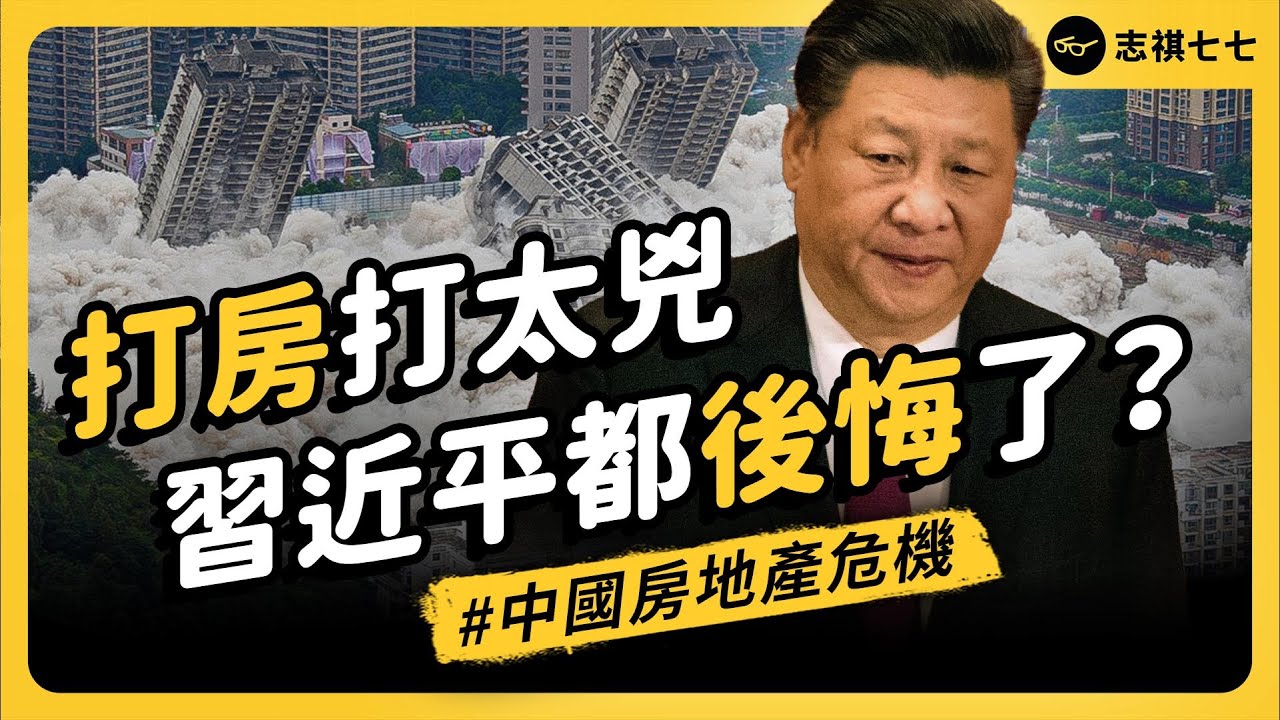
】 One of the biggest focuses of everyone's attention is China's economic problems . Due to various reasons, China's economy has been hit hard in recent years, and a serious real estate crisis broke out last year . The youth unemployment problem continues to hit new highs.
The central government even blocked the announcement and did not announce the unemployment rate on these issues. , First of all, Premier Li Qiang mentioned in this year's "Government Work Report" that China's GDP growth target this year is also set at 5% . In addition, he also mentioned the issuance of "ultra-long-term special treasury bonds" to be used for major national strategies, In terms of building security capabilities in key areas, RMB 1 trillion will be issued first this year to use this national debt to stimulate the economy .
In response to the real estate crisis, the Chinese government stated that they will optimize real estate policies and provide support to real estate companies in different situations in terms of "financing needs . " As for the unemployment part, they said they would create more than 12 million new jobs in all cities and towns and bring the surveyed urban unemployment rate down to about 5. 5% .
Then, they also proposed a new direction this year to vigorously develop "new quality productivity" to "Technology" innovation is the main force for economic development. This goal has also received enthusiastic response from Lei Jun, a representative of the National People's Congress and the founder of Xiaomi. Although it seems that the government has proposed many measures , many media and experts have criticized these goals as being a bit unrealistic.
Actual [economic goals are unrealistic? 】 Foreign media such as Bloomberg in the United States believe that China’s economic goals are like a “political ledger” that may not necessarily “reflect” or “response” to the actual economic situation because usually, Xi Jinping will first instruct everyone to complete a certain goal within a number of years. After the economic plan , the State Council will then back- calculate the minimum number of goals that should be achieved every year .
The problem that easily causes this is that the goals they set will be out of touch with reality . Many people are not optimistic that China can achieve a growth rate of 5% . In addition, There are also criticisms that these policies only give slogans but do not explain the specific steps to achieve them, such as the "new quality productivity" newly proposed this year.
Many people are not optimistic about it . Although the development of high technology is a trend , the United States has increased the strength of its chip blockade to restrict many advanced technologies. Chips and chip-making machines are exported to China.
However, Chinese officials did not explain how they would break through the chip blockade at the two sessions. There are also criticisms. It seems that many people are abusing the seemingly trendy slogan of "new productivity" .
Originally it was about high-tech industries , but at the two sessions , even representatives from the real estate industry, education sector, etc. said that they wanted to develop "new productive forces. " [Are there any new trends in politics?
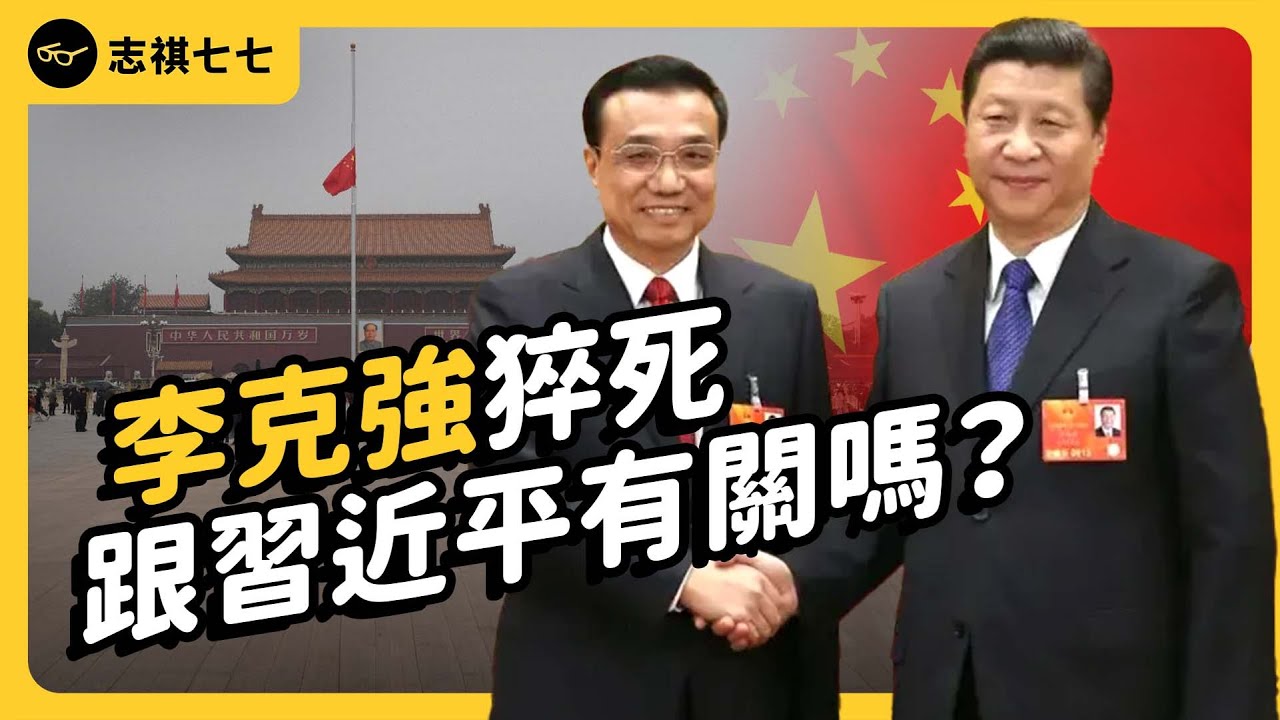
】 This two sessions is the first two sessions after China's new Premier Li Qiang took office . The outside world generally wants to use this opportunity to see what kind of governance style he has . In addition, there have been frequent personnel changes at the top levels of the Chinese government recently.
Minister of Foreign Affairs Qin Gang and former Defense Minister Li Shangfu were all dismissed not long ago , so many people are paying attention to whether there will be new personnel changes at the two sessions. In conclusion, although there were no personnel changes, there was an important resolution at the two sessions. The two sessions passed the amendment to the "Organic Law of the State Council" and added the following new clauses: "Adhere to the guidance of Xi Jinping Thought" and "Adhere to the overall leadership of the party.
" " Another focus is that as a rule, a "Prime Minister's Press Conference" is held during the two sessions, with the Premier of the State Council presiding over the media to answer questions about new policies. However, this year, China directly canceled the "Prime Minister's Press Conference", breaking a 30-year tradition. The outside world generally believes that all these signs indicate that China’s political atmosphere is getting tighter [A tighter political atmosphere?
】 In vernacular, austerity means that power will be more concentrated in the hands of Xi Jinping. In addition to the law clearly stating that the State Council must adhere to the leadership of Xi Jinping, Premier Li Qiang of the State Council also directly stated at the meeting that China's achievements in the past year were "completely" attributed. As for "Xi Jinping's leadership and helm" , the number of times the Prime Minister mentioned Xi Jinping in the government work report was also more than in previous years .
The outside world interpreted that this means that the power of the State Council has been reduced , and Xi Jinping's personal power will be further expanded . Moreover, since 1993 China's "Two Sessions" have the Prime Minister's press conference. Although the media's questions are pre-screened , it is still a rare opportunity for the media to interact with high-level government officials .
However, this time they directly canceled the editor of Nikkei Asia, thinking that this means that the CCP is too lazy to pretend to be transparent anymore. Publicly , a senior researcher at Stanford University also posted on Won't you become more nervous as well? [Are cross-strait relations more tense?
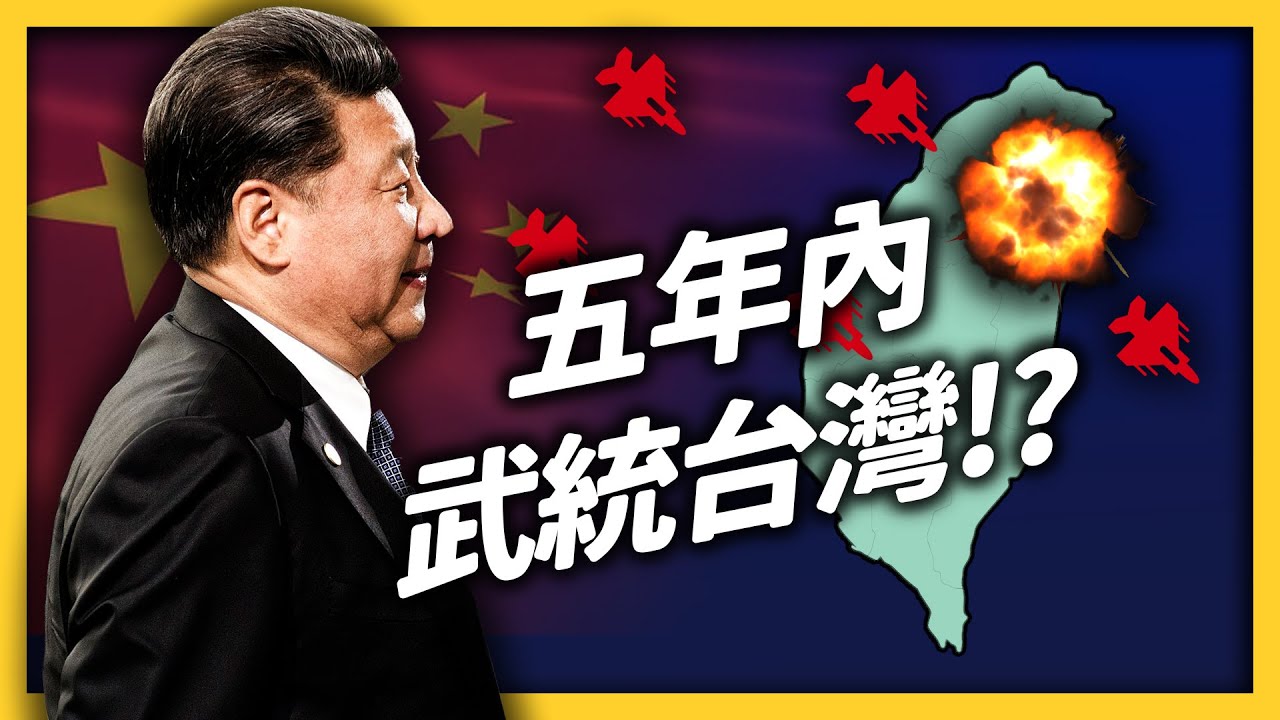
】 Cross-Strait relations are generally observed from the two directions of China's military subordinates and Taiwan policy . At the beginning of this year, Taiwan's presidential election was also won by the Democratic Progressive Party. Later, the controversy over the capsizing of a Chinese fishing boat in Kinmen broke out.
Therefore, in the Two Sessions Before, the outside world had speculated that China's attitude might become tougher. For example, the "Anti-Secession Law" explicitly included "anti-Taiwan independence" related content. Although as a result, China did not directly establish "anti-Taiwan independence" related laws .
Some people noticed that when Li Qiang mentioned the need to "unswervingly promote the great cause of the reunification of the motherland," he did not emphasize the need for "peaceful" reunification as before. This once caused everyone to speculate whether the CCP is inclined to use "force" to solve the problem? Regarding this point, although Xi Jinping later stated that his policy is still to "promote the process of peaceful reunification of the motherland," under the tight national economy, China's military budget this year is as high as 1.
6 trillion yuan, which is more than last year's military expenditure. An increase of more than 100 billion . Regarding this point, the director of our National Security Bureau said that we have not seen any information to show that the tension in the Taiwan Strait continues to rise .
They will closely monitor the situation in the Taiwan Strait and if there is any abnormality, they will respond according to the predetermined plan. In addition, some people I believe that although the CCP has not stated clearly, their expansion ambitions are still growing and cross-strait relations may continue to be tense. [Our point of view] Before entering the point of view , we would like to thank you in advance.
Special thanks to all members of Zhiqi Qiqi because there are With everyone's support and sponsorship, we can continue to operate this channel and provide a different space for discussion on many issues. Thank you very much! If you are willing to support us to go further, please click the "Join" button on the channel homepage to become our member , or you can also use "Super Thank You" to support us with a small amount .
Okay, then again, we don't know that the power has already been lifted. How can Xi Jinping more centralize power in the future? After reading a lot of discussions, we feel that the simplest concept may be that the State Council and the National People's Congress, which originally had a chance to make a voice, may become less and less important.
But we believe that whether it is the economy or cross-strait problems , etc. cannot be solved by expanding his personal power. On the other hand, more concentrated power may easily lead to more risks.
Take economic policy as an example. Under Xi Jinping’s dominance, all policies follow him. But is the information he has access to really all true?
Does anyone dare to tell him that Mr Xi’s policies have made the people poorer? Although the slowdown in China's economic development may be a positive opportunity for certain industries in Taiwan , some people may even be optimistic that China may soften its attitude and try to seek economic cooperation with Taiwan . However, we believe that based on Xi Jinping's past performance Judging from his attitude in the short term, the possibility of him expressing goodwill towards Taiwan or giving up on reunification should be very low , and he may not even rule out using more radical methods to shift the focus of immigration grievances .
Therefore, we feel that at this stage, at least in terms of national defense, Taiwan should still maintain a certain degree of vigilance . However, this is just our own observation. If you have different opinions, please leave a message to share!
At the end of today, let me ask you how do you think Xi Jinping will deal with China's economic difficulties ? Finally, if you like today's video, please share it to let more people know what the "China Two Sessions" are doing! In addition, you can also click here to see "China's One Belt, One Road Policy" and "How China became a "wall" country.
" So, today's Zhiqi Qiqi ends here . See you tomorrow night!