Why do so many people, even intelligent, motivated, and well-intentioned ones, keep repeating the same self-destructive patterns? Why is it so common to start something with enthusiasm only to abandon it halfway? Why do we sabotage healthy relationships, procrastinate on our most important goals, and make decisions that we know will harm us, and yet we continue to make the same choices?
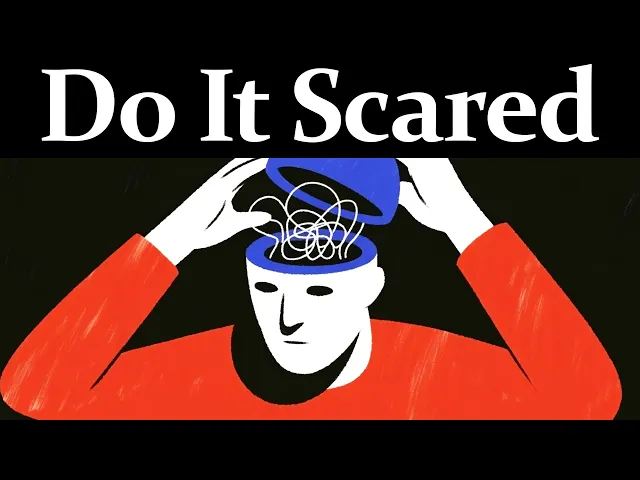
The most common answer is lack of discipline, laziness, insecurity, low self-esteem, but this explanation is wrong, deeply wrong. According to neuroscientist Robert Sapolsky, author of Behave the Biology of Humans at Our Best and Worst, self-sabotage is not a character flaw, it is a neurological conflict, a biological battle fought inside your head between two brain systems that have completely different goals. On one side, your prefrontal cortex, responsible for rational thinking, planning, and self-control.
On the other, the limbic system, the most primitive and instinctive part of the brain, programmed to seek immediate pleasure and avoid any kind of discomfort. And in this silent battle, the limbic system almost always wins. This is not a metaphor, it's science.
Your brain has been shaped by millions of years of evolution to ensure your survival in ancestral environments where danger was constant and tomorrow was uncertain. In such a scenario, the brain that acts quickly, avoids risks, and rewards immediate impulses is the one that keeps you alive. The problem is that in the modern world, this same brain becomes an internal saboteur, because it still reacts as if you were fleeing from predators when in fact you are just trying to write an email or start a personal project.
The most disturbing part is that this system was not designed to help you achieve dreams. Your brain is not concerned with your happiness, purpose, or self-actualisation. It is optimised to keep you safe and comfortable in the short term.
And that is precisely why you fail, not due to weakness, but out of obedience to a brain that is operating with outdated software. In this video, we will take a deep dive into the workings of the human mind and understand why we self-sabotage, even when we want to change. We will explore the neuroscience of procrastination, impulsivity, and decision fatigue.
And above all, we will discover how to hack this system, not with heroic willpower, but with strategic intelligence. Because if you keep fighting against your own brain, you will lose. But if you learn to redesign the battlefield, you can finally stop self-sabotaging.
This video is not just a warning, it is a survival manual for those who live in war with themselves. Most people live with the illusion that there is a coherent self in control, a rational mind that observes, decides, and acts with awareness and logic. This narrative is comfortable.
It supports the idea that we are autonomous beings, owners of our thoughts, behaviours, and choices. But, according to Robert Sapolsky and other contemporary neuroscientists, this view is a simplistic construct. The truth is much more complex and much more uncomfortable.
The human brain is not a unified entity. It is a colony of modules, systems, and circuits that constantly compete with each other for control. You do not have a brain.
You have multiple systems operating at the same time, often in conflict. And this internal multiplicity explains why you say you want to change, but keep repeating the same patterns. Why you plan to wake up early to work out, but when the time comes, you hit the snooze button.
Why you promise to focus, but end up compulsively checking social media. It's not because you are weak. It's because parts of your brain have completely different agendas, and the faster one almost always wins.
Imagine the following. Your prefrontal cortex, the most evolved part of the brain, wants you to write that important project. It has a long-term vision.
It knows that this is essential for your future, but at the same time, your limbic system, a much older and more primitive structure, detects a slight discomfort, boredom, anxiety, and it immediately triggers a desire to escape. Maybe a YouTube video, a snack, a glance at notifications. The impulse does not go through reason.
It emerges and dominates. Because the limbic system is faster, more automatic, and has much more evolutionary training time. Sapolsky shows that the reaction time of the limbic system is in milliseconds.
It has already triggered an emotion, an impulse, and a justification before you even become aware of what you are doing. When the prefrontal cortex finally tries to react, it is already too late. The self-sabotaging behaviour has occurred, and then another circuit comes in, that of rationalisation.
You invent a story to explain why you couldn't do it. I'm too tired today. I'll make up for it tomorrow.
It wasn't that important anyway. Your brain is not just sabotaging your actions. It is deceiving your consciousness.
This internal conflict is not rare. It is the basis of the human condition. Freud tried to capture it with the ideas of id, ego, and superego.
Jung called it the shadow. Today, neuroscience shows that this conflict has a physical basis. It is a clash between brain regions with opposing functions.
The problem is that we have been educated to believe that wanting to change is enough. That willpower is everything. But when you understand that there are multiple selves within your mind, you realise that self -sabotage is not a moral error.
It is an internal architecture fighting against itself. This understanding changes everything. Because as long as you continue to believe that simply deciding to change is enough, you will keep feeling frustrated.
The key is to understand that there is no sovereign self making decisions. There are parts of your brain that need to be managed, tamed, redirected. And this requires more than strength.
It requires strategy. But what caused the human brain to be designed this way? Why do we have such contradictory systems operating at the same time?
The answer lies in evolution. In the next segment, we will dive into the past of our species to understand why your brain is outdated and how this shapes every act of self-sabotage you commit today. If this content is making sense to you, click the subscribe button and subscribe to the channel.
Thank you for your support. To understand why we sabotage our own goals, we need to face a disconcerting truth. The brain you use today was not made for the life you lead.
It is the product of millions of years of adaptation to a world that no longer exists. This mismatch between brain structure and the modern environment is one of the central causes of self-sabotage. For most of human existence, we lived in hostile, unpredictable and brutal environments.
Survival was the absolute priority. Our ancestors were not trying to be productive, creative or emotionally fulfilled. They were trying not to die.
And for that, the brain developed quick response mechanisms, fleeing from threats, seeking immediate food, conserving energy and avoiding any unnecessary risk. These behaviours, now considered impulsive or self-sabotaging, were absolutely functional for survival in scarcity environments. Now think about modern life.
You no longer need to hunt for food. You do not live under constant threat from predators and you can plan years ahead. But the brain continues to operate with the same ancestral circuits.
When you try to start a long-term project, maintain a disciplined routine or develop a complex skill, you are demanding that the prefrontal cortex take the reins of your mind. But this system, despite being evolved, is slow, limited and vulnerable to fatigue. Meanwhile, the limbic system, which seeks immediate pleasure and avoids pain, reacts in milliseconds and makes decisions before you even realise what is happening.
Sapolsky emphasises that the brain did not evolve to ensure your success or personal fulfilment. It evolved to maximise your chances of survival and reproduction. This means that the most powerful circuits of the mind are not focused on what will benefit you five years from now.
They are focused on what will relieve your discomfort right now. Your brain prefers the dopamine from a like on social media to the quiet progress of meaningful work. It prefers the numbing comfort of procrastination to the productive discomfort of creation.
Because, from an evolutionary standpoint, today has always been more important than tomorrow. This phenomenon has a name evolutionary mismatch. We live in a world of abundance but with a brain programmed for scarcity.
We are bombarded by stimuli, notifications, ultra-processed food, infinite entertainment, that exploit exactly the same circuits that once ensured our survival. Self-sabotage, in this context, is not a malfunction. It is the perfect functioning of a system adapted to an archaic and hostile world, being forced to operate in an overstimulating and overly demanding environment.
And this mismatch not only influences what you do but also how you value rewards. Your brain literally places more value on immediate pleasures than on future achievements. This phenomenon is called temporal discounting and it is directly linked to dopamine, the neurotransmitter that dictates what your brain wants to pursue.
In the next segment we will dive into this biological mechanism to understand why dopamine may be the invisible villain behind your self-sabotaging behaviours and how it makes the future seem less interesting than five minutes of pleasure. Imagine you have two options. Work on a project that could transform your life in a year or watch an episode of your favourite series right now.
You know which choice would be more beneficial in the long run. Yet something in you pushes towards the easier, more comfortable, quicker path. That something has a name.
Dopamine. For a long time dopamine was called the pleasure neurotransmitter. But modern neuroscience, as Sapolsky makes clear in Behave, reveals a more accurate and much more concerning truth.
Dopamine is not about pleasure itself. It is about the anticipation of reward. About motivation.
When you feel the urge to do something, eat, check your phone, buy something online, open the fridge for the fifth time, it is dopamine that triggers that impulse. And it is radically biassed. It prefers immediate, tangible and easily accessible rewards.
This phenomenon is called temporal discounting. Your brain literally discounts or reduces the value of a reward as it moves further away in time. In other words, the farther away the gratification is in the future, the less it is worth to your dopaminergic system.
A chocolate now has more neurochemical impact than losing five pounds in three months. A short video now generates more dopaminergic activation than studying to change careers. This is not a failure of self-control.
It is a deeply rooted biological bias. Sapolsky shows that the dopamine system evolved to favour quick decisions in unpredictable environments. In a savannah full of risks, it was more advantageous to enjoy a ripe fruit now than to wait for an uncertain hunt tomorrow.
Today, this same mechanism makes us compulsively check social media, jump from task to task, abandon long-term commitments. We are addicted to dopamine spikes and the entertainment industry, social media and ultra-processed foods. They all understand this better than we do.
They design products that hijack our reward system, tricking our brains with cheap instant gratifications. And here's the most perverse point. The more you give into immediate dopamine, the more your brain learns that this is the right path.
It strengthens those connections, creates habits, automates. Over time, it's no longer even necessary to think. You are already self-sabotaging on autopilot and what was once a choice is now a reflex.
You don't even notice when you're doing it. Dopamine not only sabotages your goals, it shapes who you are becoming. But if dopamine is so powerful, how do you resist it?
How do you break the cycle of immediate reward and re-educate your brain to value what truly matters? The answer is not in willpower. It lies in the design of the environment, in friction engineering, and in the strategic use of dopamine against itself.
In the next segment, you will discover how to start reprogramming your mind with practical neuroscientifically grounded tools so that self-sabotage ceases to be the norm and progress becomes inevitable. There is a deeply rooted idea in our culture that success, productivity, and self-control depends solely on willpower. That if you want it enough, resist enough, and strive with Spartan discipline, everything will be possible.
But modern neuroscience, especially the studies by Sapolsky, dismantles this illusion with surgical precision. The truth? Willpower is a limited resource and if you rely on it to overcome self-sabotage, you've already started losing.
The prefrontal cortex, the most sophisticated part of the brain responsible for self-control, planning, and moral decisions, operates like a muscle. And like any muscle, it gets tired. With every decision made, every impulse resisted, every task initiated, this system consumes metabolic energy and approaches fatigue.
This is known as ego depletion or willpower depletion. In other words, the more you need to decide, the weaker your control becomes. And the weaker it gets, the greater the chance the limbic system, the emotional and impulsive brain, takes over.
Sapolsky explains that throughout a typical day, the prefrontal cortex is bombarded by hundreds of micro decisions. What to wear, what to eat, how to respond to each message, how to handle interruptions, whether or not to open that link, resisting the urge to check your phone every five minutes. All of this consumes cognitive energy.
And by the end of the day, when you should be focussing on your most important goals, studying, writing, training, creating, you are already exhausted. Not because you are weak, but because your rational brain is drained. And this exhaustion is not just psychological, it is physiological.
Studies show that during periods of intense mental effort, the metabolism of the prefrontal cortex changes, and the brain starts to conserve resources, functioning in low energy mode. When this happens, the automatic and instinctive systems, which require much less energy, take control. That's why you order delivery even when there's food in the fridge.
That's why you watch hours of useless videos, even knowing what needs to be done. The autopilot takes over, and the autopilot is programmed for the easiest path, not the right one. This reality shatters the myth of unlimited self -control.
No one is disciplined all the time. Not elite athletes, not monks, not productivity geniuses. What these people do, and what most ignore, is structure their lives to minimise decisions and reduce the number of times they need to use willpower.
They create fixed routines, automate healthy behaviours, eliminate temptations from their environment, and protect their peak energy times for the most demanding tasks. If you need to make a decision every time you act, you are fighting against your own biology. But if you turn actions into automatic habits, you reduce where and increase your chances of success.
The battle against self-sabotage is not won at the moment of choice. It is won beforehand, when you set up your environment and create systems that prevent the inner saboteur from taking control. And that's exactly what we will talk about next.
How to intelligently design your routine, your environment, and your mental triggers, so that the desired behaviour becomes the path of least resistance, and sabotage becomes something difficult, uncomfortable, and even unlikely. In the next part, you will learn how to use habit architecture, behavioural design, and the dopamine circuit itself to your advantage. What comes next is not motivation.
It is mental engineering. If what you're hearing resonates with you, you'll find real value in my ebooks. Beyond the Shadow breaks down Jung's core ideas, while Dialogues with the Unconscious gives you a 30-day path to apply them in your life.
Both are linked in the pinned comment. If the brain is a biological machine optimised for immediate survival, and not for self-actualisation, then the only way to overcome self-sabotage is not by fighting against it, but by reprogramming it. Most people fail not due to a lack of effort, but by relying too much on their willpower and neglecting something much more powerful, the environment.
This is where behavioural engineering comes in, or the intelligent design of contexts that shape your behaviour even before you need to decide. Robert Sapolsky makes it clear, the limbic system, impulsive and fast, wins because it responds first. It does not wait for rational analysis, it acts.
Therefore, if you want to overcome yourself, you need to ensure that when this system is activated, the right option is also the easiest and most accessible option. Self-sabotage only exists because, at the exact moment of impulse, the sabotaging path is more available, more automatic, and less costly than the desired behaviour. To change this, you need to manipulate the invisible variables that shape your action, friction, reward, and automation.
First, eliminate choices. Every choice requires energy, and each choice is a chance for your brain to fail. That's why great leaders, athletes, and high-performing artists minimise the number of trivial decisions.
Steve Jobs wore the same outfit. Barack Obama said he didn't want to waste energy choosing what to eat or wear. This is not eccentricity, it's self-control economy.
If you want to stop eating junk food, don't buy it. If you want to read more, leave the book on your nightstand. The less you need to decide, the greater your chance of maintaining the behaviour.
Second, increase the friction of sabotage and reduce the friction of progress. The brain follows the path of least resistance. If you want to stop using social media, log out, remove the apps, set long passwords.
If you want to wake up early to train, have your clothes ready, your water bottle full, your shoes next to your bed. If it's easier to perform the desired behaviour than to give in to the impulse, you win without having to fight. And that changes everything, because what you want is not to win every day with force.
You want not to have to fight. Third, use dopamine against itself. If dopamine responds to the anticipation of immediate reward, then associate the difficult behaviour with something pleasurable.
This concept is known as temptation bundling. Only listen to your favourite podcast while on the treadmill. Only drink that special coffee after completing 25 minutes of deep focus.
This way, the brain learns to expect something good after the effort and starts to create a new pattern of association. Instead of fearing the task, it begins to desire it. Fourth, turn intentions into automatic commands.
Instead of saying, I will meditate tomorrow, say, if it's 8 a. m. , then I will meditate for 10 minutes.
This is called if-then planning, and it is one of the most effective mechanisms for converting intention into concrete action. The brain is terrible with vague decisions and excellent with fixed routines. By creating specific triggers, you eliminate the critical moment of choice, which is exactly where sabotage happens.
These tools are not productivity hacks. They are shields against the sabotaging instincts programmed into your biology. The more you structure your day with systems, the less you need to rely on motivation or self-control.
And the more these actions become automatic, the more the brain learns that this is the standard path, the new normal. But even with all these external adjustments, there remains an internal vulnerability, the right moment to act. There is an ideal time, a biological window in which your rational brain is stronger, clearer, and more resistant to sabotaging impulses.
In the next segment, we will reveal how neurological timing can be the final secret to transforming your days and shielding your mind against the collapse of willpower. Because just as important as what you do, is when you do it. Have you ever wondered why, at certain moments, everything seems to flow easily?
And at other times, even the simplest tasks feel impossible? Have you noticed how your best ideas come at specific times, while at other periods you can barely keep your eyes open, even with a packed schedule? This is not a coincidence.
It's neurobiology. Understanding how your brain operates at different times of the day might be what you need to stop self-sabotaging once and for all. The prefrontal cortex, your rational command centre, is not always available at its maximum capacity.
It has peaks of energy, clarity, and self -control that vary according to circadian rhythm, sleep, nutrition, and stress levels. According to Sapolsky, it is during the early hours of the day, right after waking up, that this part of the brain tends to be the most fresh, energised, and functional. It is at this moment that your mind has the greatest capacity to resist impulses, maintain focus, and make long-term decisions.
But what do most people do upon waking? They open their phones, dive into distractions, respond to trivial messages, get bogged down in irrelevant decisions, and exhaust their executive circuits early on. By the time it finally comes to doing something important, the brain is already drained.
The internal saboteur, the limbic system, takes the wheel without resistance. To break this pattern, you need to protect your cognitive golden window. This means scheduling the most important, demanding, and transformative tasks for the times when your prefrontal cortex is most active.
It means shielding your morning, or another period of greater clarity, if you are a night owl, from noise, distractions, and unnecessary decisions. Reserve that time for what truly matters. Writing, studying, creating, planning, solving.
The part of your mind that wants to change your life needs to step in while it still has the energy to win. Moreover, aligning your routine with your biological rhythm drastically reduces the need for willpower. You don't have to fight against yourself when you act at the right moment.
This is behavioural intelligence. It's about synchronising what you want to do with when you are most likely to succeed. Deep down, what Sapolsky shows us is brutally honest.
You won't stop self-sabotaging with motivation, promises, or good intentions. That's romanticism. The solution lies in recognising that your brain was made for survival, not for success, and from that, designing a system that works with your biology, not against it.
Internal sabotage is not a failure. It's a behaviour consistent with a machine built to escape pain, seek pleasure, and conserve energy. But now you know this, and that changes everything.
Because once you understand the machine, you can learn to operate it, and even reprogram it. Now tell me, which of these strategies do you need to apply immediately? Comment below.
I read everything and want to know which part impacted you the most. If this video helped you understand what happens inside your head, don't stop here. The next video is just as important as this one, and it could be the next step for you to finally break the cycle of self-sabotage.
Click and keep watching. Your transformation is just beginning.