13 Major Events That will Transform US in 20 Years (Do you remember the first time you heard about self-driving cars, virtual reality, and 3D Printing? It sounded like science fiction. But fast-forward to today, and those "futuristic" concepts are a reality.
Now, imagine what the next 20 years will bring. The United States of 2044 might be unrecognizable compared to the country we know today. due to drastic changes from social movements, climate crisis, and terrifying applications of technology.
Number 13: Personalized Medicine Personalized medicine is set to revolutionize healthcare by leveraging advancements in medical technology and genetic engineering. Genetic testing and analysis allow for treatments tailored specifically to an individual's genetic makeup. Historically, treating medical conditions has been a trial-and-error process; not every treatment works for everyone.
For instance, a person's genetic profile can determine which medications are most effective for their illness. If a patient has a genetic makeup that suggests penicillin won't be effective, doctors can prescribe a better alternative right from the start. This approach not only personalizes therapies but also enhances treatment effectiveness while minimizing adverse side effects.
Ultimately, the move towards personalized medicine is expected to lead to better health outcomes and longer lifespans, reshaping the future of healthcare. Number 12: Universal Basic Income or UBI In the next two decades, the United States will likely face a reckoning with automation and job displacement, pushing the country to adopt a Universal Basic Income (UBI). As automation advances, more jobs will inevitably disappear, leading to increased poverty.
UBI isn’t just a safety net—it’s a necessity. It ensures that every citizen has a minimum income, regardless of employment status, allowing them to meet basic needs and potentially pursue personal growth, innovation, or even entrepreneurship. The logic is straightforward: fewer jobs mean more poverty.
It’s one thing to be poor due to personal circumstances or bad luck, but it’s another when the country simply has more people than jobs. Some might dismiss the idea, thinking it won’t affect them, but that’s a dangerous assumption. When it’s your job on the line, the need for UBI becomes painfully clear.
It’s a cycle—more poverty leads to more crime, which demands more policing, more prisons, and ultimately, higher costs. UBI could break that cycle before it spirals out of control. Critics argue that UBI would be too expensive and discourage work.
They claim it undermines the American work ethic. But let's consider the alternative: too much poverty leads to higher crime rates, which means more spending on policing and prisons—costs that could exceed the expense of UBI. And UBI isn't some untested theory.
Alaska’s Permanent Fund, which has provided residents with $878 to $2,072 per year, is funded by the state’s oil and gas revenues. In 2022, every resident received $3,284. Several other countries have similar programs.
If UBI becomes necessary in the U. S. due to automation, it’s likely we’d see a tax on automation and artificial intelligence to fund it.
It’s not a question of if, but when. Number 11: Electric Vehicles Become the Norm This next prediction might just stir up a bit of a debate in the comments. So, approach it with an open mind and see where it takes us.
By 2044, electric vehicles (EVs) will have become the norm in the United States, transforming the transportation landscape and having a profound impact on the environment, economy, and daily life. To put this in perspective, in 2020, EVs accounted for just 2% of new car sales in the US. Fast forward to 2044, and that number will have skyrocketed to over 90%.
This seismic shift will be driven by a combination of government policies, technological advancements, and changing consumer preferences. Technological advancements will be another key driver of the EV revolution. Improvements in battery technology will enable EVs to travel longer distances on a single charge, alleviate range anxiety, and make them more practical for long road trips.
To illustrate, by 2044, EVs will be able to travel 300-500 miles on a single charge, a significant leap from the 200-300 miles of today. Furthermore, charging times will decrease dramatically, with some EVs able to reach 80% capacity in under 15 minutes, making them as convenient as filling up at the gas pump. The impact of this shift will be far-reaching.
The growth of the EV industry will create new job opportunities in manufacturing, sales, and service. Cities will need to adapt to the increased demand for charging infrastructure, leading to changes in urban planning and development. Moreover, the convenience of home charging and the ability to charge on the go will alter daily routines and habits.
To put it simply, the rise of EVs will fundamentally change the way we live, work, and travel. Before we continue, make sure to hit the Subscribe button and click the notification Bell to stay updated with our future videos. Number 10: Virtual Reality And Augmented Reality Only three decades ago, the first real smartphone hit the market and made screens a staple in our lives.
It completely changed how we communicate, work, travel, shop, and more. Now, we’re standing on the brink of another technological revolution with virtual reality (VR) and augmented reality (AR). Most people know VR as the experience where you put on a headset and get immersed in a computer-generated world, like a game or a movie.
But that’s just the basic version. AR, on the other hand, is when you wear glasses that let you see the real world around you, but with digital elements overlaid onto it. Remember Pokémon Go?
That’s AR in action—you could see those little creatures through your phone camera, but they weren’t actually there. VR and AR are poised to transform a wide range of industries. In education, for instance, students could dive into virtual environments that make learning far more engaging.
Imagine a teacher saying, “Today, we’re exploring the surface of Mars,” and with a click, the whole class feels like they’re standing on the red planet. What used to be the stuff of science fiction is becoming a real possibility. Entertainment is also set to get a major upgrade.
We’re not far from a time when movies aren’t just something you watch on a screen—they’ll be all around you, fully immersive, thanks to VR. Healthcare will see significant changes too. Doctors could diagnose and treat patients remotely with the help of VR, and surgical training could be revolutionized through advanced simulators.
And let’s not forget the workplace. By 2044, it’s easy to imagine job training involving VR goggles. Instead of sitting through a typical HR or safety briefing, you could put on a headset and be virtually guided through a warehouse or factory, seeing all the potential hazards firsthand.
This is one of the most straightforward predictions for the future: VR and AR are going to reshape how we live our lives. Number 9: High-Speed Rail Projects Several experts including Daniel Sperling, the founding director of the Institute of Transportation Studies at the University of California, Davis, have emphasized how high-speed rail could reshape development patterns and help tackle issues like urban sprawl and car dependency in the next two decades. Taking the lead is the California High-Speed Rail, a groundbreaking endeavor set to connect major urban centers across the state.
Once completed, the system will allow travelers to journey between Los Angeles and San Francisco in a matter of hours, dramatically reducing commute times and opening up new residential and economic opportunities. Similarly, the Texas Central project aims to bridge the gap between Houston and Dallas, two of the country's fastest-growing metropolitan areas, by providing a high-speed rail corridor that will shrink the distance between them. But that’s not all America has planned up.
On the East Coast, the Florida BrightLine extension is set to transform the transportation landscape, linking Miami to Orlando and beyond. The BrightLine high-speed rail system currently operates between Miami and West Palm Beach, with plans to expand further north. The Orlando extension will be approximately 170 miles long and is expected to take around 3 hours to travel from Miami to Orlando, a significant improvement over the 4-5 hour drive.
Now here’s the best part; the new rail line will use electric train sets capable of reaching top speeds of 125 mph, making it the fastest passenger rail service in Florida. This will provide a more convenient and environmentally friendly transportation option for residents and tourists traveling between the two major metro regions. These high-speed rail initiatives represent more than just improved infrastructure; they embody a vision for a more interconnected and accessible future.
By reducing travel times and increasing mobility between major urban centers, these projects could incentivize population redistribution and alleviate pressure on congested cities. Number 8: Renewable Energy Dominance Over the next 20 years, the U. S.
is going to undergo a major shift toward renewable energy. We’re already in the thick of it, but let’s be honest—renewable tech is still in its early stages. Like with most technologies, there’s this growth curve where things keep improving, and then they hit a plateau.
Fossil fuels are pretty much at that plateau, and they’re not getting much better. As renewable energy tech keeps advancing, it’s going to become more reliable. Combine that with government policies and growing concerns about the environment, and we’re looking at a significant drop in carbon emissions and a more sustainable energy sector.
This isn’t just the opinion of a few eco-enthusiasts; it’s a belief shared by a wide range of experts. Experts and big fossil fuel companies are saying that this is the direction we’re headed. They’re already planning to pivot toward renewables alongside their existing fossil fuel operations.
Number 7: Sustainable Agriculture And Alternative Food Sources It's clear that we'll see some big shifts in the way we grow and source our food. Vertical farming and aquaculture are two areas that are really starting to take off. With vertical farming, we can grow crops like tomatoes in compact, high-density setups that use a lot less land than traditional farming.
And with salmon farming, we can raise fish in contained ocean pens rather than relying solely on wild-caught stocks. These approaches are still in their early stages, but as the population grows, we'll see a lot more investment and innovation in this space. Another key development will be advancements in desalination technology.
Right now, the process of converting seawater into fresh, drinkable water is pretty expensive. But as the technology improves, we'll start to see more desalination plants pop up, especially along the coasts. This could be a game-changer for water-scarce regions and help address growing concerns around freshwater scarcity.
Ultimately, I think these shifts will be driven by a combination of population growth, resource constraints, and technological progress. The pace of change will depend a lot on how quickly these factors evolve. If the population expands rapidly, we'll likely see scientists and engineers really ramp up efforts to develop new food and water solutions.
But if population growth slows, the impetus to invest heavily in these areas might not be as strong. In any case, I expect the American landscape to look quite different in 20 years, with a greater reliance on innovative, high-tech approaches to feeding and watering our communities. It's an exciting time, with lots of potential for transformative change.
Number 6: Climate Construction I'm not sure anyone can say for sure who's right in the climate debate, because there are so many different views and opinions floating around. Some people even question if climate change is a problem at all. Here’s the reality: if climate change progresses as scientists predict, we’re going to face rising sea levels and more severe weather.
To cope with this, significant changes will be necessary. Coastal areas will need sea walls and robust flood prevention systems, while disaster response will require new technologies, better warning systems, and more effective emergency preparedness. On top of that, climate migration could become a major issue.
As conditions worsen, people from less-prepared countries may flock to more developed nations like the United States and Canada. This could lead to the construction of border walls and other measures to manage the influx. With all these challenges, there will be no shortage of work.
The sheer scale of construction projects over the next two decades means employment won’t be an issue. People will be more focused on getting these critical jobs done than on anything else. Number 5: Planting 1 Billion Trees The America's Planting 1 Billion Trees initiative is an ambitious reforestation effort launched in 2021 with the goal of planting 1 billion trees across the United States in the next decade.
Forests play a crucial role as natural carbon sinks, filtering and storing water, sequestering carbon, and providing essential resources for Indigenous communities. Furthermore, healthy forests contribute significantly to the economy through outdoor recreation and timber industries. When left unattended, areas ravaged by wildfires are susceptible to various environmental hazards, such as mudslides, flooding, and landslides.
To address this, the Forest Service aims to enhance forest resilience and mitigate the potential impacts of climate change-related disasters by replanting trees on public lands. One interesting aspect of this initiative is its focus on native tree species. Many reforestation efforts in the past have relied heavily on fast-growing non-native tree species, which can have negative ecological impacts.
In contrast, America's Planting 1 Billion Trees initiative prioritizes the use of native tree species that are well-adapted to local environments. This helps to restore natural forest ecosystems and provide habitat for native wildlife. The initiative also emphasizes collaboration with state and local governments, as well as private landowners, to identify suitable planting sites and engage local communities in the ‘tree-planting’ efforts.
This community-based approach helps to ensure the long-term success and sustainability of the reforestation projects. Number 4: Drstic Changes in Urban Areas For decades, U. S.
cities have been defined by sprawling, low-density suburbs surrounding a compact downtown. This model, shaped by zoning laws favoring single-family homes, now faces challenges as populations grow and housing becomes unaffordable. To address this, some states like Oregon, California, and Washington, have passed reforms allowing duplexes, triplexes, and quadplexes in residential areas.
Also, Urban areas are expected to continue investing in "smart city" technologies, such as intelligent traffic management systems, sensor networks, and data-driven decision-making. This can improve the efficiency and livability of cities, while also laying the groundwork for future innovations in areas like autonomous vehicles and Internet of Things (IoT) applications. As these changes take effect, cities will become denser and more vibrant.
While cities may not resemble major metros, they'll feel more alive with diverse housing options. As states like California lead this shift, more are likely to follow, driven by the need for affordable, accessible housing. Number 3: Space Tourism Industry The space tourism industry is poised for a major boom in the coming years.
The United States is emerging as a hub for space tourism, with private companies offering commercial space travel experiences. This includes short trips to orbit and eventually visits to space stations. It's unclear whether space tourism will fully replace traditional cruise ship travel but it is likely to become a popular item on many people's travel checklists over the next two decades.
Leading the way in this revolution are companies like Virgin Galactic, SpaceX, Blue Origin, and Boeing. As time progresses, space tourism is expected to become more affordable, allowing more people to have the opportunity to experience space travel. This is likely to be one of the most extreme and profitable industries to emerge over the next two decades.
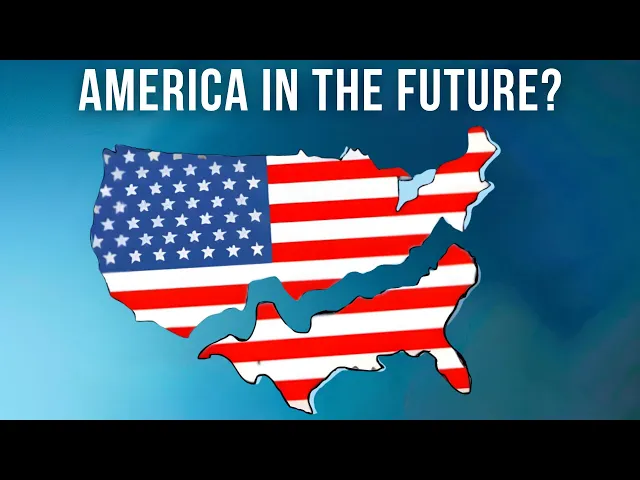
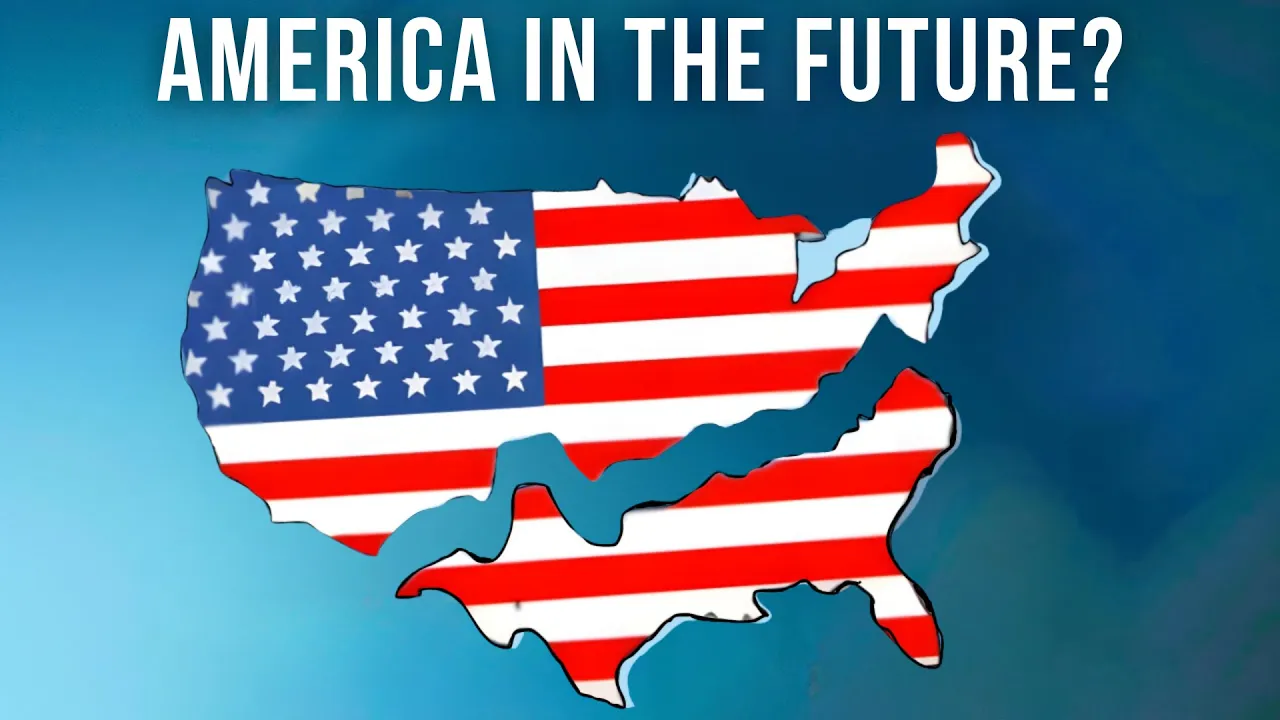
Overall, the space tourism sector is primed for significant growth and expansion, transforming how people think about and access space travel in the years ahead. Number 2: The South Will Break Away From The United States Again I have a strong belief that this could become a reality, or at the very least, come close to it. While full-scale state secession seems unlikely, I do see the Deep South—states like Louisiana, Alabama, Mississippi, Florida, and South Carolina—making a serious attempt to become their own country.
North America was settled by people with distinct religious, political, and ethnic backgrounds, which led to the creation of unique regional cultures. The Midwest, West Coast, and Northeast are almost like separate countries, each with its own identity. Given the deep political and cultural divides we keep seeing, it's not too far-fetched to imagine certain states or regions wanting to pull away from the United States.
And if any region gets close to doing so, it’ll be the Deep South. But this won't happen through some dramatic Civil War. Instead, it'll be done through voting and legal channels.
If you're interested in understanding this idea further, there's a great book called “American Nations: A History of the Eleven Rival Regional Cultures of North America”. It explains the concept in detail and is definitely worth a read! Whether or not it actually happens, the growing desire for regional independence is a reflection of the deepening divides in America.
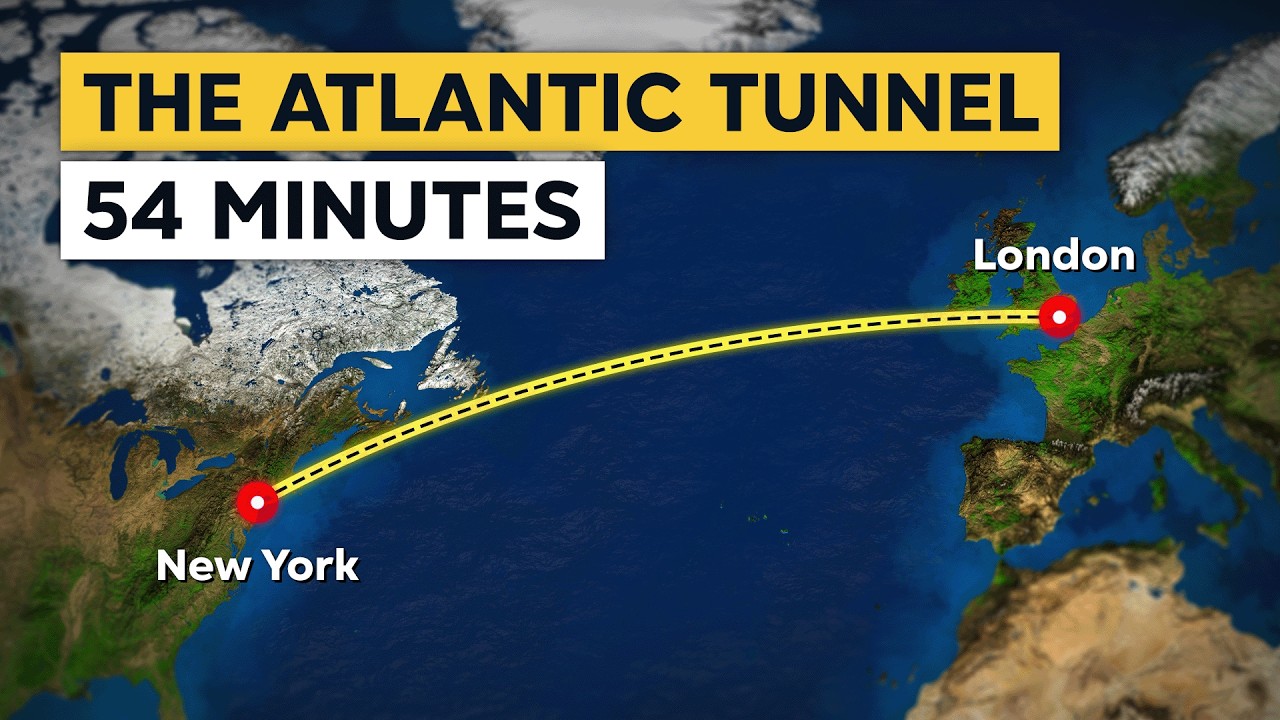
It's worth paying attention to, especially in the coming years. Number 1: Hyperloop Transportation The Hyperloop, a high-speed transportation system proposed by Elon Musk in 2013, has the potential to revolutionize the way we travel. Over the next 20 years, we can expect significant advancements and developments in Hyperloop technology, infrastructure, and adoption.
Companies like Virgin Hyperloop One, Hyperloop Transportation Technologies (HTT), and Elon Musk's The Boring Company will continue to build test tracks and conduct feasibility studies to refine the technology and economics of Hyperloop systems. Governments will start to develop regulatory frameworks to govern the development and operation of Hyperloop systems, addressing safety, security, and environmental concerns. Hyperloop networks will span the globe, connecting major cities, regions, and continents, enabling fast and efficient travel across the world.
Hyperloop systems will be integrated with other modes of transportation, such as airports, high-speed rail, and public transit, to create seamless travel experiences. That's it for today's video! I hope you enjoyed it and found it informative.
What’s your take? Which of these do you think is most realistic? Feel free to leave your answers in the comments below.
If you liked this video, then you should check out the one on your screen. This video of 5 Events That Will Completely Change The Maps Of The World Before 2100 will blow your mind! Thank you for watching!