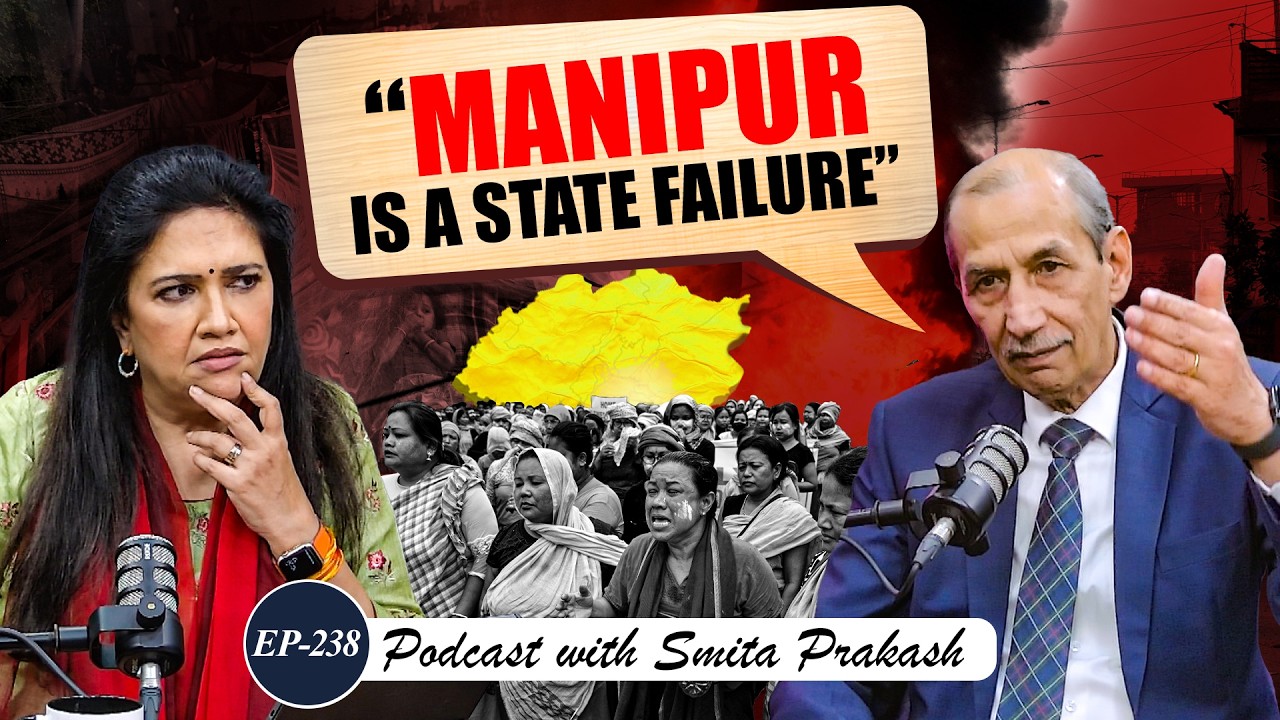
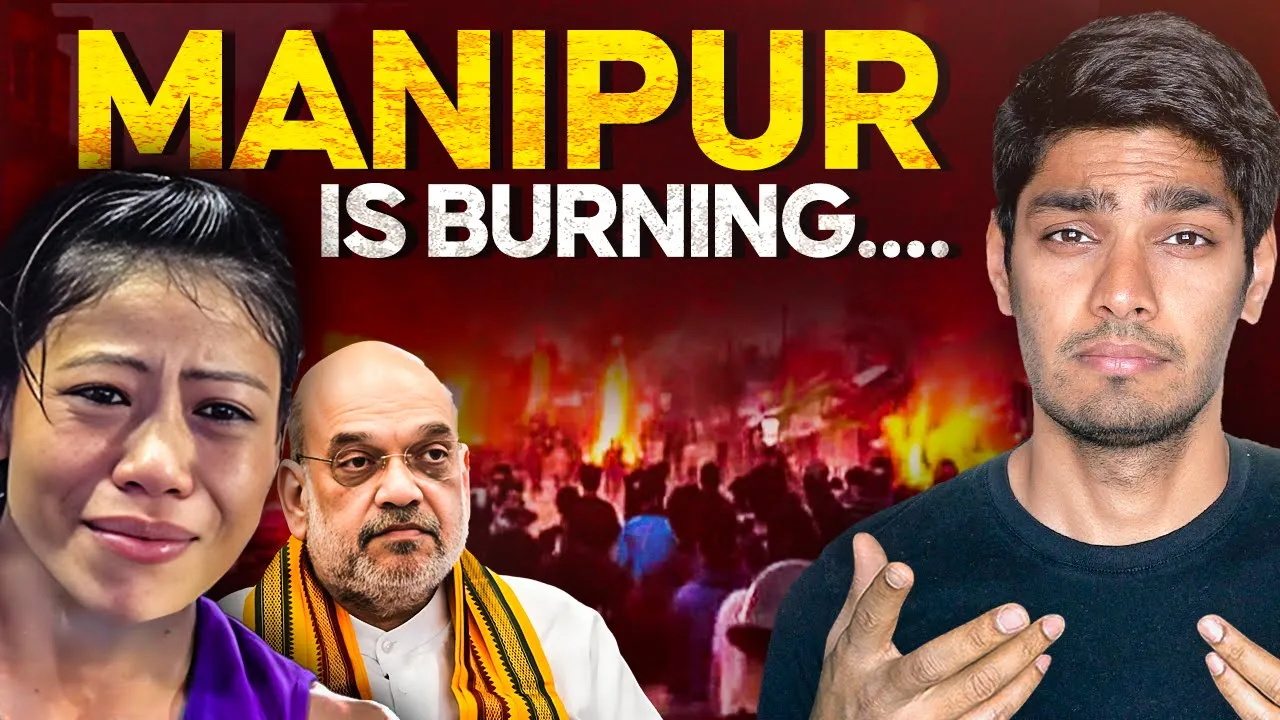
"My state is burning. " This is what Boxer Mary Kom had to say about Manipur. ["The situation is grim.
"] ["I can't even imagine it's happening all of a sudden. "] Manipur is in complete chaos right now. There are many unconfirmed reports of killings and lynchings.
People are afraid that more people could be killed in the next few days. If you watch Manipur's videos, you'll think that there's a war going on. The situation is so serious that the Indian government has used Article 355 to take over Manipur's security.
And it has issued a shoot-at-sight order. The curfew has been imposed, the internet is off, and the army has been called. ["The army staged a flag march today.
"] ["The government has banned mobile internet for the next 5 days. "] But how many of us care about what's happening in Manipur? You'll find more articles about the Virat Kohli and Gambhir fight than the Manipur violence.
But it's important for me to tell you what's taking place in Manipur. More importantly, why's it taking place? This is Manipur.
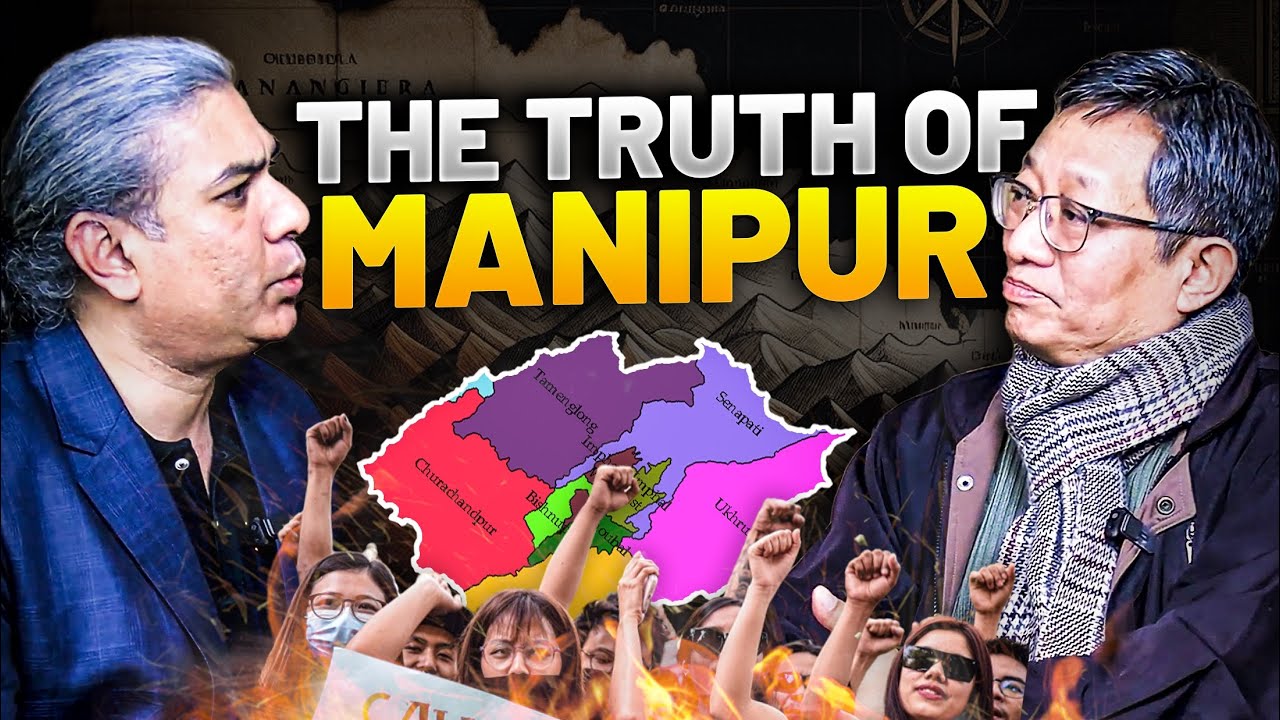
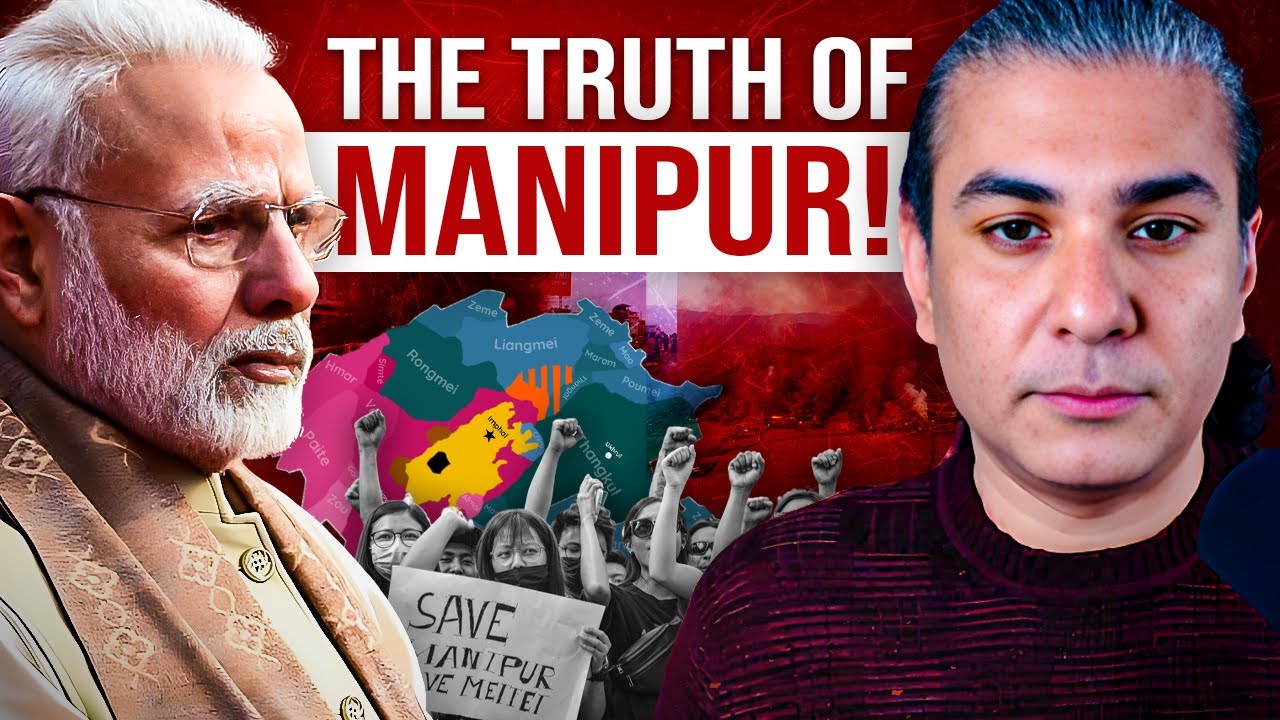
It has predominantly two regions – hills and valley plains. You can see that 90% of the land is in the hill regions. And these areas are home to the Naga and Kuki tribes of Manipur.
And the population of these tribes, which occupy 90% of the land, is 35%. And these tribes are mostly Christian. The Naga and Kuki are not just two tribes.
There are many tribes in these groups. Some are recognized, and some are unrecognized. The other 65% of the population is Meiteis.
It includes Vaishnavites Hindus and Muslims. They're also called Pangals. And this 65% of Meiteis live on 10% of the land of Manipur.
So on one side are the hill tribes, like the Kuki and Naga tribes. And on the other side are the valley tribes, the Meiteis. And this is one reason why these groups have so many problems.
These groups want different things for themselves. The government's rules and acts add complications to this. The result of this tension is violence in Manipur.
But there are two main reasons behind this violence. Let's discuss these reasons and find out what the common link is. This is Manipur's Chief Minister N.
Biren Singh from the BJP. In February this year, his government decided to protect the forests of Manipur. So he had to evacuate some villagers from their homes.
These were the residents of the K. Songjon village in the Churachandpur district. The villagers said they were evacuated without any warning.
The Kuki People Alliance, the alliance partner of the BJP government, also criticized this decision. These villagers were from the Kuki ethnic group. The same ethnic group that's in the hill region.
They said that the BJP government's decision is against their entire tribe. There are many ethnic groups in Manipur, which we'll discuss in detail later. Stay tuned.
That's why in March, many tribals protested peacefully against the government's decision. When I say tribals, I'm talking about the Naga and Kuki tribes. But the government of Manipur said that this protest is unconstitutional.
The government said that it's not at fault. It conducted a land survey of a protected forest region in Manipur. The village was also included.
The government of Manipur said that their protest is unconstitutional and many villagers are using the forest land for their drug business. The land survey included three districts. One of them was Churachandpur district.
After this, some tribal leaders announced a 8-hour shutdown, in Churachandpur district. Before the shutdown, the chief minister, Biren Singh, was going to inaugurate a gym and address a rally. But many protesters broke the gym and threw chairs in the venue of the rally.
Despite this, Biren Singh didn't stop his rally. Then, the protesters tried to enter the venue of the rally where many VIPs were sitting. Thereafter, the police and protesters clashed.
After this, the government imposed a curfew on the entire district and shut down mobile services for 5 days. This frustrated the locals. But this decision to remove the villagers was just one issue.
The government was about to face another issue. Watch this video. People are singing, We shall overcome one day.
This happened on 3rd May, in the Churachandpur district of Manipur. Why are people protesting? Because the government evacuated the villagers.
There was another issue. The All Tribal Students Union Manipur appealed to the people for a Tribal Solidarity March. They were opposing an order by the Manipur High Court which said that the Manipur government ask the central government, to give the Meiteis the status of a Scheduled Tribe.
The people of Hill, the Naga and Kuki Tribes, don't want the Meiteis to get the Scheduled Tribe status. The Meiteis have been demanding the Scheduled Tribe status since 2013. The Meiteis believe that their community needs the Scheduled Tribe status to protect their land and culture.
They say that illegal immigrants from Bangladesh and Myanmar are harming the identity and culture of the Meiteis. The Meiteis say that if they get the Scheduled Tribe status, the Naga and Kuki Tribes won't be harmed. Instead, it will bring peace to Manipur.
But the tribals of Hill, the Nagas and Kukis, don't agree with this. The tribes of Hill say that the Meiteis are powerful, well-educated, and connected. If they get the Scheduled Tribe status, the political and economic power of the people of Hill will be diminished in Manipur.
The tribes of Hill claim that the Legislative Assembly of Manipur has around two-thirds seats of Meiteis. If they have such political power, why do they need the Scheduled Tribes status? They also claim that some sections of the Meitei community have the Scheduled Caste and OBC status.
So they get protection from there as well. The language of the Meiteis, Manipuri, is also included in the 8th Schedule of the Constitution. The tribes of Hill also claim that if the Meiteis get the Scheduled Tribes status, they'll have to fight for the remaining jobs.
These are the two issues that are responsible for the recent violence. The tribes of Hill claim that the Manipur government is kicking out the Kuki tribal people from their homes and will soon give the Meiteis the Scheduled Tribes status. This is why a few days ago, violence broke out in the tribal protest rally when the rumor spread that the Meiteis had attacked a tribal woman.
The rally started with this rumor and then the violence spread throughout the state. TV channels showed pictures of how the Meiteis and the tribals were burning houses. This is why the Indian Army was called to the state.
["The army and Assam Rifles were deployed to control the situation in the state. "] But you won't understand the complexity of these issues until you understand the complex history of Manipur. So let's go back hundreds of years to understand who Manipur belongs to.
Watch this video. These manuscripts are called Puyas, which are ancient texts of the Meiteis. They're written in an ancient language, which talks about medicine, astronomy, religion, history, and politics.
Manipur's history begins with the Meitei people, who ruled the Manipur Valley for centuries. It's said that the Meiteis came to Manipur Valley from Myanmar, where they settled their kingdom. Many Meitei kings ruled Manipur and expanded their kingdom.
Apart from the Meitei people, there were many hill tribes in Manipur, like the Nagas and the Kukis. These tribes lived on the mountains of Manipur and had their own culture, language, and tradition. The Meitei Kingdom had a complex relationship with the hill tribes.
The Meitei Kingdom launched many military campaigns against the tribes. The tribes of the hills were pressured to adopt the Meitei culture, language, and religion. If we go back in history, the Meiteis did this expand their kingdom.
To expand their kingdom, the Meiteis believed that they must pressurize the tribes. This led to violence between the Hill Tribes and the Meitei Kingdom. But this story isn't all black and white.
There are instances where the Meitei Kingdom formed alliances with the Hill Tribes. So that they could trade with each other. The Meitei Kingdom would get forest goods from the tribes.
while the Meitei Kingdom would give protection to the tribes from outsiders. But this changed in the years 1819-1825, when the Burmese Empire invaded Manipur. The Burmese Empire defeated the Meitei Kingdom.
and the Meiteis were made to adopt the Burmese culture and Buddhism. The Hill Tribes had to suffer the same fate. The Burmese rulers launched several military campaigns against the Hill Tribes, which killed the tribal people and destroyed their villages.
This went on for 7 years, which is why this period is called the Seven Years' Destruction. This lasted until 1826, when the First Anglo-Burmese War broke out, where the British defeated the Burmese Kingdom and took control of Manipur. After the British came to power, the Manipur society underwent political and economic changes.
In 1835, the British formed a political agency in Manipur and upgraded it in 1891, making Manipur a full princely state. Now, there's a difference between a political agency and a princely state. In a princely state, the British told the kings to take care of their kingdom and they had to pay the British for it.
Whereas in a political agency, the British sent a political agent, who was the king's advisor. But the king didn't have any power. He was like a puppet in the hands of the British.
Initially, the British took control of the Meiteis Kingdom. But the Hill Tribes were given the free reigns by the British. But this also changed gradually.
And then a very popular policy of the British started --Divide and rule. The British created a political structure where the Meiteis were preferred. This created tensions between the Hill Tribes and the Meiteis.
The British created a land settlement policy to decide which group would acquire a certain part of land. So they gave some land to the Meiteis and some to the Kukis. But there were two problems.
The first problem was that the Kukis were tribal people. They didn't have a single land. They went to different places with their animals.
So when they were told that their land was permanent, they couldn't follow their culture. The second problem was that the British gave more fertile land to the Meiteis and less fertile land to the Kukis. This created tensions between the Meiteis and the Hill Tribes.
And this didn't stop even after India's independence. But there is another twist in the story. This time, the British were not the enemies.
It was the Indian government. This is Maharaja Bhodhchandra Singh, who was the king of Manipur after independence. In 1891, the British made Manipur a princely state.
After India's independence, the king had to decide whether Manipur would go with India, Pakistan, or remain independent. Maharaja Bhodhchandra Singh decided that Manipur would remain independent. This particular segment of Manipur's history can be made into an episode of Game of Thrones.
Manipur was very strategic for the Indian government because Manipur was on the border between Myanmar and China. The Indian government was also afraid that a communist movement was about to start in Manipur, which could instigate instability in India. So it was very important for the Indian government that Manipur didn't remain independent but became a part of India.
And India was successful in this. In 1949, Manipur signed a merger agreement which made Manipur a union territory instead of a state. But there's a twist to the story.
Before the agreement was signed, many people in Manipur had been protesting against the king. because they didn't want a monarchy in their state. That's why a legislative assembly was formed.
But when the king signed the merger agreement, he didn't seek permission from the legislative assembly. Instead, many Manipuris say that the king signed the merger agreement under pressure. It's said that when the king went to Shillong in 1949 to talk to the Assam government, he was arrested and kept in custody until he signed the merger agreement.
Many ethnic groups in Manipur were not happy with this. The problem was that after the merger, Manipur was run by the central government. For the first 25 years, Manipur wasn't a full state.
It was a union territory. So the Indian bureaucrats ruled Manipur, who weren't from Manipur but from other parts of India. Another problem was that different communities had different aspirations.
The Naga tribe wanted some parts of Manipur, Assam, and Arunachal Pradesh to be merged into Nagaland. The Kukis wanted ares of India, Bangladesh, and Myanmar with Kuki domination to be a separate country called Zale'n-gam. The Kukis wanted Kukiland, the Nagas wanted Nagalim.
The problem was that some areas were common to both. The Meiteis didn't want either. They believed that for centuries, the Meiteis ruled the Manipur area, which also had hill regions.
So they wanted the hill regions, where the Kukis and Nagas were, to be part of Manipur, where the Meiteis ruled. What did the Indian government do? They came up with a solution that displeased everyone.
They made Manipur a union territory. And revoked the Scheduled Tribe status given to the Meiteis. The Indian government argued that if Manipur was dominated by the Meiteis, why would they want the status?
They also told the Meiteis that they couldn't buy land in the hill regions. The Indian government gave the Kukis and Nagas the Scheduled Tribe status. And said that they could buy land anywhere in Manipur.
It's said that a solution that displeases everyone is a pragmatic solution. But this solution didn't solve all the problems. In 1972, Manipur was made a state from a union territory.
In the same year, the first elections were held in Manipur. And there was a problem with these elections. Manipur has 60 constituencies.
40 of them are in the Meitei-dominated valley area and 20 in the hill region. This means that it's easier for the Meiteis to win power. This is why the chief minister of Manipur is from the Meitei community.
And the tribal people of the hill region believe that this is why Manipur's policies are against them. For example, the recent decision where the government asked the Kuki villagers to evacuate their land. The tribal people also say that they're discriminated against.
For example, the leaders of the Meitei community have called the Kukis refugees. But the Kukis say that they're not refugees in Manipur. They've been living in the hill areas of Manipur for centuries.
So how are they refugees? They give another example of this discrimination. What language is this?
The Meiteilon language, which is written in Bengali script and is used by the Meitei communities. In 1979, this language was made the official language of Manipur. It's not like only the Meitei people speak this language.
Many tribal people also use this language. But because of the Bengali script, they can't read and write it well. So in the 1980s, when the government made the language compulsory till class 10, the Manipur tribals were not happy with it.
Because of these examples, they believe that the Meiteis are discriminating against them. But the Meiteis say that they're discriminated against too. A Meitei leader said that in 60 years, their population has fallen from 59% to 44%.
He says that they've become outsiders in their own ancestral land. While the tribals can buy their lands, they can't buy the lands of tribals. The Meiteis argue that they need an inner-line permit system in their state.
A system similar to the one in Arunachal Pradesh, Mizoram, and Nagaland. Let me tell you what this system is about. The Meiteis say that they're fed up with illegal migration.
Because of this, their population percentage has decreased in Manipur. So why not create a system where a person who isn't from Manipur needs a permit to enter Manipur? You might say that the Hill tribes will also agree to this.
But they're against this system. They say that the Meiteis have the power in Manipur. Many Meitei leaders have said that the Kukis are the refugees.
Who knows, maybe the Meiteis will say that the Kukis will also need a permit to enter the Manipur valley. Because the tribes don't trust the Meiteis, they don't want to implement this system. Many times, the Meiteis tried to make a law about this.
But the Indian president rejected it. Because of this, the Meiteis came up with a different strategy. They said that they want the government to give them the Scheduled Tribe Status.
The same status that the Meiteis had before 1949. The tribes of the Hill region say that they don't need Scheduled Tribe Status when they have their own domination in the state. Because of these issues, the Meiteis and the Hill tribes keep clashing with each other.
Because both groups believe that if one group benefits from a policy, the other group will suffer. Do you know what this tension between these groups results in? These are two national highways, NH2 and NH37, that connect Manipur to other parts of India.
But these are not just two highways. They are ways to earn money. The group that has influence over the highways, uses them to earn illegal taxes.
You must pay the group to move goods from one place to another across this highways. Do you know who gets this money? The insurgent groups.
Every ethnic community has an insurgent group. For example, there are several insurgent groups for the Kukis. They say that they protect their own people.
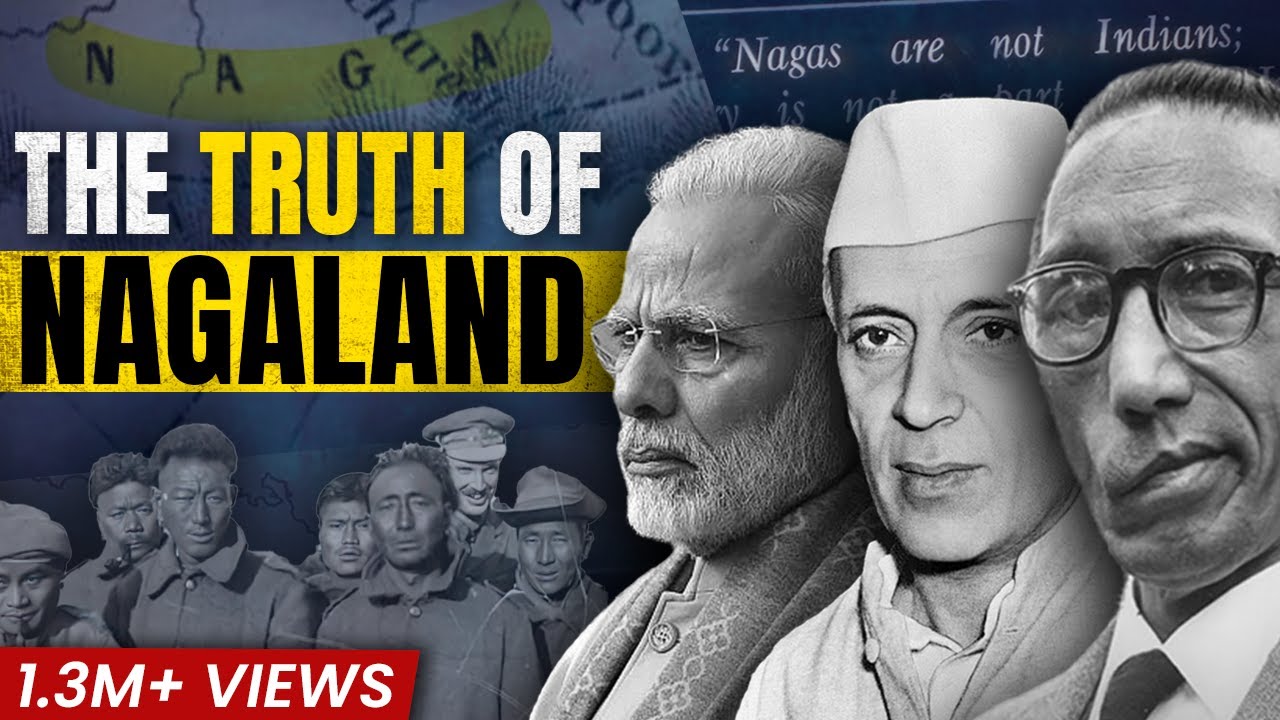
Like the Kuki Commando Force, the Kuki National Army, the Kuki National Organization, Kuki Front Council, Kuki Independent Army, Chin Kuki Revolutionary Force, and Kuki Defense Force. Nagas also have insurgent groups, like NSCN (IM). The story of Nagaland is very interesting.
I'll suggest a video on it at the end. Manipur is so complex that you'd think that Nagas and Kukis are from the Hill Tribes. They must have lived together in peace, fighting the Meiteis.
But that's not true. There's been a lot of violence between them. For example, in the 1990s, thousands of people were killed in Naga and Kuki clashes.
Because NSCN (IM) Naga insurgents targeted Kukis in the villages where Nagas were the majority. Because they wanted to unite all the Nagas of North East India to build Nagaland. Whereas, KNA and KNF Kuki groups targeted Nagas.
Many people comment that I point out the problems but rarely discuss the solutions. This problem is very complex. But I believe that we can solve any inter-group conflict through economic factors.
I made a detailed video on this. In 2002, when there was a riot in Gujarat, there was a lot of violence in Ahmedabad, but not in Surat. There was a reason behind this.
Hindus and Muslims worked together in Surat. Hindus ran businesses, and Muslims were the workers. But this wasn't the case in Ahmedabad.
Both communities were divided in Ahmedabad. So, imagine if you're a Hindu, but your workers are Muslims. If your workers are attacked, what will happen to your business the next day?
You'll pay a price. That's why researchers say that economic needs can reduce violence between groups. The Manipur and Indian governments need to come up with a similar solution that will make all the communities of Manipur economically interdependent.
Obviously, it's easier said that done. The solution is difficult, but we can at least take a step forward. It takes hours of research and editing to make such informative videos.
So if you liked this video, please subscribe. It's a request from my side. Before I go, I'd like to recommend two videos.
One is about the Manipur Society, where we discussed the role of women in the society. And its history is fascinating. The other video is about Nagaland, which I think is one of the best videos on our channel.
In this video, we discussed about the Nagas. To understand their history, you should definitely watch this video.