There's a reason so many hikers hit the wall by day three, even when they are fit as anything. And nine times out of 10, it's not training, it's food. I've watched it wreck trip after trip over the last 35 years as both a hiking guide and a passionate hiker myself.
So, in this video, I'm going to show you the four mistakes I see over and over and how to fix each one so you can actually enjoy your next multi-day hiking trip. Bringing the wrong food. So, the first mistake is probably the most common one.
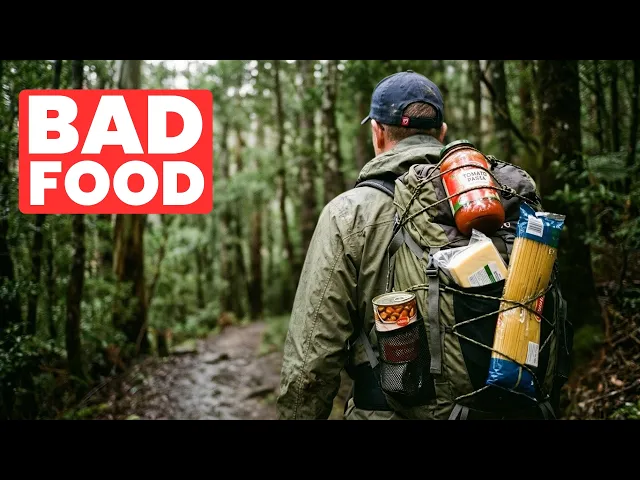
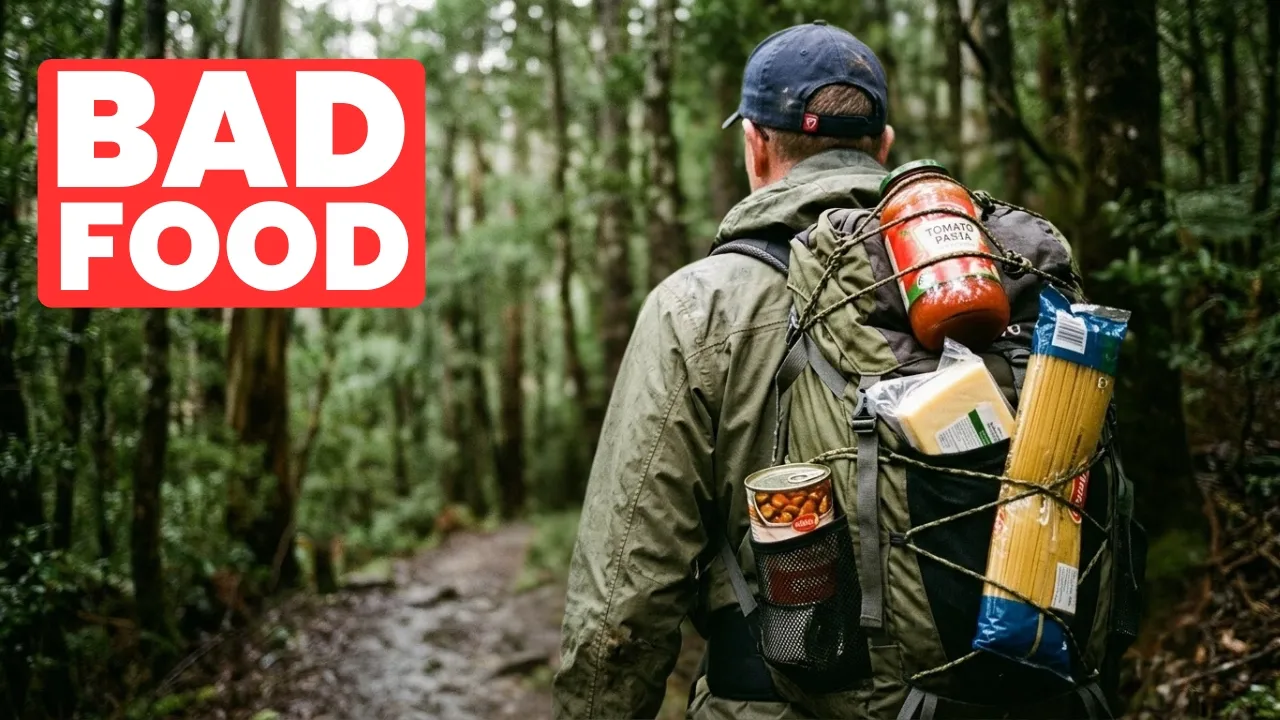
People bring food that's heavy, it's slow to cook, and it just doesn't taste that good when you're out on the track. You end up carting extra weight for meals you don't even really look forward to eating. It's just not a nice scenario.
Back in my early days, I was the worst offender. I'd take all this dry pasta, bags of sauce, heavy sachets of pre-made liquid curry mix. We'd spend 45 minutes to an hour cooking every single night on our little trangia stove.
Then we'd be carrying 2 L of fuel in our packs, way more than we should need, just to keep the stove going each day. And honestly, the flavor flavor it just wasn't that good either. A bit of basically tomato paste, maybe a bit of that packet Parmesan cheese if you're feeling a bit fancy.
And all that effort for a meal that I wasn't even that excited to eat. Sure, it filled a bit of a hole, but it didn't excite me at all. I carried that setup around Tasmania and other places for years before I started sorting it out in the early 2000.
These days, if you're wanting to avoid proprietary freeze-dried or dehydrated meals that you buy at the shop, then there are two paths that work much better, and you can pick whichever suits you. Path one, if you've got a dehydrator, is to cook the meal the way you'd eat it at home. Not way you'd eat it, but the way you'd cook it at home.
The way you'd cook it at home, then eat it. But you're not even I digress. Basically, season cook your meal at home, season it until it's genuinely good, then spread it out in your dehydrator trays, dry it out, then bag it up.
And on the trail, well, you just add a bit of hot water, maybe boil it for a short minute or two, then you leave it. And I like to leave mine in my little little pot cozy for about 10 to 15 minutes. And it rehydrates into something that actually tastes like an excellent awesome dinner, not just a packet of salty dust or some chewy sort of pasta that's kind of been boiled properly.
Path two, well, that needs no dehydrator at all. You build your meals from dry ingredients, which are very readily available these days, and you can grab them at the supermarket. Think of bit of couscous with dehydrated veggies, bit of beef jerky, and a bit of curry spice mix.
Or instant rice with coconut cream powder and a foil packet of chicken or salmon or whatever you can find. Chuck it together, add some hot water, 10 minutes, and you've got a real meal. Both paths are lighter than what I used to carry, they're faster to prepare, and they actually taste pretty good.
And little hot tip, the dehydrated meals that you make yourself, bellissimo. The rule I go by now is, well, it's pretty simple. If it tastes good on the couch on a Tuesday night, then it'll probably taste good on the trail on a Friday.
If it doesn't, then don't bring it. Now, that sounds obvious, but plenty of people still get it wrong. What this actually means is that if I cook, say, some risotto or risotto, you might say risotto, for myself and the family on a Tuesday, then I'll put some aside, I'll dehydrate it, and I'll take it out on the track next weekend when I'm heading out on a hike.
It's a great way to prep food easily prior to a trip, and it tastes fantastic. Now, I just did this literally this time last week for a three-night trip. Over three nights the week before that trip, I prepared three meals for my family, and I dehydrated down a bit from each meal for my upcoming trip.
I then had some really tasty meals for my trip, and I was super impressed. They were an absolute treat when I rehydrated them out on the track. And I I picked this little method up from a mate who I go hiking with regularly, who's been doing it for a while.
I gave it a really good try last week, and I've had dehydrated stuff in the past, but I really gave it a crack last week, and I'm I'm switching over. This is what I'm doing from now on. I'm excited.
It's awesome. Now, even if you've got the right food dialed in, there's a second mistake I see constantly, and it's the one that makes people think they're just out of shape when really it might be their food sabotaging them. Not eating enough through the day.
Mistake number two is not eating enough during the day while you're hiking. This one sneaks up on people because it doesn't feel like a food problem. It feels like well, it feels like being tired.
But the tiredness is the food problem. I've seen this happen more times than I can count. Lunch rolls around, people are physically fatigued, and half the group just isn't hungry.
They don't want to eat. They'll pass on lunch, maybe they'll have a small snack, and well, that's it. Then by 3:00 in the afternoon, they're moving like they've got a hangover or, you know, there's something like that.
They're stumbling, they're they're quiet. They might be grumpy, might be making dumb mistakes, and you get to camp and they're straight to bed. I need to tell you I need to go and have a lie down.
I'm a little sleepy. I want to have a lie down. Afternoon bored.
Even when you've finished early, this will happen. Once someone bonks, you know, when when they're just fired out and almost, you know, drop out of the whole thing altogether, the rest of the day is damage control. And here's why it happens.
When you're working hard day after day, your hunger cues lag behind your calorie burn. So, by the time that you feel hungry, you're already in the hole. Your body asks for rest, but what it needs is calories.
The fix is simple, but takes discipline. You need to try and eat on a bit of a schedule, not on when you're hungry, not on an appetite. Set a timer if you have to.
Every 60 to 90 minutes, something goes in. It doesn't matter what, just don't let the tank hit empty. Keep the snacks accessible.
I love to keep mine in my hip belt pocket so I can grab them without stopping or taking the pack off. Think nuts, dried fruit, bars, jerky, bit of dark chocolate, calorie-dense stuff you'll actually eat when you're tired. Salty and sweet is a killer combo.
And if you're guiding someone or hiking with a mate who won't eat, warm and sweet is my reset button. A hot drink or a soup, and it works on kids, too. Sometimes you just have to be firm about it.
Make them up a drink, make them up a soup, and say, "Get this down the hatch. " And I'll tell you what, it does make a big difference, even if it's just mentally more than anything. Now, even if you're snacking properly all day, there's one more calorie mistake I see constantly, and it's not on the trail, it's in the first 20 minutes of camp.
Oh, and before I get into that mistake, well, a quick heads-up, I've dropped a link below to the three recipes that I made up for my trip last week. They were absolutely delicious. I have also included a bunch of other recipes with those that I'm working on, but they are still undergoing testing.
So, cook those ones at your own risk, and do provide feedback. The link to download those recipes is down below in the description. Arriving at camp with nothing easy.
So, mistake number three kind of relates to number one, but you've been walking all day, you're totally cooked, like mentally and physically. You roll into camp, and you've got nothing easy to eat straight away. Now, you've got to set up tent, maybe filter water, fire up the stove, wait 15 minutes for the meal to rehydrate.
By the time it's ready, you're cold, you're shaky, you're irrationally annoyed at everything. Trust me, I know. And a lot of people don't even finish the meal.
I've seen this one a lot over the years. When you're wrecked, your willpower disappears. So, dinner either doesn't happen or it happens badly.
You go to bed underfed, you sleep poorly, and you start the next day already way behind. The fix is a two-stage approach. Stage one is a camp arrival snack.
I call it a C I S, a CAS. I just made that up then, actually. A bar, some jerky, or a handful of scroggin.
And like I said, I keep mine in the hip belt of my pack. I have some easily accessible at the top of my pack. Same spot every time so I can grab it before I've even taken my boots off.
The other option is to keep it in the lid of your pack or on a pocket there, or somewhere similar. It takes the edge off the moment you arrive, and it does make a big difference. Stage two is a warm drink, ideally a soup.
Now, I'm a big miso soup fan, but a cup of soup works just fine. The Lux is good, and it works just as well. It's warmth, it's salt and fluids, and it brings you back online mentally for another 30 to 60 minutes while you get camp set up.
Then, once camp's sorted, well, you can do the proper meal without rushing. You'll eat more of it, you'll actually enjoy it, and you'll be in much better shape for the next day. That's the difference between feeling strong on day six and watching your mileage collapse.
And I'll tell you, even when it's raining, I just get that tent set up, I'll get inside of the tent and get the stove going while I've got my wet gear on, and just get that heated up so I can get that energy. And then while it's heating up, wet gear comes off, get ready, drink, yum. But there's one more mistake that gets even experienced hikers, and it's the one that quietly ruins trips because you lock it in at home before you've even left.
Not testing food before the trip. Now, mistake number four is not testing your food before the trip. People will pick up a new freeze-dried meal at the camping store the week before a trip, chuck it in their pack, and then discover on day four when they're wet, and they're tired, and they're hungry, that it tastes absolutely awful.
I've done this. I've seen my friends do this. All my mates have done this.
It's funny after the trip, and it's funny on the trip if you're watching your mate try and stomach something, and it's just awful. It's quite funny. But in the moment for them and for you, it can be brutal.
You open a meal you've been looking forward to all day, you take one mouthful, and you realize it it's genuinely inedible. And now you've got two choices. You can choke it down or go to bed hungry.
Now, either way, your recovery takes a hit, and on longer trips, dinner isn't just comfort, it's tomorrow's energy, and it's often your motivation, too. The rule is simple here. If you haven't eaten it at home or on a previous trip, then don't take it out on a multi-day trip straight up without testing it.
Buy one of whatever it is, cook it up in your kitchen, eat the whole thing. If you wouldn't eat it twice at home, then don't bet your trip on it. Now, for brands of, you know, freeze-dried meals and stuff that I haven't tried, I try to read reviews before I buy.
I might ask my friends, "Have you tried this before? " People are pretty honest about what tastes like cardboard and what actually works. And if I do have to take a gamble on something untested, which can happen occasionally, then I'll gamble on breakfast and generally not with dinner.
But I I mean, it'll happen. Like there might be a chance to taste everything. But breakfast is low stakes.
If it's bad, then you eat a muesli bar and move on with your day. If dinner's bad, then you lose the biggest calories of the day and you feel it all night or you just choke it down and just think, "What was I thinking? " Now, look, on a long trip of 10 days or more, I might give myself one or two untested meals and take the risk, but ideally on most trips, I don't gamble on dinner.
It's just not worth it. I need to mentally look forward to my dinner at the end of each day. And honestly, testing meals at home is the easiest thing on this list.
Test it once at home or you'll test it for the first time when it matters most. Now, getting your food sorted is only one part of a successful multi-day hike. The other big one, the one that makes the difference between enjoying the trip and just surviving it, is your fitness.
And you don't need a gym for it. So, check out this video up here next where I show you exactly how I trained for a brutal 9-day off-track hike just by changing my daily commute. It's by far my favorite way to train for my next hike.