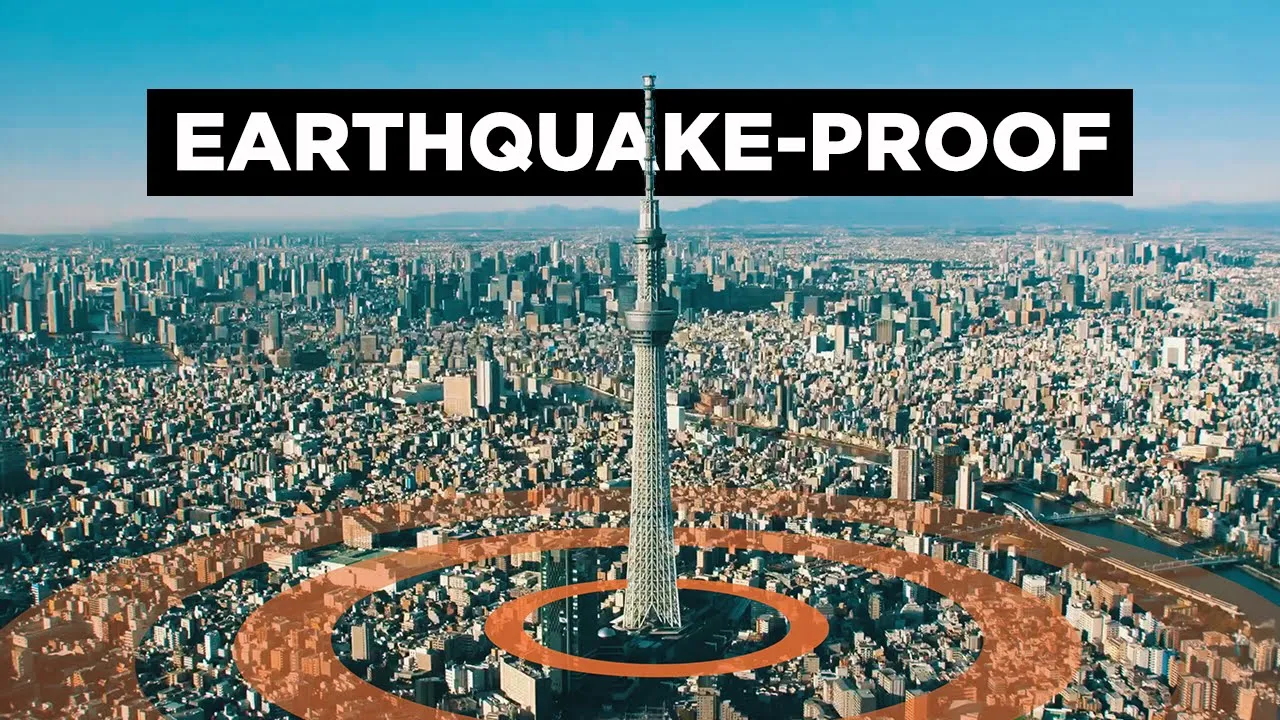
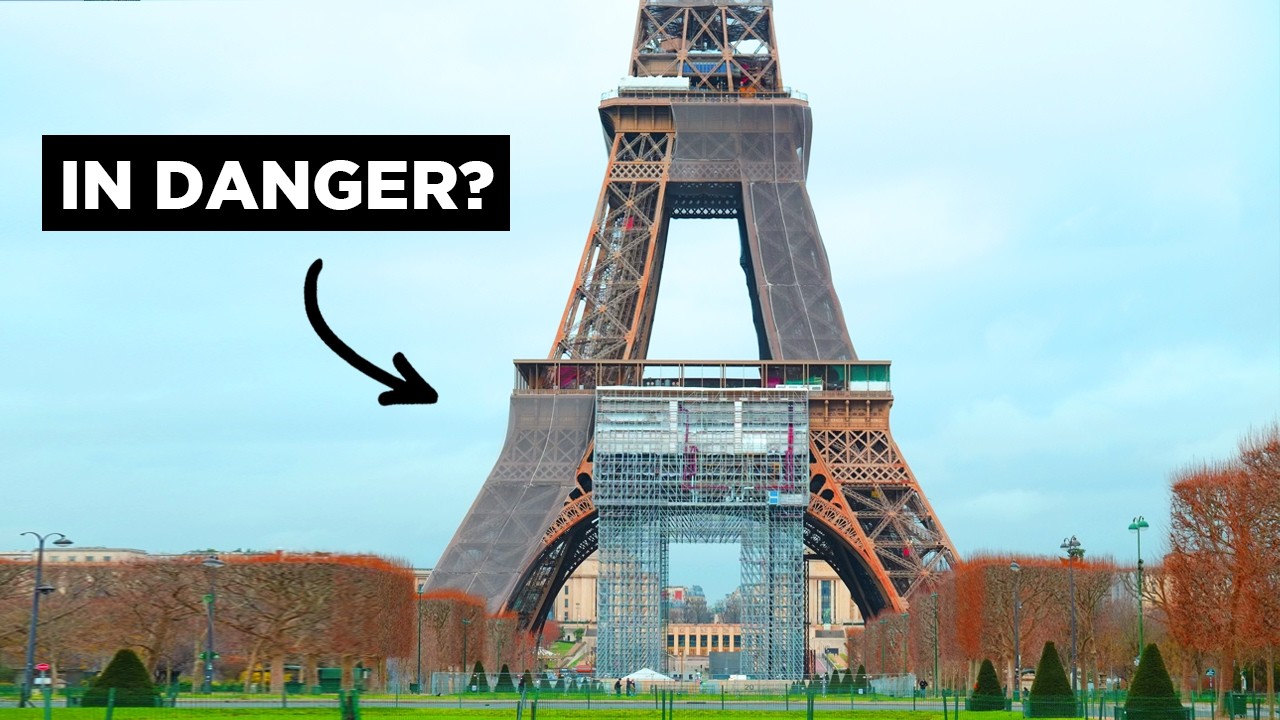
this is the view from the Timo deck it's a viewing platform at the top of the Tokyo Sky Tree a massive Observation Tower and the third tallest freestanding structure in the world it offers the kind of incredible views of Tokyo that you'd expect from a viewing platform more than 350 m in the air but if that's not high enough for you you could head up to the tempo Galleria 100 m above that while you're discovering your new found Fe of heights here's something else for you to think about Tokyo sits in one of the most seismically active regions in the world in fact in Japan some kind of seismic activity is recorded about once every 5 minutes in other words spend long enough here and there's a fair chance you might see an earthquake strike the earth below your feet but don't expect to feel it because during a quake this is one of the safest places to be in the entire city there's no need to run for the exit in fact you can sit back grab a coffee and even enjoy the fight dining but why or more precisely how how can this here at one of the highest viewing Platforms in the world be safe enough to ride out the kind of earthquake that would flatten most cities you might think it's all down to the sky tre's intricate steel work but you'd only be half right the real answer lies in the kind of ingenious engineering Ing and determination to defy the odds that's made Japan one of the greatest construction superpowers on the [Music] planet if you're building anything of significant height then one factor is going to dominate your design the wind towers may be thinner than buildings but the same principle applies in fact the most famous tower in the world owes its iconic profile to early breakthroughs in the understanding of wind resistance the RW iron of the Eiffel Tower proved a strong and relatively lightweight material and allowed the tower to climb to an unheard of 330 M but it had a critical drawback it flexes to address this the towers Engineers used their pioneering understanding of aerodynamics to give the tower its swooping tapered shape this channels wind downward from the more vulnerable upper sections to the stronger basee stabilizing the entire structure Against the Wind 90 years later Toronto's CN Tower represented another breakthrough when it became the tallest freestanding structure on Earth its propeller-shaped cross-section gives it an enormous strength by reducing the sway caused by wind this shape is so effective at diffusing wind loads it's also used for the core of two other Giants the bur Khalifa and the upcoming coming jeda Tower but there's a problem this shape resists Wind by providing strength and minimizing sway but in an earthquake zone that level of rigidity is actually pretty deadly many Japanese buildings have stood the test of time by doing the Opposites now while the engineers who built Japan's most historic structures would have spent decades learning from lectures and dense books luckily you don't have to thanks to today's video sponsor Brilliance you can learn all about vectors and measurement from the comfort of your own home or the Shen Canen or the top of the Tokyo Sky Tree or really anywh you can take your phone brilliant lets you learn by doing with interactive lessons proven to be six times more effective than watching lecture videos they've got thousands of lessons in topics ranging from maths and data analysis to programming and Ai and if you're worried about staying consistent brilliant is built to help you create a daily routine learning a little bit every day to try everything brilliant has to offer for free for a full 30 days visit brilliant. org theeb 1M scan the QR code on screen or click the link down there in the video description you'll also get 20% off an annual premium subscription now let's get back to some of Japan's oldest structures this is the Pagoda at the heroi temple in karaga like everywhere else in Japan this area experiences regular earthquakes caused by the multiple fa lines that cross this country despite that it's one of the oldest wooden structures in the world thought to have been built in the year 711 but some parts of the structure date back even further pagodas are a common site in Buddhist temples around the world but the ones in Japan known as godun notu are unique they typically have five stories representing the five elements and it's the ingenious design of the joints between these floors that hold the key to their resilience the beams are held together in grooves which aren't fixed when an earthquake strikes the beams slide against each other with friction absorbing some of the energy making sure the structure maintains its balance is a tall wooden pole known as a shim bashera in a mark of the incredible longevity of these buildings the shin bashira in the huoi temple dates back to the year 594 it was in homage to this structure that the Tokyo Sky Tree nicknamed a crucial part of its earthquake proof structure but to understand the root of the sky tree's extraordinary stability we need to look at its foundations the tower shares the same triangular cross-section as both the Cen Tower and the Burge Khalifa at its base where it uses that shape's strong profile to really anchor itself to the ground Each corner of this triangle features a cluster of wall pile foundations driven 50 m into the Earth between these is a shallower wall foundation made of room for Force concrete which links and reinforces those three points rather than single rods the foundations are made of continuous walls of steel reinforced concrete which increases the surface area in contact with the ground that creates more friction with the Earth to counteract the push and pull forces of the tower above during high winds above ground the sky tower is made up of three main parts the observation deck sits on top of this enormous latice it's a structure made from high strength steel twice as strong as your standard steel framework at the base these pipes are 2. 3 M wide and 10 cm thick rising up from there are three Corner trusses connected by the outer lattice at the ground level these align with the foundations creating a kind of tripod effect but they become more rounded further up the structure inside this is a cylindrical middle section housing the towers four elevator shafts and other utilities and nested inside that is an enormous concrete pillar the shimira this huge trunk of reinforced concrete is 375 M high and 8 m wide at its base the concrete is 40 cm thick but this increases to 60 cm near its tip with some incredible access I got to crawl into the very heart of the Tokyo Sky Tree to discover how this feature forms the towers VI vibration control system as an engineer getting to see something like this up close gave me goosebumps when an earthquake strikes the flexible truss structure sways but because the Central Concrete pillar or shimira is structurally separate it vibrates at a different frequency allowing it to cancel out some of the vibrations of the outer structure in addition the core column is connected to the steel Tower by an oil damper to prevent overstroke within the narrow core core that's enough to absorb up to 50% of the forces experienced by the tower during an earthquake but that's still not enough to keep something like this standing in Tokyo the final line of defense for the sky tree is a seismic base isolator incredibly this massive concrete core rests on these six rubber bases each 1.
4 M thick because the rubber is pliable it serves as a flexible connection between the core column and the foundation to prevent damage during an earthquake if an earthquake were to strike now this would be a perfectly safe position to be in although it didn't feel like that for me sitting down here all I could really think about was that enormous column of concrete above my head all put together these measures give the Sky Tree an incredible level of earthquake resistance the structure would still be standing and open for business even if it was the epicenter of a magnitude 7 event that's the equivalent of 1. 8 billion kg of explosives being detonated underneath its base but the sky tree is so safe because it needs to be Beyond its role as a tourist destination it also plays a crucial part in Tokyo's disaster planning system should the city be struck by a devastating natural disaster the residents can rely on Vital Information being broadcast from the m at the top of this structure for them to work they need to remain stable in the strongest earthquake and the strongest wind because even though the Tokyo Sky Tree can withstand ground shakes it also has to battle the wind just like any other tool building to keep its precious broadcast antennas safe the sky tree has two remaining tricks up its sleeve it's tuned Mass dampers now tuned Mass dampers are a common feature in skyscrapers like this one over in taipe 101 and they help reduce the vibrations caused by forces like wind or even earthquakes they consist of huge weight that act as a pendulum in a similar principle to the pillar and Trust structure of the tower they sway a different frequency to the surrounding building absorbing vibrations caused by forces like the wind the skyre goes further by using two of these devices the first at 620 M weighs 40 tons and the second at 625 M weighs 25 tons uh aside from their weight the two dampers are identical in design consisting of an inverted pendulum supporting its frame by a series of Springs and universal joints they help dampen the wind Resonance of the tip of the Sky Tree known as the gain Tower and prevent television transmission interference now the gain Tower is intentionally designed to be light to reduce the resident winds speed and prevent transmission interference but the tmds improve this performance even further Tokyo is not an easy place to build if it's not the constant threat of earthquakes there's always the threat of floods typhoons and even volcanoes that could cover the city in a blanket of Ash and yet these challenges haven't stopped Tokyo from rising to become one of the most vibrant and advanced cities on the planet structures like the Sky Tree embody the resilience and Ingenuity of Tokyo's Engineering in them we see the true Spirit of building not just to shelter but to rise above the Yachts to create something enduring and extraordinary this video was sponsored by Brilliance you can learn more about that at the link below don't forget that we're inspiring the next generation of Engineers through our investment into brick borrow a fantastic Lego subscription service you can learn more and get started today over at Brick bor.










![Can we REALLY build on Mars? [SPACE ARCHITECTURE]](https://img.youtube.com/vi/N3KxgUxPhqI/maxresdefault.jpg)