hello and welcome to lesson four of the advanced psychology course the high performance tradeing this video is on letting your winners run or perhaps as most Traders experien the problem taking profit early if we strip trading Back to Basics there are three core principles let winners run and cut losses so that overall you make more money than you lose and protect your account with sound money management in some form or other all profitable Traders respect those principles but I'll start by saying that what is mathematically optimal is psychologically difficult knowing what you should do no
matter how simple it is doesn't mean you can do it and the funny thing is you may be making the mistake of not letting your winners run without even realizing it you may have Incorporated this mistake into your system rules thinking that you're doing the right thing I'll explain that in a moment the most obvious problem we've all experienced is the urge to take profit even when our rules say otherwise so assume that you're in a buy position but immediately after your entry the price reversed and it spent a considerable time underwater close to your
stop and you're almost certain this is going to be a loss if it eventually comes back to your entry level there will be a sense of relief you're just grateful that you've got away with this so you take profit and you thank your lucky Stars that's one scenario but of course the urge to take profit early can come from any number of reasons your last few trades may have been losses and you just want to end the losing streak and experience a win for a change you may have been on a winning streak and you
don't want to spoil that with a loss one more win may give you the longest back-to-back winning Street you've ever had so who cares about the size a win is a win and it adds to your record it may be that you've heard some news or rumors and your fearful so you want to take profit before anything bad happens or the classic case where your memory is recalling all of the times your winners turn around and become losers so you take profit quickly before that happens to you yet again there are just so many things
that can trigger that urge and I'm sure you can relate to them but you may be taking profit without even realizing it you may have coded it into your system believing it's a good thing I'm talking about scaling out of winners or taking partial profits this is often given as supposedly good tradeing advice but it is a mathematical mistake it's a classic case of your system one hijacking system two to fool you into thinking that there is a logical reason for your behavior when really it's an emotional reason so let's say you buy two units
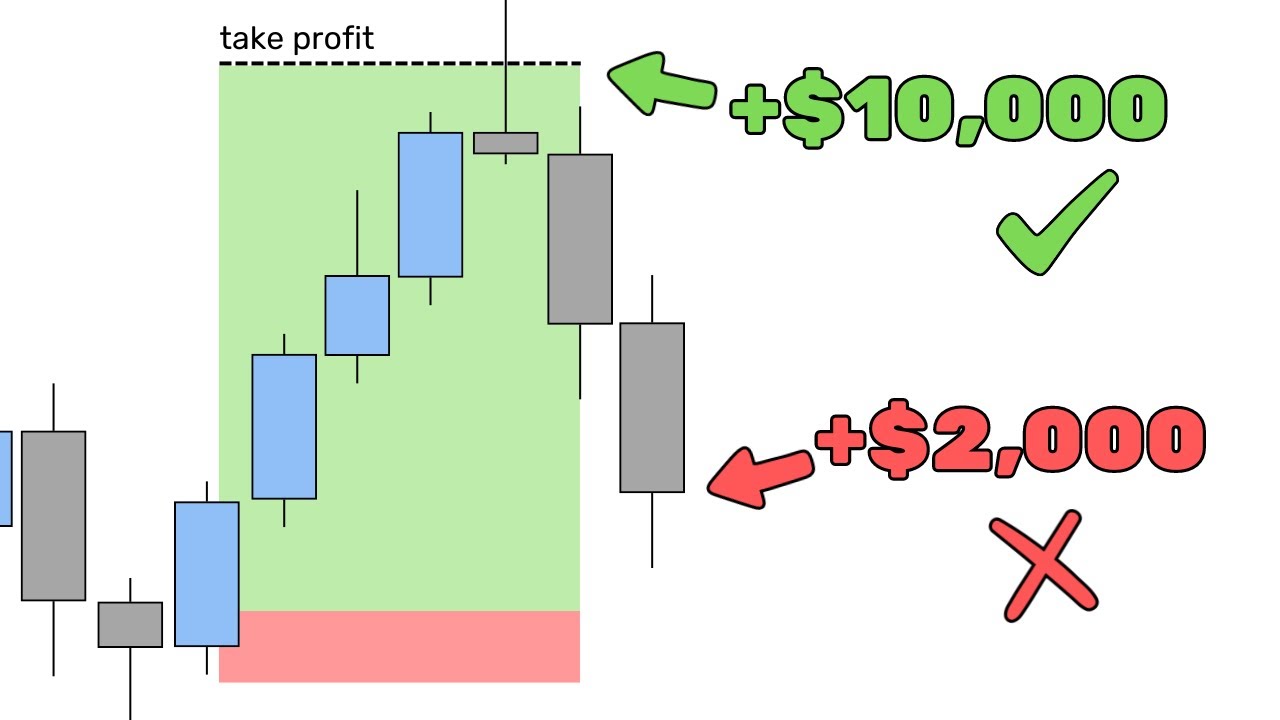
and you have a 100 Point stop loss if your trade lose loses you lose 200 but when it goes into profit you take off one unit at let's say 50 points and you leave the remaining unit to run on when the price reaches 100 points so a 1:1 ratio to your stop loss between the two units you have a maximum profit of only 150 compared to the loss of 200 have the price gone against you now people will defend this strategy with their last breath but any way you measure this it is failing to let
your winners run it is taking profit early you've made sure you have your biggest position size open when you lose and the smallest position size when you win it is not mathematically optimal it is a purely psychological crutch we now know that a large part of overcoming these seemingly simple trading issues is about improving your awareness of what's being pushed up from system one to the n where it feels like a soup of feelings impulses and thoughts that all feel right as if it should be acted on immediately but the more you can untangle this
mess and develop better self-awareness of exactly what system one is trying to achieve the more likely you're able to choose whether or not to act upon it because remember these pushes are not all bad they just need evaluating so for this lesson we are specifically concerned with any urge to close those winning trades and take profit early and I'm going to focus on five main contributing factors at different times you may have experienced one or all of these let's start with the first and the simplest one winning it goes like saying that humans are fundamentally
motivated to try and win we are a highly competitive strategic and at times aggressive species which has served as well in terms of our survival historically the battles that we have for either individually or collectively have been simply one or lost the winners survive and the losers either lose their life or are at least very much less likely to reproduce and while the modern world may be much safer we continue to carry that deep simplistic drive to win the reason Sports have taken such a hold in every single culture across the world is that it
allows us to exercise and vent this deep Drive to win but a binary outcome like that is not suited to trading let me explain in basketball for instance if the Chicago Bulls score 48 and the New York Knicks score 46 the Knicks are still losers regardless of how clubs it might have been it doesn't matter if thead was two points or 42 points and that's the problem winning and losing is a form of binary analysis which is fineing sports but it can have dire consequences in trading seeing individual trades as a win or loss battle
can trigger one of the worst parts of our defensive systems and closing the trade even just one pip above your break even point will be seen as a success so that's the first problem to try and bring to your conscious awareness and try to examine do you feel the need to win individual trades experienced Traders are less concerned about whether the individual trade is a win loss which can seem CRA inuitive to newer Traders inexperienced Traders May accept that losses happen but this is usually only at an intellectual level at an emotional level In the
Heat of the Moment they easily get hun up on the need to Wing but trading is a probabilistic activity the outcome of individual trades in isolation are irrelevant something that I will cover in a lot more detail in later lessons now this win or loss framework that we put around individual trades is often triggered by trading in the wrong mental and physical state being stressed anxious or physically overstimulated on any level will have a profound effect on how you perceive individual trades stresses from previous trade outcomes work Health and Family worries can all end up
affecting how we trade symptoms like elevated heart rate physical tension sweating and and nervous habits such as twitching or tapping are all signs that we may be about to trade from our most basic human instincts seeing it as a battle to be won at any cost and seeing it as a battle is misinterpreting the threat it activates your self- protection sub sself which if you remember from the previous video is the first and the most powerful sub sself within system one it assumes because of our history and have system one involved that you are facing
a physical threat so your fight flight or freeze response is being primed you are getting ready to respond physically and the trade is treated as a battle that must be won remember from a survival standpoint it makes sense that the sub sself is over sensitive and overreactive there is no penalty for assuming the worst and overreacting and being wrong but if it underestimated the threat and but it wrong the penalty may be fatal and to get you ready to respond it floods your body with powerful hormones so in a way you are now trading while
intoxicated elevated heart rate faster breathing and a feeling of excitement at the prospect of taking profit are all the result of chemical reactions that act as narcotics in the body and that narcotic is boosting your confidence sharpening your attention and preparing the expectation of a dopamine hit when you close that trade and you conclude that you've won that battle it's not until afterwards when the narcotics have worn off that you realize you've overruled your tradeing strategy and you got carried away on internally secreted drugs now as your intuition and experience grows this chemical release will
become very useful in communicating High threat Market situations but for most beginners and intermediate Traders this reaction misfires and it can frame individual trades as battles to be won or lost and this results in a decision mechanism that will try to win as soon as possible at any cost if you've reduced the meaning of an individual trade to a win or lose battle your mind will be looking for any opportunity to win as soon as possible pretty much as soon as the trade is in profit and just remember you're unlikely to experience this in a
DL or a micro account but as soon as the account size increases and significant amounts are at risk the stronger this surge is going to be you may be more familiar with this mechanism at play at auctions you may have gone to an auction with an upper limit or a plan in your mind but the competitive atmosphere can trigger you into a wing lose battle where you're up against an enemy another buyer and it becomes a battle that you need to win when the auction's over and the battle is won and that sub sself retreats
to a more dormant State you can easily be left with an object that you've paid well over the odds for and you're questioning one on earth just happened this is one of the most powerful types of decision hijacking there is and once it in control of your trading it will spot any premature opportunity to win it doesn't understand profit targets or trading plans nor does it care for your long-term goals it's only interested in protecting you here and now and you can't turn it off regardless of the fact that you're not actually under any physical
threat whilst you're trading it is on 24 hours so you need to be aware of it and learn to recognize the early warning signs of physical and mental that it's about to take control and then develop and strengthen your oversight to be able to prevent it and hopefully discour is going to help you with that as we progress very briefly looking at trading think about what might affect you personal circumstances like relationship problems or financial hardships those things can already feel like a battle and you can easily carry that over into your trading as a
natural continuation of your existing mood or demeanor pay attention to physical Sensations and behaviors increased heart rate trembling or restlessness agitation feeling anxious maybe feeling angry at whatever the price is doing or competitively willing the price to go in your direction and punching you in Triumph once it does go where you want it to you really need to be very self-aware of these behaviors and actions that you have this is why pre-trade routine is so critical to get you prepared correctly or for identifying when you're not in the right frame of mind I'll explain pre-trade
luchin in more detail later in the course in another lesson now let's move on to the next driver of not letting your winners run the need to be right it's a very similar to the need to win in that it's still a battle with a binary outcome but this is on a more conceptual level it feels much less physical so it has far less obvious symptoms in its simplest form it's the need for our prediction or opinion to be proved right we've all been there when we get into a debate with someone regardless of the
evidence that we are wrong we stick to our guns and we don't want to back there and we don't want to be proved wrong or more importantly we don't want to be seen to be wrong wrong that is our ego trying to ensure that other people's perception of us is maintained it should be obvious that in a probabilistic environment like trading this need to be right is particularly maladaptive we've signed up for a career in being wrong an awful lot of the time well that's if you see losing trades as being wrong which professional Traders
don't by the way but if you do see a loss as meaning you were wrong in in a winning trade so far at least you're right but it could reverse and prove you wrong so cutting the trade early and taking profits secures your sense that you were right you will throw away greater profits simply due to the need to be right and the fear of being wrong experienced Traders know that whilst their decision to enter a trade may be based on something statistically valued it doesn't guarantee a particular outcome at best they may have a
slightly increased probability of a particular outcome so good Traders detach the result from the entry but even professional Traders can sometimes lose this perspective especially if they have a very high conviction or belief that their entry has or will predict the price Direction This is especially true if they committed a lot of time and energy to analysis and have convinced themselves of a developing move but any form of conviction is anti- probob bistic high probability does not mean you should feel convinced that the trade is going to do anything in particular and if you see
trades going the other way to your trade prediction then being wrong can Dent your ego the me to be right is pervasive amongst humans we often take being proved wrong as a slight against our character or our intelligence when we're not in control of this urge we're just a slave to our deep drives to be seen to be right but where does this Eagle come from and what is it trying to do it seems irrational but as weing there are highly rational reasons as to why you want to be proved right and be seen to
be right it's the status sub sself if you think back to the subs covered in the previous few lessons you'll remember the subs sself that is purely concerned with gaining status from a survival point of view being proved right is outward evidence of your intelligence and situational awareness which impacts how you see yourself and importantly how others perceive you there are major advantages to seeing yourself as someone who makes good decisions and obviously huge negative implications for people who display self-d or are seen by others as being poor thinkers but gaining status must being extremely
useful from a survival point of view can create huge obstacles in intellectual activities like Trading wanting to succeed a trading in order to prove to oneself or to others that you are a capable individual is unlikely to result in consistent trading behaviors all trading strategies regardless of their methodology be it technical or fundamental only suggest what is likely to happen not what is certain to happen every trade has a probability not a certainty and therefore the outcome of an individual trade has nothing to do with whether you right or wrong if you do go into
a trade framing the outcome as being right or wrong you are destroying your probabilistic thinking from the outset I spend two whole lessons in this course video seven and eight talking about probabilities so you'll understand this more when we get to those lessons with regard to taking profit early if you view the trade outcome as confirming if your prediction was right or wrong you are much more likely to want to close that position early take the profit and ask in the conclusion that you were right all along now I know you're watching this video to
improve your trading but to do that especially with regards to this needs to be right issue it's important to recognize the tendency elsewhere in normal life have you trade is very much a reflection of who you are and as I keep saying it is self-awareness that is the key to doing an oversight and Mastery over the subconscious system one mechanisms so as you go about your normal day try and spot this need to be right or at least the desire not to be wrong and it can take many forms not listening not wanting to update
one's opinion debating a point just to win the argument not wanting to apologize or admit that you were wrong and not wanting to understand or try and understand someone else's point of view at the end of the day being right is a very comfortable feeling and for the untrained mind appearing to be wrong or fearing that other people will see you as weak is very uncomfortable if you're not aware of this in life in general you'll definitely bring it into the trading room with dire consequences taking profit early being just one of them averaging in
and widening your stop or not using a stop-loss at all are all other ways that this manifests in trading with average in name you buy the market Falls and you're in a loss so you buy some more the market Falls further and you buy again doing this the price doesn't need to go back as far before you begin to see a profit if the price continues you'll often hear Traders say that they were right they were just early no what's really happening is the price didn't go in the direction they predicted but they're so influenced
by the need to be right they refuse to accept the situation system one of course will hijack system 2 and get to come up with all sorts of seeming any logical excuses to justify why this is a sensible technique but it isn't this is bad trading based off the Primitive defense mechanisms of meeing to be right it's exactly the same with moving stop losses it's frustrating to get into a trade watch the market Fall and stop you out before coming back up in your original Direction you sit there you say look I was right but
my stop loss was too tight so next time you widen your stop or you remove it it all together now I hope you're starting to recognize that the classic pop psychology that tells you fear and greed are behind your trade mistakes is far too simplistic they are far more subtle yet powerful mechanisms going on behind the scenes and the need to be right is a big one now the next Factor might be more familiar to you it's loss AV verion this is basically a universal problem that all Traders are affected by regardless of experience it
exerts constant pressure on us all in the last video I explained how loss aversion explained many of our apparently irrational economic behaviors hopefully you remember that s-shaped curve in prospect theory showing how a small amount of loss creates a disproportionate amount of pain behavioral economists describe loss aversion as a strong preference for avoiding a loss over trying to gain more as far as this lesson is concerned loss version describes your tendency to fear the loss of profits already make much more than you're motivated by the possibility of even further gains anytime you're considering taking profit
early it's worth remembering that your fear of losing what profit you've already accumulated is more psychologically powerful than the potential pleasure you would feel from Gaining even more a winning trade is by definition moving in the right direction so you would think the rational thing to do is hold on to it for more profit when we don't behavioral economists consider it irrational but I would argue it isn't don't forget that our ancestors evolved in an incredibly scarce environment short of food and resources if it hadn't prioritized safeguarding what little they already did have and instead
repeatedly took risks to acquire even more they wouldn't have been around long enough to pass on their genes in a winning trade we're in that same predicament we've made a gain we have something and now we Face the uncertainty of future price where we might lose what we've gained we could end up with less than we started with by closing the trade and therefore securing our minimal profit the fear of loss is removed almost instantly now just don't reminder however loss aversion Is Not a Bad Thing ultimately loss aversion if used correctly will will stop
you losing your entire account your fear of heights is completely rational and keeps you from taking unnecessary risks near the edge of cliffs if it got out of hand and it stopped you from walking across a bridge or climbing a tourist Monument then you would want to understand it and bring it into balance but you certainly wouldn't want it removed completely loss aversion in trading is the same experienced Traders have learned to understand and use it to their advantage because it's extremely useful it motivates you to assess risk properly and protect your account but if
it interferes with winning trades that are still in the parameters of your system rules it will sely harm your ability to maximize profits in the long term one way of simplifying this would be to remember that trading strategies try to maximize gains but survival instincts minimize losses looking at loss aversion in terms of our sub eles that I discussed here in the last couple of lessons keeping a mate and caring for family are in play you will fear losing the resources in this case money that you need to maintain your family's safety comfort and well-being
and remember that our environment can prime us to behave in different ways and activate those different subcell trading from home with your spouse or family in close proximity is highly likely to stimulate an exaggerated fear of loss but don't worry that doesn't mean you need to move out or rent office space the whole point of this course is to help you build self-awareness not overreact try to find a quick fix trading from home as we all do simply requires a greater level of self-awareness and understanding of how impulsive decisions are made and lastly the fear
of loss is exaggerated in trading by viewing unrealized profits as something that you own this is something that you must detach from watching a trade's continuous gains and losses fluctuate can easily overstimulate system one experienced Traders are find ways to detach from the unrealized profits therefore bypassing or reducing the fear of loss the way I personally do this is threefold one I hide the trade terminal inside my platform the part that shows the details of the trade like the entry price and the unrealized profit and loss I do not want to see the dollar amount
going up and down in real time because that's an emotional roller coaster two my price charts are neutral exactly as you see them on the screen now I use bars instead of camors because I don't want to see the body of an up or down move and the price bars are all a neutral gray color I don't color Cod them red and green because that again would be a psychological priming Factor and lastly when I enter a trade I look at the stock loss as my starting point not the entry level I assume I've already
spent back money as the cost of being able to play this ging the price reversing from my entry is irrelevant to me because I've already spent the money technically the price can never go against me because it's always better than my starting level and when I Trail the stop up that's all I look at the fluctuating price is meaningless to me that's not my money I'm only ever looking at the Hard stop level which does belong to me and that of course can never get worse it only ratchets up to improve those are small subtle
tactics but they help enormously in managing my loss aversion because it's soothing my system one or certainly not stimulating my system one now moving on to the fourth Factor mental accounting I introduced you to this in the last video if you remember it's the part of system one that remembers if a friend owes you $20 from a night egg weeks ago or if you owe someone a favor in return for their help assem in the garden shed this is almost never discussed in trading education which is strange considering how much it can Dominate and disrupt
your decisions in trading at the very least it has the tendency to store the outcome for the last few trades and then aggregate an intuitive assessment of whether you're having a good or bad week or month the key point with this factor is that because we keep different mental accounts it changes how we act depending on the account that is being used as an example you may have a plan to save all of your disposable income for 3 years to save for a deposit for a house now suppose that 18 months into that plan you
get an unexpected bonus at work for5 ,000 or perhaps a tax refund that is technically disposable income and should according to your plan be added to your savings for your house deposit a plan was remember to put all disposable income assigned but it's very likely you would see this unexpected money differently and it would be stored in a separate mental account the next thing you know your booking holiday abroad the mental account you place money in will alter the decisions you make I explained the last lesson how humans developed an intuitive accan system that pre-at
money and even write in a language and that we don't see money as completely fungible this is entirely a system one intuitive mechanism so it is extremely powerful and coming from system one it is highly convincing the running totals you have appear in your mind quickly and without effort and it will feel like you're being logical and analytical so you are very likely to act on this urge in trading it's easy to build up mental accounts of profit and loss for the week or month or the number of wins and losses in a given period
in normal life this is really useful if you run a business you might have mental accounts for which time of day or the day of week is more or less profitable keeping track of what stage of the month you've earned enough to cover your expenses or you might even even keep a mental account of how much you are likely to owe in tax and these mental accounts can be quite accurate but in trading keeping mental accounts of how many trades You've Won or lost in a given period or your profit and loss can easily lead
to taking profit early just to satisfy those mental accounts for example at the start of a fresh week you might be much more able to stick to your rules properly but after some losses as you get to the end of the week you are much more likely to take profit early in order to balance the books before the weekend if you're in a profit that gets your weekly balance back to break even you'll be more inclined to take that profit close out this mental can and then start fresh again next week of course if you're
doing that you're not making decisions that follow your system rules your system should dictate when to exit a trade not a mental account if at any point you are urged to close a trade to satisfy any sort of mental account you are in immediate danger of inconsistent trading and lastly the final factor of letting winners run is the present bias remembering the previous three lessons I've explained the human tendency to focus on immediate payoffs rather than long-term gains from a survival point of view concentrating on getting through today rather than prioritizing anything else in the
future is hardly effective but it's a major issue when when we're trying to leave winning trades open the present bias is usually described as preferring payoffs in the short term over the longterm faced with the question of whether you would like $100 today or 120 in a week you might expect that the logical thing to do is to wait for that high remount but most people don't it's being labeled another irrational Behavior but let's try and understand the actual rationale remember system 1 developed in a very uncertain world living from day to day to survive
so it's not hard to understand why if the future is uncertain it's much more advantageous to have something right now we can use what we get right now but we might not be here to use something that we might get in the future and neurologists have proven that we basically are hardwired to seek that immediate payoff our brain releases a dopamine hit purely from the expectation of a win just thinking about taking profits releases a chemical rush to nudge us to close the trade and then when we do bank that profit and close early there's
another even bigger Rush of chemicals as a reward which reinforces that behavior experience Traders have trained themselves to detach from that instant gratification cycle so that they're surprisingly neutral about taking any kind of profit from an individual trade to achieve that you've got to pay attention and become aware of your feelings and what it is that you're chasing what are you getting your dopamine hit from experienced Traders have learn to get their dopamine hit and gratification from long-term goals and achievement rather than the highs associated with taking profit on individual trades for instance sticking to
the system perfectly if you execute with no errors for a full week reward yourself with the treat if you manage to do that for a month give yourself an even bigger treat you will get a doping hit from something of value consistency and at the same time you will remove the focus from Individual trade outcomes over time that will weaken the ma adaptive mechanism and strengthen a more beneficial one this is how retraining works and remember that highs lead to lows and it's those lows that lead you to chase more Heights take profit get a
high take a loss feel low so you're even more inclined now to take profit early on the next trade to re-experience that high again and delaying gratification and Detachment is like a muscle if you don't use it it will get weaker and you'll have no willpower you lay in bed for two months you wouldn't be able to walk and likewise if every time system one urges you to do something and you just give in you're not exercising your willpower and you'll soon end up with none of it tradeing is a giant exercise in delaying gratification
particularly with letting winners run and you can practice strengthening your willpower and that delay gratification immediately from now on something as simple as notice whenever you want to eat something or smack try and delay giv into that urge and gradually increase how long you can delay giv into that urge that practice will carry over into your trading but it's no wonder that this is hard when when it comes to leaving winners to run longer here is a graphical representation that explains what's going on if you're wondering whether to take option a $10 now or option
b $100 now of course you would take $100 but if I offered you $10 now or $100 next week that $100 starts to disappear into a kind of mental timeline but you'd still wait a week and take that $100 right could maybe but as I slowly push the promise of $100 further into the future it's almost as if it's losing value and at some point system one just doesn't see the value of the $100 at all compared to the $10 right now and the less money you have in your life the more this effect is
exaggerated this is one of the reasons why people who have money make more money a successful Trader with some wealth is happy to let winners run and delay that gratification for as long as it's needed because they don't need the money right now in the short term and similarly why poorer people don't or can't save and they struggle more to delay gratification shortterm money is far more valuable to them so this effect is exaggerated survival biases are much more persuasive if you're in a state of scarcity just another thing you must be very self-aware of
when you trade but please remember none of this is an insurmountable obstacle preventing you from succeeding it just means you need much more self-awareness to be able to catch these system one urges before they take control all of which this course hopes to teach you okay so we've covered the biggest contributors to not letting and winners run it's up to you now to do some trading with a sensible amount of risk Capital enough to trigger system one pushes but not so much that it's overwhelming and then pay attention as system one urges you to close
trades early and break your trading rules what you're looking for is what system one pushes up from your subconscious the urge to take profit and close that trade early contrary to what your system rules say you should be doing try and notice what that system one urge is the why is it because you feel the need to win or be right is it a disproportionate fear of loss in other words loss of version or are you being advised to satisfy an arbitrary mental account like wanting to be up for the day or week or is
it just the needs to get that dope and mean hit right now greater self-awareness will improve your trading but to get there you must understand the processes that are going on below the waterline if you to stand the chance of not acting upon them automatically without self-awareness you're just going to be a slave to the confusion and cocktail a system one pushes ask yourself questions like what's driving this urge you could even ask yourself so what if I did close the trade how would I feel what would that change the answer may help you understand
what's driving the push in the first place anyway here's a summary slide for you to use if you are making notes which I recommend you do throughout this course so pause the video if you want to take some notes there but what I want to end this video on is a quote from aan durman from goldber Sachs because I think it brilliantly expresses the reality of trading which is very different to what beginner Traders believe I'm not going to read it all out for you you can pause the video again it is worth a read
the next video in this course is about cutting losses so the opposite side of the problem that we've discussed so far in this video it's so closely linked to lening Winners run you've probably already got several questions so click through to that video when you see it and and I'll explain why you have trouble accepting the loss why you move your stops why you add to lose in positions and a whole host of additional trading Stakes that people make when it comes to losing trades so I'll see you there