[Music] this is a video i've been wanting to make for a while a few years ago my friend ethan and i took a backpacking trip through south america where we hitchhiked camped and explored the ancient andean cities along the way about halfway through our trip we decided to start documenting our experience and eventually put together a pretty goofy very off-the-wall and spontaneous six-episode series which we uploaded to youtube it was originally supposed to be just a chronicle of our backpacking adventure but soon turned into something which we had not anticipated as we talked more to
locals visited ancient ruins we soon began to feel a bit uneasy something didn't quite add up and we were certainly not equipped nor educated enough to piece together the puzzle nonetheless we tried our best after we returned home we slapped it all together and called it a show but the things we unearthed during our trip still linger in our minds as a reminder that we barely scratch the surface [Music] in this video i'll attempt to take a much deeper look at some of the mysteries we uncovered and bring forth some of the evidence in a
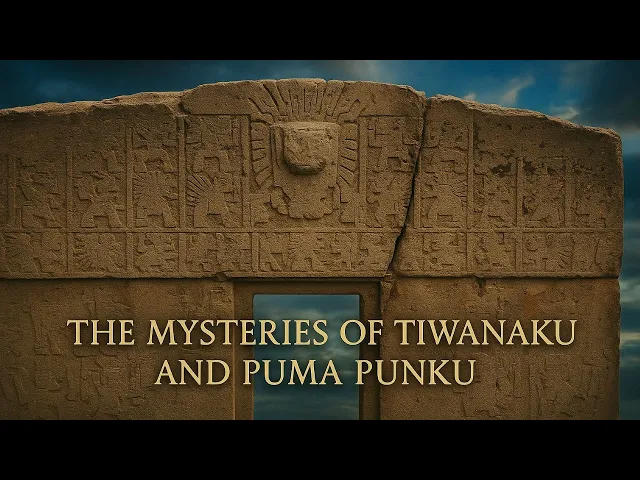
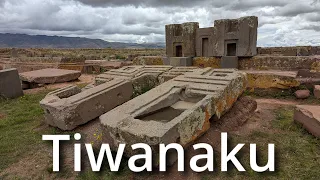
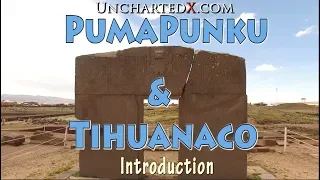
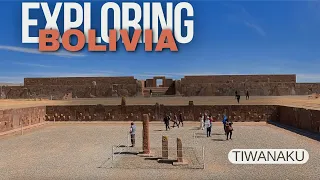
new light so without further ado let's dive into it [Music] so let's begin by examining the ancient city of tiwanaku tiwanaku can be found near the south shores of lake titicaca in bolivia the site is one of the largest ancient cities found in all of south america and is believed to be around 2000 years old who in fact inhabited the city remains a mystery to this day there are many theories regarding the tiwanaku people one such theory suggests that the city was abandoned sometime around 1040 a.d due to agricultural collapse following severe droughts it is
currently believed that the ancient inhabitants of tiwanaku spoke a language closely related to the pukina language a now extinct language family of the andes remnants of pukina still exist in the quechuan and aymara languages of ecuador peru and bolivia the inhabitants of tiwanaku likely dispersed across the lake titicaca region splitting off into several isolated groups eventually the city became completely abandoned and embedded itself into quechuan aymara and incan folklore little is known about the religions of the tiwanaku people but based on incan myths the people of tiwanaku worshipped multiple gods one such god was given
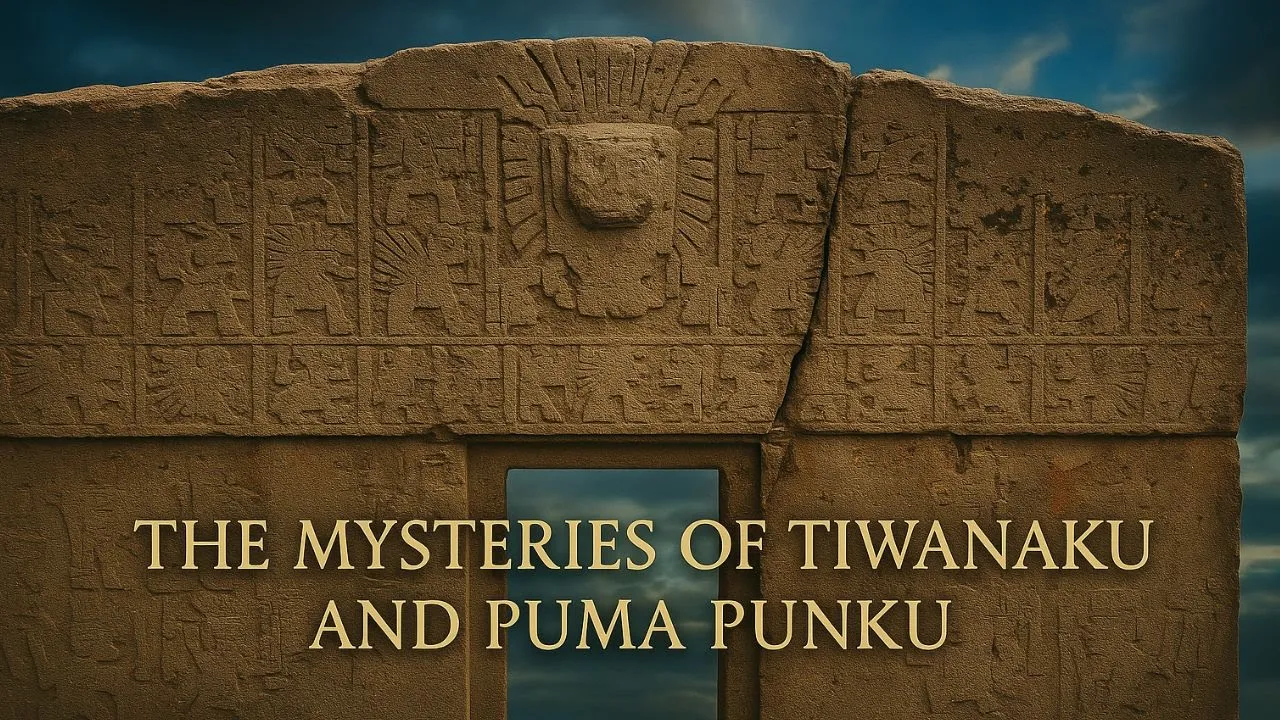
the name viracocha by the incans and was thought to have given the people of tiwinaku knowledge and technology one of the most important structures of the site is the gateway of the sun which stands near the center of tiwanaku we'll come back to this later now this is where things got weird we spoke to several aymara people who told us of ancient legends of ancient tiwanaku deities the god of tiwanaku's name varies throughout the region by some he is tanupa by others contiki and by many thanks to the incans viracocha many of the stories we
heard spoke about the mythical deity as having arrived from the pacific ocean via sailboat and taught the andean people about agriculture architecture and astronomy but the strangest part was yet to come in almost all of these legends the vivacocha is portrayed as a pale-skinned slender man with facial hair these stories could perhaps be dismissed as first contact encounters with europeans except for the fact that they pre-date european colonization by thousands of years outside of oral folklore there exist artifacts depicting these deities as fair-skinned bearded men which also predate colonial times the other puzzling thing which
we heard time and time again from locals was that their native language of aymara was similar to japanese some words are the same okay and she she says woman woman have a the same we saw the same mark in woman here she said what is the more we heard the more we questioned what we had known about the peopling of the americas some locals even insisted that there were cognates between japanese and imara there didn't seem to be much evidence for these claims outside of subjective experience and the northwestern coast of south america has become
home to many japanese immigrants in the recent past but we still wondered if there was some truth behind these stories a reoccurring story which we had heard from locals detailed how upon spanish arrival in the 1500s the spanish asked to the imara incan and quechuan people who built the city of tiwinaku to which the natives responded we did not build this nor did our ancestors this place was abandoned long before we ever came here it's stories like these that made us wonder before we delve deeper into these claims we have to examine contemporary theories on
the history of the americas to understand the controversy and mystery surrounding this ancient site we have to go back to when the first human supposedly ventured into south america the most commonly accepted theory is the theory that humans first began migrating across the bering strait into north america around 13 000 years ago these people are now referred to as the clovis people however recent evidence of pre-clovis cultures existing in the americas much earlier has led many to push the migration of people into the americas around 33 000 years ago now the oldest known human settlement
in all of south america is a very mysterious place called monte verde located in chile this site dates to around 14 800 years old now this site due to its age challenges the clovis first theory which advocates for the clovis people and the clovis culture being the first evidence of humans in north america and ultimately the ancestors of south americans the site was first excavated by two archaeologists named tom dillahay and mario pino what they found at the site were stone tools which they had dated to over 30 000 years old however due to the
fear of causing extreme controversy over this date they chose to ignore this finding and focus on the items that they found which dated to around 14 800 years old which was already controversial enough pino however insisted that the site is 30 000 years old despite his colleague not being convinced or interested monte verde has been accepted reluctantly and begrudgingly by the archaeological community to be at least 14 800 years old now this brings a whole new problem to the table a problem called the beringia problem for decades it was believed that asian peoples crossed the
bering strait around 13 000 years ago during a period when an ice-free corridor opened up between mile high ice sheets over the bering strait this allowed people to walk into the americas while following big game now back to monte verde monte verde is on one of the most southern points in south america and dated to at least 1 800 years before the alleged crossings at beringia some archaeologists deem monte verde to be impossible because it contradicts that all american natives came across the bering strait now much more recently this has become pushed back quite a
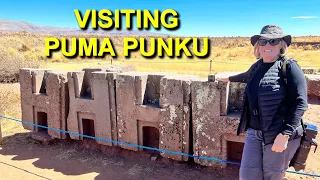
bit further with more archaeologists suggesting that humans first came to the americas around 30 to 20 000 years ago but there's another problem with the baron strait theory which is that people may have not been able to cross beringia due to a lack of big game along glaciers and may have followed the coasts of western america and boats instead this would also promote the kelp highway theory which suggests that people populated the americas from the pacific while following kelp beds across the oceans back to the site of tiwanaku and pumapunku the site was rediscovered by
a spanish conquistador named pedro sies de leon in 1549 much later a man named arthur ponsansky first proposed during the late 1890s that tiwanaku was perhaps 15 000 years old he believed the core of incan civilization and even the maya could be traced back to tiwanaku his writings of course later became very controversial when stone dating techniques dated tiwanaku and pumapunku to around 2000 years old and most of his findings had been rejected by that point and forgotten [Music] the polynesians were some of the most highly skilled seafaring people to have ever lived originating in
southeast asia they populated much of the south pacific by hopping from island to island for centuries the furthest known region to have been inhabited by the polynesians is easter island which lies only 2 300 miles from the west coast of chile it was long thought that this had been the furthest point of polynesian exploration however recent genetic studies have found traces of polynesian dna in ancient south american bones several other studies have also found native american dna in populations of people on polynesian islands it has even recently been confirmed through dna analysis that around 800
years ago a group of polynesians reached the south american coasts where breeding occurred between native americans and polynesians who's to say this could not have been possible the distance from easter island to south america is far less significant than many other distances crossed by polynesians in the past yet another genetic study had discovered a link between sweet potatoes found in parts of south america with those found across polynesian islands this could in fact be explained by the sweet potato seeds being carried across the ocean on floating islands of debris however there is linguistic evidence that
supports the theory of contact and perhaps trade between pacific islanders and south americans in some polynesian languages the word for sweet potato is kumala and in the aymara language of the andes the word for sweet potato is kumara these findings seem to shed a bit of light on some of the andean myths and legends which we had been hearing across our trip i got my hands on an aimara dictionary and began looking for cognates or similarities between japanese and imara i did end up finding some things which i found interesting to say the least take
a look [Music] i wasn't entirely confident with these findings so i turned my focus towards easter island and the rapua nui language here's a list of some of the similarities i found between the two languages [Music] in short dna evidence has suggested that there may have been waves of different migrations into the americas one such wave being an asian wave from siberia into north america which represents most of the native american ancestry today and then from the south pacific which has been found in native americans dna across the continent these people were much more closely
related to african groups australian aborigines polynesians and the inhabitants of easter island who were very close to reaching chile there are many theories as to how the city of tiwanaku became abandoned most of these theories deem agricultural collapse as the culprit however there exist other more controversial hypotheses one such hypothesis suggests that tiwanaku is in fact much much older than contemporarily thought and had become abandoned due to some type of natural disaster or cataclysmic event this would possibly explain some of the imara legends which describe a catastrophic flood which had devastated the land wiping out
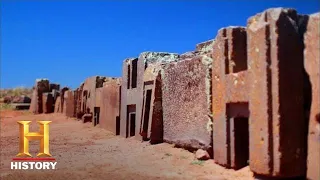
most of the population this could also indeed explain the chaotic state of tiwinaku and pumapunku today it does appear as something truly catastrophic occurred at the site toppling massive stones weighing over 100 tons it's hard to find solid evidence for these claims but what we do know is that during the end of the last ice age around 12 000 years ago there would have been a dramatic rise in sea level but the big problem here is that tiwanaku has been dated to be around 2 000 years old but could it have been built much longer
ago some researchers such as graham hancock have pointed out strange glyphs found at tiwanaku as being evidence for the site being much older hancock proposed that the images on the gateway of the sun at tiwanaku depict an extinct species of gomphotherus named cubierinus cuvierness disappears from the archaeological record around 11 400 years ago a recent archaeological study discovered that a massive meteor struck greenland around 13 000 years ago dramatically shifting the environment to a much warmer climate this would have displaced much of greenland's glaciers and could have possibly raised sea levels rapidly this event has
been referred to as the younger driest event and has been linked to many extinctions of megafauna across the americas from that time it certainly could be so that tiwanaku was much older and populated by a group of people who vanished after such a catastrophe however much of these findings have been disputed by archaeologists and when you look at some of the glyphs which allegedly show cuviernus it sometimes appears to be two separate images nonetheless it still remains a possibility but there is one final piece of evidence which i realized while visiting tiwanaku and lake titicaca
it is currently believed by many that tiwanaku was once used as a seaport and that during the time of its reign it had been closer to the shore of lake titicaca today the ancient site lies about 10 miles from the shore of the lake it seems strange for the ancient inhabitants of tiwanaku to have built a city so far from the lake as it would have been beneficial to be along the shore another strange thing is that there have been ancient towns and villages discovered underneath the water of the lake from an outside perspective it
would appear as if the water level of lake titicaca had experienced vast fluctuations in the past could it be possible that these floods wiped out the tiwanaku people and if so where did the survivors go if any well here's where i propose a bit of a radical claim what if the aymara people of the floating islands of lake tadikaka are the remaining descendants of tiwanaku the aymara people live atop man-made floating islands constructed using tatura reed for buoyancy it is unknown exactly how this culture began living on the lake but what if this was their
solution to the floods there are cities miles off the coast of the lake as well as cities underneath it at the same time there could have been multiple floods and fluctuations of water level which could have forced the imara people to adapt in the ever-changing environment in the most unique way possible if the imara truly are the descendants of the tiwanaku people it would also explain why the aymara language has remnants of pukina the language once spoken at tiwanaku it's only a hypothesis but it could be possible the ancient city of tiwanaku has been shrouded
in mystery since its rediscovery in the late 16th century it's difficult to attempt to uncover the truth when there are so many stories myths and legends surrounding this ancient city but based on what we gathered from interviews with locals and our independent research it seems probable that the ancient myths of tiwanaku including the legends of the vivacocha could in fact have some truth to them was the vivacocha in fact an ancient japanese explorer or was he a polynesian sailor from the pacific perhaps we will never know for sure this would explain many of the aymara
quechua and incan and even mayan origin stories which depict fair-skinned people from the sea arriving to spread knowledge it's certainly a possibility that the site of tiwanaku could have been populated by seafaring peoples from the pacific perhaps the people of this first wave had built vast cities and empires across south america long before the second wave of people arrived from the north coming down from beringia this could well explain the persistence of legends across native american cultures that people long before them and their ancestors had constructed ancient cities perhaps these people were wiped out in
a cataclysmic event which may have occurred just before or during the beringian migration perhaps these first people who populated the americas experienced a radical climate change which subsequently caused their civilizations and cultures to disappear into the newly arriving beringian folklore it could be so that during this event only small populations of the pacific islanders survived and throughout the next 10 000 years assimilated seamlessly into the most recent wave of native american populations or maybe only a few isolated interactions occurred between polynesians and native americans during a short period of time right before european colonization occam's
razor doesn't help much to penetrate the mysteries to the truth the history of the americas is far too complex what's certain is that there existed advanced rich and powerful empires across the andes throughout antiquity and that trade and contact occurred between native americans and pacific islanders long before europeans ever set sail for the new world [Music] [Music] [Music] you