this video is about 1 Timothy 3:15 and this language where Paul says the church is the pillar and buttress of the truth we're going to go through what does that mean and especially with a view to these debates between Protestants and other Christians and basically the question is ecclesial infallibility uh so ecclesial having to do with the church infallible meaning uh incapable of error in certain contexts and basically the question comes up here is does this verse mean that the post apost olic church has infallibility and I've often argued against that in favor of a
Protestant view that the church is always fallible after the apostles she must measure herself by the scripture which is infallible I've argued for that view from the early church history evidence in this video and then I've argued against the other Main New Testament passage that comes up Matthew 16 in this video and that's where you get into the binding and loosing and the Gates of Hell shall not Prevail and all that but here we're going to talk about this verse this other this is the other one of Matthew 16 1 Timothy 3 these are the
two big ones from the New Testament that come up I'll put up the whole passage you can read through it if you want want to give a Protestant take on this verse and basically say this is not a good proof text for ecclesial infallibility for two reasons I have two arguments number one being a pillar and buttress of the truth is not identical to nor does it entail infallibility so that's the first point is just we're going to get into this language pillar and buttress of the truth and say that just doesn't mean infallible okay
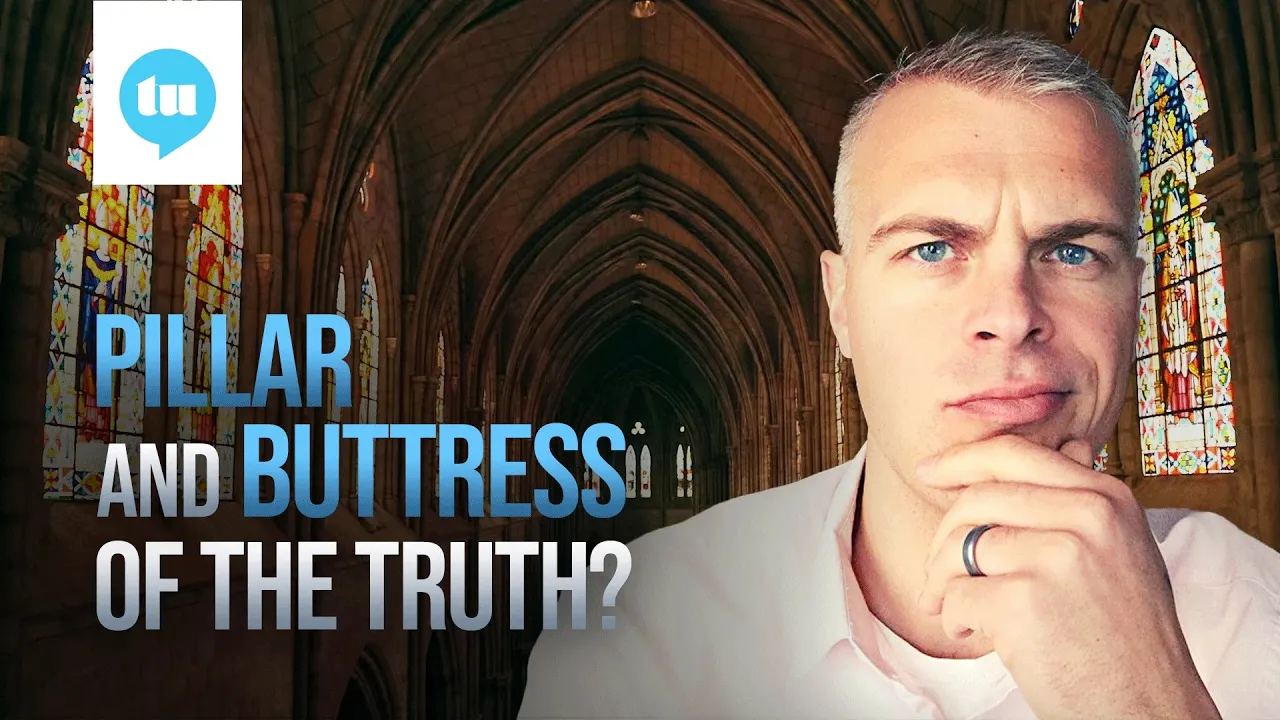
so we'll take a look at this verse I'll put up these two relevant Greek words in the Bolden font here uh the Greek word stulas means pillar or column it's the same word used in Galatians 2:9 and the reference there to the pillars of the church the word hroma is a rarer word it means support or base or ground it could even mean like Foundation okay or usually it means either a building's Foundation or one of the buttresses that support it so basically you can see these are architectural terms and you can kind of get
the main idea here um the the main idea is support or upholding so the idea is that the church supports the truth like pillars support a building John stot references the Temple of Diana and it and it's 100 columns supporting the building and says just so the church holds the truth a loft so that it is seen and admired by the world and he emphasizes kind of two two implications from this imagery first stability and second visibility so pillars and buttresses make something firm but they also hold it up high for others to see and
that's what the church does with respect to the truth and the truth that Paul has in mind here likely is basically the truth of the Gospel the revelation of Jesus Christ that he's about to go into in the immediately succeeding verse in this hymn In verse 16 so lots to go on in this passage that we could summarize but let's make the main point here the idea of being a pillar and buttress the idea of upholding the truth does not logically entail infallibility to be the pillar and buttress of the truth does not logically entail
a kind of preservation from error in certain contexts that just to get that goes beyond the language here the language is underdetermined to get that result that's a more Technical and exhaustive and specific category to get out of this more General language now uh you know we can make a long case for this but I think the easiest way to try to show that is just to show how frequently this same language was used all throughout the early church for fallible entities Francis Turin points out a couple of examples and there's some other Anglican texts
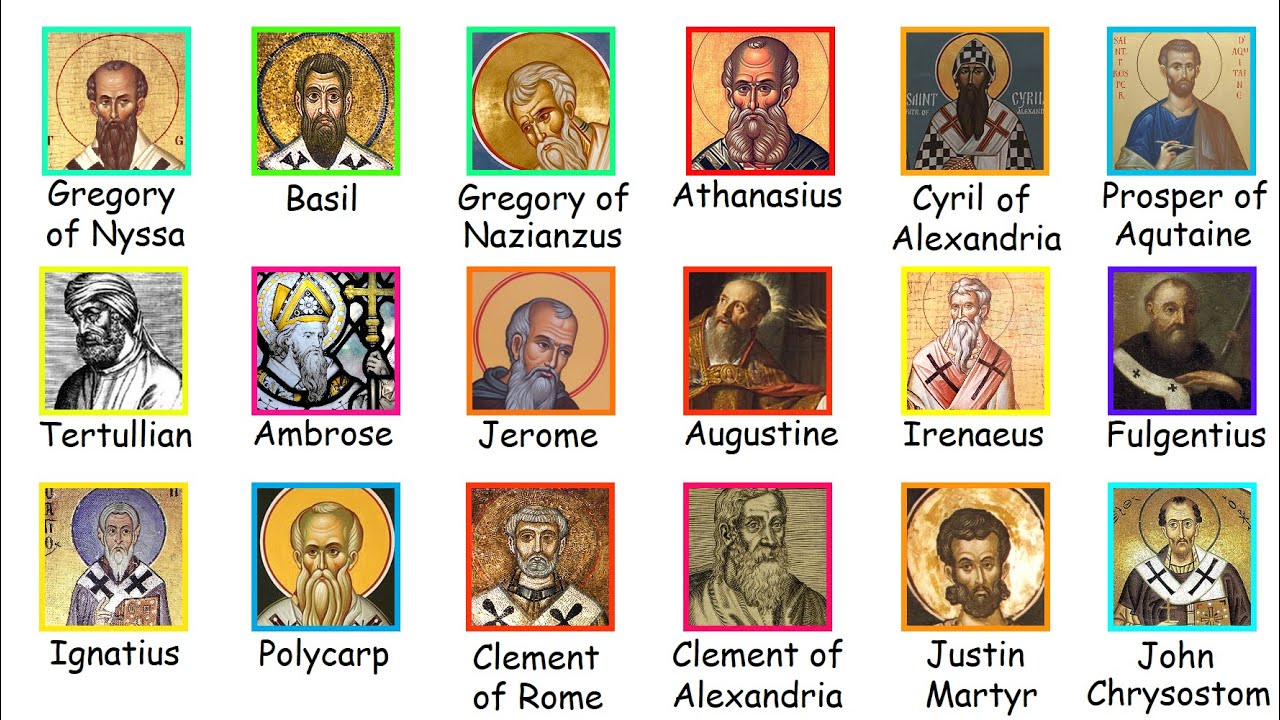
that go through even more I'll put up some of these on the screen so you can get the idea here you have uus the early church historian who references a martyr atalis who was a native of peramos where he had always been a pillar and Foundation in his letters Basel will refer to the Defenders of Orthodoxy as pillars and foundation of the truth scattered abroad Gregory of naanis refers to athanasius as the pillar of the church and this language doesn't entail infallibility right we wouldn't say that you know um athanasius is infallible or that uus
is trying to say that atalis was infallible or that Basil's Orthodox uh co- belligerant were infallible or anything like like that that just wouldn't follow from the language here now to clarify we're not saying that this is incompatible with infallibility it's not inconsistent you could make a case for that on other grounds Just Like You could argue that athanasius was infallible from some other argument but um we're just saying this language doesn't get there itself it's not an implication of the language and that's important to see because this verse is often touted as if it
were one another way you could see this is you can kind of give a parody argument from the Pharisees you could show how the Pharisees could make this exact same kind of argument there's so many verses in the Old Testament that have similar promises about how Israel or the leaders within Israel are the Guardians and upholders of the truth and the light of the world and so forth and they could appeal to this kind of language and say therefore we are infallible they could quote Malachi 2:7 for example and say look the people should seek
instruction from the mouth of a priest because is the messenger of the Lord he guards knowledge therefore as the inheritors of that Priestly Authority we have a kind of infallibility we cannot he therefore the Traditions that we Proclaim as the oral law of Moses must be obeyed by the people of God and as it turns out that's they did say something like that and Jesus rebuked them for that and said they are nullifying the word of God by their traditions and the reason that if if they had made that argument is that that's just getting
too much out of Malachi 2:7 Malachi 2:7 doesn't entail infallibility in fact if you just read Malachi 28 you see just how fallible the Guardians of knowledge and Truth in Israel were and so I'm just trying to make kind of help someone see how we as Protestants are looking at 1 Timothy 3 we're saying the point is that a particular entity being a guard or upholder of the truth doesn't necessarily entail infallibility you would need more information to get that well what does it mean what does 1 Timothy 3:15 mean in a Protestant view very
simply that the church has been entrusted with upholding and supporting and maintaining the revelation of God given to us in the Gospel of Jesus Christ she has this task with respect to the gospel that pillars and buttresses have with respect to uh a building so Francis Turan lists five different ways that this plays out but they seem to basically boil down to two functions preservation and Proclamation the church's task is to preserve from Death the truth of God given to us in Jesus Christ and his Revelation and to Proclaim to the world that truth um
and that is you know that that that how did how did we do that so many ways everything from manifesting the reality of the Holy Spirit through exercising spiritual gifts protecting the scriptures during times of persecution translating the scriptures into new languages proclaiming the gospel and new languages ordinary evangelism and preaching in the ongoing Ministry of the church our corporate love for one another John 13 the whole life of the church has as its object this to uphold the truth of the gospel and we are like pillars and buttresses of the truth in that sense
John Calvin in his treatment of this passage uh passage emphasizes the ministry and offices of the church especially for its preaching and he gives as a parallel passage Ephesians 4 where these various offices of the church are serving this purpose of promoting and preserving the church or the the truth you can read this passage if you want so that's what it means to be a pillar and buttress it doesn't mean infallible that's the first argument that has to do with what the words pillar and buttress mean the second argument has to do with what the
word church means very simply the word church here does not refer to any infallible entities that are claimed by contemporary churches in 1 Timothy 3:15 Paul gives no indication he's talking about a particular office in the church any particular occurrences in the church like ecumenical councils he's speaking about the church as such of which the Ephesian church that Timothy serves is one manifestation there's an older Anglican text surveying this passage where he goes through you know over a dozen or so examples of where Christians in the early church are using this language of pillar and
buttress of the truth for fallible entities and he says they hereby plainly declare cled what they understood by these words of St Paul and that they looked not upon this as a privilege peculiar to any one bishop or any one church but common to all churches I would go so far as to say every single faithful local church is a pillar and buttress of the Church of the truth just as every single faithful local church is a display of the wisdom of God Ephesians 3:10 uh manifests the presence of Christ Matthew 8 19- 20 and
so forth but if a contemporary church wants to come along and say our particular mechanism of infallibility is what's in view here they would need additional arguments to get there because that's not in view in 1 Timothy 3 in this chapter you just get the two offices that Paul mentions overseers and deacons so in other words you know people are skipping over steps of inferential reasoning that would be needed to get to their particular understanding of infallibility take take the Roman Catholic View as an example for the Roman Catholic position The Entity that is entrusted
with interpreting the word of God is the magisterium of the church this is basically the Pope in communion with all the Bishops and that Authority can then be expressed in an infallible way in various ways through an ecumenical council through an ex Cathedral statement from the pope many other ways as well but the question then is well why should we think that when Paul says Church in 1 Timothy 3:15 he's referring to that very very particular mechanism the Roman Catholic magisterium in those capacities number one that goes Way Beyond what the text says and number
two in its actual execution and practice it doesn't look like it is upholding the truth of the Gospel it looks like it's adding on you know what is yielded by that particular mechanism of infallibility is stuff like the bodily Assumption of Mary and Papal infallibility and the immaculate Immaculate Conception of Mary and so forth and these beliefs gives every give impression of being unknown to Paul unknown to Timothy unknown to the Ephesian church that Timothy served just completely kind of obviously way later than that so the notion of upholding or supporting the truth implies that
there's something already there to be supported but what it looks like is happening through the Roman Catholic magisterium is not the upholding of the truth that's been entrusted to the church but adding on new layers in other words this doesn't look like a a buttress or a pillar for the truth of the Gospel it looks like at you know at the bottom of the building or the foundation it looks like another floor on the top of the building adding making it more heavy and so forth so that's hopefully that metaphor makes sense what I'm trying
to say there so uh you know I I would conclude by saying I think it's telling that these are the best verses you're going to get to try to prove ecclesial infallibility from the New Testament it's very weak and inferential um you know the the words pillar and buttress don't mean infall ibility and the word church here doesn't correspond to what is claimed to be infallible by the Contemporary options on the table um and this is really surprising because if the church could be infallible this would be the single most important thing for the New
Testament to tell us we've got a lot of passages in the New Testament like in 1 Corinthians 12:28 and following in Ephesians 4 that are telling us about the offices of the church and how they serve the unity of the church it would be very surprising if we had some sort of office or mechanism that could actually speak infallibly to guarantee the unity of the church and it just never came up in the founding of our religion what do you think let me know what you think in the comments short video hopefully it helps address
this passage thanks for watching everybody