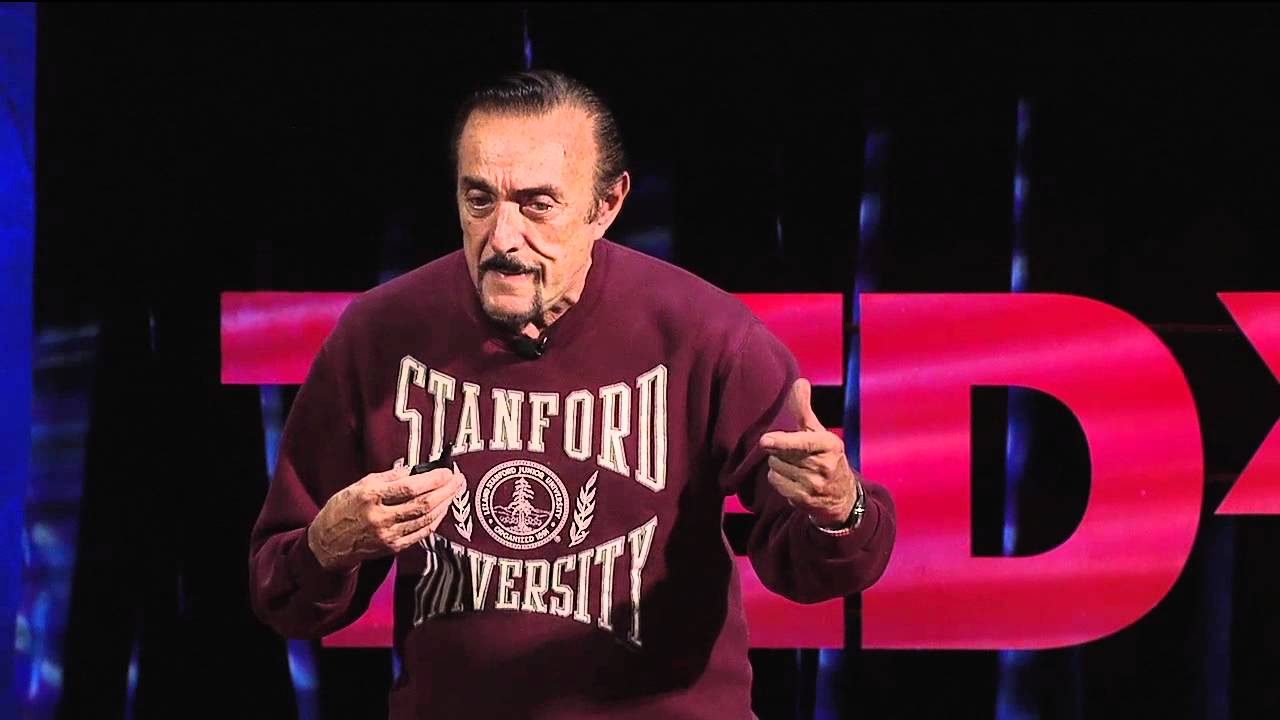
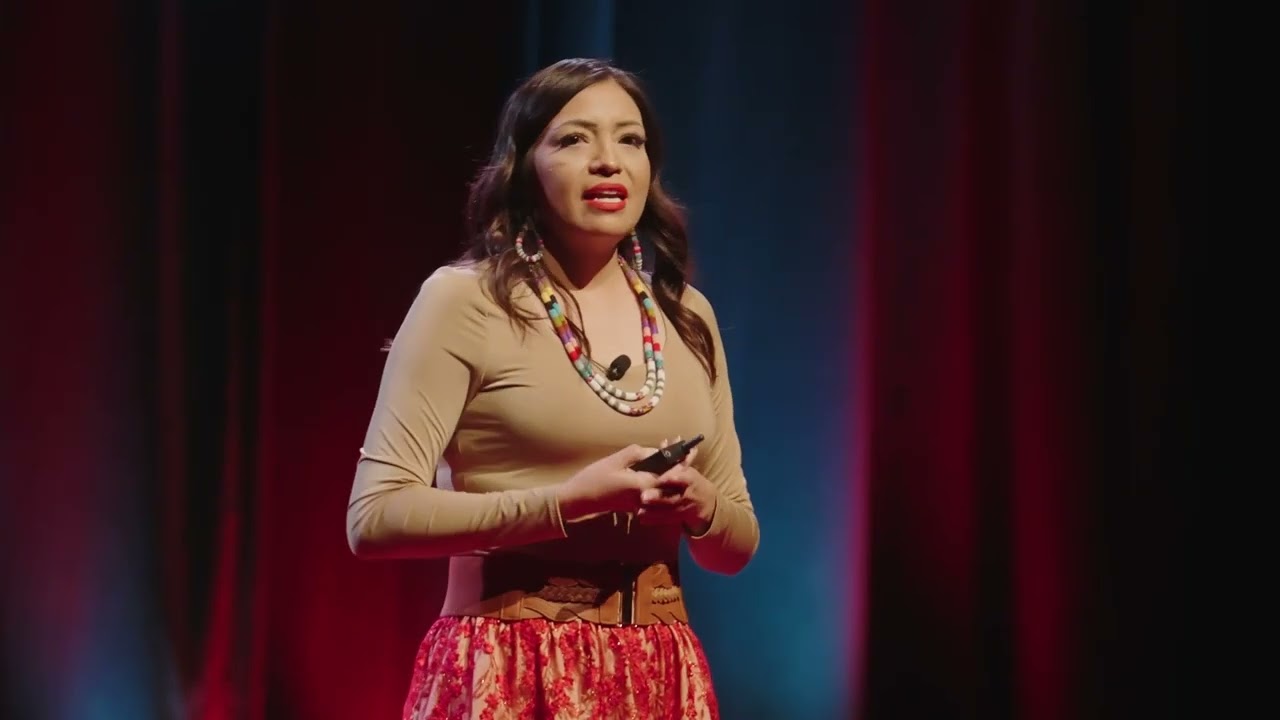
hi there tedsters in Ted X Warick England uh I'm Phil zimbardo uh coming to you from San Francisco I wish I could be there with you in person I will be in Edinburgh April 2nd giving a talk to a thousand high school students and before that a few days in London uh so if you're around those parts uh come and come and visit me what I want to talk about today is um what it felt like being a virgin at Ted 2008 uh last year in montere California I had never heard of Ted I thought
it was Ted from United Airlines or Ted Williams was my favorite baseball player on the Red Sox when I was a kid but I didn't know about Ted or ted.com uh until I got a call from Jun con who was a former student of mine at Stanford who happens to be the executive director of T invited me to give a talk and then they said of course it's limited to 18 minutes well you're an academic you know my world is 50 minutes I usually like more often than not I teach twice a week for two
hours rather than three times for 50 minutes um so 18 minutes is really the introduction but I prepared I cut down my 2hour talk to close to 18 minutes and of course it's very professional so you have to rehearse during the rehearsal unfortunately the clock was not working it was a glitch so I couldn't time it but they told me too many slides cut out the Words which I did that night um but as you'll see it was really good that the senior staff saw the rehearsal that day uh the day before I talked it
was the most intimidating day in my life I've been teaching for 50 years I teach classes up to a thousand I give talks all around the world I go to many International International conferences but there's never anything like Ted every lecture was brilliant more brilliant or even more brilliant the slideshows were extraordinary the video clips were you know totally professional and they all got it in in 18 minutes so I went home that night and rehearsed and practiced and then then it's my time they hook you up they give you a little remote call your
name and you're out in the red circle well I said I'm so happy to be here and I look up and there's a huge digital clock that says starts with 18 and it's and then it's now at 1758 it's oh my God I wasted 2 seconds so I have running dialogue I'm talking a mile a minute cuz I knew I had 60 slides and I only had 18 minutes and I'm talking a mile a minute and I'm hyper I begin to hyperventilate and I'm saying to myself slow down you're going to faint I I can't
slow down it take three seconds to take a breath so I'm talking fast and Fast my voice is going up I can hear it going up and but I'm shooting along and I look up I got 10 minutes I got 30 slides and it's moving really well and what I'm talking about is the psychology of evil I'm talking about what are the processes by which ordinary people even good people can be seduced cross the line between good and evil into doing things that harm other people hurt other people even kill other people or at National
level commit crimes against humanity so this is what I've been studying for a long time with my Stanford Prison study and other research I've been doing so my lecture was filled with lots of interesting slides the milgrim experiment um Stanley milgrim and Iowa high school classmates in the Bronx and his study was the first to really powerfully demonstrate how individual Authority can compel individuals to harm to believe they're harming another innocent person uh in fact 2third of a thousand American citizens went all the way to 450 fults when they're put in the position of being
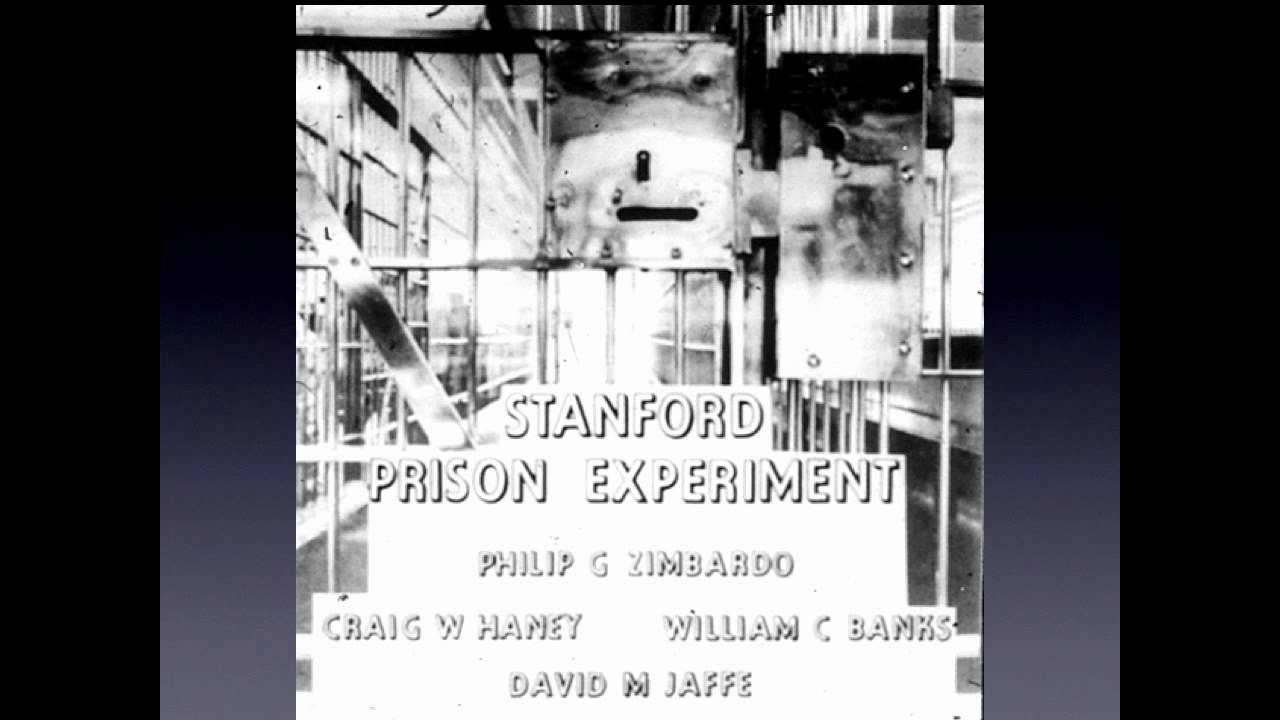
a teacher shocking alleged learner for making mistakes well his study was really a one-on-one power of an authority over an individual and I realize most of our life is spending institutions family schools work military hospitals um so that I wanted to see what is the power of institutions in corrupting good people where it's not a single person that says do this bad thing it's a set of norms a set of rules a set of operating procedures and so that's when I created the Stanford Prison study at Stanford back in 1971 and the study very simply
was uh we put an ad in a local newspaper and the City newspaper wanted college students to study a prison life for 2 weeks 15 bucks a day we got 75 students applying this was they were from all over the country because they happened to be in the San Francisco area in summer school at Cal University of California Stanford but we gave them personality tests and clinical interviews and we picked two dozen who were the most normal and healthy and then we randomly divided them as in all good experiments pronet versus guard so at the
beginning of the study it was only by chance you were assigned to be a prisoner or guard and in fact you normal healthy intelligent college student moreover it's 1971 so a lot of these kids are hippies a lot of these kids are anti-war activists you know um pro- civil rights certainly not the kinds of kids and all kinds of kids who said don't believe don't trust Authority don't believe anybody over 30 and the most amazing thing was within two days of getting into their role which the guards who worked 8 hour shifts prisons lived in
the prison 24 hours a day as in real prisons uh the guards got so much into their role they began to abuse the prisoners I had a con I was the prison superintendent I had to constantly intervene to say no physical Force if you hit him with if you touch him with your Club it's like hitting them but what the guards did is use psychological Force to to undermine the reasoning undermine uh sense of Independence really producing a state of learn helplessness and the prisons within 36 hours the first kid we chose because he was
normal and healthy had emotional break bre down and that became a model of how you get out because it no longer was an experiment that you just say I quit the experiment obviously I have the freedom to to come and go it became a prison run by psychologist not by the state and each day thereafter another prisoner broke down in a similar fashion so that at the end of the sixth day I had to end the experiment prematurely because the guards were simply out of control uh and I had to go to sleep at some
time the study was just me and a couple of graduate students running the whole thing 247 um so I ended the study after this the six day uh and you'll see you'll see later when I uh when I show you a little video clip uh that I presented at Ted uh what was the dynamic force that made me stop the study in addition be because of the Stafford prison study a a lawyer for one of the guards at Abu gra um who one of the U Army reserve military policemen who abused the prisoners in Iraq
in Iraq's prison asked me to be part of his defense team and I agreed because I had I then had access to all of the images I had access to all the 12 investigative reports and I had access to this man to find out what really happened there how did he get corrupted U and so also what I did is I showed um a set of video clips a set of clips of the Abra abuses uh which were much worse than anything that's been seen publicly that's why the pent God is suppressing them because uh
they're really really outrageous it's not only outrageous what the soldiers did men and women it was outrageous because it went on for three months and that no senior officer ever intervened because no senior officer ever went down to the night shift where these abuses were occurring uh and they should have had command responsibility for that action um any event I'm going through breathless and I I get to the point where I say and now we're going to switch from evil to heroism because to be consistent I'm saying evil is evil is horrendous act generated by
Ordinary People in special circumstances and really heroism is an exceptional act also generated usually by Ordinary People Gandhi Nelson Mandela Martin Luther King those people we know their names because they're exceptional in sacrificing their whole life to a cause we look at them we say we're glad they exist but I'm not going to do that but in fact most heroes are Ordinary People most heroes are everyday people who engage in a heroic deed only once in their life you know why because you have to oppose evil you have to defy unjust Authority you have to
oppose corruption you have to oppose immorality uh uh you have to be you have to be there has to be a disaster so for most of us we don't have an opportunity to be a hero because we're not in that Crucible of human nature in any event when I say now we're going to switch from Evil to heroism you can feel the whole audience lifted up and say oh God please just then ding ding ding z00 Z time ran out and and it was like a vacuum in the audience because I said now we're going
to switch to the good thing after the bad thing and just then de XM descends from from the sky in the form of Chris Anderson he's the the CEO who had heard the rehearsal and he got up on the stage he said something like this is too important to stop now we're going to give you a few more minutes which they never do the only people ever got more than 18 minutes were Bill Clinton and Al Gore so I I didn't know that till latest so I felt privileged so I raced through the next five
minutes which you'll see now and I and I ended and I heaved a sigh and I got a standing ovation which is relatively rare at 10 and certainly not anything I expected and I did not faint uh fortunately uh so I want you look at the look look at the video it's only a few minutes and then afterwards what I really want to talk to you about today is the amazing things that have happen since then to now in creating a heroic imagination project that I I really want to engage philosophers dramatists uh theologians have
grappled with this question for centuries what makes people go wrong so situations have the power to do the same but the point is it's the same situation that can in that can inflame the Hostile imagination some of us that makes us perpetrators of evil can Inspire the heroic imagination in others it's the same situation and you're on one side of the other most people are guilty of the evil of in action because your mother says don't get involved uh mind your own business and you have to say mama humanity is my business so psychology of
heroism is we're going to end in a moment how do we encourage children to develop this heroic imagination the self-labeling I am a hero in waiting and teach them skills to be a hero you have to learn to a deviant because you're always going against the Conformity of the group heroes are ordinary people whose social action is extraordinary who act the key to heroes are two things you got to act when other people are passive B you have to act socio centrically not egocentrically and so one day you will be in a new situation take
path one you're going to be a perpetrator of evil evil meaning you're going to be Arthur Anderson you're going to cheat so you're going to allow bullying path two you become guilty of the evil passive in action path three you become a hero the point is are we ready to take the path to celebrating ordinary Heroes waiting for the right situation to come along to put heroic imagination to action because it may only happen once in your life when you pass it by you'll always know I could have been a hero and I let it
pass me by so the point is thinking it and then doing it so I want to thank you thank you thank you let's oppose the power of evil systems at home and abroad and let's focus on the positive advocate for respect of personal dignity for justice and peace which sadly our Administration has not been doing thanks so much when I give a usual lecture at a conference or anywhere colloquium people usually say interesting nice and that's it sometimes they say anything like you know did they hear this ATT it was a totally different experience maybe
a hundred people came up to see me in the next two days saying it was inspirational it was wonderful it's exciting you know these are not most of them are not psychologists very few of them are they had never actually heard this kind of of orientation presentation but what they focused on was the hero part the the little part at the end the little Koda uh and they and then in Ted fashion is saying well you got to Brand it you got to scale it I didn't even know what that me you got to scale
it up you have to Brand it uh you have to move it to the next level um and then for example Jeff Bezos is the head of Amazon comes up and says I have three children I want them to be heroes give me some advice well I said you know we don't have the advice to give because we have to study it we have to do the research and that that's what we started doing so that just mobilized me to put aside lots of other things I was doing and focus on what's we calling the
heroic imagination project heroic imagination is really the engine of heroism it's fueled by the Civic virtues of compassion altruism empathy uh responsibility and mostly Integrity but it is what drives heroic action so heroic imagination is kind of a cognitive motivational force that is fed by these Civic virtues which in and of themselves don't produce anything but it's heroic imagination which is the mediator uh or the turbine which then generates heroic action what I mean by her action is action taken on behalf of other people or cause without expectation of reward and certainly with awareness of
possible personal cause it's different from certainly from altruistic Behavior because because of the awareness of the personal cause um so our goal is how do we expand and explore the nature of our own inner Heroes how do we Unleash the Power and give voice to the many quiet Heroes that exist in every country around the world so this is what we've started to do creating a heroic imagination project uh and focusing around a number of issues so essentially what we want to do is Empirical research on heroism it's amazing there is very little psychological study
of heroism mostly it's about archival studies interview studies of Christians who help Jews in the Holocaust uh but there's no hard empirical research we want to develop curricula and workshops and summer camps for hero for heroism of specific age groups but also hold towns and cities to become hero sites we want to integrate and organize all existing information on heroism there's lots of different websites with different names and different focuses we want to create a cultural Outreach hero change organization that encourages different kinds of Heroes so there's Eco Heroes uh getting promoting um recycl promoting
energy U um conservation water conservation Health Heroes you know getting getting kids to get parents and friends and family to stop smoking because smoking kills so that's heroic AC you get anybody to stop smoking reduce smoking um to exercise to to stop taking drugs uh to stop uh dang you know hard drugs and uh to drink less alcohol we want social support here as people are going to help help the elderly uh in in societies that are graying we have lots of elderly and often that there's no children nearby especially in American Mobile Society so
we need people are willing to give their time uh to the elderly we want anti-bullying Heroes we want family Heroes people going to do things that make other people in their family feel special we want to establish and promote the heroic imagination ideals internationally not just of America and one of the newest things is I've hooked up with u Michael blastone of the I shine Foundation in San Francisco we want to promote corporate Heroes that is people as part of what we call the Integrity capitalism Network people openly defy corruption greed dishonesty and fraud in
business to act heroically um and um and so here's a whole new approach so we're moving away just from the notion of the solitary hero the military hero on on a bronze horse in a park to create hero networks because heroes are most effective in Network in in a group uh and moving to the next level of Heroes in corporations in businesses so so the Empirical research we want to do new laboratory and field research web-based survey research interview research archival research and if we're trying to develop hero courses and workshops but they have to
be evaluated what works what doesn't work uh so those are the kinds of things uh that we're trying to do and also we want to think of new ways to use the web to create web based media sentes where we have U video and film clips as well as all the the literature English literature staral literature on on heroism so in conclusion I'm reaching out to Ted the S grade to help us create an international organization to to promote heroism as the antidote evil and really as a celebration of what's Best in human nature the
organization is going to be dedicated developing and spreading concept of hero as ordinary people whose Act is extraordinary who act on behalf of other people of moral cause again knowing that there's a cause and not expecting any reward I think one of the most important things I've been trying to do is demystify and democratize the concept of heroism to take it away from the movie Heroes the Fantastic Heroes of our kids or the mythical Heroes of Joseph Campbell cuz we want each person to instill in themselves the concept I'm a hero in waiting and when
the time comes I will act now we have to give them a hero and Source kit that you have to be prepared to act you can't just run willy-nilly you know Into The Crucible so so essentially we're developing what kinds of skills you need what kind of situational Savvy what kinds of social influence skills you need to form a network of like-minded people so the point is we want people people say when I become aware of the need to act on behalf of others or people who are suffering from uh as victim of evil forces
I will be ready and able to take the necessary action so T is out there in war or I guess Americans would say Warwick uh I hope you'll join in uh and on this task we think it's one of the most important tasks uh facing the world today to create a world filled with Heroes that are that are ready to stand up and oppose corruption and evil that exists in every country thanks so much maybe we'll talk later on a live Q&A it's been a pleasure thank you Phil [Music] zardo www Lucifer effect.com a whole
section on celebrating airw some articles I've written but it also has a way for you to volunte it's a section where you can volunteer to just put your name and background and how you think it might help what kind of talent you have um and we will get back to you once we begin to organize different projects and a postcript on the postcript is that Lucifer fact alive and well throughout the world uh for example in California uh recently uh there was a bill to allow marriage between gay people gays or gays and lesbians and
it was opposed systematically with big big money interest religious interest fundamentalist interest um that want to De Pride people of their civil rights and in a in my sense this is this is and and they thought of themselves as heroic so one of the big issues with heroism is the definition the socially constructed definition and I know in England we have big problem with you know with terrorism and again it's fundamentalist everywhere uh putting on a call for heroism for young men and women to become Mars for olives suicidal suicidal terrorists who uh become heroes
in their Community by killing innocent people well that's Lucifer's work that's not the work of heroism and so we really have to oppose that the same way we're opposing bullying in classrooms where you know kids just ruin not only the life of the kid they bully but they ruin the quality of life in the whole classroom uh and Corruption every corrupt Every Nation suffers from some degree of corruption we have to not allow at at the smallest level of the policeman on the corner taking fruit from a Fruit Stand because all corruption diminishes the quality
of life of the people who are being corrupted because it's it always ends up with it's not what you know it's who you know and if you know the minut at the top you get ahead regardless of how hard you work and so we want to change all that uh it's a big a big um Vision but we're going to start small and work up hopefully you help us yes it's girl sardo in San Francisco welcome to it's a pleasure um we very much enjoyed your um pre-recorded lecture for us thank you very much for
that oh I'm happy at work um the the audience here have a couple of questions they'd like to ask you if that's right oh I mean you light it I'm as I said I'm sorry I can't be with you okay uh first question um what percentage of Heroes uh do you think we need in society what percentage Yeah that's of a basic well at at the moment um I think there are Rel relatively few Heroes it's hard to put a percentage on it um but the the goal would be to have increased that percentage okay
thanks very much um another question can we have too many Heroes no we have too many of the wrong kind of Heroes we children have the fabulous Heroes Superman and Spider-Man but they are fantastic Heroes who have abilities that these children can never have then there's also there's a hero program in America where you have adults who have these fantastic abilities they can fly they can can be invisible the problem is that it's Ordinary People everyday people we want to get begin to think of themselves as willing to engage in heroic action so we don't
have too many also we have a lot of false Heroes celebrities you know uh we make it the heroes um uh fashion models B you know athletes they're not Heroes they make us feel good but they don't do any they don't make a sacrifice uh for us so Michael Kelps the Olympic uh Ro Medal winner eight times over was a big hero in America in one sense but he was really a role model for talent for practice for hard work and he's not really a hero by the definition I I use okay thanks very much
um there was a question about who or how we Define what is evil in order to create an ocean heris against how we Define what what is evil evil yes yeah well what I try well again these are these are very amorphous Concepts that people have been dealing with for Generations a psycholog iCal definition of evil which is different from a religious one is that evil is a behavior done intentionally to harm other people the harm can be psychological dehumanization uh ridicule bullying to hurt other people Through Torture through abuse to kill other people mortally
and then when evil is done by a system by a nation by a group then it's also to commit crimes against humanity so it's a behavior it's intentional and it operates at all of these levels the harm the hurt the kill okay thanks very much we have one last question for you which is how can a hero deal with a situation which is morally ambiguous say that again how can Heroes how do her de with situations which aren kind of clearly cut right or wrong which are morally ambiguous I mean I I thought you said
how do Heroes deal with an ambiguous situation yes yes yeah well that's that's one of the big problems psychologically is that in many cases it's not clearcut or most people don't want to get involved every one of our mothers tells us mind your own business do not get involved and if we do that we'll live a long time but the world begins to be ugly so in many situations we are looking for reasons not to be involved so often we say oh it doesn't look so bad uh that that person is probably just drunk so
he brought it on himself so one of one of the first issues is how do you train people to be more sensitive to to situational ambiguities how do we identify when a situation is truly an emergency and we should take action usually what you want to do is call you don't want to be a personal hero usually if possible you want to call the officials who are trained to do this but in their absence then we as citizens have to take action on behalf of other people profor thank you very much well again I I
as I said I would invite you all to this our website Lucifer effect.com it has a whole section on celebrating heroism and the other one is every everyday heroism dog so thank you it's been wonderful being part of Ted again thank [Music]