[Music] internationally associated with japan it is derived from a phrase that means to blush but today it's commonly known as cute and this restaurant is cute on steroids [Music] this is so cute i don't want to eat it look at how cute it is to the outside world kawaii has come to describe a specific subculture covering everything from what people wear to the food they eat but for us japanese it's a multi-faceted idea that's hard to define and ever-changing much like our national identity i'm yumi araki i left japan as a teenager and now i'm
back as a journalist to explore the country of my birth as it enters a new era i'm here to get to the heart of what it means to be japanese today i think it's the whole japanese system and like the politics it all starts from there to explore the influences that have shaped our national identity [Music] and to meet the people looking to redefine it for better [Music] and for worse [Music] [Music] [Applause] [Music] kawaii was popularized in the west during the early nights by famous artists such as gwen stefani [Music] [Applause] and katy perry
i'm curious to get a japanese perspective on the international adoration of kawaii and how it relates to our national identity this is the kawaii monster cafe in harajuku it's the brainchild of sebastian a contemporary artist and designer heralded oh since 1995 creating works across art fashion and entertainment he's traveled all over the world spreading the gospel of kawaii kanji this lifestyle culture is talking about is what i most associate with kawaii japan is famous for its myriad of adorable characters hello kitty is probably the most famous but here in japan we have a mascot for
almost everything local towns [Music] companies and even promoting safe sex you name it we got it these strange but lovable characters are known in japan as yurukyara kangani [Music] [Music] on the surface this place with its bubblegum pop aesthetic seems light years away from the sullen stone statues you encounter at japanese shrines but sebastian is right there is something monstrous to it all that feels oddly familiar i wonder what lies behind this unique aesthetic is [Music] and there is in fact some science behind this in 2015 yale researchers conducted a study to look into what
they coined cute aggression they concluded that this reaction is part of what is known as a dimorphous expression when positive feelings produce a negative reaction like happy tears cute things trigger something primal in us a kind of caregiving instinct gone pharaoh and if that's the case hawaii is not just a part of japanese identity but is intrinsically part of the human condition kawaiify your life [Music] the idea of kawaii as a way to express individual identity is a shift from traditional japanese thinking [Music] there is an old saying the nail that protrudes will be hammered
down it alludes to the position individualism has historically had in japan i can't help but reflect on my own childhood here growing up biracial and a predominantly motto racial society the idea of sticking out was something to be avoided as much as possible in japan those who are biracial are known as hafu a loanword from english meaning half [Music] i've come to meet models naomi sanberg and sion burns and photographer kageyaki smith they're all hafu like me fashion is probably where you see the most hafu representation in japan i'm curious whether they feel this is
a shift in societal views on race or if it's just an aesthetic trend i think all half japanese people in general have this sense of being you know in one foot out one foot i know from my experience i always felt not fully japanese but not fully malaysian nor fully american i feel like we're accepted quicker but not fully accepted like we'll never be like you're saying two feet in the door when i'm at photo shoots people treat me as equals it's more international in that industry but when i step out and people see me
in real life the first impression they have is like oh she's a half person and they don't necessarily go further than that it's estimated that roughly 40 percent of runway models in japanese shows are hafu many of them caucasian japanese but in recent years there's been an increase in more ethnically diverse high-profile hafu with the likes of tennis player naomi osaka and miss universe japan ariana miyamoto gaining international recognition they've been at the center of the debate on what it means to be japanese some welcome the diverse representation while for others they are not fit
to represent japan you know when i was growing up hafu automatically meant your half white half japanese do you think there's a difference in attitude that japanese people have towards hot food like white hofe and japanese and then versus other hot food like yourself so there's the white halves there's the invisible halves and then there's the other half right so white half is obviously like caucasian half right invisible half is what i consider like us because that's half asian somewhere and half japanese but you can't see it yeah you know like on your face and
the other half is just like every other race but in terms of japan itself right now obviously they have more of a strong feeling towards like the caucasian half because they see it all the time you know it's just like on tv and do you feel like that affects the type of work that you do regardless of being half or not just the modeling business is all just mostly white but there is in the halves we understand that there is a hierarchy but we don't like to really acknowledge it because we feel bad for each
other because we're all at the end of the day like half and at a disadvantage but we do kind of understand that there is somewhat of a hierarchy what's your reaction to people who say oh you're not fully japanese because first of all i mean your blood is tainted and then also you know you're not fully japanese in my opinion you're either foreign or not you're either us or not us basically that's the way i think japanese yeah i think it's the whole japanese system and like the politics like it all starts from there yeah
japan is a really nationalistic country so i think they're very isolating and not very open to different foreign ideas at some point they don't really have a choice but to accept because like of japan's increasing diversity like they probably want to prevent it but it's at the current pace it's like inevitable yeah with japan's like declining population there's more and more halves right i mean look at all the athletes right now but a lot of houses tennis players people need creativity and you get creativity from something that's not going on all right that's a wrap
let's go with this i love that i'm thinking a lot now about what my mom used to say growing up you know whenever somebody would introduce me as hafu she'd always say no no she's double meaning she is both japanese and something else we're both ingrained in japan and in another world it's incredibly heartening to see how secure and confident naomi kage and sayong are in expressing their own japanese identity but it's also clear that change is happening very slowly and the prejudices i faced growing up biracial have not disappeared who are the people behind
this disturbing undercurrent appearing in [Music] [Applause] japan [Music] although japan is thought of as a homogeneous country across the world there are several minority groups living here the dominant ethnic group some argue are the pure japanese are known as the yamato people but there's also two indigenous groups the ainu and the ryukyu in addition there are several immigrant communities the largest of which are chinese and korean [Music] in the last couple of decades there's been a rise in ultra-nationalistic far-right groups in japan who are targeting these minority groups it is believed that there are about
1 000 groups currently with a membership of around 100 thousand i've heard of a rally happening that will see many of these groups take to the streets of tokyo so i decide to head out to see what it's all about [Music] [Applause] this protest march is an anti-china rally triggered by the coronavirus and the scheduled state visit by china's president xi jinping [Music] [Applause] many of the groups marching together in fact have conflicting ideology but they're all seemingly united in their anti-china sentiment [Music] it's encouraging though to see that there is some opposition here [Music]
[Applause] [Music] within mainichi which is one of japan's major news organizations he's also an award-winning author he has spent much of his career reporting on ultra-nationalist groups [Music] um [Music] the rhetoric touted on these online hate groups now appears to be spilling over into the real world with several controversial figures stepping into the world of politics [Music] one of the most notable is a man who goes by the pseudonym makoto sakurai he got a start running an online extremist hate group that was often compared to the neo-nazi groups in the west [Music] [Music] [Music] has
since graduated from running an online hate group to heading the far right political party japan first it's evident how antagonistic he is straight off the bat although this is supposed to be a rally to garner support for this upcoming election most of his speech seems to be dripping with disdain for a public he deems as slacking on their national duty [Music] i want to get to the bottom of what it is he envisions as the ideal version of japan so i've come to talk to him at his campaign headquarters [Music] [Music] foreign [Music] i think
what was most interesting about him is the notion that he is threatened by the minority when all they're asking for is sort of like the same rights as all japanese people it's striking how similar his ideas and tactics are to other populist leaders across the world today manipulating the very real labor and financial woes of the japanese people to create an atmosphere of fear and mistrust japan first has yet to make significant traction at the polls but the fact that these sentiments are no longer banished to the dark corners of the internet but being debated
as legitimate politics is truly worrying i wonder if minority groups in japan are feeling any day-to-day impact as the politics become increasingly polarized [Laughter] [Music] foreign there's been a definite rise in nationalism in japan this is down to a myriad of factors from the increase in fringe right-wing groups to a government that's pushing increasingly conservative policies as well as a rise in the number of immigrants in the country all of this has unsurprisingly resulted in a more vocal sentiment [Applause] growing up here the prospect of me being the target of racial discrimination was a very
real concern for my family so much so that they placed me in an international school to avoid anything of the sort i wonder how things have changed since then what is it like to raise a biracial family in japan today [Music] live in scuba in the ibaraki prefecture with their two daughters nana and torisa lamine and sachiko met in 2008 when she was volunteering in niger where he's originally from [Music] they moved to japan in 2011 and have lived here ever since [Music] lameen now works as a teacher at a local kindergarten seven-year-old nana and
four-year-old torisa also go to local schools [Music] [Music] [Music] [Laughter] [Music] [Music] [Music] foreign [Laughter] are still in the minority here according to a 2016 report by the ministry of health labor and welfare multi-racial marriages only make up 3.3 percent of the national total scale [Music] marijuana [Music] [Music] um [Music] um [Music] [Music] foreign [Music] [Music] sort of power or confidence in her daughters and their ability to sort of navigate life in japan which is traditionally quite an insular society was really powerful it's something that i never saw in my own family growing up there
was much more fear much more worry about how i would be able to navigate this world it's comforting to see that despite nationalism rearing its head in the political world it doesn't seem to have sunk its teeth into the life of this family [Music] for genuine societal change to take place japan's political system needs an overhaul [Music] for most of the past 65 years the country has been led by the ldp a party that openly associates with the right wing most notably nippon kaigi the largest right-wing nationalist organization in japan but there's a new kid
on the political block that's challenging the ldp's rules [Music] are an anti-establishment political party led by actor turned politician taro yamamoto [Applause] me [Applause] 45 year old yamamoto entered the world of activism and eventually politics after the 2011 fukushima disaster becoming a prominent figure in the anti-nuclear movement his vocal criticism of the government and anti-establishment views eventually cost him his career as an actor um several prominent journalists including three outspoken news anchors have been forced out of their jobs in recent years the deterioration of media freedoms in japan has gotten so bad that it was
the subject of a damning report by the un in 2017 japan is now ranked 66th on the world press freedom index dropping a whopping 44 places since the current prime minister shinzo abe took office in 2012. it is now the lowest of all the g7 countries says [Music] many officials in parliament come from political dynasties which plays a large part in the disconnect between public and government by disrupting the political status quo within parliament yamamoto sang hopes to break the cycle of political apathy [Music] you know [Music] [Music] in order for me to fully understand
his vision for the future yamamotosang has asked me to go and meet a member of his party who's from one of japan's most marginalized communities [Laughter] [Music] is one of the most well-known members of daiwa [Music] he was diagnosed with als in 2000 and has lost most of his mobility communicating through a computer and a letter board via his career according to the japan council on disability there are currently 9.6 million people with disabilities living in japan that's 7.6 of the population however japan's had a long and troubled history with caring for those with disabilities
in both infrastructure and attitudes so much so that in 2018 the government was embroiled in a scandal that revealed that they had been inflating the number of disabled people in their employment for over 40 years they failed to meet the very quotas they themselves had [Music] he became a vocal activist for the disabled community and embraced life with renewed vigor even going so far as to fulfill his childhood dream of becoming a pro-guitarist by helping to develop an instrument that can be played using just facial muscles his passion and activism eventually led him to politics
[Music] [Applause] as their top candidates for the upcoming upper house elections and defying all expectations people rallied around them thousands turned out in support of them on the campaign trail and in july of 2019 they made history by becoming the first severely disabled people to be elected to parliament this election resulted in the most diverse upper house representation yet with more women than ever also being elected as well as japan's first openly gay lawmaker japan has always been really preoccupied with difference if you're an outlier you're usually cast aside to see funagosang and kimurasang elected
as counselors is absolutely monumental politics is a reflection of who we are as a nation and such a radical shift fills me with much hope for the future [Music] this all-encompassing inclusiveness reminds me of something much older that helped shape the original japanese identity buddhism and shintoism are considered the main two religions in japan but their place in japanese society has become more cultural than religious according to the nhk culture research institute less than 40 of japan identifies with any organized religion i wonder if this ancient religion still has a place in modern-day japan yoshinobu
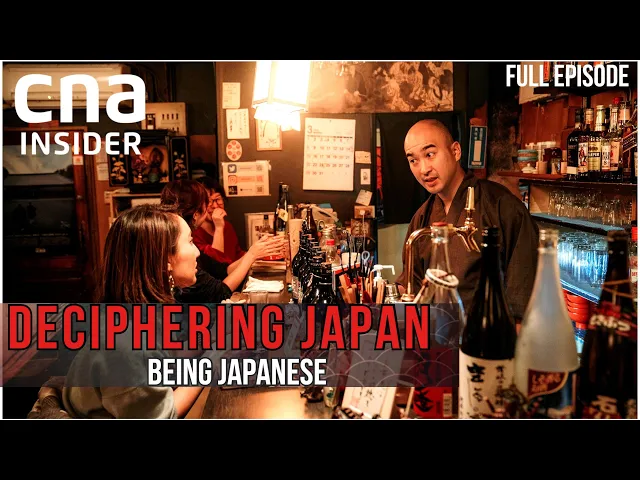
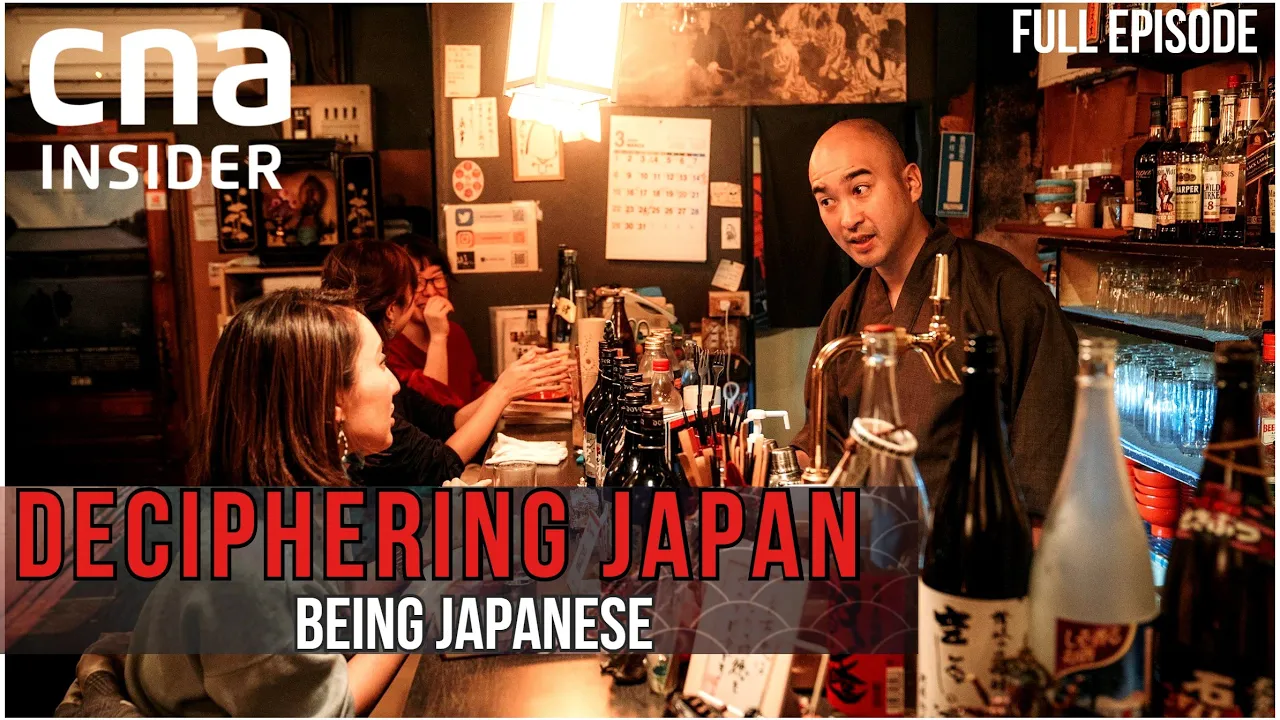
fujioka is a buddhist monk as thais have frayed between temples and communities he has found a novel way to entice people back to buddhism [Music] he runs val's bar in the yotiya nightlife district of shinjuku in tokyo [Music] m we see this turns out nirana tastes like a fruity mix of vodka and cognac [Music] since opening in 2000 countless people have made the pilgrimage to valspar to grab a signature cocktail with a side of enlightenment [Music] foreign [Music] and his fellow monks here try to find accessible ways for people to learn about buddhism whether that's
while pouring drinks or thrilling crowds in their all monk rock band this is most definitely not the image of a japanese monk i had growing up [Music] on [Music] foreign [Music] foreign foreign [Music] i think buddhism has become such in japan to the point where people don't even think about it as a religion it's sort of always been a part of japanese life the country's identity has always been steeped in tradition but if something as central to that like buddhism can evolve and grow with the times there's no reason the rest of japan can't also
it's unsurprising that as modern life here becomes increasingly challenging people are turning to things outside of themselves to find solace whether that's in pop culture politics or religion and while there are those who seek to use that to hijack the japanese identity and twist it into something dark i've seen evidence of significant positive change and i'm left with a sense of hope that the majority of japan is moving towards a more open and bright future [Music] oh she just [Music] [Laughter] god this looks terrible [Music] [Applause] bye