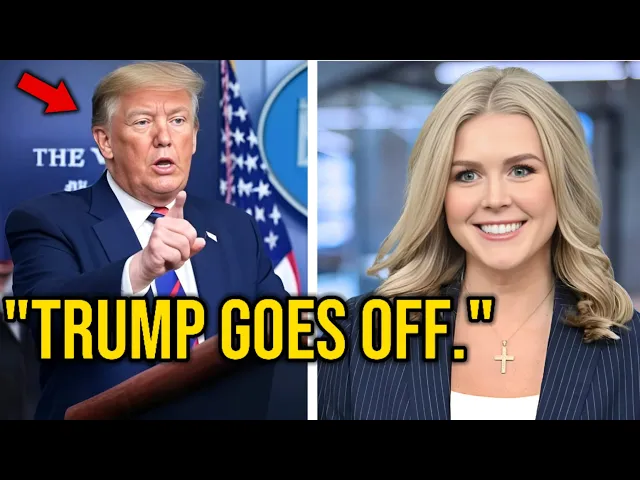
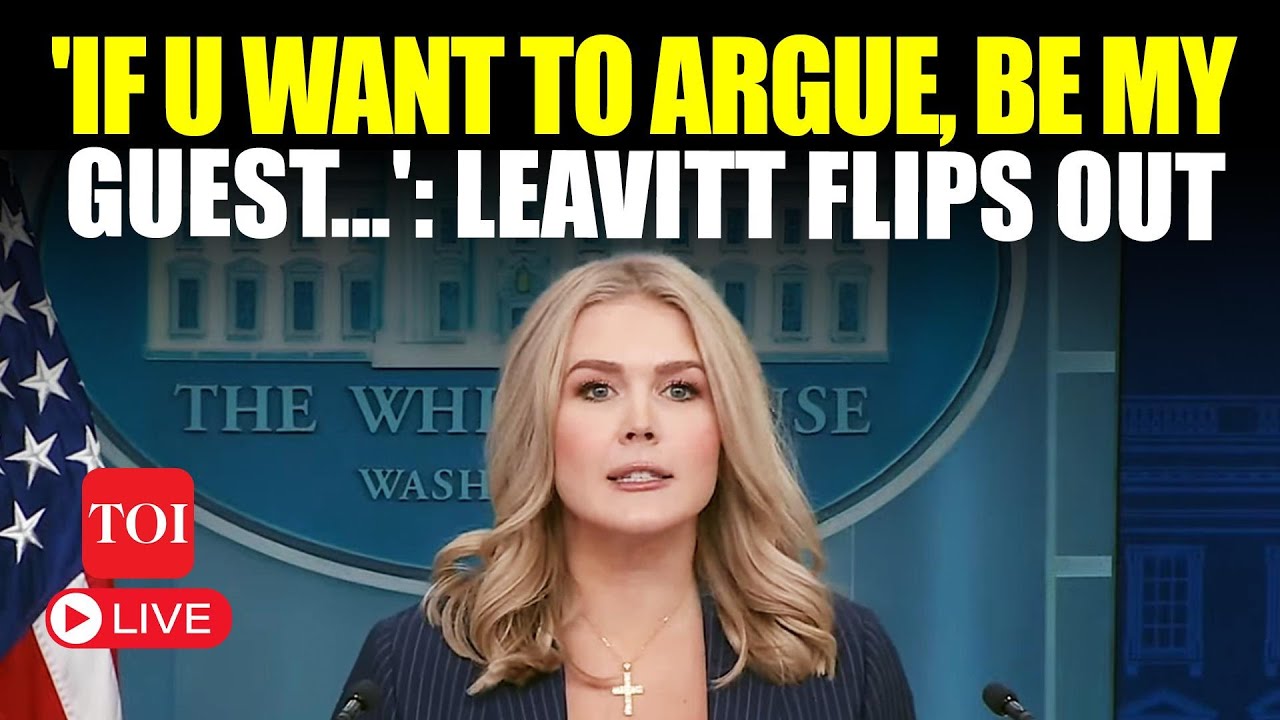
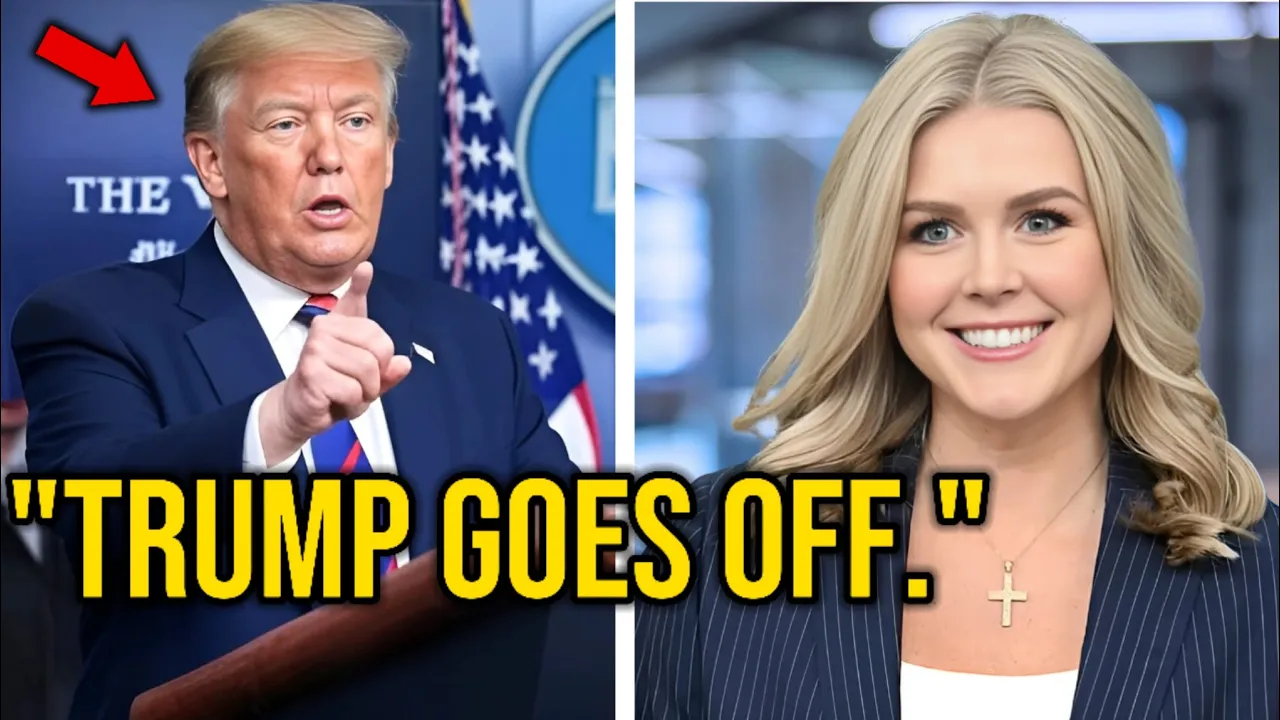
The press briefing had just ended when it happened. Caroline Levit, her poise unwavering, had been wrapping up, delivering clear and concise responses to the eager audience. Everything seemed routine, almost subdued, until the moment a voice cut through the air like a blade.
“Miss Levit,” the reporter began, their tone thick with condescension, “don’t you think that at just 27 years old, you’re a little inexperienced for a role of this magnitude? With all due respect, isn’t this a seat better suited for someone with more years under their belt, someone the American people can rely on? ” The question lingered, sharp and pointed.
The room fell silent; heads turned toward the reporter, a younger man with a thick notepad and an air of smug certainty. His smirk grew as he tapped his pen against the desk, waiting for Caroline's response. For a brief moment, her calm demeanor flickered—just long enough for those closest to see—but she quickly composed herself, her lips pressed into a polite smile.
She didn't respond immediately, and the silence began to stretch; the tension was palpable, almost suffocating. Then, from near the podium, a familiar voice broke the quiet. “Is that what we’re doing now?
” Donald Trump's voice carried through the room, firm and dismissive. He leaned into the mic, his expression somewhere between amused and incredulous. “We’re questioning people because they’re young?
Really? That’s where we’re at? ” The reporter shifted uncomfortably but didn’t back down.
“Well, Mr President, it’s a valid question. Experience is important. Surely you agree that someone with more years in politics might be better suited.
” Trump held up a hand, cutting the reporter off midsentence. “Stop right there. First of all, it’s not a valid question; it’s a lazy question.
And I’ve heard enough lazy questions in my time to recognize one when I see it. ” The audience chuckled, tension momentarily breaking with erupts of laughter. Trump continued, his tone sharpening.
“Second of all, don’t pretend you’re concerned about experience. You’re not concerned about experience; you’re concerned about her being someone you can’t predict, someone you can’t control. ” The reporter blinked, stunned at the directness of the response.
Trump wasn’t done. “You know, it’s funny,” he said, gesturing toward the reporter, “you never ask the people who’ve been in Washington for 20, 30, or 40 years—decades collecting dust and doing nothing for the American people—about their experience, do you? You never wonder if their fancy suits and endless committees have qualified them for anything.
No, no, you’re perfectly fine with them staying in their positions forever, talking and talking while never getting anything done. ” The room shifted; several reporters exchanged glances, and a few even nodded. Trump was a polarizing presence, sure, but there was no denying the truth in his words.
“And here’s the ironic part,” Trump said, leaning closer to the mic, his eyes fixed on the reporter. “People like Caroline Levit—they’re what this country needs. She’s young; you got that part right—big deal.
She’s also sharp, she’s driven, she’s not bogged down by the swamp. She’s brought more ideas and action, actual results, to the table than most of the so-called experienced people you’re busy writing love letters to. ” He turned to glance briefly at Caroline, who sat quietly, her face carefully neutral.
“Caroline here, she’s 27. I say that’s an advantage. She’s not part of the old boys’ club.
She hasn’t spent decades making backroom deals and selling out the American people. She’s done more by this age than most people do in their lifetime. ” He paused, his tone deepening.
“But you—you sit there in your chair, acting like age is the only thing that matters. Why? Because she’s not your idea of a politician?
” Trump’s voice grew louder, more direct, as he stared the reporter down. It was the tone of someone who wasn’t interested in negotiation. “Do you even know what you’re doing when you ask questions like that?
It’s not journalism; it’s not reporting on the truth. It’s bias, plain and simple. You don’t like that she doesn’t fit your narrative, so you throw out the age card—creative, very creative.
” The reporter opened their mouth, but Trump raised a finger, silencing them effortlessly. “No, no, don’t even try it. I’ve heard this nonsense for years.
You don’t respect the voters who chose her, who believe her. You don’t even respect her. All you want to do is tear her down because she’s not the kind of politician you’re used to.
Well, guess what? That’s exactly why she’s sitting here and you’re asking the cheap questions. ” The room erupted in murmurs, and a few reporters even clapped before catching themselves.
Caroline, for her part, remained silent, stunned but steely. She couldn’t help the faint smile pulling at her lips; it wasn’t often someone spoke so passionately on her behalf. Trump wasn’t done.
“You say age matters,” he challenged, pointing directly at the reporter. “Now look at history. Some of the greatest leaders we’ve had in this world were young when they started.
Alexander the Great? He started his conquest at 20 years old. Teddy Roosevelt?
Do you know what he was doing in his 20s? Reforming, changing the system! And here’s Caroline—she’s doing the same thing, driving change, stepping into the fire every day while people like you sit back and doubt her.
And you know why you doubt her? ” He didn’t wait for an answer. “Because she’s not part of that tired, broken machine you’ve been protecting for years.
” The reporter tried again to interject, their voice shaking now. “But Mr President, we can’t compare modern politics to—” “Sure we can! ” Trump interjected sharply.
“You’re trying to push the idea that only seasoned politicians can do the job. Seasoned politicians? ” He snorted.
“Like the ones who’ve brought us debt, wars, and broken promises? If you’re asking me if I’ll take Caroline’s ideas and determination over their so-called experience, the answer is…” Yes, a thousand times yes! The room broke into laughter and applause.
Caroline felt her heartbeat slow, the earlier tension replaced by a strange lightness. Trump's words rolled over her like a tide, bold and unapologetic. He wasn't just defending her qualifications; he was redefining what it meant to lead.
"Here's the deal," Trump included, the room hanging on every word. "Caroline is exactly what this country needs: someone new, someone fresh—someone who has the courage to stand up even when the deck is stacked against her. You don't like it?
Tough! Get used to it, because that's how movements start; that's how change happens. " He leaned back, the faintest of grins on his face.
"And if you're not ready for that, maybe it's not Caroline who's out of touch. " The room now buzzed with energy. The reporters sat frozen, their smirks wiped clean.
Caroline caught Trump's eye and gave him a small nod, a subtle gesture of gratitude that spoke volumes. As the reporters scattered and the moment began to dissolve, Trump turned to Caroline, his voice softer now. "You don't need me to fight for you, you know," he said almost teasingly, "but I couldn't pass up the chance to put him in his place.
" Caroline laughed lightly, her voice warm. "I think you did more than that. Thank you.
I mean it. " Trump waved it off. "Don't thank me; just keep doing what you're doing.
You've got the talent, you've got the drive, and trust me, that's better than all the so-called experience in the world. " She smiled again, and just like that, the tension of the confrontation melted away, leaving behind one undeniable truth in its place: Caroline lit wasn't just holding her ground; she was claiming it.