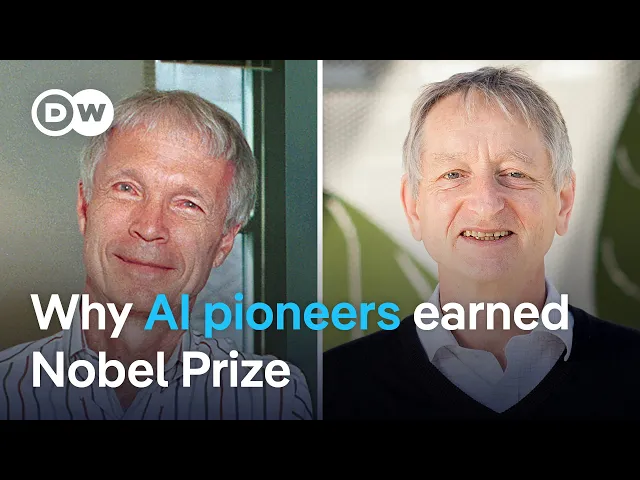
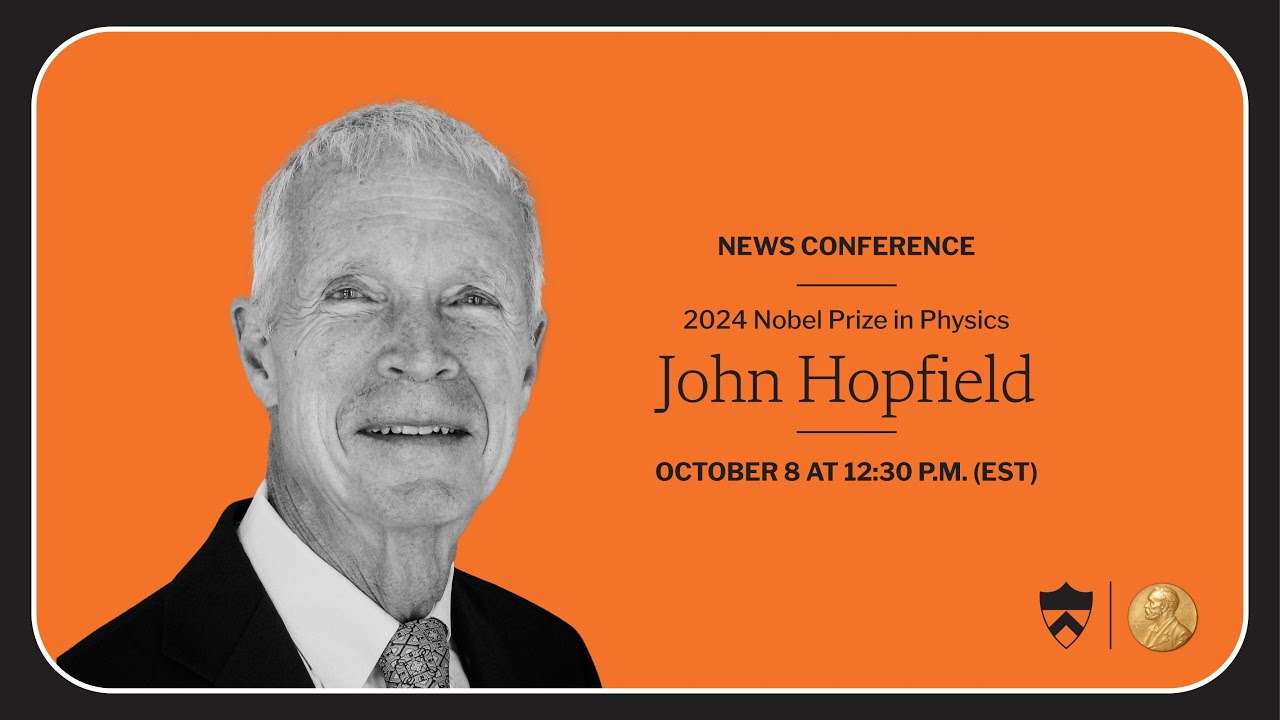
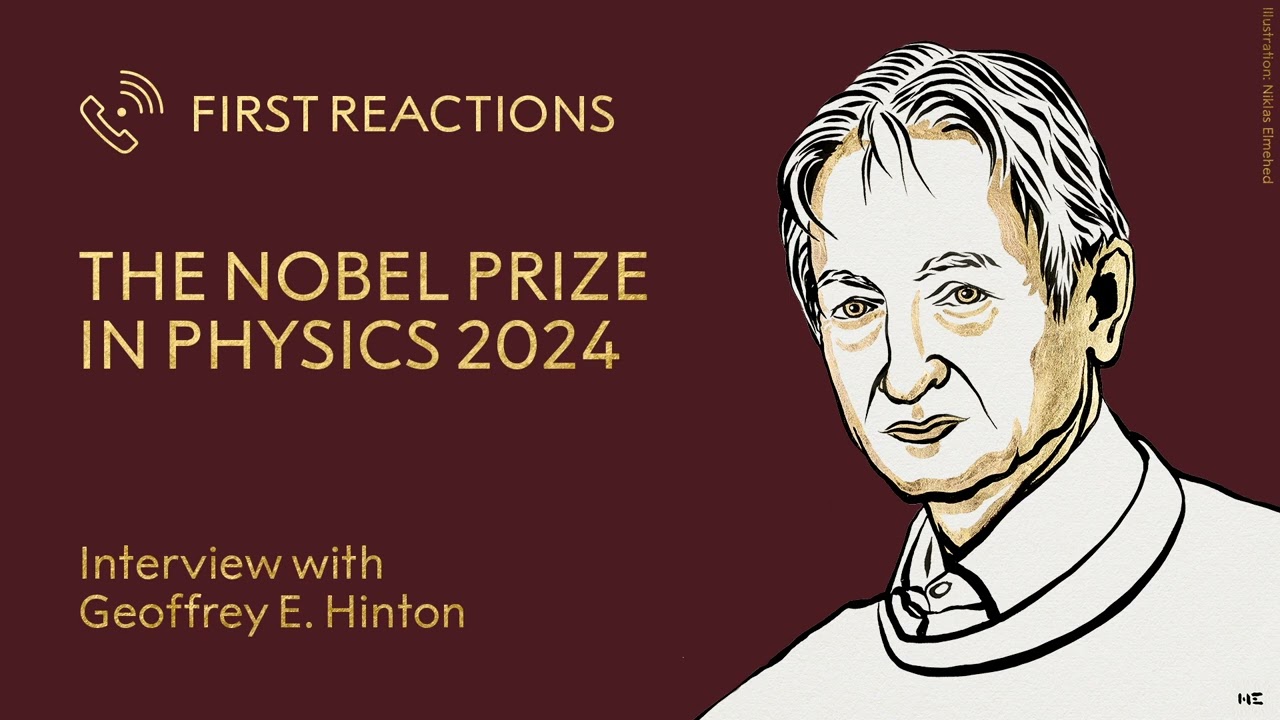
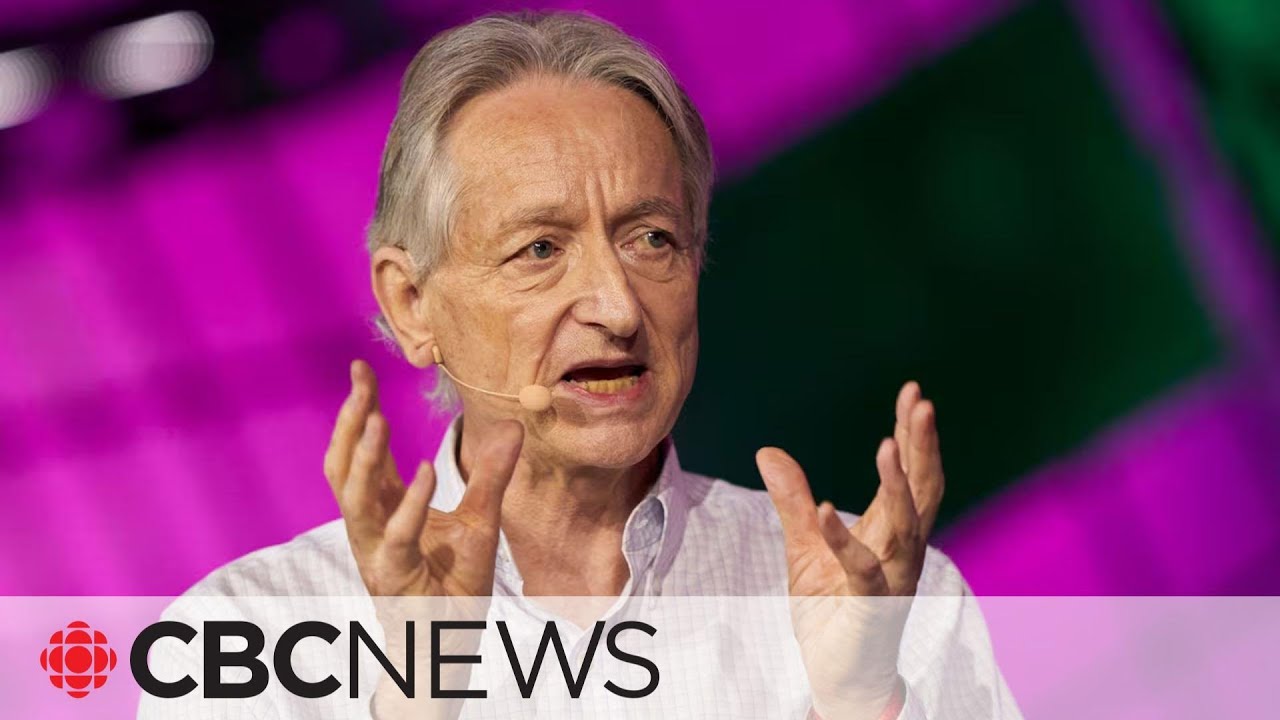
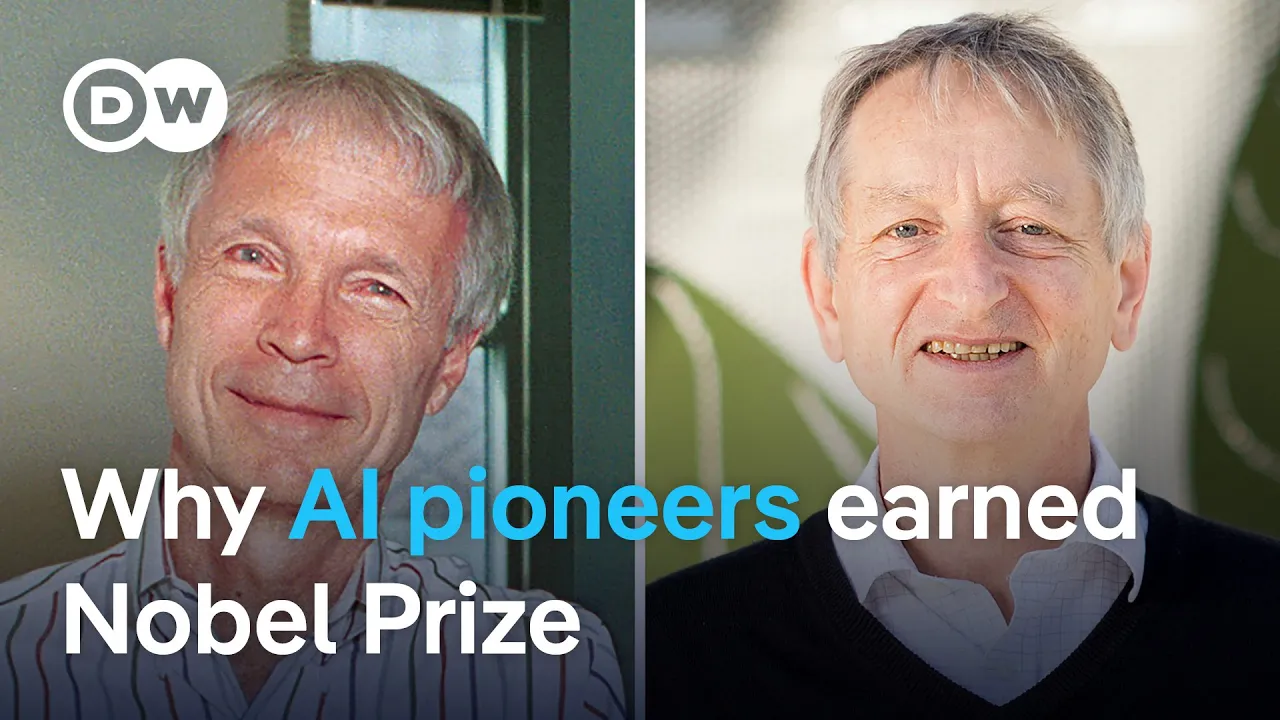
well two North American scientists have won this year's Nobel Prize for physics they were honored for their pioneering work on artificial intelligence and machine learning back in the 1980s John hopfield and Jeffrey Hinton set the stage for today's artificial intelligence by using physics to identify patterns in information their work now allows machines to mimic learning and remembering functions that were previously thought to be the sole province of organic brains at a Tech conference last year Hinton emphasized the differences are smaller than you might think we're just a machine we're a wonderful incredibly complicated machine but
we're just a big neural net and there's no reason why an artificial neural net shouldn't be able to do everything we can do modern artificial neural networks are structured on the two recipients groundbreaking ideas in the field of statistical physics their models allow machines to start making apparently intuitive leaps through Association or identifying similar elements in systems like humans can that's radically changed for instance cancer diagnosis you can train an artificial neural network on which are known to be tumors images that you know this is a problem you train the network and then it can
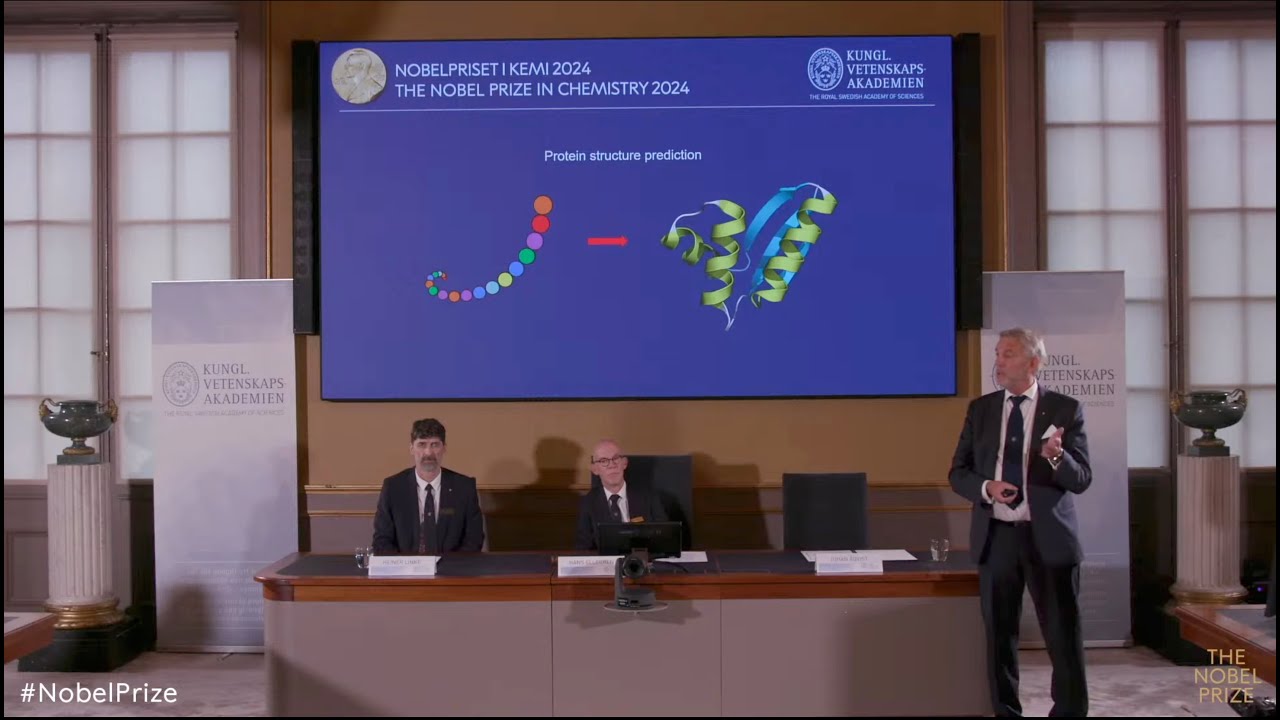
become very fast and efficient at finding this in images and it can work much more quickly or it assists the doctor and be much more uh certain in the diagnosis and Medical Imaging is just one area where the research has had a huge impact AI now also plays key roles in Fields as diverse as large language models particle physics atmospheric and climate modeling and predicting the structure of proteins the physics prize this year goes for research that has changed and continues to change the world as we know it and joining me here in the studio
now is my colleague Matthew Ward ages from DW science so Matthew let's talk about who this award is going to I understand it's awarded to The Godfather of AI tell us about him yeah so Jeffrey Hinton has been described as the Godfather of AI you get described as things when you in other Awards and a few years ago he won a churing award for his work in AI with two others so they were collectively described that way um his uh his co- awarde John hopfield has not been described as that but he's certainly a Trailblazer
in the field as well he started it in terms of the research that won this award in 1982 he he created a a network called the hot field Network and the best way to sort of describe it is if you think of your brain it's got neurons it's got synapses connecting those neurons and a neural network of an artificial variety replaces neurons with nodes these connect up and in this case it was able to be fed a lot of information of imagery retain that information and then when it was fed a distorted or uh incomplete
image similar to one that was already in there was able to churn out the most likely image that you were trying to find con dots correct which is what our brains do uh Jeffrey Hinton then built on that with work that he later did in the 1980s and since then it has been iterated iterated on to the point that now we have well where we find ourselves uh now with AI being part of our um common pance uh we talk about it all the time and uh finding new ways of how it might serve our
our species I I I know Hinton is a name that if you follow AI you'll be familiar with and he acknowledg when he received the prize when it was announced he also issued a warning about his own work tell me about that because it's not the first time he's issued a warning and it was something also that was acknowledged by the Nobel committee decided on this award AI has a great amount of potential to serve Humanity's interests but there are also safety and ethical concerns that we should all take Collective responsibility for uh Hinton himself
as you point out has said he is concerned about what might happen if we lose control of this technology that we have developed he has said that it will be like an industrial revolution but instead of the um muscle of humanity being replaced by machines it will be the intellect of humanity being replaced by machines so there is a lot of promise there is a lot of potential consequence his point is that we need to be very careful about how we proceed forward um and to do so with guard rails to do so with structure
around the way that we pursue this technology and what impact is their work already having I mean is it all about AI well I guess it depends on how you define AI in this case but some good examples that that come to mind are in health care so you get an exray uh you're not sure what's wrong with you a doctor might take a look at it and have a pretty good idea of what it is AI is already being used to an analyze imagery in health care settings to be able to identify tumors that
a human eye might not be able to detect in astrophysics we're trying to look at galaxies and stars that are quite a way away when we get the imagery it might be fuzzy when we run it through an AI we can start to identify where stars and galaxies may be we talk a lot about asteroids the European space agency has launched a rocket to try and investigate what happens when one's nearby we can use AI to determine the trajectory of the asteroids that we do know about fasinating yeah it can do a lot that humans
can do maybe a little better we just don't want to sell that too loudly right now that's right Matthew thank you thank you