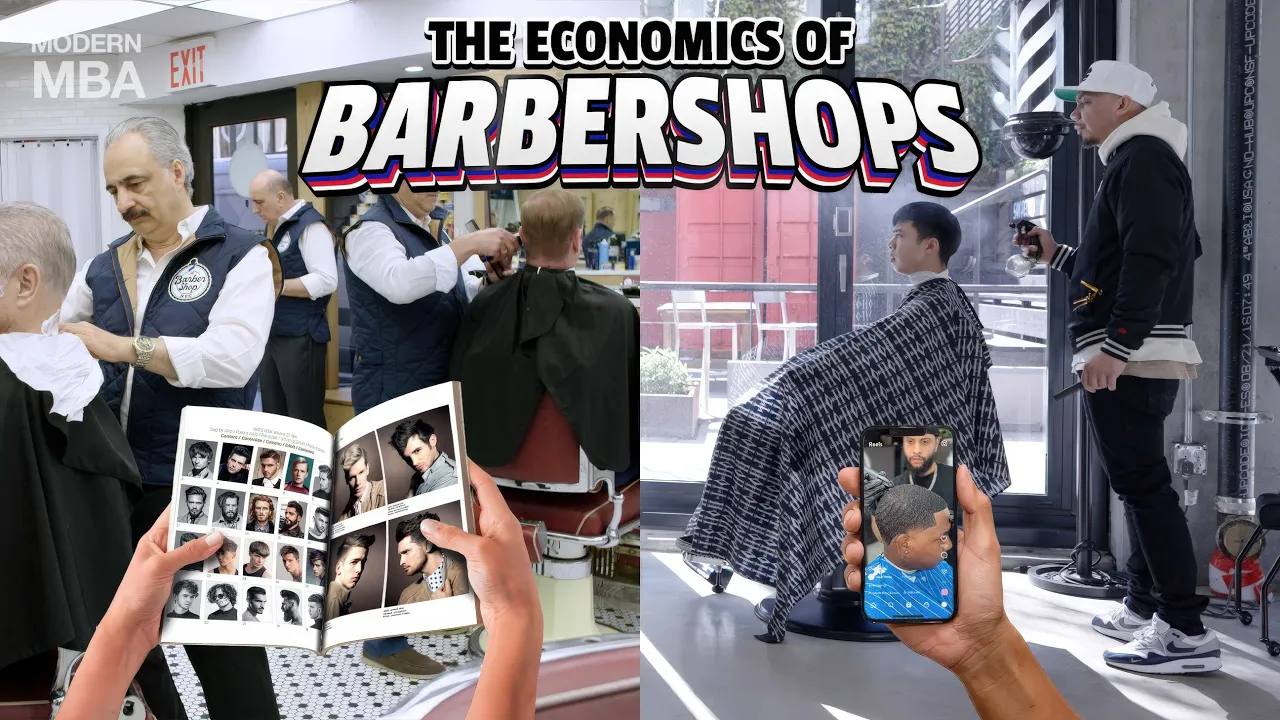
in the US every industry inevitably gets taken over by Corporate America whether it's groceries ambulances or electricity private equity and institutional investors control supply of everyday Commodities and services The Playbook at this point is well known you buy out established players in an industry with proven cash flow and assets you acquire majority market share through m&a and price cuts and once you achieve that majority market share you then standardize streamline and consolidate you finally cut costs raise prices and maximize profit and customers at that point would have no choice there would be few Alternatives left
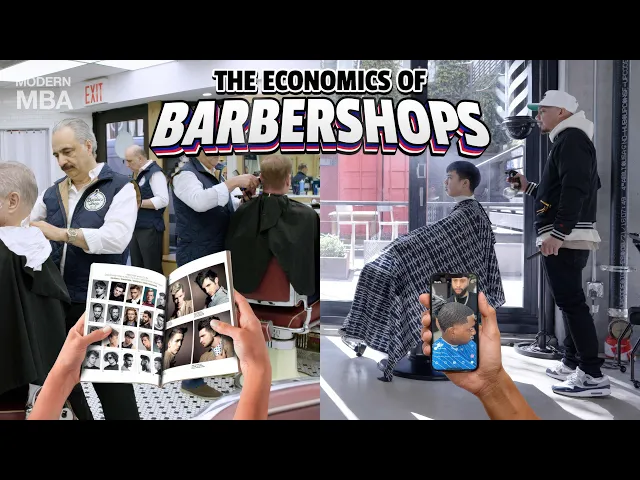
as any existing Independence would have been squeezed out in the initial race to the bottom and it would be unappealing for any upstart to enter this Market as their only options would be to chase for the scraps at the bottom or to try to create something at the top the barber shop is a unique industry that Corporate America has been unable to penetrate despite investing countless Millions every year for the past 40 years over 80% of barber shops in the country remain independent and chains like super Cuts have been falling behind corporations have been unable
to find their footing despite the brand recognition unprecedented scale and even first mover Advantage they slash prices and offer loyalty programs to win on value but they still can't match the local rates they renovate and blast advertising but still can't pull in highend clientele the industry continues to be led by Independence as new upscale Concepts co-exist in harmony alongside established old school No Frills traditionalists in this modern NBA original We Go From macro to micro to understand this business from the chains to the independence we'll cover the rise and fall of Regis the largest owner
and operator of barber shops in the world and the PEB Corporation behind the once dominant Super Cuts from the 1980s then we'll dive into three Independents who work in the most competitive markets in the world the first is a lone wolf in Silicon Valley the second is a 20-year master in New York City and the third is a Maverick in the San Francisco Bay Area there's no player bigger than Regis who has unsuccessfully tried to take over the industry since the 80s as the single largest owner and operator of barber shops and hair salons in
the world they bet everything on retail which was a sound bet in the era before the internet they opened everywhere and in the 9s reges had assembled a portfolio of over 3,000 locations through m&a Super Cuts Master Cuts trade secret Smart Style and Cost Cutters were just some of the most famous brands under their umbrella having multiple Brands allowed them to blanket any given mall with multiple stores at once and to give customers that illusion of choice when in reality every sale went to the same pocket their unprecedented size granted economies of scale in labor
and demand for anyone who wanted be a barber or already was one Regis was the place to be they trained you faster than any independent and had the best locations marketing and volume valuation grew in line with performance and made them an attractive Recession Proof Blue Chip stock into the 2000s reges went so deep into retail that they had developed a Playbook to crush Independence at every level of the market malls were blanketed with upscale Regis salons for women at the top of the market and Master Cuts for families in the middle of the market
plazas and strips were saturated with Super Cuts and Cost Cutters targeted at The Working Man the company was under No Illusion that their bread and butter and moat was in the low-end walk-in Concepts rather than the fashionable higher margin appointment driven full- service high-touch salons haircuts are a volume business and back in the early 2000s the total addressable market for a top-of-the-line $30 haircut was just too small there weren't enough customers and by extension not enough franchisee interest to reach the 400 to 500 location minimum that the company demanded of each concept Beyond Tam the
other angle was that Regis knew that it could not hold on to its talent and designed their business to combat brain drain brain drain is when Talent leaves one place to go to another for better compensation countries IND and companies all experience brain drain but it's especially pronounced in barbering where barriers to entry are low and the upside is high anyone can get started with a pair of scissors and without formal training throughout history barbering has been an attractive gig for people who want to work their own hours and to make money on the side
we can see this in the average wage for Barbers which is lower than an average 9 to5 but still higher than minimum wage and then there are top performers who have turned cutting hair into lucrative careers that exceed these industry averages Peter in Silicon Valley was packing groceries in the supermarket just six years ago he rents a chair at a local mom and pop so he's not an employee Peter is his own boss and he keeps everything he makes he's built up his own clientele packs his schedule and sets his own prices barbering is a
volume game and Peter is a speed demon who's optimized every second to maximize income clients don't sit around the moment they walk through the door he gets them in his chair as fast as possible with a tub of pre-workout he pumps through 15 to 18 clients a day and finish each haircut in 30 minutes or less I looked at the industry here in San Jose and basically kind of peeped out like you know the wide variety of of barber shops that we got and what they charge and what their skill level is and you have
a lot of these smaller barber shops that have been around for a long time and their price point is $7 to $15 and they're training out haircuts in 10 15 minutes their main priority is getting you in and out for a cheap price and then I look at the other higher end barber shops they're doing a really really good job it's really technical they have a lot of skill and they're taking a lot of time and they're charging top dollar for those haircuts you I respect that when I first started I wanted every single haircut
to be the absolute best Masterpiece I could create and then eventually I started to find out not all my clients were interested in having the best possible Masterpiece haircut they were more interested in getting a good haircut in a in a good amount of time and so that's what I'm going to do maybe not going to focus so much of my time and energy on making every single cut amazing that I'm going to make it as good as they want and then uh they can get in and out of here I thought to myself I
could charge more money and go slower or I could do more haircuts and go faster or I could just find that sweet spot and go right in the middle so I feel like I'm getting like the wide variety of the population the majority of the people who are wanting good quality haircuts that aren't going to be ridiculously expensive or don't want super cheap haircuts they're going to be super fast they want something in the middle to where they can get a little bit of both and then also customer service obviously is huge you know this
is a service industry so you want to have your customer service on point we have a client over there that you know he had an appointment at 8:00 a.m. it's uh it's 9:19 you know I mean I'm not trying to throw any anyone under the bus but he's over there waiting for a haircut right now you know he had an appointment you know what I'm saying like if that I mean personally I never do that you know I mean like I'm I'm not going to have you know my clientele come here and wait essentially it
just boils down to offering top tier customer service and top tier quality at the fastest rate possible in my opinion it's not this way is better it's just that I find it for my own style to be the best way that I could do it you know where I can make you know I mean to be quite honest where I can make the most money and uh still enjoy the process Peter grosses six figures a year and becoming a barber has been life-changing for him and his family he's a prime example of how how far
and how fast an individual can progress in this industry on Merit alone yet Peter represents the top 1% as few are willing to work the hours that he does and he's been able to achieve this success as an individual all without the overhead and risk of owning a shop himself ultimately haircuts are deeply personal and once people find a barber that they like they tend to stick with them from the standpoint of shop owners this leads to Perpetual brain drain as customers are loyal to individual Barbers like Peter rather than the shop when a barber
leaves their clients will generally go with them this hurts the shop because they lose talent and a portion of their customer base overnight once the salon catches back up it's only a matter of time before another barber leaves with their clients and the cycle continues the power dynamics are tough Barbers need shops just as much as shops need them yet while the paror takes on all the short-term risk developing that barber they keep none of that value longterm it's an industry where individual workers hold all the power this issue affects every shop but for a
corporation like Regis with thousands of locations in so many different markets brain drain was magnified at their scale their goal is to maximize throughput and to Service as many customers as possible every hour every day this is why Reis laser focused on its walk-in value Concepts like Super Cuts selling cheap haircuts to the mid to low end of the market grants a big enough Tam but also provides a theoretical hedge against the industry's long-running power dynamics to get ahead of attrition Regis trained just about anyone who wanted to be a barber quickly to backfill those
who would leave they leaned into walk-ins so clients would be more likely to remain even if their favorite Barber left everything was designed in an attempt to restore power to the chain for customers to build loyalty to the location and to diminish the value of the individual Barber while people point to the death of retail as the reason behind the collapse of Regis their biggest mistake in reality was assuming that Barbers are fungible this is a widespread problem even in Corporate America where Executives believe all workers are the same even in the face of decline
Regis refused to admit to the reality that there are good Barbers and bad Barbers and that their strategy only helped keep the bad ones the company trained thousands out of pocket every year the good Barbers would hit the ceiling and leave while the bad Barbers remained dishing out bad haircuts and losing customers the newbies brought on as backfill could not replicate the talent that left the ones that could ended up leaving for greener pasture themselves Regis tried many things over the past decade they closed stores Consolidated Super Cuts ramped up marketing invested in training in
and push franchising but offloading responsibility did not slow down the brain drain and service decline they tried getting good Barbers to stay by promoting them into franchise owners but cutting hair and managing people are completely different skill sets now in the 2020s Regis has collapsed and the revolving door of CEOs has only affirmed that no Corporation no matter how well-funded can beat the independence in this industry the biggest challenge for Barbers is that the window of opportun Unity to acquire customers as small people may not be happy with their current Barbers but they're also so
indifferent about it that they generally don't change until after a bad experience this broad consumer apathy is prevalent throughout grooming where barber shop and shaving are highly mature markets that grow at just 1 to 2% every year this maturity means that like how people are indifferent about their Barbers they also have the same attitudes about the razors they use under the traditional razor razor blade business model companies make money by selling cheap handles but expensive blades all the profits come from getting people to continually buy these blade refills over their lifetime and consumers around the
world have become indifferent to it over Generations the indifference stems from the fact that two out of three men still expect irritation when they shave and why 80% of men including us at modern MBA use do razors because we'd rather not pay for blades we knowingly shave with dull blades and end up with irritation see the cycle here what if there was a company that did the opposite one that doesn't rip off consumers with overpriced blades and annoying subscriptions enter Hensen shaving the only modern shaving brand that offers blades for life and this episode sponsor
that's right blades for life for a one-time cost of $50 Henson will ship you free blades for 50 years that's a savings of $200 if you use double-edge blades and nearly $5,000 if you're cartridge user the Hensen Razer is made entirely of aluminum has zero plastic even in packaging and is made in Canada not China every razor is manufactured in the same Aerospace Factory that produce parts for the International Space Station and Mars Rover the h razor is engineered with a unique 30° design the blade extends only 0.0013 in past the shave plane less than
the thickness of human hair which means zero to little skin irritation and it uses industry standard double-edge blades that cost just 10 cents each leading to a dramatically lower cost of ownership by providing blades for life and removing cost from the equation Hensen shaving wants people to stop using dull blades and prioritize their skin when you go to Hensen shaving tocom modern MBA and check out using Code modern MBA you'll get a free shaving cream with the purchase of a Hensen razor that's Hensen shaving tocom slod MBA for a free shaving cream and a lifetime
supply of blades with your purchase of a Hensen razor thank you to Hensen shaving for supporting modern MBA and making this episode [Music] possible in the heart of New York City is Arthur the owner of Barbershop NYC and a 20-year Master who's been cutting hair for social media and when haircuts cost just $9 he comes from a family of Barbers and his business is rooted in decades of intuition and Acumen he's got two shops in Midtown Manhattan one in Hell's Kitchen and one on Fifth Avenue right down the block from Trump Tower it's not only
cocacola it's every company when they come into New York Manhattan they treat each neighborhood as his own City from Harlem Upper East Side upper west side and they just treat each portion separately and they marketing like specialize for that area when you open a business you don't want to open just a brand carting one specific portion of society you want your brand to be as identic as possible with that neighborhood I'm located right in between Hell's Kitchen and Time Square so Time Square that's where you get all the tourists coming in and the business often
Hell's Kitchen it's probably one of the oldest gay community in Manhattan they very hipster a lot of them young uh so young guys usually come in and they want to be around that area that's where all the restaurants that's where all the bars that's where all the Hangouts whil we go to Time Square that's where you get the office people that's where you get majority of the lawyers the bankers the people in Hell Kitchen they're looking for something more trendy the fade the short haircuts the high and Tide the G out haircut the flashy one
they'll definitely challenge you with the haircuts once you get the guys the office guys which is the lawers they won't look as corporate as possible little bit trim very regular haircut for them preserve their look it's more important because they go to meetings to meetings to meetings and they don't want to have that look of I just got a haircut I I I got a haircut just for that deal it's the Jewel of the crown to be on Fifth Avenue you got the highest Brands there the biggest hedge funds are sitting there the biggest laow
firms are sitting there Fifth Avenue sits right in the middle of the city most of the people in there they split or they go really East or they go really really West so there's nobody over there for me demographic was worther Barbers get paid in two ways they can either be employees making an hourly wage and keeping the tips like at Super Cuts or they can be independent contractors renting out a chair at a parlor under the chair rental model Barbers are running a shop within a shop as each individual Barber sets their own hours
and prices they share a roof but ultimately are their own boss Barbers looking to maximize income will rent chairs but they're responsible for bringing in their own clients and arranging their own schedule Barbers who don't want this overhead take the paycheck you either raise your ceiling or secure your floor those who rent chairs only make money when they cut hair whereas those who are salaried get paid just for showing up for Arthur he's found that the only way to guarantee quality and to combat brain drain is through an iron fist no one is above the
shop all his Barbers are salaried employees and the prices are the same for everyone he controls the appointments and schedules for everyone his Barbers don't exchange numbers with clients they show up cut hair and then go home after a day's work and nothing comes before the customer experience a lot of those highend Concept in California in Texas their idea is let me build a beautiful place and let me start renting the chairs when you rent the chairs to other people first of all you can validate them if they good in the craft it's like you're
renting an apartment can the L tell you what you do inside No it's your place when you rent the chair you lose quality control you lose your control of the right ethics for that shop the guy have to come in at 9:00 the guy have to finish the guy have to treat the customers at certain Integrity certain respect when the guy rent a chair you can't tell him that he's renting a chair his chair he'll do whatever he wants they start slacking off they don't come in on time they'll book their 10 customers a day
five customers a day and they okay but they don't understand you have to keep building those chairs customers disappear they go different places my job as an owner is to build the place and make sure the clients will coming in so I'm paying as hourly basis and I'm telling my guys don't worry about building your chair all you have to do is come into work work and give the respect and build your chair I'm more comfortable with the olderly guys they just want to work they're very consistent they here in the morning most of my
guys they're here at 9:00 in the morning they don't slack off you know it's rightful for everybody to make money it it is right yeah you you work on your craft you want make the quick bug but the lack of the ethics the lack of showing up in the morning they they go hang out too late they come in junk the next day or don't come in a roll I don't know what's better don't come in a roll or come in junk every Small Things bothers you and you're too emotional about you broke up with
your girlfriend you take it on your customers that's something you don't get with the elderly they pass that life on stage they have the kids the kids in the house they colge they know they need to work the first thing you got to set the tone saying hey the shop is first you guys all fitting out of that shop Arthur's worldview was shaped by his uncle who threw him in the deep end at the age of 18 cutting hair next to 40 to 50 year- olds in East New York his uncle had run his own
shop in a similar fashion and Arthur had proved his worth one haircut at a time before striking out on his own novice Barbers under Arthur get a $16 hourly base and make mid 20s after tips seasoned Barbers get 28 to $35 an hour and make mid-40s after tips Arthur's shop on Fifth Avenue has only been open for a few months and it's his responsibility to make sure that there's enough for everyone having Barber's idling around is not just a waste of payroll but also an accelerin for brain drain only once the volume is there he
can put his barbers in but not before so for now he's putting it on himself to build up this location one client at a time how we doing busy busy buy busy busy by what um the usual so down to a half on the Sid and then maybe just like only a little off the top I kind of like the length it's at but just to like freshen it up I guess so yeah in cities like Manhattan New Concepts have emerged pushing the envelope on pricing service and Ambiance they're generally appointment based charge 80 to
$100 for a haircut and emphasize quality over quantity while conventional parlors aim to finish haircuts in 30 minutes or less to maximize throughput these luxury Concepts move slower with haircuts that can take up to a full hour they also tend to Market themselves as lifestyle brands with minimalist designs massive build outs modern decor and apparel Arthur is not a traditionalist out of principle to him pushing margin in a volume business is shortsighted some of them are good concept some of them work maybe not work but giving a guy to someone a concept of a beautiful
shop of come in and have shots or or get that beautiful lady up front and lure you in and there's High chances you not going to get a good haircut I'm here to Exel the craft I'm here to provide a service so I want to take that half hour of the guy that comes in I want to take him out of his normal day just give him that Comfort get American make him feel good and let him go back to the office when you start all those Concepts you neglecting your craft you kind of sell
the space but the space is not your craft the space is created the owner build you beautiful place they'll give you that bar they give you the lady they'll give you the massages but when you talk to those clients that came in from those concept they'll say I went in first time concept is great I got okay haircut I was okay with it because the atmosphere was fun I went in second times I didn't want to get the okay haircut anymore I want to get good haircut I pay enough money to get a decent haircut
and they still end up getting the same haircut again because people cannot perfect their craft so when you come over here I want to sell on the haircuts that's what I want to sell I want to sell that you can go to any chair here you still get a great haircut any person anybody the priority of the guys that work with me is to keep the client loyal to the shop it doesn't matter if it's loyal to you as long as prioritized is loyal to to the barber shop itself to my brand there's no reason
to charge a person $122 for haircut you want to bring the customers as much often as possible so if you charge a guy that's $120 he'll come in a month and a half I rather the guy to come in once a week once every two weeks and charge him less $40 to $50 or $35 $50 it's a good range and I think it's comfortable for the customers to pay it and come in every 2 weeks i' rather see them coming in more often I don't want to go and look for something cheaper you want to
stay competitive with with the rest of the guys if the rest of the guys charge you 40 and you know your place is a little bit more upscales charge 42 43 it's still enough to make money it's still enough there's enough money in there to make all you have to do is just make sure the customer come back the moment the customer come back it's a more easier build of making money you just build customer on top of customer customers and at one point after a year or two years your place is buzzing you have
four or five people working non-stop all day because your price is accountable the the experience is great that's what it is about business Arthur's barber shop in Hell's Kitchen grosses on average $48,500 for an annual run rate of $582,000 the goal with the second location is to match these numbers to reach a combined seven figures shop level operating margin sits at roughly 38% his pricing strategy is to stick to the neighborhood and for this new parlor he set the lowest local average to Arthur it makes more sense to build up clientele and make incremental raises
over time rather than to blast out the gate with a high figure what's going buddy yeah Eddie ha get in shap if customers aren't coming in his bar will leave if he doesn't have enough Barbers for customers he's leaving money on the table and if they don't cut hair well he'll lose customers anyways Arthur has to be as good as marketing as he is at cutting hair managing and scheduling the name of his business Barbershop NYC is so generic that it breaks every cardinal rule about branding yet the rationale behind the name is classic old
school wit it's very generic nobody can go after the trademark of Barbershop nobody can go trademark of New York City with the Google when you always going to be on the top and you don't have to spend a lot of money on marketing it's just your name going to keep pushing you up front whoever is going to search best barber shop right away Barber Shop is there match you'll come first barber shop near me barber shop is there match right away best barber Barber is there it will match right away you'll come in first in
90% of the searches which gives you a lot of leads of clientes my website right now generate about 150,000 viewers a month that's pretty much with the big brands that's how many start to get leads Arthur plays a long game and sees every side of the coin just like he and his uncle before him people get into barbering to make money and Arthur knows firsthand that an iron fist cannot stop even the most talented of Barbers I'll tell him from the beginning hey if you ever want to do in the future something let me know
I can help you out first of all it's vile information for you if the guy he'll say right away you know what yeah I'm looking to open up something so he like okay listen you have those and Those portions in the city there's not many competition over there try those portion and then you pitch them as like hey join to my brand let me give you some s money let me help you out to open a space we can make as a joint venture I'm already established I got my name out there we'll do some
partnership agreement I'll use my resources we will'll get a place and we'll just go from there a lot of the guys they'll consider very difficult because what's the city became recently it's especially after landord would not give you a space without being an operator before so you got to have few businesses already in place before you actually approach to a place even the the realtor that going to work with you said their first as question going to be do you have a store the moment you say no they done with you they're not going to
work with you no Lear will give you any space once you show hey I have couple location the whole process became so much easier I really do enjoy competition and once you go to 99th Avenue over here in Hell's Kitchen there's maybe five just within those two blocks there's maybe like 15 of them within the next four or five blocks all around and in general competition creates a better brand if you up for it some people you know they just want to come work take their money they don't care for that for me I'm very
competitive guy I evolve together with the business the business evolve I evolve my competition evolves too that's part of being Manhattan you can never get an area that doesn't have a a competitive on you all you have to do is just be better better and always keep working on yourself always work on your craft always work on your brand while Arthur's conviction in business is built on generational expertise not every shop owner has that advantage on the opposite Coast in Silicon Valley is Rod the owner of Mysterio a hybrid concept that's an appointment driven highend
barber shop as much as it is a Lifestyle brand while Arthur's haircuts are priced at $40 haircuts at Mysterio start at $60 we like to take our time and it's not a volume shot it's more about quality and so when we produce quality we get quality clients I always tell people have you ever driven in a Lamborghini or a Ferrari or been in it and have you been to like a Honda Accord once you get that taste of luxury you want to keep going you want to keep that high standard what our clients that's what
they look for they're willing to pay for that price because they appreciate the service they appreciate the craftsmanship and also the details in the shop the cleanliness it's the full spectrum of the moment you come in to the moment you leave while New Yorkers Rush In And Out at Barbershop NYC haircuts at Myster you are slow where the conversation is as important as the cut itself and a single haircut can take as long as 90 minutes good morning how you doing yes sir rod believes that customers are evolving and this shop is not exclusively for
the top of the market before the pandemic Silicon Valley techies just wanted cheapap Buzz Cuts and Fades since Co he's seen the same population put more effort into appearance and seek out shops that value what they want to achieve just as much as the money they pay going to a barber shop without even knowing anyone or know that type of culture was intimidating and so I felt that same emotion going in to the shop so if I have a lot of people it's the first time here at the shop and they're nervous they don't know
what to do my goal is to make them feel comfortable and so greeting them it's like hey how's it going do you have an appointment today so yeah I have an appointment with you know Daniel Brandon or Ryan Jolan uh I said oh sweet would you mind you can grab a seat right here would you like water Brandon will be right with you after he's done and so that's super important to make them feel not just a warm welcome but also feel comfortable the first thing I like to ask is what type of style do
you want to do today and I always tell my clients I want to ask as many questions I can just because you know I want to be able to achieve the same exact look that you're looking for Rod doesn't come from a family of Barbers and he entered the industry late after a career change in his 30s he doesn't have the Battle Scars or generational expertise of Arthur and by Nature Rod is more of an idealist if you go to like traditional barber shops everyone's against the walk they're all congested it's all about real estate
the more space that you have more Barbers you can fill in the more money you generate but my mindset was definitely it was more than money it's like creating a brand it's creating experience creating something unique in San Jose that no one really offers everything here is all custom the stations the displays the lights so you see one that's on the top you see one that kind of lowers it kind of gives it more Dimension to the shop and also give it a hint in green we have a special scent when you enter the shop
so when you come in they like oh wow it smells good it's not your traditional you know Barber Shop scent and then the lights and then the station so to me my mindset is really trying to figure out how people come in and just be mesmerized with the art the details um cuz everything matters to me every detail matters it cost Rod $120,000 in 16 months to build Mysterio which is comparable to what Arthur spent in Manhattan both owners still invested less than what it would have cost for them to go with a chain when
factoring in The Upfront franchise fees and licenses in Rod's mind such an investment was always inevitable his shop is tucked away in a random alley in downtown San Jose say far from the street it's definitely a challenge to bring Walkins bring clients to our space cuz before it was just a parking lot it was brand new when people think San ped Square they go to like the main Market you know their main The Main Spot while when people go to the alley they actually have to really you know oh wow I actually didn't know they
We Exist I think it's just trying to figure out how to bring awareness somehow now I'm doing Yelp ads doing our social media we do cross promotion with local small businesses and that's pretty much the only way it's not like you know we're at a plaza where there's so many people coming in and out Mysterio is appointment base given the non-existent foot traffic and the general lack of Barbers that are available to take on Watkins because The Upfront costs were so high rod rents out his chairs to keep overhead manageable his Barbers are all independent
contractors who set their own prices work their own hours and bring in their own customers which in theory takes the pressure off r the business models of Mysterio and Barbershop NYC are completely different Arthur's earnings depend on how many clients walk in the door and how many haircuts they do hence the emphasis on location and proximity to tourists workers and commuters Rod's earnings on the other hand depend on how many chairs he can rent out and how much he can rent them for hence the emphasis on branding over location in an Ideal World there would
be more demand than Supply more Barbers than chairs which would allow Rod to raise rent on his chairs to increase shop Reven Rue Mysterio space is meant to appeal to Barbers as a place to work as much as it is a cool space for customers to get their haircut at under the chair rental model Rod's business is better insulated in theory against Brain Drain as he doesn't have direct investment in his Barbers and never gain from their clientele in the first place I think for me it's just the more I can create a better space
slowly build that infrastructure I think it's going to be hard for people to like leave but that's the only thing I can do is just create this nice space and hoping people will stay in long term Rod has built up a loyal following and has booked out every day from open to close the longer haircut time means less volume as he cuts a maximum of 8 to 10 clients a day compared to Peter's 15 to 18 yet his individual success has not quite translated to shop wide success his space attracts younger upand cominging Barbers who
appreciate the Aesthetics have big dreams of their own but have little experience and few clients while Rod is slammed his Barbers are generally not but he also can't force them to wait for walk-ins if they only want to do one or two clients a day and then go home he has no control or even visibility into their schedules as Barbers show up and leave unannounced throughout the day he wants to Mentor them but not everyone has that growth mindset and no one is obligated to listen as they're all contractors I'll tell some of the other
guys like super important how you greet clients and how you Vibe with them sh them respect and show them a lot of love when they come in I think it allows them to hey you know what I kind of like the GU here Mysterio um I want to you know stick with just the barber Seer I'm not GNA go to another shop and so to really keep everything in house it helps everyone out technically since they're all contractors it's usually The Barbers responsibility to find their clients through doing their own marketing Instagram social media things
like that for me it's just because I see their view if they're not busy then how can I track more Style was into the shop and so technically that is the responsibility because we're not in a prime location it's also my responsibility to build that value sometimes I'll bring in Educators to come to the shop like we flew out another person from Canada and you know say ask the guys hey you know do you guys want to learn how to cut hair from this guy and give him the option I it's really hard for me
to like enforce that and I know probably should but there season bar that you know they're already set then there's Barbers like maybe new Barbers up and coming barers where they want to learn and I get to mold them and hey every Monday every Tuesday we're going to have to do training most barber shops in Silicon Valley charge Barbers $400 to $500 a week to rent a chair Rod personally grosses on average $112,000 a month on cutting hair alone for an annual run rate of $144,000 Mysterio total revenue in an Ideal World combining Rod's contribution
and assuming maximum chair rental would come to $323,000 Rod has had to keep his rents below Market at $375 a week and out of the eight chairs available only three have been rented out he grosses on average $500 a month from apparel for a combined annual run rate just above $28,000 his operating margin currently sits at 30% and would get a lot higher if all the chairs got rented it's a conundrum in that what's good for the shop is not necessarily what's good for the indiv visual Barber Rod's success is a barber and the success
of his shop are two different things I think the hardest balance is you got to cut hair and like I understand what all our Styles go through but then there's like another part of it it's like I'm also emotionally involved because this is my baby I got to like figure that out balance the two emotions but also understand what they go through and trying to figure out how I can point out what I go through as a business owner now tell the guys I'm going to be completely honest break down the numbers and things like
that I always say I'm never going to fake it till and make it I'm going to face it till and make it and so I'm always going to be completely honest and educate you know even them like what needs to be done what I'm struggling in this is year two you know we're still brand new we're not a walk-in shop so we have to put in a lot of work I got to figure out how to attract more clients for all our stylists and at the same time I also got to see what's also within
my budget budet and that's the difficult part I look out for them you know I'm always going to look out for them I Market them you know promote them on Instagram things like that I don't have another person looks out for me you know and so that's the hard part when you have another business partner like hey this is what I know this is you know you're I'm going to focus on the structure the infrastructure I'm doing that that's part of the most difficult part of this journey is being those two pieces which is super
crucial Rod is an accomplished Barber and is learning how to just as successful at running a shop he knew things would be difficult he's waited years for the chance to open up a shop on his own and when he first saw this empty lot he could already visualize what Mysterio as a shop would look like I don't treat my clients like transaction it's more like a transformation where I want them to be able to kind of get that full-on experience take my time build that relationship which is super important I feel um a lot of
people skip that process and that's the reason why I tend to get all of my clients back so it's super important to like really take my time and it's really more about the whole experience rather than just oh it's putting money into my pocket everything's based off emotion and so the reason why it feels good on my soul to make them feel good is because I want them to feel like they can take over the world and so I feel her is super important to me because just that whole experience and you know leaving the
door with a different mindset that feels good to me cuz you know they also they're also like our my walking billboard so if they feel good they'll send me a text they say hey you know what it's like Rod this is the one I love this haircut and when I get that text that you know that just brinds my soul barber shops are a modern case study on not just service providers and the power dynamics between workers and owners but also how the absence of private equity and the lack of consolidation enables organic Innovation from
small bootstrapped Independence like Arthur in New York City you can rule with an old school Iron Fist and exacting standards to create the most efficient business possible or you can be like rod in Silicon Valley who places passion over money and brings a more modern holistic view to his business or you can be a mercenary like Peter and focus exclusively on elbow grease and your own two hands to maximize earnings