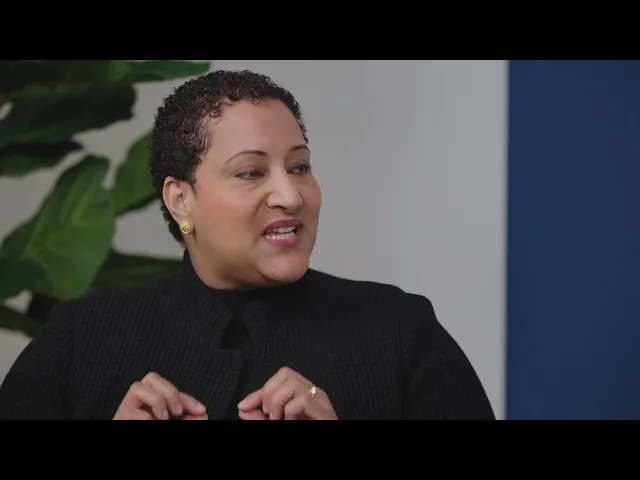
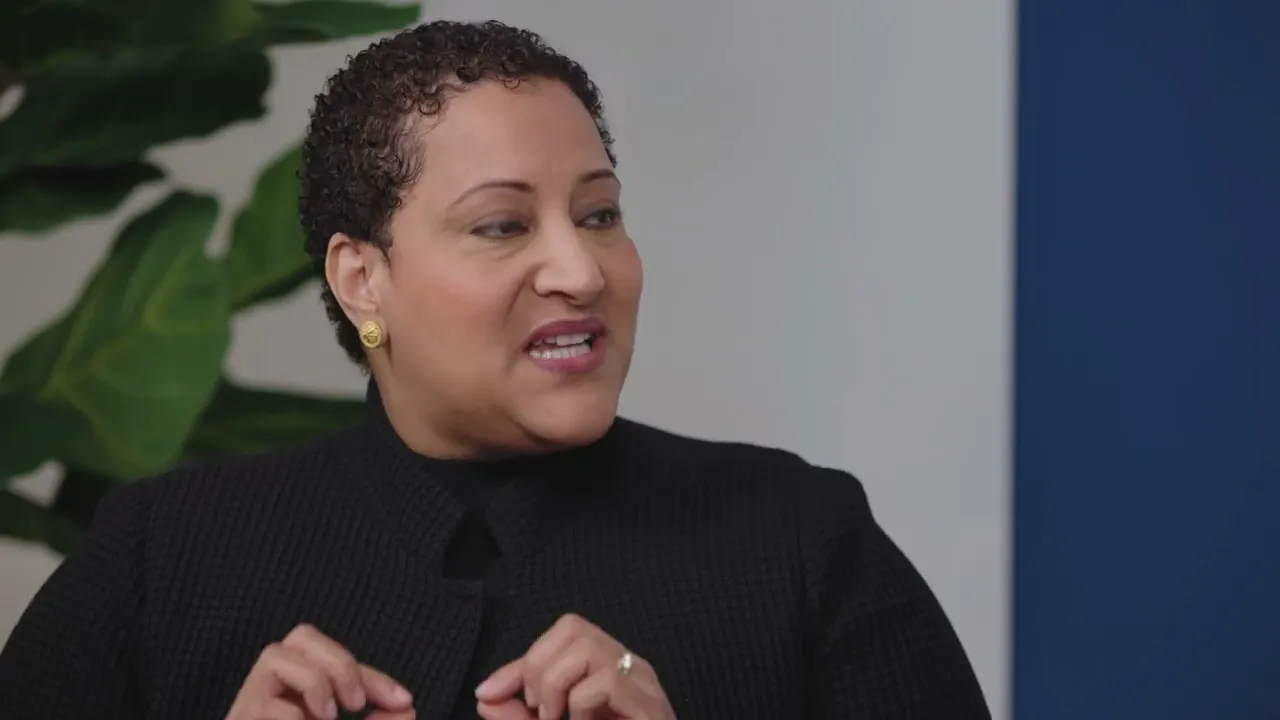
welcome to the leadership module I'm so delighted and excited to have with me sadal NE sadal is first of all a good friend of mine we've known each other for 17 years yeah uh sadal is the n fitzu professor of business administration at the harvor business school she's also the senior associate Dean uh at the haror business school and my boss uh yeah I reported to her uh and is one of the leading authorities on leadership and change digital mindset and remote work if you see her CV it's incredible if you see her on YouTube
12 million views about her teaching at the Hard business school so I am truly uh grateful and blessed that sadal is with us to talk about her area of expertise which is leadership I'm so happy to be here Kareem I'm really excited to talk about leadership and to be with all of you yeah so what we're going to do in our in our in this in this module is why should we first care about leadership in the first place why do our our audience should make this uh a priority for themselves then we'll get into
defining leadership what does it mean the dimensions of it um then an essential question that everybody asks our leaders born or made I know you have definite opinions about that so would love to get that perspective and then we're going to open up the leadership toolkit what are the essential uh for aspiring Trailblazers who want to be leaders who needed to be leaders in in their worlds in their communities as well so should we begin let's go go I'm excited um so sadal I mean you've been studying this for your whole life and youve also
been practicing this for your whole life why should we care about leadership in the first place why should our audience care about leadership you know leadership is one of those things that's incredibly important because you don't have to have you don't have you don't need you don't need to have have a position of authority to be a leader okay you can act like an owner you can solve problems you can engage in conversations you see a problem you solve it you need to be a follower you become a follower in a role of a leader
so leadership is all around us and it's about not only our personal growth but it sets us up for actual leadership positions well wait can hang on a second you said something profound you said like you don't need formal authority to be a leader can we just double click on that because I think when I was their age long time ago uh I thought like leader with a capital l like you had to have a leader or executive blah blah blah in your title or like stand on a big mountain and be the leader like
tell tell me about this view because that's new to me there's an L in each and every one of us there's an L in each and every one one of us and the way in which this L Comes Alive before we have these positions of authority is by acting like owners is by feeling a sense of obligation and person responsibility so if there's a problem you solve it as opposed to being a bystander if there's um uh a moment when we need to speak up we need to speak up and we can do this in
our families we can do this in our communities we can do this in our school RS and this is where it begins that l in us can grow into that position of authority but it's an attitude it's a behavior it's a definition that starts out early so my big advice for everyone starting from the age of 18 and on is to begin to act like an owner on route to becoming a true leader with authority I love that so what else what else uh why else should we care about uh about leadership listen leadership is
really interesting it's actually a social science and it starts out like I said with ourselves that L and all of us and acting like an owner and eventually we begin to lead others and most often where we see this early on is in teams leading teams and leading teams teams are defined uh as three people or more so if you have three people or or more and you take on a leadership role whether it's at school or otherwise it's really important because Kareem if you can lead a group of three people yes or 10 or
15 yes you can actually lead an organization of 15,000 people SC it scales completely it's the same set of behaviors that scales because if you can lead those 10 people or 15 people it is through them that you lead wide organizations it's through them that you lead communities it's through your team that you lead even countries wow and I guess I guess the the thing about why you need to think about teams is because to solve important problems right you need a team you'll need more than yourself if it was a problem that you could
solve yourself that takes you so far but problems that are big that are naughty that need U leaders like you to be engaged you need to be thinking by teams absolutely in fact teams are critical to leverage yourself to scale teams are critical for the division of labor teams are critical uh in order to achieve much more than what an individual can do and so how to structure a team how to motivate a team how to create the processes by which a team operates is a very crucial function of leaders so once you establish that
you can act like an owner and be an owner and then the first thing to do is to find ways to lead a very small team and once you figure that out you can lead entire organizations that's fabulous so also so I often say one of the things that leaders need to do is invent the future do you agree with that is that is that like how does that fit within your sort of research and practice of leadership you know inventing the Future these are such intimidating words right inventing the future but what it is
it's really determining and thinking about what's in the present and beginning to anticipate what can be possible in the future sometimes is to say whoa I see an oncoming train I see it others don't so that's part of the future other times is to say whoa I see all these dots imagine if we connect them yeah what new possibilities can we engage in and so part of that is we talk about this in um uh our leadership work here at the Harvard Business School As Leaders as beacons yes to be able to see the landscape
yeah and to imagine what may be the very next thing that we all need to think about so you're right in a sense that is inventing the future and it comes com from understanding the landscape understanding today in order to imagine what's for tomorrow which means we need to be exposed yeah to a lot of things and so and so this is like setting Direction and vision right like part of inventing the future is Direction and vision it's absolutely Direction and vision I mean even if you think about the image of the leader as a
beacon uh it's the ability to look far um and to set uh a a direction and a vision based on not facts that are very much in front of you but the facts that you imagine will be in the future so if you think about all of the innovators of our world those who've invented telephones uh those who've invented new ways of doing things and as you know we're living at a time where there's so much Innovation going going on but it took leaders to be a ble to see those things and sometimes it's also
responding to what's here yeah uh in in an affirmative way so for example we know that technology is moving very fast and Leadership requires us to understand those Technologies to start shaping those Technologies that's where Vision Direction but what happens if you're not a technologist you learn as much as you need to learn often time there's a baseline we call it in fact the 30% rule you've done a lot of research on this ton of research my latest book with uh poon Aris called the digital mindset and you learn the baseline or some Basics some
common vocabularies languages around these Technologies and you shape it that's what it means to be a beacon you shape it and to shape it you have to understand it yeah now one of the things I've heard you say quite a bit when you've been uh you know sadal talks to leaders everywhere Executives of large companies uh around the world um you've often talked about like the importance of becoming good at change so why should our audience care about change change management because that seems like a thing that companies do you know like you're old fart
company sorry you're old company around for long and then the the old line Executives say we need change management why should they care about change and and becoming good at change change is a fundamental core competency of leadership because what is change ultimately it's Improvement it's either small Improvement or big Improvement and change management is actually an entire field uh we can teach a whole a whole module on it uh but it's a core leadership competency otherwise you're presiding over something and you're not anticipating the future and you're not making any improvements so to make
improvements to think about the future it requires change and change management and there um two ways to think about leadership one is leaders uh as um or the role of leaders as transactional which is the presiding over to make sure the trains are running and the uh buses are running and everything that need to run on time on time and adequately but that's not enough the world is so Dynamic it changes so much all the time that we need to be ready to improve and change and meet the moment and at times we need to
transform that's why it's a very core competency for leadership change yeah you and you know like you have to be able to change cultures organizations people their mindsets their perspectives and and that to me is part of this leadership Journey right like how do you actually enable people to change because most people tend to at least what I found in all of my inventing the future activities that she knows all about uh that I come to her for therapy uh uh is is that you got to be able to enable others to change to sort
of be comfortable with change because most people resist change people don't love change they may say they like change and you know change is good for others not for ourselves good for others not for ourselves and you've heard people say I love change you know I change my hair all the time and change change change that's not true people like predictability they like certainty and they like um stability yeah change by definition is not about certainty it's not about predictability it's not about stability so they resist and there's always this belief of if we enact
any of these changes are we actually going to break things that are working change is also breaking things that are working yeah you're very familiar with that aren't you a little bit you can ask our Dean about that I think it's a big file in the Dean's office U with f it's a good file yeah but you know a lot of change lot of change um so the other thing that I want to sort of add to this about why we should care about leadership is that for the young leaders we're working with uh this
is about securing your personal future right if you invest in learning about leadership if you invest in practicing leadership if you invest in actually changing things then that's going to secure your personal future because that it will enable you to to to impact the world in ways that others cannot can I add to that sure it's also about securing the future of your family it's about securing the future of your community it's for some people it can even mean securing the future of your country it's a very very big deal so you either are a
bystander or an observer or you can help shape the the lives and the future of many others so um so it's it's about securing your future and the way you secure your future is by empowering shaping the lives of others I love that so let's recap just just even this this whole notion about why should be careful leadership uh first is you got to act like an owner right second is it's about sort of the team and making sure the team that you put together can actually get the work done uh the third is is
inventing the future setting the direction and vision then driving change becoming good at change uh and then securing Futures do you have a favorite quote about leadership is there anything that that stands out to you I do actually this is this comes from one of the former US presidents I love it so much because you don't have to be a current leader to appreciate what he says so this is John Quincy Adams yes and he says that if your actions Inspire others to dream more learn more do more and become more you are a leader
wow wow you can you just repeat that again so if your actions if your action inspires others to dream more dream more that's the vision that's like that's like the the inventing the future yeah learn more yes yes practice practice yes do more yes get more things done solve more problems and become more themselves others becoming more so part of the leadership is enabling others to become more as well absolutely enabling others to become more that's what defines you as a leader isn't that a beautiful quote Yeah I love that I love that quote maybe
that should be part of our motto as well of this of this program for our program we care a ton about leadership uh because I think that that is you know that is a core principle that we're trying to uh Infuse in young people around the world um and for us U this is because we feel as we've discussed that these leaders can be Community Builders these leaders can be uh economic catalysts they can actually have meaningful impact in the economies that they're work work in they can be educa uh agents of change in their
in their environments and that's so important because we don't want to be stuck in a static world where technolog is changing fast societal Norms are changing fast cultures are changing fast you can be the Agents of change and actually nudge the change in the direction you see important uh and that also you can be a skill amplifier if you act as a leader not just for yourself but for others and then finally I I really feel uh like you can be a global collaborator right you can learn from other peers from around the world and
because the the problem sit around uh what's happening in Mogadishu is also happening in Montreal it's also help in in in Melbourne Australia and Melbourne Florida at the same time yes we're such an interconnected world that for us to be true leaders we need to not only be very aware of our local scenarios and context but we need to understand beyond our context and connect with others in order to lead better uh uh locally even I love all the things that you talked about and the thing that I love most about this and what I'm
hoping is is um going to be something that people internalize is this journey only begins if we begin to imagine ourselves as leaders that we can be leaders and that it's accessible to us and that can be a goal the question is how do we learn to be leaders and defining leadership it's completely accessible to each and every one of us