humans have been using roads to get around for thousands of years but what are the oldest roads in the world that's the question we're going to be exploring today from ancient roads in the northern Chinese step to the ancient ridgeways in the south of England join me I'm counting down 15 of the oldest roads in the world starting with number 15 the post track in 3838 BC an incredible trackway was created on the somerset levels in England the timbered trackway consists of long Ash planks faced along through 3 met intervals and it was likely used
as a pathway to places of spiritual significance it's because of this that it was likely updated maintained and eventually replaced over the years and when the newer sweet track was made some 30 years later some of the wood planks from the post track were reused number 14 the step route now while the Silk Road is undoubtedly Asia's most famous historic Road the step route is its lesser known older cousin that actually predates it at least 2,000 years connecting Eastern Europe to northeastern China through a series of roadways it was surrounded by forests to the north
and deserts to the South and extended for a distance of 10,000 km it's through this roughly 2,000 year old route that Furs weapons musical instruments precious stones and jewels were transported on Horseback number 13 the Viet Triana the ancient Romans they were prolific road builders and the Viet Triana was was one of their crowning achievements stretching from benevento in the Northwest to brendisi in the South it was built in 107 ad by the emperor Tran at his own expense in order to shorten the distance between the two cities today it is still possible to visit
both the road and the remains of several Roman bridges that are along it such as the pon lone the pon deance and the pon Petra number 12 the Ridgeway by some accounts the Ridgeway may just be one of the oldest roads on the planet believed to have been used about 5,000 years ago for trade this 139 km route is located in Southern England and stretches from the Salsbury plane to East Anglia the path is littered with historical sites from the bronze and iron ages and it was also actively used by the Vikings Romans and according
to reports as recently as 1750 by Travelers ever since 1973 though it's been protected as a National Trail and today people who want to experience England great historical Heritage we'll visit it and go for a stroll number 11 the bundan way of all the roads in oceanum the oldest that we know of is the Eastern Australia's bundan way believed to be thousands of years old this 365 km track links what is now called mount casasco with the turquoise ocean waters of bilgera it's believed that tribal groups use the path for various reasons be that during
spring migrations or for ceremonial gatherings in the summer unfortunately though for decades Australian authorities have more or less allowed the road to go into a state of disrepair and it's only in recent years that a revitalization effort has begun to bring the trail back to its former glory number 10 the Sha zil in today's day and age most roads are made of asphalt and while this may not be as pretty or as carful as the roads of years past asphalt is proven to be a top tier Road material however like anything it got its start
somewhere and according to the historical record the first modern asphalt road was none other than the shanzi D located in Paris France this road was constructed in 1824 it was built to connect the plast La Concord in the East and the Arctic Triumph in the west and it continues to be a Marvel of Urban Design at 1.9 km in length and 70 m in width it is absolutely massive and it's become world famous for its series of luxury shops cafes and restaurants and according to many it holds the dis of being the most beautiful Avenue
in the world as you might imagine the shanzi is often quite busy fing everything from tourist buses to local traffic it is bustling with activity and it ends at the arc the tri's incredible roundabout it's also worth mentioning that from time to time the shanzi LI is carfree that's because thanks to a 2016 bylaw the road is pedestrian only on the first Sunday of every month making that the perfect day to visit this iconic roadway it also comes alive on July 14th that's because this is bastile day and it's on this date that the largest
military parade in Europe passes down the shanzi yet no matter when you visit it the old shanil is a beautiful site to behold number nine the King's Highway of all the historic roads to run through the Middle East the Kings Highway is certainly one of the most notable connecting Africa with Mesopotamia this trade route ran between Egypt up to Jordan and then on to Syria in use since at least 800 BC by ancient states such as Edom Moab and Amon it was mentioned frequently in the Bible's Old Testament in fact it's believed that many of
the wars waged between the Kingdom of Israel and the other Kingdoms in the area were likely fought or at least in part over control of this highway after the Iron Age the route continued to see used during classical Antiquity by the naans and later by the ancient Romans it then continued to be a well-traveled during the Byzantine period too and it was an important pilgrimage route for Christians after all the route did pass next to Mount Nebo which was Moses's death and burial site and levas which was the traditional site of Jesus's baptism by John
the Baptist during the Muslim and later ottoman periods the road continued to be used however due to its religious significance it was a highly contentious route during the times of the Crusades even as late as 1917 the route had some significance after all the famous TE Lawrence of Arabia used the road to get to Cairo in order to inform British intelligence of the Arab victory at aaba in July of that year today much of the King's Highway no longer exists however large parts of it have been paved in the country of Jordan allowing for the
route to be traversed by car if you do decide to go down the road though be sure to take some precautions it is filled with hair pined bends switchbacks and Steep ascents and descents and at times the animals in the middle of the road make it tricky driving during daytime and a very tricky drive at night however the good news is that most of it isn't very busy making it an enjoyable route to travel down so long as you're careful number eight the lake Morris Quarry Road of all the entries on this list the one
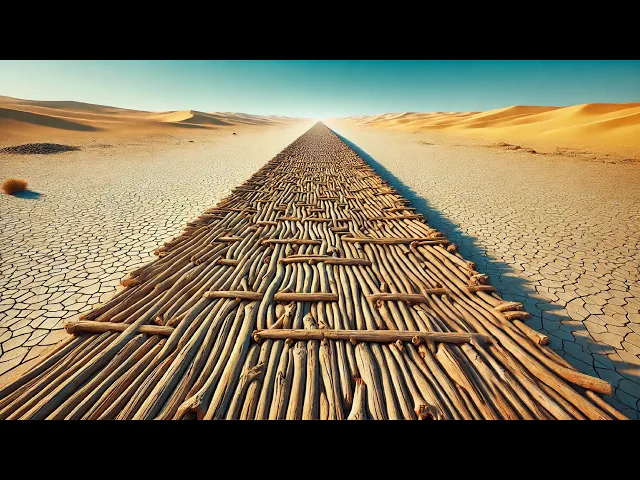
that officially holds the title for being the oldest paved roadway is none other than the lake Morris Quarry Road it's located in the fume District of Egypt and it's covered the 12 km distance between the Quarry and Lake Morris and it's believed to have been built sometime between 2500 and 2100 BC while the lake now is incredibly tiny in the past it would at least on seasonal bias flow into the Nile River this made it the perfect route for Quarrymen to send rocks down river more specifically they would send heavy blocks of Basalt down the
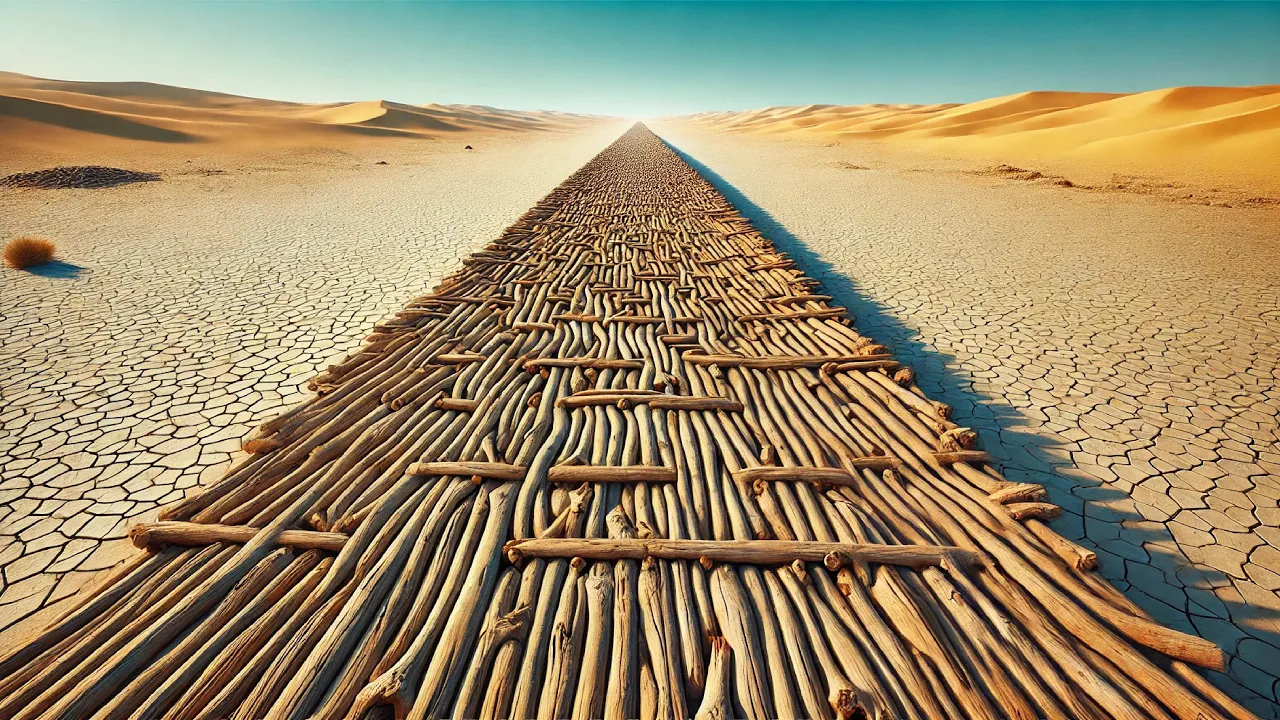
road to the lake these blocks would then float their way down to Giza where they were used to build incredible sites such as the Great Sphinx and the pyramids now the road itself was pretty strange by modern standards coming in at an average width of 2 m its composition consisted of a mix of slabs of sandstone slabs of limestone and logs of petrified wood this in turn puzzled archaeologists after all Not only was the material pretty strange but the pavement Stones bore no deep grooves or marks meaning that they were likely not transported by carts
or foot after an investigation it's now speculated that logs were laid over the road and that the stones were transported by sled towards the lake the stones thereby prevented the sled from sinking into the desert sand while the weight distribution caused by the logs prevented any large marks from being made into the pavement so it is worth emphasizing that the road's continued existence today is pretty incredible after all it is the oldest pave Road in the world by about 500 years and is the only Road constructed by the ancient Egyptians that we know of and
while the construction wasn't consistent after all in some areas the stones were placed neatly while and others they were placed halfhazard it still is an engineering Marvel as put by geologist James Harold of the University of Toledo quote the road probably doesn't rank with the pyramids as a construction feed but it is a major engineering achievement not only is the road earlier than we thought possible we didn't even think they built roads end quote so yeah it's fair to say this Quarry Road is nothing short of incredible moving on to number seven the Royal Road
in the annals of History the great Persian Empire is sometimes overlooked home to massively important Empires for thousands of years the Persians were one of the few people to effectively combat ancient Romans and in the Heyday of the first Persian Empire the Royal Road was was constructed commissioned by King Darius the great sometime during the 5th Century BC it was built to facilitate rapid communication on the western part of his large empire stretching for a length of 2700 km from the imperial capital of Susa to the Western city of Sardis in what is now turkey
the entire Journey took about 9 days on Horseback or about 90 days on foot it is worth mentioning that the road has a weird peculiarity more specifically it didn't follow the shortest nor the easiest route between the most important cities of the Empire making it less useful than it could have been it's because of this that the Western most sections of the road were probably built by past Kings and Darius likely came in and improved the existing roads while building some new ones when the area was later taken over by Alexander the Great he used
the road on his military campaigns while recaptured by the Persians in later years it was retaken by the Romans and the Romans got to work improving the roaded applying a hardpacked gravel surface and at par extending its width up to 6.2 M increasing its quality and its capacity in its Heyday the Royal Road also had several posting stations these were areas where Fresh Horses could be placed so that Messengers could get quickly from one area to another and according to the Greek historian Herodotus these Messengers were top rate after all he wrote quote there is
nothing in the world that travels faster than these Persian couriers neither snow nor rain nor heat nor Gloom of night stays these couriers from the Swift completion of their appointed rounds end quote it is also worth noting that the Royal Road wasn't a cut off entity that's because it linked to many other routs in the overall Trade Network known as the Silk Road some of those routes such as those to India and Central Asia were also protected encouraging regular contact between India Mesopotamia and the Mediterranean so given its utility and its Legacy I think it
is fair to say that creating the Royal Road was a great decision on the part of King Darius number six the old North Trail while not paved in the same way a regular Road would be the old North Trail earns a spot on this list for arguably being the world's oldest Trail that's because according to oral history it's been used for over 10,000 years by the indigenous peoples of North America some of its oral history has been written down in 1905 the Blackfoot Chief brings down the son told a certain Walter mcclint talk about the
old North Trail in their conversation he said that there is a well-known Trail we called the all North Trail it runs north and south along the Rocky Mountains my father told me it originated in the migration of a great tribe of Indians from the distant North to the South and all tribes have ever since continued to follow in their tracks in many places the modern man's roads and towns have obliterated the old trail it forked where the City of Calgary now stands the Right Fork ran North into the Barron lands as far as people live
the main trail ran South along the Eastern side of the Rock Rockies at a uniform distance from the mountains keeping clear of the forest and outside of the Foothills as the chief suggests the old North Trail has now more or less become a relic of History paved over and forgotten by all but a few however in areas it still continues to run and can be accessed by those with a strong knowledge of indigenous history it also appears that we have at least one written map with the trail you see in 1801 a headsman named old
Swan sold the Hudson's Bay Company a map of the area around the Red Deer and South Saskatchewan Rivers the Hudson's Bay Company asked him to draw a map showing the route the ca Warriors had taken in the past and in response he produced what is now known as the old Swan map this map which was intended to be used without a compass clearly shows the existence of a path and it's thanks to documents such as this one that it is possible to accurately trace the old North Trails history today number five the Amber road while
Amber may not be seen as all that valuable today in the years past the ancient Amber Road transported what was then known as the gold of the north running from the coastal areas of the North Sea and the Baltic Sea to the Mediterranean Sea it was the first major roadway to facilitate trade between northern and southern Europe This was possible through both water and land travel after all the Amber would be shipped from the sea to tributaries on the Vistula and neeper rivers this Amber would then either float down the river by foot to places
such as Italy Greece and in the Black Sea Syria and Egypt and while this trade began over 4,000 years ago it would continue for thousands of years in fact it's believe that the roots may have seen use until as late as the year 1000 ad the story of Amber trade is an interesting one the oldest trade in this golden substance began in Sicily and in short time Sicilian Amber was being shipped to Greece North Africa and Spain however after a decline in the consumption and Amber trading at the beginning of the Bronze Age in around
2,000 BC the influence of baltic amber gradually overpassed that of Sicilian Amber by about a th000 BC Baltic Amber was the biggest name in town and the Amber Road was making sure that that Amber was getting to willing customers across the European continent it is worth noting though that the Amber wasn't the only sought after commodity traded along the Route other Goods of course from the north such as animal skins Furs honey and wax were also exported in turn those from the north would buy Roman glass brass gold and other metals and it is worth
noting that by all accounts Baltic Amber is still a worldclass substance today in essence it is a deep orange translucent fossilized tree resin that oozes out of some species of Conifer trees while it's not as valuable as it once was Amber is still used today however other uses have fallen out of favor after all in the past it was used as a healing agent in folk medicine as it supposedly would have worn off evil spirits demonic figures and quote unquote Madness number four the Inca Road the Inca were a very Advanced civilization and one of
the greatest pieces of infrastructure they created was the great Inca Road system literally translating to the Royal Road in English it was a network of about 40,000 km of formal roads that were carefully planned engineered built marked and maintained by the Inca Empire across what is now Colombia Ecuador Peru Chile Bolivia and Argentina depending on whether the climate was a mountain one or Coastal One the way the road was built built was different for example while Stone steps were a feature in areas with high slopes retaining walls were common in desert areas to prevent sand
from getting on the roadway in many ways it is very similar to the Roman Road system only it was built about a thousand years later and in some ways better than its European counterpart at Short distances there were relay stations along the road that had Messengers at a one-day walking interval there were tambos which were buildings with support for Road users and flocks of llama pack animals administrative centers with warehouses called kulas were also found along the road while fortresses could be found at the roadways extremities and order to protect boundaries of the Empire now
while the roads may not be as well used today some of them still connect many hundreds of communities found in these regions especially in areas where there's a pedestrian Transit some are also still very relevant from a modern perspective for example the Inca Trail to Machu Picchu is one of the most well-known trails in the world additionally a 2021 study even found that there there seems to be a link between proximity to the road and personal outcomes according to the study nutrition and school levels were higher in communities living within 20 km of the Inca
Road compared to similar communities located farther away number three the sweet track the younger cousin to the not as well preserved post track is the sweet track dated back to 3806 BC by using the tree rings of the tracks wooden planks it extended for about 1,800 M from what was then an island at weste and a ridge of high ground at shapwick in order to create the sweet track builders made use of crossed wooden poles driven into the water log soil now these cross poles held up flat Oak planks which in turn supported a walkway
while it served its purpose well it was far from sturdy after all it crossed a swamp and was likely abandoned after just 10 years or so due to the rising water it was eventually rediscovered in 1970 though during Pete excavations by a certain Ray Suite this of course raises an obvious question how did the wood not rot away in the 6,000 years or so in between the road's creation and its Discovery well this can be explained by its location you see the wood in question lies within a water logged Pete this is important because the
lack of oxygen in the Pete prevents Decay allowing the wood to stay intact well as you can imagine Excavating the wood that was previously underwater proved to be no easy task following the purchase of the land by the National Heritage memorial fund a water pumping and distribution system got to work along the tracks length while it did a good job at removing the water the wood recovered was while visually Inta extremely degraded and very soft the conservation process for these well preserved pieces was pretty intense it involved keeping the wood in heated tanks and in
a solution of polyethylene glycol and by a process of evaporation gradually replacing the water in the wood with wax over a period of about 9 months after this treatment the wood was removed from the tank and wiped clean and once the whack cooled and hardened it would be handled freely without fear of damage it is roads such as the sweet track that give us good insight into those who lived in the area both the sweet track and the nearby artifacts suggest that the region was inhabited by Neolithic farmers who likely colonized the land sometime around
3900 BC while the area was heavily wooded in the past they likely cleared it out to create an economy that primarily revolved around ranching and farming in their Heyday these people thrived on their largely agricultural economy and by all accounts the sweet track played an important role in its flourishing well in any case it's thanks to this historical significance that the sweet track is protected as a scheduled Monument meaning that its nationally important historic structure and an archaeological site that's protected against unauthorized change number two the Via apia all right let's face it most of
the roads on this list are way past their primes as relics of ancient times they no longer have any traffic trff and simply sit there as reminders of the past however the Via Appia is different than most that's because it has the interesting world record for having the oldest Road surface still in use stretching for 560 km from Rome the Via Appia was built in 312 BCE and named after the wealthy and politically powerful appus Claudius casus originally the road was meant to bring armies and supplies across the Republic and in its day it was
a great strategic importance you see at the time Rome wasn't yet an Empire IR man was still expanding its territories and administrative State this was a problem because at the time most of the roads had been built by the atrans meaning that many of the more remote areas of the Republic were not really serviced this road allowed troops to quickly be moved to these far off areas by the late Republic the Romans had mastered road construction and many of these old roads started a chain reaction of road building that has help give legitimacy to the
phrase all roads lead to Rome well in any case the Via Appia was one of the very first pieces of that puzzle it also saw a lot of development in its usage while it did play an important role in armed campaigns such as the Semite Wars soon regular citizens began to use it as Rome began to colonize southern Italy once Christianity took hold in the region burial sites were expanded into catacombs and according to scripture St Peter even met Jesus along the road while he was fleeing Rome as a result the Via Appia was by
all accounts an important part of ancient history now while the Via Appia is is still in use today parts of the road have seen periods of various activity over time parts of it fell into disrepair and for years it was unclear exactly where the Via Appia snake through well thanks to some Renovations all of it is now demarcated and still much of it is in use after all parts of the road in Rome are now a park and the majority of the Via apia can still be walked on or in some cases driven on it
is also worth noting that the Via apia had a bit of a Resurgence during World War II you see in 1943 the Allies hoped to break the stalemate against the axis by going around mon casino by traveling down the Via Appia towards Rome however much like the failed campaign of purus during Antiquity this ended up being a failed maneuver unfortunately for the Allies they didn't make the trip quickly enough and by the time they made it to the city of anzio the Germans and Italians had cut up to them in a Counterattack the Germans then
came down the Via apia from the Alban Hills however in a fortunate Stroke of Luck they could not retake anio and in May of 1944 the Allies finally managed to break out of anzio and take Rome number one the Silk Road of course of all the roads on the planet few are as old or as important as the one and only Silk Road now contrary to popular belief the Silk Road isn't one long singular Road rather it's a network of routes used by Traders for more than 1500 years the very first to use the route
were Merchants coming from the lands of the ancient Chinese Han Dynasty with early records indicating that this was sometime around 130 BC soon the Chinese began to take great interest in the well-being of their merchants and extend the Great Wall of China to ensure the protection of the trade route by the first century BC Chinese silk was widely sought after in Rome Egypt and Greece and this in turn caused European Merchants to frequently use this route if you were a Trader you had a few different options to choose from these included the northern southern southwestern
and Maritime routes depending on where you were looking to go and what type of terrain you wanted to avoid some were better than others and along all four cities and trading posts sprang up to engage in trade and commerce now despite its importance the Silk Road was far from well regulated or safe covering a whopping 6,400 km it passed through the lands of several Empires and a number of formidable biomes such as the GOI desert and the pamier mountains this in turn meant that no single government was charged with its upkeep and while some parts
of the route were safer than others many were completely Lawless this meant that robberies along the Route were common and so in order to protect themselves Traders often joined together in groups known as Caravans in order to fend off thieves of those to make this entire Journey few were as famous as Marco Polo born into the family of wealthy Venetian Merchants Marco traveled with his father to China when he was just 17 years old they traveled for over 3 years before arriving at Kubla Khan's Palace in 1275 and from there the young Marco stayed on
at the K's Court going on to missions to parts of Asia never before visited by Europeans upon his return Marco Polo wrote about his adventures giving both him and the Silk Road the legendary status they enjoy today it is worth mentioning that the Allure and legend of the Silk Road is still alive and well today while no longer in use the modern People's Republic of China has capitalized on its lore by creating a mega project known as the Chinese belt and Road initiative following the same principles as the ancient Road it is a multinational modern
infrastructure project that's attempting to connect much of the world in a way that's aligned with China's economic interests in conjunction with this plan China's even launched a digital silk rolling initiative which aims to expand digital Technologies in developing countries and pose a challenge to US tech dominance these plans have not been without controversy though after all many International observers have decried the infrastructure loans given by Chinese Banks as predatory While others fear these initiatives May pose a security threat to the United States however given China's recent economic wo the development of the initiatives has slowed
to a crawl and only time will tell whether or not China will be able to reinvigorate the project and create something similar to The Great Silk Road of years past thanks for watching Everybody I'll see you next time thank you to our channel members