Brandon, nice to meet you. >> Tim, nice to meet you. >> Tim, good to meet you, man. And something. So, anywhere on the board, be on it. >> Yeah. I wish I'd found you earlier. I had a major surgery about 2 and a half years ago. Fusions, uh, all that stuff. But I've been doing your program for about 4 months now. >> Okay. >> And it is improving. It's coming along. >> So, you can see the new direction sort of is early on >> things that that you guys use recommend. >> Yep. We're going to
do it and I'm excited. I'm glad I reached you. >> Yeah, >> for sure. It's going to be a good day. >> Saved a lot of guys lives, man. >> Thanks, man. Yeah, >> these guys get all messed up on >> Yeah. >> opiates and they off themselves, you know, other guys off theelselves and I always tell >> heard a lot of it. Heard a lot of I've been through a lot of it. >> Yeah, man. >> Yeah, you get it. >> Thought about it too, you know. >> Yeah. >> Yeah. >> Reaches that point.
>> How are you? >> How are you? >> Good. Nice to meet you, Nick. >> Nickon, good to meet you, Nick. How are you? You can sleep wherever you'd like. How are you? >> Hey, good. >> What's your name? >> Patrick. >> Patrick. Good to meet you, Patrick. Nice to meet you. >> Awesome, guys. Cool. We got a few more minutes. People come in. Good to meet You, Adam. Good to meet you. How are you? >> Hello. >> How are you? >> Nice to meet you finally in person. >> Me, too. Ra. >> Brandon. Good
to meet you, sir. Glad you're here. >> For almost uh 9 months now. >> Wow. >> I ran the marathon last year. >> Really? >> And I got injured. >> Okay. >> So, then I started >> started a new journey. >> Yeah. >> Yeah. How you feeling today? >> Much better. Yeah. Much better. But I'm really looking forward to this cuz I think a lot of stuff that you've been telling me on your videos has been helping cuz I bought them the uh the extension machine. >> Good. >> So I do that a lot. >>
Concept. Yeah. >> Yeah. >> Yeah. Need some videographers. >> Yeah, for sure. >> Yeah. We should probably message Z. >> Dope, bro. All right. Well, I'll see you in there. >> See you in there. >> Thanks for saying hi. >> Yes, sir. How are you, bro? >> I'm Kyle. >> Kyle, good to meet you, man. How are you? >> Sweet. I'm good. I'm good. Yeah, I came all the way up from Maine for this. So >> from Maine? >> Yeah. >> The top that state? >> Yeah. Yeah. In the city. So, I just took the
subway down and >> Wow. >> Beautiful, man. I'm glad you can make It. >> I've been on the LBA training for like eight months now. I was one of the original ones that got the the Nordex bench. So, >> Oh, you did? >> The winner. So, >> you were a winner? >> Oh, yeah. In the beginning. In the beginning. Yeah. Yeah. >> Somebody benefited. Godamn it. How you doing, man? About my heightened altitude on the bench. It's going to be a creative day today to see how we're all going to flow and make space for
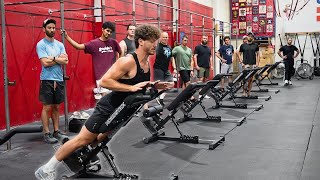
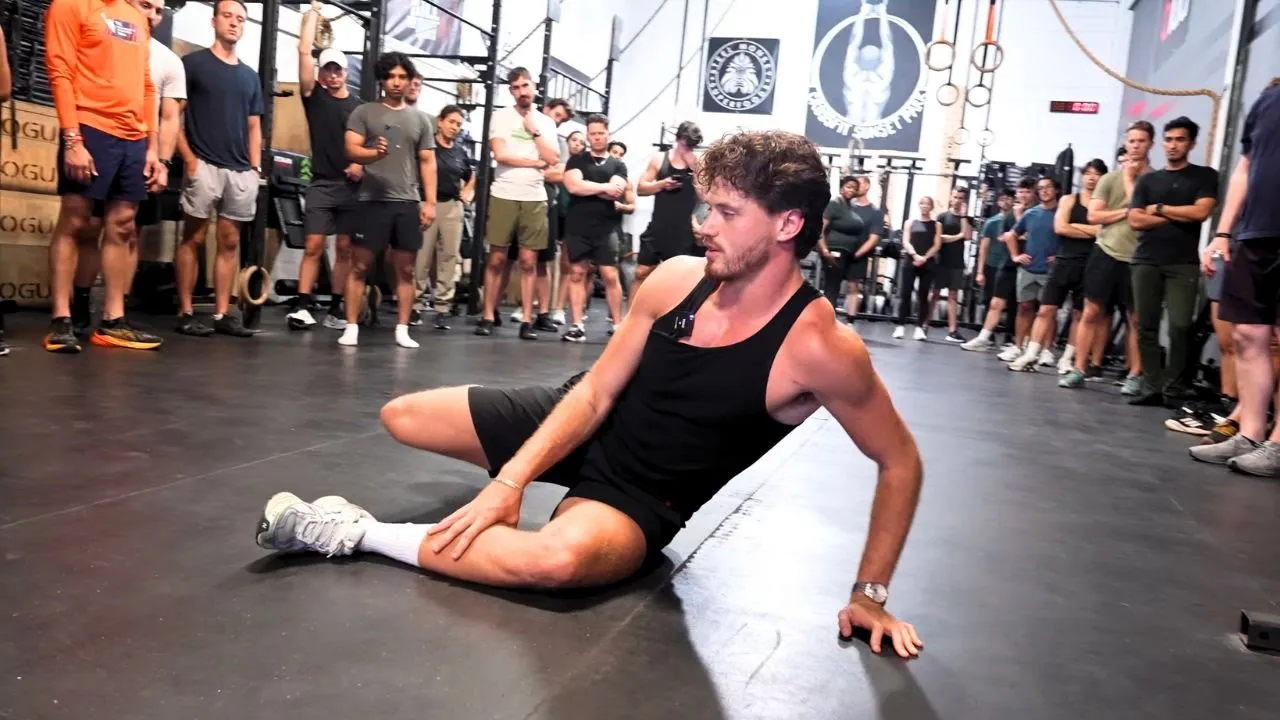
double the people here now. But crazier things have happened. Um, we're going to get started soon. If you haven't yet heard the layout of the gym, we got a bathroom downstairs here. At any point, slip in there. We also have two bathrooms. If you go up the staircase, all of our stuff, yes, it's piled up. I Do trust this is a pretty solid, trustable group. Um, you know, let's just try to be mindful of space. We're going to kind of have people to our left and right the whole day, but we're going to make it
work. So, we had done one stop before in Boston and it was a gut punch awakening for me at the real necessity for something like this, whether it was me doing it or it's just the space held for people that have been through something so demoralizing And persistent. And so, it was it was more emotional and more heartwarming than I anticipated. And it started off very shy and quiet and everyone was nervous and so as I keep doing this I realize like it's a really beautiful thing. Okay. So as soon as nerve issues go all
the way down the sciatic nerve route all the way back of the leg to the big toe any musculature along the path of the nerve will inhibit the firing gets weird. So The calf raise will be not as high on the foot that was affected and that can stay that way pretty much forever if you don't work on it. So we're going to work the arch of the feet. I'm not going to be able to queue you and see if you're doing it right. You have to go for the feel. You're going to stand shoulderwidth
apart. All I want you to do is squeeze the ground big toe clench into the ground as hard as you can for 5 seconds. Should feel almost a shake in The feet and then relax. Butt against the wall. And I want you to take one solid step in front. So about two feet if you stack them. That's where your feet are both going to be. Then I'm going to want you to lean forward. Keep your legs straight and pick up the toes as much as you can. It's up to you if you want no shoes
or shoes with this. Hold for two seconds at the top and lower. If you feel any kind of zinging, nerve issue, any tightness, Hamstring feels uncomfortable, you just sit up. So, we're going to go through a two second squeeze hard and then lower slowly. So, something silly we started last year at these events. Before we do anything that could bring your body fear, we first do a little game. We call it a neurological reset. If you're about to go into something fearful, we want to get your brain laughing silly and just totally not thinking about
it and trick Yourself into a less anxious place. So, we're going to do a high stakes game of catch. Let's see some form. There we go. >> There we go. If the ball were to come to you and you don't catch it, you would be out once we actually start. So, this is the warm-up round. I can tell what kind of kids you were in gym class by the by the honesty. >> Whoa, the ball hit the ground. How's the ball hitting the ground? >> Who was it? >> Everyone's still in the game. You're going
to go over there. Oh boy. Who's got it? Who's got it? We need some head fakes. We need some distractions here. >> Oh. Hey, now >> I think your refrigerator is running. Look. Oh wait. HEY. OH, SO CLOSE. >> OH, he just he just broke the rule off. >> Do you have your phone? >> Take his name. Get his info. Okay, we're taking that energy of gym class into Now, let's pull on a muscle that's attached to our spine and see if it's a little less daunting. Hip flexor kick out. So, we're going to lift
our right leg, perfect posture, kick out, hold for five seconds, both legs are straight, and then lower. We're going to do it all together. So, that's going to squeeze. This is now starting the concept of squeeze then stretch. If You ever had a sensitive area, super tight low back, super tight glute, super tight hamstrings, we've normally tried intuitively just get straight to stretching it every day. What's missing is the squeeze, the contraction, the circulation. That's what I've called building evidence. The hip flexors into the soaz is a good example that we feel like it's pulling
on our posture from sitting. You can stretch all day with whatever if it's never contracted Intentionally. It just goes right back. So, we're going to first squeeze it with this exercise. Then, we're going to all go into a split squat together, which I'll coach, and start to pull on the front of the spine with that exercise. So yeah, great great question. The regression is the height at which you kick out. So it still works. This muscle called rectus forous does two things. It lifts the knee and it kicks at the knee. It lifts at the
hip And it kicks at the knee. So when you do both dead lock out of the knee and you're lifting, it pulls it from both directions and that's why it feels like it's cramping. But if you have even a millimeter bend in your knee, you don't really get the same effect. So I want dead lock out. Even if it's here, if you feel nerve pain or just extreme tightness, toes down. Knee up. Kick out. Hold. Five, four, 3, two, one, and lower. That's good. Another cue. Keep The standing leg completely straight, too. Both quads flexed.
Knee up. Kick out. 5 4 3 2 1. You're doing it right. If it starts jumping, knee up, kick out. Five, four, three, two, one. Two more. Knee up, kick out. Five, four, three, two, one. For the last one, try to get as tall as you can. And then keep your ribs down. Think perfect posture. Knee up. Kick out. Five, four, 3, two, one. We're going to do the other side. It's the little things, right? It's just The simple things in life. Five, four, 3, two, one. I'm going to give one little cue. I see
a lot of people kick. You're losing some. Stay perfectly tall. Start slow. Start really low and see what it's like to be completely straight. Squeeze the standing glute. Let's go together. Up. Kick out. Five, four, 3, two, one. Lower. That's two. Three more. Kick up. Out. Five. Four. 3 2 one. Great. Two more. Kick up out. Five 4 3 2 one. One More. So that's the the muscles being trained is mainly the hip flexor that's on the quad. The idea is before we go into any kind of stretch for the front of the hips, let's
get some kind of pump, some kind of burn to make it more susceptible to just handling it with less of a cramping risk, with less of a a flare up risk. So now we're about to go into the opposite. Instead of kicking out in front, we're going to put it behind us and then stretch it. And so It's just a little warm-up for that. So clicking in general, if it's very consistent, I wouldn't really ignore that. You know, if you hear a weird sound in your car, you're like, "That's okay." But if every 5 seconds
on the highway d you're going to die. So same on this. Let's not just grind through a click click click. If it's on the lowering, then just move out of it. However, if you feel like it's at a certain height, Then go lower. But this applies for a lot of other things. If your knees clicked really bad when you squat and it's right at the middle, you could literally do squats just below that and never pass the point where it's going to click or above it and just basically work the ranges that aren't going to
give that and then over time it should get better. The problematic inclination for the back is that since you're stretching the front of the hip, it's Pulling on your spine. You might want to overarchch. Your body's going to try to force it with that. You don't want to allow that. So, you don't have to go super deep. You could start here and just hold >> the height, too. >> Yep. The height usually makes it easier. There's a height that is just ridiculous. It's not easier to have it up here hugging your knee. But this height
is pretty good for everybody. So, For the first round, it is a regression. We're going to go down and just hold together for a minute and then we're going to switch. And I'll be giving cues as we go. Okay. If we don't have a box yet, you can. Yeah, you can. Back foot up on the toes. So, a calf raise on the back foot. Let me squeeze by one time and then I'm out your way. All right. So, let's lower down together. All down. And then we're going to hold and then I'm going to be
Queuing y'all. Ready? We're starting from here and go. So, the things to think about, torso as tall as we can up to the ceiling, but not leaning back with the ribs flaring out. Keep your ribs down. So, let's keep the ribs down and then squeeze the back glute. >> Is the heel on the ground? >> Heel on the ground on the front. >> Yep. >> Looking good. Try to keep the hands off The knees. If it's pain, that's one thing, but if it's just a a relaxation, let's keep the hands off. This should be active.
So, I want you to squeeze the back glute. Squeeze the back quad. Stay up tall. Head to the ceiling. Seeing some of y'all look at what you're doing. You don't have to look. Yep. Another 10 seconds. If we're trying to restore postural Setting with the hips and the pelvis, when you're in this position, I want you to take very deep breaths. And now work the pelvic floor in the stretch position with perfect posture of the pelvis. Back toes up on the back toes. And break. Good work, guys. If we the front heels down. So back
and up but then ribs down. No flaring of the back. You decide how intense to make it. One more thing. You can squeeze the Front tib that tip raise we did. Pulling the toes up. You can squeeze the front of your shin to pull your knee even deeper in the front. Nice. High on the back foot. Big calf raise. Really high on the back foot. Yep. You might need to slide the foot back more. If you feel an ache in the back, ease it off a little bit. High on the back foot. High on the
back foot. Yep. And if you can go forward more, let's try it. Good. Let's hold this. Keep it going. 3 seconds and break. M. It's a good question. It's kind of hard when it's so stretched. So, you go down. You're trying to squeeze the opposite things. The glute. If you squeeze that harder, you don't even have to go lower. If I'm here and I want to make it harder, I could force deep or I could just squeeze the opposite side of the glute and now it's stretching more Internally. So, I'm a fan of in in
a lot of stretching in general instead of seeing how deep can I go and pull on something, go to a 60% stretch and then contract the opposite. And now it's just stretching more without even having to go deeper to the risky range. Another thing is taking the stretch and then loading it. And you could hold weight and do here for 30 pounds each hand. Now everything's going to be jumping in the stretch. So I would say you're more Focused on the stretch when it's on the back and squeezing the glute, squeezing the quad. So >>
way to help flexibility. >> Yeah. The stuff we did early on. If your Achilles is really problematic, this stretch is painful or just feels super locked up. Go below the Achilles. Train the arch of the feet. do the squeezes we're doing. There's another thing that I would sometimes do like a foot roll. I called it. It's a push-up on the back Toe on the big toe. So, you go to the arch and then you go to the big toe and just do little press ups squeezing just into the big toe. That's like doing wrist curls
here or grip. So, that's they're connected very intimately the bottom of the feet and Achilles. So you could keep stretching at the ankle, but if there's a problem below, it's not going to help. And then obviously directly training the deep calf, like calf raise. If we had the ability, y'all Would have held like a 50 lb dumbbell and got good work. Um, four, three, two, one. Really good. I want you to try in this one. Kick low and then try to squeeze everything we're talking about. Kick up, kick out, but low. Really squeeze the quad.
No knee bend. 5 4 3 2 1. So that's what that feels like. We got two more. Whatever height you want. Kick up out. Five 4 3 2 one. We got one more. Knee up. Kick out. Five 4 3 two one. Shake it out. Awesome. Good work. This is not the only way to train hip flexors. It's just a really potent way to do a body weight. All right, let's get into the other leg. For this round, I want y'all to think about posture at your pelvis. Think about squeezing the back glute, keeping your head
high and your abs down. Glute, abs, head. Real tall. That's the focus this time. Left. Four, three, two, one. Good work. Awesome. Knee up, kick out. Five, four, 3, two, one. Good work. Knee Up, kick out. 5 4 3 2 one. Let's go. One more. Knee four, three, two, one. Great work. Awesome. So if you take any kind of straight leg hip flex to work like that over time, this is also the back friendly way to start training it. The problem with a lot of hip flexor training, it's taking spinal flexion. So you start rounding
your back to make it happen. And that shouldn't be a problem if you're not hurt. But people have hurt themselves in Sit-ups, garammer raises, V-ups, all the sort. So, this is starting to train compression of your hip flexors and abs, but no movement your spine. If you do left side, right side, and you get your hamstrings flexible without training for it, you'll get to stuff like an LSIT or a certain now back rounded hip flexor training you might want to do. So, we're going to go back one more set on the split squat. Back foot
as high as you can on a calf Raise from the jump. All right. Yep. Back leg pretty straight, hips centered straight. So, all I'm going to tell you is the back foot. We're going to do reps this time. So, I'm going to count you on the way down. Pause. Back up. Back foot on the toes. And then internally rotate the back leg so you're more on the outer toes. Turn the leg in on the back foot. That's going to keep your hips really straight. Back foot is toes rotate in. We're going to do eight reps
together. All right. Right. So, let's lower 3 seconds. One, two, three. Hold for three. One, two, up. That's one rep. Lower. Three, two, one. Hold. One, two, three, up. If possible, hands off the knees. Lower. Three, two, one. Hold. Three, two, one. Up. Good. Lower. Three, two, one. Hold. One, two, three. Up. It's looking good. Remember the back foot. Three, two, one, hold. One, two, three. Up. Is that five? Four. All right. Three, two. Even if this is a good exercise that works on a lot of things today, it might be ambiguously problematic. So, you
feel the stretch that's supposed to happen, but you feel slight sensitivity in the front knee. Maybe the back hip flexor feels like a a real yanking stretch that's too aggressive. The point isn't that it feels perfect today. If you did any of this and you're nervous that like I don't know if that feels good yet, It's a long-term journey to make feel good. For all of the exercises we do today, back extension, direct spine training, hip stuff, the first goal is not adding weight, doing more reps, more time. The first goal is what you did
in March that felt iffy qualitywise in July just feels safe to do. So don't be discouraged if you feel any kind of semi- discomfort that's not just burning out. Just wanted to say that. Let's get into the other leg. You guys are doing Awesome. Two. One. One. Breath in. Deep. One breath out. Up. Good work. Few more. Let's lower down. Three, two, one. Hold. Deep breath in. Feel a stretch. And then out. Let's go up. Good work. Few more. Lower down together. Three, two, one. Hold. and up. Six. Right. Six. Two more. Here we go.
Lower. Three. Two. One. Hold. Deep breath in. Deep breath out. Up. This is the last one. Here. You can feel how the Breath intensifies the stretch. This is why when you sneeze, you can flare up your spine. The space of your diaphragm matters. So, train it here in the stretch. This is the last one. You're going to hold for 20 sec 15 seconds. Lower down. Three, two, one. It's very, very gentle entry into training the spine. Some ways you don't imagine that are spine training. Spine's in the center of your core. The core is the
center of your body. The spine is Pretty central to the core. There's muscles that attach to the front of the spine. Even doing something like this is pulling the spine forward. Something like that's definitely pulling the spine forward. Building tolerance to that is spine training. A deep breath, diaphragmatic breathing. If has anyone done Miguel big three? I'm assuming the curl up and you go into that position and they queue you on breathing. A lot of times the core has a ceiling Diaphragm. It has a floor, pelvic floor. It has a front wall rectus abdominis. It
has outer sides transverse abdominis. Then the low back tissue. It's this barrel. So we only usually think spine training and where it goes wrong flexing. But the training opportunity is in every direction. The stretch this way, the deep breath. If you just do diaphragmatic breaths, your spine is hugged by everything. The pressure squeezes on it and relaxes. That's level Zero of spine training, deep breathing. So when you're in the bottom of that stretch, you can feel how that really big breath all of a sudden stretches even more. I would rather you guys train that by
engagement and deep breathing versus I just rush to give you weight and make the stretch more intense. So this is the first entry point to spine training. Very gentle. We're going to go now to the shoulders and upper back. We don't need >> I get it. The extension. >> Yeah. >> Yeah. Totally. So spondi and retro there's certain diagnosis the vertebrae stacking gets misaligned and so they're shifting on from one to the other it gets very worrisome now anytime you're pulling the spine deeply through range cuz it's already not properly stacked and like I said
if you go deeper than you really should what's Going to happen is the arch and pulling is going to be there so you have to be from the start of the rep extremely braced a big breath in is going to hug it and stabilize it. That's why people wear belts. Gives you something to breathe against and get it stiff. Only go with a good breath and hold for a second. As deep as you feel zero worry in your spine. The safest thing in the short term would be to avoid it completely, but that's The worst
thing to do long term. You're guaranteeing you don't build any protection there. So, just go into it super slow, maybe something halfway down and see deep in, deep out. Is there any shifting feeling? Is there any instability? And you're going to have to go by how you feel. There's no height I could tell you safe for you. It's just purely intuitive how you feel. But it's a real concern. I mean, it's a real thing to be mindful of. I would take Video and just make sure how do I look from the side angle? Do I
look the same as if I'm standing at the bottom or do I have some shift? So, yeah, it's really important. All right, guys. So, I don't Yeah. when you're coming out >> lower or add weight. >> Yeah. So, oh, progress. Yeah. So, what I would like to do before going lower is add weight because no matter the height kind of show here, if if I'm at this Height and I'm like, "Okay, I got it. I can go lower." As soon as you grab some dumbbells, you didn't realize you could sit even deeper and the weight
will pull you further. So, for most things, I would rather grab weight before going deeper in range. The range is where I've just seen I've taken so many people through this and I've seen what hurts them most often and it's range more than weight honestly. So I think somebody else had one or way from the top down. We're going to put our hands on the wall. We're going to go about thumbs at eye level a little bit higher than straight out. Put them on the wall. You're about a kicking length from the wall. And we're
going to lean into it. Hold for three seconds and come back up. It's a wall pullover. So, let's all try to find a spot in the wall and go for 10 reps. Before we start, let me make sure Everyone's got a spot and I'll count you in to go down. I'mma count us through together for 10 reps. Near up and walk closer to the wall if your shoulders feel uncomfortable. Let's lower down. Three, two, one, back up. I would do chin up a little bit, not look down. Lower down into it. Let's hold for three,
two, one, back up. >> What's the regression? >> The regression is just how intense you go into it. So, >> guys, do a do a easy rep where you just gently kind of go to the first second you feel a stretch and hold. So, it's really how far you go down. You can feel almost just a little bit of tension and then go deeper into it and hold for 3 seconds. There's so much more range to go through the shoulders. So, >> what about stepping closer? >> Stepping closer. This is a little bit less. You
could, but it can still be intense close. Let's lower down. 3 seconds. You could be close to the wall and still yank on it. But three, two, and back up. Okay, three more reps. Get a good stretch. Lower down. Three, two, one, back up. Is doing great. Three, two, one, and back up. Awesome. Let's swap this wall group in the middle. Let's make sure everyone gets to turn quick. >> When you're doing this, do you want to internally rotate or externally rotate >> the hands? Probably more external. >> Yeah. Whatever feels good for the shoulders
to clear up. But I I'm normally like this. Good. >> Yeah. Thank you, sir. All right, guys. Let's go down into it. remember. Okay. So, eyes eye level with the hand and put your hands straight out. Raise them up so the thumbs are at the eyes. And then you should almost be able to kick the Wall if you put the leg forward. Just Yep. Gentle kick. Boom. All right. So, let's go down into it. Knees slightly bent. Lower it down. 3 2 one. Back up. Slower down. 3 2 one. Back up. Bend the knees a
little bit. Lower down. Three, two, one, and back up. Lower down. Three, two, one, back up. I'm going to give a new cue. Push into the wall at the bottom. So, once you're stretching, that's great that you're feeling it Through the spine, opening up your T-spine. Now, force it as an iso. Push your palms hard into the wall like you're going to break through it, but please don't. All right, lower down and then hold five seconds. Try that out. Now get in the good position and now put a little tension even if you need to
go less stretch and then back up. >> Do you want your core braced for this? >> Uh, nope. You don't have to be too Braced. All right, lower down cuz you kind of want to arch a little bit if possible. And then lower down. I mean back up. Sorry. But you could lower down. Three, two, one. Back up. Slower down. Three, two, one. Back up. Let's do one more. 5 seconds. And really push into the wall now. Lower. 3 2 one. Back up. Okay. So did every Is training getting to the low back as the
low back workshop we're at today from things below it and then things above it. Your spine is one structure. It's a bunch of vertebrae stacked. But if you get hyper loweris your low back is extra arched in or the opposite. You have a pel a pelvic tilt that's posterior. You could have rounding here and not enough arch. your upper back is going to try to move and shift to it over the years. If your low back moves An inch forward, a lot of people then get a hunch back an inch back, trying to keep an
equilibrium. So, the goal is to unwind where we're normally tight in this way. And then now we're going to hold it with strength. So, we're all going to sit on the box. We're going to lean forward. And the same thing we just tried to open up that position with the wall helping us, we're now going to get to it with strength. Have your hands out and reach Up. Trying to squeeze all the muscles that are supposed to keep us in good posture without us thinking about it. So, how far down you go on the angle
is really how how deep can you go without rounding your back. You have to have a good rowing position as if you're about to do a row with a flat back. We want to be here and then super straight arms. Same hand position where we're at, right? So, let's all get on the same thing. Person sitting facing that way. Person sitting fitting facing that way. If we don't all fit, go hands behind the head while we're sitting up and then keep the back super super super super flat. I don't care how far forward you go.
Just go down as low as you can now before you lose any spinal position. And then hold there. I'm seeing some of youall go lower than you should. Super flat back. So this is the seated iso hold for the low back. Just want to show this is the same Position we're about to work out of. So, don't move anything. Now, all I want you guys to do is drop your arms, but keep your body where it's at. Now, from here, super straight arms like you don't have elbows, and straighten up and reach out. And then
back down. One second. Let me squeeze through. Hold. And then back down. So, it's using upper back and low back. Let's go up. 3 second hold. Three, two, one, and back down. Let's take a little reset. Sit up tall. Shake it out for a sec. A big part of this is just going to be in the focus of the strictness of the back in that leaning position. This is a really important one to learn. So, arms are dead straight, holding here. I want you guys to feel the squeeze in the middle of your back like
it's cramping up on you. That's the goal. You're going to feel some low back as well. Okay, let's all get back into It. We're going to do five more. Do a little hold. So, wherever you think you should be, I want you guys to now come up five degrees higher. Not as deep as you think. And really squeeze shoulder blades flat back. And then hands out down to your side and raise them up like a Y. Less less wide for some of y'all. A little more narrow than you think. And then back down. Really good.
One cue is reach your hands out like I'm pulling your wrists Away from you. Let's lift up. Hands as far out as you can. Reach out out. Not up to the ceiling. 45 and back down. Good work. Hands aren't going to be to the ceiling. 45 degrees out. Up. Yep. And hold. Go for the squeeze. Go for the squeeze. Good work. And then back down. Let's try two more. Okay. Lean forward a little bit. Keep that posture up. Hold. Three, two, one. Good. One more. Okay. Lift up. Hold. Reach the Wrist out outwards like I'm
pulling away from you. And then back down. Really good. Okay. Where do people feel? What part of the back? >> Low, upper. Someone feel shoulder. Yell it out. >> Middle. Okay, cool. So, to be fair, could I use this real quick, my friend? It that's a tricky setup because you, some of you guys, we're just hands straight up. And the reason why is Because your torso is pretty upright. And that's fine. You shouldn't go deeper if you can't hold it. If you get more opened up in the groin and the glutes, you'll be able to
go lower. And then it's a lower angle. And I'm just like almost cramped by doing that. The seated one's a little tough. To be fair, too, if you sat on a higher bench, it's easier to get further forward with your torso. So, normally, I don't know if you've seen on my social media pages, These exercises in the normal setup, like with equipment and with a bench. All the cues I'm teaching you pretty much apply to that setup that doesn't have 80 people. So, trying to just teach internal cues, intentions while you do it, which make
a big difference from hurting yourself, from stalling in progress. So, we're going to go back to the wall and do that pullover one more time. And then we're going to go to this one One more time off the wall. And you can feel the same muscle start to fire. This is another variation of what we just did. So, before we get into it, let's do eight pullovers on the wall. Let's sit back up. Let's do the stretch version. take like a a half shuffle closer to the wall and the the hands wiggle them up about
3 4 in. So now I want you to bend the knees, hinge forward at the hips, push your butt back, keep a flat back like we were Doing. Don't go as deep into the stretch like the pullover. Now fingertips on the wall, only fingertips lightly on the wall. Now the game is here to gently lift, not with your hands or shoulders, but with the midback. Can you lift the hands just off the wall? Don't move your body. No movement in your feet. No weight distribution shift. And then back down. You could do reps of that.
Holding for 3 seconds at the top and then back down. If it's hard to get your hands up, you're going to want to move closer to the wall and squat. Okay, let's do five reps like that. Let's try to lift them up. One. Back down. Just barely off the wall. Lift them up. Three. Two. One. Make the movement come from the midback. Lift them up. Three, two, one. Super straight arm. Super straight arm. No elbow bend. Lift them up. Three, two, one. You should feel zero weight shifting in your feet. Focus on that. Nothing moves.
Start to work. Good or bad. Okay. It doesn't take much, right? The step one is getting you guys reintroduced to your back in not a punishing way. If the only time you feel your low back is, oh god, it's here again. There we are. And you're trying to do a squat and it got you. That's forming a really bad relationship almost neuromuscularly. Your nervous system just does not anticipate a pump as a good thing. It Doesn't think of that as good. So any opportunity to feel any muscle from here to here is great money in
the bank. And it can take little movements of just posture reset and squeezing and all those things trained you to then do it weighted. And you could sit here with five lbs and start to actually build little mountains in the middle of your back and have structural protection. But this is where it starts. So, group two, if you didn't get to go, let's slide in. Difference in the weight distribution of your feet. You should look like a statue, but you're just moving your fingertips an inch off the wall up. All right, try that. Lift up.
A lot of you guys shifted back on your heels. So, go back down to the wall. You shouldn't be leaning on the wall. Should be standing. All right, and then lift up. Three, two, one, back down. Reminder, if anything doesn't feel good, step out. Lift up. Three, two, one. Smaller movement, guys. Barely off the wall. You want to work for it with your middle back. Lift up. Three, two, one. Back down. Just fingertips. Lift up. Keep the arch of the low back. Lower down. Good. Barely off the wall. >> If you shift, try to make
it easier. >> What is that? >> If you're shifting, how do you make it easier? I I'll talk about it. Let's lift up. Three, two, one. Back down. Lift up. Two more. Three, two, one, back down. Last one. You guys are doing awesome. Lift up. Three, two, one. Good. Really good job, guys. That was intense. So if you're shifting on your feet, that's just your body trying to mimic as if you moved your through your spine with the strength of those low traps. So when you have your hands here and I say, "Okay, now take
your fingers off the wall." The easiest thing to do is push on your toes And just move your body. And nothing changed and it's just trying to look like you did it, which is is fine. So that that may mean one a focus thing understanding what it needs to happen is reach just up a bit learning to engage right here and it squeezes. If that's still too difficult walking closer to the wall takes the angle to a higher place. It's it's easier. It's much easier from here to actually use your your traps. When your hands
are up Here and I'm doing this strict motion, it's pretty high up. The more I get to a low position here, now it's low back and midback. And so you can control if you feel it's a really good point. If you know you have L2, L3 issues, a pretty higher up low back issue, you may want to avoid that segment taking most of it and you want to go higher. If you had herniated disc or some issue, true midback, you might want to go to a lower angle and target a different place. This Is true
on the back extension holds. Where you put the pad dictates where the peak force is going to be at what segment a little bit. Same on that. Your body angle. This is more low back. This is more upper back. If you're shifting your feet, you probably need to make it easier. Move closer. That's a lot of practice. So, how's everybody feeling with this? I know this is the weird part of the segment. These exercises aren't the fun ones and take a lot of Nitpicking. >> Yeah. one day of that and then another day doing bench
roll or >> it's pretty frequent. You could, this could be viewed as something. I mean, how many of you guys on a daily basis find yourself doing some weird kind of like stretch thing in a chair? Like you just are constantly stretching it out, right? The idea is that you're not you're not masterminding through conscious thought what's the Best relief stretch. Your body kind of knows, oh, I I want to get rid of that and you start testing stuff. Take that feedback instead of going at the bench and just doing that, turn it slowly into
a trainable quality and you could take just a little planning instead of reaching back on the chair and just stretching there. If you do it as training here, you're building a little bit more specific strength and it adds up. Now, okay, Who here of those people have felt like it's it's shifted your emotions whether you like it or not to some degree on certain days? Cool. Like you went to the gym kind of optimistic. Today's a new day. I'm going to try. You get a flare up on tying your shoe and you can't help but
everything in your face is just now flushed and you're like, my friends have seen it with me and it's like a light switch. Part of that becomes a loop of thought. Another part becomes this Constant guarding. If you have chronic pain, you just become guarded off with these triggers and you're like flinched and tight and compressed. Obviously, there's science to this. the mechanism of how it works. You don't have to be an expert to know as a human being. Chronic pain and chronic stress loads up on us and we can tweak out and just break
or we learn to basically live with it unhealthy. any kind of practice of decompression of reeregulation Of any sort of mindful work to breath stillness a walk sounds silly until you're losing your head like I lost my mind from back pain to the point where I couldn't sleep a whole year so then I got sick all the time and then I got inflammation of my brain due to a flu symptoms that went on forever and And then I couldn't tell you my birthday. And I was a whole year as a zombie in the sunken place.
And I was going to kill myself every day. And I Didn't know if it was real life or not. The only thing I could do was walk. And that was my training. And my back was still screwed. I didn't know if I was ever getting better. MRIs weren't showing anything. Doctors are like, "You have anxiety." I'm like, "This is not anxiety." And I was forced into this direction of other holistic measures that are basic, but when you grow up in a city in New York the way I did, you're not doing breath work. It's not
the Coolest thing. You don't even know about it. And so for me, meditation became a daily thing. Breath work became a daily thing. And I would have never thought or cared to do it unless it was by force. And I was forced to. So now whenever we do these workshops, it's kind of my right of passage and honor to try to give people their first experience of some of that if they haven't done it. Sometimes it's kind of profound and feels cool. We're Just going to hyperventilate, rev up our nervous system, and then we're going
to do a long breath hold. It'll be guided and hold our breath, and that's going to downregulate it. So we're going to touch the extremes within our nervous system, and by doing that, going up and back down, help regulate our resting point. So, it's three rounds. We're going to all try to find a seated place. I know one of the main limiters and opportunities for your Breath capacity is through the muscle that is your diaphragm. That's trainable. The strength of it, how hard you can pull down. Literally, a muscle pulls down which gives space for
the vacuum of your lungs. And the amount of air in the lungs can be trained up to like 30 60%. You can get so much more. And by doing this most days for a year, it went from like, oh, I felt a little tingle to like I'm getting high. Like, what is that? It Starts getting crazy. And that's a cool thing maybe to experience for relaxation. Um, but for pain, it like it started to do something for me when consistently stacking it. And so, I know it's not everyone's cup of tea. Um, and it takes
some discipline to form any kind of habit on the day. But my life is better when I do something like that every day and I I include some walks and some like just Sitting still. Normally right after I'll just sit still for 10 minutes because it feels pretty natural to do. So um if I could take the culture and idea out of like oh spirituality or the mindfulness and hippie stuff or whatever. No no offense to hippies or people who are into it. I love it. Um, I just as a human I think that's such
a powerful tool that probably makes a healing difference over time. So, I don't know who felt who felt something in that. At Least relax is it's interesting, right? Um, it gets easier as you go and you can hold the breath for longer. You get to like 3 minutes and you start becoming a a diver. So, yeah. I appreciate y'all's openness doing it and trying it. Was that a clap? Oh, I was like, okay, I don't think we got Thank God we can breathe. Some people can't. The fact to be able to do that. Um, we
don't even have to get up for this next section. We want shoes off. Pretty much means opposite. Inhibition means inability to fire. Basically, on a lot of joints and structures, you have egregious tightness on one side. It's just going to naturally restrict your ability to contract the other. If you hit arms crazy and you have T-Rex arms like you're a teenager and a bro lift, how hard can you contract your tricep? You can't. You want to contract it, you'd be out here. But the chronic tightness somewhere will stop your Ability to do that. So on
the pelvis, you have SI joint pain at the very low part of the sacrum. Well, what's the the sacrum is the top back of your core. The opposite is the lower front, which is exactly what's exposed here, which is your hip flexors, your adductor group. Mine isn't great, but it's better than what it used to be. Every bit tighter you are here, and your legs are here, just every movement in life sitting in a chair, trying to Squat, trying to live, you have more tension at the sacrum than someone whose legs are down here for
sure. So, just something to think about. You feel tightness. Often we try to stretch it. It's only tight because it's trying to fight something that is so tight, you know. So, this is not an exercise part of it, just an idea to get you thinking. Why does it matter some of this stuff? So, the first movement. >> So, I'm a basketball player and I got a back mild dis. >> Yeah. I'm saying let's walk this way. >> Yeah. So, I got a mild dispul recently. >> So, after that, I've been healing a lot, but then
I'm not sure like when I can start the back exercises and everything. You have taught back extension and stuff, right? >> Yeah. So, I don't know when is this the right time to start because I don't have pain there, but I have a lot of muscle Spasms, >> right? >> The back. >> How long ago was the the disc injury? >> I got around March and I've been recovering for the last 4 months. >> Yeah, you're probably ready to go. If your only issue is spasming, I mean, that's exactly what that's going to help is
retach firing, you know, just super easy holds. Sorry, man. Super easy holds. And like >> when people ask, "When do I know if I'm ready?" Your body knows better than I do. So, you might as well just try super gentle and see today and tomorrow how you feel. I think today's a good day. Have you done any of it before? >> No. All these things are new. >> Okay. >> It's actually feeling better, right? >> Beautiful. I'm happy. We're going to try it today. All right. And I'll make sure to watch and ask how you
feel, but don't Do the reps. You're good. Don't do the reps. Just stay with the hold for a set or two and see how that feels. >> I also had a doubt when can I start playing and stuff because I play with NYU team. So, it's an NCAA division team. So, it's like they're very physical. >> NYU. >> Oh, NYU. Right. Right. Beautiful. >> I'm trying out for the team. October, I was actually going to try out for the Team. >> It's risky. >> Exactly. >> If you want to do it, you can. >> Yeah.
>> It's risky, but um >> What did you advice on that? Like when can I start? >> I would make sure you can do basic baseline kind of test of do the back extension for 30 reps and some kind of level that today feels scary, but by Then feels okay. >> Yeah. >> Um but you should know what your back can do cuz basketball, >> you're gonna die for a ball. You're gonna get a twist. You're gonna be backing up. You're gonna be twisted for sure. or it's it's um I've done dumber things trying to
work through stuff. So, >> you play basketball, too, right? >> Um I would say yes, but my friends would expose me poorly. >> I play anything. Not well. Um I ran track and played soccer, but >> I think I've seen you dunk. >> Yeah, I can. I mean, I could >> right. Yeah. Never on video, though. Um if you want to go for it this year, it's probably going to be risky. >> But let's see if you really What is It's August. You got two months. >> Yeah. If you could really help me out, that
would be great. Cuz I just have one more Year. >> Yeah. Oh, okay. You don't have one more year of life in and of sports, just of NYU. And but I understand that. >> I was thinking, too. That's why I didn't rush back into the sport. I was just digging in. >> I missed all of my college sports here. So, I understand the annoyance, but it was cuz I was rushing >> and the mental frustration of not being able to play and everything. >> And being young, too. So, wait, you're young. 26. >> 26. You're
young. >> Yeah, man. Um, you're going to have to see come October, but see how the training goes today and then stick with it, stick with it, stick with it week by week. Get really focused for the next eight weeks and see what you build to and maybe >> maybe you keep training it in the season and you don't have any big issues and You might be good, you know, but yeah, let's see. All right. Yes, sir. >> Thank you. >> Yep. >> Thank you. >> Do you know much about hypermobility? >> Um, I'm I
understand the concept. >> Yeah. >> Yeah. >> Cuz I I was just watching you. I'm like, >> I think you have some hyper mobile shoulders. >> Maybe. >> Yeah. >> What what made you think that? >> So, I have a connective tissue disorder called hyper mobile Ellis Danlo syndrome. >> Have you heard of that? >> Yeah. >> Yeah. So, it's like the the joints are super loose and having to work a lot on >> postural >> control stabilizer. So, that's why I Like a lot of your work. >> Um, >> working to, you know, I
I kind of destroyed my body >> in my mid20s just trying to get huge. >> Okay. just doing a lot of weightlifting with just really poor form. >> Yeah. >> So, it's been a quite a journey um to get to where I am now. >> I had back pain for like 20 years. >> Really within the last 30 >> my whole life. I'm not that good at math, but that's 10 years old. Godamn. >> Yeah. And for the first time in my life, I'm painfree now. >> Wow. From what? >> I've done so many things.
>> Um >> rewiring the way that I move. >> Uhhuh. Um, a lot of niche modalities. Alexander technique, anesmatics, aoscu. Um, have you heard any of those? >> Yep. >> Yep. >> Um, a lot of self myofascial release. I've >> been living under a rock for the last like 2 years. >> Kind of had to. >> Just trying to >> heal myself. Just spending pretty much the whole day every day rehabbing and studying anatomy. >> Um, yeah. Now I'm starting >> You start an Instagram page. >> Yeah, that's the plan. I'm trying to >> That's
all I did. I was forced to do a similar thing. Honestly, you just share what you you found cuz it wasn't immediately available on page one through five of Google. >> You find the the intersections of these things too, you know, like for example, the full full range of motion is the answer for everything. That's only true because that's only true most of the Time because most people have an issue with a lack of range, but people like you that are having hyper mobility, that's not the best advice. And so, you know, >> getting into
yoga and thinking that was going to be the cure and then that actually kind of made things worse. Kind of getting into end range and >> forcing into end range. >> Exactly. >> Yeah. >> Um, >> nice. >> Yeah. So, I'm starting a master's degree in motor learning. >> Dope. >> Yeah. So, I'm trying to turn it into a group with do chronic pain health and movement coaching. >> Love that. What's the What's the school within Columbia that's for like family? >> Teachers College. Yeah. I remember looking into that back in the day when I
Thought that was going to be my route. >> Damn, that's beautiful. >> So, what did you do for your studying process? >> Um, like formal. >> Yeah, formal. >> So, I was in K basically trying to get to a PT path. So, I was teching. >> Yeah. You know, I was thinking of doing uh doing a PT school. Yeah. >> But then it's like you're kind of boxed in. >> Went to school for one year, studying kinesiology. >> Yeah. >> Had to get knee surgery and was really unwell and sick. So, I left school for
a year, took a gap year in that. I became a personal trainer like 2017. >> I was a technician at a physical therapy clinic just a little run taking people through little pro protocols and listing all the billing and stuff and just getting the whole year of inside a PT Clinic. I was still injured so I was a patient there and I got a job there. Um then I trained for the next like three years under a lot of functional training and I did a lot of like you know cattle bell stuff and FMS stuff
and um Mike Bole Exo just trying very linear robotic movement based training or whatever and I got strong in some ways and really tight in others and I went back to school and was studying kinesiology. Then I started to get Wrecked and uh I was trying to really get into academia within the school and I was starting to go to conferences and just help with certain research with the um graduate students and that's when I was like peak bad and so my back is [ __ ] up. Herniated disc all the pain too. Was there
something? >> My life was messed up. I mean my friends could tell you my the way I thought was different. the way I taught myself. I was like homeless through some of that Period too in New York and I was living on the trains and [ __ ] and just trying to grind and I was still training really hard and >> also just idea of intensity at all times of like quantitative metrics but not qualitative just weight. Um >> eating like [ __ ] for sure. Definitely had pre-diabetes. Um yeah just chicken rice like a
[ __ ] A lot of rice. Um, and just basically the whole route I was trying to become a physical Therapist. I was an exercise science. I was studying through academia doing research. I went and worked at the clinic. And then I realized I still can't help myself. Like I'm still [ __ ] up. >> There's a lot of like bad PG out there. >> There's a lot of bad everything. There's a lot of tired professionals in every field. There's a lot of professionals every field that has never done the thing they're teaching. And it's
not Their fault. They want to help people. Kudos. But it's there's things that are always lost when you haven't gone up the mountain yourself. You studied topography, but you never climbed it. It's like the sharpener knows what the [ __ ] he's talking about. But um yeah, I basically had to learn through weird mentors. My pain got so bad and that story I shared of I don't know if you're there where I got sick and lost my mind. Basically that took all school out the Way. I couldn't. I left school planning to come back and
I started to figure out what was working for me and dead broke and I just started sharing my story about it and content. And just through not really knowing yet why it was working for me, but I'm getting better. I just cared about people going through it and I had enough response. I was like, I'm just going to not go back to school and try to talk about this more. >> Yeah. Be a practitioner. >> Yeah, that's awesome. There's nothing stopping you from changing the lives of people >> who trust you. >> Especially if you're
honest and say, "I don't know a lot." Like I tell people all the time, I get on consult calls and they think I'm going to be a guru expert. Like here, >> what if I feel this problem and and my foot spasms up in here? >> I'm not really sure. It could be 10 Different things. But if I want to say exactly it's because of this. If I have a hunch, I'll tell you. But ultimately, I've been through a lot of it. So, let me tell you the questions I asked and the direction it brought
me to. And that's already five steps ahead of just like them what they're going to Google on rice method or stretch it out or something basic. So, you know, if you want to go get the credentials, do it. There's stuff you get from that Environment. You get resources. You get, >> you know, you get a network. >> You don't necessarily need to take these classes to get to where I want to go. >> It's good for networking purposes and be able to milk the resources. >> Yeah. Whatever you need, man. >> That's awesome, man. And
I'm proud of you. That's like such a great journey. >> Have you worked with people with hyper mobile EDS much? >> Yeah. And what what do you find works The best? >> You know, what works with your shoulder? He's dislocated that shoulder 42 times, you know, when Yeah. >> Yeah. I just had surgery on this one like ago for >> dislocation. Which one was it? Cuz we were looking into >> one. >> What was it? Which surgery was it? Cuz they have a few different >> slap tear, but I had it on the top and
Bottom tears on the top and bottom. >> So, did they like anchor it in place or something? >> Put in some sutures. But I had to go like way above and beyond in physical therapy. >> I started working with a circus PT because they know hyper mobile body >> Christ contor. >> Yeah, they got she really good stuff. >> I've been working with a health coach who's an expert in EDS and traditional Chinese medicine. >> Beautiful. She's a beast. She's actually the one that's inspired me to take >> Where's she from? >> She lives in
Austin. >> Oh, nice. Um, yeah. So, I went and met with her once, but now I do weekly health coaching. >> And every every week I have like a crazy insight with her, learn something about my body. >> Yeah. >> Um, just like peeling back the layers of the onion, finding all my blind spots. >> Yeah, bro. Just start asking more questions. >> Yeah. So, like what have you done with the hyper mobile EDS population that works well? >> Honestly, I don't know nearly enough to I go off what they tell me cuz I don't
think I have that. I don't really know. >> You definitely have hyper mobility. Like at least in your shoulders just the way That I'm >> It's not a range thing, is it? You You feel like I have crazy range just the way they sit or something. >> I think your range like going forward. It's like pretty That's right. >> I just dance a lot. I get a lot of shoulder work going on. I don't know. Is it my shoulders move a lot? I'm tight in muscular ways obviously which is different than hyper mobility. That's the
misnomer. You could be tight Muscularly but maybe. So, you know what I do? Cuz when I go through deep pressing and stuff, that bice long head of the bicep like gets out of the groove and clicks. I have some stuff for sure. >> Yeah. If you're getting clicking, >> that's usually a general sign. >> Fix me. >> Yeah. I mean, I used to be >> I help people with spine stuff mainly and that's, you know, even a lot of that is I go to basic iso holes and be caught Mindful of range. I treat them
the same except with extra disclaimers. I I'm not I'm not a >> A lot of my back stuff was stuff was so many different things, but shoulder was a big component and that's been like the final piece of the puzzle was learning how to get the range back in my left side. >> Uh pelvic floor stuff, man. I didn't realize pelvic floor was jacked up. >> It's real. But most people don't know What that is. >> Yep. Didn't know what it was. And it's it's quite a bear to try to >> rewire that. You >>
get some weird sessions. >> Yeah. Yeah. Yeah. >> You got to get in there. >> I understand. Bro, it was good talking to you. I appreciate the chat. >> Thanks, man. >> Appreciate you. You're doing a good job. >> Regarding Just like where do you know what your limit is? You know what I'm saying? Cuz like when you're working out, you kind of have you start feeling tightness and stuff. It's not necessarily pain, but just kind of trying to figure out where I could draw the line. >> Well, some a lot of times in order
to draw the line, you got to cross the line. and you did something Monday and you're like, "All right, let me try that Two-minute hold he said or on the back extension and then you're [ __ ] up the next day. Try one minute and then you see, okay, that like left me kind of weird sore but not extreme." Okay, probably a little bit less 45. It's a trial and error in the beginning until you learn your tissue tolerance. Um, but there's no way to there's no way to do it but to do it, you
know, you you end up finding out the trial and error. But is there a specific exercise you're kind Of going through that with? >> Uh, I think that's my problem. I think I kind of during my workouts I kind of try maybe too many exercises. It's kind of hard to pinpoint. >> Yeah, it's not methodical. And if you're still trying to hit normal legs or you're trying to do, you know, deadlifts or back squat, not saying you are, but sometimes people keep their normal lifting, but add this. They're like, I don't know what it is.
Well, try a Session of just three things. >> Yeah. Just back down. >> But once you kind of know, then you know, and then you can slowly add stuff in. >> So the idea of this, we train the feet, we train the ankle, we train the knee. We do very isolated training for a reason >> because now I can tell you it's low back time. This is if you hurt your low back tomorrow if you feel pain it's probably This exercise where if you do a normal leg day lunges, back squat, deadlift, all of those
are compound movements which mean it's like always using your back somewhat and you don't know which one did it. And so the isolation training of the joints in the beginning helps you know if you if you felt sensitive in your back it was probably something hip flexor or probably something with the spine movements in the back extension. So once you know that then you can add back in stuff. >> And what's like normal pain like what what am I supposed to be feel when I'm supposed to be feeling regular soreness, regular tightness? >> What's something
else I should be concerned about? It's another part of the game when you're earlier on and you're training something like the low back that you haven't trained in a long time. That soreness is like this Ambiguous flavor. It's like it feels like a muscle soreness, but it also feels like an ache and it feels like burning during, but then it also feels like discomfort pulling. And that is honestly just going to happen in the beginning especially. You want less of the bad feelings, more of the good. But that's a that's a measure of progress over
the months. Is it more positive sort of soreness and less negative? How many months are you into this? >> Um, I mean, I've been resting for seven months. >> Yeah. >> Just about. And then I kind of just started getting into like adding more, you know, stretching and strengthening the last maybe like two months. It's been on and off since I can't really figure out what's causing the flare ups or what's causing the >> Are you doing the program >> fully? Are you in it diligently like Doing that now? Yeah, just it's kind of hard
to just figure out how to rest. I think that's my problem. >> I would start Monday, Friday, twice a week with the flows, with the normal session that's on there. >> And keep a weekly tracker, not a daily tracker. >> You know, like every Sunday, do your journal in of how do I feel on these metrics? Is it weirdly sore? Is it better soreness? Do I feel anything? Does it feel tight? Every week, give yourself something to check in and cuz daily is going to be like that. But yeah, man, you got to just zoom
out. That's why the slogans play the long game because it makes sense after 6 months. But in the first three months, that stage is just figuring out this. >> When you don't train your back, you don't really feel much. But when you start, now you're confused and you got to just take data on it, you know? >> You got any advice for the psychological side of it? >> Pray whatever you believe in, man. Um, don't make your whole life about it, you know? find find new things to help give you meaning in the meantime. If
you like music, get into music, play music, listen to stuff. If you like any any other thing that's not limited by the back pain, if you if your whole life is sports like mine was or exercise, well then it feels like your whole life is Gone. Try to pick up some new things and not be reminded every day that you're limited. And just like don't take anything that serious. I know that sounds crazy >> cuz you're in pain and everything's a reminder, but you almost have to become a little stoic monk about it in the
in the worst times. And when it comes back, you're going to be extremely grateful and just hold on to a vision. What is life going to be like when I'm painfree? Cuz you know what the pain does that people reach is like they learn to accept what is life going to be like while always in pain. And that's why you start taking medication to keep the same reality but less less suffering a little bit. Dole it a little bit. But if you just say, "No, it's delusional." But what is life going to be like when
I can just like go play ball with my friends or go run and go do whatever, >> no matter how crazy it sounds, just hold On to that. >> Just keep that hope. >> Yeah, man. It's real. >> Yeah, it is for sure. >> Hope that's held long enough and worked at and you're you're willing to reroute. It's it's just a plan. >> Yeah. Yeah. >> Assuming you can have an accurate plan, though. The problem is doctors give you the wrong plan for sure all the time. >> But you're going to find the right plan
More likely by f picking 40 wrong plans and then finally the 41st one is the right plan >> unless the wrong guy injures you. >> Set you back a little bit. But I think there's no setback too big if you're willing to you learn something by every failure too. You learn how to try new things. Like in the beginning if you just hurt your back you try avoidance which is a terrible plan but for some reason we didn't know that yet. And then You're like okay screw it. Plan two. I'm going to stretch the crap
out of I'm doing yoga. Let me open it up. Bad plan, too. Those are extreme. By your 10th go, maybe you find something like this or a combination of things. You learn what it's like to take a little bit, let it marinate. How's it cooking? Little painful. Okay. And like you get wiser to it. Um again, like I said, I'm toxically positive. Like I just believe there's always a lesson in it, you know? But It's true. You could be misled. >> That can be really hard though, man. cuz dudes I mean I've multiple physical therapists
who give me the wrong [ __ ] >> Yeah. >> You know I'll be like I can't stretch my hamstrings at all without it pulling things out. They're like well let's just try it this way and it still doesn't and they're like clueless. >> Yeah. And maybe I'm doing that. That's the thing is I know that cuz I've been In it. >> All I can try to do >> is make you a better back expert of yourself because I just don't know. Maybe I'm like, "Yeah, this is really going to help pull on that." And
you just feel pure L3 L4. >> Ignore me. feel what you're feeling. You know, it's bad when professionals like don't empower you to or they're not honest of, hey, I'm the expert, >> but you know more than I do about your Body. Sorry, you're paying me $300 an hour. >> That actually happens a lot. >> That's Well, this I think it's more honest and it's more real, but it's >> No one said this life is going to be easy. >> Very true. >> You know, but >> put the work in too at the end of
the day. >> Yeah. >> Yeah, man. They're just >> What's the most basic regret? Cuz I Cuz I have one of the machines cuz I put it on like the highest level. Okay. >> And I would literally do like just the holds. >> Yeah. >> Now, I might have been doing too many holds a day. >> Yeah. >> But even that was irritating me. Anything beyond >> you could put the pad up so high or be on an incline bench that is like that trap three. You're literally >> incline. >> Leaning leaning. Yeah. Leaning on
it and you just arch your pecs off a little bit and you hold for a minute there. >> Sometimes sitting there. What about sitting like that? >> Sometimes that's easier too. It depends what your problem. If you have, you know, the facet joints are >> sort of. Yeah. >> Yeah. It's like the bony ridges on the on the back. Some people, you ever done prone press ups or the cobras? >> I can't do those, >> right? If you can't do those anymore, that sensitivity often in the facet joints, it it gets intolerant to extension. So
on the back extension, maybe for you, your back extension shouldn't be extended at all. You should almost be slightly like almost rounding A little bit in your head and contracting from there and just iso holding there. So maybe it's not even a pad height >> like this. That's probably too much, right? Like >> maybe. >> Yeah. Yeah, >> this is really extending which you if you can't do press ups, you probably shouldn't do this. You might want to be here slightly rounded and hold >> cuz it may not be pad height or weight. It might
just be the that little millimeter position of your spine while contracting the muscles isn't good. You know, >> useful. >> Yeah, >> I'm going to No problem. I'm going to say we go in the thought process. Why can't you undo some of the underlying problems over time? And so it's just more complicated now. >> You know, it's easier to prevent anything than fix it, >> right? >> But >> yeah, and I know a lot of people have spondi with no symptoms. So I'm just kind of like I could be one of those people, >> which
is like having no spondi. I mean >> Yeah. >> Yeah. >> Yeah. And I'm at grade one and it's Stable. So like I'm lucky and I have a steroid going right now so I'm comfy. >> You do? >> Yeah. >> Oh man. Do less than you think today, please. >> Yes. >> Cuz those things >> Yeah, I know. >> You think you're good. You're like >> think it's scary. There's no feedback. Yeah, there's no feedback, which is not A good thing. And that's what I mean about asking more productive questions. You go to the doc,
how do I get rid of this pain? >> Not really the best question cuz there's a lot of ways you can do that. >> But now you're going to have no feedback with the pain and that might just wreck something, you know? >> So, >> well, thank you. No problem. It's like, you know, you have PT and then there's Like nothing else and like and PTS who get it depends who you get. >> I had a great PT, but it was all kind of first aid, >> you know, and then they're like, okay, you're done.
and you graduated. So like you've created a space that's like there's just like no really not there's nowhere to go >> and what you're going to keep trial and erring with different if your insurance allows you you're going to pay out of Pocket and go broke. It's like >> also paying so much even with insurance and like so this has been awesome. So thank you so didn't know she was a TED talk speaker. We got her. Um, I told everyone going >> I made a pretty good comeback. I've shifted most mostly to like um unilateral
work, avoiding back squats. I'm I'm now doing zeros, which is it's cool. I'm playing with it. I try some frog sand deadlift. >> Pretty intense, bro. Zer is on there. It's pretty intense. >> I feel like it's good cuz it's >> you force. You got to >> Yeah. More so, but I notic like hip hinging. I I think I have a bit of scoliosis, but like terms of hip hinge feels unnatural. >> I know. I mean, I'm really scared of doing kind of RDL. So, I'm doing like Nicely doing like Nordic progressions to like get
my hamstrings and stuff, but Like I noticed like there's a big difference. >> It feels like my pelvis on one side >> hinging is like moving a different way. But like what's kind of a good practice? I usually take a foam roller >> kind of just like you know hold the foam roll. >> Well, you can do all the practice for it. >> Yeah, you can do all the practice with it if your hips are completely unle or Not even visibly but tension wise they're unle. We're going to do something called a lateral pelvic imbalance
routine. It's a circuit. We're going to do some No, not quite, but we're going to do a lot of stuff hips and and outer back. So, if there is any actual discrepancy where your hips are at or the tightness is different, it's going to expose that and work on it. So, that will always throw your hinge off. Mine was weird. It just Felt tighter on one >> now, but I'm like, I don't know. It's one of those things that >> Yeah, >> I'm happy to do it. Like, there's so many cool nonspine loaded things to
do. >> Yeah. I'm trying to think of like >> busy for a long with >> Yeah. Oh yeah, the Nordics can really I do Nordics just so you know like I squeeze the glutes and keep the ribs down, keep My body long cuz that can really arch you into in the back and you want to do >> Nordics. >> Okay, if you do bend dip without >> I'll send you guys a cool like Nordic progression even like playing with the like diveres and stuff. >> Yeah, I'm going to go in. >> Yeah, >> I finally
mean it this time. Um, you free to hang out, get some a little bit More. We need at least hour and a half for the second round of training. You all good? >> Yeah. Sorry, >> that wasn't your spine, was it? >> No. >> Heard a lot of movement. Okay. Um, so yeah, with us and where we're kind of at in life. So, I would really encourage and welcome through the convo that we have. If you have any Testimony, not just a low back ability, but healing with your low back or tough story or you're
really deep in it or you've really been going through it or you relate to any of it. um that you realize this environment is very rare and that you're in a room of people who really understand and even if you don't want to get emotional about it, the tangible potential, the takeaway of lessons is very rare to have 70 people who have been desperately trying To figure this out in their life together. Like that is a really potent group of people. So, anything that you guys feel comfortable sharing as we talk about this, it is
really helpful not just for me, but for someone that's like a former you or someone's a further along you. And so, as I kind of shared earlier, this means a lot to me because this really broke me hard and I didn't think my life would ever matter because of that. And so I've done a few of these events when I was smaller. And every year that goes by, this starts to get like more real for me. And when we're warming up and just doing foot stuff, ankle stuff, I feel like a fitness trainer. And then
when we kind of get to like lunchtime and we get to the end, some reason in the first hour, I'm like, "Oh, these people, everyone Hates me." Okay, everyone's everyone's like, "Okay, who's this guy? What are we doing? He's shorter than I thought he was. Like, you know, whatever. And then by the end, everyone comes up with the real story of what they've been going through. And what I just went through in Boston, like, it was a real silent car ride back to New York cuz I just I've juggled with a lot of different things.
um building a social media to try to raise Awareness on this and trying to do the business in a way that shows to people like my heart's in it for what I say and then you sometimes this is like really petty stupid [ __ ] but get like bashed by other creators or have people like well you don't have the credentials well who is this kid what do you know and I've just learned to turn it all off and I go 350 days a here without this real gut punch reminder that these are real people
that Are messaging me with stories and that I don't have to prove anything to somebody that isn't in this because the only reason I did this was because fortunately I found mentors at the right time when I felt like the treatment model failed me and that story I told y'all earlier of I lost my mind you know if I didn't have my friends Eddie and Enoch, I would be dead. Literally. And when I came to New York and started this story of this gym, I'll wrap up my Monologue, but just to let y'all know where
my heart's at with all of it. And I'm like not going to cry cuz that's the last thing you'll see at the workshop. I get a mop out. Um, when I first came to this gym, I made my Instagram low back ability. I left a job at with a mentor, knees over toes guy, started working for, if you all know who that is. I like road trip down with no invite, was a nobody, and said, "Hey, bro. Uh, I can tell this Stuff is needed. It's helped my back and I want to help you change
the world with it." I lived in my car there and was like, you know, being mentored by him just to clean the bathrooms. I got hired and I worked there for a year. I left there and realized I wanted to focus on low back specifically and I felt kind of boxed in and it wasn't so aligned. So when I came back to New York, I had a a Instagram page of like 20,000 followers and I came here and Then had no income, was dead broke and again homeless. And I don't know if Alex is here.
Is Alex here? He's not here. the owner of the gym that's back there setting everything up and not here owns the gym and he just knew what I was doing and uh he let me sleep upstairs on the couch of this gym for 4 months and I was just trying to basically post videos and build content around this problem and I would train people down here that would come to work with me for the low Back problems. And so being here is really weird cuz some about I would wake up at 5:00 a.m. every day
on the couch upstairs to the CrossFit classes and the 5 a.m. CrossFit classes are are some older geysers. So you're waking up to like hello Mr. Bright Side blasting as your ringtone through the floorboards. I'm like this is going to help people one day. This is going to help people one day. and the fact it all worked out and now my Friends work with me and we get to do events and I don't have to charge $3,000 and I never have to sell out on anything and like it's such an important thing that my morals
are intact and now we're all here in the same space that may not mean anything to y'all but it's just absurd to me. It's crazy. Um but yeah, so that that's my story first to share. This all means a lot to me because uh it's the most pure part of my life and I struggled with a lot of things in my Life and the purpose of what I get to do with y'all is really the most grounding part. And the pain has wrecked me before, the isolation of it has wrecked me. Feeling no one can
help you. Going to the doctors, not feeling understood. I've been through it all. Addiction. I got a drug addicted to like hydrocodone by accident and I I've just heard so many stories of people have been through it all as well. And so One thing I want to ask about the path is like I'm just trying to teach y'all. I I use analogies that maybe aren't that sharp, aren't that great, but for me they work. The path is just teaching people it's a climb. you it it doesn't matter the footing of exactly oh it's going to
be this way or it's going to be that way. It's that there is no other way to get there but through asking better questions over time. If like you said It's not over. It's just learning discernment and a better process and how to ask better questions. When people ask me and it's okay that you guys do when I do that exercise I feel my foot cramp what should I do? It's like, do you want me to lie to you like I know for sure or do you want me to tell you the possible directions of
things that you should look into to try and strategies? And so the whole thing is just becoming more communicative with your own body. And Like you said, gratitude for pain is a very hard thing to understand when you're in it. But at least awareness of what pain is as a feedback tool. Your body doesn't want to make you suffer. 99% of babies are not born in excruciating pain just because the the syndrome is not it's not existential pain that we may go through every day thinking of stuff but we go so long blaming it running
away from it you build up this debt and by the time you Realize you've had this problem damn I got all these injections I got all these band-aids and not only did it not do anything longterm it actually put me further in debt and by the time you accept what the real problem is it's a big stack and you're like, "Oh, so I'm going to be in pain for the next year no matter if I do the right thing." That sucks. But I'm I'm just big on be delusional that you can get better. Someone asked
me That. What do you do for the mental? And just hold on to the vision of what life is going to be one day for you. No matter how delusional it is, that's what this is for me. That's what you are. We're carrying your two kids till they're teenagers up the stairs. as a you know it's just like just asking better questions and and not getting too discouraged. Um that what is quitting quitting at this end just means life of pain addiction or What it goes to a certain direction and I sounds extreme and I
hope most people's cases never take them there. My DMs are extreme. It's like crazy who decides to reach out with Seymour blang. And I'm like, okay. And they live where? Turkish. Okay. And um damn. And so I don't know if anybody else has a a story that they feel comfortable sharing with any kind of insight or on issues with the bones, issues with the disc, issues with the Nerves. I mean they could see other stuff but they don't diagnose a weak multipetus or these little small interwoven muscles that support the grooves of the muscle the
bones in the spine. So it's like we only test the endstage breakdown really. By the time something shows up there you're kind of screwed. Like fortunately you could have something there and still be asymptomatic. A lot of people have bulged disc with no symptoms. However, By the time you realize you have an issue and it's no longer a tweak, it's like you daily have pain, that means that was cooking for a long time. The outer muscles, the larger ones that are supposed to keep you moving globally in your whole body, maybe just overall weak. You
didn't get a low back pump. The smaller muscles, the intraspinal ones that are tiny to support, interwoven all through the bones, those aren't taking through any kind of Strength. Those are getting slight injuries. they inhibit, shut down, get weaker. That can be seen in MRIs, but they don't talk about it. Then the ligaments will take in the tendons and then you get misalignments of it. And then all the way to damn DDD, why are my bones starting to break away? Why is the disc height starting to change? And it's like, well, there's genetics, there's age,
for sure, but the layers of big things to smaller to smaller to smaller To the final stage of the spine itself wasn't really supported. So now you have to heal from the same way we do iso holes to just get general pump like I'm saying you guys are doing these why am I doing these YMCA on the wall this is your guru this is how I'm supposed to heal it and it's like just start for any kind of positive contraction with the bigger muscles that'll gain you access to go more intense to the smaller stuff
and the reason I went on this whole rant Was just about timelines because in a perfect world if you could stimulate the small thing maybe it would only take 3 4 months but you can't afford to get to that level till you work to the bigger things and the bigger muscles and the more gentle stuff. So, the reason I made the slogan play the long game um is not cuz it's cute, but it's because if you do anything else, you're going to quit or feel it's hopeless. It's the wrong expectation like trying to grow a
bicep For fixing a multi-year problem. Um so, yeah, seven months to get to the first level, but that gave you all the awareness you need. Damn, my direction's different. That's all I need to know. It doesn't need to come fast. So, is everyone in the program or does some people just know from social media? Raise your hand if you're in the program familiar. That's cool. That's that's a lot more than some places sometimes. Okay, cool. Now, the social media stuff, Like if you don't not on the program, how many of y'all kind of had the
vibe of like what this is about or did you just come like a few exercises? Okay, gotcha. Um, I just want to keep making these better and understand how people are feeling when we're kind of in the space of it. But we have have a lot more training. Absolutely. A lot more stuff that we're about to do. Um, but yeah, just want to Make sure. >> Great question >> for sure. >> How do we know if there's an actual like sciatica issue or there's muscle issues? Sometimes I get confused about that because I have, you
know, this radiating specifically. >> Yeah. >> And then it gets sometimes I feel like whenever it is an actual sciatic >> Yeah. So sciatica issue it's in the name sciatic. It just it just means irritation of the sciatic nerve. So anytime you feel anything running down the back of your leg, it's sciatica. Now, is it because of a disc bulge or is it because of muscle in your glute? Could even be tight hamstrings. If I if you got hit with a baseball bat to the back of the thigh hard enough, it'll compress the sciatic nerve
and you'll feel from then down nerve pain. Uh That's just not common. So, um it's for sure sciatica. What's the cause of it? That's why I take you guys from the outer layer in like the furthest part from the back. We did the big toe stuff. So my idea which has worked for a lot of people is stimulate and contract all the nearby muscles working up to the spine following the nerve path of the sciatic nerve. So, big toe, doing the calf raises, hamstring curls, I would definitely do. Um, back extension, iso Holds, contracting, everything.
And nerve flossing is something that we could get into and talk about starting to glide it and move it, but it's got to be something from the nerve root where it branches from your spinal cord, then it goes down your glute, then it goes down your hamstring, down the calf, and further. most likely is spine, could be glute, very unlikely. It's just the hamstring that's too tight, but the whole body is Covered in this sheath of tissue called fascia, which is like if you ever cut through chicken breast and is that white sheath of things
surrounding muscle tissue, that's our whole body. We got that. Nerves are within fascia. They run through fascia. So, a lot of times, like I'm friends with a a spine surgeon at NYU Lone. He does tons of surgeries. Um, but he really believes in this and doesn't like when people have to get surgery. And he says sometimes he Operates in people's spine and they expect to see a disc bulge pushing on nerves cuz they have persistent sciatica over time. And the disc actually is completely retracted and is not pressing on the nerve. However, the nerve is
still compressed as if there's something on it, but there's not because it took form from the fascia in that compressed position even though there's nothing compressing it. So that basically says like your structure of your body can Form a new muscle memory. A very oversimplified way is if you're at a desk forever and people start being shaped like a C, well it starts to take the form of that muscle memory inside your spine. If you have a bulge or a fractured bone or something compressing long enough and you don't move anything or contract, the bulge
can leave and it'll still be stuck there and feel exactly like a disc bulge, but they won't be able to understand why. And so That's why just moving stuff the general approach squeeze the muscle within the fascia iso holds then gently move the nerves. So nerve gliding is anytime for the satic nerve the chin and toes move together within your whole body the fascia and nerves are gliding a little bit just a little bit. So during those tip raises, you can move the chin. You can sit here, do a little bit there. You can do
it few times a week. Intensity is when you make the stretch more, you Could lie down flat, make it really easy, but just get the whole tissue moving and then contract. If you think pureformis is an issue, train it. We're going to train it. I'll pay attention to how you're feeling and how it looks, but really get a crazy burn and squeeze. Gently bring in stretching. Um, but just as a general thing when you're like, "Okay, I have this pain sciatica. I don't know if it's this or if it's that." The good news is you
kind of Don't need to know. Just train all of it and go by the symptoms while training. See if you can improve what you can do. And so, yeah, it's uh whether it's your purformis or your spine, largely you're going to do the same and you'll learn more as you go. It's also a good point to mention Q&A can happen here. A lot of people are asking me questions out there. Now's a great time. We got another 10 >> essential curious >> competitors. >> Shouldn't have mentioned the competitors, my friend. No, I'm just kidding. Um,
it's good cuz I Okay, so to be blatantly honest, um, I don't come from necessarily my professional background. I was on track to be a PT and learning protocols and then my life tanked from this. So I am very biased that I my messaging and what I tell people do is for the Person who was lost where I was lost. I'm just trying to help my former self which is the person who already tried the basics who already did bridges who already did clamshells cuz odds are by the time you see my stuff you have
gone to PT and you have done bird dogs and you have done this stuff. If someone isn't I'm the first person they've seen and they ask should I do Miguel Big three? Totally like that's totally fine. Um, I just know if you're giving me a Try off the internet, you have done the standard stuff. And I've also seen people skip that and still make progress. So, um, that's why I skip a lot of that stuff. I'm not going to lie. It just it's it's not progressive. It doesn't lead you to the next thing necessarily. It's
probably very valuable. Um, it's just not my contribution to the space, I feel like. So, if you follow things diligently as it's taught through this process, the Odds of you wrecking yourself is pretty low. The odds of you maybe overdoing it and having a pretty tough day or two, that's possible. But I said to someone else, they asked, "How do you know?" I think it was you, how do you how do you know where the line is so that way you don't like hurt yourself? And you a lot of times with this stuff, you have
to cross the line to know where the line is. Do a little bit too much and you're like, "Okay, apparently I'm strong Enough to do two minutes on the back extension. nice hold, but anything over a minute causes symptoms the next day. And there's no way to predict or know that without doing it, unfortunately. But you could try really slow and gradually ramp it up. So the mistake is just like that big. You're like, "Ooh, I don't like the flavor of that. That's not the best soreness. All right, I'll remember next time." Um, but there's
no avoidance of a misstep cuz you misstep, But then you you recover from it and then you misstep and now you're dancing. You're not misstepping. you're just learning how to tango. It's like that's part of um the fluctuating human body, you know, but you seem very mindful and like aware as you're doing it and I I don't think you're going to wreck yourself, but I don't know if anybody else has overcome that. Yeah, >> I just have something to say that. Um I know this. Um >> that's my favorite. >> Um so I guess I'll
go into my background. of the Marine Corps. I joined 2001 or 2021 and a few months in before my trip to Abram, they didn't know that it was like that was pouring low. They told me, "Go on practice. You're fine." And was not high. Like came back every single week, like this is worse. and they kind of just thought I was faking it to get out Of the workouts and even though I've loved working out my entire life, it just kept getting worse and you're fine. And then finally somebody was like, "Okay, let's get you
an MRI." And they're like, "Oh, you're actually messed up." And at that point it was kind of almost too late for the medical abilities that they had. So it continued to progress to the point where I literally couldn't bother I couldn't get up. I was Just like so this is like really into it. But like my obstacles point God, my sister, she is listening to him and bringing God into my process. every day. Um, and I noticed it really was not mine at all, but it has absolutely changed my life physically, mentally, probably so many
different things. And then what you were Talking about like testing boundaries, I pray before every single time I work out like asking God like discernment and just like help me test those boundaries without going over and it's not perfect a little bit too much but I just it has completely changed my way and >> yeah thanks a lot like like you that it might we don't know how people feel about certain things in life but one thing I will say No matter the background of who you are and what you came up in this is
an act of faith and whether it's what you call it where you're at what you feel connected to or your relationship with that even if it's just in your own healing potential and feeling supported through like a plan whether it's divine to you or not whether you have a relationship with God or not um not to belittle the what you shared cuz I'm just trying to meet people no matter Where they're at. I don't think anyone had a problem with you sharing that. I'm grateful you did. Um I found truth in the same thing. But
no matter what, it requires faith, which is like believing without seeing, like knowing without physically seeing. And when you're so deep into it, um there's no logical reason to think you're going to get better, not to where you used to be. and then go have a professional who's an expert in this verify, yeah, you Probably should give up the idea of getting back to that. And then you still go, no, I think there's more. That's an act of faith, and you have to have that. Um, I've worked with people like online that uh had people
ask me as skeptics. They come in, "Oh, you can't heal me. I guarantee you, you can't heal me." I'm like, "You're right. I'm not going to even try." Like if if that's the mindset you're coming in with to prove how you're unhealable, I'm gonna give you The resources and really hope that you come to wanting to heal. And I understand what the confused place it gets to, but like um if you call that being a realist, I'd rather be delusional. And yeah, I I think the act of faith is like something deeper than any day,
any moment, and up and down. And I can say the same thing for sure. So thank you for sharing that. really and it's honest and we should be. Yeah. >> Yeah. >> So, um my vertebrae run on my vertebrae and fraure and vertebrae a lot. Um but mostly and it's been a few years and I think I'm really I guess I'm lucky. I'm grade one of four. That means I'm not really a candidate for surgery. I'm surgery. that you do every surgery. So, I just don't want to go down that road, but I feel like
I've never been in a room full of people with back pain. So, I just Kind of want to say out loud like how much it sucks to like do the mental gymnastics of like for me sitting is hard thinking is not so hard. But I know like which movie theaters have recliners or like I don't >> Yeah, I do. >> All the way. And I know like you know I avoid like restaurants which is kind of like the main way New York socializ but um it's yeah it's depressing as >> I'm really lucky my husband
came with me >> your husband was on that vacation recently where he made himself into a extension extension. So, >> can I get a video of that? What was the or is it not? >> Columbia was dope, too. But >> okay. >> Might have got reported know in my late 30s. We talk about having a kid that really scary. If I see like a mom Picking up their toddler, I get like emotional and sad. So, >> pick up our top one dog. >> So, yeah. I optimism. There are people with spondi who don't have symptoms
and when they grow up will be one. I'm pretty new to the LDA journey, but I like that. You know, I had a really amazing PT, but it's so much about just like first aid and just avoiding pain. So, I'm pretty fired up being here because I want to be Stronger. And my like my toxic optimism is when I'm an old lady, I'll be really grateful for the injury that taught me how to protect my body from further injuries. >> Yeah. >> Kept getting injured no matter what I tried to do because the way I
was living overall, if I didn't get injured and was forced to look at my whole life better, I was going to be very sick in some way in Life anyways, you know. And sometimes like that these problems are forcing us to get better or be doomed and then we get better and we become more wise than if we never went through it. So thank you for sharing that. I've had so many injuries that people think I'm faking it when I tell the lineage of like and only some of them have scars and surgeries. I had
a when I knew Eddie in high school and we're on soccer team and running track together. I missed two years Because of patellar tendinitis which is should be a simple thing and I had surgery. That was just a little thing. And then uh got back into it and running track for two years of college. I had stress fractures in my shins. Basically micro fractures in both my shins. So I was like walking with crutches but two legs. That's like the least cool thing in the cafeteria in college. There's no cast to sign. They're like what's
really broken? I'm like it's a micro. So Whatever. and then started the real loop with the disc herniation. Two years later, disc herniations and then that led to all the hip issues and a hip impingement and then a sports hernia and then SI joint problems. This whole section was just really, really bad. Um, sports hernia is not supposed to really improve without surgery if it didn't after the first couple months. Um, hip impingement is supposed to be a deformity of genetics and you have Abnormal bony growths that just are going to clash in your socket.
Um, and the whole time I'm like, I'm making the Olympics for track. So, I don't know how this story goes. Um, and then when I healed all that stuff and even started like posting about it and getting on this side, I was so eager to get there fast. I'm like, I'm 25. I'm an old man. I got to go. Then I got new injuries just by rushing. The fact that I built my body up, but it's been years from Sports. Let me get back into it. Set me out another two years. So now I'm 28
and I finally realize I'm young and I'm not it's not too late for me. And I know that's that just made a lot of people angry in this room probably like whatever. It was a mental illness I had at 23 to think I was old but it's you know it's it is what it is. But um just realizing the the shortcut doesn't work like there the long the long game is the fastest way cuz it's the only way. And If you keep trying to prove to yourself that you're going to get there, it's not really
from a good place anyways. From a place of like lack and trying to prove that no, the fear is not correct. Um cuz if you're really confident, oh, my healing may not be immediate, but it's inevitable. You just don't care how slow the winds are going to come in cuz it's going to feel so good whenever it comes in. And so just choose choose smarter goals that aren't the same old whatever Four plate squat. you'll get there. But the goals before that are my 12 in split squat paused with the 45 lb and then the
back extension for this hold then that time cuz those things actually build to the squat anyways. You could take all that time from the old goals, build your body up in these ways and realize I've been making progress. I'm actually better off for these sports and these lifting that I want. Um, so yeah. How old are you? Come on, guys. You know what I'm saying? Like I get it. That's where I was at. And um so what if you take 3 years to really take your time and make sure you never have an issue again.
You're 27 and in peak form and your body's incredible and your joints are all ready for it. Life's going to be pretty good. I think you'll enjoy it. If you keep messing around 25, 26, 27, maybe you're 32 trying to get there and still be good. But it's the The truth for everyone. I got 80 year olds in the program in the Discord like I'm playing the long game and usually they're like my father died at 109 so I I got this back for a while most likely and it's like they understand there's no rushing
things even if you think times of the constraint and it it's not. So pick pick new ways to challenge yourself and just have faith like >> athletes get back. >> Yeah. Better for sure. All of us. I mean Eddie >> Eddie was you want you wanted 45. >> So I was an athlete in high school. I was fast. I lifted heavy. I started working out pretty young. Um >> we went to high school together. Young kids together. I was this big. Yeah, >> he was this big. >> When he says he was small, he was
small. Like the Brennon I see now is not the Brenon. >> I never told him I was small. >> But yeah. Um and then so fast forward um I herniated and I herniated my L4 and had a pinched nerve on my uh L5. Uh, and I went from being somebody that did everything. Uh, ran, jumped, lifted >> records in college, track and stuff. >> College, um, to a couch to somebody I couldn't move. Uh, by the time I used to work for the Boys and Girls Club, I used to start off my days straight up,
right? By the time I'm getting off at 8, I'm Hunched over trying to crawl to my bed because I couldn't do anything else other than lay down. Um, so I went through it. Like hearing your guys stories definitely reminds me of like like it's it's possible for you guys to get out of that pain. >> Yeah. >> Uh because I I went through it and um >> my journey has been about a year and a half of straight consistency. >> Thank you for saying that. Uh >> it it affected me. We talk about it. >>
Yeah. >> We talk about how you affected us and how it reminds us we have to keep doing these events and like damn. So cool you're here. >> Yeah. I for your your question about solo, I found that buying a $10 mirror from Target to be able to look at myself helps keep my form, makes me not fall Out of line. I moved here two years ago from California and I have always been a very social person but with 13 years of back pain that is different in New York I it I feel bad saying
it but I love sitting in this room and seeing people shift around like me because I'm not used to seeing that at all >> because you know what that means. Yeah. Something that I don't think we have quite hit on in this uh mental health relationship is uh though I was here 6 months ago and I'm in the program I am struggling I did not want to come here today I told my girlfriend I wouldn't she encouraged me. I took medicine to calm down, just to get in this space. I'm thankful I'm here, but I've
been Looking at that clock wanting to leave because I feel embarrassment that I have not progressed enough in 6 months. I feel like in this moment right now, a question that I have that I think you might be able to help me with is that though I ran track in high school, this idea when I look around and see these signs about pushing it or lifting weight or running faster, that doesn't hit home for me. I've never been that type of person. So, it's hard for me to Try to say, "Let's go out and do
it," when I've never been a person to go out and do it. So, I'm looking for some direction from anyone in here about when you fall down, when we have our roller coasters. And I feel like I'm stuck at bottom. I don't know how to keep it going. So, not that anyone has an answer for that, but simply sharing with people who understand because it is Been hard in the last 6 months to realize a bit more that my support team who loves me, cares about me, they don't understand. And you all do. So, thanks
for being here. >> Thank you. I feel like that's a spot. If I made a plan like have the roll to reach and be able to like know step on like stairs, walk up towards that point that always gives me hope to say to myself like oh [ __ ] well even though I'm here I feel like I can get up to here if I have like place in my head that I want to reach to. So that was kind of like my question was like how how can I feel confident making a plan doing
exercise that I know I want to progress because you're saying six months ago you had exercises that shouldn't be able like obviously everybody can be different. We all have our own problems like you know I was going to say you Know if I can have a plan where I feel confident uh in addressing like the specific issue that I have doing exercises that I know are going to work for me like that would totally make me have so much more hope reaching towards my goal like you know what I mean? So I think like having
something flush, having something you want to reach towards that that would like be the solution for you personally to help. >> Yeah. >> Yeah man. Connection community is like hard to find on this sort of space. I I do want to just tell you whether it helps or not and I do mean it that I got love for you as a human and the fact that you're here and you didn't want to um means a lot to me. And I know that doesn't serve any of the question you had, but it just I have I
would not say it if I didn't mean it. It's really impacted me. And I think what was said earlier is really True and valuable that if you have it's not over until you stop showing up or you decide there is no way out. And having a structured route that you're going to follow and then showing up for it means you're still in the game of I'm going to make it. Even if that plan's incorrect, it's just the fact you have one and you're willing to refine it. Don't say this plan has to work out or
else I'm jumping off the bridge. That's not the right plan cuz This of course is going to need reiterations. And so keep learning principles, keep taking things and exploring. Um, but the fact that you a have a plan that means something to you, a route, and you're showing up means the game of life is still on. You got it. Soon as you say there is no way to fix it, that means there's no potential for plan, which means there's nothing to show up for. If you don't show up, that it's just you're just done. You're
Saying basically, and that's the whole the whole thing. Trying is winning. And if you can keep trying, it just is a delusional act of faith. And it's a lot of life and pain sometimes. And you are already trying. And you don't know how you're going to keep. But it's why a lot of times it calls on things bigger than you. And people find motivation in their children or their Parents or something that must mean more than their existence because the math isn't adding up to keep going or to keep having faith. And so you got
people that care for you. That doesn't solve it. I know that. And you're you're not understood. And um you just can't see the full path yet. you know, you you don't know how this all plays into your full story. And I I feel like you're very resilient and strong, and that's okay that you get Broken down and stay in the lull for a long time. Um, >> yeah, >> show up. >> Showed up. It's about part of the journey. It's a part of the it's hard and it feels hard means you're you're on journey. >>
Yeah. >> Know it helps or not but you're working Hard. That's it. Sometimes you don't know how to climb the mountain until you're on the turn of the mountain like you take one step. >> Yeah. >> You can only correct while you're in motion. >> You just >> I can relate the shame that comes with having these tools and not I do have a really hard time Incorporating into my routines and then it's like okay I'm in pain and that's my goal. So I'm hoping like the inerson energy here and she talk about that and
also I had a really great therapist who always said like support areas. She's always like build your you know like text or like maybe someone can be on Zoom with you or um for me it's my spawn subreddit is awesome. >> Nice. >> Yeah. That's dope. >> I appreciate you sharing what you know. Don't mention what else. And one thing that's helping me is taking baby steps 1% better every day. So taking the hand It was like an inch and like I don't know but I'm so proud of showing up here today and I see
so hard and that's such a big win like For me like I signed up for the program and I haven't started doing it yet but that's still something you know like just keep thinking each don't minimize what you're because what you're getting through is hard and even though not everyone understands that like no one has to understand that your struggles you know how to struggle you are and to minimize what you're doing everyone has different struggles like you can't compare yourself to others Like all the energy and effort and pull up to show today I
believe that everyone else went to this no shame But you should be so so proud. It's not it's not easy. And I think it's helping me to focus on the little things and being able to play play with my niece or being able to help my mom care something like just like all those little matter because like at some point you couldn't do >> those things, you know? So even if I Could help my mom pick up her bag that I couldn't help her with two months ago, that's still something to next next month or
two months from now. You would help her carry a few more things, you know, maybe journaling like having giving yourself concrete evidence of um sorry to sound so preachy right now. >> You're good. No, you're on point. But I think especially with like the mental health condition is your mind playing tricks Tricks on them and there can be an imbalance of the negative things and as long as you keep trying to keep positive side a little bit higher than it's mind all those little things add up and I hope you feel like we're all just
not too myself. I don't relate to like I'm not an athlete and I'm the one searching for stuff like that. I think sometimes therapists are like I'm good enough for the stage that I'm at. I'm not trying to Raise it and stuff, but I do have goals. I want to be able to go to my mind. to um to swing the plat that's still important to me and you have things that are important to you that are worth it and just remind yourself it's all worth it. >> Yeah. >> Sorry. >> You're good. saying to
Things that are important not to >> and that reframe will learn that life respect and stop myself and realize and come up better on the other side. And like you said, I said looking back sometimes these moments are like the the biggest growth that you can build. I mean some of the we had she felt God because of the situation And what you're building now because of what you know >> and when I first started getting these bags I was I was traveling international kids tend to set up they started happening about five years ago
and it was kind of progressive the first time I go for the flights it'll go away then it got to the point that any stand hours and like I just couldn't do too much and I was kind of you know sad and so depressed about That I'm getting older so I was stage like how much time we spend here again and so it really made me like step into the moment like appreciating that and and I'm not going to say it's there but not enough and I'm literally childhood and so I look at it as
a blessing kind of woke me up to that kind of pull me a little bit out of that program so long but I enjoyed it was amazing um just making me a lot more blessed Children, you know, back to you. I was really in a bad place with the embarrassment. I hate doctors. I'm scared, you know, and then I kind of stumbled upon your age. and just went back and said, "Oh, and that's a long way to go, but I certainly was not even near all the table. I mean, God comes." I was really Really
thinking about that. I would wake up in the morning, I pray here, try and just, you know, like I'm going like this way. I'm going 49, but I'm not 79. My kids are active, you know, finally something right now, you know, and that was impressive. So much more. >> Yeah. >> Thanks, man. >> Thank you. >> I believe a couple other guys were saying um being like an athlete your played ice hockey my whole life and also like sport is kind of like a way to get away from life and I can't so it kind
of sucks not to do like do the activities I love um I'm L4 L4 L5 S1 just uh finally found here a year and a half ago but then I jumped right into it I did 30 on the [ __ ] thing on the back section like an idiot right away as Well. Um, that put me out for roughly four months and I felt that was awful. >> I'm glad you don't hate me because some people go through that and then they make burner accounts to come in my comments. >> I was like what a
[ __ ] right away to it. So kind of going towards your aspect as well a little bit older of you. Don't push it. Take your time. Uh, feel your body. I got it to 60 reps last Week. >> 60. >> Oh, I was say you trying to go. >> All right. >> Um, and then I feel my a little bit, right? But then you let your body rest. Like if you need the rest for a week, don't don't be like, three days. You need that rest. Take the week. Don't Don't go to the wall
with it. I know you want to get back at it. I want to get back on the ice. I don't want to go on The ice until I'm fully healthy. Like as I'm rolling, just a little movement up for that much longer. >> Build up slowly. >> Yeah. >> Oh yeah. Just depressing. >> Yeah. >> Thank you, man. There is no p definitely a pace too fast. Too slow just means, oh well that's going to take 80 years to get Better. That's a better problem than there goes 8 months cuz you overdid it. And it's
much easier to be doing too little and slowly ramp it up than it is to realize you messed up big and it hit you in the heart so hard that you you gain a little bit more trauma around your back and takes even more bravery. I'd rather have the problem of impatience than the problem of further trauma to my back. There's different hearts that you get to choose. And so I don't know if anybody else has anything they want to share, but I I really do. Would you >> for sure last this past Christmas, why
don't you try to help and he just said and to me he is the definition of disappoint. like that's sort of like just let it Motivation. I'm sure I'm not alone here and I for a living for a living. So that sort of issue now I don't work but I don't I'm doing what I do and one day I have I'm still working and like work I feel momentum I get start down. That a far cry from a year ago this time when I was stretching a day at work On the ground else. >> No.
What's it look like? Not at all. That's my So this week got me thinking of what is your advice from people who for me this week I was on the verge of a worse than I already had every single day knowing this but also knowing that I wasn't program >> right so I'm curious is there room in the day of that doing it still or is it better to just Do it while you can? >> It was hard for me. Not helpful for low back pain. Um trainers, I was I was a blink trainer at
the gym when I saw the shirt. I don't know if you just work out there or you work there, but I I was there trying to train people and I'd be like by the end of the day, Jimmy, can you pick that up for me real quick? Thanks. I'm you know, I can't do that to my clients. Um, some people work construction and they're in the program. They have crazy jobs that like that's really on the side of there's no deposit too small. Well, do if you have one day a week you like how do
I fit Monday, Wednesday, Friday when I work Monday through Thursday. You don't maybe just do Friday, Sunday and try to work around it. Any work is better than not, but you have to plan your recovery. Well, it's not so easy for me to say quit your job or take a break. um at Boston when I Spoke to somebody who said they had to they lost their job because they couldn't work and now their whole life is to fix that. And it's like environment is a very impactful word because it's not just about it's mental. The
environment of your head space but also the environment of the people around the environment of your work demands the environment of the city you're in. The environment of everything is conducive for some things but not Always for others. and do what's in your control. Do the most with what you have truly and either that will be enough or what you have in control will eventually change too. So it's like even if your current formula is guaranteed impossible in 6 months you're going to come to that conclusion and something's going to budge where okay I'm going
to learn a different way to work for right now. Um, and I know that sounds depressing, but I'm just trying to keep it real in the Sense of like it's all good. Whatever you keep trying, keep trying and keep trying. You find out my environment doesn't match. I can't live here. I can't do this. I can't be this for this person. I can't show up in whatever way. Once it's clear to you, you're going to make a decision to alter it. And it won't have to be the end. Maybe a pause, maybe an alteration to
the way you do things. Um, but it's a very hard answer. It's a hard Question to truly answer honestly because we live in not the cheapest city, you know. Um I I I get it. I was homeless because of it and and the injuries not being able to work and so I don't know if anybody's been through that sort of struggle with work. Yeah. Yeah. It's uh really do do the best with what you got and eventually what you got improves. you you get more times just yeah man do what you can make the Deposits
the analogy just real quick I'll say is it's a lot like being in debt with money um if you're 100k in the whole student loan debt all the stuff and you're like today I care about my financial future and my fiscal health well I'm going to fix this but you're on barely getting by paycheck to paycheck and it's like you can't kill that debt overnight but principles of micro deposit deposits over time. The compounding effect, zoom Out enough, small changes, it'll add up, it'd be a lot more convenient if you could double your income and
make more deposits, but you you get more buying power. You get more ability to invest as you save slow amounts. For example, 7 months to get to 2 minutes on the ISO hold. That's you just like now you can finally train your back. You did all that work just to get in the game, but now you're here and now you can afford to make bigger deposits. And so it the Journey is very much exponential. I've noticed for most people it's very hard in the beginning, but the progress you make improves your ability to go harder,
which improves the potency, which makes the return bigger, but in the beginning it's like you're doing it, you're not getting much from it. It feels like delay gratification to the max. Um, you could do once a week of ISO holds for one minute. That's still 52 minutes. >> You know, it's Well, exactly. One minute A day is six hours a year. Like these things add up. And you think about all the years of not doing it. So, we're just changing the direction. Maybe that wasn't wisdom. Uh that's my rant on it, but someone that's been
through it. All right, guys. Well, I I know that respect your guys' journey and story and I don't know you. So, if you're like, "Well, does this guy know?" I don't. But I understand how hard life can be, especially with The filter of chronic pain. It's not healthy. It's not a good thing to sit in. And you guys are very resilient. And the irony is whenever we have a big group of people have been in chronic pain, they're actually kinder and nicer than most groups of people, which is backwards because normally the pain shelters you
into just feeling justified to lash out. I was nasty when I was hurt. And so I appreciate the energy you brought into this. I Appreciate what you offered cuz it's really you don't know who's listening. Not all of us like to speak up. Everyone was attentive and you don't know that thing you said that just changed the course for them. And for me, that's what this is about. And so I really thank y'all. We We did good. No tears were not too many tears were there for myself. At least I'm glad we made it this
far without the waterworks. But we're going To get back into the training. So our next steps are we're going to try to move out these boxes um back This is good space. This is a little too tight. Okay, I'm seeing it. I'm seeing it. I'm seeing it. Let's move forward a little bit more. All three rows if we can. We'll move whatever we have to to make it happen. So, we're going to work everything from about the midback and lat to the QL outer section of the lumbar and core to The outer glutes. So, just
cuz I was so riled up from gym class throwing the ball, I forgot the first thing. We're actually going to stand up and do one test together. Then we're going to get back down. >> Is that a natural thing? >> Arch in what way? Could you show me >> like that with the >> Ah, yeah. Yeah, I understand. You want to turn directly sideways as you can. It's I can imagine that you can still Keep your ribs pretty stacked and your rib cage down. Just fight the idea of the flare, like the ribs poking out.
A little bit of engagement and rotate. But I'm going to look at it as you do it. >> Looks keep that arm tight to your leg. Arm arm is sliding down the thigh the whole time. That looks good. I don't know how it feels, but it looks good. Squeeze the right glute hard. >> Let's see. >> I was trying not to move my hip. >> Try to keep both feet pointed forwards. So look at your feet real quick. Is one pointed outwards? Try to turn them both straight forward. Feel a sharp kind of pull maybe
on the outer side by the fascia, the obliques. Maybe feel more deep internal. This is the test run. This isn't fixing anything. This is before we do the whole circuit to see the difference it makes. >> Okay. >> Yeah, I rotate a little bit. Open up the elbow, but it looks good. Yeah. The idea is if you move a lot, that means your hips moving. So, you want it to be as if you can't move at all and you're in a little hallway and all the movement has to happen internally. The more you move your
hips and your body, the less you're moving inside. You want to have no movement in your hips. So, once you did 10, we're good with this section. We're going to do that at the end again. So, now we're going to go we're going to be on the hands and then both knees. We're trying to keep the torso from moving at all the entire time. We're going to do four different movements from here. really slow and I'm going to be extremely strict and over and over and over remind you guys extremely slow the whole way through.
The first is back at this pace as high as you can then rotate out and then in that circle is one. So the Pace should have no starting or stopping really slow. We all have different hips. We have different tightness. It'll be different range for different people. I'm not great, but I just care about the slow control of it. That's three, right? So, you're going to go five this way. Then you're going to rotate the opposite out, rotate to the back, knee up, and then down. That's one. And same tempo. Most people normally go, I'm
going slow till They get to the hard part, and then they go here, and then they go slow. So, just keep it constant. That's two. The third one is knee just out. Five. Slow. As high as you can. I'm opening both knees. I'm pushing the one on the ground deep. I might be moving. Cheating. That's five. The last one's tricky. I'll remind you as we go. You start here and you're going to rotate back and then back to the starting point. That's one. It's going to burn like crazy. You see the shaking and jumping? You're
going to feel that. So, we're going through all four of those on the right and we go all four on the left. Five reps. Really slow and you'll be sweating like me. Okay. So, let's get in our alignment. We should be fine with start a fluid circle as slow as you can. Think about are you leaning? Where's your torso at? Where's your head at? I'd rather you do a smaller circle but have Perfectly square and still hips and torso. Really good. So, I heard a big If your hip consistently at the same place, find out
where that's at and right before it, I want you to stop and reverse out of it. So, hit every range but that one spot and count that whole movement as one. Sorry. I'm come here. Keep going. I'm sorry, y'all. You're good. So, remember, it's Five. And then you're going to rotate to the other side. I'm sorry, not the other side, the other direction. Exact opposite, right? Is where the knee just comes straight up to the side. Straight out. Five. Slow. Yep. As high as you can. And then back down. The third one is no rotation.
Just knee out to the side and back in. Back out to the side. >> We're still on the right leg, right? >> We should all be doing right leg. >> Right foot. >> Yep. The other's counterclockwise. The third one. this straight out. Open both knees. That really helps. Now, this is the tricky one. You can start whichever way. Just the knee. Pretend your knee can't drop below your hips. It has to stay high. So, it rotates out to the side, then behind you. Nice and slow. Should be shaking. Do five on those. I Don't think
anyone's done that one yet. Yep. So, this is stuff when I was doing it. You can keep going. I was doing this as like a warm-up drill. You hear about mobility. You kind of see videos and clips of people just like flopping and okay, move the hips, glide it. When you go slow like this and intentional, now it can become a strength movement. You get an ankle weight. One pound is a huge difference. And you take it Progressively once five reps here. Slow is easy. You go to one pound and then maybe go to two.
So this is the stuff that I would credit my hip impingement becoming asymptomatic. I don't know if I still have if I have bony growth on my hip. My labum's torn. I don't know. But this is a basic on the hip. You got to do get strong at it. The third one is the knee straight out to the side. >> That's probably really good. Actually, that's a great because it forces you not to cheat and extend the arm, the the knee. It's a great idea. You go rotate to the side behind you to the side.
That last one, the knee stays high the whole time. You don't bring it down. Awesome. Whenever you guys are done, you can hop up when I get here start >> inside or outside. like at the top. >> Uh yeah, pretty deep. I would probably keep it out. And >> don't go that far. >> Yeah, for sure. Don't push through that. >> Awesome, guys. First one is clockwise. I'm going faster than you should. The second one is counterclockwise. The third one is straight out. The fourth one is rotating from behind, side, behind. Those are the four.
Okay. So, the group that didn't go, let's let's slide in the middle. Give them space. Back around knee. That's one. I'll do a 5second count. The whole rep should count five. Ready? So. So, start together. Knees together. One, two, three, four, five. That's the tempo. Ready? One, two, three, four, five. Patience. You're not Being very patient. You're going fast. I see it. Let's try. One, two, three, four, five. That's really good. Keep that going. Two more reps on your own. That's the That's the tempo. belly but belly button pulled in. And when you finish five,
let's go the other direction. If you need any help, just yell out help and I'll be there. Looking good. You're solid. It doesn't take a lot if you do it right. Third one is straight out to the side. Keep the knee bent at 90. Does anyone need a reminder of anything? They want to check it out. Fourth one is >> what if your leg doesn't go to 90? >> Doesn't what? >> What if your leg doesn't go to 90? >> Doesn't go to 90. Why not? Let's see. >> Looking good. Oh, all the way up.
That's okay. >> Take what you got today. Just keep it as High as you can. We have different hip sockets. We have different anatomy. It's naturally going to be easier for some. We also have different muscular tightness. The groin tightness is what restricts how high this goes. to the left. >> Huh? >> Yeah. And the left side, too. >> Slower, my friend. Slower. You're doing good. Just try your best. Don't arch. Yeah. Throughout the movement. Find your position and hold that. Okay. >> I feel like I struggle to follow the instructions for especially the first
one. >> Yeah. Kind of forgot. It's just not coming together right. >> Yeah. >> Okay. So, bring bring the knee back. A big kick. Yep. As high as you can. And Now bring your knee to my hand. Tap your knee into my hand. >> Just sideways. >> Rotate. Yep. >> Boom. And then bring your knees together. That's one rep. So behind you pointing my um toes up to >> to the ceiling >> opposite. Yep. And then tap your knee in more and more more and more and more more. And then knees together. So that's the
Circle. Now just try to make it smooth without 1, two, three. Try to make it just a flowing. It's really good. Slow it down a little bit. It's okay. Good. Good job, guys. Take your time. That's really good. Hey, don't rush cuz you got a crowd. Now, you said you're nervous. Well, we're all here to make sure that gets squeezed out of you today. Yep. So, now it's You're doing the opposite way, right? So, tap my hand with your knee out and then back and then bring them together and then out. Yeah. Nice and smooth,
right? And then straight out to the side. Just tap and back together. Then tap and push the right knee into the ground to get even higher. Keep it going. Good work. And one more. Doing great. Okay, the last one's hard, but bring up the knee. And now rotate it around to tap my hand. I'm over here. >> The knee. Yep. >> Boom. And then bring it back to where it was at. Keep it high. So then rotate around. So tab my hand. Now bring the knee behind you and then back to my HAND and then
back behind you. Good. Two more. Back behind you and bring it around. That adds up. There you go. >> Thank you so much. >> There you go. That was uh that made me sore. Okay. So that is with movement. That is rolled articular rotation. Ball socket rotating very healthy. If you feel a click, that's probably not inside the joint usually. It could be something grooving over weird with a tendon or the fascia. It could be in the joint. It feels very Like deep. That's not fun. You can still work so much range without getting to
the click. So just take whatever you have once or twice a week. If you do that over a year, I promise you there's 0% chance something isn't feeling better with the way you can move your hips and then squats and things are better, which means your back is taking less cuz everything's working better. So, what we're going to now do is no motion in the hardest position for the muscles Only. So, that was for the joint with some muscle burning. This you guys stay standing and I'll show you. It's called outer hip drop set. Is
really for the muscle much. So there's three levels, three positions. The first is just rotating on the knee. Boom. Internal rotation. So just the foot is off. That's 30 seconds here. The second one is the foot and the knee. So you lift and rotating. Slightly different muscles. 30 seconds. The Challenge, you can see if you could do no hand, you could try that when you're here. 30 seconds. Really tough. I wouldn't recommend for most. Just stay here. And then kick out. You're going to go down to the arm and kick straight out to the side.
Internally rotate. Get your heel to the ceiling. 30 seconds there. This is really easy, but the fact that you did this drop set of the hardest one then a slightly easier than the easiest. It's just all burning on fire. So, show How to make it easier. I know we're going to have the questions. Where your body is determines all that. So, if you're trying to get up and you're like, "This doesn't even lift." Go down to the elbow. turn away from it. That'll be easier. The higher you are, the harder it is. The more you
turn towards it, the harder it is. So, turn away and down. If you're sketched out about your back, I'd prefer no rounding, no side crunch. Stay down here. So, it's one Is one, two, three. You could be on the elbow to make it a little tougher if you want. So, we should be able to do the three rows and actually all do that together. So, I need everybody right knee forward in this box. Now, I hope you get set up and let's see how this works out. Okay? Anyone done this before? >> Nice. Yes, sir.
Space between your front heel and your Back knee. It's like this is good. That's good. That's tight. So your knee here, foot there, and then that leg's got to go back. So this is maybe a space thing, maybe. No, you're good. Right here. Let's try this. Put your knee here. And then this heel's got to go back here, right? And then you're pretty good if I know we're tight on space here. Could you shift your body just like 4 in to the front? And then let's move this Out here. Try to get your back knee
in line with your body. If we could slide it back more. Like try to get this knee to here. You want to slide this one back. >> No, the whole leg. Slide it. Yeah. More. More. More. Boom. And then bend this more. This knee. Yeah. Okay. We're cozy in here. Okay. We actually have some space. So, is everyone feel like they're they're okay space-wise? If you feel like you got space problem, Just we got a spot here. You need some space. This is a good one. So, right here, the knee, the front heel and the
knee need some space. You want a box. So, like that's not a box. It's a triangle. Open it up. Perfect. Great work. Back knee should be 90. Not more. 90. It's going to be worth it. You want more space. Turn that. Going to be worth it. This is the fun time with the perfect song up. So, just rotate foot up. Keep the Knee down. Good work. Keep it up. I'm gonna walk over y'all. Keep going if you can. Yeah, that's basically what you want. Can you put your foot here and just rotate this back a
little bit right there? Good. As high as you can get it without contorting your body. Can you or you can't? What if you lay all the way on your side? >> Put this on your knee. Is that harder or easier? There you go. All right. Lift. Lift the knee. Good work. Good work. That is the wrong leg entirely. You just >> What are you talking about? >> Keep going. Keep going. >> No, you're good. You're good. Some of us have to be different. I get it. >> You're good. Good, guys. Keep that knee as high
as you can get it. Come on. I'm not hearing enough grunts. You guys aren't trying. Huh? All right. Three, Two, one. Lie on your side. Kick the leg straight out. Got to rotate. Do what you got to do. Watch. Watch his face. Watch his face. There you go. Good. Now think, are you in a straight line from that back that heel that's kicked out to your head and then roll your body so you're not facing the ceiling, but you're facing me. I know some of y'all have a a sneaker to the mouth. I know. Rotate.
So the higher higher. How you doing that? How's she doing that? Okay. Three. Yeah. So the one that had the leg going to the ceiling, you're like able to get really high. You got to try to rotate the hip down cuz if that leg is facing the ceiling, it's hip flexor. So you rotate on the last one. So that way it's just a little kick out. So let's change the position. Three, two, one, and then lift just the foot as high as you can. Great work. >> Sitting operator, >> huh? >> Hitting opterator. >> Oh,
definitely some of that. Yeah, it's an opterator. Hitting glute man, glute me, pure former as high as you can. Yep. I'd rather you lean down, make it easier, and then fight to get it higher As hard as you can. Come on, guys. Okay, stage two. Lift that knee up too. Knee and and foot as high as you can. Keep the spine in a good position and work for it. Good. Could you bring your knee here a little lower and then foot high? Yeah, keep the foot high. >> Yep. Keep that rotation. There you go. Good
work. Good work. Five seconds. Really good. Can anyone do no hands? Just throw it out there. No. Okay. And Kick out. Last round. Mindful of where you're kicking. So, just as we need. >> Yep. And now rotate your hips towards me, guys. Rotate your hips towards me, not the ceiling. Turn in. Be on your side, not on your back. Yep. >> It's good. Good work. Yeah. Heel to the ceiling. fight for it. 10 seconds. Y'all are awesome. Keep it going. Yep. With the movement and then that one another time a week or you pair it
up, do whatever. You're going to see how Sore you are tomorrow. Like, wow, that didn't take any equipment. Um, if you're trying to open up the groin to send a squat, squeeze and get stronger on the opposite with this. So, it's going to pay off. Good work. Any questions on it before we move on? Yeah. >> Uh, can you do this uh exercise every day or >> if you want your hips to fall off the bone, you can. So, you can. That would Be an experiment I wouldn't do, but it's going to be sore, but
you could build up to it. Yeah, >> I'll build up. >> Yeah. Okay. Tall. Great work. Don't lean forward. Nice and tall. Okay. Pause. Switch hands. Turn around. Different direction. Okay, let's get it going. Yep. Nice and tall. Come on, guys. This is my fast line. What happened? There you go. Heel toe in the sense of silent steps. Smooth. Yep. some lateral forces on the spine. Look at the person in front and you will go sideways on it and bend your whole spine and start like that. >> Yeah. Because the thing is the muscles that
help you on one side, there's no real like lateral muscle that only goes sideways. is if you heard of the QL muscle, it also helps you Forwards and back. So when you're training back extension iso hold or reps, anytime it's under load, your QLs are also helping. So the forward helps you get to the sideways. We still want to gradually introduce it to forces to condition that. Well, holding the weight, you could just stand. A side plank is really good. It's not everything, but it's starting. You can go off the side of here and iso
hold. More intense than a normal two-legged iso hold. But just basically if you can't yet handle your full body weight with both sides of the back muscles helping you, sideways is basically taking the same body weight but half of the muscles helping you. And it's a little sketchier. So that walk I like just as a different kind of challenge. thinking about the posture. That's cool. But every step's a little stable. It's tough To just stand and hold forever. So, few different ways you could do that. That's just generally getting us ready to start doing it.
Say standing is a great way. Body weight, do the isos over time, gentle weight, not even very deep. It could be just here. The deeper you go, the less it's the outer stuff and it gets deeper to the spine. So, we're all on our own journeys with that. We're going to get We don't have to get in the lines, but Let's get a little space. Just Yep. Squeeze the right glute. Make sure you're not leaning forward, guys. That's why we're squeezing the right glute. And should be looking to the ceiling. It's not a big movement.
You may have to feel like you're leaning back to stay upright. Once you do 10, let's rotate. Switch. Someone's going super deep. So the outer glutes deeply connected to the outer layer of The spine and the lateral spine. So I have the disc herniation. Most disc herniations are protruding either laterally or posterior lateral. So they're more to one side causing more symptoms on one glute problems on one. One side gets affected so much that things shut down. For me the aftermath was I was sitting lopsided for everything. Leaning on the chair, leaning on tables, squatting
weird. That literally led to that muscle memory of Fascia. I said so my hip was one to two inches higher like this. Now everything I did was lopsided reinforcing that. And so this lateral circuit we're just doing is exactly the stuff that help. You have to work below the pelvis right here, the high part of the pelvic bone. You have the glute me and glute min, these outer glute muscles that connect to it. And then directly is QL attached to the top of it. So it's like a bridge with these suspension cables fighting for tension
Of where the bone should sit as well as pelvic floor and deeper things and hip flexors. But the ones below and the ones above. That's why we just trained it warm through range and then we did isometric with the walks and then through range just gently contracting. Can it pull a little bit? Can open it up. And so that difference left to right. Even if you do back extension, you only feel one side. This stuff matters a lot. So just Be mindful of your own. If you have that problem as well, this is some of
the training stuff that'll help. So our last step. Yeah. Do do you >> normal pigeon where it's it's more of a knee bend is not rotating deep. So we're going to have the heel more towards our pelvis almost sitting on it. Right. And now where this becomes pigeon strength. It's an active exercise. I posted about a few days ago. You're going to hold yourself up by picking up the knee. So basically it's all the weight on the glute. So you're holding yourself up by pushing the knee into the ground. And you're going to hold for
one minute. right here. Could be on top of the foot or you could be on the toes. Toes are a little bit easier. But as long as your back knee is off the ground and you push that knee hard into the ground, you're going to feel the burn like crazy in a stretch. So, you get the benefit of the stretch. You also get some gains. It's Going to stick. So, we're all going to do one minute together. Let's try to get long rows. Right knee forward, bent, flat. You're holding here. Just push your knee into
the ground as if you're going to lift up. You can control how much weight. In the meantime, you can take half your weight off and just push the front knee into the ground. If you want it harder, hands across the shoulders and hinge with a flat back. You'll get more stretch, but hands are What control how much weight. Okay, you're not going yet. Some of you guys getting that extra credit work in. Okay, you have like down. Yeah, if you want to lift and try to get your butt off the ground and heel hip off
the ground. All right, let's lift up now. Hold. There you go. If you want a challenge, don't go hands behind back. Go hands across shoulders. Hands across shoulders. Hands across shoulders. Hands across shoulders. I just I just don't like defiance. No, I'm just kidding. There you go. So, if you want a little challenge, you hinge forward, lean a little bit, but push that knee into the ground. You can come in and out of it as you need. Back knee off the ground. There you go. Take what you can today. Push that knee into the ground.
Fight. Fight the ground. This is how you improve the problem. >> It doesn't feel like >> I know it's the irony of life. It's got to feel like this to feel easier. >> Uh-huh. But the idea is loaded stretch. Just yanking on stuff is not a good way to ask a sensitive tissue. It's sensitive. There's something it needs that's more than just pulling. So, that's a good way to keep it safe when you want to open up stuff. And you guys are going to find Out. Uh, you could do holds here. If you're like level
one looks scary of just sitting on a hold, you can step out of the machine, kind of put your feet on the the plastic. It could be mid chest. As long as you are contracting somewhat to stay up, you're putting in some work. This is a pass. Over time, the pad gets lower. until you get to a height that's more appropriate for where you would really work from. Like this is a a normal Height for me where I would be able to do reps. So, this is kind of the last height I'll do holds at.
Otherwise, it turns into too much hamstrings. But, we're going to all go together. I'm going to aim for us to all get one minute. Rule number one of the workshop, do it safe, do it smart, nothing more. If this is your first time, use assistance. If you want to step out, you can step out and get less. And if you want to do hands free, one minute. This is a standard way to do it. If you want even more challenge, hands behind the head. But be honest with yourself. Two, one, hold. Level one is with
hands. Good place to start. Level two, shoulders. Level three is behind the head. So, I don't want you to try to stay up. I want you to stay long. Pretend there's a string on your head pulling you to be the longest height you could be. Yanking You out. Get long. Even if you're using hands, you can use a hand if you want or not, but you want to get long a little lower and then extend as if you're opening up. 30 seconds in. Really good, bro. Really good. Get >> too much. >> Do less than
you think. You don't. So, do less than you think. For sure. If you if you're feeling okay feedback, keep it going. Deep, slow breaths. Think about what you want to feel. Like we're talking about how do you get over the PTSD of training things? It has to be through evidence, exposure. Could you come up a little higher? A little higher. A little more. You can even use help if you need. Really good. 5 seconds. Deep breath. Think about the back muscles firing. Calm. And hop up. Good job. Nice. All right. Person two. >> Perfect. >>
Phenomenal. We're not doing reps. We're not stretching it. Your your likelihood of damaging something is pretty low, but you might stimulate the sciatica cuz it's squeezing. So, see if you if you feel tingle and a little bit coming, what if you put hands on, take some off? Is there a a gauge that you can handle with no symptoms? If you have a little bit, I would say it's probably okay, but you know your Body better than me with that. Okay. All righty. Therefore, already we got three, two, one. Let's run it. I'm seeing a little
bit too low for most people. A little higher. Really good. That's great, Pat. That's phenomenal. You're doing great. You could have hands there. If you want less help, you could go here. Start there for the first round. We got multiple. Really good. Could you come up a little higher and get long, long think pulling out from The machine? That's really good. Squeeze the glutes. Really good. What if you get your elbows to like here? Lower your body a little bit. Right. A little higher and then long. Yeah. Pencil straight. A little higher. Squeeze the glutes.
Good job. You got 25 seconds. That's really good. Maybe a tad bit higher if you feel comfortable. Wherever feels good though. Feel. Nice. Nice. Chin down stretches the nerve more. Chin. So I'm sorry. Yeah. Chin up stretches it less. So, chin up is a regression. Chin down. Yep. Chin up. Great work. A little higher if you can. >> Yep. And you're done. One minute. Good job. There you go. Great. This counts. One minute holds. >> It's all good. It's all good. It'll Happen. All right. If you if you feel brave, feel confident. If today is
the best day to venture out a little bit, we're going to try the next session, the next section, it's going to be hinge reps. So, you can still start with handles. So, bending at the hips, still treating the back as a board, but now moving it with the hips. You can be here as deep as you can get without the back rounding. It's not a huge movement depending where the pad Is. This is a step up. The third one is where you decompress and let it go vertebrae by vertebrae, testing the small muscle strength. Okay?
So, we're going to go on the hinge reps. If you don't think that's smart, you go another set of holds. That's totally fine. If you want a second set, you you find your dosage. Okay? So, person one up again. I would ask if we try to coordinate the reps. That's a that's a luxury to make happen, but we can Yeah, you're on the cusp. You want it higher. Does that feel better? You think? >> Maybe one up. >> Good. Good. Three. Unless you're doing holds. Two. One. And then up. That's one. Okay. Lower down. Three.
Two. One. Find that stretch. And then back up. Wherever the stretch is for you. I'll count you one more. Lower. Three. two, one, back up. Go for hamstring stretch. You're on your own pace now. Anything Under anything over 10 would be a great workout. You're using some glutes to get yourself back up. This is one variation. Great work. Really good strictness. I like the discipline on it. >> Nice. Stop whenever you're ready. If you're doing holds, you're at about 45. So, another 15 seconds would be good. Nice work. Yeah, you're getting a little Single leg.
That's nice. It's a good hold. All right. If you're doing holds, you could pause. That's really good reps whenever you got your fix. We got one more set after. Good work. If you want a challenge, do a hold just to burn it out some. No need really. >> Oh, for sure. >> Like when you're when you like >> For sure. And I'll I'll do weighted. >> So yeah, I'll do a weighted hold. I Think there's unique benefits to that that you need with that. For sure. Yeah, for sure. Okay, group two. We're about to get
going. Do you need help making that shorter, taller? Feel the stretch. Come up. Good job. Let's go low. Use handles needed. Three, two, one. Just remember, try to squeeze the muscles back here. So you like think perfect posture. Sit up. More. Higher. Higher. Higher. Yep. And keep it all back. And now only lower as Much as you can while keeping that. A little bit. A little bit. A little bit. >> Honestly, it hurts more going up. >> Okay. You want >> I'm fine. >> Yeah. So I want you to use a little bit. Just keep
them here. So, you can do it all you on the way down, but the way up, use some help. >> Okay. Okay. >> Okay. I'm looking. I'm looking. It's great. Keep it really flat. Use the glutes to start your way back up. Totally. Mhm. All right. The third one is going for rounded reps. It starts pretty similar as the hinge. Starts the same. Once you get to this point though, instead of super stretching the hamstrings and arching or fighting the rounding, you just let it happen. If you felt nervous with the hinge reps, you are
either going to do another hold or you're going to sit out And feel extremely accomplished because you did a great job. Please don't do it today, but it's just to show the map. Holding then to here, moving and holding. There's so much tension changing. This is a big jump. Then to here is all of it together. I've shown other stuff like single leg now uses diagonal smaller muscles. If you have spondy or other stability issues, you need to get really good single leg holds, single leg reps. That's Important. Um, so yeah, we're going to go
for the full reps. If you've done them before, just to demonstrate the goal is to get decompressed. You have to invert and let the elbows hang. Now I'm getting I could literally feel space in my disc. It starts to decompress. But the reason it's better than an inversion table is because you get the recompression. The recompressive strength comes from going from decompressed to properly put together. That is a strength and firing you need to get to be healthy. If all you do is live your life chasing decompression, you develop intolerance and you overuse the the
ligaments that are supposed to hold your spine from ripping apart. You do it every day. It's going to be bad. just like these every day till it's over with, right? You just end up overusing something else. You do it a little bit as good. If you do it all the time, you're taking there's no strength. You Don't fight to hold that. So, as a general rule, if you're not actively using spine strength to hold it, that means it's going to the passive tissue, which is ligament and bones. Even those have its limits. So, you do
it every day. Why doesn't my spine just rip apart? It's because there's tissue holding it. That has its limits. You do it every day for a year, it's you're going to be intolerant and you just created more spine problems. >> The strengthening for that would be Yep. get inverted. So, when I'm upside down, it feels similar. I'm spacing out the disc, but then I'm getting the little muscles to pull it back together. So, I'm going like this with strength, which is a very different thing than just for one minute. Remember the pigeon how I said
we could just sit here and relax or we could hold that hold where we were all on the ground. That's where the the growth is at. That's the money. So, Person one, human being one, we're going to go on the way up. I like I like to go down rounding and then come up extending, but you could even go kind of the same. There's no wrong way. >> Start with assistance on the handles. So, if we all get in the machine, I'll guide us through together on a tempo. We're going to get going. Okay. You
can do holds, you can do hinge reps, or you can do full reps or half rounded Reps. Let's lower down. Five count. Five, four, three, two, one, and back up. Wow, bravery. I love it. Back up. Good work. Okay, lower down again. Five, four, 3, two. Open up your elbows to the ground. Try to tap your elbows to the ground. That's decompression. Back up. >> Great work, guys. I'll count you through one more. Slow down. Five. Four. >> Nice. >> Nice. The max movement of all the Nerves. If you go chin down on the way
down and then really round and then chin up and really arch, you're getting a lot of different the worm. You got a lot of different movements in there. Sometimes the pad's a little high or avoiding stretching the hamstrings. It turns into a curled arch thing, right? You can come up when you're ready, which isn't bad. A proper the perfect height for the decompressed rep is where At the bottom, you can pretty much be almost flat back to that. I don't really know what I look like. But the more you have to round, that's when the
pad is uh like some of us are starting here where we instantly have to round over the machine and it's really hard to be that way. None of it's wrong or right, but that's another element. Okay, so good. Okay, at your own pace now. You can do 10. You don't have to. 20 is the max. You feeling good? >> Yeah. >> Okay. You're doing good. Nice work. Do less than you want. >> Is it getting you a little bit? >> Frustrated. >> It's okay. >> It's okay. >> Normal. >> Of course. It's very common. >>
How do I do it? >> Like it's been five start six weeks now. >> I mean, you heard the guys said seven months to get the holds. >> Yeah. I don't know what you're starting with, but it is normal. I mean, were you able to do any level without problem without nerve pain or even the easy holds nerve pain? >> Even the easy holds are >> but not a lot. >> Uh, fair amount. Okay. >> Like right today. I mean, I'll spare it Up from now. >> So, you might want to might want to work
more like middle of the back down with the whole Yeah. And just slowly >> Okay. So, yeah. Question on wire. So, like is it in line? Do I want to be in line or >> No, slightly like this. No, like that. >> Oh, but I don't I'm like like in line with my body. You want to be like over here, not here? >> Yes, I do. >> Depends how here it's easier. The lower your angle, the harder it is and the more low back it is. >> But like vertical or 45 >> 45 kind of
like why? Yep. Why? But like >> I mean I guess like how high should I go? >> As as high as you can to your ears. To your ears. >> But start with the bench. Okay, guys. person two or did we both go? >> We both went. Got three sets in. Patients came to support her daughter and she's got six, seven sets in. She's just been sneaking them in. I don't know what she's like recording her. We love that. Um, so this is a I've been diligent for nine months. It was rocky. It took forever.
When he said it took seven months to get to two minutes, he means seven months just to sit here and hold for two minutes. And I would just ask, well, like, I'm feeling nerve pain. It's six weeks in. Is that normal? Talk around. It's it's normal. Now, it depends. How many years of problems did you have before? This is why we're not only doing this. If you have the nerve issues along with the glute, that's why we're working that. It's more rare if you have it all the way tightness to the calf and to the
toe. That's why we were doing foot squeezes, doing the seated calf. I would include the calf stretching gently. Um, but your journey On this is putting it all together. It's working the hamstring up to the middle of the back. And I can't predict or tell you what that's going to be like for you. I just know if you go slow enough over a longer time frame, it works. May not fix everything. May not solve MRI structure completely. It works for improvement though on how people feel. And it's not that this is magic. You could do
the 90°. You could do other exercises, reverse hyper, but the for The sake of understanding a route. People make kind of jab at me that like these levels are made up. They're absolutely made up. But like we said, if you have a route and you're showing up every day, there's still hope. An arbitrary route that you can change is better than saying, "Well, what's that based on? What's the sign? I don't care. I'm just trying to get something I couldn't do, and now I can." Slow. So, I'm really proud of you guys for facing That.
I saw a lot of different experiences of overcoming fear, of excitement, of having to check yourself. Okay, that was a lot. And that's really what this is like, just normally alone in the corner of the gym with the dusty machine and everyone's just hitting the normal stuff. So, I'm really proud of you guys. I would clap it up for yourself. One final challenge for whoever's down. It's a little leg workout burnout. We do It every time just cuz I want to see what cloth you're cut from. I want to see the fabrics of your hearts.
Um, we're going to do a squat challenge. Yep. So, these machines. >> Yeah, me too. And I didn't mention this yet. This This whole tour was sponsored by Nordstick. I think someone Who was the wa the giveaway winner? >> Who was the giveaway winner for the Nordstick? Who was it? Am I missing them? Did Someone raise their hand? Who? >> Right here. Right here. Okay, so I just want to shout it out because it is really cool. This company makes a bunch of equipment and I never wanted to be an affiliate. I I helped sell
these. I make no money, but we've done raffles. So, anyone that's bought and used it, 10% went to this giveaway fund and we've given away like 70 or 75 and he was one of the winners and the guy that owns this Nordstick sponsored the whole event And gave us a van worth 25. So, I just wanted to shout that out on the record. There's people helping me to help y'all. So, thank you Garrett. Just want to send that to him. Thank you. >> So, but we're going to do reps together. Trying to go full range.
Whatever you feel comfortable. We're going to do a certain amount. And then we're going to do pulses together. Halfway up. Slow. All the way down. Halfway up. The idea I know our backs are already fatigued, but we're trying to do a squat where there's no low back. So, if you're like, "How do I train my legs with this back issue? I'm losing gains. You learn new ways to challenge yourself. Your pencil straight back, all legs, all quads. Going to stay upright. We're going to do a couple sets together. So, next to every one of these
benches if there's space. We're going to put Ready? Follow me. Try to go on my Pace if we can. Down as deep as you feel good. And then up. Slow. Pause the bottom. I heard a lot of cracks. That was crazy. It's always the first one. Two. A little faster. Down. Three. Down. Four. Good. A little pause to the bottom. Hey there. Is that on me? >> Hands up fella. Back down. >> Grand pacer test. >> As a fitness grand pacer test. Here we go. Six. You guys are doing great. Hands in front. Nice and
tall. >> Try to keep the low back out. Cheeks to sneaks. Sit on the shoes. Seven. Eight. Good job. Two more. Nine. Great job. Phenomenal. So, this is where we do the pulses, right? All the way down. Halfway up and down. Slow. One, two, three. I've acquired a rare skill set. Don't ask how I got it, but this is my strength. Seven, 8, 9, 10. Stay with me. 11 12 13 14 15 >> 16 17 18. When you get to not 20, we're going to sit. One more and then sit at the bottom. Sit at
the bottom. >> And if you're about it, you try to sit up a little bit off of resting. >> Back flat, nice and tall. >> 30 seconds. >> This is the last thing for the day. I'm Proud of y'all. Come on. >> It's a blessing to have productive pain. If you don't feel any joint pain, be grateful. It's a blessing. 15 seconds. Get real quiet. Get real still. Just sit in it. Deep breath. It's just an experience. It's just an experience. It's fleeting. And up. >> Hey, there you go. >> The game is can you
find new ways to Stay in the game and not feel restricted? Find things that give you new meaning, new hobbies, new things in the meantime that aren't reminders you're limited, new exercises, new ways to get a a burn, some good soreness. Um, yeah, I know this is real life and I'm really we've never had such an awesome big group that came with good stories and it means a lot to me and you guys stayed an extra hour and a half. So, I'm so grateful for That. I I would like to really tell you that I
want to be there for each and every one of y'all. And if you're very thorough and message me and I know it's you from the event and I will be here in contact and keep me in the loop. Seriously, it means a lot. This is the only reason I do it and it gives me purpose and you already heard my story. I could get down about the downs, but it's that deep to me. and you guys telling me what this has done for you And how you may be able to help your family, people that
you know going through it. Uh there's not many things better in life. So, I really appreciate y'all being here. This was awesome. This is a lot. >> You got one of these so I can move on them. Take one of >> Keep Keep there. Keep there. in here for like 6 hours, man. Sorry. >> I can hear it from your diagram on a good one. A good one. Y'all ready? >> Hold on. We'll miss one. We'll miss one. >> Hold up, brother. >> All right. The scream that you want to let out during the pulses.
That's what I want to hear right now. >> Amen. >> 1 2 3. >> Well done. We all good. We all good. >> Awesome. Thank you so much. I appreciate it. Yes, sir. >> Thank you. Much love. Appreciate it, y'all. Thank you very much. >> Thank you. Thank you. I appreciate it. I know we all probably really late for something. >> Thank you so much. Thank you, man. Appreciate it. Thanks, man. >> Yes, sir. Yes, sir. >> Thanks, man. Thanks for coming. Yes, sir. I'm glad we got to talk. I'm glad we got to talk.
I'm probably going to come for by the >> Thanks, bro. Good work. You, too. Thanks, bro. Thanks, man. >> Thanks so much, man. A quick question. Like, uh, all those exercises and everything. I know I'm not going to remember all that. Is there a way to like see it in like a PDF or there >> goback.com? It's laid out, but you could I mean, >> is there one? >> I'm a I'm a I could type that up. I could just send I got a mass sending Thing through the Posh app. I got your phone number.
So, I'll blast a list of what we did. >> Okay. >> So, you got it right now. >> One thing, too. Um, so I'm one of the people that that gave like the lower amount and that's because not because I can't, you know, I think it's worth it or whatever, but you know how we just open the business. Everything we have is put into >> you know your generosity with that has like inspired me and what I would like I didn't want to say it then and there but I'd like to offer when we open
up the wellness center like a free 2-hour session to everybody who's here tonight. >> So maybe I'll get in contact everyone. >> Yeah. Sure. like you know I want to pay it forward that was special and and just the the talks there like was probably the best part of it like the story >> I sent the message out part of it to Them >> once whenever you have it ready I should still have access to their thing and I'll be able to do that >> yeah how do I get in contact with you >> how
have you reached me how do you know me for like what platform >> just uh YouTube >> oh YouTube okay do you have social media you have Instagram or something >> okay you you want to get me on there and send me a message yeah sure >> yeah like And now I'm looking more towards the low back stuff. I've never had like severe lower back issues, you know, just knock on wood. Yeah. Uh >> but this stuff, so how can I implement these like these workouts into my routines to start training now to like I
guess quote unquote bulletproof? >> Yeah, this athletic advantage, the low back and upper back. Bro, when you jump, it's not just your ankles, knees, and hips. Your spine even helps with that Extension >> always. That's why when you see somebody really go up, they're getting this with their reach. So your spine involved with your glutes. If you're already painfree and you have an issue your low back, hit one day a week. >> Like not the day before playing ideally. Sometime you know you're going to have a day or two and just like hit a hard
session. You want to do body weight on the back extension, do three sets of 30 Like we did. You want to add some light weight, grab dumbbells, do three sets of 20. But like just get a crazy good pump. Chill the whole week and that's enough. You want to do RDL's and maybe other movements that's that's not so spine specific, that's fine. But for you, it's once a week. When people are injured, I tell them three times a week cuz they're doing a deposit like that baby work. >> Got it. >> I want to try
like I love the Decompressing on the elbows, but I've never done that. >> Once a week. >> Yeah, >> once a week. >> Yeah, max. Got it. >> This great work. You got the max center, right? >> Yeah, I did. I did. >> Congratulations. You son of a gun. You were cheating with that tap stuff. You know that, right? >> That's good, right? Good. >> I would I would run away if I were you. Cuz if you beat me on that, >> it's my basketball reflex. >> I know. Good stuff, though. >> Getting back. I
was telling you, go play pickup on your wife when you die. >> Hey, please. Yeah. >> Yeah. >> I I'll kill you. >> Okay. I I'll >> Thanks, bro. >> Bye-bye. Thank you for coming. >> See you guys. Thanks, man. Thanks a lot to like all this. I just was really just looking for information on just like lower back and stuff like that. >> I'm sorry for overloading you. >> No, no, no. >> Came for snack. You got a buffet. >> Good. No, it's good cuz you know I was just looking for answers and I
didn't realize like I had such a bad like >> situation situation. So now it's like >> I know that hurt a little bit and you were maybe like okay well it's good to know >> cuz it was like even like the the standing position it was like it was hurting. >> So I'm just like wait this isn't normal. >> Part of your first goal of trying to solve a problem is finding out what's the most potent trigger. So potent is like potential to heal or potential to harm. >> You want something that means a lot.
If you're trying to fix your hip and it's little stuff >> it's not very potent. Meaning it can't hurt you which means it's also not likely to heal you the same. So, if you know you just did that and you never knew it was so weak and tight and you got punished a little bit, >> well, imagine if you take it to a bite-sized amount, do a little bit and a little bit and more. >> By the time you're good at that, there's no way your symptoms didn't improve, you know? So, it's a little L
today for a greater purpose, you know? >> So, doing like those kind of exercises, I don't know, like once a week, not like >> once or twice, but you could do 10 seconds, you know, or you could keep keep finding ways to make it easy. >> I start looking at all the videos and stuff like that. It's like, okay. >> Yeah. you check out legit legit like That and stuff like that cuz yeah it's a lot it's hard it's a lot of people doing stuff you know what you're talking about you know what you're talking
about you know what you're doing so you know and a lot of people like that do a lot of PT they still don't get like the extra bump that they need so I really appreciate like your I'm more big on community so the fact that your community is like the way it is and so much people came out and so many different stories like >> I really it's very heartfelt to hear all that I was like damn like I got [ __ ] going on but [ __ ] >> [ __ ] >> yeah it
always helps what was your name again Oh, Joe. >> Joe. >> Yeah. Yeah. >> Thanks, bro. I appreciate you came out. It means a lot that you experienced it even without the same background. For real. Helps me, man. Like, I think this Was asked earlier. What does it have to do with my low back? Well, it's like, >> does your glute have to do with your low back? >> I'm pretty sure. >> For you, it might. For someone else, maybe not. It's not a rhetorical. It's just saying like it can, it cannot. Is your hamstring
related? For some people, some people not. Is the calf for some people with the nerves and waist related? It is, but some people not. So, It's like where do we draw the line of where it matters or not? For me, in my experience working with people, a lot of people do have full body differences. If they ever had sciatica down this even to the hamstring, I can see a calf raise difference. I'm like, there's no problem in warming it up just for the joint sake. If they're going to do the split squat, well, I want
their ankles as warmed up as possible. I want the knee as warmed up as possible so that way They can get to the soaz work. And now there might be similarities with another program or whatever but it's like the intention the focus is different here in the sake that I can't just say just do back extension cuz when that doesn't work the reason was there was other stuff skipped and now I don't when I built up all my body I could produce more force and I hadn't run in two years a jog made me sore
and now I can sprint faster from Literally not even sprinting I hit PRs without training just because my body Yeah. I hit lifetime PRs as if I like not that I was that fast before, >> but then I hit decent times just when my body opened up and strong. I was sore for a month >> and then I was set back. So just treating yourself like your seven-year-old brother or something like let's go for a jog. All right. Twice a week and just >> Hello, gentlemen. >> I'm Henry. >> Henry. >> Yes. >> Hurry. How
are you? >> Good. >> You texted me back in May. >> How do you have my number? >> Because you texted me back in May, >> right? Cuz you had the the long game ticket. Good to see you, man. >> I just wanted to say hello. Thanks, bro. >> And I want to say thank you, man. >> Your stuff and I still continue to do it uh two to three days a week just really healed my back. >> Awesome. >> Cuz I have like some spinal degenerative conditions. So, >> but I will do it for
the rest of my life and continue to support you. So, >> thank you so much. >> And it means a lot. I'm glad it worked and >> it's uh it's it's just really changed my life. So, >> and so it's like >> I can wake up feeling great. But I even though I know that I'll still have the rest of my life with my issues, but at least I can still keep doing the exercises and hopefully it'll help me. >> How long you been doing it again? >> Since last year. >> Well, you'd be surprised
what 3 years can feel like. >> Maybe. >> But today actually, so the the level one is hold >> I still to do it to this day, but today was the first time I actually did the reps. I actually got my elbows close to the without feeling any pain. So I was just like, >> shoot me a tar. dead. Actually, if you're dead, you don't have to send that. Just say alive. >> Alive. >> And if I don't get a text, I know what that means. >> Okay. >> I'll send the flowers. >> But uh
even the part with the knee like >> with the pigeon. >> Yeah. >> Like I was able to get it off, >> you know? But it was like a balance thing just like never tried it, but it was like >> that's what I'm saying. There's still Levels to go. I mean, maybe you deal with something on paper forever. >> You'll forget though some days, maybe most days. Who knows, man. I'm happy you feel that. Right. >> Thanks, man. >> One, two, three. >> Get another one. >> Another one. >> I got a few. >> Strong
guy. >> Thank you for the Oh, thank you. Thank You for the session. I'm wondering you guys are based out of New York, right? >> Or no? >> Yeah, we live here. We're We're kind of moving around a bit, but yeah, this is >> teams when you're not in New York like doing sessions or anything like that >> or like little spots like in different neighborhoods. We should, man. >> I think it would start from this. >> I think from these people and what I might do is I'll send like a group Message out. I
might create like a Telegram group chat of just, hey, send a link to your text cuz I have it through posh a Posh thing push and hey, if you guys want to keep in touch, here's a Telegram thing. Y'all can link up for workouts. I can show up for some. Maybe I can pop in and offer. >> Um >> cuz I remember that guy was saying it's hard to keep up with his workouts. I'm like, "Oh, neighbor." Like >> get it. >> Cuz some people are like, "Oh, we all live in the same neighborhood." >>
What neighborhood? >> Uh Queens in Atoria. >> Live. I live there. >> Yeah. You live in Atoria? >> I used to. >> Okay. >> Yeah. It's Miami. >> Yeah. Miami. Yeah. I'm from I'm from uh Jamaica. >> Cool. I lived in Flushia. I went to Queens College. >> Okay. Nice. I went to Queens College. >> You did? What year? >> Uh 20 Let me see. 2022. >> Dope. We left 2020. Me and him both went >> boys. Yeah. Yeah. >> So, they were like, "Oh, yeah. You know, if there were like if there were other
pots or I don't know what you call them, groups doing these workouts like different neighborhoods." Yeah. >> I'll try to help facilitate that, especially home in New York. >> Yeah. Absolutely. >> I can make that happen, man. And I'll pop up. >> Thank you for the session. >> Yes, sir. >> Thanks, man. Thanks for bringing the energy. >> Hello, sir. >> Pleasure to be here. >> Means a lot. >> I don't know. I thought I was going to break cuz I came the farthest, but I think the the girls from Montreal beat me. Yo, thank
you for real, man. It's uh it's hard for people to like really share how they're feeling sometimes and start that. >> I hope I didn't like I didn't mean to, you know, overstep or whatever. Over to kind of >> No, do it. >> No. Okay. >> Yeah. >> Um I Yeah, I appreciate what you're about, man. Like the authenticity that you show has encouraged me to like share some of my own stuff and I think I bottle a lot of it up >> because it's just like a past >> that I wanted to keep there.
Yeah. >> Um, >> but uh I've learned there's like story and uh really >> and I've been able to like have a few Other like old dads like me who are just like just trying to work on their [ __ ] >> Yeah. >> To like make some music. >> Yeah, man. >> How you presented is just cuz I've got all these little things like try this, try this, try this, but like the way that it's together just makes it accessible just >> like anyways. Thank you. Thank you. >> Appreciate it. it allow me to
be here. >> When people point out the the biggest decisions we make, we make a lot of choices on this city, that city, this exercise, that exercise. But then we make business model decisions and we make like structured decisions which are our margins are [ __ ] We're going to take a long game. We're going to do these things. And when someone's like, "Hey, I see the decision there and the authenticity priority that means a lot." Thank you, bro. Thanks for chatting, Man. It's like we don't do it for the acknowledgement. It's just cool that
some people see, you know, cuz when some people like, "Well, why don't you have that?" It's like, "Cuz those guys have it. We don't do what they do. We don't have ads running. We don't do that." And it's just like, >> you know, >> it shows, man. Like, and I think the long game, like you said, the long game's in the business model. >> Yeah. >> Oh, it's going to win. >> If it works and it's cheaper than what's out there and word of mouth is there and it's like I just want to put [
__ ] out of business cuz man, I was 5 years ago. All the other people they said, the competitors, whatever. when I was 19, those are the guys I followed. >> They were already kind of known and like I tried to pay for it and it was thousands of dollars and they're not bad People. It's just what the normal approach is to that. And so, >> yeah, accessibility is the goal. So, I I appreciate you mentioning that and helping kind of spread that vibe. It takes some bravery and authenticity is what got me from nobody
of hurt to being something to somebody in any way. So, >> you know, >> it's I can see it, man. Like, yeah. >> Yeah. >> Appreciate it. >> Um, I'm making a short little video just like throwing up on YouTube of my own like back kind of story. >> And I've been filming just like my journey just talking to myself about other stuff. >> I just want permission if I can like >> Let me get in there. Mention me. Let me Yeah. Whatever you need. All right. >> Yeah, for sure. >> Yeah. Cuz I think
>> I don't know. I don't have any audience Or anything. >> Please do. >> Please do. So needed. >> Can I Can I get a photo with you? >> Yeah, of course. Of course. >> Some of you got a steady hand. Good right there. Or what? >> I would swap, but you already kill my lights with those earlier. >> All right. >> Yeah, man. >> Appreciate it. >> Yes, sir. >> All right. >> Thanks, bro. >> Hey, thank you so much. >> Congrats on the family. >> Thank you. Yeah. >> Beautiful. How did you like
the event and uh what takeaways did you get from it? >> First of all, I loved the event so much. I came from Michigan for this just because I believe in low back ability so Much. It has absolutely changed my life in more ways than I could possibly state. I get so much out of every single video that I watch. like no matter if it's like a five minute clip or a 20-minute clip, but like coming here in person, I got so much more than I could have ever imagined and am so grateful for all
of you guys. >> Thank you. >> That is it. >> All right. Thank you so so much for >> Absolutely. You have a good one. >> Luka, uh my name is Luca. I'm 28. >> And uh how has the low back ability page helped you or what injury do you have that the low back ability page has helped you? Um, I have like hip impingements and I've been like struggling to squat for years and I came across a low Mac mobility page, uh, ability page like a year ago. Um, and like have kind of been
following along and and I think this was like the first Step towards really trying to tackle that and um, yeah, like dive head first into the exercises and trying to um, yeah, start to recover and get back to squatting. >> What were your key takeaways from the from the event? Honestly, every every little thing counts. Um it's it's a long game. Um it's it's 1% and if you can't do the full range of motion, find the next thing that you can do and just build up until you get where you where You want to be.
>> Absolutely. >> Hi, Luca. >> Thank you very much. >> Thank you. >> Absolutely. Nice meeting you. >> Good to meet you, man. >> Um so I have So hello. >> Hi. >> So what is your name and um older? >> My name is Adita. Uh I'm 26 right now. >> Okay. Uh what injury do you have that Led you to find the low back ability? >> Uh so I recently got a mild disc bulge. So that's when I was looking for solutions and I found Brendan and his page and it has helped me a
lot. So I wanted to come for a live uh event so that I can learn more from him. >> Um what were your key takeaways from that event? >> Uh he's uh very informative. He's very patient. He uh makes sure that he solves everyone's problem individually which I Really liked and uh he's very um caring and um all everyone was helpful a lot. >> All right. Well, it was a pleasure meeting you. >> Pleasure meeting you too. >> Thank you very much. >> Thank you. >> All right, let's go. T >> All right. Sweet. Hey,
man. Um so, can I have your name and your age? >> Uh my name is Jonathan, age 25. And uh what injury do you have that led You to find the low back ability? >> So I'd say initially my injury started on October of 2024. Um MRI showed I had five bulge discs from C7 to T2 I believe it was I can't remember directly. I had three. So three discs were 1 millm and from T2 to like the upper of T1 or the next segment of that C level was 3 millimeter disc bulge. So ever
since then you know been in constant pain. same thing as you know What we learn today you know went going through doctors doctors wanted to prescribe surgical options physical therapy you know and what made me discover um Brendan was just I'd say I was losing hope you know inside I was losing hope that man I maybe this is something that I'm going have to live with for the rest of my life and just hearing Brendan's story knowing that what he's been through and how he's overcome this made me you you know, it Made me have
hope, you know, that there is an answer out there that this, you know, we shouldn't just fill our heads with, all right, surgery doesn't work, therapy doesn't work, then that's it. We're done for. We don't know what else to do. That we have no other answer. And not only that, it's just knowing the community how a lot of people go through this and we're all seeking those answers. And, you know, us coming together is like, you know, it's makes a Major difference that there's hope, you know, and that there's answers. is not, you know, just
the same thing that we hear over and over and over again. You know, it could be overcompensation of muscles, it could be fascia tissues, it could be your tendons, you know, the multi that's he explains the multif muscles on your back. There's so much thing we don't know about our body and that we would expect you right therapists and our doctors you know to Help us with with these things and explain to us look you know it could be this it could be this maybe you should work on this you know sally sadly that it's
just not you know how it is right now so people like Brendan out there you know showing us the reality and the extent of our injuries but not only our injuries of what's possible for healing you know, it's just uh it's amazing, you know. >> Absolutely. >> Uh how did you like the event today? What were your like key takeaways? >> When you can you explain key takeaways? I'm sorry about that term. >> That kind of you had struggles with understanding. Maybe it was how to do a specific rep or how to do exercise or
even just the the community standpoint. >> I wouldn't say there wasn't any key takeaways for me. It was more of you know eye opening you know the things that we don't know you know as Brendan Explained you know at times the nerve can be compressed and the disc is not intentionally compressing on that nerve as he explained so you know even one would feel nerve symptoms one would think I have a bulging disc that's pressing on that nerve when you know that's probably not even the answer and as he explained you don't know until they
finally cut you open and it's like it's too late right >> so it just for me it was more of a eye Opener and just like, you know, sucking in that knowledge, you know, >> learning more. >> Uh, how would you say you are now, like symptom wise? >> Symptom- wise, I've definitely gotten a lot better than when I first started, you know. >> And how long have you been on the program? >> I've only been in the program for like two months. >> Okay. >> Yeah. So, just learning, you know, of course I'm not
100%. I still have, you know, those flare up days, but they're not as bad as how it was when I first started, you know, first started. flare-ups would be like two weeks, three weeks, you know, bedridden, not being able to get up until now, you know, I'd have a bad flare up, but it probably only lasts a day or two. So, even though, you know, sometimes mentally, You know, when you get that flare up, one could just be like, "A man, I'm back to square one," is not the answer. You know, your body can adapt,
right? >> I love that. Thank you. >> Yes, sir. >> Thank you, man. >> Yes, sir. Thank you so much. >> What's up, man? So, uh, what is your name and, uh, what is your age? >> My name is Gio. I'm 26. I turned 27 in a couple days. >> Happy almost birthday. >> Thank you. I appreciate it. >> Absolutely. Um, what injury did you have or do you have that led you to find low back ability? >> Um, kind of all my life I've always dealt with uh, low back issues. I kind of felt
like since I was young, I've been an athlete my whole life and I've been, you know, playing sports, soccer, different different uh sports. But every time after jogging a hard sprint, I Would always find that my back is on fire. And I thought that was normal because, you know, growing up, all you hear is, you know, the older you get, you know, everybody has back pain, you know, things like that. So, I think that kind of just conditioned me to believe like it was normal and everybody kind of goes through these things. And as I
got older, it got worse and worse. Fast forward to now where I got a labor intensive job. So, a lot of heavy Lifting, a lot of moving around and one thing led to another and I had a really bad fall at work and I got three bulging discs on my L5. So, from that moment, that was earlier this year in January. So, since then, um, kind of just trying to figure out my way to get better and came across Brenda's page on YouTube, I believe it was. And yeah, just kind of went down the rabbit
hole of his work and it was really important to me especially because I think he approached It in a way that I would have approached it. So it was good to see that cuz you know physical therapists and doctors they kind of target the symptoms of the problem. They don't really focus on what is actually causing these symptoms. And I feel like that's something that Brendan's page and Brendan's work actually really helped me with. So from there, you know, kind of worked on that and um yeah, since January kind of been resting for the most
part, a lot of Stretching till I realized just stretching wasn't working. So, you know, you got to incorporate both stretching and do strengthening exercises. So, uh yeah, that's kind of where I'm at now. >> Uh what were some takeaways that you got from the event? >> Um main takeaway I would say is that you're not alone. you know, there's a really big community for this. A lot of people are going through the same things and it's good to see that. It's good That there's a community that, you know, backs you up and like I said,
shows you that you're not alone. >> Absolutely. That's beautiful. And, uh, how long have you been on the program? >> Um, I've been aware of the program for a while now. Probably around maybe like seven months, eight months. Having actually applied it maybe like probably a month two now. >> Okay. >> Yeah. kind of battling with the flare Ups and stuff. So, you know, just taking it slow at my own pace. >> When you apply it, how do you feel? Like, how has your has your pain reduced, stayed the same, or increased? >> Um, yeah,
that's kind of what I'm going through now is kind of dealing with finding my pace and dealing with the flare- ups. Um, but yeah, it's a lot of information. It's a lot of help. So any issues that you might have, I think the program does a really good job of Explaining what the issue is and how to target that said issue. So >> beautiful. >> Thank you. >> Appreciate it. >> You killed it. >> Thank you. >> Uh my name is Ethan Shamay and I'm 24 years old. >> Uh what injury did you have do
you have that led you to find Brenn or the low back ability? So, I was dealing with Sciatica about 10. >> You could just hold it like right here. You're good. You're good. >> I was dealing with sciatica about 10 years ago and thankfully I'm painfree now, but I was left with all the stiffness and lack of mobility. So, kind of just looking for a gateway to gaining that mobility back. Uh, I found him through social media about I'd say six months ago now. >> Okay. >> And join the program and really been a big
help in feeling free again. So baby steps but >> so you would you say the program led you to being painf free now? >> I say it definitely >> not necessarily pain but in terms of gaining that mobility like he says the evidence >> to really feel comfortable in those positions and like confidently be able to you know free up your body. >> The impact there was great for sure. >> That's beautiful. That was beautiful. Um what takeaways did you get from today's event? So I say he's very detailed. So like the little things maybe
like changing up how you do something by a couple degrees uh really changes the feel of the exercise. So kind of just fine-tuning the form. Uh really like focusing on what it should be feeling like and any doubt you had cuz like when you go in the gym, no one's doing this Stuff. You're probably the only one. Uh, some kind of just like getting a feel of what it's really supposed to look like, what you should be feeling, and pretty much just reassurance you're doing it the right way. >> Absolutely. Absolutely. >> All right. Sweet.
Thank you, man. Appreciate it. >> Absolutely. >> All right. Uh, what is your name and what is your age? >> My name is Ethan and I'm 24. >> So, Ethan, um, what injury do you have that led you to find. >> So, I've had like chronic pain for almost a decade now in my back and it's definitely affected my ability to work and like do the things I love and um I've been through like physical therapy. I've been through orthopedist multiple of each and never had any hope like basically exactly what what like the you
know the journey he described and I just Saw his one of his videos like his uh his one of his like story time videos I guess you can call it on my uh on my feed and uh totally just described what I was going through and um it gave me some hope I guess. So I found this uh I found this program or well I guess I found this meet up here. I haven't done the program yet but I totally found it super beneficial and uh I definitely have a lot more hope now than I
did before and I'm confident with like some Of the stuff that I learned today like on how to use the back extensor machines. There's like some floor exercises and I just I don't know. I feel good. Like this is the first workout I've had in a while where I haven't been concerned about feeling pain in my back, let alone soreness. Like soreness is fine, but you know, I haven't done anything, you know, like working out like this in a really long time to the point where I've I felt Confident that I'm not going to be
in pain afterwards. So, >> yeah. >> All right, Ethan. Thank you. >> Thanks, man. >> Nice meeting you. >> Yeah. the best. Eddie and oldie, >> Eric, 24. >> Uh, what injury do you have that led you to find low back ability? >> Too many to count. >> Too many to count. >> Yeah. >> Uh, discarnniation, sciatica, performance problems, um, meniscus problem, tear, um, SI joint pain. I the other ones I remiss. >> Yeah. Okay. Got a lot. Um what key takeaways did you get from today? >> Uh mainly to be patient. >> Um not
to rush in. >> Have you are you on the program? >> Not at the moment. >> Yeah. >> I I was in the past. I hopped off and uh I saw the event so I came to the event. We'll see. It was a pleasure meeting you. >> Likewise. >> So that's the mic. >> Oh, this is the mic. >> Okay. >> No, no, a little bit. >> No, it's okay. >> What is uh your name and what is your Age? >> Uh my name is Henry her and I am 44 years old. >> Um so
Henry, you've been doing this for a while. So I'm going to just ask you to tell us your story. um your injury story and then also your story after you found low back ability and how that's propelled you to be who you are now. >> Sure. Uh, I first heard about Brendan through um knees over toes Ben Patrick. At the end of 2023, I had um lower back Issues which I've had for the past 20 years. And I finally got an MRI and found out some spinal degenerative issues that I've had like uh grade one
2 millimeter retrolistthesis and mild stenosis. Not that this part is related, but I do have a schwanoma, which is a slow growing tumor between the L3 L4 of my lumbar spine. Um, and I think that's when I found out about Brendan with the low back ability. And, uh, I think it was June of last year was when I started To subscribe to him and do his exercises. Uh, and it really, I must say, really helped me a lot. So, to this day, I still do like that level one iso hold. And uh it's just helped
me significantly uh the way he explains it in his videos. Very thorough, very educational, and just kind of like what he said today, too. A leap of faith and just I just didn't question it. I just said, "Let me try this." And it helped me a lot. So, >> beautiful. Beautiful. Um what are some key takeaways that you got from today's event? uh similar to my own journey I think in terms of since I started his program it's just being consistent and working from the ground up kind of similar to how I felt with knees
over toes but it's low back focused and I just felt the the stuff that I also been doing for the past year there were things that I've Never tried until today uh like doing the actual ual back extension like the reps and going all the way down where my elbow nearly touched the ground. That was like the first time I tried it today. Uh no pain whatsoever, but I feel like the one year of doing just the two-minute ISO hold uh and the other exercises just very much helped me so much. >> Absolutely. >> And
I didn't have that fear of pain. I Just went slow >> and it just felt great. >> You created you built that standing, right? You built that resilience >> 100%. And yeah, and and I think what's important too is for anybody who's interested too, uh discipline and and patience is the key. I think with anything in life, uh just because I did martial arts most of my life, uh I think just those two things Are extremely important. No matter how bad it gets, just don't give up and just keep going and it's going to come.
So,