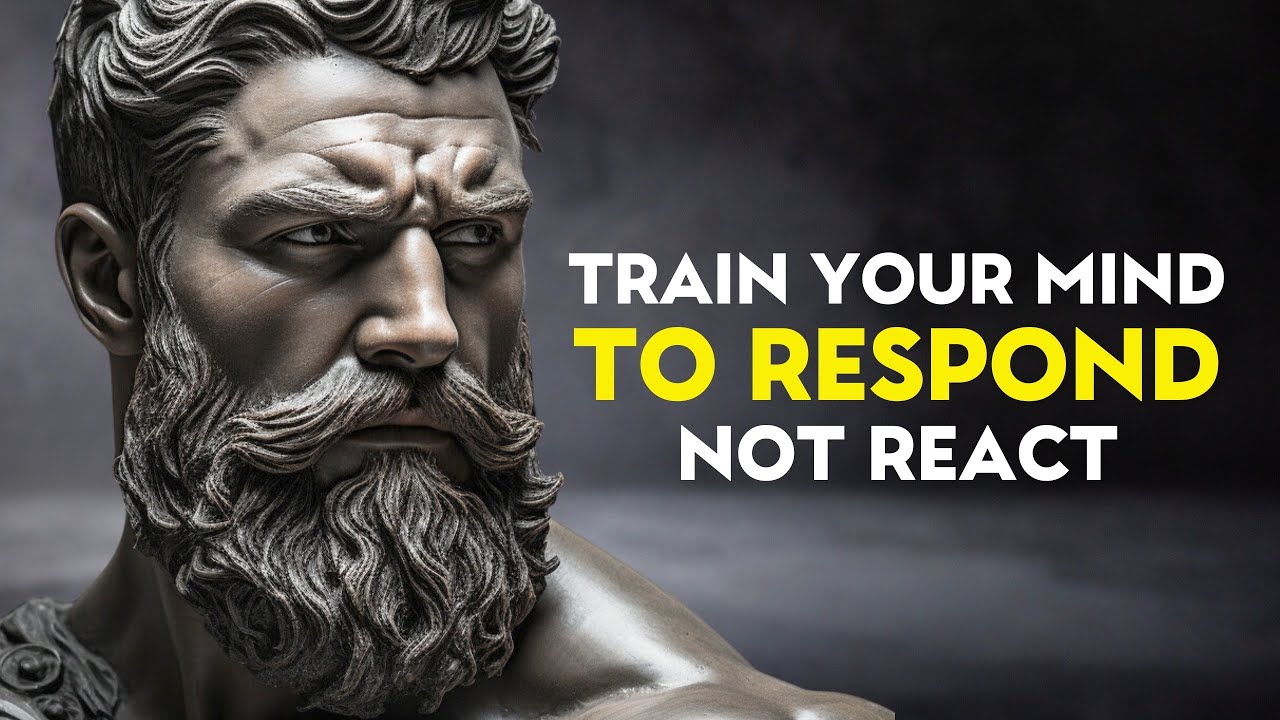
[Music] as Marcus Aurelius once said another person cannot hurt you without your cooperation you are hurt the moment you believe yourself to be in stoicism it's held that when someone makes a rude comment the event itself is objective neither inherently good nor bad it doesn't come with emotional labels attached it's your opinion of the event the meaning you assign to it that either disturbs you or brings you peace that's why Marcus Aurelius also said in his meditations that you always own the option of having no opinion there is never any need to get worked up
or to trouble your soul with things you can't control these things are not asking to be judged by you leave them alone when will you stop choosing to be sad or unhappy the stoics realize that our emotional reality is shaped by our choice influenced by how we view the world around us you can choose to receive your personal setback as an unfair blow a op in a sad and Powerless emotional state or you can view this setback as material uniquely tailored for you to use as a catalyst for growth and learning thereby adopting a more
empowering emotional state this shows that the same event can lead to two entirely different experiences all depending on the individual's mental strength and thus this stoic rule from Marcus Aurelius stands out you have power over your mind not outside events realize this and and you will find strength through this journey we'll explore profound insights from the stoic philosophers who believed that true emotional Mastery was not about suppression but about transformation and understanding lesson one the art of stoic emotional resilience why do we struggle with emotions that often seem to control us more than we control
them the stoics provided a compelling answer it's not the emotions themselves that unsettle us but our judgments about them Marcus Aurelius once remarked you have power over your mind not outside events realize this and you will find strength this foundational idea leads us into the practice of stoic emotional resilience the stoic saw emotions as the product of our judgments which means we have the potential to recalibrate our responses to the world around us by altering our perceptions we can dramatically change our emotional landscape the first step is recognizing that our initial reaction to an event
is not the final word on our emotional response how often do you find yourself reacting instantly to situations without pause reflect on this the stoic practice involves a moment of pause a breath between the event and your reaction allowing you to respond with your rational mind rather than being led by initial impulses imagine navigating life's challenges with a Serene and untroubled heart this isn't an unreachable ideal but but a practical reality accessible through the disciplined practice of stoic thought it requires consistent effort to examine and manage the beliefs that underly your emotional reactions have you
considered What Lies Beneath your emotional responses it's often a deeply ingrained belief or judgment that we can unearth and scrutinize the stoics teach us that by understanding the causes of our emotions we can begin to moderate their effects on us how do you currently deal with negative emotions the stoic method involves a proactive engagement with our feelings through a technique called cognitive distancing viewing our emotions as if from an outsider's perspective which helps in reducing their intensity can you recall a time when a change in perspective transformed a challenging situation for you this is the
essence of stoic emotional resilience transforming challenges into opportunities for growth every emotional experience becomes a lesson in self-awareness and self-improvement what practices can you adopt today to start mastering your emotions begin with the simple yet powerful practice of journaling each day write down instances where your emotions felt overwhelming and explore alternative ways to perceive the situation this helps in developing a more rational and controlled response over time the stoics didn't just philosophize about emotional resilience they lived it by integrating these practices into our daily lives we too can start to experience the profound stability and
contentment that comes from stoic emotional Mastery lesson two cultivating the stoic mindset to manage anger why is anger often considered the most disruptive emotion we experience the stoics regarded anger as a primary obstacle to wisdom senica one of the great stoic thinkers described anger as a temporary Madness that sets the soul on fire and leads to regrettable actions to cultivate a stoic mindset towards anger one must first understand its roots and triggers anger typically arises when we perceive an injustice or when our expectations are not met the stoics teach us to question the validity of
our expectations and the Justice we demand from the World by realigning our expectations with the reality of human nature and the unpredictability of life we reduce the frequency and intensity of anger how can we apply stoic principles to Everyday irritations and griev es one effective method is the premeditation of evils a stoic exercise where one visualizes potential annoyances or misfortunes before they occur this mental rehearsal prepares us to handle them with composure and rationality when they do happen thereby diminishing the impact of anger in moments of anger the stoics recommend a technique called The View
from Above This involves imagining oneself from an external perspective seeing the bigger picture and recognizing the transient nature of the incident this broader perspective helps in diluting the personal sting of the grievance and promotes a calmer response what practical steps can we take to manage anger as it arises immediate actions include deep breathing counting to 10 or removing oneself from the situation momentarily these techniques provide a buffer time to engage our rational mind allowing us to choose our response carefully instead of succumbing to impulsive reactions by integrating these stoic practices into our daily routines we
cultivate a robust emotional defense against anger this proactive approach not only enhances our personal Relationships by reducing conflict but also contributes to our overall well-being and happiness through consistent practice the stoic mindset toward anger can become a natural part of our character empowering us to live with greater peace and resilience lesson three embracing stoic flexibility to overcome fear why do fears so often hold us back from living our fullest lives the stoics understood that fear stems from our perceptions about the unknown and our inability to control or predict outcomes to manage fear effectively we must
adopt stoic flexibility which involves adjusting our attitudes and expectations to align with reality recognizing that many of the things we fear are either not as bad as we imagine or entirely out of our control fear often arises from a perceived threat to our safety Comfort or stability the stoic practice of differentiating between what we can control and what we cannot helps to mitigate irrational fears by focusing our efforts on our own actions and attitudes factors within our control we can remain calm and reasoned in the face of uncertainty how can we train ourselves to be
more accepting of the unpredictable nature of Life a stoic technique involves regularly contemplating the impermanence of situations and our own adaptability this mental exercise reduces the intensity of fear by normalizing change and uncertainty as natural and manageable aspects of Life One practical approach to embracing stoic flexibility is to challenge our fears by gradually exposing ourselves to them in a controlled and rational manner this method known as exposure therapy in modern psychology aligns with stoic principles by allowing to gain confidence and reduce the power that fear holds over us what role does reflection play in overcoming
fear reflecting on past instances where we have successfully managed or overcome fears can reinforce our ability to handle future uncertainties this builds a psychological resilience that is grounded in personal experience and stoic wisdom empowering us to face new challenges with courage and composure by incorporating these stoic strategies into our daily lives we can transform form our relationship with fear instead of being a barrier to our actions fear becomes a signal to engage more deeply with our stoic practices encouraging growth and fortitude through this transformation we not only enhance our own lives but also set an
example for others on how to live boldly and serenely regardless of external circumstances Lesson Four mastering emotional responses with stoic acceptance why do our reactions to events often escalate our emotional turmoil stoicism teaches that it's not the events themselves that disturb us but our responses to them to master our emotional reactions we must cultivate stoic acceptance which involves embracing whatever happens as part of a rational universe and understanding that we can choose our responses thereby mitigating emotional distress stoic acceptance starts with the recognition that many of the things we react to are beyond our control
when we focus our energy on what we can influence our thoughts perceptions and actions we gain a sense of empowerment this shift from external to internal focus is crucial for maintaining emotional stability and is a core principle of stoic philosophy how can we practice stoic acceptance on a daily basis one effective method is the practice of Daily Reflection where we examine our reactions to the day's events each evening this habit helps us identify patterns in our emotional responses and provides insight into how we might alter our reactions for better outcomes in the future stoic philosophers
like epicus emphasize the importance of distinguishing between our sphere of control and what lies outside it by mentally rehearsing this differentiation during calm moments we can prepare ourselves to apply it more effectively when emotional challenges arise this preparation makes it easier to respond with reason rather than impulse what specific strategies can we employ when faced with emotionally charged situations techniques such as taking a moment to pause before reacting deep breathing to reduce physiological arousal and asking ourselves what a stoic philosopher might do in the same situation can all help these strategies create a buffer between
stimulus and response allowing for a more measured and considered approach to emotional events incorporating these practices into our lives leads to a greater Mastery over our emotional reactions over time stoic acceptance becomes not just a practice but a way of life one that enhances our resilience and equips us to face life's challenges with a calm and balanced perspective this transformation is the essence of stoic emotional Mastery providing us with the tools to navigate our lives with Grace and Poise lesson five the stoic path to overcoming Envy why does Envy often consume so much of our
emotional energy Envy arises when we compare our lives unfavorably with those of others feeling deprived or inferior the stoics believed that focusing on external comparisons detracts from personal virtue and inner peace to combat Envy we must refocus on self-improvement and contentment with our own Journey independent of others stoic teachings emphasize the importance of focusing on what is within our control our own thoughts actions and responses by channeling our energy into personal growth rather than external comparisons we reduce feelings of Envy this shift helps us appreciate our unique path and the progress we make along it
fostering a sense of fulfillment that is not reliant on others how can we practically apply stoic principles to diminish the feelings of Envy in our daily lives one effective strategy is to practice gratitude by regularly reflecting on what we are thankful for we shift our Focus from what others have to the abundance in our own lives this practice not only diminishes Envy but also enhances our overall life satisfaction another stoic approach to managing Envy involves reflecting on the impermanence of external goods and Status the stoics remind us that wealth Fame and physical possessions are not
only temporary but also do not lead to true happiness understanding this can lessen the grip that Envy has on our emotions and redirect our Pursuit towards more lasting and fulfilling goals what role does self-awareness play in overcoming Envy being mindful of our triggers for Envy allows us to confront these feelings more rationally when we notice feelings of Envy arising we can engage in stoic reflection to question the validity and usefulness of these emotions this process helps to dissolve Envy's power over us and strengthens our emotional resilience by integrating stoic practices into our emotional toolkit we
can effectively overcome envy and cultivate a life of contentment and gratitude this not only improves our wellbeing being but also deepens our relationships with others as we replace Envy with genuine happiness for their successes the stoic path teaches us that true Joy comes from within and is not diminished by The Fortunes of others lesson six stoic strategies for building patience why is patience often so difficult to cultivate in our fast-paced world the stoics believed that impatience stems from unrealistic expectations about the world and an overestimation of our control control over external events to build patience
we must align our expectations with the reality of Nature and human behavior acknowledging that many outcomes are beyond our Direct Control patience according to stoic philosophy is not merely a virtue in itself but a reflection of deep wisdom and understanding it involves recognizing the natural flow of events and our limited role within them by embracing this perspective we can reduce frustrations and develop a more harmonious relationship with the passage of Time how can we practice stoic patience in everyday interactions one effective approach is to consciously slow down our responses when we feel the urge to
react quickly especially in stressful situations taking a moment to pause can help us respond more thoughtfully and less impulsively this pause allows us to consider the stoic principles of acceptance and understanding before acting another practical method for cultivating patience is to engage in regular meditation or reflection on the impermanence of our frustrations stoics like Marcus Aurelius often wrote about the transient nature of life's difficulties reflecting on this can help us see that many of the things that test our patients are not as significant in the long run as they might seem in the moment what
role does empathy play in developing patients by trying to understand the perspectives and challenges of others we can better appreciate why things may not always go as planned this understanding can extend our patience as we recognize that just like us others are navigating their own difficulties and complexities in life incorporating these stoic strategies into our daily routines can transform how we experience challenges that require patience over time practicing these techniques not only enhances our interactions with others but also contributes to a more peaceful and contented State of Mind by fost fing patience we align more
closely with stoic ideals promoting a life of virtue and Tranquility lesson s harnessing stoic courage in the face of adversity why is courage more than just facing physical challenges stoic philosophy teaches that true courage involves confronting not only physical dangers but also the internal battles against fear doubt and despair this form of courage requires a deep understanding of what is worth fearing and what is not Guided by reason and WI wisdom it involves the Readiness to endure discomfort and uncertainty for the sake of virtue and personal growth stoic courage is about maintaining moral integrity and
purpose even when external circumstances are daunting it's not the absence of fear but the Mastery over it allowing us to act according to our principles regardless of potential consequences this kind of Courage is cultivated through a clear understanding of our own values and the transient nature of life's challenges how how can we apply stoic courage to our everyday problems one practical way is to confront small fears Daily building our resilience and preparing us for larger challenges whether it's speaking up in a meeting or addressing a personal conflict each Act of Courage strengthens our ability to
handle more significant adversities by consistently practicing courage in small doses we develop a habit that fortifies our overall character another key aspect of developing stoic courage is the practice of reflection on past experiences where we have shown bravery or endured hardship by recognizing these moments we reinforce our capability to act courageously in the future this reflection not only boosts our confidence but also provides a framework for understanding how to navigate future obstacles with courage what role does community play in fostering courage stoics believe that courage is not just a personal virtue but also a communal
one by supporting and drawing strength from others who share our values we can bolster our courage this communal aspect helps us to not feel alone in our struggles making it easier to stand firm in our convictions and actions integrating stoic principles into our daily lives allows us to approach challenges with a balanced perspective viewing them as opportunities to demonstrate and deepen our courage this mindset shift from seeing adversity as a threat to viewing it as a chance for growth embodies the essence of stoic courage and transforms how we interact with the world around us lesson
8 the stoic way to cultivate contentment why do we often struggle to find contentment in our lives according to stoic philosophy discontent arises from misplaced desires and unrealistic expectations about what we need to be happy stoics advocate for a life of Simplicity where contentment is derived not from external Acquisitions but from internal virtues by focusing on what is truly essential we can reduce our desires and increase our satisfaction with life contentment and stoicism is achieved by appreciating what we already possess rather than longing for more this requires regular self-reflection to distinguish between wants and needs
emphasizing gratitude for our current Blessings by practicing gratitude we shift our Focus From A deficit mindset which looks at what is missing to an abundance mindset which appreciates what is is present how can we practically Embrace stoic contentment day-to-day one method is to engage in Daily meditations that focus on the impermanence of material possessions and the lasting value of ethical virtues such meditations help us cultivate Detachment from things that are fleeting and invest more deeply in personal growth and moral Excellence another practical step involves limiting exposure to influences that fuel desire and comparison such as
social media or competitive environment ments by creating boundaries around these influences we can maintain a clearer focus on our own values and goals thereby fostering true contentment this practice aligns with the stoic principle of controlling what is within our power our attention and our attitude what role does simplifying Our Lives play in achieving contentment simplification means removing unnecessary distractions and focusing on what truly matters this can include decluttering our physical space streamlining in our daily routines and prioritizing activities that align with our core values simplifying life allows us to breathe easier think clearer and appreciate
the richness of Simple Pleasures by incorporating these stoic practices we can cultivate a life of contentment that is resilient to external pressures and aligned with our deepest values this contentment is not a passive acceptance but an active choice to live a life of Simplicity gratitude and virtue through these steps we embrace the stoic ideal of a fulfilled life grounded in self-sufficiency and Serene acceptance lesson N9 embracing change with stoic adaptability why is adaptability considered a crucial virtue in stoic philosophy stoicism teaches that the only constant in life is change and resisting this natural flow is
a source of unnecessary suffering to live harmoniously we must develop adapt ability an ability to respond to Life's everchanging circumstances with composure and wisdom this stoic virtue helps us remain resilient in the face of life's unpredictability adaptability in stoic terms means having the flexibility to adjust our plans and expectations as situations evolve this requires a deep understanding that our control is limited primarily to our own actions and attitudes not the events that unfold around us by focusing on how we can adapt rather than resist we conserve our emotional energy and maintain our inner peace how
can we cultivate stoic adaptability in our daily lives one effective practice is to regularly remind ourselves of the impermanence of our current circumstances whether we are experiencing success or facing challenges recognizing that these conditions are temporary helps us prepare for change this mindset encourages us not to cling too tightly to any particular State making adaptation smoother when change inevitably comes another key to developing adaptability is to practice scenario planning a method where we consider various possible outcomes and determine how we might respond to each this exercise not only reduces anxiety about the unknown but also
equips us with a flexible plan of action that can be adjusted as needed it is a practical application of the stoic principle of working with what we can control what role does Detachment play in enhancing our adaptability stoics advocate for a healthy sense of Detachment from specific outcomes by not tying our happiness or selfworth to any particular result we can remain more balanced and ready to adapt this Detachment is not indifference but a strategic non-attachment to the uncontrollable elements of Our Lives by embracing these stoic practices we enhance our ability to navigate life's changes with
agility and confidence adaptability as taught by stoicism is not about passivity but active engagement with life in a way that aligns with our core principles and values this approach not only reduces our stress but also increases our Effectiveness in personal and professional Endeavors lesson 10 the stoic practice of self-mastery why is self-mastery a pinnacle of stoic philosophy stoics believe that true power lies in self-control and the Mastery of one's desires and impulses self-mastery is about aligning one's actions with rational thought and virtuous principles thereby achieving freedom from the tyranny of uncontrolled reactions and external influences
this discipline allows individuals to live in accordance with their true nature which is rational and good self-mastery requires a deep commitment to self-awareness by consistently observing our thoughts emotions and behaviors we can identify patterns that are misaligned with our values this ongoing introspection enables us to make conscious adjustments fostering a life that reflects our philosophical beliefs and personal ideals how can we cultivate self-mastery on a daily basis one effective technique is to set daily intentions that focus on virtuous actions and self-discipline whether it's practicing patience generosity or diligence each day offers opportunities to strengthen aspects
of our character these small consistent efforts accumulate over time significantly enhancing our capacity for self-mastery another crucial aspect of developing self-mastery involves the stoic practice of voluntary discomfort by occasionally choosing to forego Pleasures or endure hardships we train ourselves to remain equanimous under less than ideal circumstances this practice not only reduces our dependence on external conditions but also strengthens our resilience and self-control what role does reflection play in a achieving self-mastery regular reflection on our daily experiences and choices allows us to assess our progress and reaffirm our commitment to stoic principles this reflective practice can
be facilitated through journaling meditation or thoughtful discussions with like-minded individuals providing insights that guide further personal development by embracing these stoic strategies we Forge a path toward greater self-mastery which not only enhances our own lives but also positively influences those around us this Pursuit is not about achieving Perfection but about making consistent Earnest efforts to live a more disciplined and virtuous Life as we grow in self-mastery we experience a deeper sense of peace and fulfillment embodying the stoic ideal of living in harmony with one's own nature [Music]