Homeless black girl dances with millionaire's disabled son and a miracle happens. "Look what the wind brought us today," sneered Victoria Whitmore, director of the prestigious Metropolitan Cultural Center, as she watched through the tinted glass window of her office. A young lady doing whatever that is right in our entrance.
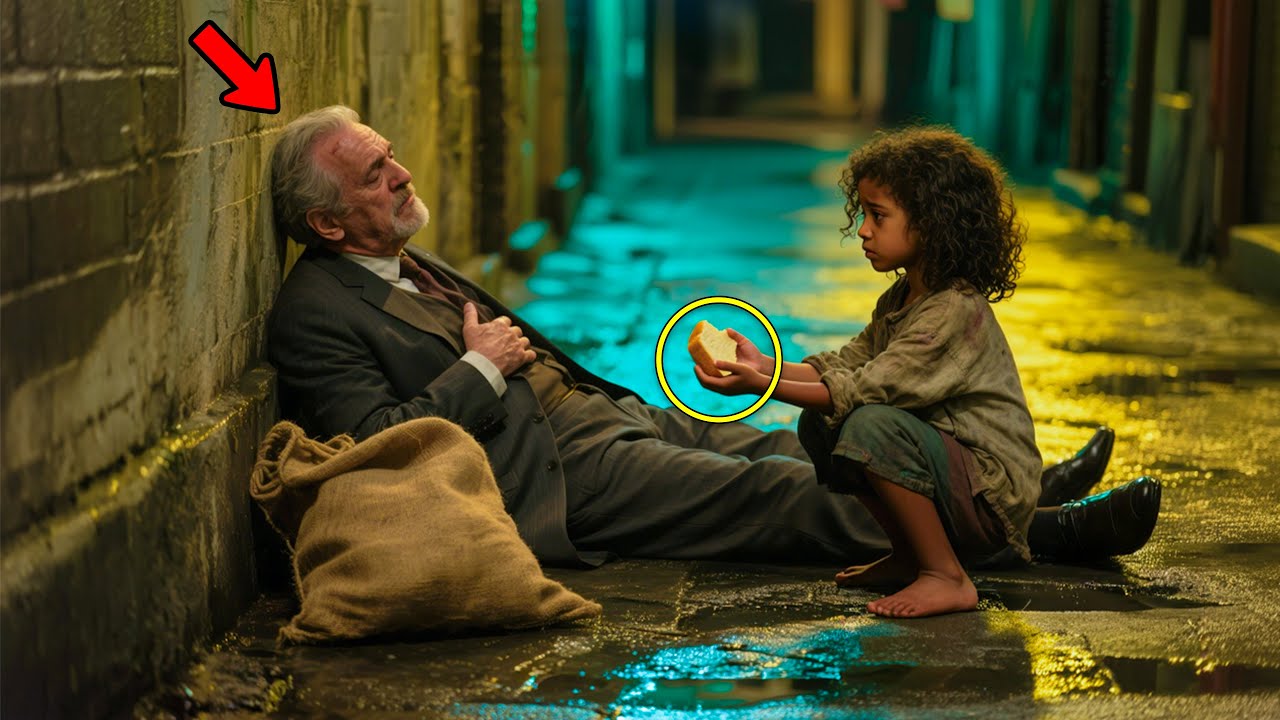
Down below, in the square in front of the city's most elite cultural center, 16-year-old Zara Johnson danced with a grace that seemed to defy all the adversity life had thrown her way. Her fluid, mesmerizing movements drew small crowds of passers by who stopped to watch and drop a few coins in her torn cap on the ground. Zara would never have imagined that at 16 she would be dancing on the streets to survive.
3 years ago, she still dreamed of being accepted into the Prestige Dance Academy, the same institution that now operated inside the building whose security guards were about to expel her. The irony was bitter. She danced better than any paying student inside, but her black skin and humble origins kept her outside the glass.
Call security. Victoria ordered her assistant, adjusting her designer glasses. This performance is scaring away our clientele.
We have the elite charity event tonight, and we can't have this kind of atmosphere contaminating our environment. Victoria had built her career by keeping undesirable people away from her events. For her, art was a matter of pedigree and bank account, not talent.
The sight of that black girl dancing with impeccable technique in front of her establishment was a personal affront. Three burly security guards emerged from the building, walking purposefully toward the girl. "Hey, you!
" shouted the largest of them. "Stop that right now. This is private property.
I'm on the public sidewalk," Zara replied, stopping her dancing but maintaining her dignity. She had learned to know her rights after so many confrontations on the streets. I'm not doing anything wrong.
You're disturbing our customers, retorted the security guard, deliberately kicking her cap with the coins, scattering the change on the ground. Get out of here before we call the police. It was at that moment that a luxury car pulled up across the street.
James Patterson, a real estate mogul, was taking his 12-year-old son, Marcus, to another physical therapy session. Marcus, who was born with cerebral palsy, had lost almost all motivation for treatment in recent months. "Dad, stop the car," Marcus asked, suddenly excited for the first time in weeks, watching the scene through the window.
"That girl. " She dances like the angel's mom used to describe before she left. James stopped the car and they both watched Zara pick up her coins from the ground with a dignity that impressed even the hardened businessman.
He had spent the last two years trying to make sense of life after losing his wife in an accident while caring for Marcus and his growing depression on his own. "Why are they being cruel to her, Dad? " asked Marcus, his small hands pressed against the glass.
Despite his physical limitations, the boy had a keen emotional sensitivity that often surprised adults. But what really caught Marcus' attention was how Zara stood up, looked directly at the security guards and whispered something that made them all recoil slightly as if they had heard something that deeply disturbed them. What did she say?
Marcus muttered intrigued. Zara had whispered, "You will remember me. One day you will wish you had treated me with respect.
" But there was something else in her eyes. A determination that suggested she wasn't just making an empty threat, but a calculated promise. As she walked away, carrying her few belongings, her eyes briefly met Marcus' through the car window.
Something indefinable passed between them, a connection that neither of them could explain, but that they both felt deeply. It was as if they recognized each other as souls wounded by prejudice and abandonment. Marcus had spent his life being looked at with pity or discomfort because of his condition.
Zara had spent her life being looked at with suspicion or disdain because of her color and situation. In that brief moment, they both saw in each other something they rarely found. Genuine acceptance.
Victoria Whitmore, watching the whole scene from her window, smiled with satisfaction. "Problem solved," she muttered to herself, unaware that she had just made the biggest mistake of her career. "She couldn't imagine that in a few weeks, the same girl she had just humiliated would be at the center of a turnaround that would shake the foundations of her elite institution.
" There, in that moment of apparent defeat, Zara maintained a serene gaze that revealed something disturbing. She didn't seem surprised by the humiliation. It was as if she already knew something like this would happen and was somehow prepared for it.
More than that, there was a calculating quality to her calmness that suggested this wasn't just another random humiliation, but a piece of a much larger puzzle. As she walked away, Zara ran her hand over the cell phone in her pocket, a device that seemed surprisingly sophisticated for someone in her situation. For a brief second, her fingers hovered over the screen as if she were about to make an important call.
But then she shook her head and put the phone away. "Not yet," she whispered to herself. "If this story of prejudice and determination touched your heart, don't forget to subscribe to the channel because what you're about to discover about unlikely connections and the transformative power of art will completely change your perspective on who really deserves to be on the stage of life.
" Three days had passed since the humiliation, but James Patterson couldn't forget that scene. "Marcus had asked about the dancing girl every day, and the businessman decided to follow his paternal instinct. " "Mr Patterson, this is crazy," argued Harrison, his assistant, as they searched for Zara in the streets of downtown.
"You don't know this girl. " But James had made up his mind. After two hours of searching, they found Zara dancing in another square.
Marcus shouted with joy when he saw her and James stopped the car without hesitation. You're the dancing girl, James said, approaching her with Marcus in his wheelchair. My son couldn't stop talking about you.
Zara stopped initially suspicious. But something in James sincere gaze and Marcus radiant smile made her relax. "Your father seems nice," she said, addressing Marcus.
"Unlike those mean men in the fancy building. " "They were cruel to you," Marcus replied. his voice laden with impressive maturity.
Daddy was very angry. James made an unexpected proposal. How about dinner at our house tonight?
Marcus would love to watch you dance in our garden. During dinner at the mansion, Marcus was completely enchanted by Zara, who adapted her movements so that he could participate from his chair. James watched in awe as his son laughed in a way he hadn't heard since his wife's death.
But it was during a private conversation that Zara revealed more about herself. Where did you learn to dance like that? James asked.
My mother was a ballerina, Zara replied. A shadow passing over her eyes. She got a scholarship to the Prestige Academy in the same building where I was expelled.
But when they found out she was pregnant with me, people like Victoria Whitmore don't believe black girls deserve second chances. James felt a tightness in his chest. Victoria Whitmore, the head mistress.
The very same. She destroyed my mother's dreams before I was even born. My mother died when I was 13, still blaming herself for not being good enough.
It was at that moment that James began to understand the calculated serenity in Zara's eyes. This was not just a teenager on the streets. She was someone with a specific score to settle.
Meanwhile, Victoria Whitmore was implementing security measures to keep undesirable elements away from her institution. She had hired additional security guards and installed facial recognition cameras programmed to identify Zara. We cannot allow this kind of situation to happen again.
Victoria declared, "Our reputation depends on maintaining certain standards. " "What Victoria didn't know was that her measures were being monitored. " "Zara had spent 3 years not only surviving, but learning skills that a girl in her situation shouldn't have.
" Uncle Marcus said, "You're very smart. " Little Marcus commented during a regular visit to the mansion. He said, "You have the same name as a warrior prince.
" Zara smiled mysteriously. "Your uncle is right, and warriors always have a plan. " Then she showed James something shocking.
A folder containing documents, photographs, and recordings about Victoria Whitmore collected over the past 2 years. "How did you get access to all this? " James asked, leafing through suspicious contracts and questionable financial records.
Invisible people see and hear a lot, Zara replied cryptically. And some are very good with computers. The truth was more impressive.
Zara had connected with activist hackers who specialized in exposing social injustices. Her ability to move unnoticed had made her a valuable source on discriminatory institutions. All the while, Marcus was making extraordinary progress.
The joy of his dance sessions with Zara translated into motor improvements that impressed the doctors. It's as if she's a natural therapist. Dr Williams remarked, "The results are almost miraculous.
" While everyone celebrated Marcus' progress, Zara was completing something even bigger. She had discovered that Victoria had not only destroyed her mother's dreams, but had systematically denied opportunities to dozens of talented young people, keeping her institution an exclusive club for the white elite. And now she had the proof.
More than that, she had a plan. For a moment, when Victoria increased security by actively pursuing any troublemakers, everyone thought Zara would be forced to back down, just another young black woman knowing her place. But anyone watching closely would have noticed that Victoria's pressure wasn't driving Zara away.
In fact, it was providing exactly the final evidence of systematic discrimination. She needed to execute something that would change everything forever. The night of the elite charity event had arrived.
Victoria Whitmore circulated through the main hall of the Metropolitan Cultural Center, receiving compliments from millionaire donors and influential politicians. Her years of work building that elite network of contacts would finally yield the largest donation in the institution's history. "We are about to announce a historic donation," Victoria declared into the microphone, her smile radiating confidence.
"But first, I would like to recognize our top donor tonight, Mr James Patterson. James took the stage, pushing aside the chair Marcus had insisted on pulling up for him. The audience applauded politely, unaware of what was about to happen.
"Thank you, Victoria," James began, his voice echoing throughout the hall. "Before I talk about donations, I'd like to share a story about true talent versus systematic discrimination. " "Victoria felt a chill run down her spine.
Something about James tone wasn't right. A few weeks ago, my son and I witnessed an extraordinary young woman being humiliated by the security guards at this very institution. James continued as the room fell silent.
A 16-year-old black girl whose only crime was dancing with technical excellence on a public sidewalk. Victoria's face drained of color. She tried to step closer to the microphone, but James stopped her with a stern look.
But the story gets even more interesting," James continued, "when we discover that this same young woman is the daughter of Sarah Johnson, a brilliant dancer who had her scholarship canled 17 years ago by then assistant Victoria Whitmore because she was pregnant. " A murmur ran through the audience. Victoria tried to interrupt, "James, this is inappropriate for inappropriate.
" James laughed bitterly. "You know what's inappropriate? This.
" A giant screen descended behind the stage displaying documents, emails, and recordings. The first image was a letter from 2007, signed by Victoria, cancelling Sarah Johnson scholarship with a justification. Pregnant women do not fit the profile of excellence that our institution represents.
The audience was shocked. Victoria tried to defend herself. That was a long time ago.
Policies have changed. They've changed. James pressed a remote control.
The screen now showed a series of recent letters, all signed by Victoria, systematically denying scholarships to young black and Latino students, always with vague justifications about cultural suitability and institutional standards. In the last 5 years, James continued, Victoria Whitmore has denied 47 scholarships to qualified black youth while approving white students with lower grades. The most devastating evidence came next.
An audio recording of Victoria talking to her board where she clearly said, "We need to maintain our standards. We can't let this institution become a social project for inadequate people. " The hall erupted in indignant murmurss.
Journalists present began frantically taking notes. "Marcus from his wheelchair, grabbed the microphone. Zara taught me that dance has no color.
She made me walk again, but you kicked her out because she's black. The brutal simplicity of a child's words hit the audience like a punch. Victoria, desperate, tried to justify herself.
Those recordings were taken out of context. I have dedicated my life to art. To art.
Zara's voice echoed through the hall. She entered through the main door wearing an elegant dress that James had arranged, accompanied by 10 young black and Latino people. All former candidates rejected by Victoria.
"You've dedicated your life to keeping art away from people like us," said Zara, walking toward the stage with a dignity that impressed even the most skeptical. "The final revelation was devastating. The screen showed financial documents proving that Victoria had embezzled funds intended for diversity programs into her personal account, accumulating more than $500,000 over 5 years.
" Not only did you systematically discriminate, James declared, but you stole money intended for the very communities you excluded. Victoria collapsed into a chair, realizing that her career and reputation were completely destroyed. The audience, which minutes earlier had applauded her, now looked at her with contempt and revulsion.
For 17 years, you destroyed dreams, said Zara, finally taking the stage. My mother died believing she wasn't good enough. How many other mothers died carrying that guilt?
The media was already broadcasting live. # Victoria Whitmore racist became a worldwide trending topic in a matter of minutes. I could have taken cruel revenge, Zara concluded.
But I chose to expose the truth and create real opportunities. Starting today, this center will have new owners and a new mission, true art for all. James announced that he was buying the Metropolitan Cultural Center and transforming it into the Sarah Johnson Institute for Inclusive Arts with Zara as its youngest artistic director in history.
Victoria was escorted out by the same security guards who had humiliated Zara weeks earlier. Her last glimpse was of Zara dancing on stage, applauded by a standing ovation from an audience that finally understood what true excellence was. As the revelations piled up and the masks fell away, a new reality took shape in the hall.
Like a symphony finally finding its harmony after years of discordant notes, proving that true greatness knows no color, social class, or limitations imposed by those who fear authentic talent. 6 months after the night that destroyed Victoria Whitmore, Zara Johnson stood on the main stage of the now renamed Sarah Johnson Institute for Inclusive Arts, directing a rehearsal of 50 young people from all ethnicities and social classes. Her full scholarship program had attracted talent from across the country, transforming the institution into a global benchmark for artistic inclusion.
Once more with feelings, Zara instructed, her voice echoing through the same room where she had been humiliated. Art knows no boundaries. Marcus Patterson, now 13, sat in the front row as always, no longer in a wheelchair, but supported by special crutches.
His progress had been so extraordinary that medical universities were studying his case as a revolution in therapies based on emotional connection and art therapy. Zara, he called during a pause. My father said you received another proposal to give international lectures.
She smiled. In 6 months, she had become one of the most respected figures in the fight against institutional racism. Harvard, Oxford, and the Sorbon were vying for her lectures.
The documentary, The Dancer Who Changed Everything, was up for an Oscar and had been sold to 47 countries. Across town, Victoria Whitmore opened another rejection letter for a job as a receptionist at a neighborhood dance school. No cultural, educational, or even commercial institution wanted to associate its name with hers after the scandal.
Her 30-year career had been wiped out in a single night, and her resume had become radioactive in the job market. The one-bedroom apartment she now lived in, a pathetic fraction of the size of her former mansion, was all she had left after paying the million-dollar court fines and returning every penny of the embezzled money. Even her family had distanced themselves, ashamed by the public exposure.
Proven systematic discrimination and illicit enrichment, the judge had declared during the trial that followed the public exposure. Not just a civil matter, but a criminal one. Embezzlement of public funds intended for social inclusion is a federal crime with the aggravating factor of racial motivation.
Victoria had lost literally everything. Her job, her reputation, her home, her relationships, her bank account, and even the right to work in any capacity related to education or culture for the next 10 years. Even her former colleagues in the cultural elite crossed the street to avoid her, pretending not to recognize her.
James Patterson watched from the window of his new office at the institute as Zara led a class of 30 children with special needs. The program she had created, inspired by Marcus, already served 400 children free of charge and had a waiting list from other states. Mr Patterson, said Harrison, his assistant, the Netflix producer is here to discuss the series based on your story.
Tell them that director Zara is the one who should decide on the rights. James replied, smiling. This has always been her story, not mine.
I was just lucky to be in the right place to help. During a live television interview on CNN, watched by 12 million people, Zara was asked about her meteoric transformation from homeless teenager to director of one of the world's most respected and influential cultural institutions. I could have responded to prejudice with more prejudice, she explained with a serenity that belied her years.
I could have retaliated with cruelty, personal destruction, or even violence. But I realized that the best revenge isn't to destroy those who hurt you. It's to build something so great and transformative that they realize exactly how much they lost by underestimating you.
The reporter asked specifically about Victoria Whitmore and whether Zara felt satisfaction at her downfall. She tried to erase me from history, but she ended up being erased by the very history she tried to control, Zara replied without any bitterness in her voice. I feel sorry for her because she lived her whole life believing she was worth more than other people simply because she was born with privileges.
Now she understands too late that human value cannot be bought or inherited. Marcus, who participated in the interview alongside Zara, added with his precocious wisdom that always surprised adults. Zara taught me that when someone treats you badly, you have two fundamental choices.
To become like them or to become infinitely better. She not only chose to be better, she redefined the concept of excellence. The program ended with inspiring images of hundreds of young black, Latino, Asian, and disabled people who now had opportunities that Victoria had systematically denied them for decades.
Many were already being accepted into Giuliard, the Royal Academy of Music, and other world-renowned institutions that were once inaccessible to people like them. The camera focused on a giant mural at the entrance to the institute. A photo of Zara's mother, Sarah Johnson, with the words, "Talent knows no color, class, or limitations, only hearts open to recognize it.
" That night, in her small, gloomy apartment, Victoria watched the interview alone, drinking cheap wine straight from the bottle. For a few moments, she saw clearly what could have been if she had chosen to use her privileged position to include rather than exclude, to build bridges rather than walls. But it was too late.
Her revenge had turned against her in an irreversible way. Zara, on the other hand, was in her new home, a modest but cozy property that James had helped her buy, planning with him and Marcus to expand the institute to Los Angeles, Chicago, and Atlanta. At 17, she had turned her pain into purpose, her exclusion into radical inclusion, her humiliation into inspiration for tens of thousands of young people around the world.
"Do you know what Victoria's biggest mistake was? " Zara asked as they reviewed the contracts for the institute's new branches. What was it?
James and Marcus asked simultaneously, always curious about the young woman's profound reflections. She thought she knew me for what I appeared to be on the surface. She never imagined that a homeless black girl could have the intelligence, the connections, and above all, the emotional strength necessary to defeat her at her own game and still turn that victory into something that would benefit thousands of other people like me.
Zara's true revenge had not been to humiliate Victoria publicly, but to prove definitively and irrefutably that talent, dignity, and human value do not depend on color, social class, family background, or bank account. She had transformed the cultural center that had brutally rejected her into the most powerful and respected symbol of inclusion, democratic artistic excellence, and social justice in the Western Hemisphere. 3 years later, Victoria Whitmore was still living alone, working part-time in a department store, while Zara was on the cover of Time magazine as one of the 100 most influential people in the world.
The Institute had expanded to 12 cities and had already transformed the lives of more than 10,000 young people. Victoria tried to erase Zara Johnson from history, but ended up being completely erased by her. Zara learned that the best revenge is not to repay the harm done to you with more harm.
It is to achieve such extraordinary and transformative success that your enemies realize that by underestimating you and trying to destroy you, they lost forever the chance to be on the right side of history and humanity. If this story of transformation, overcoming adversity, and true justice touched your heart and showed you that our real strength does not come from where we are born, but from how we choose to respond when the world tries to diminish us. Subscribe to the channel for more stories that prove that the best of us emerges exactly when others try to bring out the worst.