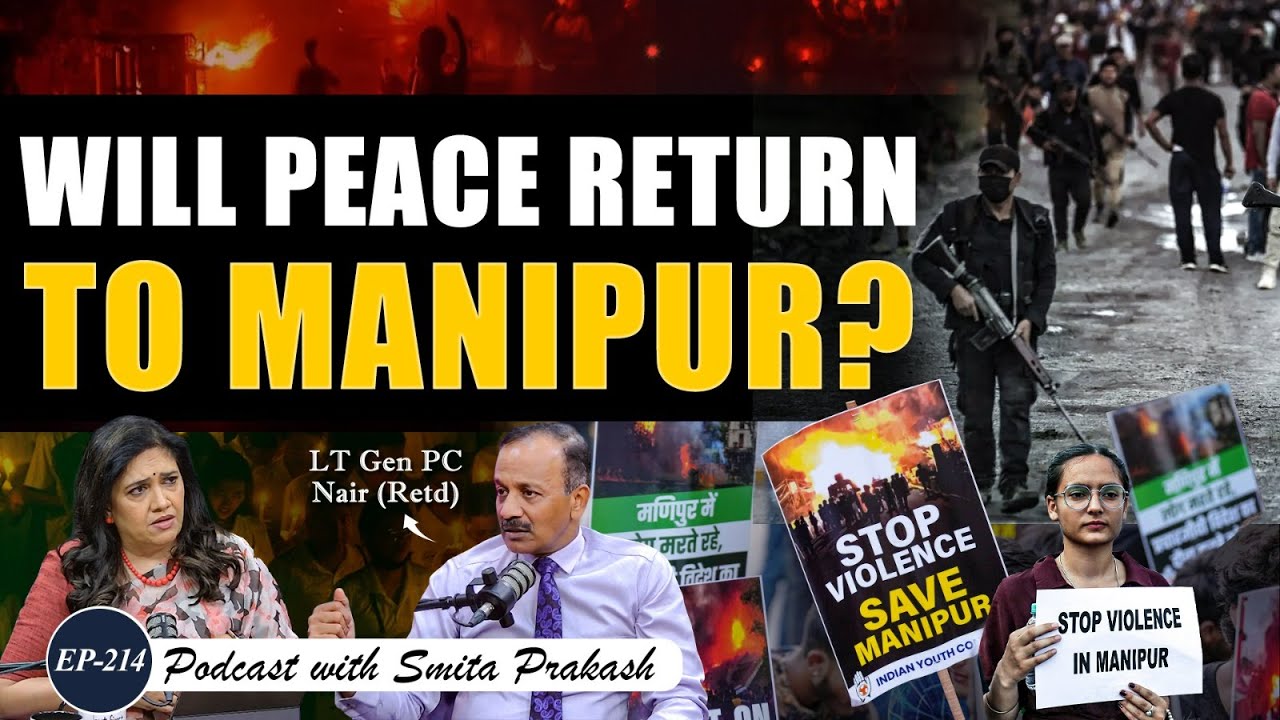
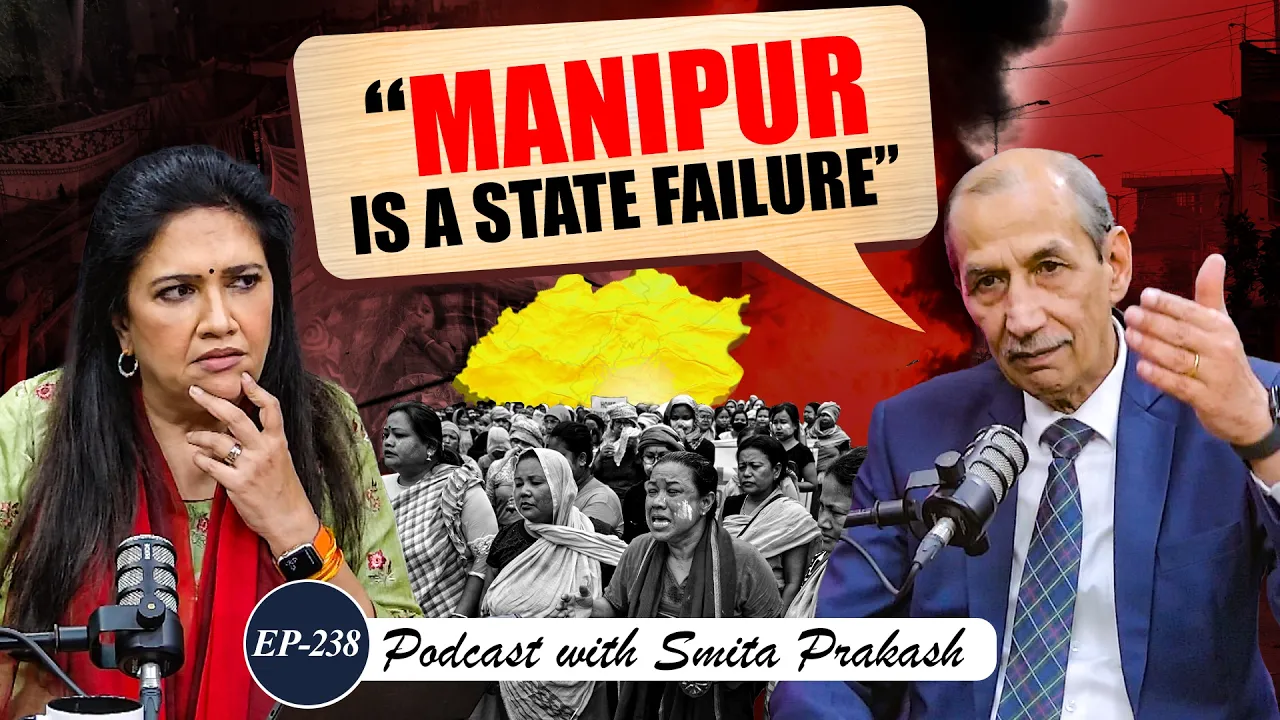
Manipur uh what is your reading of the current situation there I terming this as a failure of the state and I'm using these words very responsi this open carrying of weapons how does the security Force deal with it armed groups openly challenging there have been cases of actually pointing weapons at Assam rifle people it has never happened there is a massive recruitment going on both sides among the cookies boys as young as 13 14 are getting recruited the reason they giving is if these young boys get arrested he because he's a minor he won't be
jailed for a very long time the general feeling has been that forces are deployed in a uh manner in which like almost peacekeeping Mission types they're not taking action the military and the security forces will behave as they are directed to by the government Jammu Kashmir backto back attacks migrants being Attacked um civilians being attacked attack on armed forces you can't have such numbers infiltrating uh without the Pakistan Army knowing about it in the jamu region we found uh these terrorist groups surviving for months how would they have survived without local support the surgical strike
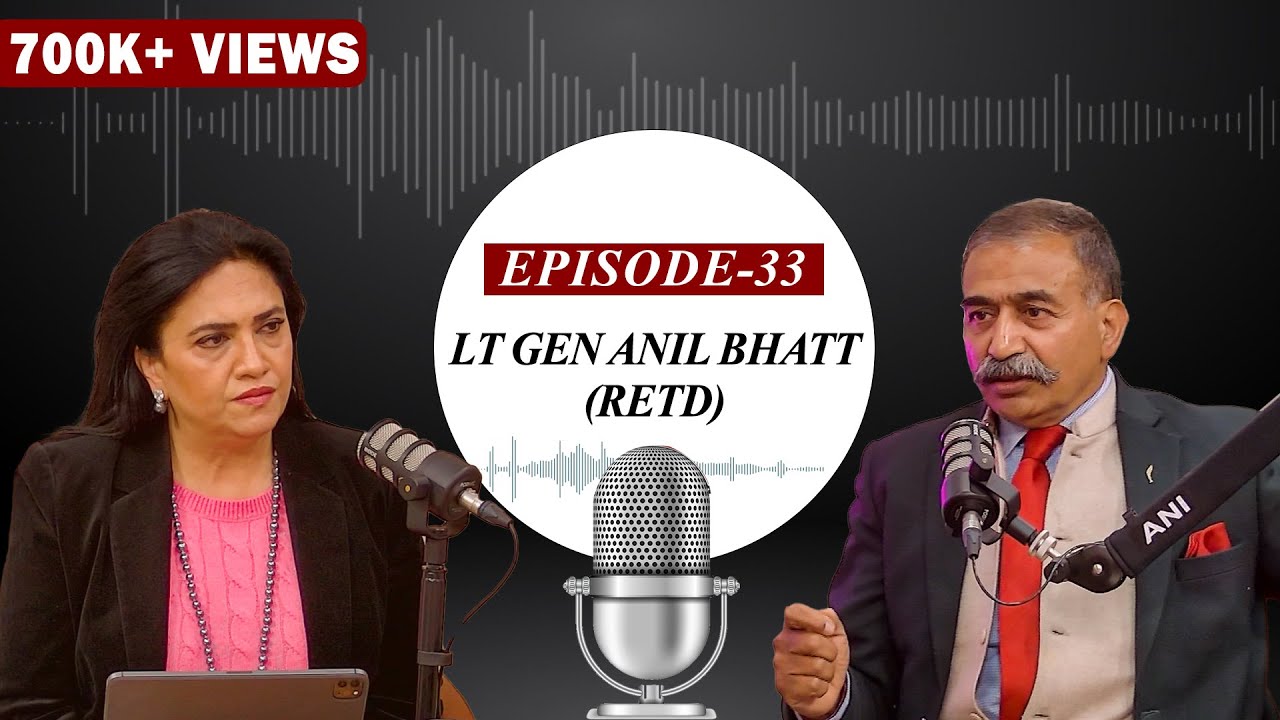
was meant to send a strong message that India will respond to Major Terror attacks but it did Damage their morale to a large extent yes oh yes it did Namaste J hind you're watching or listening to another edition of the Ani podcast with Smita prakash thank you for liking and subscribing to the channel and sharing these conversations with people who you think will enjoy listening to them or watching them today in the studio I have with me leant General dendra Singh Huda from 2012 to 2016 leant General Huda was stationed in Jammu and Kashmir first
as a core commander and then as an army commander of the northern command in this assignment he handled numerous strategic challenges along the borders with both Pakistan and China he was the Army Commander during the chumar incident along the Lac in 2014 on the sidelines of President xi's visit to Amad another significant development was the launch of the surgical strikes into Pakistan in September 2016 he retired in November 2016 after 40 years of service in the Indian army I'm joined in this conversation by my colleague Ajit dub welcome to the podcast Le General hura uh
very honored that you're here Ajit and I have a whole range of topics which we want to talk to you about of course you're a prolific writer also so we've been reading your columns uh but let's begin with uh the Hot Topic right now as far as the security situation is concerned of course we'll talk about Kashmir we'll talk about uh the situation on the India ch our boundary but let's begin with Manipur uh what is your reading of the current situation there uh so at the outset thanks for inviting me to the program great
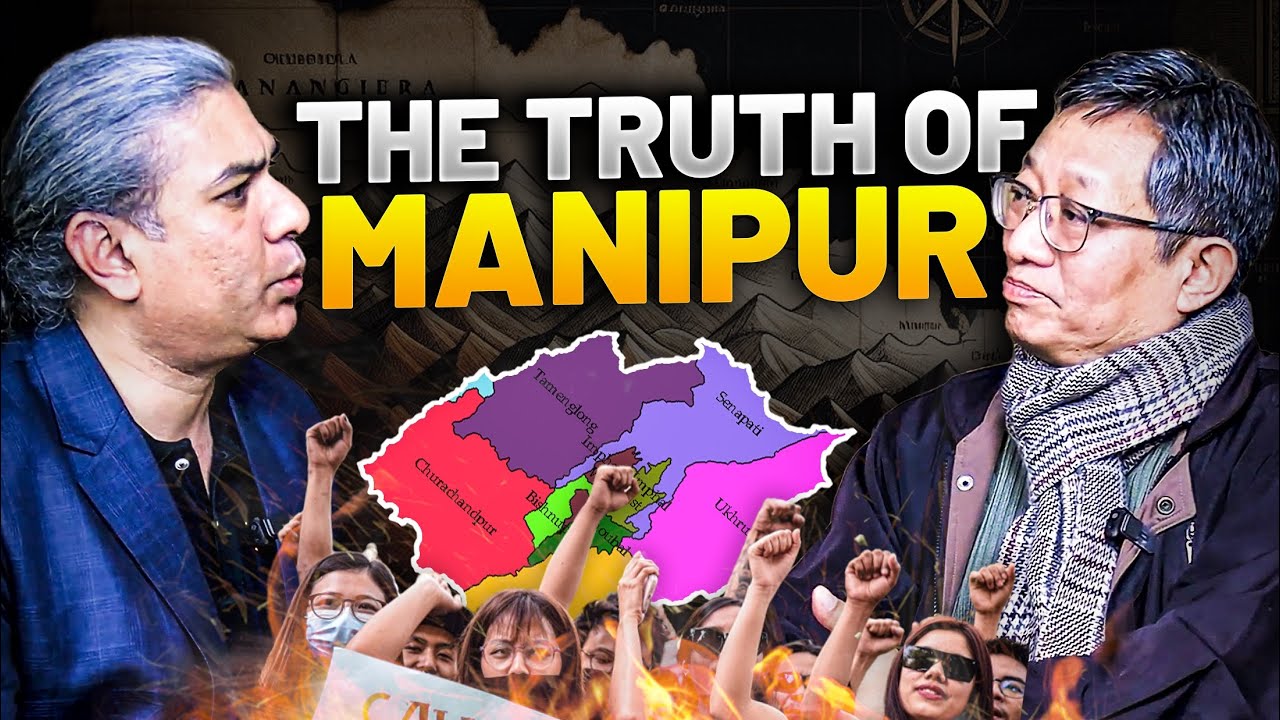
pleasure to be here uh talking of Manipur if I can describe it in sort of one line um I think it's a state failure because what we are seeing today is the fact that Law and Order is not in The state's control uh you have armed groups onard both sides the uh the valley based uh MTI groups have their own armed uh groups and so have the cookies uh which they're calling Village defense volunteers uh both sides don't have complete Trust on government forces so the metis say that the Assam rifles are aligned towards the
cookies the cookies say no no the Assam rifle is neutral but it's the central forces and the Manipur Police uh which is against us so what we are seeing actually is that uh Law and Order has literally passed in the hands of uh radical groups on on both sides and so you have uh the people and the population depending more on these armed groups rather than on state forces that I think to me is the Crux of the problem the fact that so many weapons were looted and have not yet been recovered and what we
are seeing is a sort of Almost a complete breakdown of confidence uh not only between the mighties and the cookies but also breakdown of confidence uh among the cookie groups on the government that you know we can't rely on the government so that in a nutshell is sort of the chaotic situation which is there in Manipur today so you were uh you were a major general when uh in Manipur uh and you were responsible for counter Insurgency operations uh in the state And even in uh even in South Assam region um now there are several
layers to the conflict which have been going on uh it's also the the collective fear of each of these ethnic communities and uh their loss of faith in the state or in the uh in the security apparatus to control the situation out there and that results in them depending upon their own uh groups to provide security what is the way out out of this when you say there's a state failure uh is it because The they are not uh they don't have the ability to control the ground situation uh first area domination that is the
major thing that needs to be done how did you do it then and what is lacking now and and Sir to add to it like uh when you were commanding or uh 3 4 years or five years after that uh did you ever foresee that uh what like was this ethnic divide a challenge at that time or that time as well or is it something new that has Happened in the last 5 six years no look uh the fundamental ethnic divide has always existed in in Manipur because you have these three groups thees Val and
nagas cookies and nagas and each have uh you know sort of their own issues the Maes feel that despite them being in majority they completely cooped up within the valley they can't buy land in the Hills there is no reservation for Ma so jobs are all going to the tribals they have these issues uh nagas you know Have this whole idea that nagalim should be a greater state which will Encompass parts of Manipur something that the mtis are deadly against that you know the Integrity of the state cannot be touched uh and the cookies have
always been sort of sandwiched between the uh between the nagas and the and the mes so each the ethnic divide has always been there I think uh there was greater sensitivity to Handling uh demands of of different tribes and different communities so what has happened I think in the last four five years is that uh the cookies feel rightly or wrongly that they are being targeted specifically by a chief Minister who pandering to the to the majority Community which is the m which is the Maes and which is why this whole sense that you know
he has been said talking about them That a lot of infiltration has taken place from Myanmar the fact that kookis are indulging in uh illegal poppy cultivation they have expanded their Villages so I I think there was a this as they say a breakdown of communication confidence uh which required a sort of a spark which was given by the high court ruling which said give reservation also to the to the mes and that sparked of this this Violence but as I said what has happened is uh again the ability of the state to control and
it's not as if there aren't enough uh Security Forces it is just that uh the confidence if the people don't have confidence in a particular uh group so you are finding for example uh women groups in uh Manipur stopping the Army and the Assam rifles from carrying out their duties that is somewhat new I recall when I was there so we had this incident of mua wanting to come to Manipur and that spared of massive massive protests yes Isaac Mo yeah the NC yeah yeah yeah he wanted to he wanted to come to Manipur and
post Accord or no yeah yeah this is I'm talking 2010 I think it was and uh Manipur State said we will not permit him and so there was firing at the Manipur nagaland border and that led to massive protest and blockade of the state for months by the Naga groups uh but the Army had complete sort Of freedom of movement so I recall talking to both the Naga groups and the mtis saying that look we are here to do our duty and let us do that uh they were blockading uh civil trucks uh Etc they
were blockading supplies from coming in something similar to what is also happening now uh but our you know sort of understanding with all these groups was that look the Army has some its work to do and you cannot stop us from moving Around so that freedom of movement you know continued at that time uh I think also them at least the security forces the military had full confidence among all the groups among all the tribal communities nobody thought you know there is favoritism or leaning towards one side which is something which is actually dangerous now
because people lose faith in we have now seen not only I mean political leaders in Manipur asking for Assam Rifles to be removed I mean that that's that kind of situation has not existed people uh say this that uh and and I don't mean it disrespectfully towards any uh any army person deployed out there but they say that you know you know this kind of thing happens when um for example if you were to put the uh to put any other regiment out there mhm and if they don't have ethnic Loyalties it doesn't matter you
know you know they have got nothing to do with them but when you're talking about ass Sam rifles and you're talking you know then what happens is these loyalties come into you know are you from here do those um things matter on the ground not really and see Assam rifle earlier used to be composed of people from the Northeast but for many years it's been Yeah it's all it's all India recruitment is is taking place in my own experience I have not seen uh you know this kind of feeling or sense that uh local communities
or if there are members of the military belonging to the local community that they will behave in a in in some different way I mean forget Northeast look at Jammu and Kashmir we have territorial Army battalions where 100% recruitment is taking place from the locals locals and we have not seen Any issues among the territorial army or people saying that you know because of our ethnicity or clan we are going to behave in a particular way I think the level of training that happens the discipline uh the kind of ethos that is created in in
in the military these things are these things are kept very very far away okay so the uh the other problem which I have uh Ajit you can elaborate on this is this open carrying of weapons uh that happens in Uh in in Manipur it there is attempts are made uh you even mentioned about uh recovery of arms have not happened but this open carrying of weapons especially in front of the security forces when they come straight away uh when they are uh carrying weapons how how do how does the security deal with it uh did
it happen during your time when you were posted there and are you watching this increase with anxiety now absolute anxiety Smith it it has never Happened U armed groups openly challenging there have been cases of groups like I think arambai Tang actually pointing weapons at Assam rifle people yeah uh openly carrying weapons I mean this is this is not happened which is why I'm saying uh I am terming this as a as a failure of the state and I'm using these words very responsibly the state has responsibility for Law and Order you cannot have armed
groups Saying we are policing our communities openly then what is the police meant to do what is uh this is not something that that you can uh delegate to to Armed groups it's happening on both sides uh the cookies villagers are saying oh these are the people who are protecting us which includes some people who are part of uh Earth while groups which are now in suspension of operation there is uh there is uh Massive recruitment going on on both sides I was reading somewhere that among the cookies boys as young as 13 14 are
getting recruited and the reason Intel is available yeah yeah and the reason they giving is if these young boys get arrested he because he's a minor he won't be jailed for a very long time okay I mean so uh so I mean really uh and I I don't see if Uh the state takes a decision that these groups will be disarmed and these armed uh CER will be s disbanded or if you were the military adviser to the home Ministry what would your advice be this would be my advice I mean you need to you
need to reestablish Law and Order and control over the state yourself and how you have enough Security Forces I mean you think deployment is enough deployment plus the fact that if you Have to take some hard action then you take hard action okay I'm I'm saying I mean can you imagine this happening anywhere else this has been going on since 2023 uh if hard action uh had to be taken it could have been taken is what you're saying uh but now with uh and now let me just go a little political on this with depleted
numbers uh in the loksabha do you think that uh the government uh and subsequent elections Happening in jnk and the terror uh increase in Terror attacks in jnk to uh do you think that the government uh is playing a waight and watch or a game of attrition in Manipur no I I don't think the game of attrition is going to help in any way it is only going to sharpen the divide that is already existing and you're going to make finding Solutions more and more difficult so whether whether depleted numbers or Not this this is
a matter of National Security you you see let's let's look at uh Manipur and then see it's having an impact on mizoram you now have the NSC and I am saying uh we want an independent Constitution flag that was promised to us and the 2015 Accord if it is not exercise then we will go back and pick up arms you have a problem in Myanmar which is happening so I mean let's not look at This in isolation we've also had in the past uh money put based groups and their leadership uh being based in Bangladesh
uh and now you have a regime there now now you have a regime there yeah so I think it's important and quick for example U the UNF XLF Chief arim Megan he was picked up from Bangladesh he was based in Bangladesh that's not going to happen anymore that kind of cooperation yeah so I'm saying so you Know look at the whole region uh and see what what churn is going on and let's not look at Manipur uh purely in isolation which is why I'm saying I think it's it's best that we get the situation there
under control uh will it will there be some cost yes will will it be tough yes it will be the way these groups have got encouraged now but it's not as if you cannot reestablish the authority of the state I mean the Indian state has enough Resources to be to do that the general feeling in last year or 15 months has been that forces are deployed in a uh manner in which like almost peacekeeping Mission types they're not taking action and uh with the situation with regime change in Bangladesh situations escalating possibility of situation escalating
in nagaland mizoram and other areas in that part you think now it's it's time for the forces also to for the government to allow the forces to get Out of this peacekeeping mode and then get into action take action absolutely look the the military and the security forces will behave as they are directed to by the government because this is not an external role you're not fighting an external enemy so whenever you are in internal security duties you are completely completely Guided by what the government wants so uh to me it is apparent that the
government has in some Ways been asking people to go easy or not do what they so that's what's happening you you also had a very unique situation of uh the arambai tangol summoning all uh members ml uh May mlas uh getting them into a meeting and all of them had to kind of situation from a government situation yeah yeah um so let's move from uh the Northeast and uh Ajit and I would like to know uh your views on the latest disengagement uh agreement between China And India but before that for our viewers uh for
those who haven't followed the developments the two countries have agreed to conduct coordinated patrols along the line of actual control in eastern ladak each side that is the Indian army and the Chinese Army will conduct one Patrol per week it's hoped that this would lead to deescalation and reduction in tensions which has been going on for 4 years military tensions that got heightened With a violent clash in the galwan valley in 2020 so how do you see this uh agreement is it a tactical move or is it a genuine attempt by both sides to deescalate
the situation so I think SMI it's a positive development let me put it uh this way so uh we had at some arrangement which we had which were buffer zones in areas where incursions had occurred since 20120 the two areas that were sticking points And uh little difficult to resolve mainly deang and then of course Dem Dem and deang and deang and and Dem deang was more tricky because the area inall was was uh very vast NJ 2013 you were there right yeah okay yeah that they have been doing 2014 2015 they tried alongside tumor
they also did this in yeah we're going to get to the chumar incident okay H so as I said uh having come to this petroleum Arrangement where we can uh now go back to patrolling our Earth while Patrol points I think it's a positive development uh so what has happened is that you know the immediate Flash points that were there after 2020 all of them now stand resolved the patrolling Arrangement is good because if you have coordinated patrolling then you're not inadvertently two patrols coming in contact with each other some clashes taking place so at
buffone troops have been Separated will it uh are we going back to pre-2020 uh situation I I don't think so uh and I say that because it's a temporary DET it is it is temporary uh because uh confidencebuilding measures that held peace uh that guided the conduct of military troops on both sides that confidence building measur all broken down there is deep uh mistrust uh I think the Army Chief ji did mention that and he said we need to Reestablish trust and then we'll see if we can go back to sort of the normalized management
of the Lac additional troops that have gone into these areas uh both in defensive role as well as as reserves I don't think I'm going to get pulled back in a hurry so I think we will uh we will wait we will watch see what the behavior on both sides is see how this petring Arrangement is working there is also need to discuss further uh the buffer zones that are being set up are they going to be permanent are there going to be some Arrangement on patrolling even in those areas so I think uh I
I I think uh let's not expect uh if if I can term sort of immediate normalization uh it will take time and it will completely depend on the behavior of the of the Chinese military Why did they do this is it pragmatism is it situation changing uh globally what is it or in for them so they were I think I think it's a combination of of combination of many factors people are talking about you know India's infrastructure building uh India building up its capacities um I don't think that is that is the main reason uh
I think there were larger sort of geopolitical issues one which is India's growing ties with the US uh China viewing them as uh India becoming part of the us strategy of containing China uh there was also this growing rivalry within South Asia the fact that uh we were completely opposed to Flagship schemes of the Chinese like the belt and Road initiative so that's been going on for 15 years yeah yeah our uh opposition to the uh belon Road initiative they didn't take it seriously at all no no so look As as India grow and you
are seeing uh economically and militarily uh they do see China does see India as a strategic rival do they of course uh I mean which is which is the one country which is the one country in Asia that can actually become a challenger to uh to China uh and that is uh that is India look if you if you look at if you if you uh look at the history of uh you know countries which are Powerful those countries became powerful because uh they became the predominant power in the region right look at the US
it's predominant in this region uh at a time when USSR was powerful it was most predominant part you know regionally uh preor War II Japan was the dominant part in Asia but it had conquered Korea Mongolia and China parts of China uh this is exactly what China wants for it to rise in part it wants to Be the biggest power in Asia and India not going to allow that or what is it do they think India won't allow that yeah obviously India is India the Challenger India says and and C C J shanker's writings and
speeches he says we believe in multipolarity uh I'm not sure China might also use that word but I'm sure they don't want multipolarity in Asia they want to be the dominant part in Asia I think even America has woken up to that when they thought that it is when they it was just two G2 uh they didn't realize I mean their security establishment I I remember listening to a radio show I came as a shocker to the security establishment in America at some point of time that China was not looking at a two power situation
they were looking at a single power situation and China being that single power the security EST establishment in America the Deep State woke up to that pretty late uh to realize that and that's when all this quad and everything and their uh you know their five eyes all of them woke up uh to that soth the second reality of international relations Is that uh existing Parts don't want another part to rise true I mean look where geographically us is situated and look where geographically China is situated and still it's very clear that us does not
want China to Become more and more powerful m in our case we are two neighbors yes and so I mean obviously uh China will view India's rise with suspicion just as we View China's rise with some level of Suspicion so I think this long-term strategic rivalry between India and China is a reality that is going to stay so sir like in my interactions with people I've seen that uh like people are talking people are very categorically Saying these arrangements are only for deang and Dem CH uh the situation Remains the Same in other parts uh
we will not let our guard down so is like nobody has come out and categorically said that the standoff is over that the military standoff is started in uh April 2020 is over and now we are back to being normal do you think we are reading too much for the overall situation with this these two agreements no no so you're Right these two Agreements are limited to only deang and Dem chock the other areas as I said uh the buffer zones that were set up there there will be no discussion on that I think the
foreign secretary said that also that those are issues that we can uh we can take up later uh what has what has been achieved is U you have separated out forces that were in very close proximity to each other that happened first with the buffer zones and now with what has Happened in deang where uh Chinese forces were physically blocking blocking patrols yeah so they have moved back uh those that infrastructure has been has been uh taken away so some easing of tensions has taken place because the chance of you know some physical scuffle happening
Etc when troops are in very close proximity or you try and force your way to do patrolling that situation has Eed off but as I said I mean certainly can't say That everything is normalized because uh suspicion is is there uh the shadow of Galvan is still uh looming over us none of can forget it it's too recent yeah plus the fact is uh Smita see U the Border uh not the border the line of the line of actual control Still Remains unsettled yeah there are still areas which are disputed so fundamentally that has not
changed the maps you spoke about that also let me come to the chumar incident uh uh could you tell us what Exactly happened in uh 2013 2014 uh um for our viewers uh chumar is the last Village in ladak area of Jammu and Kashmir bordering Himachal Pradesh it has been a bone of contention between India and China with China claiming it to be its own territory Chinese troops have been foring into this border area with their helicopters almost every year but in 2014 the incident got serious for at least 14 days I'll let General Huda
explain to our viewers and listeners Exactly what happened what was the background to it and how he controlled the situation then so let me just explain the let me explain the geography a little bit so easier to understand so the Lac as we view it lies at a point called 30r now 30 R is a relative height so it's like a it's like a deep cutting uh and the point is called the relative height is 30 m which is why it's called 30r because of this deep cutting Uh this is where we consider our our
Lac lives for the Chinese they feel that the LC is further north of 30 hour so uh we were easily able to patrol up to our Point even in vehicles we had a track going right up to 30r so uh we could quickly move and Patrol that area for the Chinese if they wanted to patrol up to what their perception was uh they had to stop their vehicles at 30 hours Vehicles couldn't cross over Then on foot they would have to come and Patrol so when they would Patrol we were able to see them and
quickly go there and sort of uh block them do that Banner drill that we used to do they wait uh when they came uh when you're saying that they stopped uh they had to stop the vehicles why was it coming from a height or because of this I could very very deep cutting there 30 hours okay there was very deep cutting so they had to stop the vehicles you couldn't bring The vehicles what they become horses what did they sometimes in horses or or they would they would come Park their vehicles and then on foot
they would attempt what is Banner what you're saying what is that so so so what happens is that uh according to uh the agreement that we have if two patrols come in vicinity of each other in a disputed area then both sides are supposed to unfall Banner saying uh we unfold a B Banner saying this is Indian Territory please go back and the Chinese would unfold a banner saying this is Chinese territory please go back right and then both sides were supposed to disengage and go back so that was that was what was called the
banner drill now because we had an advantage there we could see them coming and they were they would come on foot we were able to quickly go there and deploy the banner and say then they was forced to go back is that good Enough for a an opposing Army to go back a banner the that was the agreement it worked for no bullets were exchanged for DEC yeah it it worked uh it was working absolutely fine which is why we say these uh confidence building measures have all completely broken down so there were no fisy
CS no pushing shoving so all that uh SMI little bit started uh you ask me uh after doam you what happened in September 2014 now that I've described the Geography to you what these people did suddenly about uh I would say 3 to 400 uh soldiers and obviously uh that many soldiers would not at the post so they had come from outside uh suddenly appeared at this place 30r and why I described it in so much detail with dozers and they tried to create a track across this so that in subsequent times future times instead
of having to Come on foot they would be able to create a create a track and bring their vehicles in September yeah September but isn't it like snowed in by then or not yet no no no no no it isn't it's not it isn't uh I'll come to the timing also later I mean she was coming uh she was coming there were massive floods in uh Jammu Kashmir in Jammu Kashmir our roads main road coming into ladak was cut off I see some similarities you know With 2020 here this Co everybody is sort of and
then you take an opportunity uh so she she didn't ping was coming I think the thing was that movement of troops at least from jnk uh sorry from shagar side into ladak would was impossible I mean it couldn't be done uh but very quickly I think uh honestly giving credit to the young officer who was there at that post tumor Post uh he sort of quickly rushed with these people and uh stopped this doer from coming into our area by then we had also moved up our Dozer and it came and stood in front of
the other Dozer uh hundreds of Chinese were there this young guy with 30 people I mean he's uh honestly he's the guy who initially stopped them from after that you know everyone takes credit H the actually what strong action we did but I mean he was the he was the guy who just stopped So we were outnumbered we were outnumbered uh on day one quite badly but uh very quickly uh by the evening we had moved in reserves and they brought in another people my our own estim imate was that there were about a thousand
Chinese additional who had come into this area so it wasn't some action by a local post Commander or something it obviously uh was planned at some some high level I think there was also a feeling that because Xi Jinping is Coming then maybe uh the Indian military will not react in a very forceful sort of manner but uh I think by the second day we had uh we had moved in perhaps double the double the number of soldiers that the Chinese had into this area and literally it was U like like I'm standing here and
the Chinese highest they were they were sitting there we were sitting here and this continued for more than a Week till did you think it's normal or did you think this is going to escalate into see the my my big my big worry and concern was because we were in such close proximity that it could escalate uh so we had told everyone that you know it's just remain calm but as I said I think at that time there was still this uh this understanding between both sides that uh physical violence is a no No so
who was the Army Chief uh then uh had taken over okay okay and you're talking about a new government in uh uh in India uh you have prime minister mod it was in only for 4 months when this happened and no stomach for a conflict at that stage at least uh initially because uh Mr Modi was just about learning the ropes in of Delhi uh you know so you have a political situation also and you have a diplomatic situation where you have a head of state who's Coming in and you have a military situation all
three of them working at the same time yeah so when you are there uh at that time how confident are you that if you need to escalate the situation you need to you need to move in in a in a military fashion how sure are you at that stage that you will have the backing of the forces so and your superiors look we had we had forces in place uh by as I said by the second day we had actually overwhelming forces as Compared to what the what the Chinese uh had and uh frankly you
know when local incidents happen it is really up to the local commanders to to react if something immediately is happening uh nobody is going to pick up the phone at that stage and say should I react or should I not react so local incidents will be handled locally just as this young officer did what he had to Do without I mean he's not picking up the phone and saying Shin ping is coming should I stop them or not stop them know that my job is to stop them at the at the L and exactly he
did that anything larger where you're talking about planned conflicts and something like that is uh obviously something that the government will have to look at but it's a theater that you're familiar with and you people would have planned for a situation like this if it was to arise Right yes yes so as I said we had uh uh we had moved additional forces uh we had the command control arrangements as to uh who's the officer who's going to be in charge if something goes wrong uh some headquarters had moved up uh additional forces reserves were
there so I mean the planning and everything uh was in place uh but I think after the after maybe 2 days uh we were clear that uh there was was no stomach also on the Chinese side to Up the anti or to AIO escalate uh incidently uh uh one of their patrols which had come inside uh at night the first night and the officer who was accompanying the patrol fell from a height their officer their officer and um I mean we were surprised the patrol left without him and we found him the next day and
I think it was also reported in the media that then we handed over the officer back after Treatment back to the Chinese to me it was surprising that they' leave a man behind leaving a man behind I mean I frankly I was surprised that that had happened but we handed him over I think you would find somewhere in the media reports also that but I think after as I said after two days it was clear that uh uh uh neither side wanted to sort of up the ante or do a confrontation so uh they were
setting lined up uh just as Distance and we were sitting here in fact uh uh we were using our helicopters to drop uh you know special rations for our soldiers and those special rations are chocolates and biscuits and things like that so because people were so close when the helicopter was dropping those rations some of them actually falling on the Chinese side and they were quite happy eating our chocolates really okay and they how were they getting their Russians they were getting From from their Bas and there yeah yeah they were getting it by Road
okay how long are the troops stationed there like a couple of days and then go back or what happens yeah so you keep rotating uh we had something like 20 OD people so you would you would rotate them so I'm asking you this because uh I remember when when the whole Galvan thing happened there was this whole talk that um you know there used to be these po cabins which used to Come uh and because some of the troops like you know to take a warm bath or to use a toilet is also a problem
so when you have uh these pter cabins coming at least you can use them for a shower you can use them to defecate these are things which are there which I know our viewers some of us wouldn't know as civilians the problems when you are deployed in these kind of situations could you explain to that so this all depends on what is the kind of area Frankly um where in tumor we were sort of strung out the soldiers uh there were there were no roads in most of these those areas so really bringing up any
kind of infrastructure P cabins was difficult so uh it was cold at night so uh people used to just sort of dig trenches Li down inside that cover it up with uh you know a blanket the Chinese were doing the same thing big pits you dig at night uh lie Down in that and just cover yourself that's how it is uh and have things improved sir since then no no so uh things have improved uh what I'm saying is uh do we have the to send these vehicles with with supplies every place you can't see
how many how many roads can you how many roads are you going to build so it's only to the main areas that you can uh take these you know uh infrastructure which is why I'm saying even the Helicopters for food we was dropping some of the food packets because people were Strung Out Over such a such a large area and fairly remote area where you didn't have roads and tracks in those in those places so uh yeah but really it's it's not it's not something that the Army is not used to or yes or became
a it that you know it became a logistic challenge no it wasn't that okay it was difficult to uh to be there it was it Was uh conditions were difficult but wasn't as if we were suffering so much that we thought we can't do this and how did they move back sir how did how did they what did the Indian army do that they went back without doing achieving their objective yeah yeah so then as I said it carried on um I think the matter was taken up uh at the highest level I'm sure Prime
Minister Modi raised it with chin ping uh there was a lot of diplomatic uh conversations that Happened uh both in New Delhi and in Beijing I know our ambassador was in in constant touch with the foreign min Ministry uh plus we were having uh ground level sort of talks and uh actually a similar arrangement to what has happened in 2020 was then arrived at uh saying that temporarily there will be a moratorium on patrolling in this area and troops Will go back uh we will pull back they will pull back we were quite happy with
it because from our post that whole area was under observation it's obviously it was a reality check right into the first 6 months of the Modi government when it came in about China as far as China shall we move to and Sir like then you moved back and how for how long this continued sir oh this uh this became something like an unofficial Arrangement Thereafter uh they stopped coming so if you actually look at data you will find uh and some places given out area wise uh that tumor then I know for the next one
year no Patrol from that side no hot it did ceas to become a hot spot then okay yeah and we were okay with it so as from where we were you could actually observe right up to and Beyond the LSC so you really didn't need to go and sort of physically Patrol uh and so I think from Their side also they could they could and sir you must have traveled uh to the area like post galwan and pre you were there for many years now the infrastructure has improved a lot so so same in the
chum area also now we are much better off than what uh we were in those days yeah yeah so so look uh living accommodation uh roads uh infrastructure for stores uh now of course for tanks and Things like that and air strips so many Noma Noma is being developed uh shall we move to uh the theater Jammu Kashmir um we visiting uh we we were looking at a whole bunch of uh attacks which are happening out there back-to-back attacks migrants being attacked um civilians being attacked uh who are locals out there attack on armed forces
uh so could you tell me a little bit about how you see this happening this Resurgence of uh attacks on uh in Jammu and Kashmir Especially in Jammu area so uh SM if you look at the first first five months of the year you find everything is everything is calm very little violence uh suddenly starting June uh you see an uptick in the jamu region and uh when I'm seeing jamu region also in uh should I call it non-traditional areas which were completely quiet for decades katua uh Ri so there has been some incidence around
punch but uh west to east completely yeah yeah yeah rest of the area was was very calm so June July August you see Resurgence of terrorism in the jamu region and I'll come to the reasons why I think and then now uh just after the election in Jammu and Kashmir you are seeing attacks that are taking place uh in Kashmir uh you know on the infrastructure project the tunnel migrants are migrants are getting Attacked uh why is this happening uh clearly uh there has been ancas and infiltration that has taken place from Pakistan uh I
think it was the DGP himself who said at least 100 people have come in into the jamu region whereas it used to be 2 three six yeah yeah less than a dozen yeah yeah uh plus now the fact that uh you have had an incident in gulmar which is very close to the LA uh there is also talk about 780 uh people infiltrating into Kashmir and who have remained quiet for some time and have now started doing things in in the Kashmir region so one is clearly uh this is not incidental uh certainly uh has
the support of at least the pakist pan military if not others in the establishment uh you can't have such numbers infiltrating uh Without the Pakistan Army knowing about it I mean sometimes you know people say that oh the border is what it is the spor so people can quietly sneak in uh but how do 100 guys come with AK-47s starting from Lor and and murit come all the way through muzafarabad traveling uh with with uh you know uh grenades and nitren devices and M4 rifles and then come Andross the LSC so clearly Pakistan has decided
to activate with jamu and also To try and uh I think show and present a sort of a narrative that look just because you've held elections just because you're saying everything is quiet and normal uh actually It Isn't So I think this is the message sort of uh you know that is that is aimed at saying look the government narrative is not really true uh and problems still exist not only in in Kashmir but also in the Jammu region uh I don't recall who was it who said uh you know who used the phrase he
said terrorism is the the theater so the message is not so much directed that people who are getting killed that I'm killing four guys or five guys but more directed at the audience the larger audience that look uh militancy terrorism is alive in Jammu Kashmir we are still there so that's the kind of Message I think that that is being sort of spread who are they sending the message to to their domestic uh audience are they sending it to India are they sending it to America who are they sending it to Pakistan so they're sending
it uh one is to their own domestic audience because questions are asked that uh what are you people doing about Jammu Kashmir uh in my conversations and some of the track tools with uh Pakistani Diplomats and military officials uh they do say that Jammu Kashmir is a huge issue for our local population so it is directed there it is also directed at the people of Jammu and Kashmir to say that look uh we are still there don't think that uh Terror groups and now they're taking on a local color so they're not callings J you
know trf and uh PF and things so local names that they have uh that they have given that Local militancy is is still alive in in Jammu and Kashmir and of course to the international audience that look Kashmir is a flash point still yeah that it's not something that has gone away it could be a flash point uh it could be a flasho that could lead to some kind of uh conflict also between India and Pakistan are there any takers internationally for that narrative anymore especially when you're looking At so many wars which are I
don't even want to say flash points I'm saying Wars now actual Wars not conflicts which are happening around the world is there any space is there any stomach for this kind of narrative from Pakistan ma troubling us again yeah yeah so you know over a period of time U this Narrative of Pakistan has lost its flavor with the International Community and you see that also in how the International Community reacts to what Is happening between India India and Pakistan uh but that does not mean mean that Pakistan is willing to give up on it so
you will see uh their attempts at least are going to continue whether they are taken seriously or not U I don't think matters to them what matters to them is to say that look this is alive this is alive I mean they keep hopping look at the United Nations and all their speeches there and every time this issue is brought up every time they hark back To un resolutions and and say oh what happened in 1948 UN resolution is there still a disputed area so when you meet the pakistanis in these tractor do they still
talk about du and UN resolution and things they do because see they have to they have to present their official Viewpoint is it still the same that's what I want to know is it is they not change they they they they do talk about it they do talk about it Al alank no although frankly They they also admit that what's happened after 2019 has really changed the status of how India and China sorry India and Pakistan were looking at looking at jnk they don't give legitimacy to the political system in uh jnk now to the
current uh government of Omar Abdullah how do they see that no I think uh look our our our sort of viewpoint to them is uh whatever is the internal arrangement Constitutional Arrangement within Jammu and Kashmir uh is of no business to Pakistan so there is an issue which is the line of control there is an issue that Jammu Kashmir is divided in two parts one part with them one part with us uh so a dispute exists but uh whether it's article 370 or it's not article 370 uh what is the political AR Arangement within the
state whether there is statehood or not he'll keep the fire burning yeah but we tell them look this is really this is really not a matter for you to to debate we we are not saying what is the governance structure in gilg bstan or in Punjab I mean that's that's your constitutional Arrangements that you have we do talk about it because like when this Cricket thing happened mafraad May they wanted to do it we won't take It lying down we we on the ICC matter we we protested we said can't have the M no no
so so we can we as I said Smita that that area is disputed and that we have a claim on it that is that is a fact but whether what is the governance structure whether it should be a union territory whether it should be a state uh what is the government that that should be there whether there is article 35a or not I mean that really no business of any Other country that's completely an internal constitutional matter for India okay you were talking about uh you know what is happening out in as far as the
security situation and these attacks on uh migrants which which we began asking the question uh after the pulama attack you know one presumed that some Sops have been put into place but then there are still attacks on convoys which happen uh and the migrant attacks attacks on migrants on civilians Uh also when when you're talking about infiltration increase what is the intelligence level when we had the goodar and bakarwals coming and giving intelligence all those those Pathways which we knew of you know how things happened are those still active so obviously uh Smith when you
find uh an opt and attacks uh you look at these various things and sort of try and analyze it uh certainly there has been uh some Weakening of Sops let's let's look at jamu the number of attacks that have taken place on uh the Army uh in a number of these cases in fact the Army itself has said that uh sometimes Vehicles were moving singly uh some of the Sops were not followed uh there was also a sense that our Outreach to the local bakarwal guar Community has weakened and uh you know the kind of
information that that was coming in uh Was not coming uh there was also uh I think a pull out of troops from jamu so some vacant areas got created there was vacuum yeah so all these things uh SMI happened as I said lag ofs uh weakening of our of our intelligence uh grid with the gujar Bak WS now it is picked up I think they push push in additional forces and therefore you will find over a period of time the situation in jamu got slightly got Slightly better I think we should also understand it's not
possible to uh protect each and every migrant laborer people are working so many thousands come in into Jammu and Kashmir during the Summers particularly I mean how is it that you can protect each and everyone uh the whole idea is if you have a good intelligence network uh then you can proactively go after these terrorists Preven yeah before they're able to carry out uh carry out any any sort of attack but I mean just 100% protection is not possible we also have to see uh has local support to some extent uh exist or has it
got strengthened uh in the jamu region we found uh these terrorist groups surviving for months I mean where and how would they have survived without local support similarly in in Kashmir if we are seeing that infiltration has Taken place and some of these groups are there obviously they they have some local support or they can't survive so I think that little Outreach to the local communities uh also is an is an essential element uh which I feel we haven't we haven't done we haven't done enough of so we have discussed China we have discussed uh
the situation on the Lac and how we are now uh we have been forced to commit more troops were uh all along the year deployed there additional Troops have been brought in ladak and other places on the Western Front we have Pakistan which is making its presence felt the commitment to cic operations in both Jammu and Kashmir continues now uh both fronts we were we used to talk about two front war and all that is now actually happening now Lac in eastern ladak is the new looc where you have to keep your troops deployed 2020
covid comes in number of Troops getting recruited every year that doesn't happen for couple of years number of troops went down we are stressed the commitments have increased the number of troops has gone down do you think there is a need for now for the government now to incre to to possibly expand the size of the army or all the uh the forces on ground dealing with these situations because because uh what we had been hearing hearing pre uh Galvan That we want to bring in new technology and new technology will ensure that uh we
are able to better monitor better fight the wars of future uh the the quality of weapons is going to get upgraded so that fewer soldiers can do uh the task which is required to be done by a larger number of troops so are we now in a situation where we'll have to rethink over this uh thinking also that we need lesser troops and we need to expand because the commitments are Growing now from Northeast to uh ladak to jnk everything is active uh and we are seeing this activity rising up further I know but uh
see practically I don't see the government sanctioning any increase in rops I mean let let's just be let's just be practical about it so uh an accurate assessment possibly can be done by the uh by the current military leadership uh I really can't I really can't put any numbers on we need An additional 40,000 or 50,000 or 60,000 uh but look you also have to be uh practical about uh how the government and this government thinks and I think the government thinking is that we are not going to give you any action as far as
number of troops are concerned so what is it that we can do therefore now we need to start looking at technology uh a it's and it is possible uh if you have better surveillance technology for example along the along the line of Actual control you can actually reduce the number of troops that are required for physical surveillance uh getting better drone systems uh so those those kind of those kind of act s can be taken is going to put pressure on the Army it certainly is the commitment has actually increased we talking about additional troops
along the LSC the commitment is certainly certainly increased and it's it's going to put pressure have to find troops that That came into the jamu sector also were brought in from uh uh people who are into their peace postings and they brought in yeah in fact uh in one of your articles uh J you mentioned that that the need to reduce expenditure on Personnel cost and increase equipment and Technology expenditure um and uh you said that by 2028 China's military expenditure will be approximately 413 billion while India's will be around 138 billion and a large
chunk of that 138 Billion goes towards pay and pension uh you mentioned this in a very interesting article I would uh ask uh viewers and listeners to Google this and uh read this and in that same article which I read it says that India allocates 20% of its defense budget towards modernization and about 50% on Personnel China on the other hand spends about 30% on budget on personnel and 40% on equipment and this is something that's openly available nobody really knows exactly how much uh It's spending on that it's a very interesting article I ask
people to read that so modernization AI use of AI you something that I think col P enjoy listening so that is that is where the uh that is where the sort of dilemma lies that the more the personal cost and is going to impact modernization uh again we have seen uh I mean people talk about look uh allocate 2.5% of GDP uh to the defense budget uh again I don't see it practically I don't see it practically happening in fact as a percentage of GDP the defense budget has actually been shrinking over the years so
now uh and that's a good point you made that you do you what do you do with personal cost versus modernization so that's another area that that we need to so where are the problems where are the gaps uh which occur is it bureaucratic hurdles um is It lack of infrastructure that we have that to begin with you know if we were to go in for uh technology is it budget con straints that where is the problem occurring as far as modernization and moving towards Tech tell yeah I I think two three I think two
three areas one is uh we don't have a very well-developed uh defense industrial base in the country still yeah yeah which is why we are buying look at the major Hardware is all being brought from Outside uh we have uh we've had this a program going now for a decade if you look at the uh CI data of 2019 to 2023 India is the largest importer of arms and equipment in the world we number one in spite of atbar and all that's because uh SM the defense industrial B doesn't get created uh okay in a
hurry so while we are assembling uh tanks and you know some Aircraft and all that makes makes we were assembling a su sorry but really to uh develop Cutting Edge Technologies is right now is not there so which is what why we are trying to partner with with different countries that's the that's the first problem we talked about uh the overall availability of the budget it's not only the overall availability it's actually the budget is not linked to your capability development let me just explain this so Uh the military makes a long-term capability development plan
it is sent to the Ministry of Finance Ministry of Finance looks at it doesn't approve it just says okay this is for our information now let's say you have a 10-year capability development plan that is approved by the government and that it is going to cost 100 crores just as an example okay so now the next 10 years 100 cres to be allocated so therefore now you your budget allocations are made accordingly that kind of planning is not there so the budget allocation is AD hog okay here's the money now you do what you want
to do with it the budget allocations and I I I can constantly say this don't say we want 2% 2.5% let an absolute number that here is the here is the plan which is over the next 10 years uh we have to make five more ships you have to Make two more sorons okay how much will it cost it'll cost so much money please over the next 5 years a lot budget according to the capability development plan that is been approved by the government that would be a that would be a good step that uh
that we can take see here at Ani we deeply respect the Armed Forces but we also feel that more conversation needs to be held uh not just in in think tanks uh of the Armed Forces but also I think civilians also Want to be part of this discussion where we are all concerned about what happens uh and do you do you agree with that that everybody should be involved and we shouldn't be pillared if we ask questions if of the establishment do you agree with I I I agree no no no there are there are
no there are no holy cows in uh in in a democracy uh it's good to be open good that these debates and discussions take place uh so that the public is aware Look uh public sentiment is also a huge Factor uh when governments take decisions I particularly today in the world of social media no government sort of uh takes decision without considering so and it's an important uh it's an important subject National Security I think is something that concerns everybody and uh yes here on this podcast uh jenab you would be aware when Jen Shukla
was here and we spoke about uh we spoke About systems and things like that uh and how inadvertently uh if I may use the word that you were fooled I don't know whether that's the correct word but uh you were misled into it when you pushed for an uh open source operating system when you heard about that what was when you saw the podcast what did you you feel about that I know you tweeted it but you see yeah yeah you feel bad but uh frankly Jen Shukla spoke to me and he Said you know
didn't really mean the words that he said and I I sort of accept that so I think that that is behind us uh as far as that is concerned okay but no feeling in the sense sir about the uh about the reluctance you were you were the northern Army Commander even prior to that you were trying to push in indigenous iOS uh how did you feel about this reluctance uh um maybe deliberate maybe um unknowingly uh how how did you See this reluctance uh to change or to let me let me just uh I don't
think a deliberate is the right word I think it's also muscle memory to change uh there are people who have a muscle memory with a certain system and to change it even in I mean we face it in our offices let let let me train it at two levels because uh this is something that uh I had personally tried to push but it wasn't as if it was uh only my sort of brain wave I had also convinced The Army headquarter and they had issued a letter saying that please try this and put it on
trial and give us a trial report after one year boss yeah talking about uh an indigenous operating system see there were there were two issues I think which were important yes uh uh as users uh which is uh where I think Jan Shukla was talking about as users uh you know trying to switch to a new system you're already familiar with Something uh you find it a little little difficult and obviously there are also teething problems when you introduce a new uh a new system it wasn't as if it was and I admit was 100%
perfect and so user issues we had two engineers from cedac posted in um uh placed at ampur and they would go and try and fix things so one is the user aspect which to some extent is understandable to me uh I had to write a letter write down to all Brigade Commander saying look don't Worry about the user friendliness look at the larger issue which is security what was a little surprising for me was those people who were in charge of cyber security uh who knew that uh technically skilled people I'm talking about uh the
the leadership in the signal core at that level I mean they were also reluctant to um adopt this and and to me that was a bit of a surprise that look we can understand from users who Don't understand every aspect of it but those who are in charge of cyber security who are in charge of our Networks I mean the reluctance at their level was to me a little surprising is it laxity or is it more Insidious sir I look I can't I can't describe I'm not saying specifically for this but otherwise I mean generally
no I think sometimes it's that uh look uh H we have an existing Network changing it will require a huge effort Do we want to do that uh in my view it needed to it it is needed done because you and and you know over the period of time we have seen how cyber security is becoming a a greater thread and it wasn't also as if uh uh it wasn't accepted in too for example all the internet facing computers all the computers which had internet on them I'm talking of army computers all of them shifted
to uh shifted to boss as the Operating system so it wasn't as if it was didn't happen at all okay it did I'm going to move to one there was also this uh talk uh like a lot of reporting of uh daily reporting to the commanders was happening on WhatsApp it still happens but now uh there was also a talk of having an own WhatsApp type of a uh app which was I guess being done by uh by an army so that happened yeah yeah that happened after I retired so Again you know use of
use of commercial uh software is is di see so there was I think a an officer who had developed an indigenous messaging uh application why it wasn't adopted again you know sometimes uh I think that that reluctance to jump into change if uh unless you are a little sort of disruptive then you're going to be just completely completely dependent on what is happening today and so some some disruption is required I think the surgical strikes sir I'm going to come to that that was a disruptive uh measure that you took I'm going to talk about
that uh I I'm not going to go into the great detail about what happened how it happened because you have spoken several times on that um but um you were the northern Army Commander when it happened uh September 29 2016 and uh after that at one time and I'm going to quote this um you said I do think there was too much hype Over it the military operation was important and we had to do it now how much should it have been politicized whether it was right or wrong is something that should be asked to
the politicians and then when Ani asked General bippin rat about what you had said he said to the Ani uh reporter at that time he said uh these are individual person's perceptions so let's not comment on it he that is you the general who Who was one of the main persons involved in the conduct of these operations so I respect his words very much subsequently you gave us a bite also about it a and I a bite about this and when you said that that certain things have to be done and India um it achieved
uh it a achieved its objective whether it achieved the full objectives or not is something that I think those were the words in full measure that was the words uh term that you use That could be talked about so could you explain to me what happened in chandigar that day why was there doubt this was I think it was a there was there was military litfest and uh when I said uh you know too much hype around the whole issue getting politicized uh wasn't directed at any one party honestly although later sort of felt that
it was being directed against you know the party in because both the opposition had also Raised this whole issue of the surgical strike did it happen give us some proof what is this uh the the party ruling party uh did use it for example in election in in utar Pradesh where you had photographs of the dgmo being displayed you know which normally not happen so this is what I was trying to say that you know these are these are military operations and let us not create too much of a political hype around but you rled
so Many feathers the BJP as well as the as the opposition because the opposition uh said was was upset BJP of course was upset because you you were the hero of the surgical strikes and you were saying hyp and then the opposition was upset because you were saying who surgical strike so you know I the way you were yeah yeah so that is look I think uh one thing that I learned in uh in my military career is that uh you need to be honest in in what you are saying uh Advice given particularly to
the political leadership uh must be completely based on your professional opinion and not something personal so I I sort of felt that uh you know unnecessarily this whole issue had had been dragged into uh into politics and I frankly didn't know that this mark would create so much of a so much of a hype honestly I I I never imagined it that you know it would uh but uh that is that is what it is when I talked about Uh full measure you know a lot of people subsequently asked me that uh look you people
did the surgical strike but uh Pakistan still continues to do what they're doing they're still carrying out infiltration still attacks are taking place and frankly it uh the surgical strike was meant to send a strong message that uh India will respond to Major Terror attacks it was honestly not our expectation that just because this has Been done suddenly Pakistan will completely completely stop doing just that they will think about uh major attacks having repercussion just as again happened in but it did D their morale to a large extent yes oh yes it did yeah so
we were we were seeing their uh hearing the radio conversations so after the attack there was a fair amount of fear and sort of panic that be careful leaves leave got cancelled be careful something like This could happen again in the future because it was in a long the Border area you had gone deep inside yeah that is what was I think I mean we were I think newswise where is it on the map they couldn't have escaped so for many of us who didn't know even where balakot was later everybody got to know the
reason it could be balakot and there were like lot of parallels being brought up as to why balakot was picked why was Balakot pied this was this was the 2019 19 balakot balakot was was is a known uh sorry I'm talking about the balakot one b bakot was a known Camp he knew that this is where uh the terrorist uh Camp is there there are three four camps large camps in just along the border of uh p and and uh Punjab and KP where these so balakot was one of them we knew this A J
Camp so that information has been known for for quite some the two strikes that Happened uh in inside Pakistani territory now these are the ones which got hyped uh but you have gone on record to say that uh this these weren't the only ones we've been doing it in the past two it's just that nobody talked about it whereas these two strikes which happened uh the surgical uh and the other one the balakot one these got hyped a lot are you in favor of uh it happening the hype happening or not because to there are
two views about it Some feel that it is necessary because the country it it brings about this feeling of nationalism uh within the people they understand what our uh forces are doing there's a greater deal of respect uh for our national security situation greater understanding um uh about what happens uh with regard to how India deals with it enemies the other side feels that it is being done just for political purposes how do you see this so um you know you have to see what Is the what is the purpose uh of the of the
operation that you are that you are doing and the purpose of the 2016 surgical strikes was that we needed to send a strong message to Pakistan that uh if you are able going to come into our territory and do something we are going to go into your territory and do the operation and in such instances I think it is right that uh communication is clear and communication is Credible and uh I am quite in agreement with the government decision to come up and say this is what we have done uh at that time uh frankly
S I was also in favor that uh Please Release the photographic evidence and video because Pakistan straight away said Kare no this was Kare and the other one they said H so in both the cases they denied it actually initially till the uh in um for the incident they took the media to they didn't deny the balakot incident they Said it has happened in fact they came up and said they were the first ones took the media but they if you remember ma'am surgical strikes they surgical strikes completely denied didn't we have photographic evidence we
have it was then released after I think a year year and a half yeah but for balakot they said first they took the foreign media after a couple of days on the first uh first report of a strike inside Pakistan was done by Dgispr which said that at 5:30 in the morning 26 February they released that photo that uh Indian Air Force came and it has attacked and the missiles hit uh hit up bunch of trees and there were few cwls dead around that yeah but we have to rely on Pakistani media in both the
situations and uh sir not just these two situations I want to ask you about do you think it was right that we didn't do anything after 2611 militarily and in that context it became Very important for the government to send out a message also to the internal audience that look we are we are we are we are new team and we will retaliate to whatever happens ining 201 yeah yeah yeah so I'm saying I I'm quite in favor of the fact that that uh the government announced it and said this is it and it's also
a part of how you credibly send a message of your intent to the other side what happened in 2611 then what what do you think is was it what Was the mood and morale in the forces then and was it disappointed in the political leadership not taking a decision to do something militarily look SMI I was uh I was very sort of I was a brigadier at that time uh and I know some uh xf4 Chiefs have talked about that they were disappointed that we were not sort of given the given the go ahead I
don't know whether uh whether uh you know of parakram was still playing in in the mind of what we Had done carried out a full mobilization uh what was uh were you involved with operation parakram uh in some ways I was I was in charge of the mobilization in Army head you were in Chand Mand no no I was Army Headquarters Army Headquarters what was the kind of uh advice being given uh so we know that for example the xns has written a AED in his book saying uh we didn't think military use the military
force is a Good idea so I mean that that kind of thinking was uh was was going on in the in the political leadership and the advice that they were getting but in hindsight would you think that at that time if we had done uh similar kind of an operation like a surgical strike maybe at uh at the and taken out Hai maybe at that time things would have been different look I think uh I think it's important to react to these incidents because that is what Gives you the deterence capability and capacity what is
it that we we want Pakistan uh not to do I don't think we want to capture cut off Pakistan in half or anything what we want is Pakistan should not use terrorism as a state sponsored activity against India I mean that clearly that is that is sort of the immediate aim that we have uh and to do that uh every time it does Something there has to be some deter otherwise then you know you continue to do if you're not going to act in recent times also there have been uh actions which have not been
hyped or overhyped or or talked about at all so this this has happened yeah so it's not as if every every incident every action that is happening along the line of control is going to be out in the media so many things you do you just do in Other than the chandigar uh military literary festival and all this happened with the surgical St the other thing uh uh that uh trouble probably or part political trouble that you waited into was when you uh headed the Congress panel on the national SEC uh security task force I
think you must have probably given about 25 sound bites to say I have not joined the congress party I'm part of this panel and uh I'm just making a a framework for this but Everybody believed that you were joining uh the congress party at that stage one why didn't you join the congress party to what were your suggestions to Rahul Gandhi then no no so I'll tell you uh what was what was asked uh of me uh and I I met uh I met Rahul Gandhi think two or three occasions and uh what he asked
is can you prepare a national secur strategy for India uh my sort of Uh my condition was that I will prepare it as long as uh you publish it openly so it's not just merely a photo op that I'm handing you you know this and then you keep it I said you may or may not agree with all the recommendations I make and but it's something that you will need to openly publish uh you know amongst amongst uh many strategic circles military Community there's always been a sense That look India needs a national security strategy
if you don't have a national security strategy which is like the overarching document then uh how will the other subsets follow how will you create a national defense strategy if you don't have a national security strategy uh I thought it was uh uh a good opportunity uh to have uh a national security strategy That has the ownership of a political party right at least there is somebody who's who's taking ownership that we need a national security strategy uh frankly uh there was no panel it was uh I was there and and I picked my own
team of people so there were there were no uh congress party members in that you had researchers yeah so we were some Military Officers some police persons and some diplomats a lot of them didn't Want their names out so uh in fact the document is is there on the it's there on the net just your name on it yeah and I've written because some people didn't want didn't want their names on it and and you know why yeah you know the reason why uh you knew the reason why but in spite of that you put
your name to it yeah yeah I mean somebody had to take sort of ownership to it and I submitted the document and uh that is it I mean That that was my uh uh my interaction thereafter with with the Congress as a party was uh but that time the the talk was pretty clear I think Ajit will back me on this that uh had the congress come to power then uh the the pick would be uh for the National Security advisor would be either you or shiv Shankar Menan I I think that was that is
a little far cry but did ra Gandhi never speak to you about that no no there was there was no Discussion on uh being an active uh political member which in fact I have myself said that I'm not interested in uh any any role as far as the as far as politics and so your interaction was only with Rahul Gandhi nobody else in the party mainly with him and did anything happen with that document after that did they call you in have you been for discussions briefings talks yes so there was one discussion After that
and uh if you go to the Congress website it's there but the um Rahul Gandhi has picked up the National Security situation several times in his uh speeches election related speeches uh in during the Bharat jodo whether it's the agnipath scheme that he talks about he talks about cast based uh differences which are happening uh he talks about religion uh you know making its inroads into the forge you've also said that that's not a healthy Trend that's Happened um so for all this uh I'm sure there's a team of researchers does he not pick your
brain on that not not really so once in a while I get some calls from some congress party members asking about something but I know really there is no should I say there's no regular kind of interaction uh I have not met him after 2019 last 4 years after I submitted the document on the agnipath scheme sir I Wanted to ask what your view is because now it's almost a year since the first batch is I think uh operational uh initially uh there were many uh veterans who spoke against it some spoke against it openly
some wrote oped some uh were they were skeptical whether you know um whether the scheme uh will work or not uh and but it's gone through a trial by fire how do you see it I've read your articles on it but how do you see it now so so SMI I I think you know the trial By fire will actually uh come in a time period when the first lot starts going out operationally you mean after four years after four years they hav't they already gone no no no they have now started joinin now after
the after 3 years 2 and a half years the first uh the first 75% will have to will have to leave the army so my own my own my own sense is that we should have looked at about a 5year period as a trial period learn from it as to what can be done Done uh is 75% uh a practical figure uh I think it's too much uh from what I have seen some media reports also indicate the Army is suggesting 60 to 70% they want to retain that's what this talk so there are some
there are some good reasons for it uh what will happen over a period of time let's take a a unit which is an infantry ballion which is deployed on the line of control right uh slowly now more and more Agnipath agns will start joining the unit now these AGN weeds cannot be sent out of the unit anywhere so uh who will go to Assam not who will go to Rashia rifles it's going to be the regular soldier who will go to NCC units it'll be the regular soldier who will go to uh we have something
called postings like into Brigade headquarters Army headquarters division headquarters uh it'll all be regular soldiers slowly over a period of time You'll find that uh a majority of the soldiers in the unit in the next four five years I think will happen are going to be agns so you need a good balance of uh maturity people who are trained if you're going to have 3 400 people who are less than four years was service where will you get the leadership your non-commissioned officers Etc so I think it's it would have been best if we had
taken 5 years As a trial period uh and I think practically to reduce the number from 75% it's it's too much again you're talking about pay scales also increasing and the benefits the pensions they full pions no I'm not talking about they're getting pension oh when you're saying more regulars will come in that is true but uh I mean the government by its own admission says this has got nothing to do with funding it's got nothing to do Salaries so uh but they could also be joining the paramilitary forces and things right after that once
they finish with their uh training and once they finish with their years um you're going to get trained people going into even things like Railway security and all which we are seeing that we need more Railway security the accidents that are happening yeah so it I mean it could that is a that is a natural sort of way To absorb these uh these uh ugne weeds uh I mean there's some suggestion that actually before you recruit somebody in the police send him as an AGN after four years he's automatically fully trained why don't have to
spend money on training and then send him to do some basic Basic Police so one question which I wanted to ask you about the politics part where when I asked you why didn't you join about the join the congress party um there how do you see This increasing number of uh uh retired uh forges who are joining uh the political parties it's been happening in in the past decade uh increasingly more and more Chiefs of Staff also joining um General Nar and I'm quoting him he said retired service members joining parties uh is a matter
of Pride it isn't uh politicization of forces uh is what he said because so many of these veterans have joined um you've had a brush with politics but you didn't join uh that's a Personal decision I agree but how do you see this trend see I don't see I I don't see numbers uh as you are saying U being very very large I mean you look at the numbers of officers veterans who who are there uh I think it's still a very small percentage and uh it's it's fine I mean uh there is somebody who
joins politics gets into a responsible position uh he can take the military Viewpoint to the government a lot of times we say uh There is not enough discussion and debate between the military and the political leadership so if we are going to have uh Military Officers in in political circles I I think it's good to you know your own position the military's position possibly can be better explained so I don't see and it's not as if it's in droves that you know thousands and thousands of people are joining mine is a personal choice so do
Regret it no I don't never politics for you no no why I so as I said it's it's do you not that you could do uh you could be rendering a service uh to the political establishment if upright officers like you get into politics yeah so why not if they if they want somebody to in an advisory capacity in advisory role uh that's fine but this uh active politics no active politics and you know ws and things they just cannot do okay I I Grant that sir uh on this uh I wanted to ask you
on this uh your article your take on the Uber uh thing which you wrote in in a newspaper you talk about the Uber situation no no I'm kidding no actually uh sir wrote a very extensive uh article in a newspaper so what are your thoughts on this entire Uber thing which uh um I think now is on hold yeah so uh as I wrote I wrote an article based on sources we still it's not yet out in the open like there have Been reports that all these things have put on hold no no I I
wrote an article for the Tribune on this this whole Uber uh controversy as so I'll just highlight two three key issues see one is that uh if you if you look at what the Navy had put out when they uh signed this mou they they had given a Google form that is to be submitted to Uber uh if you want to Avil the facilities and that that said uh the officer's name uh His mobile number his email uh similar details for his wife children whoever wants to use it so what you're going to have is
uh a separate database obviously it cannot be mixed with the other passengers because you want to give them some additional facility so it'll have to be kept as a separate database so now you have uh mobile numbers emails of officers of the Air Force and navy all compiled in a Separate database uh Uber has been hacked so many times so many times uh the five volts are not great no no no and plus uh you know this whole question that it is all encrypted data most of the hacking is uh Insider hacking social engineering uh
somebody gets a password and he's able to get inside the network and it's happened with Uber I mean that hacker had access to their Amazon web Cloud which had all the data of uh drive So one is that you have this accumulated data the second is over a period of time you will get an idea of okay this person was posted here now he's got posted there where are where are people moving uh data on data on families um where the wife works where does she travel where does the daughter do what does they whom
is she meeting whom is she seeing you know over a period of Time that kind of a pattern is visible yes uh so which is which is uh which is dangerous and uh you know the the value of personal data is something that we don't really understand uh there is a privacy angle to it that is my personal data and there's also a national security angle to it uh I mean how is Facebook using your data for example so they know your moods they know what you watch they know what your Ideology is is then
know what is the kind of things you like they use all this data to create what they call a psychographic profile of you uh now Facebook uses that profile for uh commercial purposes sending you ads and things like that which ads do you like to see uh hostile countries use this whole data to Honey trap trap to create a profile on you so what the Russians did in 2016 election So specific messages targeting the blacks specific messages targeting Muslims uh specific uh messages T targeting radical rightwing to try and sway people's opinions uh they say
it had such an impact that the percentage of black voters actually reduced for the first time just try to send them out messages saying nothing's going to happen as it is I mean don't waste your votes on these Guys so that kind of impact is also there and finally I say look uh it's the military that should understand the implications of National Security best and so for the military to try and get into these kind of uh m is uh you know they need to be they need to be careful about this and Sir like
I've been told that now uh like people already have the families have already have accounts in Amazon on zamato swiggy or whatever apps are there for different things so this Wouldn't have made much of a difference no no but uh see the we all have accounts I also have in in Amazon and but it's not separately aggregated like this is the data of military people only which is what would have happened with Uber because for Uber to give you uh some facilities for example they said sege pricing won't be applied to the to the military
guys which means your data would have been kept in a separate data Bank right H so at one place you have the data of uh Air Force Navy families all in one place so what you need to do hack is just get that one file and at one point you have everything which is not the case where if you have an account with Amazon or you have an account I mean okay for example uh in the amster riots which happened now uh these are um unconfirmed reports or whether they are various uh sources media reports
which say that Jews were Attacked and it was a pre-planned strategy it the messaging went out through one app the information about where the Jewish uh people people of Jewish origin were located went in that information was collected from another app so it was a strategizing that happen happened with these apps so the information about where they were located were got from the apps now this is what I'm saying when we talk about you know that do not use this app or how Does it matter to me ordinary person who how does it matter to
me yeah my father is posted there I'm using it here how does it matter but the point is you yourself are vulnerable if your father is posted in a non-f family station and you are contacting your father or your father you know or the enemy knows where you are moving around so people I think don't are not aware about that yeah so that's what happened I mean there's a case of uh US troops doing a NATO Exercise and suddenly on their phones they start receiving messages they start receiving photographs of their daughter yeah of the
wife now that obviously creates some kind of a psychological sort of pressure on you that look we know we our daughter is working and this is a photograph of her in front of in front of the office and that comes to an officer at a time when he's in the middle of planning a crisis so obviously these these things All do have an impact so I think we need to be we need to be careful about how we look at personal data uh as I said not merely from a privacy point of view which is
important but also from does it have National security implication which is why I think uh a lot of people subscribe for the fact that uh data localization must take place within the country at least sensitive data must be there and it's It's a huge task and it's a long-term uh strategizing and it's something that unless each and every citizen is aware about it and is alive to that situation it's not going to work and unless citizens don't form pressure groups there's not going to be movement on this let me give you one more one more
example of how much data is there so there was an Austrian student I think his name was Ma shrim and he filed a case with Facebook that I want to know How much of my personal data is with you this is sometime around 20134 Facebook refused the matter went to the courts the EU Court said you have to give him the data I'm talking 10 years back right today would be more so uh Facebook gave him a CD which contained 12,000 pages of PDF that was the data about him only that that Facebook had can
you imagine so that the volume That they're collecting about you everything that uh that I mean what you do on Facebook you think it's private but it's completely open to encryption means nothing huh it's open to them I mean they have it they have the they have all the data and and Sir the general tendency among every uh in the PE among the people is that when they download an app or anything it's just allow allow allow allow to because nobody is going to get into Fine print and everybody allows give access like and you
don't know what all access you are giving to subscribe to any of this they they Mark what all you need to put right your name your date of birth your uh place place of birth all basically what you're putting in your passport you're writing in that when you buy anything online they ask for all this in fact I get asked this many times uh in the comment section or sometimes I get asked that what is your place of Birth because when we do a search because I have over the past 15 years that I have
been on these apps I have given wrong place of birth wrong date of birth wrong School wrong College everywhere I have given different in different places because even though I wasn't aware of it about the implications I just don't give the right information on these places so if somebody's trying to tally me well it's not difficult but it's going to be a Little difficult they will they they know your uh they know your characteristics they know what you like from uh a lot of times on Google we typing something right which is something that is
coming to your mind do I want to look look at this do I want to uh we think yeah nobody is watching but every every that you type every time that is going to Google so Google knows that Google knows everything and it's actually being Shared with people because moment you search buying house in so and so locality you start getting calls from people that sir I heard I I we know you are looking for a house can you tell us that's how they monetize the data so they take that and give it to you
now you know about celebrities I mean that's ridiculous so not just your tax returns people even know the properties that uh you're buying the dealers know everything yeah So you'll start getting ads about um you know internal you want to do the internals of your house con type of tiles you want everything is available so what happens is you type it on Google searching for something Google takes that data sells it to the advertiser that here is the person who is looking for something like this that is why suddenly you start getting ads on it
and also the manipulation of that data can also Happen abely where uh they can they can put in false information about you all these sites can put in false information about you and there's no sunai there's nobody on the other side who you can tell that what you're doing is wrong information about me but anyway thank you so much for spending all this time uh and speaking to us about uh everything clarifying many situations and what happened in the pass thank you so much for me pleas pleas thank you sir Thank you for watching or
listening to this edition of the Ani podcast with Smitha prakash do like or subscribe on whichever Channel you have seen this or heard this Namaste J hind click here to watch the previous episodes