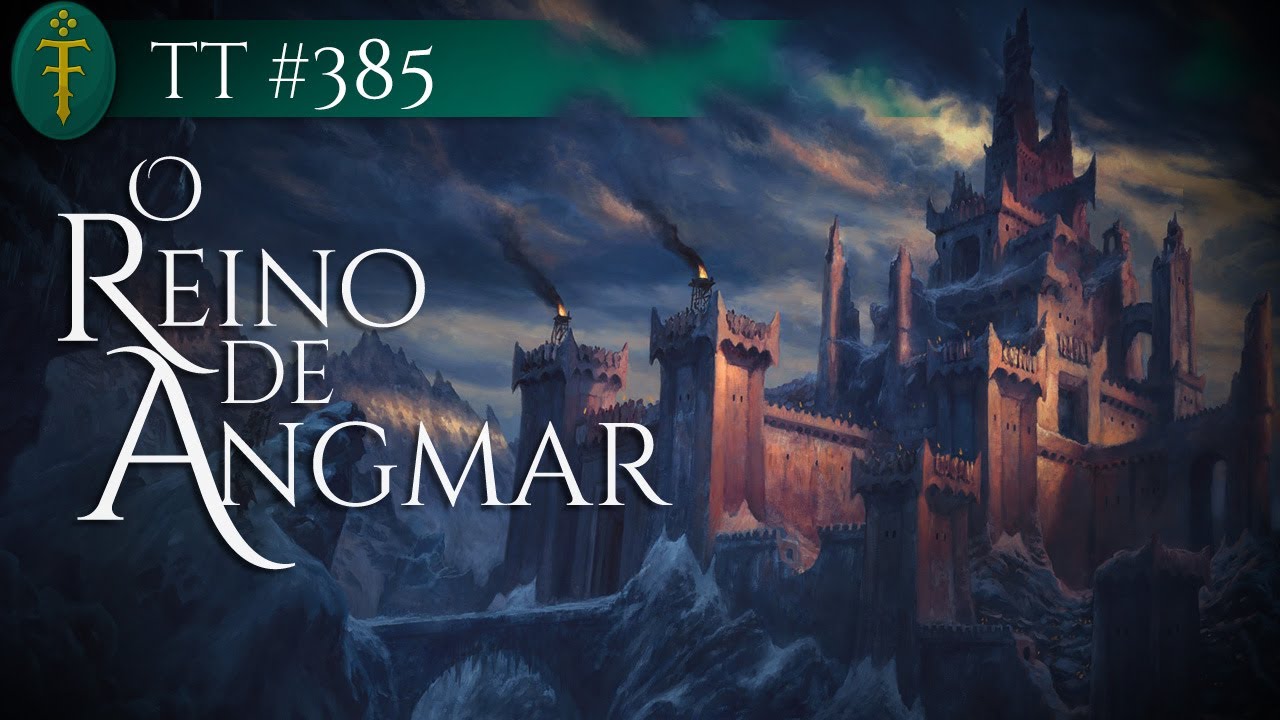
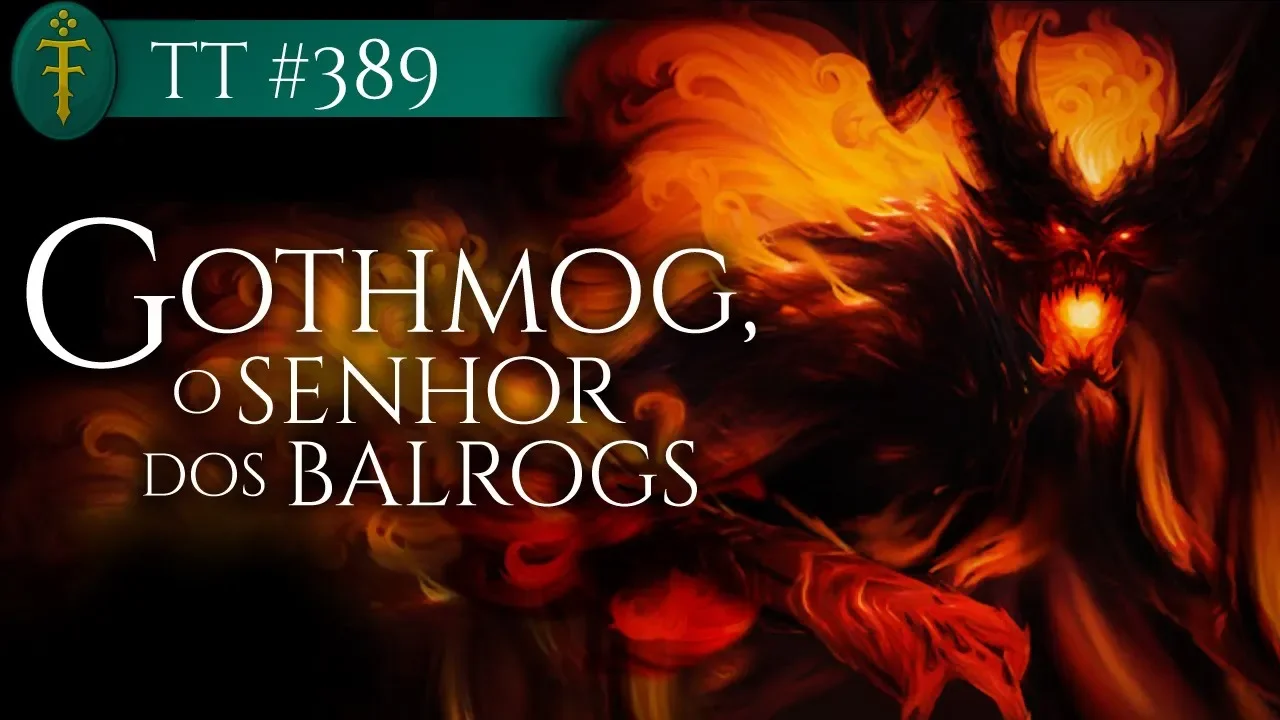
"Of the deeds of desperate valour there done, by the chieftains of the noble houses and their warriors, and not least by Tuor, much is told in The Fall of Gondolin: of the battle of Ecthelion of the Fountain with Gothmog Lord of Balrogs in the very square of the King, where each slew the other, and of the defence of the tower of Turgon by the people of his household, until the tower was overthrown; mighty was its fall and the fall of Turgon in its ruin. " The Silmarillion Of Tuor and the Fall of Gondolin Hello, Tokien Talkers, how are you? Before we tell the story of the most terrible demon of Melkor, hit that like button, those who are new, subscribe to our channel in the red button and turn on the notification bell so you get notified every time there’s a new video.
Doing all of this you help TT gains more relevance here on YouTube. And today’s video goes to: Tolkien has never left us with the exact meaning of the name “Gothmog”. Based on etymologies and other extracts published in “The History of Middle-earth”, we have arrived at three possible meanings: Horror Enforcer, The Voice of Morgoth and Black Master.
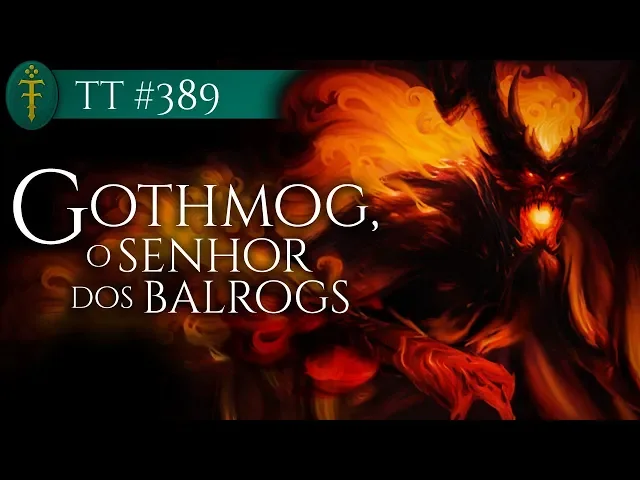
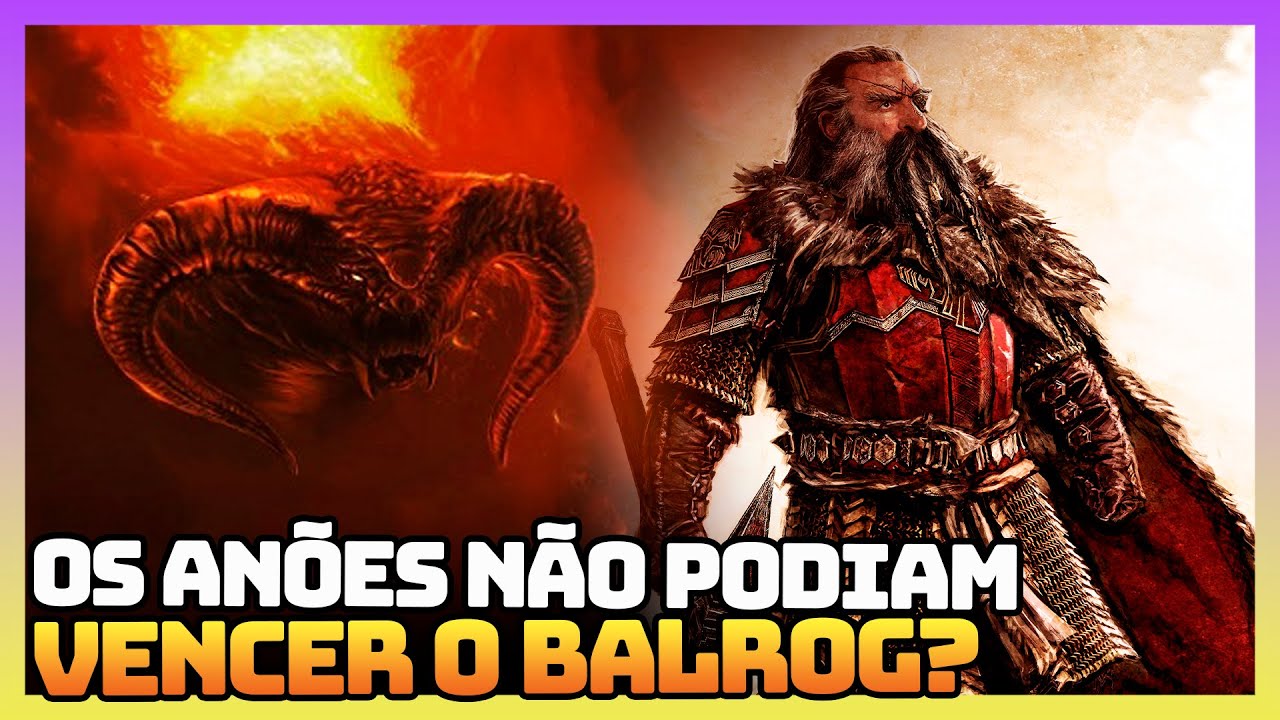
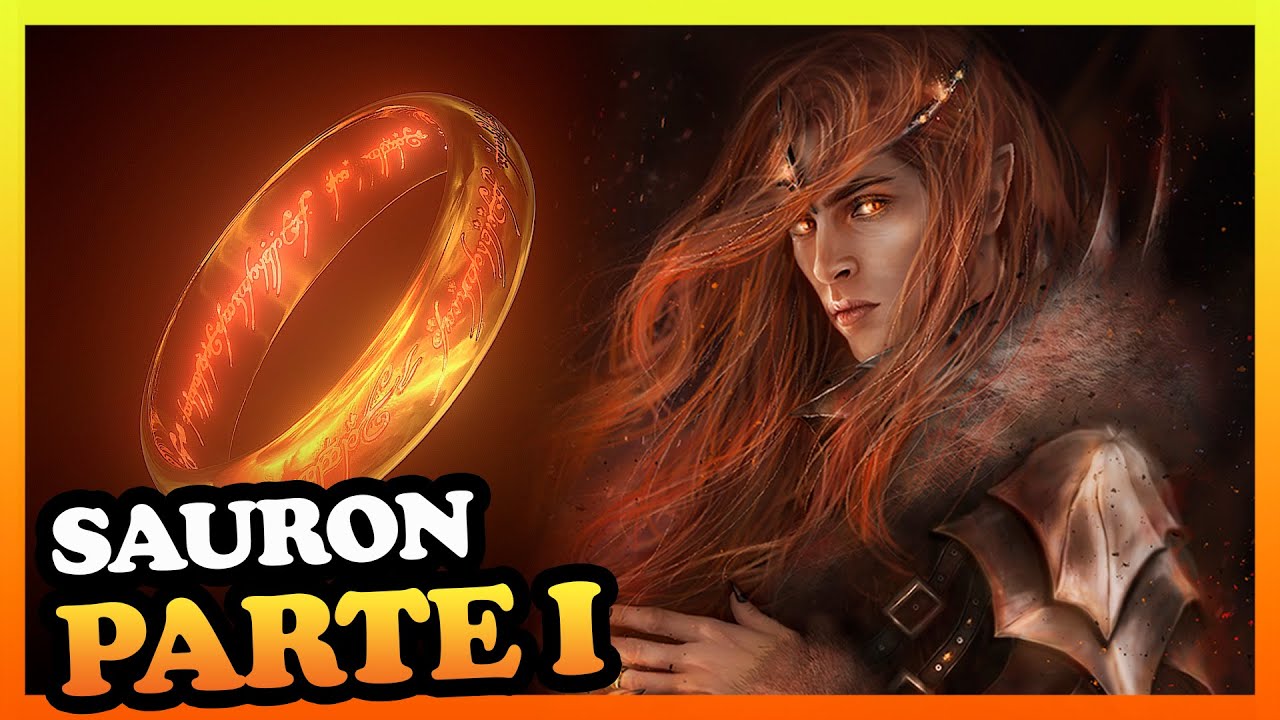
Gothmog was the lord of Balrogs, of whom we talked about in TT 54. He receives the title of High Captain of Angband, therefore, he is one of the highest ranking servants of Melkor. Possibly he would be in the same level as Sauron in the dark lord’s military structure.
However, in a letter to Milton Waldman, which in the newest Silmarillion edition there is a long extract of this letter, Tolkien says, explicitly, that Sauron was the main captain and servant of Morgoth. There is also an interesting passage from Valaqüenta, when Tolkien says that “In all the deeds of Melkor, the Morgoth, upon Arda, in his vast works and in the deceits of his cunning, Sauron had a part, and was only less evil than his master in that for long he served another and not himself. ” So, it would seem that, although they had the same level rank, Sauron could still be considered to be one level above, but that does not mean that Gothmog wasn’t extremely powerful.
He was the leader of the most terrible followers of Morgoth. The first time elves met Gothmog was in Dagor-Nun-Giliath, The Battle Under the Stars. We have already talked, in detail, everything about this battle in TT 287, don’t forget to check it out.
In that occasion Fëanor had advanced with few companions and had been fighting with enormous rage. Th Silmarillion The Return of the Noldor "Thus it was that he drew far ahead of the van of his host; and seeing this the servants of Morgoth turned to bay, and there issued from Angband Balrogs to aid them. There upon the confines of Dor Daedeloth, the land of Morgoth, Fëanor was surrounded, with few friends about him.
Long he fought on, and undismayed, though he was wrapped in fire and wounded with many wounds; but at the last he was smitten to the ground by Gothmog, Lord of Balrogs, whom Ecthelion after slew in Gondolin. There he would have perished, had not his sons in that moment come up with force to his aid; and the Balrogs left him, and departed to Angband. " Fëanor was the first of the great Noldo to be killed by Gothmog, but not the last.
The Lord of Balrogs then did not show himself for some centuries. The nest appearance of Gothmog was in Nirnaeth Arnoediad, the Battle of Unnumbered Tears, of which there will still be a video here on TT about it. In that occasion, Gothmog brought forth a great army.
The Silmarillion Of the Fifth Battle: Nirnaeth Arnoediad. "But now in the western battle Fingon and Turgon were assailed by a tide of foes thrice greater than all the force that was left to them. Gothmog, Lord of Balrogs, high-captain of Angband, was come; and he drove a dark wedge between the Elvenhosts, surrounding King Fingon, and thrusting Turgon and Húrin aside towards the Fen of Serech.
Then he turned upon Fingon. That was a grim meeting. At last Fingon stood alone with his guard dead about him; and he fought with Gothmog, until another Balrog came behind and cast a thong of fire about him.
The Gothmog hewed him with his black axe, and a white flame sprang up from the helm of Fingon as it was cloven. Thus fell the High King of the Noldor; and they beat him into the dust with their maces, and his banner, blue and silver, they trod into the mire of his blood. " Killing Fingon, Gothmog now had the deaths of two High King of the Noldor on his résumé.
In Nirnaeth, Gothmog had a personal guard made of trolls. In this battle, Húrin resisted alone with his two-handed axe, with which he killed many trolls of Gothmog. Afterwards he was captured alive by Morgoth’s command.
Gothmog bound him and dragged him to Angband, with mockery. The Lord of Balrogs would fight once more in the offensive against Gondolin, which would result in the destruction of the hidden city. In the published Silmarillion, it is said only that Gothmog and Ecthelion of the Fountain killed each other.
The text makes reference to the tale of the Fall of Gondolin, therefore, that text from the Book of Lost Tales, published in the “History of Middle-earth” and that was also published with the original tale in the book “ The Fall of Gondolin”. This tale is Tolkien’s most complete narrative of the destruction of Gondolin. The problem is that there were many texts hereafter that would change many things and Tolkien’s own mythology also changed.
However, even though it is not a canon text per se, those parts that do not conflict with future writings may very well be considered so. For example, in the original, it is said: “But now Gothmog lord of Balrogs, captain of the hosts of Melko, took counsel and gathered all his things of iron that could coil themselves around and above all obstacles before them. ” We know that Melko is the primitive form of the name Melkor, with r in the end, and more, these creatures of iron do not stay in Tolkien’s legendarium.
Therefore this part must not be considered canon. But what can be considered in this extract is that Gothmog had indeed acted as captain of the hosts of Morgoth. And it is in this way that we show continue to interpret these older texts.
One parte that may be perfectly considered canon is when Tuor is stricken down by Gothmog and Ecthelion comes to aid. Tuor was suffocated by the heat, and when he is brought down by the Lord of Balrogs himself, he is rescued by Ecthelion, whose face had the paleness of grey steel and whose shield arm lay hung, inert, at his side. With Tuor fallen, Ecthelion stood by him and faced Gothmog, but could not defeat them for he was wounded in his sword arm and the blade fell.
The Fall of Gondolin “Then leapt Ecthelion lord of the Fountain, fairest of the Noldor, full at Gothmog even as he raised his whip, and his helm that had a spike upon it he drave into that evil breast, and he twined his legs about his foeman's thighs; and the Balrog yelled and fell forward; but those two dropped into the basin of the king's fountain which was very deep. There found that creature his bane; and Ecthelion sank steel-laden into the depths, and so perished the lord of the Fountain after fiery battle in cool waters. ” The hosts of Morgoth hesitated after the fall of their general, which gave room to the advance of the king’s house army which killed many balrogs.
Gothmog was slain, therefore, in the year 510 of the First Age, the same year that the Fall of Gondolin is registered on. In his earlier versions, Gothmog had other names, Moreover, he was the son of Melko with the ogress Fuithluin. This “Kalimbo” was described as “ Wild, uncivilized, giant barbarian, monster, troll”.
In the list of characters of one appendix of the tale The Fall of Gondolin, Gothmog is described as the “Son of Morgoth and the ogress Fuithluin”. But afterwards Tolkien eliminated from his legendarium this trend of Valar having children. In the ballad of the Children of Húrin, published in the third volume of the History of Middle Earth, there is one Lungorthin, Lord of Balrogs.
It is unknown if this is another name for Gothmog or if it would be another Lord of the Balrogs. The latter is more likely, according to Christopher Tolkien. So this is it for today guys.
Today we saw the importance of Gothmog, Lord of the Balrogs, his participation in the wars of Beleriand and the Noldorin Lords, which were killed by him. I want to thank our patrons immensely, who have been helping us increment Tolkien Talk. Thank you to all of you who are contributing.
You can also become a patron of TT and contribute to our evolution. I Hope you liked this video; so, those that haven’t done it yet, hit that like button, subscribe. Hit the notification bell and don’t lose a single video.
Like our fanpage on Facebook, follow us on twitter, Instagram and visit our blog. Also follow our partners. Their links are in the description bellow.
* Amazon Add* Help TT to grow sharing our videos and showing them to your friends. It is always a pleasure to talk about Tolkien with you. So, until next video, cheers.