story of narcissus is a kind of tragedy you like it's about metamorphosis it's about change death and love narcissus was a very beautiful youth everyone fell in love with him women men children everyone but he rejected all their advances one of those who fell in love with him was the nymph Ecco and when she was spurned she just withered away from shame and ended up as more than dry bones her voice remained but she could only echo what other people had said one day he was hunting and he went to rest in a Glade where
there was a beautiful pool and he leant over to look into the water and he saw his own reflection of this very lovely youth and he fell in love he didn't realize at first the reaction was himself when he did realize finally that it was and that he could never reach this image in the water he simply faded away and when the mourners came to move his body they found a flower the narcissus growing and no body the myth of narcissus which was most famously told by Ovid has been mined by artists for 2,000 years
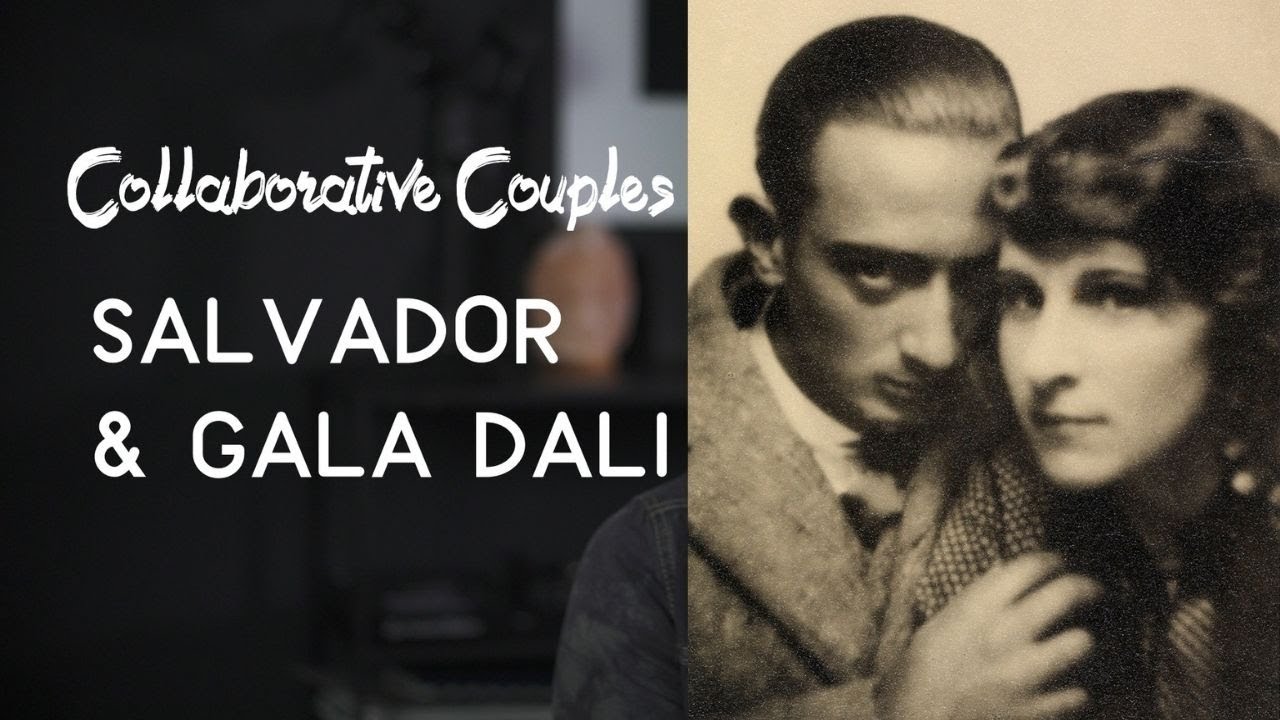
very often in the context of a same-sex desire because of course narcissus falls in love with his own image and I think that Darley himself who was what one might say probably ambivalent in terms of sexuality was particularly fascinated by the narcissus myth for that reason narcissus is a painting by Salvador Dali that he finished in the spring of 1937 and then took with him to show Sigmund Freud in 1938 when he went to see him in London when Dali went to see Freud it was the culmination of a long-held ambition Dali had read Freud
as a young student in Madrid and then in the mid 1920s and when Dali joined the surrealist movement he found that his interest in Freud was thoroughly reciprocated by the Surrealists [Music] surrealism was founded in 1924 by Andre Breton who published the manifesto of surrealism and in that manifesto Freud is really held up as this sort of founder of many of the ideas that Surrealists were proposing to explore and the fundamental aspect of Freud's thought and Freud's writing that had so attracted the Surrealists was the idea that the unconscious is a kind of active part
of our psyche it's sort of working away they're boiling away in underneath somehow and affecting our lives in every way the other aspect of Freud's thought that was so important for the Surrealists was the relationship between the Dreaming mind and the unconscious that it's through dreams he thought that one began to curse of inkling of the way unconscious works the Sigmund Freud was the father of psychoanalysis that is the aim to explore mental states and neuroses basically and he published a huge amount he was immensely influential one of the most important of his books was
called the interpretation of dreams and that was a fundamental book for so many artists and poets in the 20th century including Salvador Dali Freud invented a method of consultation in his study he had a couch covered with other beautiful rug on which the patient would lie and he would sit just behind them so they couldn't really see him and would prompt the patient to talk to remember their dreams for example and to mention any of the kind of associations those dreams awoke and then he would try to understand what had been going on in their
mind his idea was that he could through talking basically through talking cure he could kill people of their anxieties of their neuroses for it was really fascinated by the creation of symbols and by myths from the Classical Age which could be translated into the kinds of obsessions and neuroses that he saw in the modern age so he used the myth of narcissus for his notion of narcissism which was a stage of childhood development and he was Oedipus the story of Oedipus for his idea of the eatable complex Freud loved antiquities and he had a considerable
collection of Roman objects Egyptian things as well as some prints from Renaissance artists like Leonardo da Vinci who he actually analyzed through one of the other Vinci's paintings and this was one of the essays that fascinated Dali among the other objects in Freud's collection of antiquities are some wonderful mirrors and of course the story of narcissus is very closely linked to the idea of the merit of the idea of self-absorption some of the mirrors actually seem to be engraved with little scenes which might suggest the link with the narcissus myth but Freud was not really
interested in art for its own sake he was interested in it for how he could interpret it and he remain very suspicious of the way that the Surrealists were using his ideas under pressure I have been in correspondence with Freud in the early 30s and Freud couldn't see the point of fainting dreams for their own sake so there's a letter from Freud to Breton saying I don't understand what you're doing perhaps I'm not made to understand that I whom so removed from art so he really regarded it of course I've analysis as a science and
this I think is one of the keys to his response to dahlias painting when dali went to visit freud in london he took with him the painting metamorphosis of narcissus well he was trying to engage for an in conversation he was also drawing him avidly and there are several pencil and pen and ink portraits of Freud by Dali but one is not quite sure which one was the one that was done from life he was really hoping to engage Freud in a conversation about narcissism but Freud really didn't respond to Daly's attempts to draw him
into a conversation and Darlie got more and more excited about this problem and became more and more insistent that Freud should respond to Freud didn't he took us in no notice of the painting just gazed at Dali and then turned to Stefan Zweig the writer who had brought early and said what an extraordinary example of a Spaniard this young man is what a fanatic I think one of the reasons this meeting didn't go according to plan is a clue in Freud's diary which is that for the day he sees Dahle he writes in deafness salvador
dali and he actually simply was not really able to hear the next day Freud wrote to Stefan Zweig thanking him for bringing yesterday's visitor he says that hitherto I had always regarded the Surrealists as basically 95 percent cranks like but your young visitor dolly has helped me change my opinion you know he was really impressed by Dolly's painting so although he hadn't appeared to be engaging with dolly he had actually been attending to the painting and he was very impressed but you could see that dolly had actually been able to reveal some of ideas ideas
about narcissus about desire and about death that Freud would normally regard as probably hidden in a painting dolly said afterwards that Freud had said to him what he saw in his paintings was not the unconscious because Dali had already done the work of analysis himself and he was sharing you in the painting his own as it were self analysis whereas in the work of the old masters Freud had said in the work for example of Leonardo da Vinci what he looked for was unconscious signs of something that he could then interpret what you know it
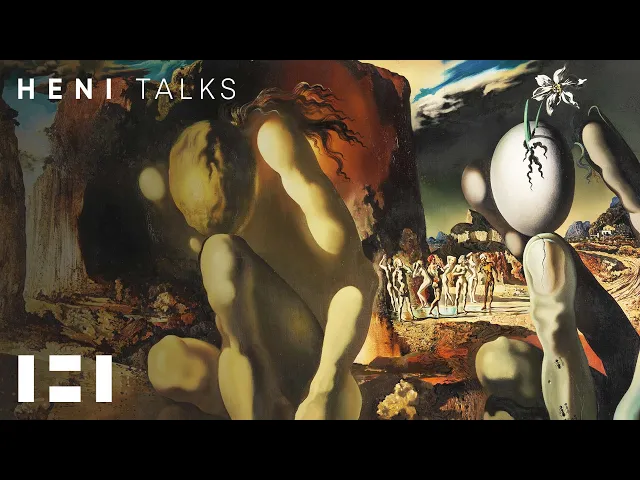
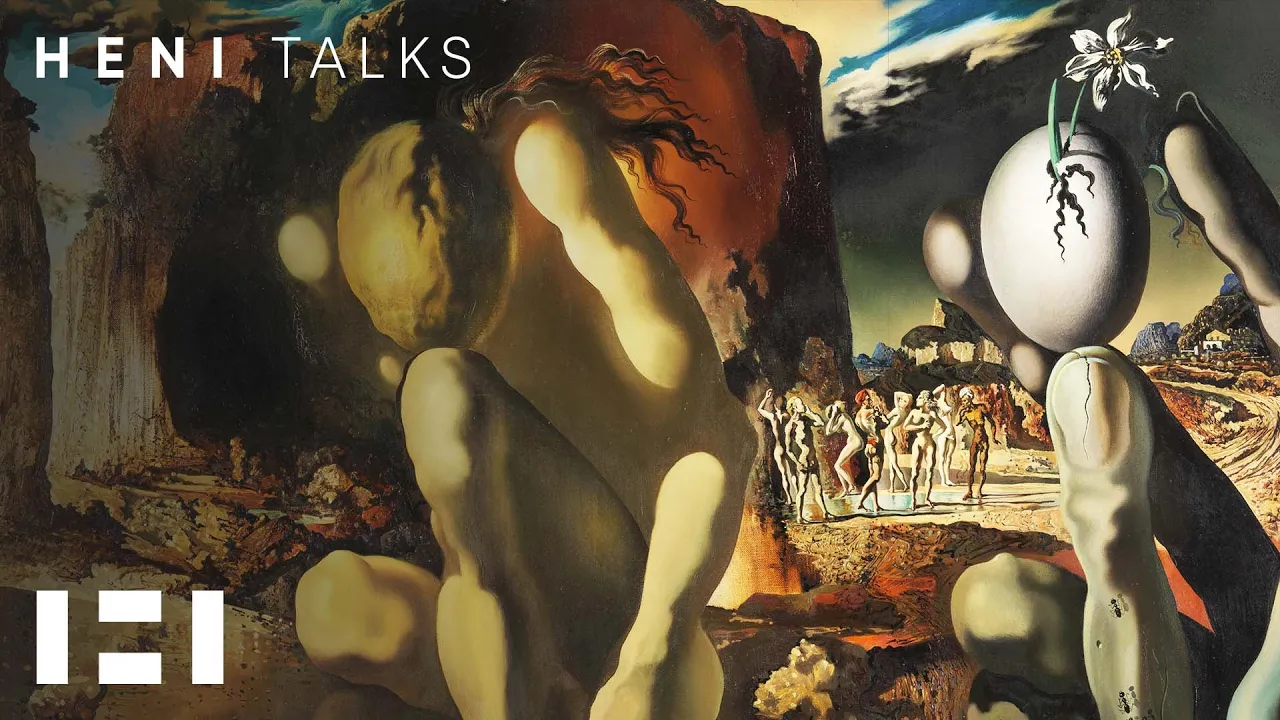
was true because daddy knew what he was doing Dali was painting in a very conscious way about his particular forms of human development that Freud analyzed such as narcissism [Music] it's a very unusual painting for Dali it shows you two prominent features in the foreground on the left is the figure of narcissus himself a kind of golden youth whose head is bowed and he's looking in the water and to the right is a fossil hand a stony hand holding an egg the point is that these two configurations which apparently represent completely different things are exactly
the same shape so the figure of narcissus and the hand are exactly the same the drawings that Dali did for the painting show these two elements the narcissus figure and the hand in one what Darla called a double image you can't really decide which is which necessarily and this of course was something that thoroughly explored as a form of what he called critical paranoia that is a kind of systematic misreading of the world around you according to an overriding obsessional idea exploring paranoia was a way of exploring multiple perceptions of the world you could say
that the meta box of gnosis is painting is a unique example of this notion of the double image because he separates out the two [Music] I think it's possible that one of the things Darlie was experimenting with there was the idea of stereoscopy the stereoscope was a little kind of camera like thing with two photographs put into it and the two photographs were taken from very slightly different angles of one single motive if you look through particular lenses at the photographs they merge into one and spring into three dimensions and I think Dali's idea ideally
was the optical effect would be that these two objects narcissus and the hand would spring into one and turn into three dimensions as it were the metamorphosis would be actually enacted and become somehow real a wonderful dream but I think it's partly lies behind this very extraordinary painting in a way the whole story of Ecco is I kind of metaphor for Dolly's painting there are so many forms that repeat so in a way although echo herself is not represented I think there are echoes which recall the story and recall the figure of Ecco at the
same time was painting the metamorphoses narcissus Dali wrote a poem with the same title dally wanted you to be able to as it were read the poem and see the painting simultaneously so that you would get his story of the painting in the poem and there are things he developed in the poem that he talks more about than are necessarily visible in the painting he details the figures of the heterosexual group which is the little group of figures who are dancing in a circle in the background and distinguishing that from narcissus this symbol of same-sex
desire and of course there's the hand which is related to this obsession or fear of masturbation so it's certainly a painting which really does focus on the question of sexuality and desire and I think that the way dolly is aware elaborates on this and the way he moves from the extraordinarily glowing golden sort was fiery figure of not assert himself to this cold stony her death like hand is an extraordinary way of mingling love and death I feel this love in death death in love theme which Darlie weaves into the the whole issue of desire
in that painting is really very important dali ends the poem he goes through what he sees Kelly as his terrifying metamorphosis into the dead hand terrifying hand but there is hope at the end because the hand is holding this egg and the out of the egg sprouts narcissus and then the narcissus turns out to be Gaara that is his partner his muse his wife and so it's quite a shock that he turns it away from narcissus this self-absorbed symbol of same-sex desire to a kind of heterosexual love at the end I think the metamorphosis of
narcissus is undoubtedly his masterpiece it continues to absorb you I mean you have to go on looking at it you can't solve it in one look in oneness or a regard and in a way you have a sense that things are changing in it that it is it is almost like alive [Music] Dalia's painting metamorphose is this extraordinary myth the myth of narcissus you you