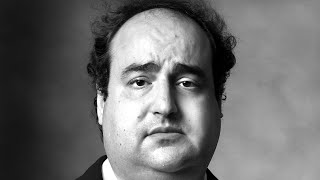
[Music] That is getting me excited. We arranged for gambler Tony Franklin to join a unique experiment by one of the world's leading experts on addiction, Professor David Nut. Gambling addiction is not a failure of will.
It is a brain disorder which is prayed upon by the gambling industry. Honestly, I can feel my heartbeat just rising just looking at the damn thing. Once you become addicted, it's very very hard to stop because you have turned you've changed your brain.
Addiction is a is a brain that has changed to become entrained to the desires of the of the gambling. So, we're going to start task Tony. This will be the first time anyone plays something similar to a fixed odds betting terminal from inside an MRI scanner.
The professor says it will reveal what's happening in Tony's brain as he uses a keypad to bet. Got £1,000 to spend. Can I spend it all on the first spin?
When Tony is doing his task, when he's looking at the roulette wheel and he's making a decision to bet parts of the brain get turned on and then they can't stop and we think there's probably a chemical basis to that. So that's what we're expecting to see that the habit centers are overactivated in people with gambling compared with normal people like us. [Music] The brain's not very active.
Maybe a little bit here. He's thinking at the what you know what should I do? But it's pretty calm.
Contrast that with what happens in the next one. And that's a huge difference from indeed there to there. Exactly.
That's in a matter of seconds as well, would it be? Exactly. Absolutely.
Yes. Okay. So here we see the visual system, the back of the brain here intensely activated.
He's watching really closely. He wants that ball bearing to come down on his color. And now we look at the emotional regions.
And these are different regions activated. This is the anterior singular cortex. This is the insula.
And these are the two areas of the brain which make sense of emotions. They may generate the emotion he's feeling of excitement. Will I win?
Won't I win? [Music] And here we see very similar picture. In fact, the only real difference between winning and anticipating is this area here.
And this is an area where I think we see the sense of uh satisfaction. Yeah, I've won. That's good.
Register that. Start again. But overall, winning and waiting to see if you've won, the anticipation, they're both pretty much the same.
And that's a really key point about gambling. It's not just the winning that counts. It's the taking part.
And the taking part repeatedly when you don't win is as activating to a gambler as the winning. When when you're sitting in a fixed odd terminal, you're getting this every 20 seconds. Yeah.
So you can have hundreds of them. And so that process can become in the end it becomes kind of habitual. It becomes addictive.
The Association of British Bookmakers told us 99. 5% of people who gamble do so responsibly. Gambling addiction is complex and multifaceted and as an industry we strongly encourage responsible gambling.