Hello friends. Welcome to the Engineering Funda family. In this video I'll be going to explain you wireless sensor network WSN technology.
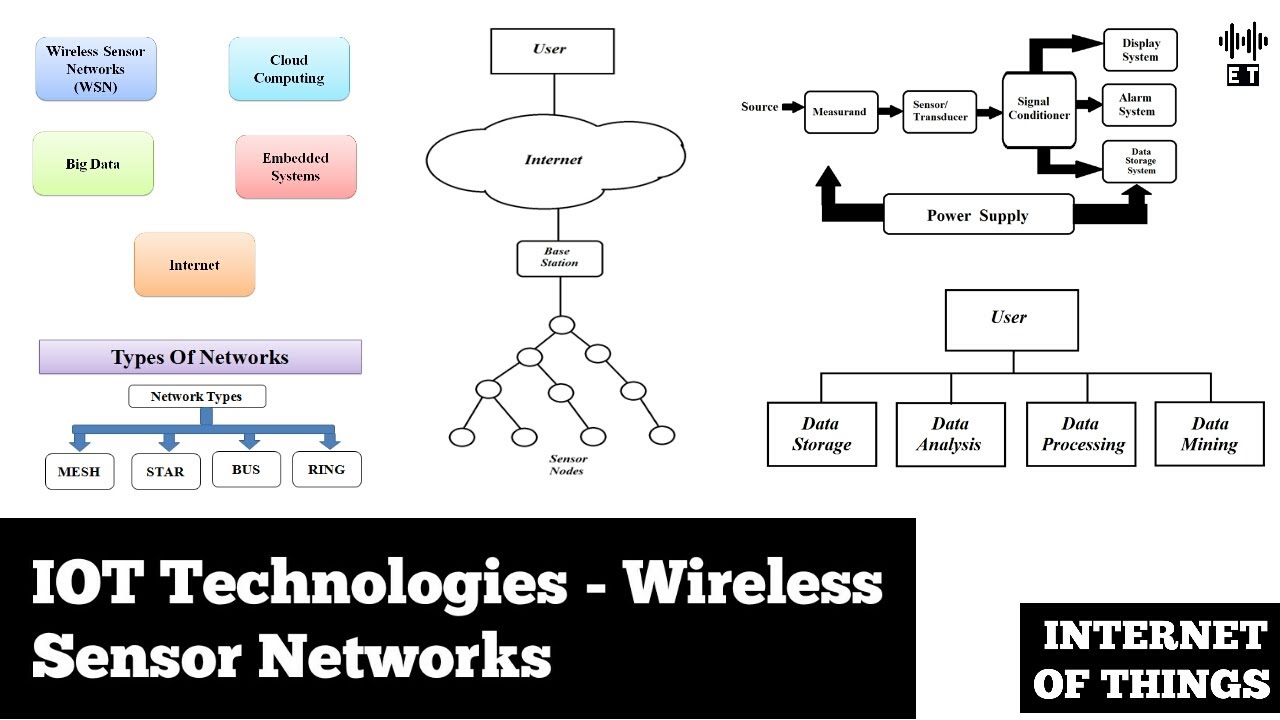
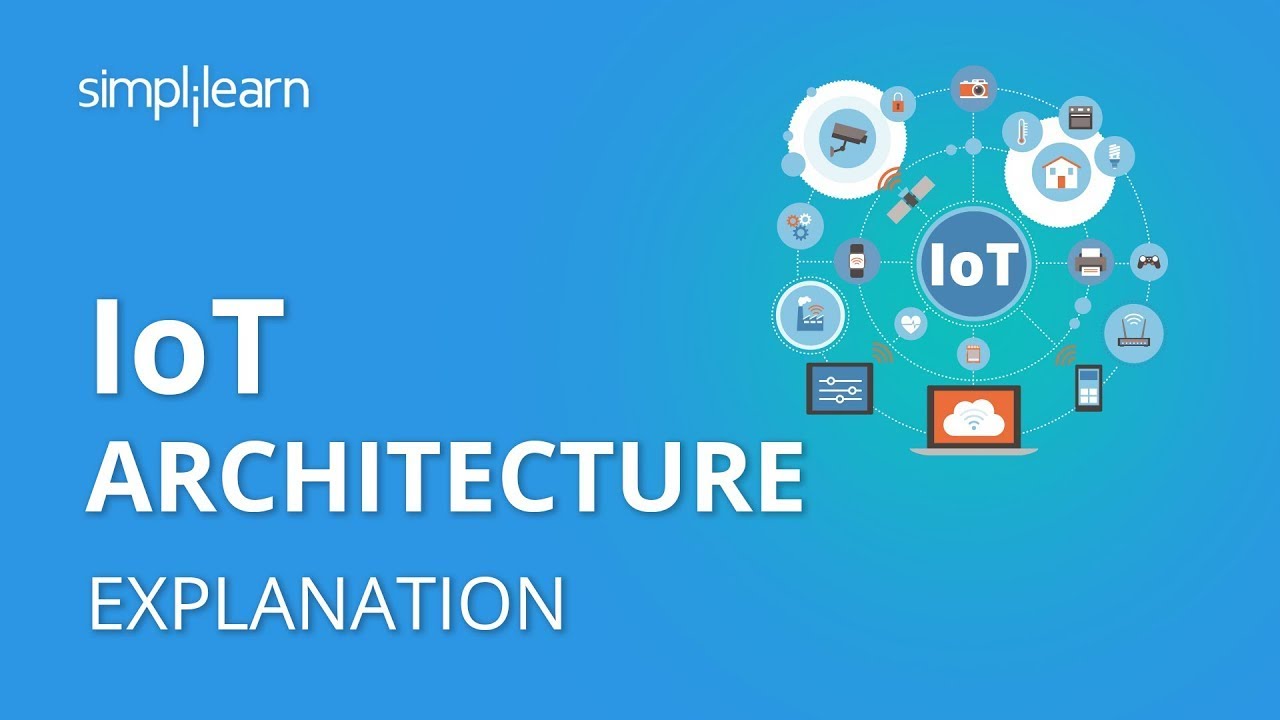
Before I explain you what is WSN technology, let me give you a list of technologies which is enabling IoT system. So here when it comes to IoT system, there are varieties of technologies like wireless sensor network, cloud computing, big data analytics, communication protocols and embedded system. So by this technologies we are working with IoT system.
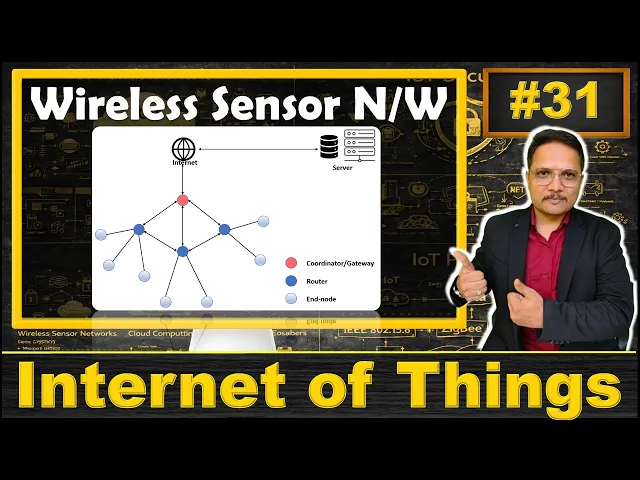
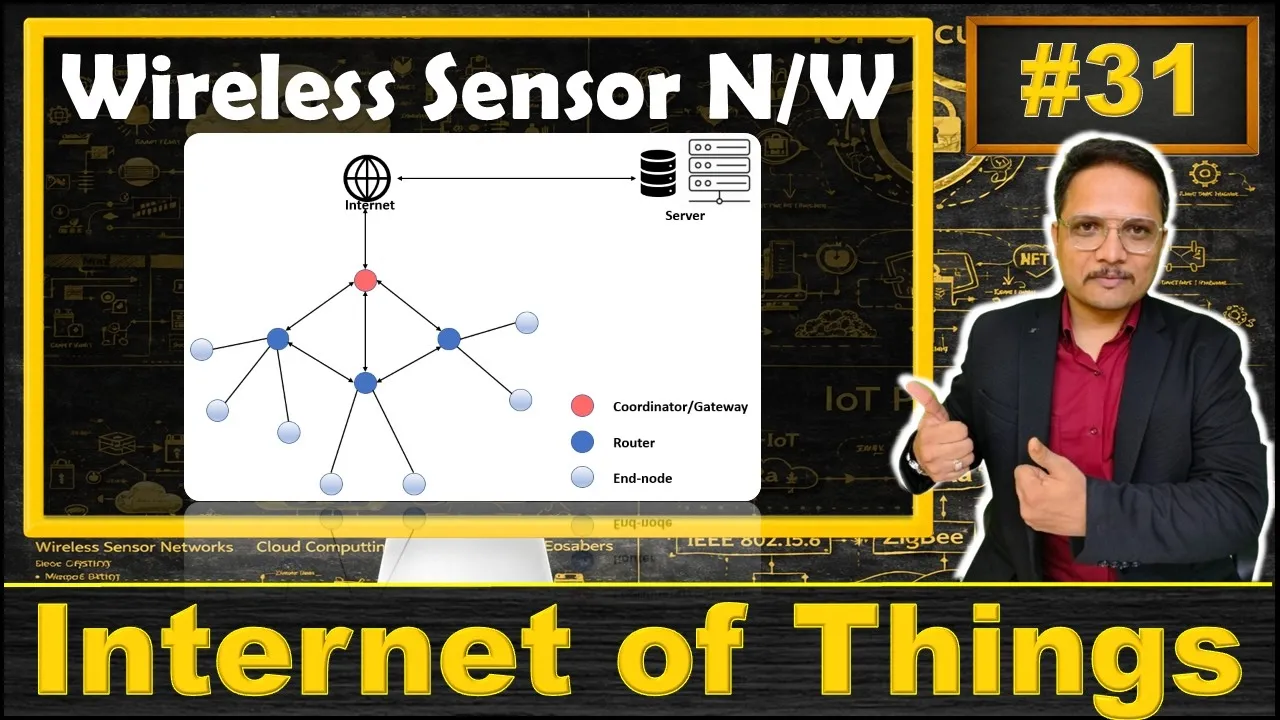
In this video I'll be discussing about wireless sensor network in great detail. So let us see first how basic architecture is there with WSN network, right? So here, when it comes to architecture, first major essential role is end nodes.
So you can observe here multiple end nodes are there with this wireless sensor network. So first of all, you need to understand what is the meaning of this. End nodes.
See these end nodes are used to capture physical data. So here, obviously you will be using sensors to capture physical data. You will be using sensors.
Like, as if you want to capture a temperature. You'll be using temperature sensor as if you want to measure moisture of soil. Then you'll be using moisture sensor as if you want to detect gas.
Then you'll be using gas sensor. Likewise, you will be using sensors here in end nodes which will be measuring physical data. Now once sensor is sensing that physical data.
That data should be transmitted to a central system. Now how we are transmitting it as per the name. You can understand this here.
Wireless sensor network is there. So all these end nodes are having sensor, but that these end nodes will be communicating with wireless protocols. So here this end nodes will be embedded system.
With that embedded system. There will be one microcontroller. With that microcontroller, we will be interfacing multiple sensors.
Those multiple sensors will be sensing physical data and that will go to a microcontroller. That microcontroller is also attached with. Wi-Fi card or Bluetooth card or Zigbee card.
So in embedded system, you'll be having facility of Wi-Fi, Bluetooth, or Zigbee by which this end nodes can communicate to central system. So here in given wireless sensor network, there will be end nodes that will be having sensor as well as it will be embedded system in which there will be microcontroller as well as wireless protocol cards like Wi-Fi card, Bluetooth card or Zigbee card, by which this end nodes will be communicating wirelessly. Once that physical data is measured, that will be routed to router with wireless communication.
So this communication to router will be wireless over here. Now this router will be having physical data of multiple end nodes. Now that data will be given to coordinator.
And that coordinator is gateway. So now this data is given to gateway. And now this gateway will pass on that data to internet where there will be server on which we will be storing all the physical data.
Now how user will be using it. See user will be using it as per application. Like if you are using wireless sensor network application, then in your mobile or in your computer, you will be having application in which you will be having data related.
All the sensors, right? All the sensors like you will be having idea about what is the temperature, what is the moisture of soil, what is the quality of air? What fraction of air quality is getting changed?
All the data that you are having with the use of application, but how that data comes to the application with the use of end nodes. So end nodes are having wireless protocols that will be getting coordinated with routers. And then it is getting transferred to gateway via gateway.
We are loading that on server with the use of internet. That is our basic architecture is there right now. Let me discuss about basics of wireless sensor network.
So in the WSN network we have distributed device with sensors. So as I have told you we are having distributed nodes and nodes that is having sensors. That are used to monitor environmental and physical condition and that monitoring that we do it with the use of sensors.
Right. Here. see WSN network consists of numbers of end nodes, routers, and coordinator.
So here we are having so many end nodes that will be embedded system that you can say which will be measuring physical data. And then we are transferring that into router. And router will be routing it to coordinator.
It is not compulsory that you will be having multiple routers. If you have large uh size of location then you may have multiple routers, but you have if you have small size of location, then with a single router, also one can coordinate all the data to router. And then we can pass it on to gateway.
Right? see end nodes have several sensors attached to them. So here single end node can be interfaced with multiple sensors which will be measuring multiple physical quantities.
Right. See each end node can also act as a router. So it is not compulsory like you will have to interface router.
As we are having embedded system and node can also be a router over here. But that end node should be powerful right? Usually in low end application we are using router where end nodes are not acting like a router.
But if you have small size application, like if you talk about application with single room, then here all the end nodes cannot be transferring data to routers and then gateway. Here you may need to have single end node by which you will be using that end node as a router. Right.
Here, routers are responsible for routing data packets from end node to coordinator. So that is what the case which I have told you router is gathering data from end nodes. And then we are transferring that into coordinator.
Coordinator is gateway over here right. See co-ordinator will collect the data from all the end nodes and it will transfer it to internet. So coordinator will be collecting data from the router and then it will it will be loading that data onto the internet.
Right. So here wireless sensor network means what. Here we are having end nodes which is using wireless protocols.
Right. Now let me explain you basic characteristics of wireless sensor network. So we are using wireless protocol here.
Like Zigbee, Bluetooth, Wi-Fi. I think you all are familiar with these protocols, right? This, embedded module, which we are using as an end node that will be having Zigbee, Bluetooth or Wi-Fi card with that given embedded system.
So microcontroller will be interfaced with sensors. Sensors will be sensing the data. Now that data will be there with microcontroller.
Now microcontroller will be transferring that data to router with the use of this wireless protocols. Right. Here range of this protocol that is there with 10 to 100 meter.
You should know this. See Zigbee, Bluetooth, Wi-Fi that we are using with the range of 10 to 100 meter distance only, right. For larger distance, we cannot use these protocols.
As if you talk about speed, then here. See, these n nodes are not communicating with large bandwidth from few hundred of words to few Mbps. That is sufficient over here.
The reason is we are just measuring physical data in real time, right? Here. Operating frequency will be there in ISM band.
ISM band means industrial scientific. Medical band. See this ism band frequency that is free to use for anyone.
So as if you want to design any application, you don't need to take permission of government. Even if you are there in USA, you can design your own system. You don't need to purchase license of any frequency as it is there with ISM band as a means industrial scientific, medical frequency bands which are used for research purpose.
Anyone can use it without any permission. Usually we use 2. 4GHz of frequency with majority of devices, like if you talk about Zigbee, Bluetooth, and Wi-Fi.
So all three protocols are working with 2. 4GHz only. Right.
So that is how operating frequency will be there. See all these end nodes are working at low power right. So with the use of battery also those end nodes can be sensing the data right here.
You do not need to worry about power consumption. It is working with low power operating nodes. See WSN.
Is self organizing organizing network. Self organizing means here. See, you do not need to have manual configuration, right?
All the end nodes will be directly communicating to router. And router will be transferring data to uh gateway. And then gateway will be transferring that data to internet.
All those things that will be happening as per protocols where it is self organizing. See this network is robust in structure. Why it is robust in structure.
The reason is even if some nodes are getting failed here, system will not get fail. There will be auto reconfiguration and whatever nodes are available based on that. Now statistics will be there at application.
Right. So single point failure is not there with this system here. This system is robust in structure that you can see even if some nodes are getting failed during working right now.
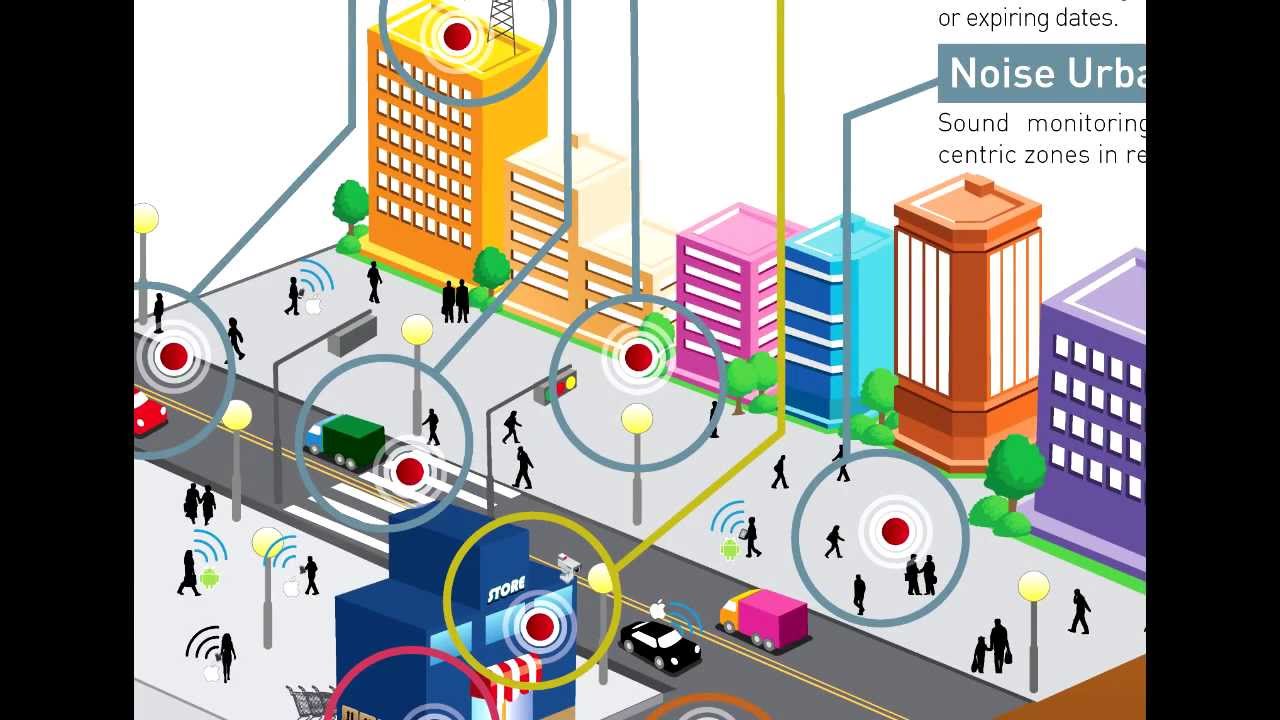
Let me give you some examples of wireless sensor network. See the weather monitoring system that uses the WSN network in which we are collecting weather data like temperature, humidity. We aggregate that and we are analyzing it.
And with the use of aggregation and analysis, we can have so many applications. So user can have so many applications with the use of WSN network. One of that example is weather monitoring system in indoor air quality monitoring system.
Also we use this where in indoor we are having multiple end nodes in that particular hall or in room. So at different locations of that room we can monitor what is the air quality as well as there can be so many other applications. Right.
Like we are measuring different concentration of various gases. Here. Soil Moisture Monitoring system also uses WSM, where we are monitoring soil moisture at various locations, not only about soil moisture.
We can also measure temperature and many other parameters. Right? Here in surveillance system.
Also, we are using WSM where we are collecting data with the use of surveillance system like motion data. Right. In Smart grid.
Also, we use the network for a monitoring of grid at various points. So that is how so many applications are there like in farm. Also, we can use WSN network if you have a large size farm, and in that farm, if you want automation without human intervention, then you can use the same network where at different at different location of farm.
You can place end nodes that end nodes can measure temperature, humidity, soil moisture. Right. And if you if you take those data on internet with the use of mobile, you can control everything, right?
So that is where also the network that is quite useful. So wireless sensor network that is one of essential part of IoT system. I hope you have understood this.
Still if anything that would like to share please note it down in comment section. I'll be happy to help you. Thank you so much for watching this video.