Translator: Emanuele Rossi Reviewer: ACBS Fan There’s something that increases our risk of death more than excessive drinking, more than chronic exposure to air pollution, more than obesity, something that increases our risk of death as much as excessive smoking: social isolation, a sense of disconnection, loneliness, according to an analysis of 148 studies with over 300,000 people. I know this place of isolation deep inside me. It started in Hong Kong when I was a preschooler about this high.
Chinese girls are typically given flowery names by their parents, like “Liang Hua,” meaning “Lotus Blossom,” “Hsieng Yi,” "Friendship from the Heart. " My parents, being health professionals, named me “Kang Cheng,” meaning “Healthy and Straight. ” Well, I was scrawny, and I had poor posture.
My classmates teased me mercilessly. I spent a lot of time alone. Being innately shy, it didn’t get any better in elementary school.
When I was 12, we immigrated to the United States. I entered a junior high school with 1,200 students where I was one of 2 Asians, and my sense of isolation continued. I worked really hard, though, to figure out how do I make friends, and I started developing a core group of girlfriends with whom I could engage in boy talk late into the hours of the night.
When I was 16, I got a job at a Chinese restaurant, as a waitress, and this really helped my connection skills blossom. So rather than asking my customers, “What are you having for dinner tonight? May I take your order?
," I let them know that they really mattered to me as people. With my body language, my eye contact, my smile, I was asking them, “Who are you really underneath your social mask? How’s your heart feeling?
How’s my heart feeling? ” I got powerful feedback in the form of not just their warm responses, but in tips that were often more than 25% of the total bill. I feel really proud and humble that I was able to overcome intense shyness and awkwardness to be able to connect with just about anyone.
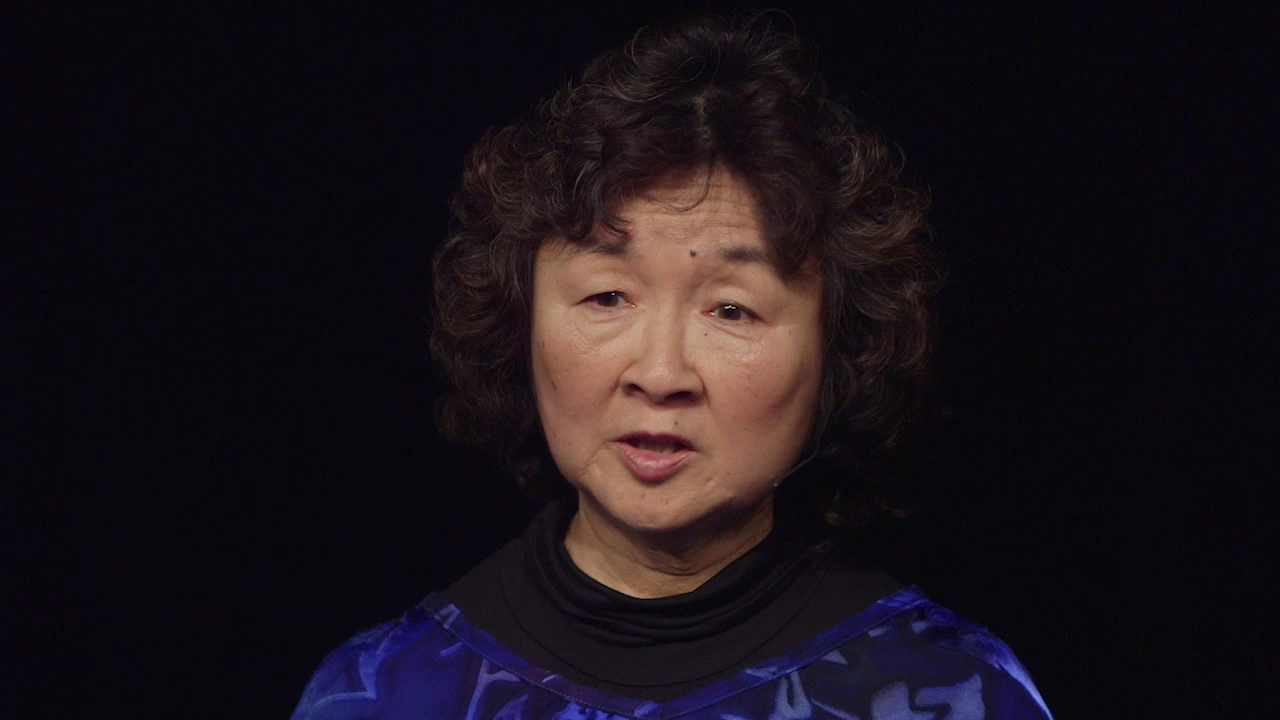
I took those skills into college and graduate school. I became a clinical psychologist and the co-creator of Functional Analytic Psychotherapy with my spouse Bob Kohlenberg. It’s a therapy that focuses on the power of the connection between therapist and client as the vehicle in creating change.
As a developer and researcher of methods of creating extraordinary interaction, I finally found a sense of belonging in a tribe and I have dedicated my life to helping others feel the same way. So I’m here today to share with you three simple but powerful steps in a formula to create extraordinary interaction. “Extraordinary” comes from Latin term “extra ordinem,” outside the normal course of events.
Synonyms are: "remarkable," "exceptional," and "unforgettable. " There are three components to an extraordinary interaction: open-hearted disclosure of what feels vulnerable and outside of one’s comfort zone, there’s being received with warmth, acceptance and non-judgment, expressed appreciation of everyone involved in the interaction. Since I’m a scientist, it’s taking all my self-restraint to not inundate you with data to convince you that this three-step formula really works.
What I’ve done is I narrowed it down to one data slide that is representative of the work my colleagues and I do at University of Washington’s Center for Science of Social Connection. In this one study, 77 undergraduates had encounters with research assistants who were open-hearted, warm, appreciative. They just answered questions like what I’m going to be sharing with you today, such as, “What does your heart long for?
” One measure of impact that we used was the “Inclusion of Other in Self Scale” which has circles indicating how close you feel to someone. Before they interacted, subjects indicated that they felt separate from the research assistants, which is to be expected. And then after engaging in these penetrating questions that were mutually responded to, this is how close they felt.
So, a sense of separateness transforms into a sense of closeness through short open-hearted conversations. More importantly, it’s the visceral sense of what happens when you have a close interaction. I’ll never forget the student who told me, after participating in the study, that she was so moved she was going to change her major from engineering to psychology, so that she could become a clinical psychologist!
(Laughter) To give you more of an emotional sense of what extraordinary interactions can be like, I’m going to show you a video in which I facilitated these really powerful experiences using six questions. These are snippets, what you’ll see are snippets of conversations between relative strangers who came to my Live with Awareness, Courage and Love Meetup at the University of Washington, and who volunteered to be in this video. They are very brave souls.
What I said to them was: “Just be yourself, be open-hearted in self-disclosing when I pose you questions, and listen to your partners with warmth. Just let them know 'I’m here. Really listening.
I’m not judging you. '" So watch for how they disclose with vulnerability, listen with acceptance, and express appreciation. (Video) [Creating extraordinary interactions] What's a strong value or conviction you have that you're willing to make sacrifices for?
That all the things I believe that other people deserve, to believe that I deserve them. It's that. .
. people are good. Authenticity, being real.
What does your heart long for? A place that feels like home. That, no matter what, I am lovable, To, like, let people in more, and not be so afraid of that.
I pretend that. . .
It's okay, I don't need other people, I don't need that connection. I pretend to be stronger than I am at times. I don't always feel very capable of just being in this world and living life.
If I had the courage, I would. . .
I would tell my story to the whole world. My partner being in a state hospital because he tried to kill himself. I'd have some really hard conversations, some conversations that need to be had with people that are really close to me.
I'd probably retire. . .
right now. What's a truth that feels scary or vulnerable to admit? I have a lot of friends.
. . I'm always active and busy, but I always feel alone.
I'm lonely for emotional connection. What do you appreciate about the person you've been sharing with? I really appreciate your being here with me, with no jugdment, but kindness and generosity.
I appreciate your. . .
seeing me and hearing me. I appreciate that what's inside you is so real, and so much like me. It doesn’t take a scientist to see how connected they felt after disclosing with vulnerability, listening with acceptance, and expressing appreciation.
Take these questions and make them your own. Use them in line at the grocery store with strangers, at parties with acquaintances. Use them with someone close to you.
I know, though, that it can feel really scary and risky to do this, so what I’m going to do now is step outside of my comfort zone, even more than I already have by giving this talk, and answering the question that’s the toughest: “What’s a truth that feels vulnerable or scary to admit? ” It’s this. My partner of 39 years, the love of my life, is 17 years older than me, so chances are he’s going to go before me, and I’m going to feel really lost without him.
He’s enriched the joy and the meaning of my life beyond measure with his wondrous presence, his passionate love, his fertile mind, his steadfast support of who I am. I can’t imagine living my life without my North Star. This talk is dedicated to you, Bob.
If I can do this in front of an audience, you can do it with individuals. Who could you have an extraordinary interaction with? Who pops into your mind right now?
Try it and post about your experiences on Facebook at the Create Extraordinary Interactions page, so that you can inspire everyone else to do the same. Remember a huge body of scientific evidence shows that our ability to form close connections not only increases our mental and physical health, but interpersonal closeness helps us live longer. Together we can enhance everyone’s well-being and sense of belonging in this world.
Let’s do it! Thank you.