my friends we will be discussing on the evolution of supply chain management supply chain has kept evolving here on years and is still evolving although there are many revolutions and some of them could be debatable whether they are really part of evolution and innovation but yes there are many which has directly and indirectly contributed to evolution of the supply chain management let's see in brief about the history of supply chain revolution we know that cars have changed life of everyone going back in the history concept of assembly line by henry ford has been a major
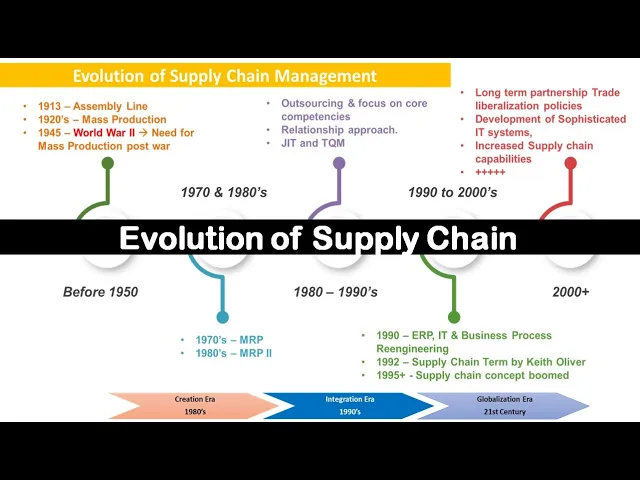
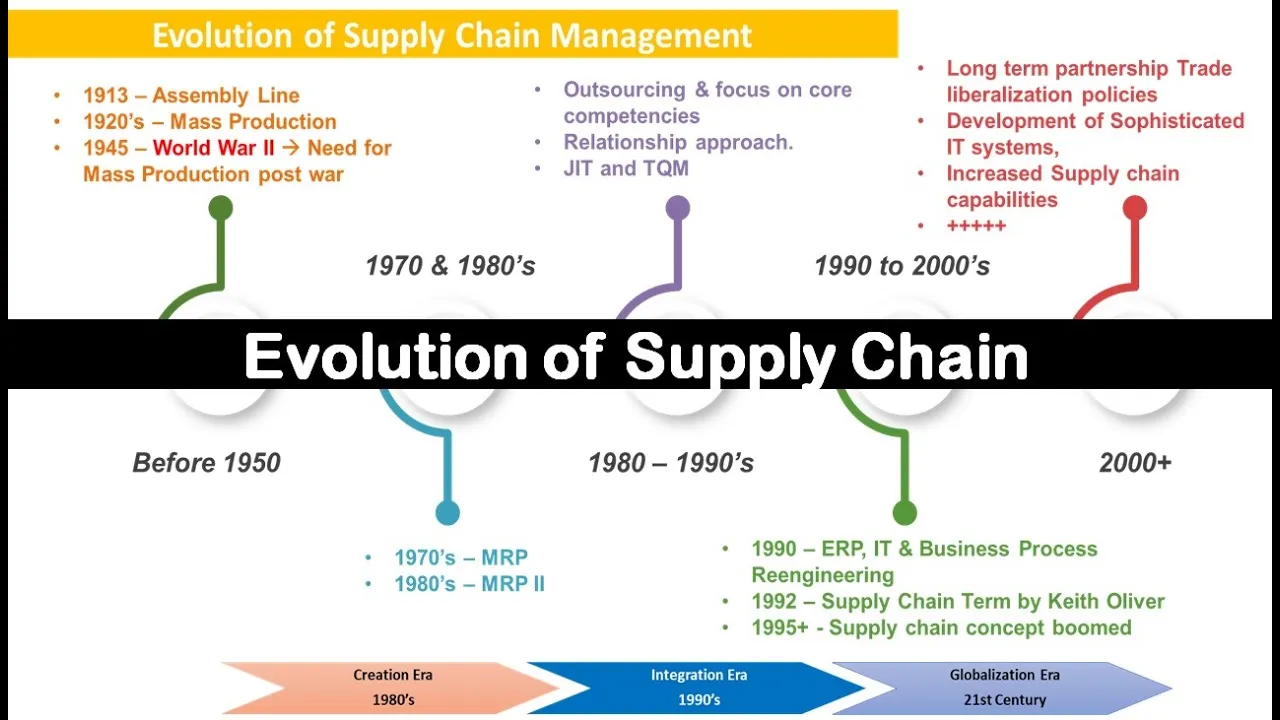
historical change in the manufacturing industries assembly line is simply a manufacturing process which is designed for sequential arrangement of workers machines tools and parts in such a way that motion of all these is at minimum possible extent before the industrial revolution most manufactured products were made individually by hand a single craftsman or team of craftsmen would create each part of a product however concept of assembly line has changed an era in industrial engineering and production in 1913 henry ford installed the first moving assembly line for the mass production of an entire automobile which reduced significant
time in building a car mass production had taken a boom in this era and term mass production has become popularized in late 1920s mass production was also referred as flow production or continuous production mass production is simply the production of large amounts of standardized products especially on the assembly lines one of the descriptions of mass production is the skill is built into the tool which means that the worker using the tool may not need the skill now let's move little further there was world war ii which was known as a global war and that lasted
till 1945. after second world war there was a high need to increase production the most part of the world was suffering from hunger most manufacturers gave priority to mass production to minimize unit production cost as the primary operations strategy this was the first stage of the creation of economies of scale however these years 1950s and 1960s the concept of supply chain management was unknown during these years new product development was slow logistics cost were high also issues concerned with purchasing activities were neglected by managers at that time in the 1970s managers become aware of the
huge work in process inventory on manufacturing cost lack of new product development quality and delivery time one of the factors of this was due to increased awareness of introduction of materials requirement planning or mrp due to this the focus in this period changed it is not just increased production economies of scale but to increase the performance going ahead in 1980s the term mrp2 or manufacturing resource planning was popularized across the globe mrp2 was developed to expand upon mrp1 and mrp2 is providing additional functionalities including finances and general accounting demand forecasting for inventory requirements machine and
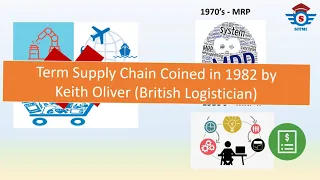
labor capacity planning which was lacking in mrp1 hence mrp2 became more strategic and advanced version for manufacturers around the world in 1982 keith oliver a british logistician and consultant introduced the term supply chain management to the public domain in one of his interview with the financial times but the term supply chain gained more popularity in mid 1990s and further the term supply chain gained lots of attention in late 90s through books articles and its awareness in manufacturing sector during the 1980s and 90s it was observed that firms dealing with increased demands outsourced logistics activities and
made sure to focus on their core competencies due to these changes the outside specialist presented benefits to manufacturers like economic service more productivity and more efficiency therefore many manufacturers realized an approach of building relationships and hence they went more for a relationship oriented approach with their suppliers and customer they understood the benefits of cooperative relationship with the other firms in the different chain levels in 1980s there were the breakout years for supply chain management where manufacturers utilized just in time and total quality management strategies to improve quality manufacturing efficiency and delivery times in the 1990s
there was the introduction of enterprise resource planning tools and this gave a boost to the evolution of the supply chain management with the information technology aspects like edi or electronic data interchange concepts erp and edi had played a vital role in connecting different channels within and outside organizations erp evolution has been continued in the 21st century with the development of more sophisticated i.t systems moreover the relationship of buyer and supplier in this period have gone one step forward from normal partnership to long-term relationship and strategic alliances manufacturers and suppliers and retailers are now coming together
with their strengths and technology to ensure competitive advantages through new product development distribution channels cost reduction and many more programs an integrated supply chain gives considerable competitive advantage to the individual actors participating in the chain in 1990s business process re-engineering concepts resulted in growing interest for cost reduction and increased process efficiencies the current era is also referred as globalization error globalization error starts with the creation of the trade liberalization policies and the establishment of institutions like world trade organization and other international institutions that deal with global and regional trade policies so in this section we
have combined all the historical happenings in one timeline starting from assembly line till the era of globalization thank you [Music] you