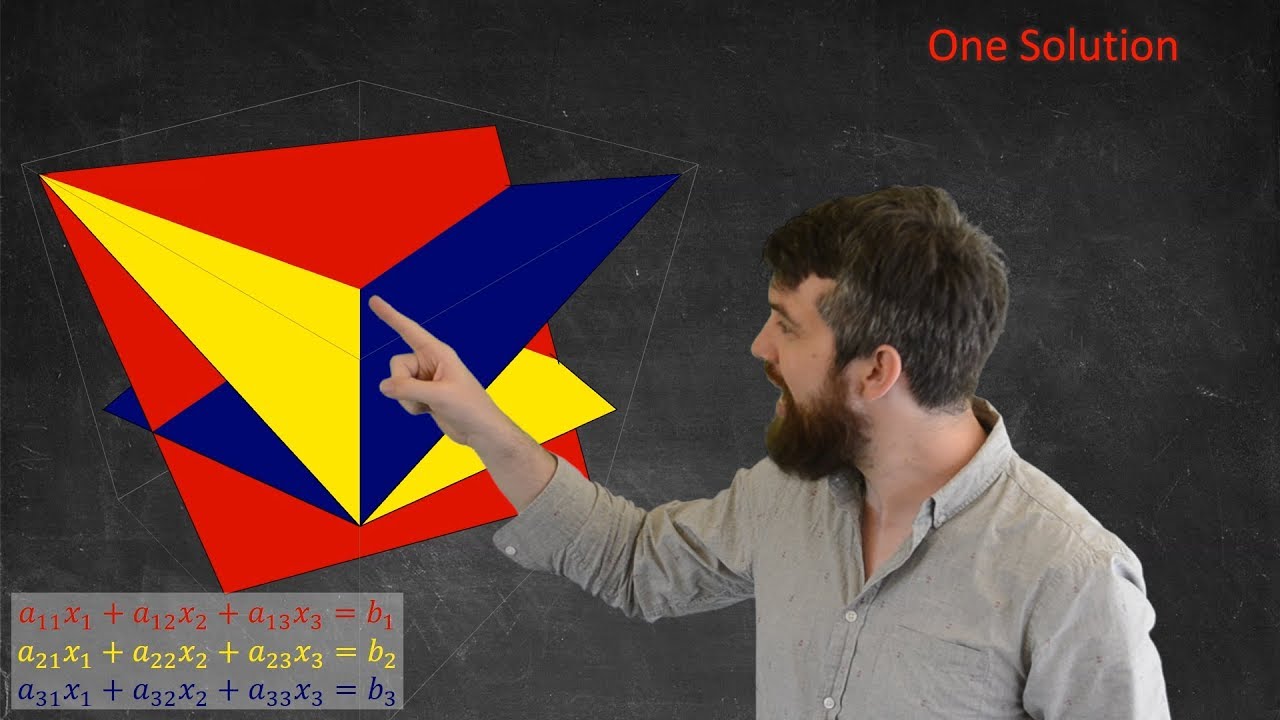
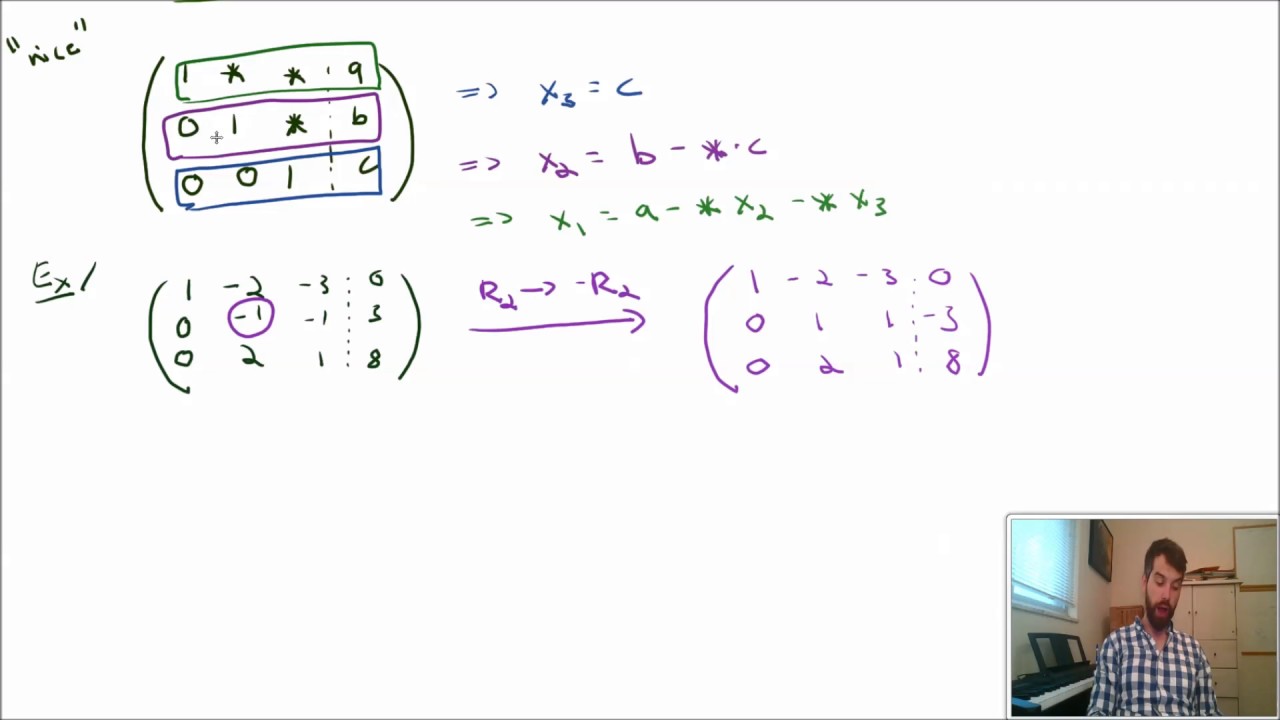
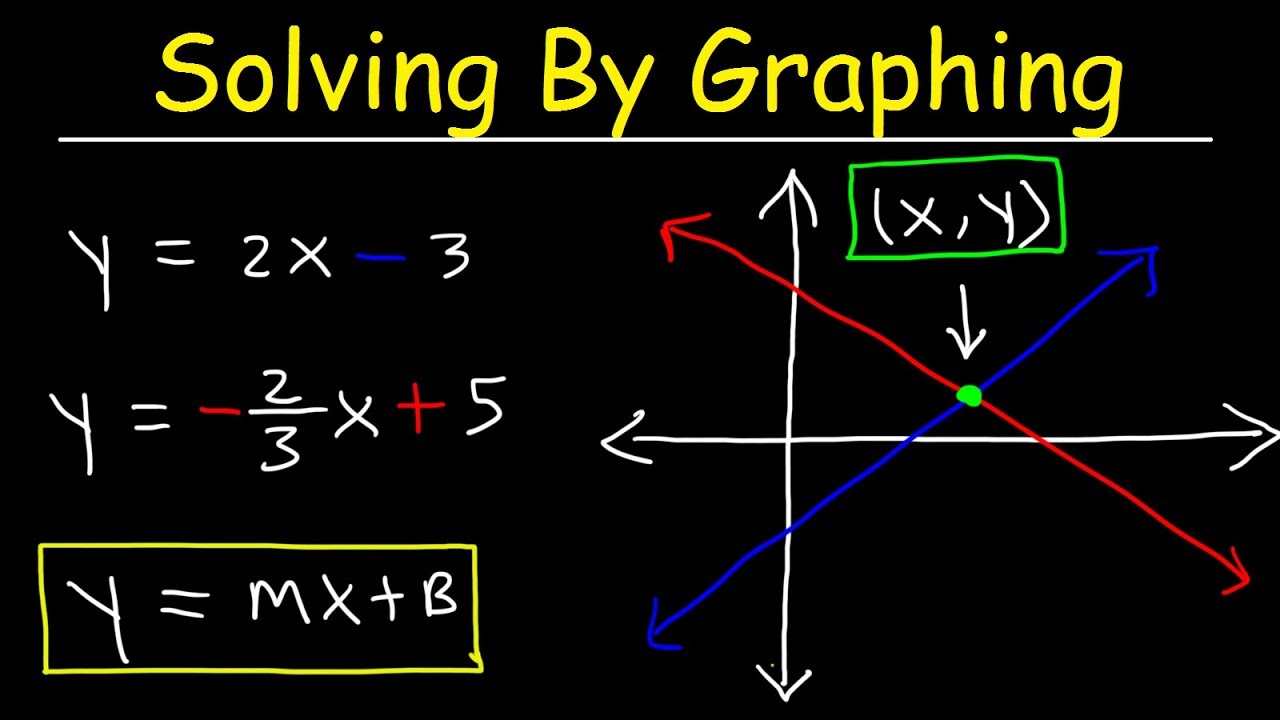
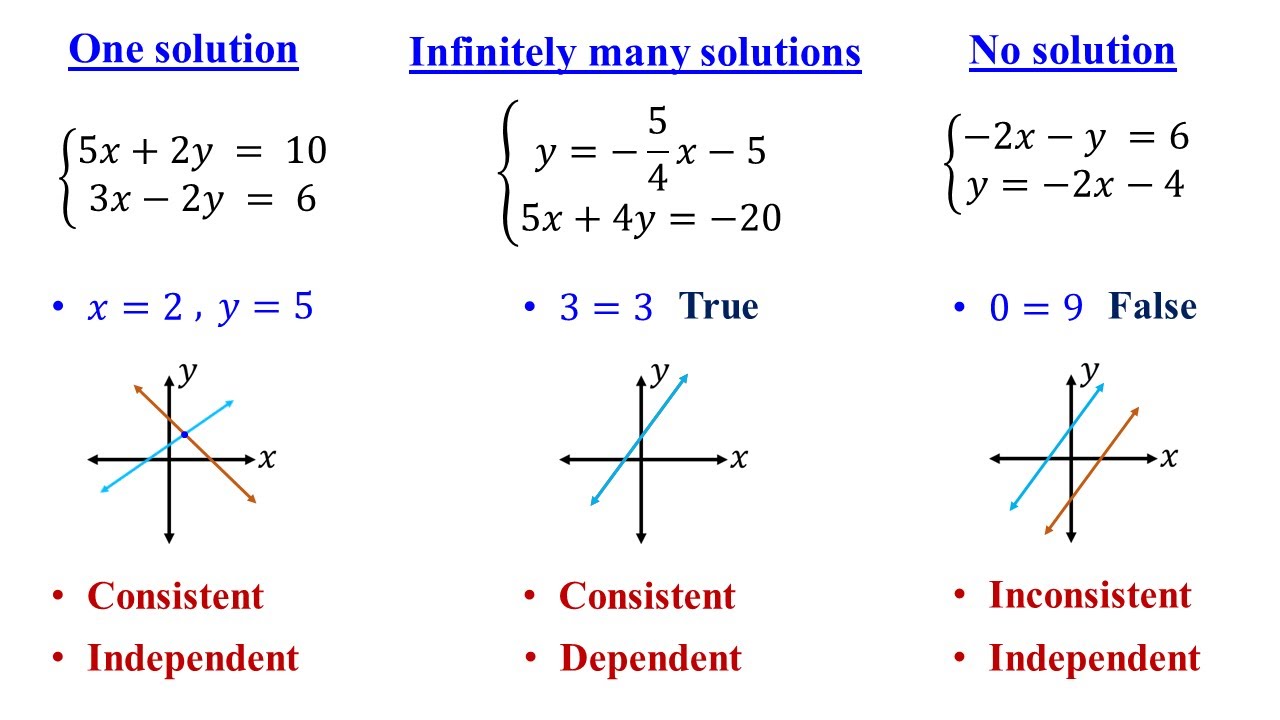
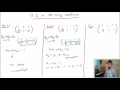
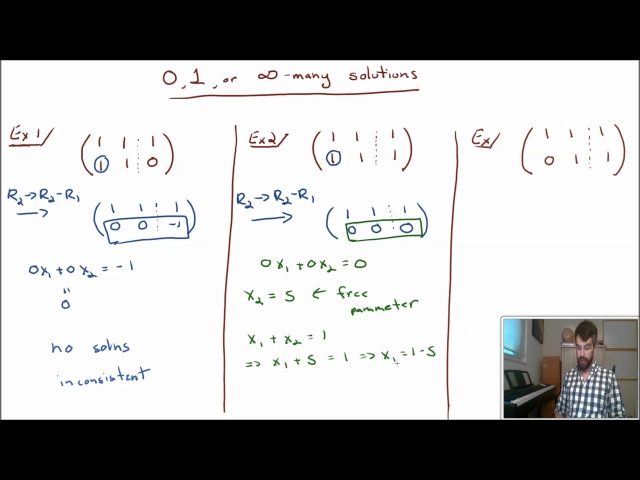
one of the most important properties about systems of linear equations is that they have only either zero one or infinitely many different solutions so those are the three different possibilities that we can have and what I'm going to do in this video is I have an example of each of them and previously while we've seen how to deal with what happens if there's just a unique solution we are going to do these row operations and try to turn that into its upper triangular form I'm going to show you in this video how we deal with
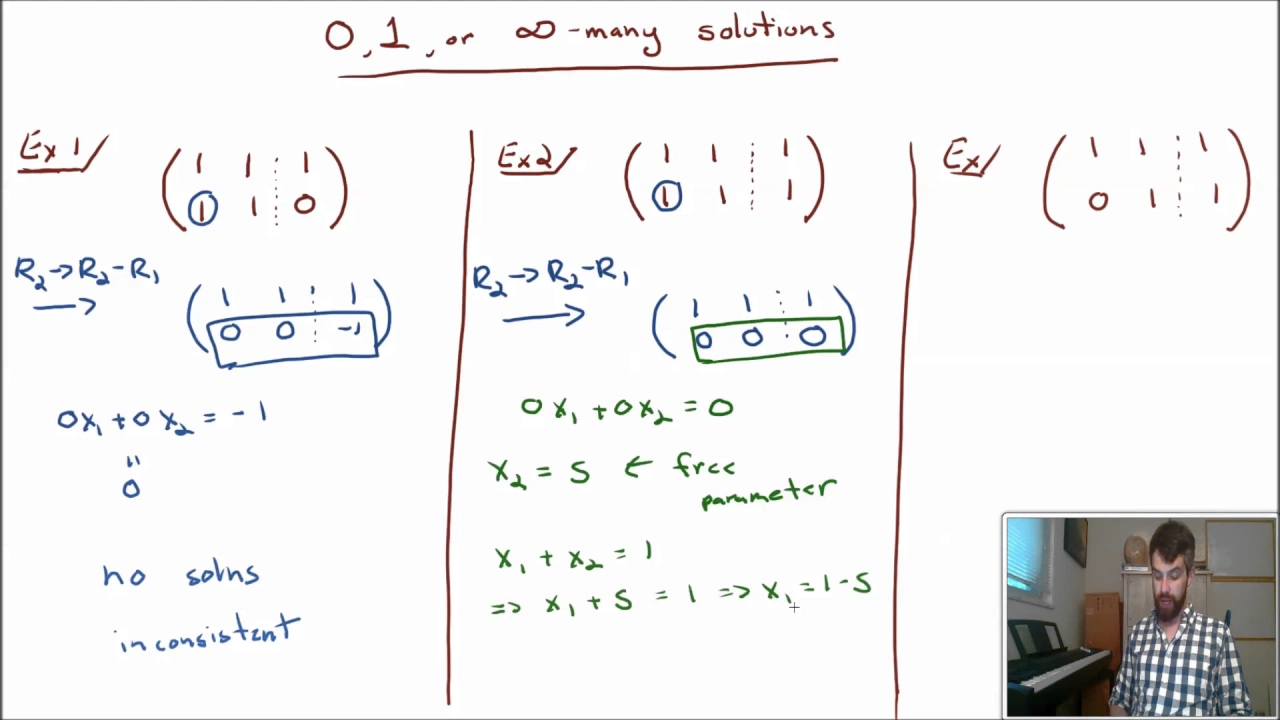
the cases when there's infinitely many solutions or when there's no Solutions so let's do the one on the left first now all three of these matrices look almost the same they're a 2X two system as in two variables and two different equations and they're mostly ones but possibly just with one zero and you're going to see that it's really sensitive small little differences like one one turns into a zero can make all the difference between Z1 or infinitely many solutions so remember our first goal is to try to put a zero here we have this
sort of leading one on the top we want to put a zero underneath it that's our ideal form so I'm going to continue in that vein and what I want to do is to put a zero there is I'm going to take the second row and I'm going to put in place of it the second row minus the first row so that doesn't change the first row at all I can just copy and paste the first row but then if I'm trying to subtract the the first row from the second row I go 1 -
1 is 0 1 - 1 is 0 and 0 - 1 is -1 so this is what happens when I try to reduce this particular Matrix however if I read off the bottom row here what this tells me is that 0x1 + 0x2 is equal to minus one in other words it's telling me that that 0 is equal to minus one this cannot be there is no X1 and X2 that has the property that this linear combination of them is going to be equal to minus1 so this tells me that I have no Solutions or
another way to write it is to say that it is inconsistent all right let's look at the second one so same process I'm going to focus on trying to put a zero in this location and I'm going to do the same thing I'm going to take my second row and in its place I'm going take the second row minus the first row and again that does not change the first row but now I go 1 - 1 is 0 1 - 1 is z and 1 - one one last time is one more zero now
there's something sort of interesting to know here if I look at this bottom equation in this scenario right so if I look at the bottom row this is a totally pointless row it just tells me that 0x1 plus 0x2 2 is just equal to zero well well duh it it doesn't matter I'm not getting any new information or another way to put it on it is I'm not putting any constraint on the variables X1 or x2 in a sense I have a little bit of Freedom here that that normally I had two different equations that
would constrain my variables but but now I only have one equation that's constraining them the first of them so what I'm going to do is this I'm going to let X2 it could have been X1 but I'm going to let X2 and I'm going to let X2 equal to S and when I do this I'm thinking of s is just some arbitrary free parameter so this s is a free parameter it could be anything and then what I'm going to do is I'm going to figure out what X1 is in terms of this parameter which
could be anything so I'm going to say therefore from the first row X1 + X2 is equal to 1 so in other words X1 plus that that value that I'm sub in which is s is equal to 1 or in other words X1 is equal to 1 - s so if I take those things together what you'll notice is that there are infinitely many possible solutions infinitely many solutions why well choose any number s you might like how about 100 then that can be my X2 and my X1 is going to be 1 - 100
or - 99 in this case so for any value s that you can get we get a pair X1 X2 which is going to solve this system of linear equations and so the idea is effectively when you have these zero rows that don't put any constraint then you get some freedom and you just make one of these variables in this case the X2 a so-called free variable or a free parameter it could just be any arbitrary symbol S and then you figure out what the other variables can be in terms of that free parameter s
and then in this final one it's already in that form that I want to have where I've got a a leading one here and then a zero beneath it and then another leading one here I actually don't need to do anything it's already in its ideal situation and I can just read off so if I look down at the second equation I get x2 is equal to 1 so that's one answer and then for the first equation I get X1 plus X 2 is equal to 1 so in other words X1 + 1 is equal
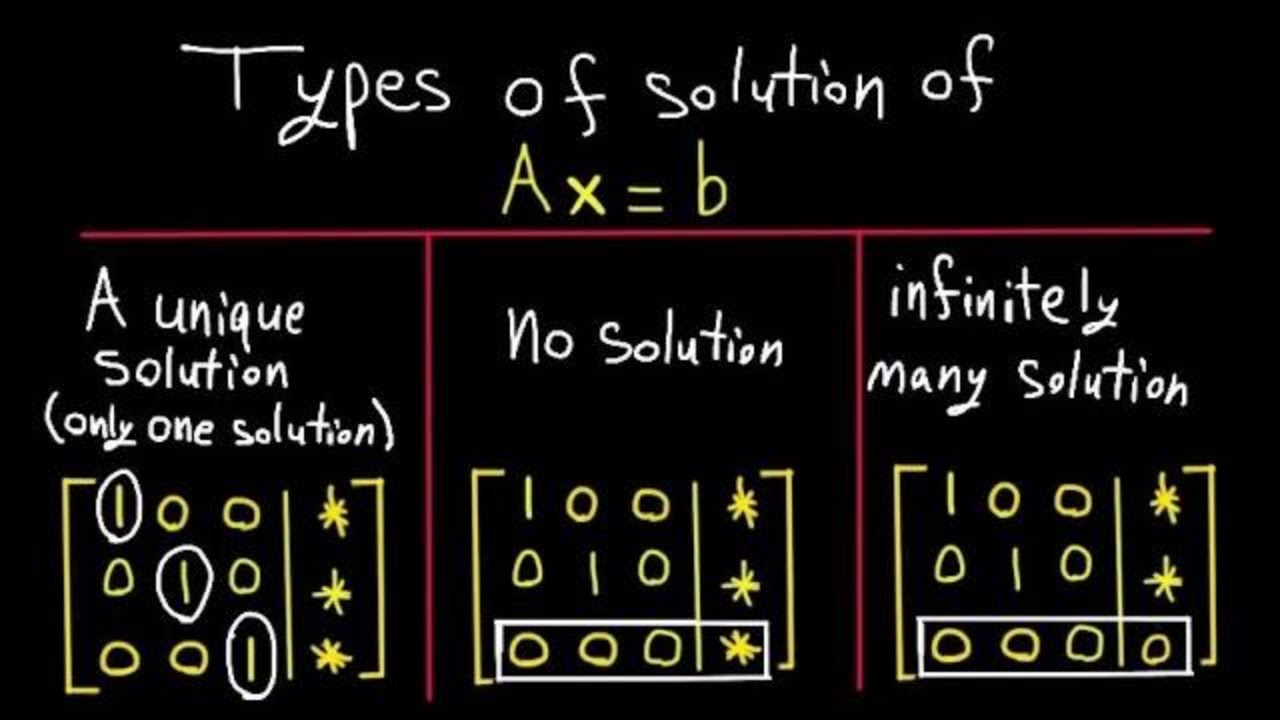
to 1 or in other words X1 is equal to zero so in other words I'm going to just get one solution a unique solution so the key difference between these three examples is that after I do my row operations to put it in that ideal upper triangular form the bottom rows look very different on the first one it was all all zeros with the variable and then a nonzero constant in the second one it was all zeros both in the coefficients and in the constant and then in the final one it was all zeros but
there was that one nonzero coefficient and the nonzero constant and that gave us the unique solution so it's all about reducing it down to these uh ideal forms looking at these rows and saying is there a contradiction there is there a freedom there or is there a unique solution
![Zero, One, or Infinitely Many Solutions? [Passing Linear Algebra]](https://img.youtube.com/vi/dZJaieE719k/maxresdefault.jpg)