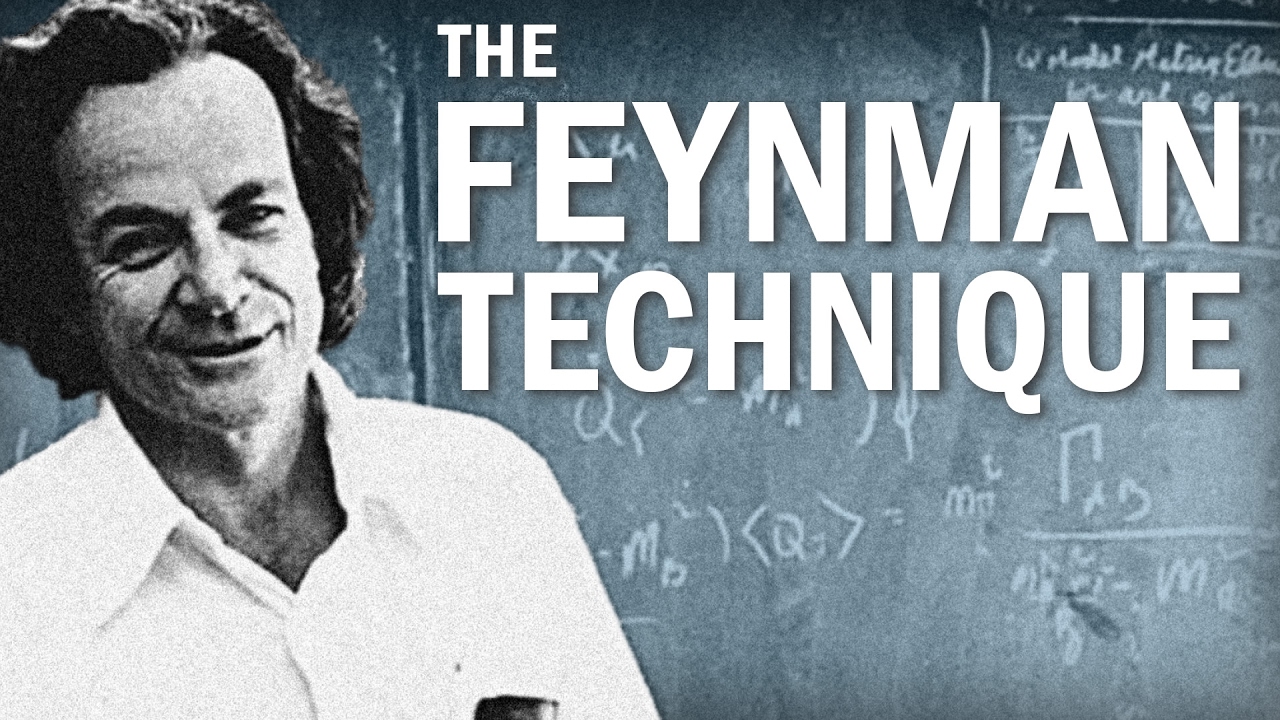
thanks to brilliant for sponsoring this video and supporting my channel a few years ago i made a video about something called the feynman technique this is a simple but highly effective study technique where you deepen your own understanding of a concept by attempting to simplify it and explain it to someone else in other words you teach to learn in this video i want to present a modified version of that original findment technique that i've been using in my own independent learning projects as of late conceptually it is very similar to the original finding technique but
in execution it is quite different so i'm going to give it its own name to keep things distinct and that name is the lpc method which stands for learn present critique and i've been using this lpc method in my own studies of anatomy biomechanics and bioenergetics as part of my goal to earn both cscs and pbc certifications which if you're curious are certifications in the strength training and coaching industry and i've learned through using this that this technique has a very high roi on helping me retain lots of information without having to spend a lot
of time actually studying it so in this video i'm going to walk you through exactly how to use the lpc method along with some examples and i'm also going to compare it to the original feynman technique you can see in the timestamps below exactly where those sections are but first if you haven't seen my original video or if it's been a while i want to give you a very quick refresher on what the feynman technique is the heart of this technique can be found in a quote that is often attributed to albert einstein though he
probably didn't actually say it but it goes like this if you can't explain it simply then you don't understand it well enough the idea behind the fieman technique is to break down a concept and simplify it to the point where you could easily explain it to a lay person if you can't do that then you don't understand it well enough yourself and in going through this exercise actually trying to explain it on a piece of paper you expose gaps in your understanding which you can then go and try to shore up so again conceptually the
lpc method is very similar to the feynman technique we're trying to achieve the same goal except for replacing the act of writing on paper drawing diagrams with actually presenting to a camera here is the tldr version of the lpc method first you go out and learn go to the lecture material watch a video read a book take your notes as normal second present a concept present something you've learned to your phone camera as if you were explaining it to a friend or explaining it to a classroom like a speech and third upload that video paste
it into your notes and finally watch it and critique it and in your critique you're looking for three different things number one any errors factual errors that you need to correct number two any areas where you are vague where you can add clarification and number three any questions that your critique brings up after the fact you can then go and learn about through supplemental material or through revisiting the actual material you're learning from so here's a real world example from my own study of human anatomy if you look through my notes here on notion you'll
see lots of different videos where i'm explaining lots of concepts but the one that i want to show you here is my explanation of the different moving joints in the human body which are called synovial joints so first i went through that learning process in this case the material that i'm working through is barbell logic's principles course which goes through pretty much everything you need to learn to become a beginner strength coach so biomechanics bioenergenics the basics of human anatomy as well as how to coach the four main power lifting lifts so i'm going through
this course and i'm taking my notes on the different joints in the body and how they move and i use a pretty typical outline style note taking technique here in notion with the one exception that i often will clip a lot of screenshots and add a lot of multimedia elements into my notes to take advantage of multimodal learning and i'll touch on that a little bit later but now it's time to move on to step two which is present at this point i want to put my phone on a tripod and pick a concept or
a set of facts to present and explain to my phone as if i were explaining it to you or to a friend so in this case i picked these six different diarthrodial joints in the body and explain how they work in the video so the way to imagine a saddle type joint and how it moves is if you took your knuckles here and took the other knuckles here and sort of sandwiched them together now this is my own analogy they did not teach this in the course but it sort of is analogous to how you'll
see illustration once i'm done recording i use the youtube app to upload an unlisted copy of this video to a second youtube channel i have specifically for my own learning and for this lpc technique and because it's on youtube i can then go ahead and paste it into my notion which will embed it and that brings us to step three critique at this point i'm going to watch through the video and i'm gonna look for again three things number one factual errors so for example at one point in the video i mentioned the carpels of
the hand and the carpels of the feet those are the tarsals i'm gonna also look for anything where i could be a little bit more clear or more correct in my explanation so at one point i mentioned the joint between the metacarpal and the uh phalangeal bones here in the thumb well that is a joint but it's called the metacarpophalangeal joint so i should actually use the name of the joint and finally number three if i have any questions that come up in this critique process and i almost always do i want to go out
and get answers to those questions and this is just another way that encourages me to deepen my understanding often by using supplemental resources so how is this method better than the original feinman technique well i am not going to stand by that claim for every subject or every concept out there but i do think that for certain types of information certain concepts this is much better than the feynman technique in terms of roi and it's because you're using a different mode of learning or mode of active learning specifically to deepen your understanding of the subject
material going back to my example of the synovial joints in the body if i get on camera and i verbally explain how these joints work but also use body language to demonstrate how they work and point out where they are on my own anatomy i am using multimodal learning to deepen my own understanding if i wanted to do that with the feynman technique i would have two different options i would either have to write out in text how these things work that's a very abstract way of learning it's gonna take me a lot longer or
i would have to draw them that is a more iconic type of learning using iconography it's much better in terms of me being able to visually see how something works but drawing takes a lot more time than just pointing out and moving my arm to show how a hinge joint works so in terms of time spent studying versus retention of information for certain kinds of topics this is going to be superior though i think the real improvement to the finding technique here is to combine your use of both of these techniques either separately based on
the type of concept you're studying or maybe even lumping them all into one big technique there is nothing stopping you from breaking out a whiteboard and actually writing out or diagramming while you film yourself but that extra step of critiquing yourself afterwards is another thing that's going to help deepen your understanding in general you want to pursue a multi-modal learning strategy because no one way of learning is better than any other you may have seen this often cited learning pyramid floating around the internet where people will say things like you only retain 10 percent of
what you hear 20 of what you read etc well as it turns out the original version of that pyramid number one wasn't even called a pyramid it was a cone it's about the cones but number two did not include those percentages at all and as far as research has been able to find those percentages are completely made up the original version of the cone was called the cone of experience it was created by edgar dale who was a very well respected education researcher and his whole point in creating this cone was to just create a
model that showed visually the differences and levels of abstraction between different methods of learning be it verbal or text based or audio visual and his whole point was that mixing up different methods of learning is more powerful than using anyone in fact back in 1969 he wrote that direct hands-on experience what we often think of as the gold standard for learning anything is often not the best way to learn something and more recent cognitive research has confirmed this and shown that for basic concepts a more abstract learning model is actually better and once you get
into higher order learning concepts then hands-on experience is better so as far as cognitive research is found a multimodal approach truly is the best so talk about what you're learning demonstrate it with body language draw it find a way to get a new perspective and a new view on what you're learning and you're going to find your long-term memory your long-term ability to retain and recall that information and master it truly understand it is going to improve as well before i end this video i want to let you know about one more resource that i'm
using in this independent learning project of mine and that is brilliant specifically their chemistry course because believe it or not i never took chemistry in college and in my current study of bioenergetics i am learning that a little bit of chemistry knowledge is actually very useful so i'm currently going through brilliant chemistry course and i'm finding it very helpful for understanding how chemical reactions work i'm also using some more passive supplemental resources lecture materials videos but brilliant is built with active learning in mind which means while i'm going through their course i'm constantly being quizzed
i'm constantly being asked to solve problems and if you know anything about the cognitive science behind active learning you will know that this is a much more effective efficient and interesting way to learn and it is the methodology they use to build all the courses in their library of which there are more than 60. so if you want to get better at math at science at computer science you're going to want to check out brilliant in all their courses you're gonna find logically sequenced bite-sized quizzes and interactive puzzles that keep you actively engaged and help
you to master the material more effectively and by solving problems more frequently you become a better problem solver overall so if you want to get started learning today go over to brilliant.org thomasfrank to sign up and to support this channel hopefully you found this video helpful i'm finding this very helpful in my own study so hopefully you will as well if you enjoyed this video likes and comments definitely help the algorithm and i'll have one more video right here and another one right here if you want to keep watching stuff on this channel thanks as
always for watching and i'll see you in the next video