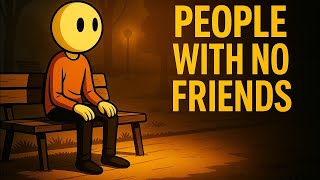
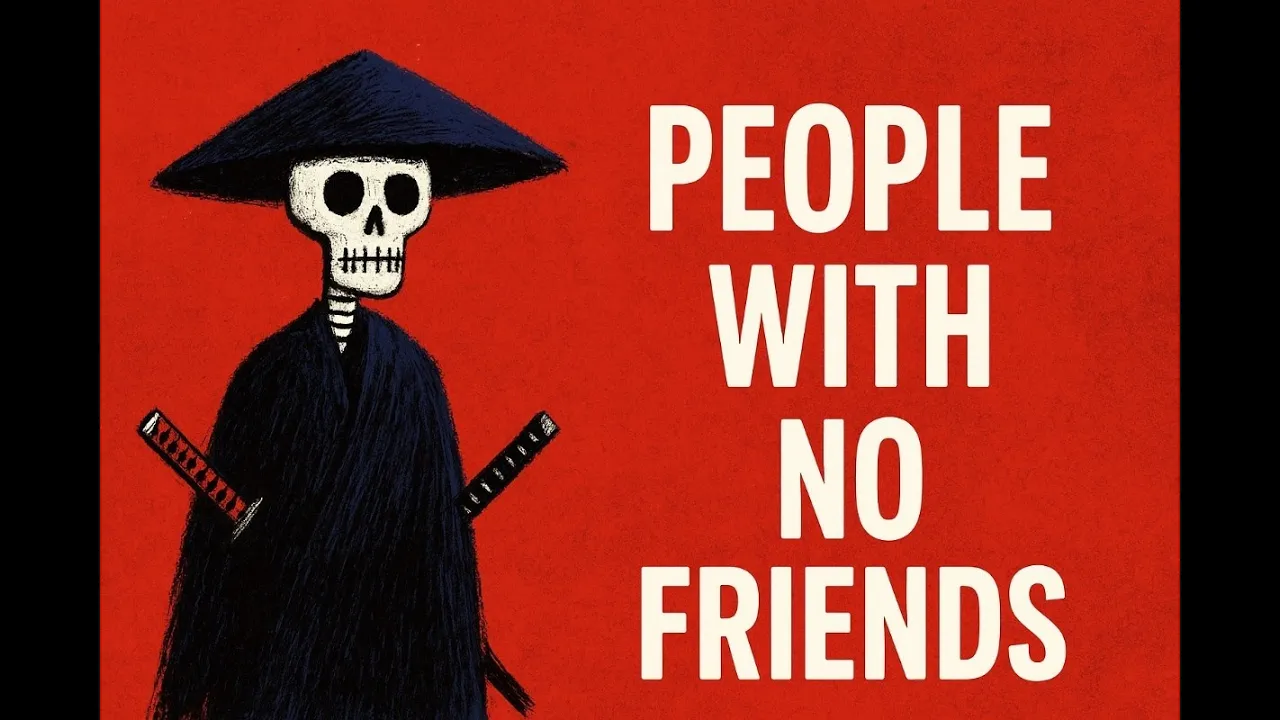
[music] There's a certain kind of loneliness that doesn't always look like loneliness. It's quiet, invisible. It hides behind laughter, behind productivity, behind the phrase, [music] "I'm just busy lately.
" But deep down, there's an ache that never quite goes away. It's not the loneliness of being physically alone. It's the loneliness of realizing that no one really knows you.
that if you disappeared for a while, most people wouldn't notice until much later. That if something incredible or terrible happened to you, you wouldn't know who to tell. It's the kind of silence that grows inside you slowly.
Not loud, not desperate, but constant. And eventually, it starts to change the way you think, the way [music] you see yourself, the way you move through the world. People [music] often assume that those who have no friends are cold, antisocial, or uninterested.
[music] But that's rarely the full truth. Sometimes it's the opposite. Sometimes they care too deeply.
[music] They observe too much. They notice every micro shift in tone, every subtle change in energy, every half-hearted smile that doesn't reach the eyes. And after a while, they start to retreat.
[music] Not because they hate people, but because connection starts to feel unsafe. Psychologically, this experience changes [music] the brain. When you go too long without social bonds, your brain begins to interpret isolation as [music] a form of threat.
It triggers the same regions associated with physical pain. That's why loneliness doesn't just hurt emotionally. It actually hurts physically.
Your heart rate changes. Your sleep becomes lighter. Your mind starts scanning for danger in places where there isn't any.
Because the human brain evolved in tribes. And to be alone for too long was once a death sentence. Yet today, you can be surrounded by thousands of people online and still feel utterly unseen.
Because attention isn't connection and validation isn't intimacy. There's a difference between being known and being understood. And that's the part people who have no friends [music] understand better than anyone.
Most of them didn't choose this path overnight. It's not like they woke up one day and [music] decided, "I don't need anyone. " Usually, it happens slowly through small disappointments that pile up over the years.
[music] You share something personal and someone laughs. You trust someone with a secret and they use [music] it against you. You try to open up, but you feel misunderstood.
And eventually your brain learns a lesson. It's safer not to try. So you stop reaching out.
You stop initiating. You start telling yourself you prefer solitude. And at first you might even believe it because solitude can feel peaceful for a while.
It gives you control. It gives you space. [music] But the truth is after enough time solitude turns from healing to haunting.
Because deep down humans are wired for connection. Even the most independent soul still craves to be seen, to be mirrored, to be felt by someone else's presence. But when you've gone years without that, something strange begins to happen [music] inside.
Your internal dialogue becomes louder than the world around you. You start talking to yourself, not out loud, but in thoughts that never end. You start replaying old memories, old [music] friendships, old betrayals, and wondering where it all went wrong.
Sometimes you convince yourself it's your fault. Sometimes you blame the world, but most of the time it's neither. It's just the complex dance between human psychology and human pain.
There's a concept in psychology called learned social helplessness. It's when you've tried to connect so many times and failed that you unconsciously stop trying altogether. Your brain associates reaching out with rejection.
So even when you meet good people later, kind, open, understanding, your guard stays up. You might tell yourself you're fine being alone, but somewhere deep down you're still yearning for that one person who gets it. That one person who doesn't need explanations.
And yet, the more you want it, the more impossible it feels to find. Because loneliness has a way of making you feel unworthy of friendship. It whispers things like, "You're too much or you're not interesting enough.
" It tells you that people have better things to do. And eventually, you start believing it. You start rejecting yourself before anyone else gets the chance to.
You isolate not out of pride, but out of protection. But here's what's fascinating. Loneliness doesn't always look sad.
Sometimes people without friends appear completely fine. They smile, they work, they create, they even post happy photos online. But deep down they live in two realities.
The one the world sees and the one they feel. They've built a version of themselves designed to survive without connection. But that version often feels hollow, like they're watching their own life from the outside.
It's easy to judge people who have no friends, to label them as weird, aloof, or difficult. But if you listen closely to their [music] stories, you'll often find a thread of quiet heartbreak. Moments where they gave too much of themselves to people who didn't care enough to stay.
And over time, that heartbreak shapes their entire identity. They begin to associate intimacy with danger, vulnerability with regret. So they learn to live without it.
But the cost of that adaptation is high. Because without genuine friendship, your world becomes smaller. Your emotions start echoing in your own mind.
There's no one to challenge your perspective, no one to soften your thoughts. Psychologists say that prolonged social isolation can reduce empathy, not because people stop caring, but because they stop practicing emotional exchange. Empathy is like a muscle.
When it's not used, it weakens. So, people who live alone for long periods sometimes become emotionally numb. Not by choice, but by necessity.
It's the brain's way of protecting itself from the pain of unmet connection. And yet, something paradoxical happens. The very people who have no friends often crave deeper friendship than anyone else.
They think about connection more deeply. They analyze it. They romanticize it.
They look for meaning in every small interaction, every passing smile. Because when something is rare, you start to treasure even the smallest moments of it. But loneliness doesn't just [music] affect how you feel.
It affects how you behave. Studies show that people who've been isolated for a long time can become hypervigilant to social cues. They overanalyze text messages.
They assume disinterest where none exists. They read between lines that were never written. Because when you've been rejected or forgotten enough times, your brain begins to scan for signs of it everywhere, even where it's not real.
This creates a self-fulfilling loop. You become cautious. People sense that caution is distance.
They assume you're uninterested or cold, and they pull back, reinforcing the very loneliness you are trying to escape. It's not your fault. It's just the way the human mind tries to protect itself from pain.
What's even more fascinating is how loneliness changes the way you see time. When you have no one to share your moments with, time starts to feel slower. Days blend together.
You stop keeping track of weekends and holidays because those things only matter when they're shared. Psychologists have found that loneliness literally alters time perception. Minutes feel longer, hours heavier.
Because when you're disconnected, you're living inside your thoughts rather than in the flow of life itself. And yet within this silence something beautiful can emerge because solitude when approached consciously can also be transformative. Some of the most self-aware, creative and emotionally intelligent people in history spent long stretches in solitude.
The difference is whether that solitude is chosen or forced. Chosen solitude heals. Forced solitude hardens.
One helps you reconnect with yourself. [music] The other convinces you that you don't deserve to connect with anyone else. And for many people who have no friends, [music] it's not always clear which one they're living in.
They say things like, "I'm just not a people person. " Or, "I like being alone. " But deep down, they miss the kind of laughter that only happens when you're with someone who really gets you.
The kind where you don't have [music] to think before you speak. The kind where silence feels warm, not heavy. It's easy to forget that friendship is more than socializing.
It's a mirror. It reflects back the parts of you that you might never see alone. Without friends, it's harder to know how you're growing or if you're growing at all because we don't just become ourselves in isolation.
We become ourselves in reflection. And when that reflection is missing, [music] you can start to feel unreal. Like you're living in a fog where your existence doesn't echo anywhere.
That's the quiet pain of people who have no friends. Not the pain of loneliness itself, [music] but the pain of invisibility. the pain of existing without witness.
Yet beneath that pain lies an extraordinary depth of empathy. Because they know what it feels like to be unseen, they tend to see others more clearly. [music] They're often the ones who notice when someone is left out.
They're the ones who check in on others quietly [music] because they understand how it feels to go unnoticed. And maybe that's the paradox of this kind of loneliness, that those who have no friends often make the best ones, [music] if only someone would take the time to see them first. There's a moment that often comes quietly when someone who's lived too long in loneliness begins to realize that waiting to be found might not be enough.
That maybe, just maybe, [music] healing isn't about finding people first, but remembering who you were before the silence began. Because friendship, real friendship, can only grow where selfrust already exists. [music] If you don't believe your voice matters, you'll always quiet yourself.
If you think your needs are a burden, you'll always hold them back. And so the cycle continues. Unseen, unheard, unspoken.
People without friends often live in the shadow of old experiences. Moments when they felt too different, [music] too sensitive, too introspective for the crowd around them. Maybe as children they were the ones who sat in the corner drawing while others played.
[music] Maybe they were kind but not loud enough to be noticed. Or maybe they cared about things others didn't. Over time, they began to wear that difference like armor, pretending it didn't hurt, convincing themselves that they preferred to stand apart.
But difference isn't the problem. It's the meaning we attach to it. [music] When you grow up feeling misunderstood, you start believing that something about you must be wrong.
You begin to edit yourself down. [music] You say less, feel less, expect less, and soon you become a version of yourself that no longer fits even the people who might have loved the real you. The psychology behind this is deeply human.
Our brains are wired to belong, to tribes, to groups, [music] to someone. It's an ancient survival instinct. But when belonging feels dangerous, when every attempt leads to pain, [music] the brain learns avoidance as protection.
Avoidance becomes a safety mechanism [music] and safety becomes loneliness. That's why many lonely people seem calm on the surface because their nervous system has adapted to predict rejection before it even happens. They live in constant self-management, [music] trying to avoid being too much or too visible.
What they often don't realize is that the longer they do this, the more invisible they become, not only to others but to themselves. It's like dimming your own light just to avoid being noticed by the wrong people only to realize you can't attract the right ones either. [music] Psychologists sometimes talk about social self-concept, the way you see yourself through the imagined eyes of others.
If you've spent years being ignored or excluded, that inner mirror becomes distorted. You start assuming that everyone will see you the same way. And even when someone looks at you with kindness, you doubt it.
You think they're being polite. [music] You question their sincerity. That's the cruel trick of prolonged loneliness.
It doesn't just separate you from others. It separates you from your own ability to believe you could ever [music] belong. But here's the thing about the human mind.
It can learn connection again. It's not permanent. Just like a muscle that can regain strength, social trust can rebuild itself slowly through tiny acts of courage.
[music] It starts with small gestures. smiling back when someone makes eye contact, answering messages instead of overthinking them, [music] letting yourself say yes even when you're scared. It's not about forcing social confidence overnight.
It's about allowing life to touch you again, one interaction at a time. [music] Because friendship doesn't come from perfection. It comes from presence.
The willingness to show up imperfect and real. What many people don't realize is that those who've been lonely for a long time often have incredible emotional depth. They think deeply.
They observe [music] quietly. They've spent years analyzing human behavior from the outside. So, [music] they understand things others overlook.
They notice sincerity. They feel energy shifts. They can tell when someone's being authentic or when they're just performing kindness.
That's why surface level friendships rarely satisfy them. They crave depth but fear it at the same time. [music] So they build walls with windows.
They want connection but on their terms through safety, consistency, and silence that feels warm instead of empty. And those are not unreasonable desires. They're simply human.
But there's another truth beneath it. Friendship requires vulnerability. And vulnerability feels terrifying when you've spent years protecting [music] yourself.
You can't form bonds without emotional exposure. And that exposure feels like walking barefoot through a field of broken glass when you've been hurt before. So many avoid it altogether.
They say they're fine alone, but that's [music] rarely true. They're just tired of being the only one who tries. Yet, here's the paradox.
When you stop trying altogether, you confirm the very fear that kept you alone. You prove your own isolation right. That's how the psychology of loneliness sustains itself.
[music] Not because you can't connect, but because the mind becomes too afraid to risk the unknown. But imagine if connection wasn't about being impressive, but about being honest. Imagine if friendship wasn't something you had to earn, but something you simply allowed.
The truth is, the people who truly resonate with you won't require a performance. They'll meet you where you are. They'll feel the quiet in you, not as absence, but as depth.
Sometimes the first step isn't finding new friends. It's grieving the old versions of yourself who settled for less than you deserved. The one who [music] begged for attention.
The one who accepted crumbs and called it care. The one who silenced their truth just to keep someone near. When you heal those versions, something shifts.
You start to attract from wholeness, not hunger. And that changes everything. There's a strange kind of freedom that comes when you stop chasing people [music] and start understanding yourself.
You begin to see that being alone doesn't mean you're broken. It means you've been waiting for alignment. For people who don't just feel silence, but bring peace into [music] it for friendships that feel like breathing, not performing.
Loneliness can become a teacher if you let [music] it. It shows you what kind of company your soul truly craves. It reveals what kind of energy you bring into the world and it forces you to build an inner life so strong that when the right people finally appear, you can meet them with [music] presence instead of fear.
Because here's a quiet fact. People without friends often become their own best observers. [music] They develop self-awareness others might never reach.
They spend time reflecting, questioning, growing. [music] And that depth, though born from solitude, becomes the very thing that draws the right kind of people [music] later. The kind of people who see not just who you are, but who you've become because of everything you endured alone.
[music] But healing from long-term isolation takes time. You can't rush it. You can't fake it.
It starts with gentle self-acceptance, with learning to speak to yourself the way a kind friend would. When your mind says, "No one cares about you," answer it [music] softly. "That's not true.
I'm learning to care. When your thoughts whisper, "You'll always be alone. " Reply with, "I'm still open to being found.
" [music] Because your brain listens. It adjusts. Neural pathways change through repetition, not miracle.
The more you affirm connection, the more open you become to noticing it when it arrives. And it [music] will. Because loneliness is not a permanent state.
It's a season, a psychological winter that eventually gives way to new warmth [music] if you allow yourself to fall. The truth is, not having friends doesn't make you less human. It [music] just makes your story quieter.
But even quiet stories can be powerful. They [music] can be filled with art, self-discovery, and meaning. Some of the greatest thinkers, writers, and creators [music] spent years alone before they found belonging.
And when they did, it was deeper, wiser, more grounded because they had learned to love their own company first. So, if you're someone who has no friends right now, please [music] understand this. You're not broken.
You're not unworthy. You're just in the middle of your becoming. [music] The world hasn't forgotten you.
It's simply waiting for you to remember yourself. There will come a day when you'll sit across from someone who looks at you and [music] says, "I feel like I've known you forever. " And in that moment, all the years you spent wondering what was wrong with you will make sense.
You'll realize that solitude was never punishment. It was preparation. Every quiet night, every unanswered text, every invisible ache was shaping you into the kind of person who could finally hold real connection when it came.
You'll stop craving the crowd and start cherishing the rare. You'll stop chasing attention and start recognizing energy. And you'll finally understand that friendship isn't about quantity.
[music] It's about recognition. It's when two people look at each other and silently think, [music] "You two? I thought I was the only one.
" And maybe that's the truest kind of friendship there is. Not built from constant conversation, but from quiet understanding, from mutual gentleness, from two souls who've both known loneliness and decided together that they won't have to feel it again. Because connection isn't about finding perfect people.
It's about finding honest ones. The ones who can sit with your silence, laugh at your imperfections, and see the beauty in your complexity. Those are the people worth waiting for.
And when they come, you'll finally understand what it means to be seen. Not the version you created to survive, but the person you were always meant to be. Until then, walk gently with yourself.
Speak kindly. And remember, even if no one is standing beside you right now, you are still worthy of being known. You are still worthy of friendship.
You are still part of humanity's invisible thread, connected always, even in your quietest moments. And maybe one day you'll meet someone else who once had no friends. You'll see it in their eyes, the same stillness, the same understanding.
You'll smile and they'll smile back. And just like that, two lonely worlds will find their bridge again. Because loneliness isn't the end of your story.
It's just the place where your next chapter begins.