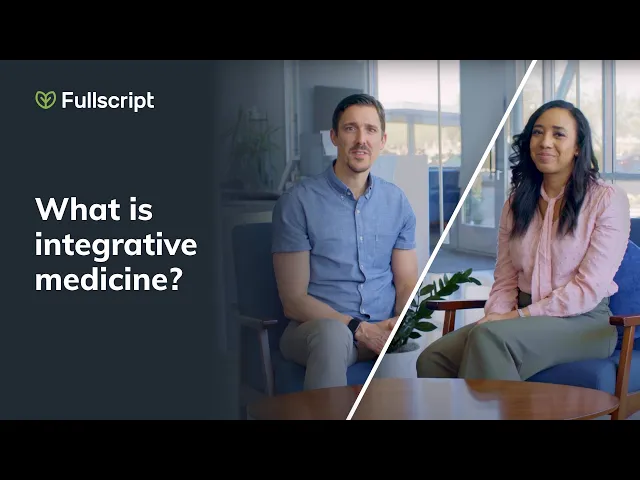
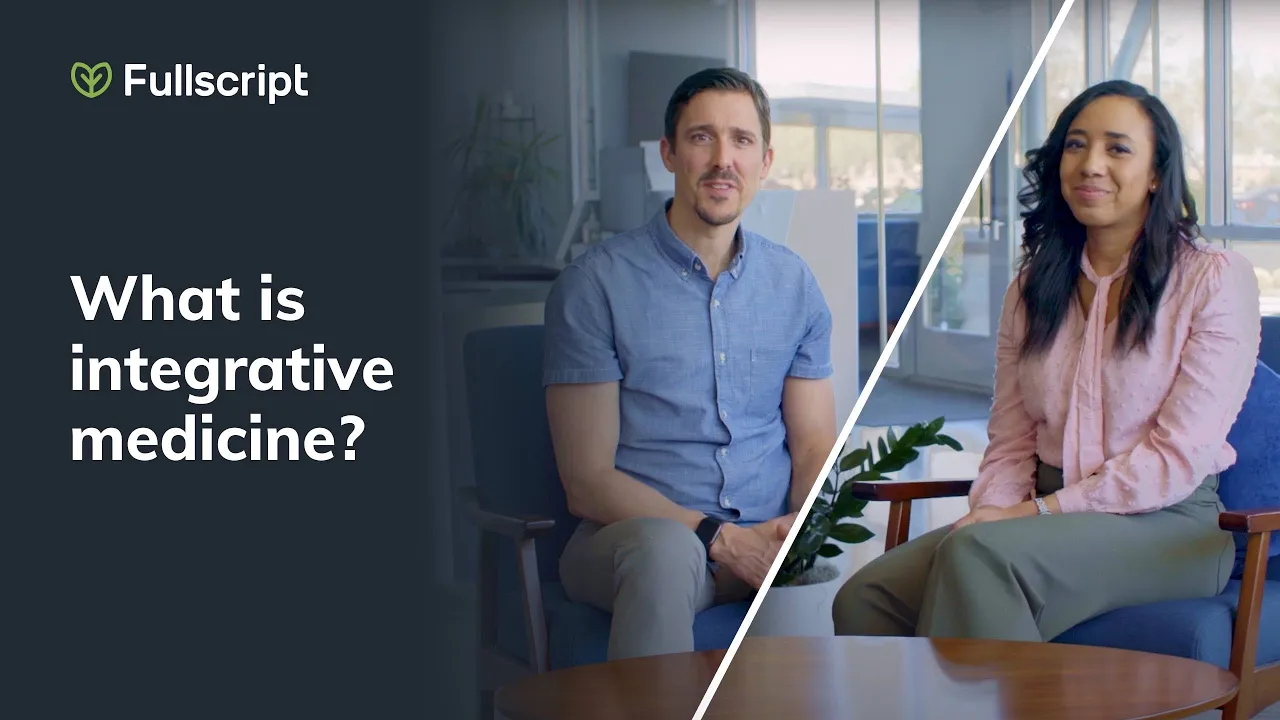
[Music] [Music] hi i'm dr jeff glad medical doctor practicing integrative medicine in indiana and i'm the chief medical officer at fullscript and i'm dr jacqueline burrell i'm a naturopathic doctor and i work with underserved communities in flint michigan and work at an integrative practice in burlington vermont we call it integrative because we're taking the best practices and integrating a variety of different disciplines of medicine and determining which path is best for the patient so that integration is conventional medicine functional medicine lifestyle medicine naturopathic medicine the the real focus within all of those disciplines is the
focus on the core patient journey mindfulness movement and nutrition by taking all of these best practices and bringing in the core lifestyle factors that are involved in their care we're able to look at the whole patient and the whole person i like to think of integrative medicine as a toolkit so you have every different tool that you might want to use for a particular project and in integrative medicine we're just choosing the right tool for the project as opposed to only using one and so in that way we can use the best that medicine has
to offer we can use integrative medicine through functional medicine naturopathic medicine allopathic medicine there's a place for it all and so i think that the role of integrative medicine is just to show how we can simply have it be medicine so the process is based on the integrative medicine treatment cycle which involves information collection treatment planning treatment delivery and treatment maintenance so tell us how information collection is done in your practice of integrative medicine in my practice information collection is done through getting a thorough history of the patient it's through understanding what are the determinants
of health how are they living how are they moving through the world what is their stress like and what are their management techniques for all of those different things it involves having a a picture of what are their passive determinants of health what is going on in their health that they can't necessarily control such as environmental toxins such as societal stress and when we get that entire picture of a patient we can begin to formulate a nice treatment plan to address the information that we've collected so as i'm developing a treatment plan you know i've
got to understand this person really well and know their motivations and what they're capable of and as i'm designing this and coming up with where we're going to go next the core message is going to be what are we going to do about nutrition what are we going to do about movement and what are we going to do about mindfulness and i want to create the baby steps that build momentum and confidence for that patient as they start their journey once we've put into the plan those focuses on the core pillars of integrative medicine you
know we may go beyond that we may talk about what labs we want to start looking at to help understand some of the root issues behind their health concerns or use labs to help motivate them to to make changes and use those labs then to guide their journey supplements play a really big role in the care of integrative medicine it may be because of nutrient depletion many medications deplete nutrients another role for supplements is emphasizing the benefits of the evidence we have for say curcumin or omega-3 fatty acids is there an inflammation concern for this
patient either symptomatically or in the data we've done i'm going to use supplements to help support that while the lifestyle factors also focus on that long-term journey for the patient so in your naturopathic practice what does that treatment planning process look like the treatment planning process in naturopathic medicine works with the therapeutic order and by this i mean we look at using the least invasive means possible and then building up from there to use the different tools that medicine has to offer such as even conventional medicine and so that that earliest tier would be things
like lifestyle modifications stress management biofeedback physical medicine and then we can also use things like supplementation botanical medicine and work from there and when we use evidence-based therapeutic grade supplementation and botanical medicine we can really begin to move that switch to help the patient's body heal itself tell me about your treatment delivery process in your practice so i like to start with the building blocks to this and i think that that begins with having a therapeutic relationship between patient and doctor and when you do this you really begin to have that trust that empathy that
connection that can really lead to the patient outcomes that we want this really includes patient education patient comprehension how are we explaining the treatment plan to the patient and you know in each different population that you work with that might look a little bit different so with some of the patients i see in flint michigan it's really important to translate some of these terms into ways in which they can digest as you said earlier keep it simple and when we have patient comprehension we have patient confidence in their treatment plan they understand their treatment plan
and they trust you and when we have all those things working together we can really get those outcomes that we want to see so when you have a patient that is having an acute situation and there's fallbacks how do you get them back on the wheel yeah and that's going to happen right acute conditions are going to show up i think the one example that happens most often in our practice is patients who have an acute infection seek medical care and now get put on the antibiotic or the steroid there's definitely benefits to getting them
back from that acute condition but now we've got to figure out how to get the body back into a healthy state because often while beneficial those medications have side effects and so it's now reconnecting with that patient and deciding are we going all the way back to square one or do we just need to pick up where we've already kind of left off in that treatment maintenance and to me this is why integrative medicine needs to become medicine is we need more of that holistic thought yes we're going to need antibiotics but we've got to
understand the probiotic aspect of protecting the digestive tract protecting the immune system so that that patient can just continue that journey once that small acute bump in the road is now resolved so talk about treatment maintenance in terms of your practice and how you're working with patients so this really reminds me of working with patients that are pre-diabetic or early in diabetes and we can you know look at what is the root cause of this and in my practice we really look at the diabetes so what are some of the environmental causes that might be
increasing the incidence of diabetes and as we spoke about earlier it's what is the root cause using lab testing to see what's going on in the body and once we remove these obstacles to cure and get them on that healthy wagon again we move into prevention which is the whole point of integrative medicine it's a it's the goal of integrative medicine how can we prevent illnesses from occurring or reduce the incidence of illness with patients more and more interested in their own personal health and what they can do to be proactive and doctors looking to
have better relationships with their patients we see a future where integrative medicine is simply medicine [Music] you