[Music] this is something we need to wake up to because the vulnerability is asymmetric democracies to operate need some common currency of Truth autocracies don't absolutely to the contrary autocratic governments need to be able to control and propagate their version of the truth so any technology that allows you to muddy facts and undermine data and undermine truth Nets out as bad for us and essentially good for them now those Technologies are all around us it's a huge Force for good potentially but in this area we've got a problem welcome to natc Tech from the special
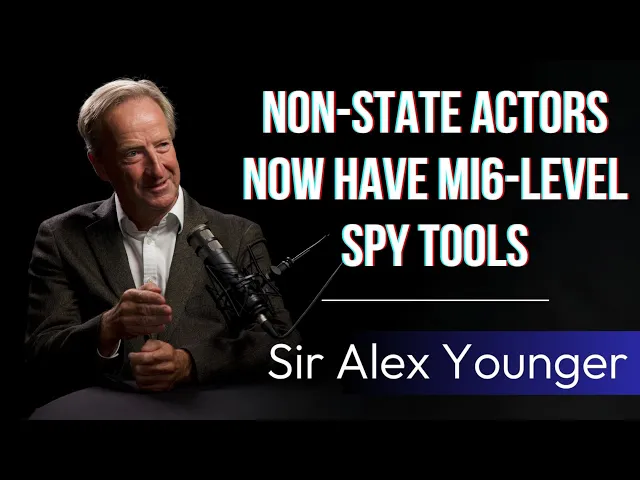
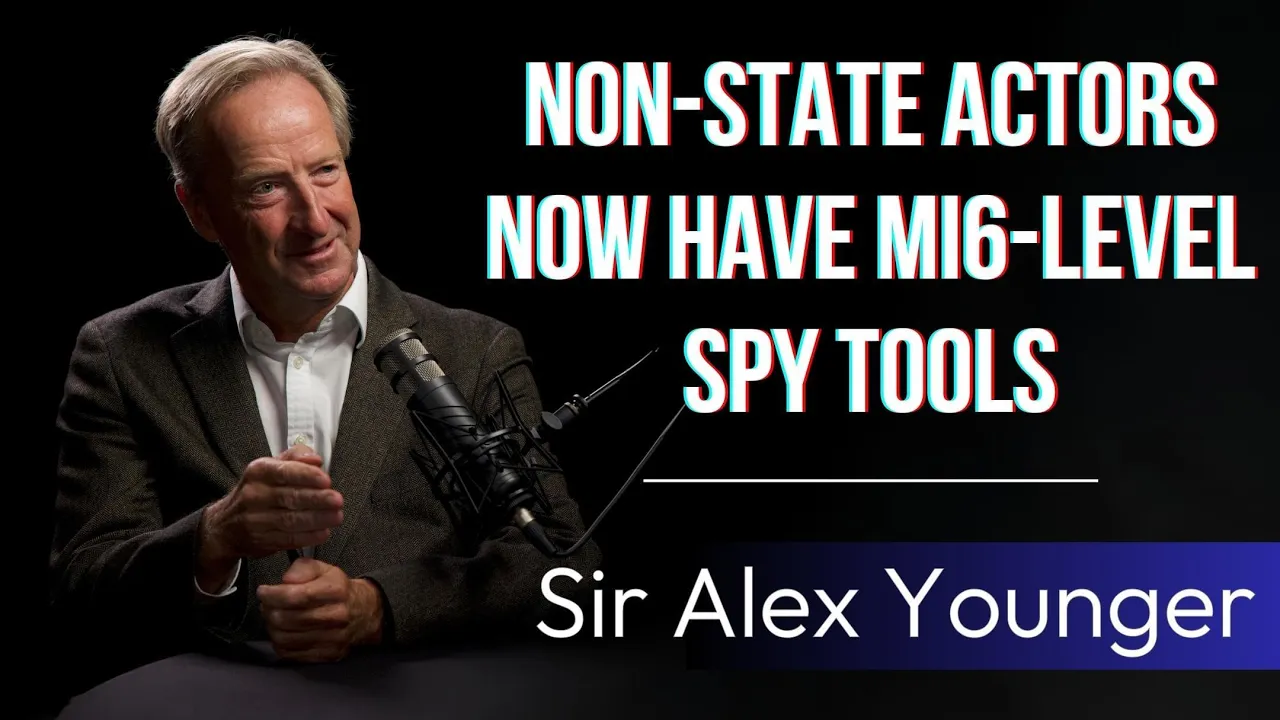
competitive studies project I'm Jean meserve technology is now a key part of geopolitics nations are competing for technological dominance and they are using technology in new ways to gain the upper hand on enemies and competitors with me here today to discuss this is Sir Alex younger he served for six years as chief of the British secret intelligence service known as MI6 he is now a frequent public speaker and media commentator and we are thrilled to have you with us here today oh it's great to be here so thanks for coming in you have said that
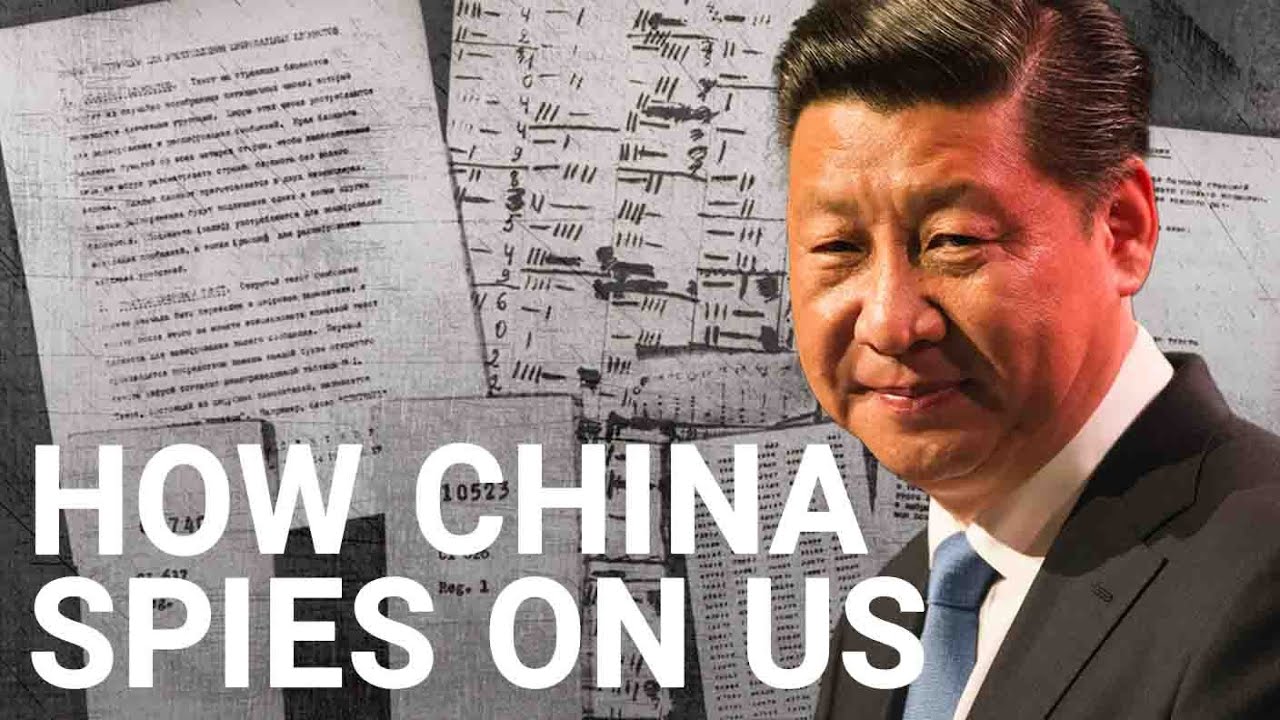
the Democratic world is quote under the full press of Chinese Espionage what do you mean what has changed well I think that um the issue for me is the way the espan defined people think of spies like me doing secret stuff in ways that they've seen in the movies and there's a Temptation in those terms understandable to think it's something off to the side that doesn't affect them directly and as democracies we do we seek to constrain and channel those activities in a way that's accountable in law and proportionate autocracies don't do it like that
in some ways their Security State Vladimir Putin was a KGB offic he defines everything that he does in terms of security and shishin ping now uh Security is coming first and control in every aspect and every piece of decision that he makes the lesson that she Drew from the cultural revolution which he was personally very affected by was that the people cannot be trusted and of course he extends that principle more widely so it's not in a box in an authoritarian regime it's full court press people talk about the hybrid War it's broadly speaking a
Russian invention where you link all aspects of National Power to security objectives now as the modern word Evol evolves and we get hyperconnectivity everything is connected to everything else that is weaponized against us so the biggest asymmetry between us and China is that we don't think there's a conflict going on and they understand very well that there is across the Spectrum and that it therefore involves using information using technology using um economic coercion as well as military force or all the traditional levers there's no need to panic but we need to understand that they're playing
one game and we're playing a different one have we not understood that manifestly not um if you take for instance the way in which our governments are organized or our legal systems are organized we still distinguish under law between peace and war or domestic and international or covert and real and the genius of a gray Zone hybrid approach is you don't do that you connect everything up and our unwillingness to do that is a source of weakness so the source of strength that we have to present is partnership cross boundaries the biggest success that I
had as an intelligence Chief was not to compound our power within the barbwire as intelligence services but to promote partnership as between us and other pieces of government private and public and internationally and start to get across those boundaries and present united front in the face of these problems so that's a work in progress so in the meantime are the Chinese eating our lunch well our lunch has been eaten in one pretty important way which is that um China launched um over many years a concerted uh program to steal our IP our trade secrets in
order to Galvanize its ambition to and might I say Western companies left the door open to let them do it wasn't hard and in fact even worse Jean half the time we did it knowingly by entering into research Partnerships or just putting stuff out there in scientific conferences now I understand that the reason we're all rich is because of scientists willingness to share ideas knowledge should be open it drives all of the progress we've seen But nor should we be naive what's moving in China uh and this is important is is that their intelligence Ambitions
now go beyond stealing IP they're now avowedly political and shishin ping I think correctly understands that the security of the Communist Party rests on Hill's ability to dominate any idea Dominate and eliminate any idea of democracy particularly in his near abroad as a viable alternative to socialism with Chinese characteristics so now we've got into something more difficult which is essentially um uh organs of the Chinese Communist Party trying to influence the way that you and I think about stuff and that's a problem and one of way the ways they're doing that of course is through
disinformation um and not so long ago um there were stories allegedly planted by China about the wildfires in Maui and that the Chinese even provided AI generated images to bolster this disinformation campaign is that just the tip of the iceberg yeah this is this is something we need to wake up to because the vulnerability is asymmetric democracies to operate need some common currency of Truth now that truth is contested of course that's what what democracies do but fundamentally there need to be facts at the bottom of the argument if that goes we're in a weak
position autocracies don't absolutely to the contrary autocratic governments need to be able to control and propagate their version of the truth so any technology that allows you to muddy facts and undermine data and undermine truth Nets out as bad for us and essentially good for them now those Technologies are all around us and when you look at particularly the Advent of of generative Ai and the way in which it can combine with other Technologies it's a huge Force for good potentially but in this area we've got a problem so this is a big election year
not just in the US but EU India all around the world do you expect they're going to turbocharge their disinformation campaigns to have an impact on those elections uh look I do it's what I would be doing if I were in their position but can I say something um which might perhaps surprise you coming from a spy which is fundamentally the problem is not hostile States explain and by and indeed the biggest damage we could do in this very feeel time is to imagine that the divisions that exist within our democracy were created by China
or Russia they weren't they were created by us and the crucial point there is that we do have it in our power to change it the great problem with putting it all on Russia and China is that we we um then feel we don't have responsibility to act so that's lecture over one level down absolutely and we need to get serious about this and um and engage across the piece my old Services of course but more broadly in making sure that in this year this most political of years 2024 no one's allowed to swing the
result with with um false information uh Noble goal but can it be done done I think that um uh there are plenty of ways in which that can be achieved now you it's frustrating for you Jean because you can tell I have a philosophical B we do have a not at all frustrating we do have a problem which is that you um in Western societies it's not up to the government to say what's true okay so we need to think hard about trusted sources of information for the public we need to think about education we
need to think about technology those themes since the last presidential election in the US at least and yet we still have this enormous problem but you and I talking about it now so it must be serious but talking about it isn't going to solve the problem well it is to some degree that there has to be something in the public Consciousness that takes this from the esoteric to the close and present danger I think a key Tipping Point for me and I do take your point it's a serious Point Key Tipping Point for me is
where Tech understand that the future of their industry rests on their willingness to um enact capabilities that make this stuff less lightly fundamentally this is about partnership now good news I'm not I don't want to be utopian about it it's not my job but I do see over my time in office a significantly improved Readiness on the part of tech to work with people like US Government from the sort of Ground Zero of of Edward Snowden times it is totally different now but they have cut back many of the big tech companies on their efforts
to detect disinformation and to eliminate disinformation isn't that bad news it is of course bad news and it goes well beyond the issue of um of Elections there's there's child safety and fraud and many other things to consider and their feet need to be held to to the fire um the UK this month has passed the Online safety act which I think does what something that in my mind is overdue which is to make tech companies legally responsible for the way in which they products are used but actually we need a strategic solution to this
so detection is always going to be hampered by considerations of scale we need Technology Solutions that actually allow you to resolve the provence of information online that's where the big brain should be going and there's been a really fascinating presentation on that today at the scsp which certainly cheered me up well talking about the Providence so okay if you can figure out that it originated in Russia China or Iran or North Korea fine but as you mentioned this is a problem that our societies have created and it does emanate from inside our countries and then
it comes down to in the United States a discussion of First Amendment rights and I may regard something um as being counterfactual but someone else in their perception May believe differently yeah so um maybe you shouldn't have a constitution we haven't got one well then then XI jingping really fine no I'm being factious and um and I don't want to oversimplify this but clearly people got to be willing participants in that there has to be an appetite to discern truth from fiction um and then there's a an education I think lies at the heart of
that um and then we Circle back to what I said at the beginning we have a very very polarized um electorate very our countries are very polarized um uh there's little confidence in democracy or less than there used to be and here's the irony that's largely the result of all of these amazing technologies that have made us rich so this isn't it Loops back again to the responsibility on the part of the creators of these um Technologies alongside governments to work to mitigate the the social harms social media is an excellent example of that optimized
to heighten polarization as a matter of commercial gain that's unacceptable another persistent problem cyber attacks how do we prevent this tsunami from completely engulfing us I think that um I this is the thing I worry about um to be honest it's not so much kind of cyber catastrophes as just the drip drip drip of damage that's done every day by fraudsters or hostile governments or ransomware operators because it's not seen we don't understand the damage and crucially because it's invisible also we don't understand the risk and we don't invest properly in dealing with it so
I think it is a big problem dealing with it um I I I would go down two axes one it's I think the responsibility of leaders of any organization to understand that most of the vulnerabilities exploited by malign actors in cyberspace are human they are not Technical and if you think this is a technology problem you're wrong it's a human problem take it from me I've seen this you know from all sides um so that um that's got to stop and then uh and then AI big question whose side is AI on here there's a
really dystopian possibility of um of intelligent malware that mutates as it goes through systems making impossible to categorize and build um build defenses against equally in AI we could have um uh organ um systems that patch in real time I need to know the answer about who a side is on in this and I think government should be pressurizing people to make sure that it's on ours that's quite a frightening Prospect yes and what does it do when it comes down to attribution well ifes it make even more complicated yeah if you have a shape-shifting
um shape-shifting malware then you you um uh it becomes harder to attribute and and that's a problem because a big part conventionally of the solution in cyber security space is partnership where we're all prepared to share quickly how or why and what with we've been attacked in order for everyone else to be able to protect themselves and um and indeed there's a lot of good sort of us legislation come down the track to try to make that happen so this is an issue um so the West is in an innovation race with China what's at
stake here um this is one of the reasons that I enjoy um being associated with the SCP they have called this out it's fundamental along when you look at um the the choices that will be available to my kids alongside climate change who wins this is the other key determinant of their future I put it no lower than that if uh China has worked this out um they know they understand that the the centry of humiliation that they enjoy was fundamentally because they turned their back on emerging technology and then not going to do it
again and they've told us this they aspire to dominate all the key emerging Technologies now to the extent that they're doing that to augment the condition of people in China and to improve their situation fine that is one of the reasons fine they're also doing it to consolidate the um their capacity to control their population so that the Communist Party stays in power and to create a dependency on the part of the rest of the world on China's goods and products and an imperative to participate in the Chinese version of the internet which is where
truth is dictated by the Communist party now at that point a number of things stop existing privacy for us stops existing security stops existing military dominance stops existing and ultimately economic power es away so I don't want to be um uh swivel lied about this but people need to understand the stakes I can assure you that the Communist Party of China has absolutely worked down so here in the US um there have been restrictions imposed on certain semiconductors some of our allies have joined that effort is that a good first step is that kind of
the kind of approach the West should be taking to try and maintain the upper hand or gain the upper hand in this competition well I think it's good news and bad news with this stuff so um you know notoriously the Washington consensus leaves everything to the market the UK and the US were the last country standing that everyone else however had decided that they needed an industrial policy which involved um a much more active government in the space to capture some of the externalities China's built on that you know it is an industrial policy European
Union is is not backward when it comes to it either um that has underlined undermined a lot of our our strength and power uh particularly in the anglosphere and um I think it's overdue that governments have recognized they've got a much more active role toay it was you essentially US military investment investment that bought us the internet or the space industry uh governments have to get back in into the business because China has been doing that for years so essentially with reluctance because it's quite economically inefficient I think it's good the bad news is that
I think um in the US in doing this and I admire the US and I admire the policy they've been uh extraordinary casual about the power of alliances and and how it feels when you're outside the US but not a d not an autocrat is that um this stuff's being done at our expense now it's um of course hypocritical for the European Union which is also a pretty protectionist organization to complain about this but let's just grow up if you've got self-cancelling industrial policies across an alliance that together aspires to withstand the onslaught of authoritarian
authoritarianism this is not a good look and I think we need rapidly to re-engineer the concept of being more than the some of our parts into these types of policies are those efforts underway now to some extent I think the Administration has got it I also to be fair to be fair the administration understand the link between these policies and domestic Politics the US unaccountably decided to withdraw from Key trade relationships in the indopacific and yet it talks about containing China well if you're if you're a neighbor of China and you're being offered a good
economic relationship with Beijing and the US has just folded its arms what think going to happen now I think those messages have got through but it's undeniable that the domestic political discourse around trade openness for instance is challenging and that goes back to what we were talking about before people's um trust in government and the identity they get from employment and a whole lot of other stuff is at a low in part because of all the Technologies we've been discussing so you've written that good policy towards China will simultaneously confront compete and cooperate yes explain
what you mean so we uh we we have moral panics about this um I I believe um one of the biggest problems we have in the west as we under up we forget how strong we are um and we get right let's decouple let's not talk to China ever again you know oh you've gone to China you politician you're a traitor what a load of rubbish I looked at the balloon thing going over the US I just despaired you know everyone went completely mental Fox News on 24 hours a day could JFK have solved the
Cuban missile crisis under those circumstances no the quality of dialogue is at an all-time low now it will be clear from our conversation that I'm not a great fan of authoritarian regimes and when they up when they seek to undermine our systems we should go back super hard and that's what people like me are for it it should also be clear I hope that I think that the vital ground of this is a competition around emerging technology and we shouldn't be wet about that but can we also understand that there is one planet which we
share with all of these people there are some things that can only be solved at a global level can we also understand a lot of the trade that has built up as between these blocks is highly beneficial to both countries of both value citizens and has made us richer and fundamentally can we also understand that even in the Cold War we have protocols for dialogue and understandings and treaties which meant that catastrophic misunderstanding was less likely so you know take this from a a Hardline secur this idea that we shouldn't be talking to countries that
don't share our values I think it's nuts so that a fine point on it I think that was clear I think I think that came through um so I have to talk about spying because that's what you were and did for your career how has technology changed the business of spying I mean you've mentioned how China is using new new technologies but bring it down to so the fundamentally and not a lot is the answer um so uh my U I'm speaking specifically as a human intelligence operator you know there's an idea that we're put
out of business by all this stuff nothing could be further from the truth our job uh is and will always be creating relationships of trust with people across forbidding and cultural boundaries in order to generate the information and actions that keep our people and our allies safe and the key the key to get in your head around is that we've just got to learn to do that and a to different environment but my time as chief of MI6 the reason I was given the job was to enact that transformation make everyone understand the rules to
change make everybody understand that um some capabilities that only we had 10 years ago are now available you know at a small price to anybody these um things that that we thought were ours um now belong to um not small or non-state actors and can do us immense damage so it's a it's been a mindset thing in Truth for me it wasn't very hard to get the memo I began spying in the '90s you I could go anywhere in the world with a bunch of cash and do anything I liked Google search killed that dead
then I was head of um counterterrorism I did spend 10 years in counterterrorism what was the answer to stopping bombs going off it was data and our willingness to share it and then I was head of operations and I was Chief and I saw this new domain open up cyber so uh it it kind of wasn't difficult to see the way in which uh we were evolving the trick was to remember in some ways we're not going to change what are our values what's this about it's about relationships in every other way fundamentally it's altered
I was talking to someone else in your business who said it's now virtually impossible to go dark yeah we have a very um uh un uncatch expression which we talk about we talk about about the ubiquitously sensed world yes and that is what we faced and it's a very uncomfortable place for a person like me to live in um but without going into any detail I can assure you that there are dents in the ubiquitously sensed world that we can so when we're talking about the ubiquit you that's too big a word you sense we're
talking about for instance our phones which are shedding information all the time about where we are and what we're doing right you're talking about standing in the middle of the goby desert and not being invisible I mean it's it is ubiquitous I mean there's there's a lot in here we don't we don't have time for this there's a lot of bad news in here for the autocrats as well so let's not beat ourselves up too much so these Technologies don't work great for people who want to dominate every aspect of their citizens life as well
but they will if if we if we if we don't get active so could you expand on that a little bit more how do they work against the out yeah so I mean obviously if if you take the grief cycle we started off thinking the internet was on our side fine you know because it literally democratizes information turns out actually it's probably on the dictator side because it actually allows um them to know exactly what all their citizens are doing all the time uh it was a bad surprise that China was able to create a
firewall around its own country I didn't actually think that was possible I think now the way that some of these Technologies are going it's going to be increasingly hard for dictators to do that uh to prevent their citizens from accessing information in a way that allows them to make proper choices and indeed just to keep hold of all of the basic tools that a state has and needs to um to control its citizens um but but as but but if but your answer was specifically about us as Western intelligence operators I think there will be
a few in elligence services in the world of which mine will definitely be one that have got the memo and will adapt and there will be a lot that don't and get destroyed there's a great example of this when the Russians unwisely came to the UK to try to kill someone in Salsbury and used unaccountably a theatrical chemical weapon to do so was it an umbrella yeah no This was um this was poisoning a door handle with novich okay yeah they do have form cuz they did do an umbrella earlier you're right um I laugh
now at how staggeringly naive they were about their capacity to keep that secret you know nonsense they hadn't got the memo and I think the key thing for us is to constantly be learning constantly understanding how the rules are changing and not crying about it but adapting and let's face it our capacity to adapt that is a thing that we have that is a USP Sir Alex younger former head of MI6 thanks so much for joining us today enjoyed the conver ation thank you and this has been Nat SE Tech from the special competitive studies
project I'm Jean misser thanks a lot for joining [Music] us