Before we get started I want to let you know about an amazing holiday promo we're running right now if you are one of the Book Lovers on your shopping list would like a membership to the next big idea Club you can get one right now for 20% off that's right 20% off which means you can get the eight best books of the Year handpicked by Malcolm Gladwell Adam Grant Susan Kane and Daniel pink delivered right to your front door plus Access to our app hundreds of audiobook summaries and special invites to Live Events check it
out at next big idea club.com and use the code podcast 20 the Curious people in your life will really appreciate it that's next big idea club.com and use the promo code podcast2 all right here's Today's Show LinkedIn [Music] presents I'm Rufus grisim and this is the next big Idea today you need a strategy here's how to make [Music] one the world is made up of systems seemingly infinite often invisible intricate inescapable systems whenever we work together to create something achieve something solve a problem we create a system and those systems stick around for a long
long time let me give you an example book publishing for most of my life maybe Yours the system worked like this authors wrote books agents pitched them to Publishers Publishers printed and distributed them to bookstores and readers discovered them through browsing word of mouth and bestseller lists it was a well-oiled machine a network of interconnected players who knew their roles the system worked so well for so long that no one really paid attention to it until this is the uh first office of amazon.com Inc that's Jeff Bezos in 1994 giving a tour of Amazon's cramped
cluttered first office see this big orange uh exension cord this is one of the Contraptions we have to have cuz there's not enough power in this room uh that's about it this doesn't take long to tour the offices of amazon.com Inc it may not have looked like much back then but that tiny company running on an extension cord was about to Chuck a wrench straight into the gears of the book business you know what happened Next almost overnight A system that had run quietly and smoothly for decades fundamentally changed and all those interconnected players authors
agents editors bookstore owners were left wondering what are we supposed to do now now I'm guessing you're not a writer or publishing executive which means you're probably wondering what does this have to do with me well no matter who you are systems affect you they shape your life your career they influence Your decisions and circumscribe the moves you can make to flor in a world that consists of countless invisible systems you need a strategy one that leverages the systems at play and the individuals who benefit from them so what is strategy it's the hard work
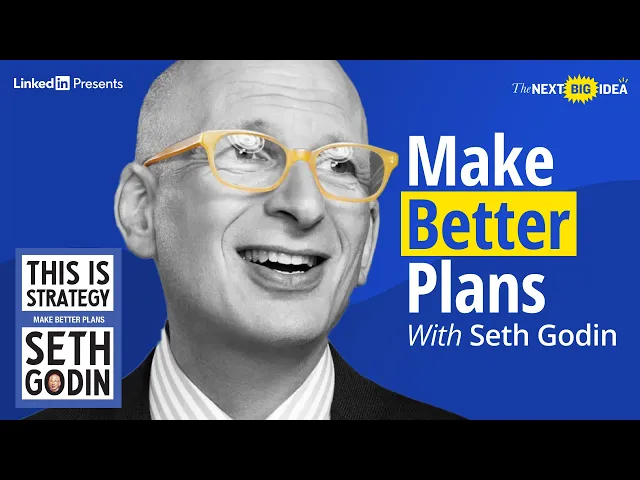
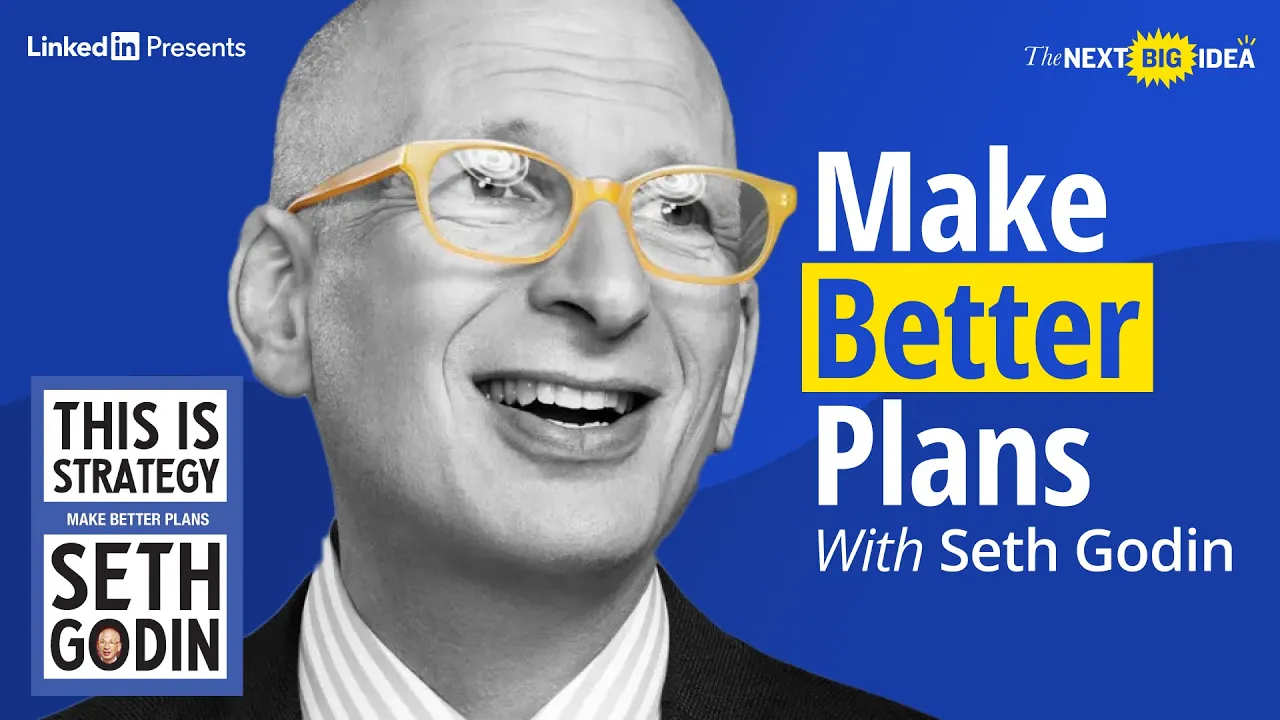
of choosing what to do today to improve your tomorrow that definition comes from a new book called This is strategy by the irrepressible writer entrepreneur Speaker Sage Guru Seth Goden I've known Seth for almost 30 years in the late '90s we were both living in New York City building companies at the intersection of media and Technology it was kind of like skiing through the Glades crisscrossing the tracks of another skier on a similar Journey or as Seth put it when we spoke last week it's not even the tracks it's sort of like being at Disney
World and you notice that guy in the other wagon and he's Still on the the other right we're on the same ride we're just not in the same car over the the decades we've watched the early screeching dialup modems slowly loading the first Mosaic browser in the early '90s get replaced by broadband and mobile Netscape and Explorer we've watched email replace fax machines video streaming render DVDs obsolete we saw the iPhone displays desktops and Uber transform Urban Mobility all while Caleb bissinger this Podcast pipsqueak I mean eminent producer was wearing diapers each of these were
cases of systems that people took for granted right up until they were replaced by newer systems those who could see these transitions were better positioned to build successful strategies better positioned to flourish in business and life the pace of change you may have noticed is not slowing down it's accelerating which means our strategies will need to change Too With a Little Help from Seth Goen [Applause] Seth Goden welcome to the next big idea well thank you it's a treat and I can't believe I waited this long to show up good to talk you know it's
long overdue I'm so glad we're we're finally getting you on the show and um you have a new book out it's called This is strategy how to to make better plans and I think of it as as kind of how to navigate the world with intention how to build things How to build a life when you look around Seth do you think most people are operating with a strategy or do you think we have a tendency in general to sort of stumble through life haphazardly with inadequate planning first I think almost no one knows what
strategy is I think they're confused they think it's goals or tactics or the job to be done today it's none of those things and the number of people who have actual intent systemic Awareness who can see time and who bring empathy to the change they seek to make is vanishingly close to zero and part of the reason I wrote the book but why it was so hard to write the book is I'm trying to outline an entire philosophy where there isn't a lot of previous work I don't to say it's just like that but twist
it yeah what I'm saying is our grandparents grew up in a world where they knew exactly what they needed to do tomorrow y now every single person Listening to this I am saying without fear of error gets to decide at some level what they're going to do tomorrow and if you're not making that decision with intent then it doesn't matter how fast you're going if you're going in the wrong direction you say choosing what to do today to make tomorrow better that's effectively what strategy is we're choosing what to do today to make tomorrow better
and you say this is hard work why is it so hard two reasons the First one which we've already talked about is people don't see it they don't see the systems they're victims of them but the biggest reason is fear fear that it might not work that you'll claim a future that doesn't arise and second fear that it will work that you'll claim a future and then be responsible for it one explanation you offer in the book for why we're not great at strategy is that we have trouble seeing time and and it Strikes me
that life is a lot more like gardening than it is like like chess or combat right and depending on the individual we may see ourselves as like Samurai Warriors launching ourselves through life or chess players or whatever but in fact it's a lot more like gardening like like the really beautiful extraordinary things that we make together right whether it's businesses relationships all the things that really deeply matter to us families Are a lot more like gardening in the sense that it is a partnership with time time is required patience is required and we need to
be watching and learning on a longer time scale is that you think fair oh yeah I mean scaffolding is key here so let's say law school didn't exist and your niece came to you and said I'm going to spend the next 3 years and a quarter of million dollar I'm not going to work I'm just going to go away and then three years from now after I Spend that quarter million dollars I will be able to embark on my career we'd say that's really scary but if someone comes to you and says great news I
got into El law school it's like oh fine because the scaffolding is pre-built and when existing systems falter the scaffolding starts to weaken and we have to build our own scaffolding so when we think about time what we're saying is whatever I'm doing today like I'm launching a podcast oh how many Listeners you going to have in the first week 10 then it's not worth doing well yeah except every podcast you know Malcolm's podcast everybody's podcast started with 10 listeners oh I see well I'm going to write a book really how many copies are you
going to sell the first day 10 and like we just go down this list of almost all the work that's worth doing is incomplete when we start it's not finished when we ship it it needs to Improve it needs to spread where's the scaffolding YouTube Built scaffolding and so now we got all these millions of people working for free for YouTube but they could have done it without YouTube they just couldn't because they didn't have the scaffolding I should say for for listeners that that uh your new book this is strategy has an unusual format
it contains 297 riffs I think we can call them riffs right they're little explorations of Different ideas and it's a really inviting format and no page numbers no page numbers right which is which is initially disorienting and then kind of liberating uh riff number six is about the elegant path which is about Simplicity efficiency and Effectiveness can you tell us about the elegant path well let's talk about surfing for a minute um okay I I know how to surf just enough to never surf again but if you see a good Surfer and then you see
a Surfer who is struggling the main difference between the two is that the good Surfer picked good waves yeah and we don't want to acknowledge that if you watch someone like Annie Duke play poker we see that she folds on almost every hand y that choosing the wave choosing the hand is almost the whole thing so when we think about this idea of an elegant strategy it's like watching a good Surfer we pick a system where our assets and our skills can Thrive and Then without a lot of drama and a lot of arm waving
we're able to make a difference if you're struggling if you're floundering it's really hard work it's inelegant you're pushing against the system that you are not ready with all the assets you need to push against on the other hand when we see someone show up and effortlessly go from A to B it's because they have an elegant strategy not because they're better than you and So the elegant path is one that recognizes the way the wind's blowing we understand how the systems are functioning and when they're not functioning in our favor and in such cases
we need to either change our strategy our relationship with the system or Punt and and and do something else right and and that's and you wrote you really wrote a book about this the dip right yeah exactly I mean I write these books so I'll read them uh you Know so if if you're a wedding photographer specializing in inexpensive mediocre wedding photography and the iPhone is invented you can rail all you want about amateurs taking pictures it's not going to make the iPhone go away if you're an average copywriter who writes average material for average
clients for marketing brochures and claw. a and chat GPT show up you can rail all you want about machine-made mediocre copy it's not going to get anyone to hire you you Need to do something else because the system just changed you know one of the things I realize Seth uh about this this business of of catching waves that are based on technological and cultural systems and patterns of motion when you're surfing you can see the waves to some degree as they're coming uh when it comes to technological and cultural waves we see them most clearly
in retrospect right right well if you're a mediocre Surfer You see the waves in retrospect too that's true right yeah but but you know we we now have the benefit of the wisdom of our years evidenced by my gray hair and your absence of hair and but looking back we can see that there were certain periods of time that were Golden Ages for let's say starting a website launching a Blog building an audience on Twitter Instagram building an audience with a podcast you know it's interesting to me that a lot of the biggest podcast Were
started you know you think of like Joe Rogan Tim Ferris Gretchen Rubin Sam Harris they were all in this kind of like 2014 to 2018 Zone there there are a few exceptions but but if if Joe Rogan tried to start a podcast today no one would hear him right and that's I think this is often overlooked okay so we got to clarify between two different things the first thing is we always benefit when we find an insatiable desire satisfying an insatiable desire is much More reliable than momentarily showing up to fill a gap and an
insatable desire for example is human beings need to connect that's insatable the technology will keep changing but human beings will always want more of that in our culture there's an insatiable desire for things that our cultural news what's new insight and so it was books and then it's blogs but you're both satisfying a similar thing right yeah but then there are systems That have the network effect built in which means that they do better when more people use them yes so let's say you see the fax machine come along and the fax machine is justed
some law firms but what you notice is that human beings ins satiable need to be connected did quickly which goes all the way back to the telegraph combined with the convenience factor of something like a fax means it's quite likely that more and more and more and more people are Going to get a fax machine and so if you wanted to start a fax newsletter you could bet on the fact that there'd be more people with the fax tomorrow than today so you can see those Cycles so permission marketing email marketing which I am proud
to claim to have invented is this idea that says marketers have an insation will need for people's attention human beings have a scarce amount of attention are going to try to protect it email is like stamps But it's free so if we come up with a way to adjudicate attention via email by earning permission that's going to run for a really long time and I was right about that but on the other hand something like DVD ROM which let book publishers build a platform a device that that would store the equivalent of a, reference books
in one $119 item I thought was more of the insatiable desire for people to get stuff what I missed was nobody could figure out how To make a living selling it because you couldn't afford to put enough data into the world and sell enough copies to make it pay and so since it that wasn't ever going to get better the industry never existed so when you start to learn to look at media systems and Technical Systems you can tell the difference between nfts and AI right that nfts were a hack to help a certain kind
of multi-level marketer make some money in the short run whereas AI is directly in The lane of convenient access to information yeah and when we have a system so you're mentioning DVD r or CD ROMs made me think of of DVDs one of the great you know transitions was the transition from you know DVDs to streaming and it's the story of Netflix successfully making that transition is ayp it's atypical right and and and and this you would say you know I I I love your metaphor of you know people people see a river and They
don't see that it's flowing they just see a body of water but in fact there's all these currents right and it's a complex hydraulic system hydrodynamics I think is the word there's like all sorts of hydrodynamics under the surface of that River and you can't you have this wonderful notion that you can't it's not easy to change a river damning a river takes is a Monumental engineering project but you can build you can dig a small channel in A direction in which the river already wants to go right and the water will carve that out
and it will re reposition the river and effectively it seems to me that this is something that Netflix pulled off yeah I tell the Netflix story in the book and it's not very long but it's profound how did Netflix do this when every other big like Western Union could have bought AT&T but they didn't I was at Yahoo when they had the chance to buy Google for $1 million and they Didn't so what happened at Netflix what happened is profound which is read and Ted saw that streaming was the thing that was most likely to
put them out of business so they said let's do streaming and then they put together a task force to do it and the key decision was this every person who worked at the DVD division which was 100% of Netflix profits every person if you were in that division you were not allowed in the meetings for the streaming people they Didn't talk to you you didn't have a say because the DVD people would have kept averaging out and dumbing down their streaming offering to protect rationally the way they made all of their money and so what
you have to do if you want to put yourself out of business is put yourself out of business you can't ask the people who are running the business to help you do that yeah yeah and this is this is out of Clayton christenson's Playbook right for for the innovator's Dilemma you have to build it internally and you have to separate it and it's and it's a really hard thing to do very infrequently to people do it successfully um so I so I think this notion of yours of of the invisible systems around us is is
so profound and it helps for people to to hear a range of different examples of of of of systems small and large they all all different scales what are examples of some of the systems that we Take for granted so if you go to the Art Institute of Chicago it's filled with celebrity art and the celebrity art isn't paintings of celebrities it's paintings that are famous paintings that are famous have more market value and yeah what does sou Beast do for a living soube does a form of money laundering in which people who have made
money in illicit and Non-illicit ways can exchange that money for a form of status by buying celebrity art the Mona is the most famous painting in the world not cuz it's the best painting it's good painting but because it was stolen in 1913 and was on the front page page of newspapers around the world for a year right when we needed there to be a famous painting here it was so once you see that all a gallery like gagosian does is curate and anoint paintings to announce who's going to be The next celebrity you as
an artist can think really hard about whether you need their validation and how you're going to get it right yeah and that when other forms of ways for rich people to demonstrate St status show up things are going to shift in the system you know another one I think of is is is marriage and the nuclear family and the way that we all live in these white boxes in our own separate white box which contains only Our nuclear family which is not the way that humans have always lived right so that means we need retirement
homes right because because we no longer care for our parents in our homes right but then then a subset of that you point out is there's a wedding industrial complex right which is a whole system just for helping you spend way too much money on the process of getting married right and and this is a self-replicating and enduring I mean here's the most profound Way to remember this what's the right amount of money to spend on a wedding and the answer is exactly as much as your best friend plus a little more right right that's
that's the wedding industrial complex in a in a sentence yeah exactly that's and that's working out well for a small subset of population but for most people we could probably find better ways to do it you know another example of kind of the dynamic change over time of a System that occurred to me this morning as I was thinking about this is the system of traffic in New York City where you and I have spent a fair amount of time I've been here now for 30 years and you'll remember Seth how people drove in New
York City in the 90s I mean cab drivers and everyone else were barely down the Avenues at 50 to 60 MPH it was totally insane and when I procreated had of first child in 2005 I remember caring the back of these cabs trying to strap In the the you know the baby seat and and telling the drivers I have a baby with an underformed neck in the back of your cab can you please Drive slowly and they would sort of smile and completely ignore me and drive like a race car driver right that's the way
it used to be but a few things ended up happening and I think Uber might have been that that kind of critical little shift all of a sudden the incentives are changed from these poor cab drivers are trying To make a living I don't I can't blame the cab drivers right these guys were trying to make a living you can't you can't blame people in systems they're just you can't blame people so yeah so has have you noticed that I mean and now we see 25 miles hour is the maximum speed limit in New York
the Uber drivers are rated based on you know the the rating system people like a smooth ride so it's a much slower and more pleasant experience particularly with a young Baby trying to get around the city we get what we measure and false proxies get in the way so the false proxy of the way to be successful is to own medallions medallions go up in value if a medallion is expensive that means you have to put the drivers in aice to make your medallion pay and so the output of the system is your baby under
stress they didn't set out to make your baby under stress when they started to speculate in medallions but that's what They got and so when we look at what a system does it's not what the system quote wants because the system doesn't want anything yeah what the system does is what it is rewarded for is what it is measured for and if you're not happy with that change the reward system and the measurement system so you know social media is a great example A lot of people to this on social media what are you rewarded
for and measured on well things like clicks and likes and Friends These people aren't following you they're just called followers and they're not liking you it's just called liking but you discover for example that the best way to get popular with certain algorithms is to pick a fight and the louder the fight and the angrier you are the more popular you get so it's easy to think you're being successful so then why are we surprised that the world we live in is filled with angry people well well that's what we rewarded them for And if
you don't want to play that game don't play that game but don't show up in a place where the reward system is counter to what you want because then there's all this tension that follows yeah yeah and and of course these systems in which we live are are comprised of humans by and large right and other humans damn them are a source of complexity so we need to understand humans right to navigate these all these systems so Seth what do humans want okay So there are some bad people in the world but not very many
yeah almost everybody in the world is doing quote the best they can in the system they find themselves and so we need to look at what the system they are in is encouraging them to do Etc and I believe people only want pretty much once they have food and shelter three things they want status affiliation and the Freedom From Fear so Let's go over them status is who eats lunch first status is this whole idea that it's not about money you're putting yourself in a hierarchy with everybody else oh that person's closer friends with this
that person has a near cabinet level job that person failed at this and and so everyone's been hierarchized even though everyone's going to get lunch there's still a mindset of who's up and who's down that's that's number one number two is affiliation which is you Know I went to a wedding two months ago way out on Long Island I don't really like weddings and we get there and there we had to park our car and they were going to take us in a little van and we're waiting for the van and I see the other
guest who's waiting for me is wearing a tuxedo and I say uhoh because if everyone's wearing a tuxedo and I'm not my affiliation is shot I am out of sync this is really bad And then two more guests walk up and they're wearing suits and I look at the guy in the tuxedo and all I can see in his face is uhoh because he's now unaffiliated because he worked right and so when we dance those two things together we see sometimes people show up to break a system so they can move up but lots of
times people show up to fit into the system so they're Affiliated both of which are driven by their desire to Avoid fear that's people navigating these systems both in business and in our personal lives we can be more effective at marketing our products at advancing our whatever our ends are by thinking with a with a lot of empathy you would say I think about the needs of for status affiliation and safety that others around us have right and we we if we accept that the system that is a homo sapien requires these things right status
affiliation safety so we're not Judging others and we want to help people on their Journey the first time I had an employee leave a company that my first business nerve.com I was crushed I could not believe that they were leaving our business to work for somebody else because that had never happened before and it took me years to evolve towards a view that you know what my mission when I have the Great honor of working with someone is to help them be on a a Learning Journey and a growth journey And on that learning and
growth Journey they're going to create value for the collective that we're building together and my mission is to make sure that if and when they ever choose to leave or it's necessary for our past depart that they are more valuable in the marketplace they are more fully realized human beings that I have helped them grow and they've helped me grow right I mean my younger self would probably be gimlet eyed about all this and think This was overly like warm and fuzzy but there's a lot to this isn't there that that you know the old
saying you know helping other people succeed may not be the fastest way to be successful but it always works I I think that's kind of central to your outlook is it yeah I mean 30 years ago my friend Tom Peters long before LinkedIn argued that your company should have a resume writing session every month that you should make sure sure that every single person in Your company has a resume that's up todate and useful and critics said what if we do that people will leave and Tom said well would you rather have the people who
aren't who aren't happy there stay right that the whole point is you're rehiring people every month whether you know it or not yes yes and if you don't buy into that then don't be surprised when either you get subpar response from people or they leave but if you can continually create the Scaffolding for people to go where they want to go and grow then you don't have to be a manager you can just be a leader well and and this is one of the you know I mean there there there's some realizations about maybe the
way the world works that are disappointing but something I found to be very many of them but but maybe one of the happiest sort of discoveries in the second half of my life has been realizing that Generosity makes us happy and it also tends to redown to our benefit to be more generous and this is this this seems to be there's enough evidence behind this our friend Adam Grant has written about this in give and take with all the you know citing a lot of science that there's an interpersonal physics to how this works which
is kind of beautiful right and it's a happy thing to discover and and it's better to learn it earlier right like for for People at home though let's be clear generous doesn't mean giving away okay obvious pieces of value it doesn't mean that when you give someone your services for free you're being generous if you need heart surgery yeah and you can find an expensive surgeon and she's going to show up with emotional labor and stick with it even when it's difficult or any other surgeon would blink and you wouldn't make it through that's generous
work right what it means to be generous Is to have the guts to see the other person to offer them dignity and to exert emotional labor when it's easier to walk away so yes we need to pay people fairly or even more than fairly but no it is not generous to say to everyone I don't care about you but I'm going to manipulate you by giving you stock option that's not what gous yeah yeah yeah yeah let's talk about serious games Okay I I really like your riffs many riffs on the Topic of games why
is it useful to talk about challenges that we all encounter as as games there are two good reasons first what's a game a game is any situation with players rules outcomes maybe with scarcity so soccer is a game but so is getting a promotion yeah and the two best reasons to think about it this way are one we know a lot about Game Theory we know a lot about how people make choices in situations like that if you don't know anything about it You're Reinventing something that someone can help you figure out but the second
one is when you realize that in a game if your you know Queen gets captured in chess you didn't get captured you didn't lose the game cuz you're a bad person you lost the game because you made a bad move yeah and once we can see our actions as moves and that the market and the system responds to our moves we don't have to take ourselves so damn Seriously and we can learn to make better moves so if someone says I applied and I got rejected which someone said to me earlier today I said no
you did not get rejected your application got rejected and if you had written a different application you might have been accepted so understand no one knows you no one will ever know you all they will know is your moves and if you don't like your moves change your moves I love I'm Quoting you here you're playing a game whether you realize it or not and seeing the game helps you play it better you also say we often spend more time trying to win the game we're in instead of choosing which game to play in the
first place so again we have a book audience here some of the hardest working people I know are in the book business yeah and they're not working hard at writing the book they're working hard at promoting the book but if they worked on Tenth That hard at promoting a YouTube channel or podcast they'd have way more people listening to them they signed up to play a game that was a really good game in 1974 not that good a game now yeah right yeah don't write a book thinking you're going to sell five million copies by
working very hard to promote it because it's not going to happen I really like your Riff on writing things down showing your work you say working on the right things is the way Forward and writing them down is one way to confirm you're working on the right things um I I love this and i' I've always been inspired by uh the way that uh apparently at Amazon Jeff Bezos asks everyone to write out memos everybody reads the memos at the beginning Barack Obama apparently did something very similar in the white house right he did staff
write memos and there's a sense that writing unlike making a PowerPoint Presentation which can be a little bit sort of halfhazard that writing forces and exercise in logic and and in thinking through strategy so so do you think that there's a relationship between writing and strategy um writing is one version of it so I've been at those Amazon meetings and the way it used to work anyway is you're not allowed to call a meeting unless you have a propos proposal you you don't just say let's get together in Chat all right what's your proposal you
have to share the proposal in a three-page memo and it says this is what I assert this is what I believe this is what we want this is what I think we should do you call the meeting and you show up and you give everyone the memo there's no Advance you give everyone the memo in the room and they sit there quietly reading the memo if everyone agrees the meeting's over they just leave if they don't people have to stand Up and say why they don't agree and now your strategy is vivid and clear yeah
and that idea is the opposite of what most people do so years ago American Express hired me to interview a whole bunch of Business Leaders and one of them was someone in fashion who's sort of welln I don't know a lot about fashion so I was nervous and I read both of this person's autobiographies and I show up and I start asking them questions about some Of their strategy and it became clear to me that not only hadn't they written their autobiography they hadn't read it and this person's entire career was intuitive they just I
don't know we just try that because they had they they got lucky enough times with their intuition but that works until it stops working and if you don't have the words for it you can't make it resilient and no one can help you make it better right if It's just I whatever it is I'm being authentic yeah you're being unprofessional professionals can share their work and as you say so so giving this example of someone who who just always operated intuitively and was very successful until that success ran out the world can you talk about
feedback loops and sometimes early luck or early Good Fortune can be uh rewarded with more attention more positive affirmation more exposure you get these sort of Positive virtuous Cycles effectively that can cause some people to think that their inherent genius has propelled them to the top of the world but in fact they've benefited from a positive feedback loop to some degree is that fair oh very much it it's actually let's talk about feedback loops for just a second there's two kinds there's the thermostat and the thermostat works because when it gets cold in outside it
makes it warm inside and vice versa That's a negative feedback loop but very useful because it keeps things stable positive feedback in a system is when the wedding DJ holds the microphone too close to the speakers and you hear that squeaking sound so small sounds get Amplified Amplified Amplified Amplified once you have this momentum now what are you going to do with it because you can't just keep coasting on you can make you know Sai made the viral video of gangdom style but when was the last time You watched the Sai video that's not what
the Beatles did but that's what's tempting is to say this is going to go on forever it's going to keep getting louder and I'm a genius yeah what you really need to do is say there's some assets I can take away from this now I need to go do something hard and we see that I mean a lot of a lot of the enduring companies uh you know uh have had to reinvent themselves what something that I think is is often not Clear to folks is that often in order to build a strategy that makes
a company successful over time you actually need one strategy that works at a small scale a second one at a mediumsized scale and a third one at a large scale right you could see this with Facebook right which was right originally an exclusive doedu product and then had to kind of iterate I think of like Instagram with which of course they had the good sense to acquire but initially before you had the Network effect of all your friends being on Instagram you had these cool filters right so you could take you know take photos and
had cool filters and share them with a few friends only later did you have this massive Network effect response without the filters maybe you would not have Instagram and people people miss that sometimes yeah and also I mean we can think about it outside the tech world if you go to your local McDonald's and say I would like to cater A party I want you to change this and change this and change this and change this and I'll be back for 200 things in a week they say we don't have a catering division right but
you can go to your local Diner and they might be willing to do that because different organizations need different customers to do different crafts and the magic of a place that's institutionalized is special orders upset them because they're not in the special orders business they're in the Business of repeating this process again and again until it doesn't work how much passion for what you're doing matter so professionals find a way to lean into the craft of what they do with passion but they are not doing their hobby hobbies are things where we should be authentic
and where the actual thing we do gives us joy professionals show up with consistency and find it in the craft They can find the joy of their work so somebody who's a heart surgeon isn't some crazy Dracula vampire they just understand that dancing on this edge of life and death and being able to touch this organ that's so vibrant but scary they can do that with a craft but that's not their passion they're not spending their their spare time messing with other people's hearts that's their work and so the internet seduced us into thinking you're
allowed to follow your Passion and you'll make a living for that I don't think so I think what you're allowed to do is follow your customers passion and help them get what they want and maybe you can make a living doing that there's an element of like if you can't be with the one you love Love the One You're With here and and and I I can see I agree that we have to be of service right it's sort of you know the idea that we can that we all deserve to be well compensated for
doing Whatever most Delights us all the time is obviously is obviously a a rather naive idea but what I have found and like like Seth when I started Company Number Four I I had like three different ideas I was torn and and I went with one that I didn't necessarily think was the easiest path but I knew that I was just going to relish every day of the work that the day-to-day work was going to be deeply gratifying and because one thing I have found and I think is you know Supported in your many riffs
in your book is is that you often have to iterate a lot and be very you know be persistent in order to find your way to to figure out how how to get this business You're Building to work with the systems that exist how to get it to scale it takes a huge amount of persistence if you don't deeply enjoy or at least somewhat enjoy every day of that process you'll get discouraged and flame out right um so so I guess one Piece of push back I would offer here is in my own experience I
found that a minimum amount of fondness for the daily work and understanding what that work is because I think people often don't don't think about what is the daily work yeah so people say I really want to be in the music business well no they're not going to be the Rolling Stones if you're signing up to to really be in the music business you just sign up to do filing all day or to you know go to meetings With lawyers all day that's not what you thought the music business was the fact that the meetings
are about LPS is irrelevant right so you know your journey has been to be on the cusp of things as they unfold but if someone was paying you the same amount to do exactly the same thing you did yesterday all day long you burn out within a week because the whole idea for you is I'm not exactly sure what to do today and there are other people who have a different Thing that lights them up but the actual thing you make that isn't really the point it's how you spend your time what the interactions are
what are the System Dynamics where where is the um hard part for you that's how you should choose what you do not I love music so I'm going to be in the music business yes yes yes I love our friend Dan pink has this wonderful uh line that he that he went to law school and never once did he actually investigate what the day-to-day Work of being a lawyer looked like and when he and when he found out what it was he was like oh my gosh I don't want to do this this is crazy
exactly you know you have a wonderful line among many trying to be in two moments at once today and in the future we're wishing for is exhausting right an effective strategy helps us Bridge the two this is back to Adam Grant's idea of scaffolding which is that what we see is that on our own each of Us is unlikely to accomplish much but when scaffolding exists that helps us take small incremental steps U and it could be the scaffolding of a lucky kid growing up in a privileged Community who learns to read at a young
age because they're surrounded by the things that help that happen but it's also how do we build our organization and the people around us toward where we're going well what are we measuring what are the tools that are available what are the meetings About who gets the parking space who's the employee of the month if all of these proxies keep forcing us to live in the future then it's way more likely that living in the future gets comfortable but if the future seems like a threat then we have a real problem because we're going to
live in defending today like the DVD division of Netflix and someone else is going to take our future away here's a passage uh that I Forwarded to our team yesterday this is about uh bringing strategy to marketing you say tell a story a true story tell it only to your smallest viable audience the tiny group that's listening the group that cares and then give this group a reason to share the story with others something that will increase their status and their affiliation with others so that's really interesting you you then say help them alter the
story to make it theirs and I'm not sure how To do that how how do how do you both okay tell a story tell a true story well that that speaks to us but this idea that you want to tell them a story about why why it's this this product is important to them and you want to give them permission or enable them to alter that story to share it with their friends how do you do that part people in business don't understand what we're talking about when we say storytelling the simplest example is if
You go to an open house and the realtor has baked an apple pie before you get there and you walk in and you smell it that's a story it's a story without words that says does this remind you of growing up does this remind you of your mom now you trust this place more and now all these other things are going to change that's a story okay so the story of Tom's Shoes is a worthwhile way to Ping all these things together so Blake comes up with this idea he's going to Sell espadrilles for more
than most people pay pay for them and the hook is going to be if you buy a pair of these shoes someone who doesn't have shoes is going to get a free pair of identical shoes now we can talk about the impact on Society of all this we're not going to I'm talking about the marketing part so the first thing is he puts his logo on a pair of women's shoes that aren't sneakers that's a breakthrough women don't want to put a logo on their shoe Back when this is launched it's one of the first
things they've done that so so the woman who's going to buy this shoe at the beginning is an early adopter is someone who's trying to make a point she wears the shoes why because she wants her friends to ask her about the shoes her status will go up if they ask about the shoes now her friends have a challenge which is if you want to stay Affiliated in certain circles if your friend Gets a Haircut a new pair of Glasses or a new pair of shoes you got to say nice shoes nice glasses gotu that's
affiliation so now you say to your early adoped friend nice shoes and her friend turns to you and says not in these exact words yeah I'm a philanthropist and the shoes I bought led to all these good things happening I'm better than you that's what her story Becomes Her story not Tom's story anymore not Blake story her story now this new person has tension because she Can't let this stand because if so her status is going to go down her affiliation will go down so now she gets a pair of shoes and she has the
same thing she wants her friend to ask about it and so it spreads and I tell the story not because you should start a shoot company that does this but because in as few words as I could the thing you quoted is my definition of what marketing actually is yes and so here you are with these Promises that you are making to people encapsulated in the world big right the word big only three letters means lots of different things but basically you're Whispering we know something you need to know and if you don't know it
you're going to fall behind status yeah now we're going to whisper to you a story about an idea that will change the way you look at yourself in the mirror because you will see the kind of person that isn't stuck in today but It's interested in tomorrow do you think most people are too risk averse I'm going to I'm going to read uh one of your last riffs riff number 258 risk is the price we pay to make a difference do you think people should be taking more risks in their lives there's apparent risk and
there's actual risk and a parent risk as someone who used to help run a summer camp is the way you help an 11-year-old grow you put them in a canoe by themselves they Think it's very very risky and scary but not one kid is allowed to drown if a summer camp has one kid drowned it's too many forever so it's not actually risky it's apparently risky because what we need to teach kids to do is dance with a parent risk on the other hand free climbing in yosity with no ropes whatsoever is foolish because you
only have to fall once and you never get to do it again so what I am trying to describe here is we are so lucky we have So many foundational privileges that things that feel risky probably aren't and that dancing with apparent risk is how we move forward so you know giving a tedex talk nothing bad's going to happen to you the worst that'll happen is no one will see it but it feels risky it feels risky to show your work it feels risky to describe to me your fashion strategy because it might be stupid
but it's not actually risky and so dancing with a parent risk is the price We pay to be alive and also to do the work we need to do yeah yeah and it seems to me that we're up against our biological wiring here to some degree in the sense that we all suffer from loss aversion we're all you know we we're cautious animals right we were prey we we're like and but we live today in a world where the consequences of a lot of the things that we think are risks are actually what you're call
apparent risks and we most of us should be taking more Swings at bat it seems like right especi when it's this cheap as it is right now it has never been cheaper yeah let's talk about money um what what's true about money that most people tend to miss the most important thing is that it's relative and yet people don't treat it like it's relative that you if you go to zero and you can't eat or find a place to live the is over but the difference between $2 million and $3 million is non-existent when it
comes to Your life but what we did was we adopted a false proxy that says your status is directly related to how much money you have and are making right this minute and as a result the most successful people often sacrifice their well-being their piece of mind and most important their opportunity to contribute because they're focusing on axy they should have forgotten about a long time ago so the single best way to make money when you get started is to create value for other People who have money to spend yeah and once you create enough
value for people with money to spend you don't have to do that part anymore you can simply create value that you're proud to create yeah and and as you point out making more money and spending less money have the exact same effect right that we actually have a lot of control and that we're many most of us are to some degree Pawns of of we talk about inv invisible systems believing we Need to spend money on all sorts of things and and I've come to the conclusion that money is both more important and less important
than most people think it's more important in so far as it can enable you to control your own time right to apply yourself to the causes and activities that you believe to be most meaningful I mean that that is an incredible privilege to be able to do and it and it does require strategy and it requires money to some degree but Only enough to accomplish that objective really right and and so finally Seth how when it comes to to to sort of Life Strate your book's about strategy in the end the business that all of
us are trying to create with the most attention is the is our own lives we're all we're all sort of you know the book we're writing is our own life it's really we're just trying to figure out how to navigate the world and H how has uh uh your own Journey been uh and do you feel That there has been a strategy behind your The Arc of your life journey and is it playing out the way that you would like it to um I want to answer a more tactical question first oh please which is
the single best thing you can do when it comes to strategy is talk about it and frankly I don't care if you buy my book but I care an enormous amount if you talk about it not my book but the questions the ideas the conversations that it will always make your strategy Better if you can find other people your life strategy your business strategy whatever it is where you can talk about it honestly don't talk to your in-laws about it don't talk to your neighbors about it don't talk you can talk to your dog about
it but don't try to impress people try to find fellow Travelers where you can have this honest conversation about strategy so that's the the thing I would say and in answer to your more personal Question after I sold my company to Yahoo uh Bill gross offered me a job as head of marketing for his startup which was about to go public and he offered me a billion dollars and I turned him down with a b a billion with a B yeah and it was the best thing I ever did and um the reason is once
you've turned down someone offering you a billion dollars it's so much easier to turn down other things yeah and I'm So grateful that I've had the privilege of having the resources to turn down things that don't help me get to where I want to go yeah and so the beginning of the book I say who's it for what's it for those two questions this hour you're about to spend this work you're about to do this product you're making who's it for what's it for and on my best days I answer that question honestly and consistently
and with integrity and if I find myself chasing a proxy that's not Dear to me I regret it well thank you Seth Goden for for joining us today what a what what a lovely conversation thank you for the Ruckus you consistently make for decades I mean I remember all the people we were hanging out with where are they now right they burned out you just got to keep showing up and making your [Music] Ruckus Seth Golden's new book this is Strategy is out now if you'd like to hear a few more insights from it check
out Seth's book bite which we recently published on our substack book of The Day He distills the book into five key insights that you can read in five minutes or listen to in 10 to access it go to book ofthe day. nextext idea club.com or just Google book oftheday substack there's also a link in the episode notes Today's show was sound designed by Mike TOA our fully potty Trained producer is Caleb Binger we love making a Ruckus with the team at the LinkedIn podcast Network I'm Rufus grism see you next week [Music]