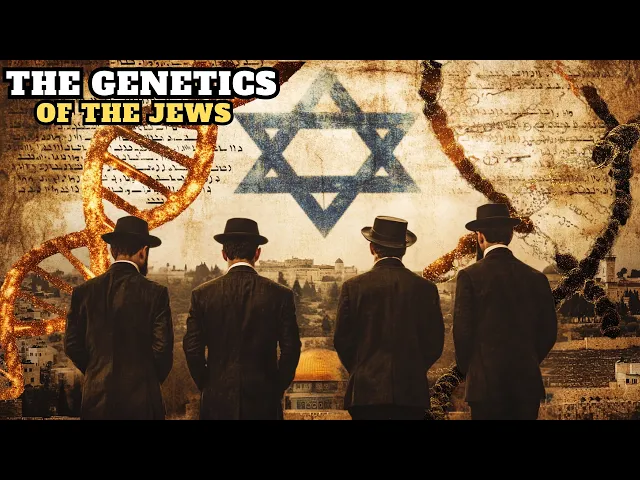
welcome to the unraveling the scriptures channel the ancient Israelites also known as Hebrews or Jews are undeniably the most prominent people in the pages of the Sacred Biblical scriptures although many people are familiar with their language culture and especially the ancient Judaism represented by prophets priests and other figures in the Old Testament few know about the genetic origin of this people in this video I intend to explore studies related to the ancient Jewish genome offering a deeper perspective on the Jewish groups that have the closest genetic proximity to the ancient Israelites the Enigma of the
ancient Israelites DNA genetic studies involving Jewish populations constitute an essential element in the field of population genetics these studies not only analyze the chronology of Jewish migrations but also integrate findings from complimentary disciplines such as history linguistics archaeology and paleontology the main goal of these investigations is to understand the origins of the distinct Jewish ethnic divisions exploring the possibility of a shared genetic Heritage between them often referred to as a hypothetical genetic Abraham to achieve these goals scientists use three main types of genealogical DNA tests autosomal DNA at DNA mitochondrial DNA Mt DNA and Y
chromosome DNA y DNA each of these methods provides unique insights into the ancestry and formation of Jewish communities atdna tests which analyze the DNA inherited from all ancestors show that Jewish populations tend to form genetically isolated yet related groups within distinct communities a striking example is the close genetic link shared by most Jewish communities with ashkanazi Jews on the other hand mtdna and ydna tests offer a more specific analysis the first examines maternal lineages through genes passed exclusively by women while the second focuses on paternal ancestry analyzing genes inherited only by men additionally technological advancements
in genetic analysis have allowed the exploration of the interconnection between Jewish populations and other communities in the Middle East and the diaspora enriching our understanding of the genetic diversity and historical trajectories of these populations these discoveries helped to paint a broader picture of the origins and evolution of Jewish communities throughout the centuries studies on the genetic composition of Jewish diaspora communities ashkanazi safic and Mizrahi indicate a significant presence of shared ancestry originating from the Middle East this common trait reflects the ancestral history that unites the these communities despite their distinct trajectories focusing initially on the
ashkan aim it is worth noting that this is one of the largest subdivisions of Judaism their Roots lie in Central and Eastern Europe covering territories such as Germany Poland Russia and adjacent countries over the centuries the ashkan aim not only preserved their own lurgical Traditions but also developed unique customs and specific forms of Hebrew usage including the emergence of the Yiddish language which blends elements of Hebrew and Germanic languages these communities played a key role in shaping European cultural formation their influence extended across various areas of knowledge such as literature philosophy music and science molding
European thought and development additionally they faced significant historical challenges such as the impact of persecutions and the diaspora which strengthened their resilience and ability to innovate and contribute to society in general next we highlight the sapharic communities whose historical roots are deeply connected to the Iberian Peninsula encompassing Spain and Portugal as well as regions of North Africa and the Middle East the term sapharic originates from sepharad the Hebrew name for Spain reinforcing the strong connection of this community to the Iberian territory in the 15th century with the Spanish Inquisition many ardic Jews were forced to
leave Spain facing one of the largest dispersions in Jewish history this expulsion LED them to settle in various countries including Morocco Turkey Greece Egypt and other parts of the Mediterranean and Beyond despite the adversities the sepharim managed to preserve and expand their Rich cultural heritage these communities stand out for their unique cultural lurgical and culinary Traditions which reflect not only their ancestral connection to the Iberian Peninsula but also the influences of the places where they settled ladino music the use of judeo Spanish as a means of expression and Cuisine marked by spices and typical dishes
are some of the vibrant legacies of this Heritage that continue to inspire admiration worldwide in addition we find the mizrahim or misrahi a term that designates Jewish communities originating from the Middle East and North Africa with a history that spans thousands of years these communities have their roots in countries such as Iraq Iran Egypt Syria and Lebanon territories where Judaism flourished since Antiquity the Mahi communities are distinguished by their exclusive religious cultural and linguistic Traditions often different from those of ashkanazi and sapharic Jews a striking example is the use of ancient local languages such as
judeo Arabic and Aramaic in their texts and liturgies as well as traditional music and dances that reflect the rich influence of surrounding cultures while United by the Jewish faith these communities have a unique trajectory shaped by their interactions and coexistence with different societies and civilizations over the centuries these three major subdivisions ashkanazi Sephardic and Mizrahi represent the remarkable diversity that characterizes the Jewish people together they reveal a history of resilience and adaptation that spans generations and continents demonstrating the ability to preserve a common identity while embracing the cultural plurality of their Origins and experiences genetic
studies reveal a striking proximity between various Jewish groups and contemporary populations in the Middle East such as Lebanese Palestinians beduins Drews Arabs jordanians and syrians this connection also extends to other historical populations in the region known as Mesopotamia highlighting a shared Heritage rooted in ancestral territories on the other hand Jews residing in Europe including communities from Italy Germany Poland Ukraine and Russia show evidence of genetic overlap with local non-jewish populations particularly along maternal lineages this fact suggests episodes of intermarriage with European populations throughout history especially in the case of ashkanazi and sapharic Jews among the
sefarim this interaction was most notable in southern European regions while the ashkan naazim show signs of diverse genetic influences from various parts of the continent additionally some researchers identify specific genetic relationships between ashkanazi Jews and certain European populations attributing this to events of misation that occurred in remote historical periods these interactions contributed to the diverse genetic composition of Jewish diaspora communities while maintaining a genetic Heritage strongly connected to their middle eastern Origins genetic studies reveal that groups such as the baina Israel Jews the kochan Jews in India and the beta Israel of Ethiopia while sharing
certain genetic similarities with local populations also exhibit traits that indicate Jewish ancestry or connections to other Semitic populations a particularly notable example is the beta Israel also known as the falasha whose unique history continues to generate significant interest historically It is believed that the beta Israel are descendants of the Lost tribes of Israel particularly from the tribe of Dan or in some versions from the tribe of manasse according to Traditions their migration to Ethiopia occurred thousands of years ago possibly during the time of King Solomon and the Queen of Sheba linking them to ancient narratives
deeply rooted in both Jewish and Ethiopian history for centuries the beta Israel lived in relative isolation in Ethiopia preserving distinct religious and cultural practices their Judaism presents unique characteristics based on interpretations of the Old Testament and local Traditions differing in several ways from the predominant branches of global Judaism this isolation not only strengthened their identity but also resulted in a cultural and religious Heritage that is both unique and deeply rooted in ancestral traditions in addition to the various Jewish groups whose ancestries are reflected in studies of ancient Israeli DNA there are also other communities in
the region that share significant genetic connections with the ancient Israelites among these communities are the Samaritans a group that persists to this day the Samaritans retain a considerable portion of their genetic Heritage shared with the ancient Israelites enforcing their historical and cultural ties to the region contemporary Palestinians also exhibit traces of this genetic Heritage due to the ancient Jewish presence in the area where they now live a study published in 2017 in Frontiers in genetics pointed out through principal component analysis A notable genetic Affinity between the ancient levantines and present-day Palestinians including beduins in the
Levant region this study reinforces the idea of sign significant genetic continuity in the area furthermore a study published in the same year in the American Journal of human genetics identified a predominance of lentine ancestry among Palestinians highlighting an overlap between the Bronze Age populations and contemporary inhabitants of the region a more recent study from 2020 confirmed this continuity by finding genetic connections between human remains of Bronze Age Israeli and Palestinian populations and contemporary arabic speaking groups these results suggest a deep and Lasting genetic interconnection between different communities in the Levant reflecting the rich and complex
history of occupation and cultural interaction in the territory Palestinians like other levantine peoples such as Drews Lebanese jordanians beduins and syrians as well as various Jewish groups like ashkenazim mizrahim Iranians and Moroccans have been the subject of research into to their ancestral Origins it has been found that Palestinians among other inhabitants of the Levant have inherited about 81% of their ancestry from the ancient peoples of the region during the Bronze Age linked to the ancient Israelites and various other Semitic tribes that lived in the area including the Canaanites in the case of ashkanazi Jews genetic
Studies have revealed that in addition to the ancient Semitic Israeli DNA they they also possess between 42% and 60% European ancestry originating from Germanic Italian and Slavic peoples examining the Semitic genetics of ashkanazi Jews today it is observed that between 20% and 28% of their genetic Heritage comes from the ancient Israelites with some individuals having up to 39% of this origin ashkanazi Jews have between 20% and 28% of ancient Israel genetics in their DNA reaching up to a maximum of 39% the majority of their ancestry about 58% to 60% originates from Europe as a result
of the misation that occurred during the diasporas with European peoples in contrast sphardic Jews have a slightly higher percentage of ancient Israeli origin in their genetic composition compared to ashkenazim but about half of their genetic profile is similar to that of ashkenazim with a strong European influence Mizrahi Jews who remained in the Middle East and did not intermar with European peoples have a significant percentage of their genetics over 63% derived from the ancient Israelites among Jewish groups mizraim are the closest genetically to the ancient Israelites many people wonder which current Jewish group is most similar
both genetically and historically to the ancient Jews mentioned in the Bible and the answer is clear misrahi Jews although ashkanazi and sapharic Jews also descend from the ancient Jews their genetic Affinity is lower when compared to that of mizrahim I hope you enjoyed this video and learned a little more about the genetics of the ancient Israelites and the Jewish groups most closely related to them today if you like the content don't forget to leave a like and share it with those interested in similar topics about the genetics of the ancient Israelites may God bless you
and I'll see you soon