[Music] hi everyone Matthew to sanis here with nirra bets thanks so much for tuning into this handicapping 101 video on Pace make sure to like this video And subscribe to the N BET's YouTube channel well let's talk a little bit about pace and how we can understand this within the realm of handicapping and how this can help you lead to picking out more winners the old adage is that pace makes the race what does that mean exactly well it simply means that the speed at which the race run during the early portions of the race
has a huge impact on which horses are most likely to win the end of the race and with the logic being the faster they go early the more those horses that are running fast up front might very well tire and then seed the lead to horses coming from further off the pace on the other side if they're able to run rather slow up front they're able to reserve a lot of energy those Front Runners might very well be able to hold off all of the Challengers and go what we refer to as gate to wire
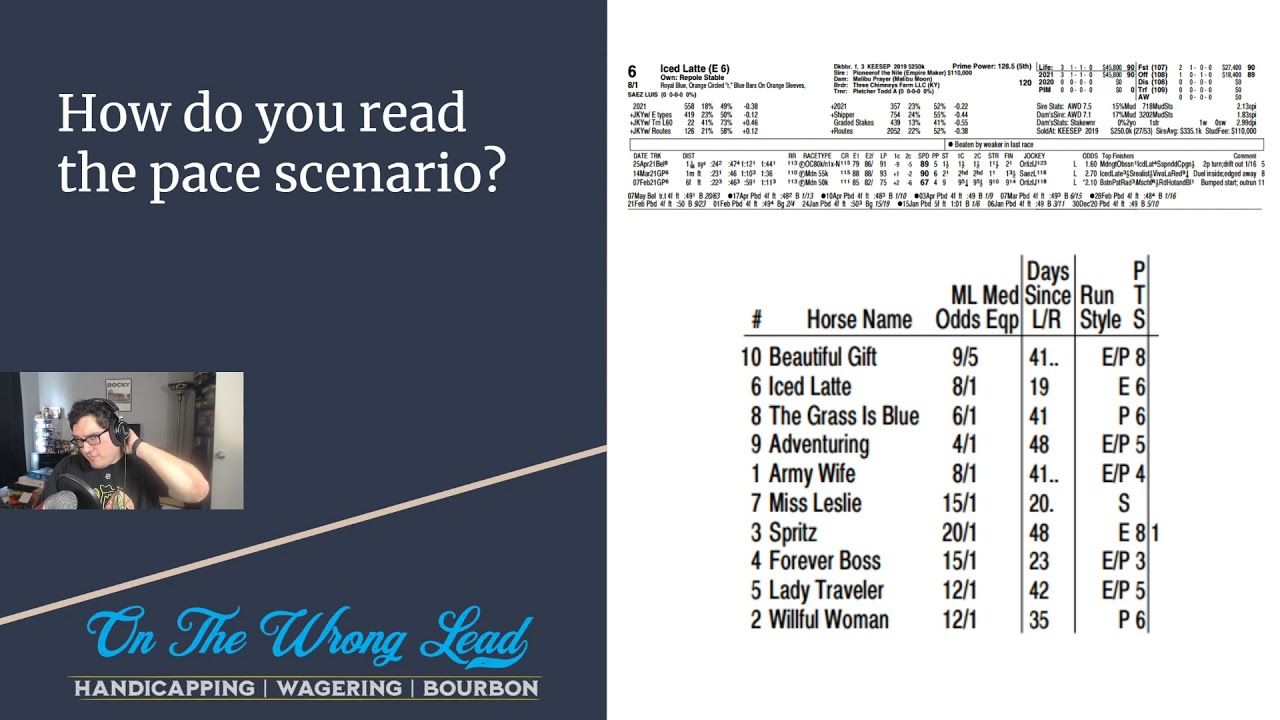
and Lead all the way around so if it's a hot Pace expect for horses to come from off the pace if it's a cold Pace expect for those leaders to be able to hang on at the end or at least have a better chance of doing so but here's the question how do you determine whether a pace is going to be fast or slow well there's a couple of different ways to do it one is to Simply look at the running lines of the race this is something can see in your past performances in your
programs but it just simply shows you how horses prefer to run in their previous races do they sit on the lead do they sit a couple of lengths off the pace that's what we refer to as a tracking trip where they're just maybe two or three lengths from the leaders or do they prefer to close from well off the pace maybe sitting sixth seventh eighth dead last and little bit further back so that's the question is how many horses in the race like to sit up front how many horses like to track how many horses
like to close the more horses that like to be up on the front end the more contested the early pace is going to be the faster the pace is going to be the fewer horses obviously the slower the pace so that's a very simple way of understanding whether or not the pace is going to be hot or cold simply to see what the running lines have looked like there are also various Pace projection Services things like time form us Optics EQ even brisnet all have elements that give you indications of how they perceive the pace
is going to play out these services are great snapshot to help beginning players get an understanding of whether or not the pace is going to be fast or slow and which horses it might very well end up favoring let's take a look at a practical example this is pulled from a recent race in New York and we're going to take a look at the number 10 collected special this is a horse when you look at the running lines which I've highlighted on the right side prefers to be on the lead that's what all those ones
stand for this horse was first at the quarter mile Mark the half mile Mark at 3/4 mile Mark and at the top of the stretch or at the finish so this horse is one that likes to get up on the lead you'll see three of the four races this horse has won have come when it has been up on the lead the one time the horse did not win the horse failed to get to the lead this is what we were commonly referred to as a need the lead horse in other words this horse needs
the lead or the horse has no chance at winning now it doesn't mean that they're always going to win when they get to the lead but it does mean their only way to win is to get to the lead the more horses you see like this in a field the faster the pace is going to be because all of those horses are going to want to get to the front only one of them is going to be able to do so but it's going to lead to a very contested Pace now on the left side
you'll see that I've highlighted something that you'll see in the drf programs time form us early and late Pace numbers the early Pace number in this instance is 106 that's rather High anything over a 100 indicates that this is a horse that really likes to be very forward potentially on the lead so you'll see our horse collected special this is a horse that wants to be on the lead has great early speed now you'll notice the horse also has a rather low late speed figure not surprisingly horses that go very fast early tend to slow
down a little bit late question is whether they can get an advantage to getting up front early and hold off everybody else again the more horses that look like collected special in the race the faster the pace is going to be well let's take a look at what time form projects the pace to be in this particular race and you'll see that they project our number 10 horse Collective special not even to be the fastest horse in the race they think the number three horse number 11 horse as well as the number five seven and
eight all are going to be very close to the lead now that tells you that there's multiple horses like collected special in the race this is going to lead to a very fast pace so you're going to want to look for horses that are coming from off the pace well let's see how this actually played out because it's one thing to handicap on paper it's another thing to see how it plays out on the track and at the beginning of this race you'll notice that the number three horse which was projected to be in the
lead did not break particularly well and is sitting more mid pack but there's our number 10 collected special up on the front end along with the number 11 and the number five and four horses in between they're all pressing a rather aggressive Pace as they go 22 seconds flat to the opening quarter mile which is a very aggressive fraction for this distance of race so we see a very hot Pace question is can our horse collected special actually hold on until the end here's the race when they're turning for home and you'll see collected special
has already lost the lead to the number 11 Allied attack and now suddenly you start to see the horses coming from well off the pace like instatic and hey macket Jack and your man Alex all starting to make up ground going past those leaders as they Tire late and the horses that were reserving their energy sitting further back are able to get the job done and win this particular race so this is a great example of seeing a race where there were a lot of horses that wanted to lead that leads to very fast fractions
and that allows for the race to be won by horse coming from off the pace but what might happen in the inverse and this certainly happens as well this is another recent race and this is one where the number four Dame Cino was the fastest horse in the race when you look at it from a Time form early Pace number that 95 was the fastest horse in the field in terms of early Pace well that tells you something right away because again that's below 100 as I mentioned is kind of an important Benchmark to keep
in mind the other thing is if you go back and look at the right hand side you'll see this is not a horse that traditionally likes to sit on the lead this is a horse that won in its last race sitting second in the early going and then going past the leader late but this is a horse that traditionally sits third or fourth in a lot of their races so this is not a horse that needs the lead it might be able to go to the lead simply because there are not many Faster Horses in
this particular race when you go through and handicap a race and see a lot of horses like Dame CCO or those who like to sit further back and there's not an obvious leader that's going to lead to a little bit of a slower Pace but let's see what time form has to say about this well they agree they have the number three and the number four horse as being up on the front end in this race but very cold early fractions and as they say it favors Front Runners because nobody's going to be pressing the
lead they're going to be able to set their own reasonable fractions again that's what it says on paper let's take a look at how it actually plays out on the track well they break here and it's a pretty clean break and you'll see our number four horse Dame Cino gets up to the front end and is doing rather well and gets out there number seven signal from noise and the number three Amanda's fol all are in the top three but ultimately it's Dame Cino that's gets to the lead with the number seven signal for noise
sitting closely behind and they're Galloping at a rather reasonable Pace setting a 23 and2 opening quarter mile now that's like I said a pretty reasonable Pace there's not a lot of pressure the horses are in a nice easy Rhythm but let's see how this one ends up playing out well as they're turning for home we have the same two horses up front Dame sink on and signal for noise and because they've been able to set rather reasonable fractions they're able to pull away in the stretch as they have plenty left in reserve and these top
two end up pulling away from the rest of the field with our number four horse Dame Cino being able to hold off signal from noise to get the win but this is an example of how horses that might not be pressed early can take advantage of this by holding on and going all the way around the track in the lead so what are some important takeaways when we talk about Pace one is making sure to review the running lines of every horse in particular look at how the horses are running recently horses form which is
another element we will talk about in these tutorial videos changes over time some horses may have not shown much early speed at one point in their careers but now might be showing a lot more early speed and might want to be up on the lead the inverse is also true a horse that used to show a lot of speed might now be sitting further back later in their recent races so paying attention to current form is really important obviously Consulting Pace projection Services is a critical element too and seeing if it aligns with your opinion
of the race again Pace projection Services often look at the totality of a horse's career when identifying their early and late paced figures but it's important to point out as I mentioned what are the recent Trends because sometimes Pace projections don't necessarily get that part of it right and a horse that used to show speed or didn't show any speed might have changed the last couple of races that might not be reflected in the pace projection finally determine which horse or horses are going to benefit most from the pace Dynamics now not every single race
is going to have a really hot Pace or really slow pace some most of the races actually you'll see a rather reasonable Pace but make sure to always dive in to the PACE dynamics of a race when you're handicapping I hope you found this tutorial helpful make sure to like this video And subscribe to the naets YouTube channel my name is Matthew de sanis and I'm wishing you a great and profitable day at the races and reminding you friends it's now post time