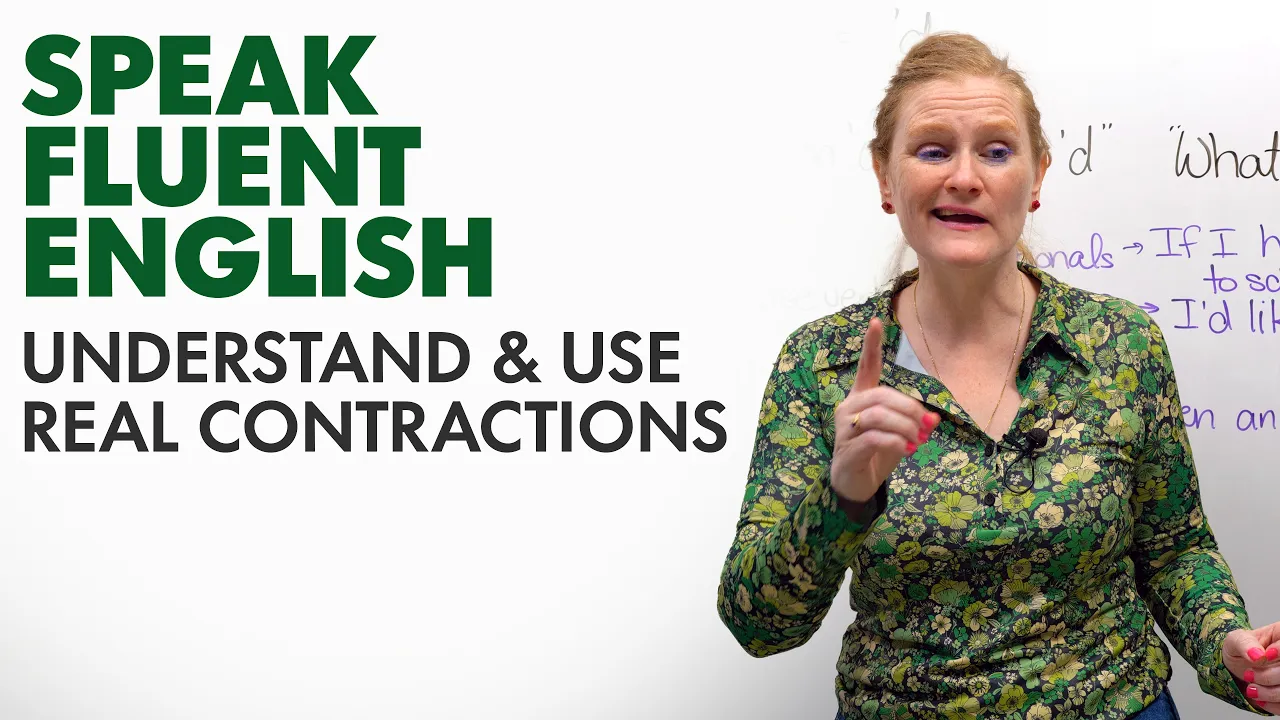
Where'd you go? What are you doing? Do you have problems understanding people's questions in English?
I do. And the reason is because we just kind of squish all the words together. We omit or don't say words when we ask questions, and it can be very confusing.
I've narrowed it down to one super amazing example that I ran into. I was running over the weekend. My friend said, "Ronnie, why'd you buy that?
" And I thought, "Oh, because I wanted to. " And I thought, "Why'd? Oh, why'd?
Homophone. Why did you? " So, in normal conversation, no one's going to say to you, "Excuse me, Ronnie, why did you buy that?
" We would say, "Why'd? Why'd ya? " We'd change "you" to "ya".
"Why'd ya buy that? " It works with our WH questions, which are who, what, when, where, why, and how. How'd ya?
How'd ya? How'd ya? So, this is only for speaking.
So, when you're writing beautiful tests or when you're doing things in your classroom, you have to know that this is grammatically wrong. You actually have to write the whole sentence. So, this lesson is called Apostrophe D.
This is an apostrophe. It's a little squiggle at the top. If you want to call it a different name, that's fine.
You can call it, like, a dancing worm in the sky, D, that's fine. But in proper English grammar, it's called Apostrophe D. Usually, apostrophes are saying, like, "Hey, we took some words out here just to make it difficult.
" And if they're grammatically correct, like these ones, they're called contractions. But this is actually not a contraction; this is just how we confuse you when we speak English. So, let's get to it.
"Why'd". It's. .
. As I said, it's a homophone for something that is not thin; it's wide. So, I would say, "Why'd ya?
" "Why did you? " "Why'd ya? " "Why'd you buy that?
" "How'd". "How'd you do that? " We don't say, "How did you do that?
" We say, "How'd ya? " "How did ya? " "How did you do that?
" "When'd". "When'd you want to go? " "When did you want to go?
" "When did", "when did". We don't say, "When did", we say, "When'd". "When'd ya come here?
" "When'd ya leave? " And the D is so fast that you might not even realize that people are saying it, and they say, "When'd go? " "Huh?
What language are you guys speaking? " That's not in my grammar book. So, "Who'd", "Who'd you go with?
" "Who did you go with? " "Uh-uh. Who'd you go with?
" "Oh, I went with my friend. " Be careful. Practice it, practice it, practice it, and then you can try and say it.
But remember, with these things, it's more of your listening and understanding fast English than you actually producing it at the moment if you're a beginner. If you're more of an advanced speaker, let her rip. Try these.
"What did", "What did", "What did", "What did you do? " "What did you do yesterday? " "What did you do?
" "Uh-uh. What did", "What did you do yesterday? " And the last one, "Where'd", "Where'd you go?
" "What? Where'd you go? " "Where did you go?
" "Where'd you go? " So, let's try again. "How'd", "Why'd", "When'd", "Who'd", "Who'd", "Who'd", "What'd", that one's hard, "What'd", "What did you say?
" I said "What'd", and "Where'd", "Where'd". So, you can practice these. But more importantly, listen when people speak.
Watch these amazing things called television and streaming services. Anything you watch on whatever social media you're banging at the time. Listen to when native people speak, and you're going to hear this and go, "Oh my god, Ronnie's right.
They didn't say 'did', they said 'duh'. " Check that out. Now, the other one, as I said before, it's more grammar-based, I know.
But it can be confusing, because we had. . .
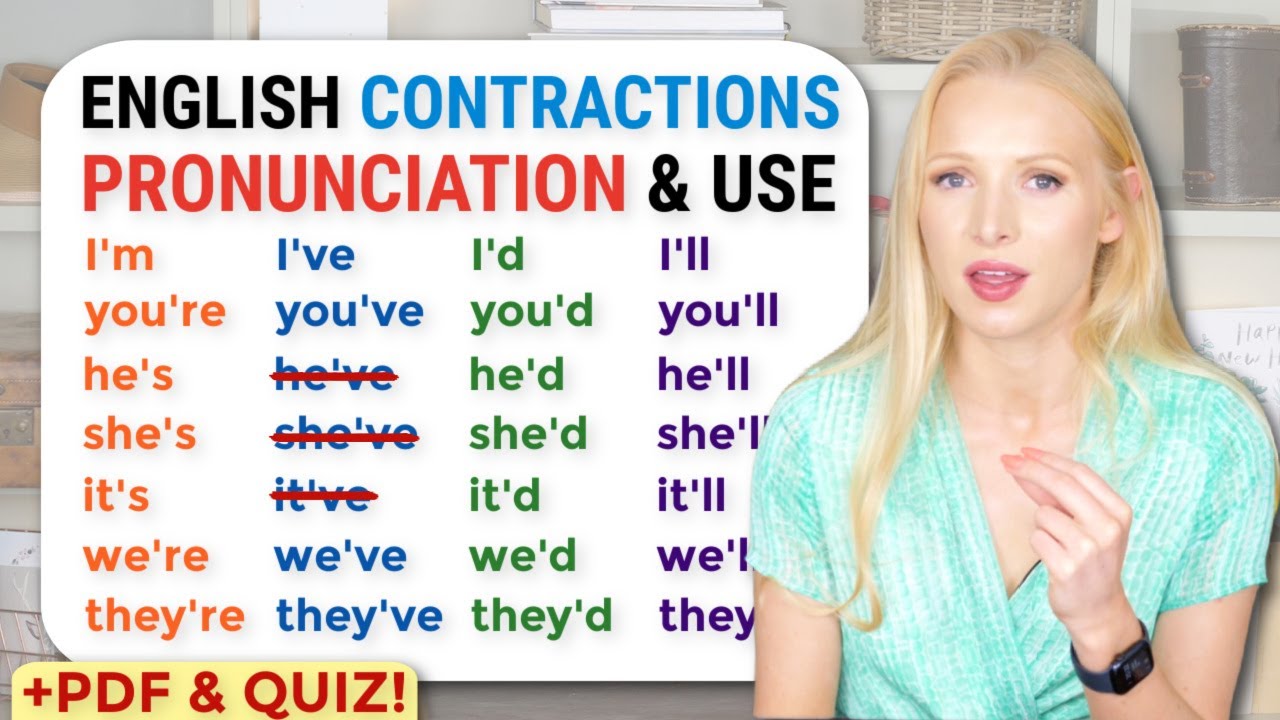
We have "I'd", "They'd", "You'd", "She'd", "He'd", and "We'd". Oh, "We'd", hello. But this doesn't mean "did" in this situation.
When we put it with a subject, it can be one of two options. It can either be "would" or "had". And how are you supposed to know which one?
Well, I'll tell you. That's why I'm here. Ronnie, teaching you some stuff.
So, if we're going to use the verb "would", "I'd", we're always going to follow it with a base verb. Okay? And there's two major ways that we use it.
One, everyone's favourite, conditionals. When we use conditionals, we might have a phrase at the beginning, and in this instance, this "would" here is "I would", but we don't say that. We don't say, "If I had a car, I would drive to school.
" We say, "If I had a car, I'd drive to school. " And this is grammatically correct. Yes.
So, oh, it's so much easier now. So, when you're using conditionals, you can definitely use this shortcut and put "I'd". But don't forget the "d", because sometimes students write it, and they say, "If I had a car, I'd drive to school.
" I'm like, "God, no, you forgot the 'd'! " Don't forget the "d". It's a whole part of it.
We also use this for preferences. So, "I'd like a pizza. " "I'd rather have", so we don't say, "I would rather have.
" We say, "I'd rather have. " So, again, this is making your English sound faster. You get more fluency, you sound more natural.
It's a wonderful situation for you to use. So, practice this. "I'd", "you'd", "he'd", "she'd", "we'd".
I know you like that, "we'd". How do we know if "would" is the "d"? Let's try again.
How do you know if the "d" is "would" or "had"? I told you with "would", we use the present tense of the verb or the base verb, but if we're going to use "had", it's going to be the past participle. PP in my brain means past participle, okay?
Oh, I have to go pee-pee. Okay? So, what grammar do we use this in?
Everyone's favorite, the past perfect. Example, "I'd eaten an apple. " So, this is, we can't say, "I would eaten an apple.
" No, that's just wrong because the verb here is in the past participle. So, this has to be, "I had eaten. " So, the number one easy way to identify if it's going to be "would" or "had" is to look at the verb.
If it's a base verb, we know it's "would". If it's the past participle, we know that it's going to be "had". Can you think of a past participle verb?
Okay. "Eaten", yeah. "Went", "gone".
Good. So, "I had gone to the store, then I came back. " "I'd gone to the store, then I came back.
" So, be very careful with your verb choice, and you're going to get this all the time in your grammar class or in your grammar tests. "Would" with the base verb, and "had", past perfect, with the past participle. "They'd", "you'd", "she'd", "he'd", "we'd".
Practice this, ace your grammar tests, keep on following this wonderful YouTube channel for more information, and good luck with everything. How'd you do that? I don't know.