say I'm running a coin flip experiment and I want to find out how likely each outcome is heads or tails so I flip a coin once twice 100 times and once I've repeated that experiment enough times I see that about 50% of my flips are heads and 50% are Tails now that's not a particularly interesting result you probably could have told me that's what would happen at the beginning but what if the experiment I want to repeat is much bigger instead of physically performing The Experiment we can simulate it with code for example maybe I
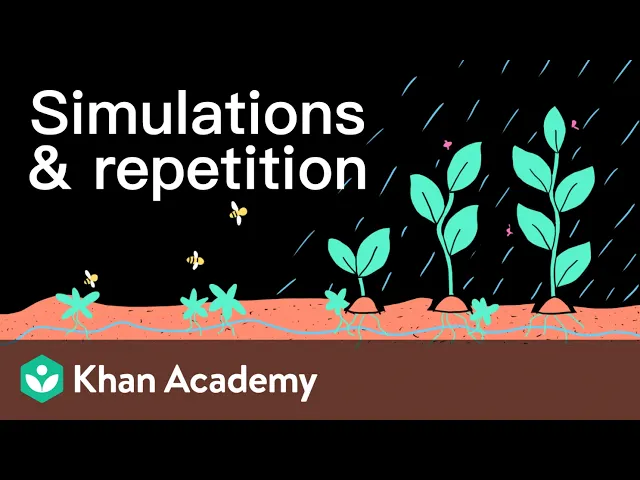
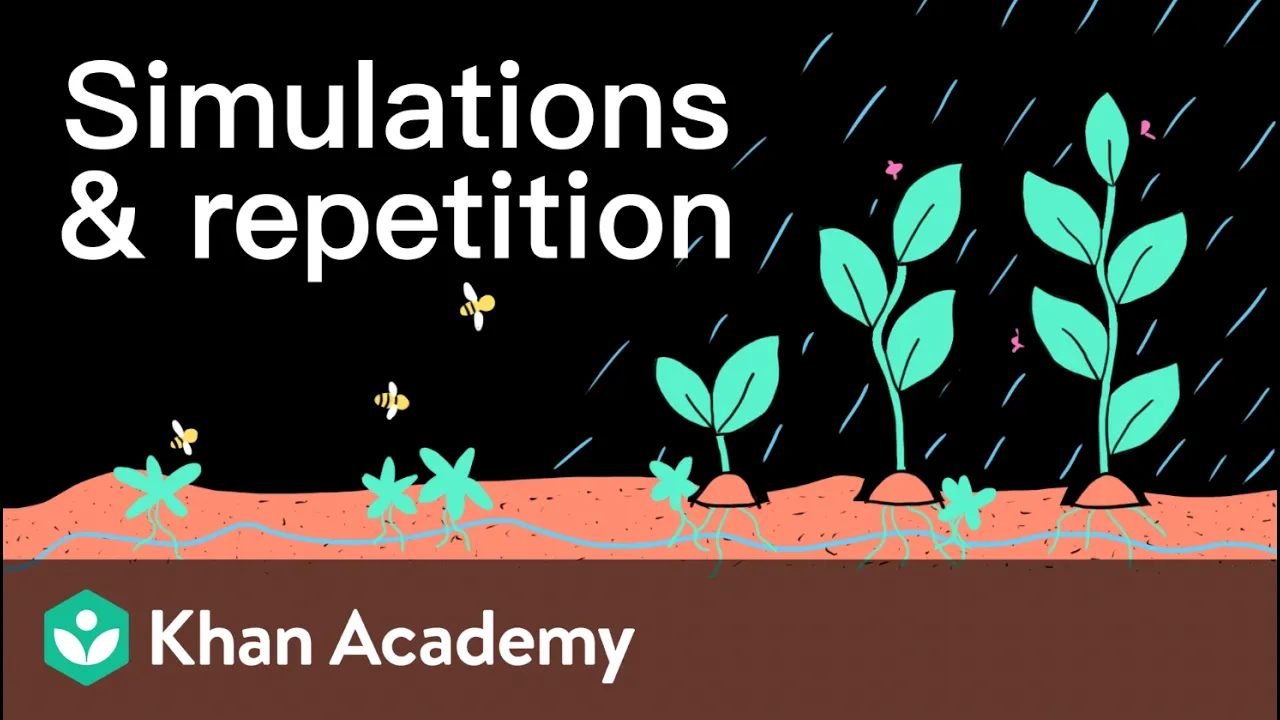
want to simulate a car crash to predict the risk of injury to the passengers or I want to simulate a forest fire to predict how far it'll spread or I want to simulate crop growth so I can predict yields and decide what to plant these are all things that would be far too costly too devastating or take far too long to repeat in the real world but if we build a computer simulation we can repeat the experiment as many times as we want for free modifying different data inputs along the way to simulate crop growth
I might combine climate and soil data with different irrigation and fertilizer choices and then repeat how that affects my crop growth over a series of time steps weather simulations work the same way they collect wind air pressure and other readings from hundreds of different balloons buoys satellites and apply mathematical models over a series of time steps okay but why is the weather forecast wrong so much of the time then it's almost impossible to 100% model the real world in a program there's just so much data data and Randomness to take into account and as humans
we don't always have access to all the data or 100% understand all the relationships involved and sometimes there are simply too many relationships that the computer physically can't process that much information in a reasonable amount of time these are some of the limitations of our current weather models we don't have data on the conditions at every single point on Earth and even if we did the computer wouldn't be able to handle all that data we can in theory more accurately predict tomorrow's weather but by the time we get the result it'll be the day after
tomorrow so for practicality almost all simulations make some assumptions or simplifications about the world around us and settle for good enough results according to their needs whether there's constraints on the data available the amount of time they have to build the simulation or the sheer computing power required with just conditionals and variables we can start to write our own basic simulations in Python we're only missing two things we need to be able to repeat our experiment and we need to be able to model some of the randomness that occurs in the real world