It would seem that the Solar System has been studied by mankind, if not completely, then in full detail. The planets have all been identified for a long time, rovers have been traveling on Mars for a while, comets and asteroids have been almost counted by name, and even the soil from one of them was taken and delivered to Earth for research. But this is where the scientists were dumbfounded.
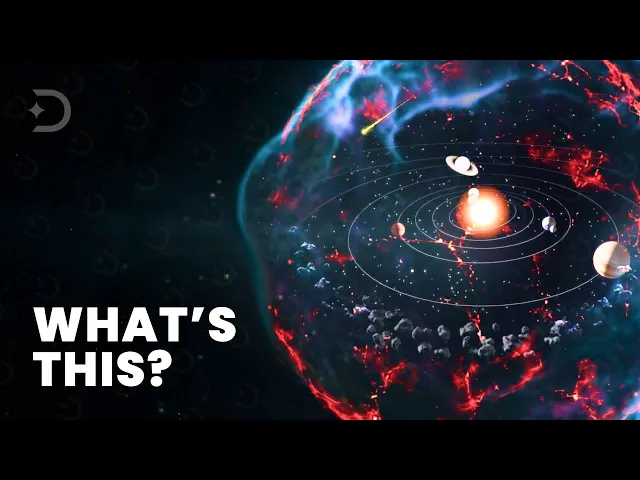
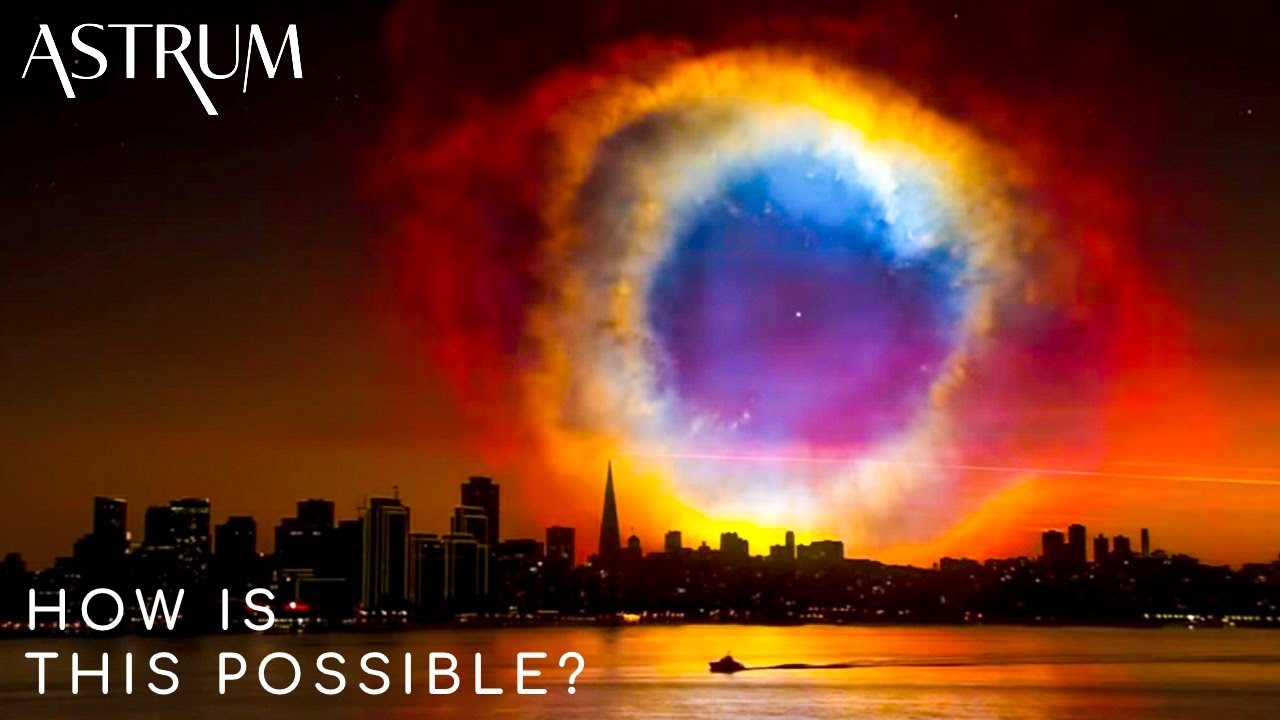
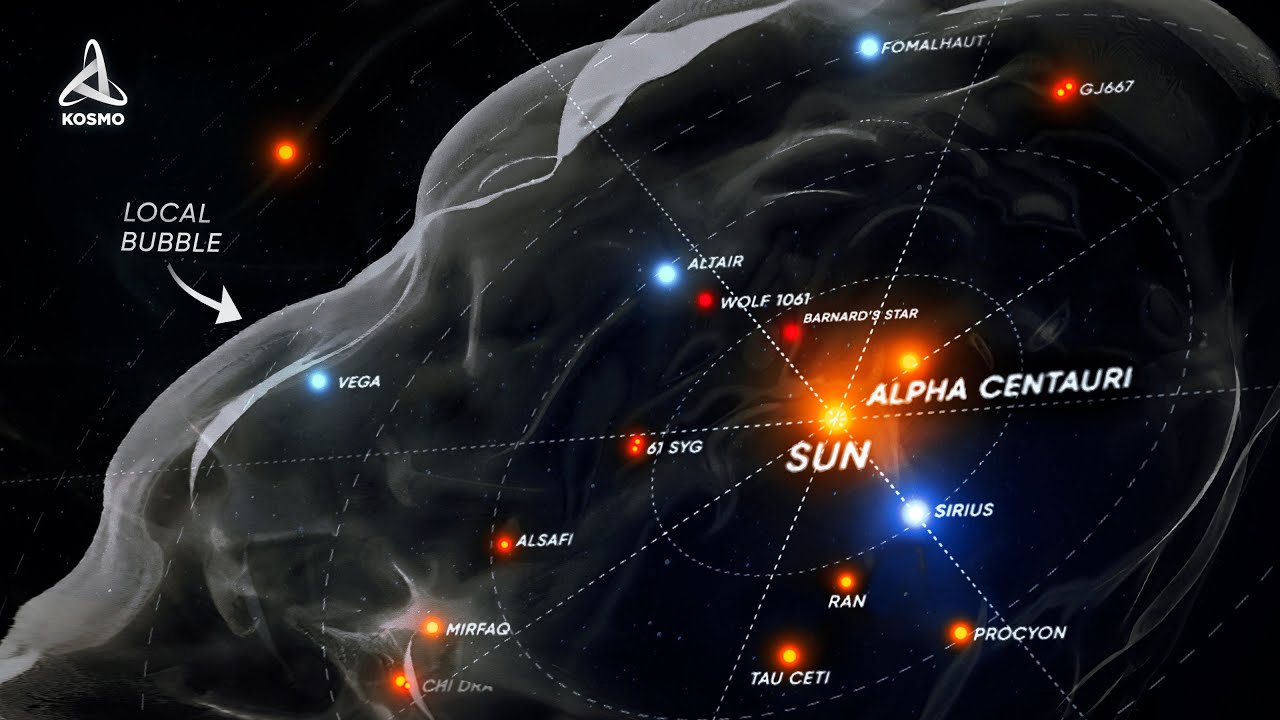
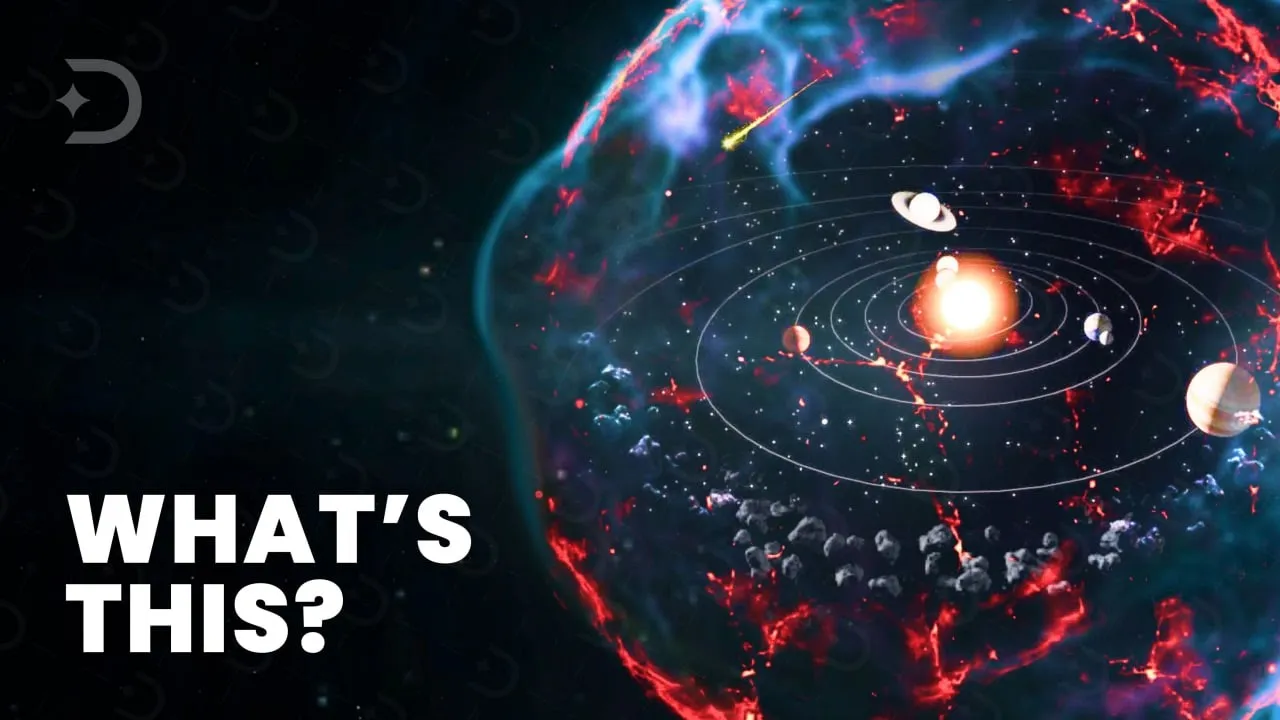
It turns out that our entire solar system, including the far, far away Oort cloud located at a distance of a light year from the Sun, is immersed in a giant bubble! Its diameter is 1000 light years. And what is remarkable, our Sun is practically in the center of this bubble!
Are we really living in a huge bubble? ! And how does our solar system actually work?
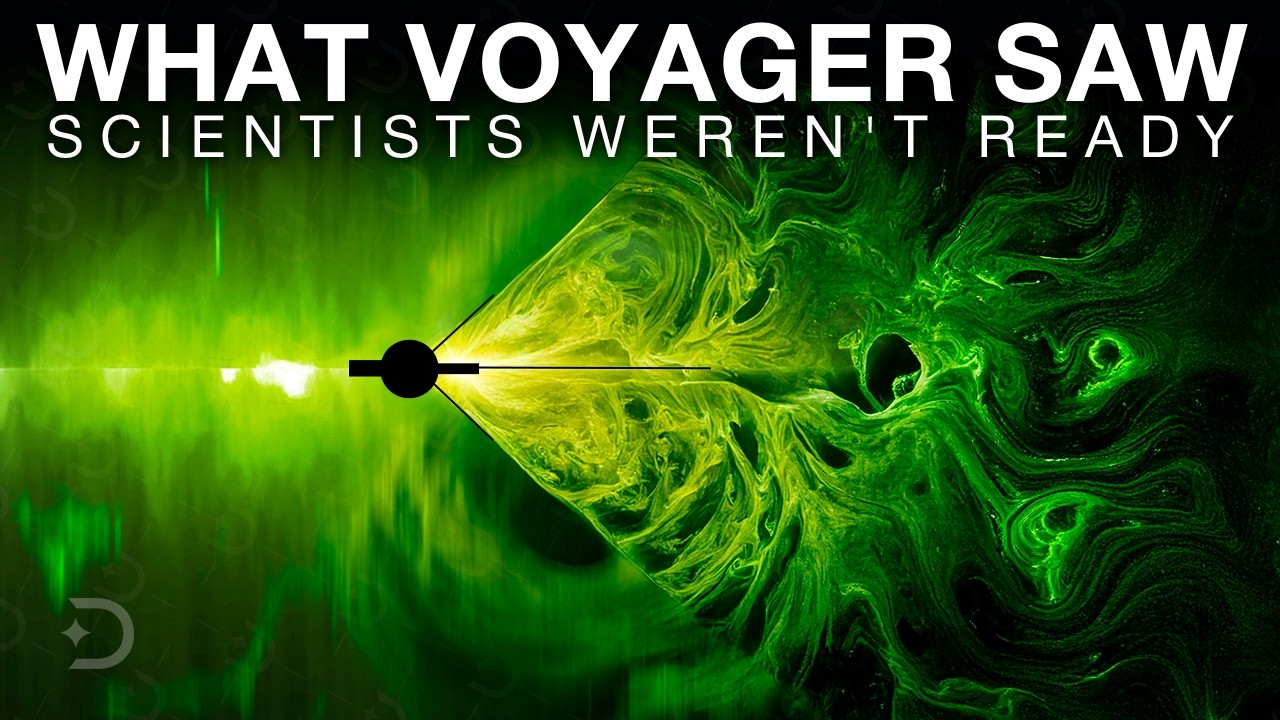
INTRO In 1977, Voyager 1 and Voyager 2 launched from Cape Canaveral less than a month apart. By the way, Voyager 2 launched earlier. But, since it had a different flight path, it flew to the edge of the solar system second, 6 years after its colleague.
Both devices found a very strange anomaly. As you move away from the Sun, the density of space increases! Interstellar space is usually considered a vacuum, but this is not entirely true.
The density of matter is extremely low, but it still exists. In the solar system, the solar wind has an average density of protons and electrons of 3 to 10 particles per cubic centimeter, but it is lower the farther from the Sun. The smallest density of space is at the edge of the solar system.
This boundary is called the heliopause. On it, the speed of the solar wind - the flow of charged particles emitted by the Sun or, in other words, solar plasma, drops to zero. The area between the Sun and the heliopause is called the heliosphere.
This is a kind of bubble in which all the planets of the solar system are immersed. At this boundary, the density of protons and electrons is 0. 002 particles per cubic centimeter.
According to calculations, the density of particles behind the heliopause, that is, in interstellar space, should be 0. 037 particles per cubic centimeter. The Voyager 2 instruments showed that the density outside the solar system, at a distance of 119.
7 astronomical units or 17. 9 billion kilometers from the Sun, was 0. 039 particles per cubic centimeter.
This almost coincided with the calculations. But then the strangeness began. At a distance of 124.
2 astronomical units or 18. 5 billion kilometers, the density was 0. 12 particles per cubic centimeter!
Why is the density increasing? We will definitely talk about this a little later, but for now let's talk about another bubble, much larger than the heliosphere, so that you appreciate all the thoughtfulness of the cosmos that packed us into two bubbles at once and understand the relationship between them. When you look at the pictures of deep space, you get the impression that it is all filled with clouds of interstellar dust and luminous gas.
But back in the 70s and 80s of the last century, astronomers began to pay attention to the fact that the galactic space around the Sun differs from this picture. The solar system seemed to hang in an almost absolute void. This year, scientists at the Harvard-Smithsonian Center for Astrophysics (CfA) proved that yes, we really are in a kind of void.
They conducted the most complex computer simulations, creating a three-dimensional reconstruction of space and time. The study showed that the Sun and Earth are located almost in the center of a giant bubble with a diameter of 1000 light years, which they called the Local Bubble. According to calculations, it began to form about 14 million years ago.
For this, it is necessary that about 15 supernovae explode over several million years! This series of explosions pushed the interstellar gas outward with the pressure of the light, creating a bubble-like structure with a dense surface at the boundary. And now the bubble continues to grow in size.
When the bubble first formed, it was expanding at about 60 miles per second, according to data collected by the European Space Agency's Gaia space observatory. At present, the bubble is still expanding at four miles per second. On its surface, seven star formation regions were detected - dense molecular clouds where stars are formed.
The process of star formation occurs everywhere on the surface of the Local Bubble, and there are many such bubbles in the Galaxy. Therefore, it is possible that there are other stars, even with planets, which, like us, are also in their local bubbles. Interestingly, the Sun was not at the center of our universe at first.
When these catastrophic explosions occurred, the Sun was far away from the scene, about 1000 light years away. But, as João Alves, an astrophysicist at the University of Vienna, explained, about five million years ago, as it orbited the center of the Galaxy, the Sun got almost right at the center of the bubble. This is consistent with estimates of radioactive iron isotope deposits from a supernova in the Earth's crust from other studies.
The researchers suggest that there are probably more star formation bubbles in the Milky Way. Research author and astronomer of CfA Alyssa Goodman, who founded Glue, explains in her statement that, statistically, the Sun would not be near the middle of a huge bubble if they weren't spread all over the place. “The Local bubble is exactly the bubble we are in right now,” she said.
“We think the Sun has probably gone through a lot of superbubbles in its history. ” The scientist compared the Cosmos with Swiss cheese. The holes in the Cosmos are punched out by supernova explosions, and new stars are being formed on the edge of the holes created by dying stars.
The research team plans to map more cosmic bubbles to get a full 3D representation of their shape, location and size. By charting out where the bubbles lie across the vast expanse of space, astronomers can piece together how these bubbles act as nurseries for stars, how the bubbles interact with each other, and how the galaxies like the Milky Way have evolved over time. With the opening of the Local bubble, the structure of the solar system looks like this.
At its center is the Sun around which eight planets revolve. The last one is Neptune, at a distance of about 4. 45 billion km or 30 astronomical units.
That is, 30 times farther from the Sun than the Earth. Behind Neptune is the Kuiper belt, a collection of small celestial bodies, the most famous of which is Pluto, which has long been considered a planet. The Kuiper belt stretches out to about 55 astronomical units.
Further, at a distance of 125-135 astronomical units there is a heliopause, which we have already described. Let us now explain why the density begins to increase at its boundary. It’s because solar plasma collides with interstellar plasma here!
Imagine two streams colliding head-on at cosmic speeds! Of course, at the point of collision, the density increases. It’s like a traffic jam - a chaos of particles.
And behind this jam, at a distance of 0. 75 to 1. 5 light years, the Oort cloud spreads - a spherical cloud of ice objects (up to a trillion), which serves as a source of long-period comets.
The interstellar wind already dominates here, but the Sun is still holding bodies in its gravitational field with its last strength. Of course, many of our viewers may ask the question: “Well, we are in a bubble that is huge by earthly standards. Even in a double bubble - local and heliosphere.
Well, so what? How does this affect our lives? About that small bubble - the Heliosphere – we can say unambiguously that thanks to it, thanks to the traffic jam that formed on its border, the Earth is reliably protected from high-energy cosmic particles rushing from the center of the Galaxy.
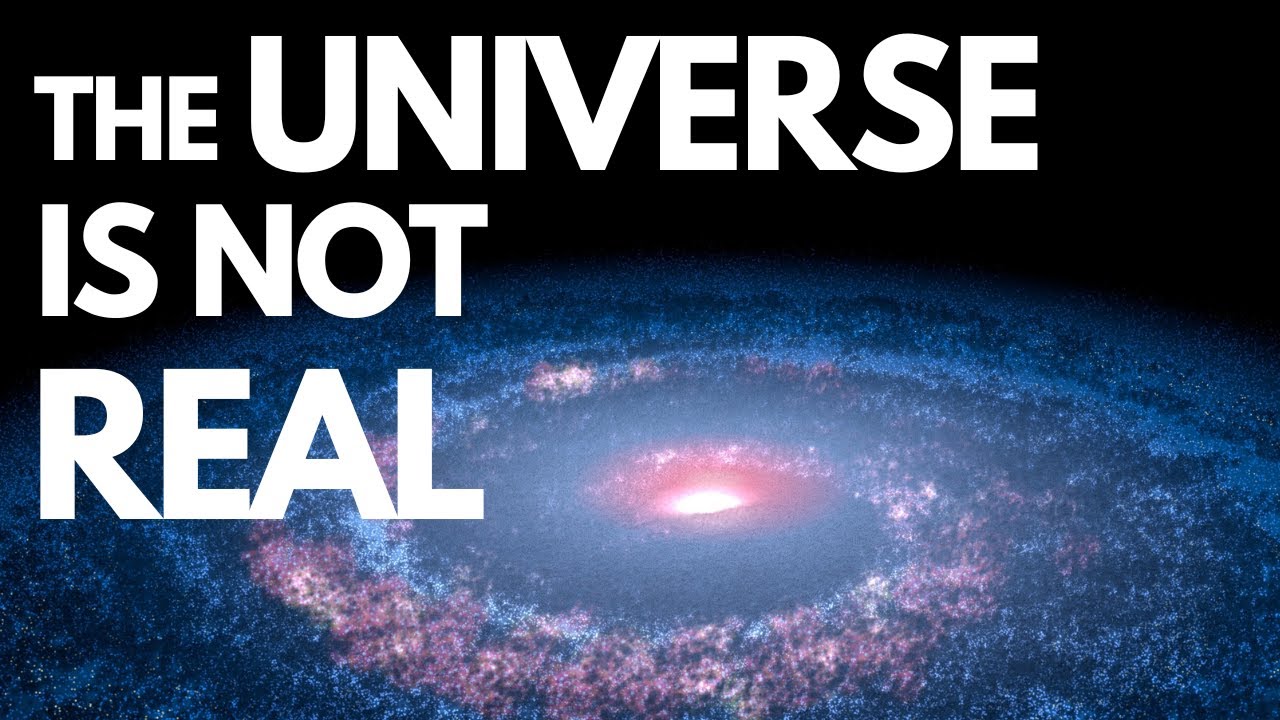
Now for the Local Bubble. Scientists have long found out that our Galaxy - the Milky Way has the shape of a spiral disk. Several spirals diverge from its center, which astronomers call arms.
Right now our Sun is almost halfway between the Sagittarius arm and the Perseus arm. And our Sun revolves around the center of the Galaxy. It makes one revolution in 200 million years.
We can call this is a galactic year. Only 0. 0008 of this year has passed since the appearance of man.
In its path, the Sun with all its planets crossed not only bubbles, but also accumulations of interstellar gas, when the density of matter in space jumped hundreds of times. Astrophysicist Miroslav Filipovic, using the latest model of the Milky Way, checked what happened on earth when the Sun crossed the galactic arms, in which the density of interstellar space is much higher. A relationship has been found between the time the Sun crossed the spiral arms and five known mass extinction events - 415, 322, 300, 145 and 33 million years ago.
So we can assume that now the Sun is in a quiet harbor, favorable for all living things. And we can say that humanity is very lucky that it appeared on Earth as a species when the Sun flew into the Local Bubble before that. Or maybe these two events are somehow connected - the appearance of man and the presence of the Sun in a safe haven - the Local Bubble?
Science has no information about it. At least, not yet. But we can definitely say that we observe such a colorful sky above our heads only due to the fact that we are practically in a void - the Local Bubble.
If the space around us was denser, many stars would be invisible. And who knows if we would know about space and about the structure of the Universe as much as now if we were literally in the dark. And we can say that the Local Bubble is just a gift to Humanity, which has entered the Space Age and is already trying to jump to the stars.
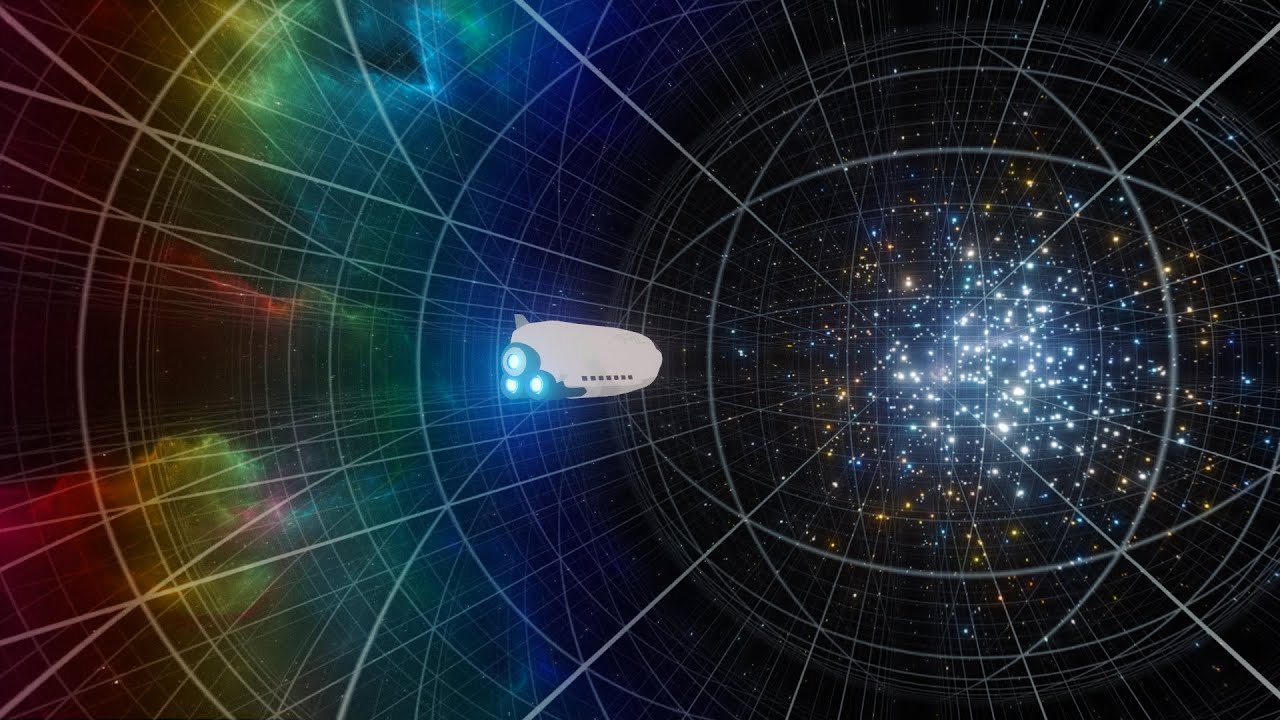
For an interstellar craft moving at subluminal speeds, the greatest threat is dust particles, which will simply grind the ship to powder during collisions. Even hypothetical concepts of such ships imply a frontal shield. But now it turns out that the Cosmos seems to have taken care of us - it removed the dust in the vicinity of the Sun and, as it were, says: "Forward, guys!
The path to Alpha Centauri and Tau Ceti is open! " Stay tuned for updates to keep up with the greatest achievements of mankind. Thank you for watching!