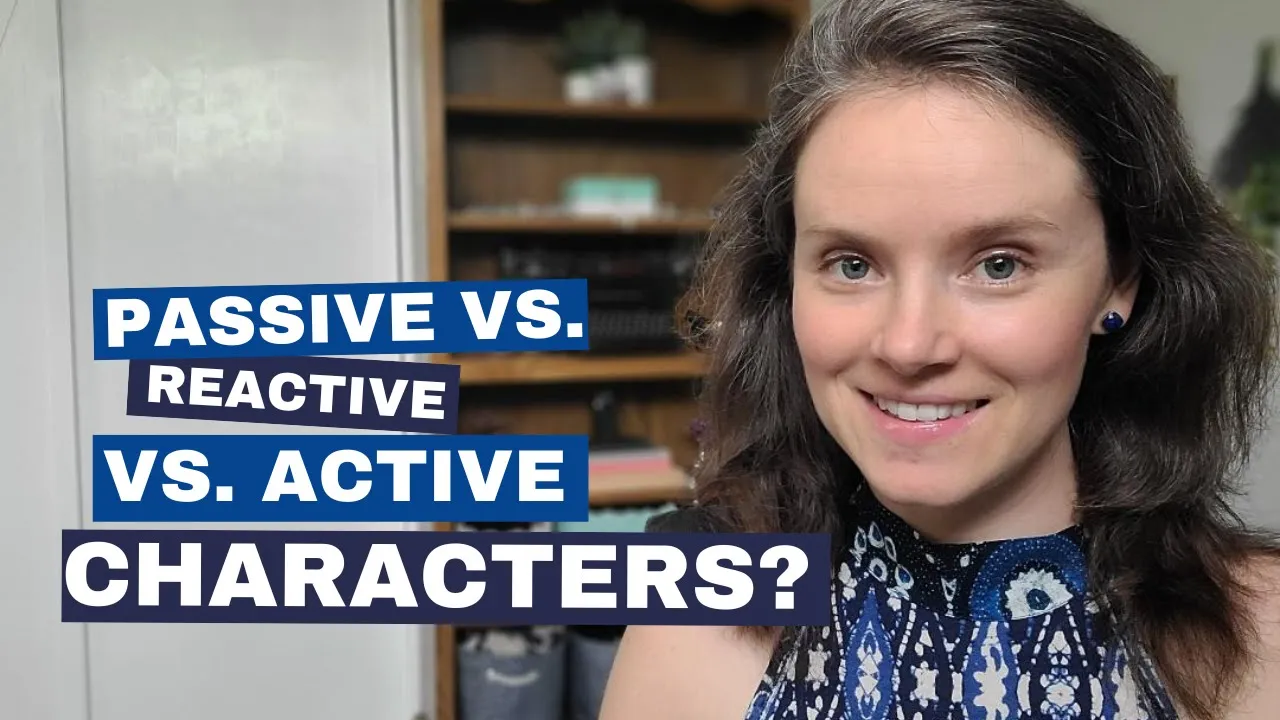
hi I'm cam Wyland and welcome to this week's writing q a video this week's question is from Val harbolovic who asks in one of your future videos could you talk about the action and reaction periods at the ACT level please is there more reaction than action in act one is there more action than reaction in act two what about act three if act 1 is predominantly reaction does that make for a passive protagonist so this is an important question which mostly comes down to definitions so let me first just start by giving a baseline definition
of what story is and how it works on a mechanical level and that is simply that we have a protagonist who is moving with forward progression toward a goal that is met by opposition which creates conflict and obviously both of these are important because if you don't have a protagonist who has a goal then you don't have conflict if you don't have conflict then the goal is immediately achieved and the story is over however also by this definition we can see why we really don't want to have a passive protagonist I would Define a passive
protagonist as one who isn't really choosing their own actions they're not someone who has a particular intention and they're not choosing how they're going to move forward in the story they're just buffeted about by the decisions and actions of others so simply we could say that a passive protagonist is one who isn't making their own decisions but is allowing um their decisions or their actions to be decided by others however reactivity is a very important part of any story we see the balance of action and reaction at almost every level of a story we have
it within scene structure in which every scene is made up of a action half and a reaction half sometimes called scene and SQL and we also see it at the level of the story as a whole in which generally you will see the character moving from a reactive space in the beginning of the story and then slowly evolving that into a more and more active space until the end of the story so there isn't a clear like um flip from reaction to action but generally speaking you can think of the characters being in a reactive
phase in the first half of the story so that would be the entire First Act and up through the first half of the second act to the midpoint at which there is a significant realization at the moment of truth and also a plot Revelation that allows the character to gain insight into their intentions and their modes of action which from that point on allows them to start acting more effectively and therefore more and more actively more and more being the one who's able to control outcome in the story and move against that opposition within the
story much more effectively and so in the second half from the midpoint on we see that character in an active phase moving through the third act toward however that is is decided in the climactic moment so again it's not like reaction in the first half action in the second but it is this Arc that we do see that is punctuated by the midpoint in the beginning so that's the simplest way to think of it um it's not again it's an important contrast here is between passive and reactive just because a character is reactive does not
mean that they're not um they don't have agency right that they're not the one making choices that they're not the one with a strong intention that they're moving toward that they're choosing to move toward basically it just means that they're not comparatively in control of outcome that they're not effective so which is what creates the conflict because if they were you know able to be immediately effective in gaining their goal there's no conflict in the stories immediately over so really story in large part no matter really what kind of goal your character is moving toward
whether it's you know an action-oriented goal or something concrete like a treasure that they're hunting or a relational goal story is all about the character learning how to be more effective over the Arc of the story until finally they're able to get what they want or alternatively in a different type of story it's about how the character never learns how to be effective or chooses um modes of Effectiveness that are counterproductive in the end which is what we often see in negative change arcs so I hope that's helpful this is an important distinction to understand
but once you do it's it's pretty simple um and you as long as your character is moving toward a goal and is learning how to be increasingly effective over the course of the story that's a clear sign that they're not passive and that you're on the right track so before I go just a quick announcement um you may have seen if you're on my mailing list or my social media platforms that I'm releasing a secret project and it's something I've been working on all summer I'm not going to say too much about it here because
I don't want to make the video super long but I will say that it is the writing archetypal character arcs guided meditations and I'm really excited about this this is based on the six archetypal character arcs that I talk about in my book writing archetypal character arcs and just sort of taking it to a new level offering a new tool that will hopefully help you access the magic of archetype which is ultimately found you know deep within your own imagination and understanding of that inherent symbolism so if if you're interested I am doing an early
bird release tomorrow which is Friday the 15th of September 2023 um so if you jump on that there's a link down below you can get Early Access and a small discount and if not uh stay tuned I will be talking about this more and explaining more about it and why I think this is such a great tool for writers and why I'm so excited about it so I will see you next week