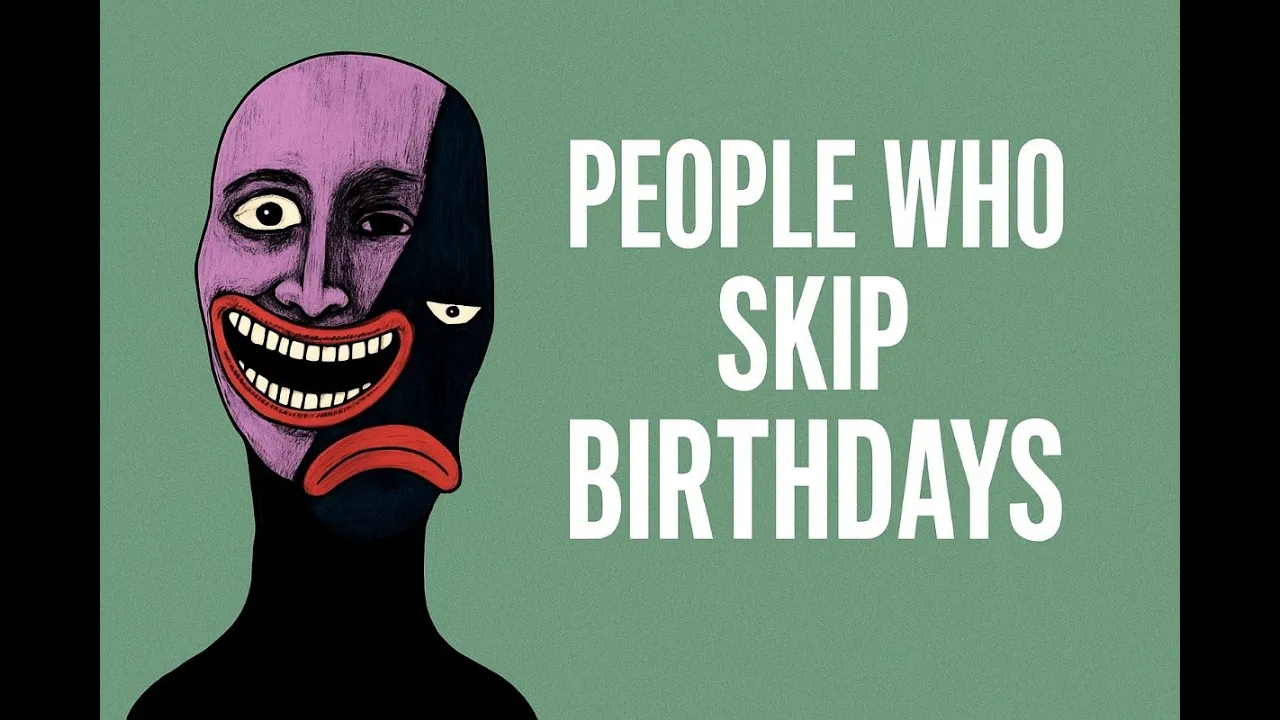
[Music] Let me ask you something simple but quietly powerful. When was the last time you actually felt your birthday? Not just acknowledged it, not just replied thanks to a few messages, but truly felt it the way you did when you were a child.
The way your heart used to thump with excitement at the ford of balloons, cake, and everyone's eyes turning toward you for one small sacred day. Now, fast forward to adulthood. The same date comes and goes, but it feels like any other day.
You wake up, maybe get a few notifications, maybe your mom calls, and then you move on. You tell people you don't really celebrate. You say you don't care.
You say it's just another day. But is it really? Because underneath that nonchilence, underneath that casual shrug, there's often a quiet story.
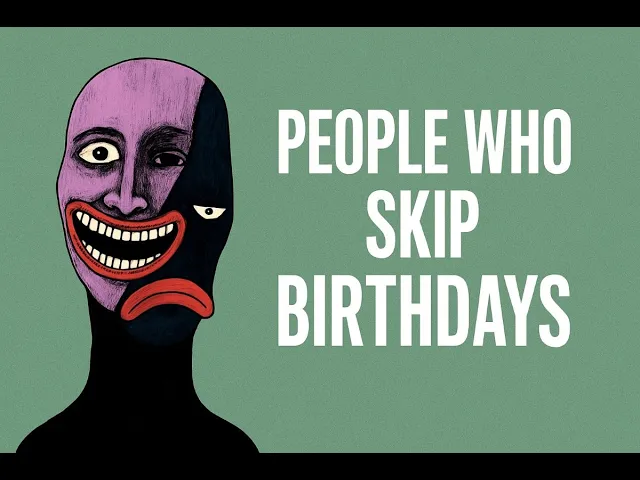
[Music] People who treat their birthday like a normal day aren't cold, emotionless, or detached. In fact, often they're the most reflective ones. The ones who have learned to hide their expectations because disappointment taught them to.
Psychologically, birthdays are emotional mirrors. They reflect how you feel about being alive, how you relate to attention, and how comfortable you are being seen. When someone says, "I don't care about my birthday," what they're often saying is, "I don't need validation anymore.
" But sometimes what they mean is, "I stopped expecting it. " There's a difference between maturity and emotional withdrawal. And birthdays have a strange way of showing us which one we've leaned into.
Some people genuinely grow out of birthday excitement, not out of sadness, but out of peace. They've found meaning in ordinary days, in routines, in quiet moments. To them, joy isn't confined to a calendar date.
They've learned that life itself is the celebration. But for others, the story is different. For them, birthdays are quietly complicated.
They might bring up subtle anxiety, not because of age, but because of memory. Maybe birthdays remind them of moments when they felt forgotten. Or maybe they once cared too much and got hurt by unmet expectations.
So instead of saying, "This year, I hope someone remembers," they say, "It's just another day. " It's protection disguised as indifference. And that's where the psychology gets fascinating because it tells us how the mind adapts.
When we feel repeated emotional letdowns, the brain begins to lower the bar. It's called emotional self-p protection. You reduce anticipation to avoid disappointment.
You teach yourself not to hope too loud. And while that might sound sad, it's actually a form of emotional intelligence, a way of maintaining balance. The brain prioritizes stability over excitement when excitement has often led to pain.
But here's the twist. Over time, that same self-p protection can quietly dull joy. The heart that once shielded itself becomes a little too careful.
You start walking through your own life like a guest at someone else's party. Polite, observant, but distant. Think about how many people smile and say, "Oh, I don't really do birthdays.
" But later they quietly replay the day in their mind. Noticing who didn't message, who forgot, who said nothing. We all do it.
Even the ones who claim they don't care because caring is human. Even pretending not to care is a form of caring, just inverted, compressed, hidden under a shell of composure. Psychologists call this avoidant validation behavior.
It's when you convince yourself you don't need recognition because part of you fears not getting it. And it often develops in people who at some point learned that emotional needs were inconvenient, that it was easier to need nothing than to be disappointed again. So, when you meet someone who treats their birthday like any other day, don't assume they're emotionally detached.
Sometimes they've just made peace with disappointment. They've traded excitement for control. But control has a cost.
Because underneath the calm surface of it's just another day lies an emotional truth. We all want to be seen. Not praised, not celebrated in grand gestures, but seen genuinely.
There's something deeply symbolic about birthdays. They mark existence itself. The one day a year that belongs entirely to you.
Not for what you've achieved, not for who you're with, but simply because you exist. And for many people, that reminder brings mixed emotions. Some feel gratitude, others feel loneliness.
Some feel both at once, like a strange cocktail of nostalgia and indifference. It's because birthdays, whether we realize it or not, remind us of time. They remind us how far we've come and how far we haven't.
That's the silent psychological trigger most people overlook. For some, treating their birthday like a normal day is their way of staying emotionally grounded. It's their way of keeping time from feeling too heavy.
If I don't make it a big deal, they think, then it won't feel like another year slipping away. There's also something cultural about this shift. In childhood, birthdays are social milestones.
They connect us to belonging. But in adulthood, that spotlight often feels strange. Many adults quietly wrestle with the tension between wanting to be noticed and wanting to avoid seeming needy.
And that inner tugofwar shows up subtly in how they treat their own birthday. Because here's what happens beneath the surface. When you grow up being the responsible one, the strong one, or the giver, your mind internalizes a message.
Your joy comes second. You learn to downplay your needs. You become the one who remembers everyone else's day but forgets your own.
And over time, your birthday starts to feel irrelevant. You're not even sure what you do if someone planned something big. It feels awkward, maybe even unnecessary.
But the truth is that discomfort with being celebrated isn't humility. It's emotional fatigue. Deep down, many of these people still crave to feel seen, but not in the loud way.
They don't want attention. They want understanding. They want someone to remember not just their date of birth, but who they've been becoming all year.
Because that's the paradox of emotional maturity. The more emotionally self-reliant you become, the harder it feels to receive love without suspicion. So birthdays become neutral zones, places where vulnerability would normally surface, but gets replaced by practicality.
It's fine, you say. Let's just get through the day. But behind that quiet tone, the mind is processing dozens of emotions.
Nostalgia for childhood excitement, subtle sadness at lost connections, gratitude for survival, and a soft longing for simplicity, for the kind of joy that used to come effortlessly. That's what makes this psychology so universal. Even if you think you've outgrown birthdays, part of you still remembers what it felt like to be celebrated without hesitation.
There's also a layer of existential reflection that psychologists have observed in adults around their birthdays. Something called temporal self-awareness. It's the moment you look back at the person you were a year ago and quietly measure the gap between who you wanted to be and who you are now.
And sometimes that gap is uncomfortable. That's why for some people birthdays feel like mirrors, not parties. They highlight the silent distance between expectation and reality.
And rather than face that reflection, people prefer to downplay the day altogether. But it's not apathy. It's introspection.
It's the human mind saying, "Give me space to process my own timeline. " So if you've ever felt strange about your birthday, like you're supposed to feel something you don't. Know that it's normal.
You're not ungrateful or detached. You're simply aware. You're aware that time is moving.
You're aware that validation feels different now. You're aware that celebration means something deeper than cake and candles. Because birthdays are never really about age.
They're about meaning. And the older we get, the more personal that meaning becomes. When you were a kid, your birthday was about the world recognizing you.
When you're an adult, it's about you recognizing yourself. It's less about presents and more about presence. Less about who shows up and more about how much of you has shown up in your own life.
That's the subtle shift most people don't talk about. And yet, it explains everything about why we stop making a big deal out of it. Because maybe we've stopped trying to be celebrated by the world and started trying to make peace with our own journey.
But even in that peace, there's an echo, a quiet voice that says, "I hope someone still remembers. " That's the paradox of emotional evolution. You can be content and still crave connection.
You can be grounded and still miss the thrill of being seen. And that's okay. That's human.
Because treating your birthday like a normal day doesn't mean you're numb. It means you've learned that joy isn't something to be scheduled. It's something you carry quietly every day in the small ways you keep showing up for yourself.
It's the softest kind of celebration, invisible but real. But here's where it gets even more interesting. The deeper layer most people never realize.
When someone treats their birthday like a normal day, they're not rejecting joy. They're redefining it. They're saying, "I no longer need the world's permission to feel good about being alive.
" And that shift from external celebration to internal acknowledgement, marks one of the quietest forms of maturity. Because somewhere along the road, we all start to learn that the things which once made us feel special, gifts, parties, posts, begin to lose their glow. What starts to matter more is alignment.
Did I live this year in a way that feels true? Did I grow? Did I show up when it mattered?
For many people, a birthday becomes less about noise and more about reflection. It's not that they don't care. It's that their definition of celebration has changed.
Maybe their celebration now looks like going for a walk alone, cooking their favorite meal, or taking a quiet day off to think. It's not the loud joy of balloons. It's the soft joy of solitude.
And that's something our culture often misunderstands. We confuse quiet with emptiness, but silence can be sacred. In psychology, this is connected to something called self-concordant motivation.
When your values and your actions begin to match, you experience a deeper sense of fulfillment, even without external validation. So when someone spends their birthday quietly, it's not apathy, it's alignment. They're no longer chasing the kind of celebration that's loud, fleeting, and performative.
They've replaced it with something steady, selfrust, but still there's an emotional undercurrent that flows beneath that piece. Because while some people truly feel content spending their birthday like a normal day, others quietly wish they didn't have to. They wish someone else would take the initiative.
They wish they didn't have to pretend that it doesn't matter. And that tension between wanting to be seen and wanting to seem unbothered is one of the most human contradictions there is. We all have it.
The longing to be noticed without asking. The desire to be celebrated without requesting space for it. It's that universal ache between independence and intimacy.
Psychologically, this is tied to something called earned secure attachment. When people have gone through emotional disappointments, maybe growing up in environments where affection was inconsistent or conditional, they learn to depend on themselves. But even self-sufficient people carry a quiet hope that someone will see through the armor.
So, a birthday becomes a subtle test. Not one you announce, but one your mind quietly observes. Who remembered?
Who reached out without a reminder? Who still sees you when you're not visible? And even if you tell yourself it doesn't matter, a small part of you still checks, that's not weakness, that's humanity.
Because no matter how self-aware or emotionally independent we become, we never outgrow the need for connection. We just get better at hiding it. There's also a fascinating paradox in how people relate to time on their birthdays.
For some, it feels like progress. For others, pressure. And the brain processes that pressure differently depending on your emotional history.
If your past years have been fulfilling, birthdays feel like milestones. But if the last year has been heavy or confusing, a birthday can feel like a subtle confrontation with yourself, a reminder that another year has passed and the questions you haven't answered are still waiting. That's why many people prefer to blur the day into the rest of the week.
It's not denial, it's self-preservation. It's saying, "I'll reflect when I'm ready. " But even in that quiet, the day carries weight.
It stirs memory, gratitude, regret, nostalgia all at once. It's like your subconscious takes inventory of everything that's changed and everything that hasn't. And in that internal dialogue, something powerful happens.
You realize that birthdays, stripped of all tradition and expectation, are actually checkpoints of consciousness. They force you to pause even for a moment and ask, "Am I living honestly? Am I still becoming someone I recognize?
Do I like the story I'm telling with my life? When you treat your birthday like a normal day, it doesn't mean you're avoiding those questions. It might actually mean you're facing them quietly, privately, without an audience.
Because not every kind of growth needs to be broadcast. Some growth is invisible. It's in the way you react differently than you used to.
It's in the way you forgive faster, complain less, or find beauty in moments that once went unnoticed. And maybe that's the truest kind of celebration. When you don't need the day to feel extraordinary, because you've learned to find the extraordinary inside the ordinary.
Still, there's a gentle truth worth remembering. Even the most self-sufficient souls still deserve to feel special once in a while. Not because they need validation, but because recognition nourishes the parts of us that carry others.
The ones who treat their birthdays like any other day are often the same people who hold space for everyone else's milestones. They're the quiet anchors in their circles, the ones who remember your important dates, who check on you first, who give without keeping score. And sometimes those people forget that they too deserve light.
that it's okay to let others give back, that you don't have to earn joy by being strong all year. Because even the calmerst souls still need warmth, even the independent hearts still need to be seen. Not for what they do, but for who they are.
There's nothing wrong with wanting that. There's nothing weak about missing it. If you've ever felt that quiet ache on your birthday, the kind that doesn't demand attention, but still hums beneath your chest, that's your heart reminding you that connection still matters.
It's reminding you that you're human and that's the whole point of the day. It's not to celebrate perfection or achievement. It's to celebrate the fact that you're still here, still learning, still evolving, still trying to make sense of what it means to live.
So maybe the psychology of people who treat their birthday like a normal day isn't about indifference at all. Maybe it's about integration, the merging of joy and reflection, the acceptance that not every emotion has to be loud to be real. And yet, even in that peace, there's space for small gestures.
Because one text can still make someone's day, one voice note, one call, one moment of presence, we underestimate how much those tiny acknowledgements mean to someone who says, "It's just another day. " To them, it's not about the size of the celebration. It's about sincerity.
It's about being reminded that their quiet existence still ripples outward, still matters to someone. And maybe that's the real psychology of it all. That deep down, none of us truly want to be invisible.
We just want to be loved in the language we understand. Some people want fireworks, others just want peace. Some people want surprises, others want consistency.
Some people want crowds, others want one person who listens. And that's okay. There's no right way to experience your own existence.
So if your birthday feels ordinary, if you went to work, made your coffee, checked your messages, and carried on, maybe that's not something to fix. Maybe it's something to honor. Because what you're really saying is, "My life is already full enough to not need one day to make it meaningful.
That's not detachment. That's gratitude in disguise. But at the same time, let yourself be soft.
If you miss the excitement you once had, it's okay to feel that, too. Missing your younger self doesn't mean you've regressed. It means you're remembering what innocence felt like before the world taught you restraint.
And perhaps that's the greatest gift you can give yourself on your birthday. To remember the child who once counted down to midnight with glowing eyes, who believed that one day could hold infinite magic. Because that child is still somewhere inside you, waiting not for a party, but for acknowledgement, waiting for you to whisper, "Hey, I see you.
We made it another year. " That's the kind of celebration that doesn't fade when the candles go out. That's the kind that stays with you.
So, if your birthday ever feels like just another day, don't feel guilty for it. It's not emptiness, it's evolution. It's the mind learning that meaning doesn't need noise.
And yet in the quiet, if someone remembers, let them. Let them say your name. Let them remind you that you matter.
Because you do. Even on the days that feel ordinary. Even when you treat your birthday like a normal day, especially then.
Because maybe that's the most beautiful thing about growing up. Learning that celebration doesn't always need confetti. Sometimes it just needs awareness.
A moment of stillness. A deep breath. You don't have to make a wish.
You already are one, a living continuation of every version of yourself that made it here. And that's worth celebrating quietly or not every single year.