Like a comical amount of people in their twenties. I've started running. There's just one problem.
I hate it. It hurts. It's boring, and when I do it, it's barely faster than just walking.
But just like doing laundry or cleaning the toilet, we have to do things we hate because ultimately it's good for us, right? But I mix my clothing colors. I don't scrub that weird pipe bit on the outside of my toilet.
What I'm saying is I'm not above shortcuts. So if I want to spend as little time running as possible, I just need to figure out how to get faster at any cost. To do that, we are engineering my perfect pair of running shoes, learning from an expert and doing a little "sole" searching to solve my running problem once and for all.
I fear something has happened to my shoe. Ow. Thank you to LMNT for sponsoring a portion of this video and to our patrons for supporting the channel.
What did you discover at the Nike Test Labs? It was so fun. This is Cleo from Huge If True.
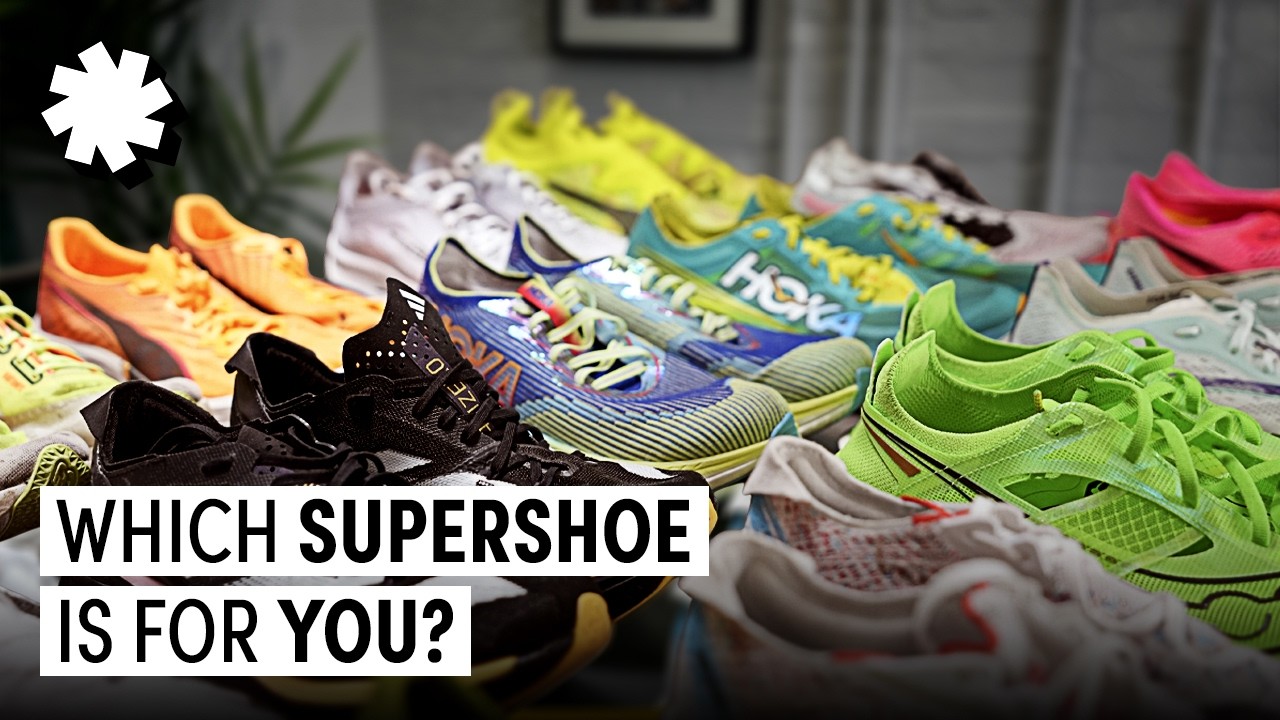
She made a video about running shoes that could make people so fast that the Olympics almost banned them. What I was focusing on specifically was how do they design a shoe that makes runners faster? Super Shoe is now what they're called.
Prior to super shoes, a good energy return was roughly 60 to 65%. Now we're in a world where almost every runner that you see is wearing a shoe that is somewhere between 80 and 90%. They all are trying to return as much of the energy as possible with every stride.
These shoes are designed to improve your biomechanical efficiency, which is just one of many factors that can impact distance running performances. But are some shoes doing too good of a job? This term that keeps getting batted around called tech doping, using physical gear to gain an unfair advantage.
Since 2020, certain limits have been set for super shoes based on some really interesting concepts that Cleo elaborates on in her video, but it boils down to keeping the spirit of the sport alive. But what if I don't care about the spirit of the sport? You see, everybody has a different reason for running.
Some want to compete to be the best, but others are just going through what the Atlantic calls the new Quarter-life crisis. My reason is that I woke up one day and realized, should I start caring about my health? So I did a very scientific cost-benefit analysis and found that gyms cost money and outside is free.
So I started running 5K once a week. That's 3. 1 miles for you Americans.
Why five kilometers? Basically when I go out running the first two kilometers, I feel amazing. Push it a little further, two and a half kilometers, hate my life, head back home.
You add all that up and you get 5K. My first try took 38 minutes, which is a problem because running is boring. That's longer than it takes to watch a rerun of a sitcom.
That's basically an HBO show. That metaphor shows how I need to exercise more. So I spent the last two months trying to lower that time.
I got to 30 minutes, which is the runtime of a standard sitcom with commercials, but it's 2024 and commercials are dead. So I actually need to figure out how to run a 5K in 22 minutes. That is faster than about 96% of comparable runners.
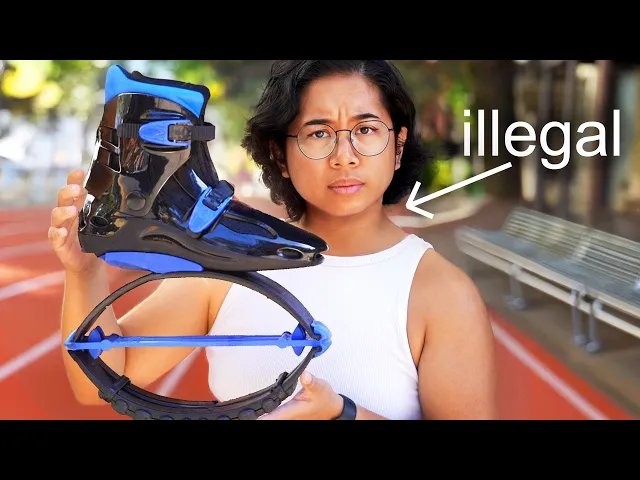
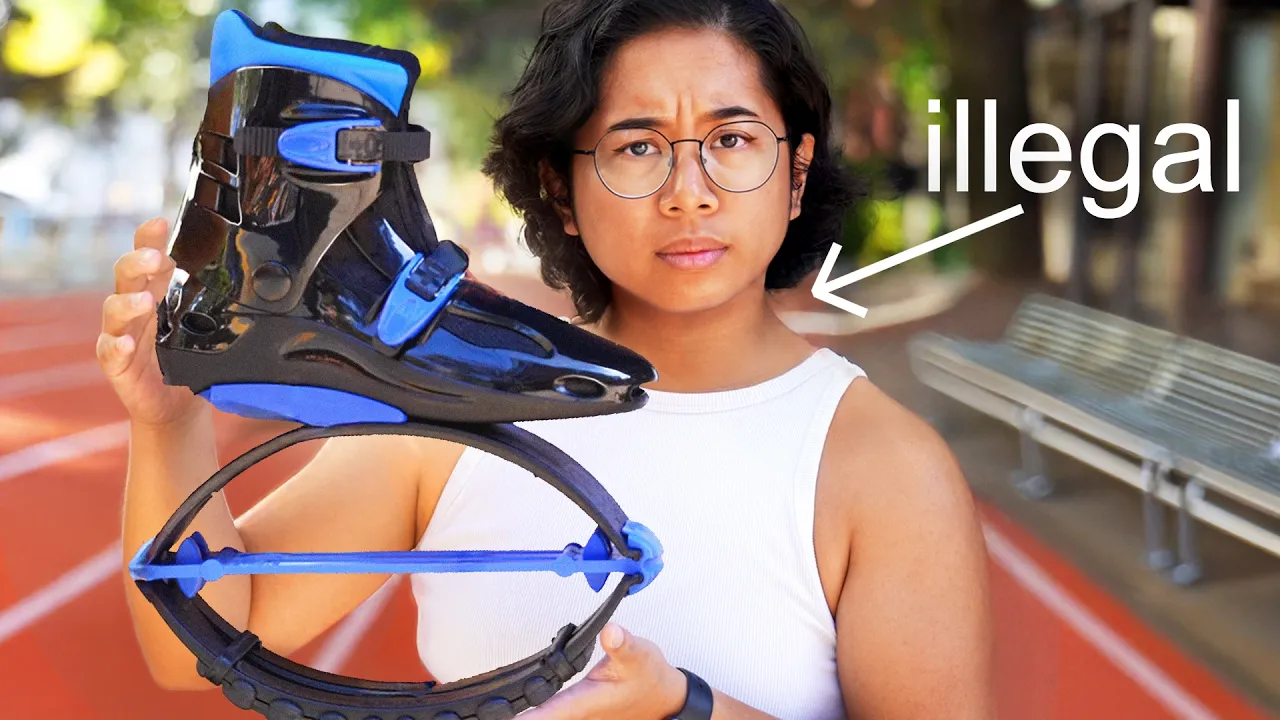
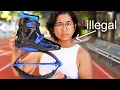
So I probably need to cheat. In these. These are rebound boots, which are mainly used in low-impact fitness classes.
But the interesting thing about them is that they basically take all of the midsole components that make super shoes so fast and crank it to 11. The Stiff Ankle Boot provides plenty of support. The rounded sole makes it easy to direct my momentum forward with each step and the spring returns my energy back with each bounce.
When I started, it felt like I was defying gravity and in just 22 minutes I ran two kilometers. I couldn't even finish a 5K because the boots scraped off a bunch of skin and it hurt too much to keep going. Maybe it was obvious, but that whole experience made me realize that the thing that makes super shoes so super is the fact that they take all of this and shrink it down so that it weighs less than 300 grams.
For reference, this rebound boot actually weighs a little bit heavier. So why did I buy this instead of the Vaporfly or PRO EVO or Cloudboom Strike or Velociti Elite or any of the other ridiculously named shoes? Well, it's because I read this study, it found that super shoes can improve elite runners race times by one to two percent which can be huge in long distance races.
Unfortunately, one to two percent would only shave seconds off of my time instead of the minutes that I need, especially since those benefits seem to shrink for slower runners. So if the super shoes I need don't exist right now, I guess I need to make them myself. So I've been thinking a lot about how I can possibly beat real shoe companies and make a superer shoe, especially because I have zero experience making shoes, so I've decided to return to first principles.
Shoe looks good. You see a good running shoe design helps a person run more efficiently. That means the most speed for the least effort.
Real shoe companies need to care about sports regulations, mass production, labor laws. I don't. I just need to make one pair of shoes that perfectly complements how I run.
So how do I run? To figure it out, I went for a jog. But for the first time I didn't care about how fast I was going.
Instead, I tried to focus on the things that were slowing me down besides my baseline fitness, what could I change about my shoes to make the whole experience better? Okay, so I'm about three kilometers in and four things have come to mind. One, my feet and knees hurt, like when I'm landing and then pushing off the ground.
I really feel it and it makes me want to run less hard. So I think having a little bit more cushion in my shoe could help. Two, I'm really fighting against this habit of pushing up instead of forward while I'm running, I feel like it wastes a lot of energy and I'm wondering if I could change the shape of the shoe to make it a little bit more obvious that I want to go forward.
Three, there's too much stuff on it. My shoelaces keep coming untied. I think if I get rid of them, it could solve that problem and also the shoe will probably be lighter.
And four, I need to stay hydrated. Luckily, I have LMNT, who are supporting the channel by sponsoring this portion of the video. I've been reusing this plastic water bottle for weeks now.
Please don't judge me. Now, I've always been a fan of electrolyte drink mixes because whether I'm running or just reading out in the sun for a while, I tend to get electrolyte imbalances, which can cause fatigue, muscle cramps, or even brain fog. Unfortunately, a lot of the products I found this far have been just way too sweet, which is why I was hyped to learn about LMNT.
They make a zero-sugar electrolyte drink mix in sparkling electrolyte water with a bunch of flavors, including raw unflavored. Just tastes like salt. Now, some people might think this is a waste of money because you could just make it at home.
LMNT literally shares the recipe for this on their website because they're impressively transparent. But honestly, the option to have electrolytes on hand is just convenient. Now, ideally, we get everything we need from our diet, but LMNT does a great job at filling dietary gaps for people who need it.
There are professional athletes, business leaders and more who stand by LMNT and you can com/ANSWERINPROGRESS. You get a free LMNT sample pack with any purchase including their new line LMNT Sparkling. The best part is LMNT has a no-questions-asked refund policy.
So if you buy it and you don't like it, you get your money back fast. Thanks again to LMNT for sponsoring this portion of the video and supporting the channel. Now let's go make some shoes.
Now that I understood the problem with my shoes, I looked for answers or at least inspiration in the history of running shoes. I learned that a distance running shoe comes in three parts, the upper, the midsole, and the outsole. And while super shoes are mainly known for what's going on in the midsole, all three parts have played pretty interesting roles in history.
Let's start with the upper. I'm going to make a pattern using some plastic wrap and duct tape. In the early days of distance running, uppers were generally made from leather or canvas, but they were pretty stiff or heavy and trapped a lot of heat.
This led to discomfort and even blisters. To solve that, the Onitsuka Tiger Magic Runner introduced holes for ventilation, but the biggest change came in 1967. The Tiger TG-4 was the first marathon shoe with an all-nylon upper.
This lightweight synthetic fiber became a staple in running shoes, largely thanks to Nike, but it was Adidas who introduced a knitted nylon mesh in 1976, which paved the way for even better breathability. You remember how I really wanted to simplify my upper design? I wanted it to have less things.
I wanted it to be lightweight, so I decided on a sock. That's actually why I covered my foot in duct tape. This is just some nylon, but the idea is that since I traced it off of that duct tape pattern, it'll conform back into the shape of my foot.
However, I needed to have a bit of stretch in order to get it over my heel, so I also got some elastic. Now, I just got both of these things from the fabric store, but most shoe companies nowadays will engineer their own fabric or mesh to maximize breathability and structure while minimizing weight. For example, On's LightSpray creates an upper by spraying a thin mesh of polymer directly onto a foot mold called a last.
Now, here's the funny thing, I don't have a last, so I'm just using my own foot in an insole and just gluing everything into shape. Yes, I'm using super glue. Yes, I've glued my fingers together already.
All glued in. This is our upper. Now this needs to go on a midsole.
Now, the primary purpose of a midsole is to absorb shock, which is pretty important when you are repeatedly slamming at least two times of body weight of force through your feet. That's why while designing my midsole, I think I'm going to make it extra thick to solve my pain problem. Yes, I did learn how to use Blender for this, and yes, I cried a few times.
Now, historically, athletic shoes didn't have that much of a midsole, if any. That was partly because we didn't know enough about biomechanics to see how they'd help, but mainly because the right material just didn't exist yet, there was just this balancing act between stability and weight that meant a thick midsole often risked doing more harm than good. Now, interestingly, it's only relatively recently that stable lightweight foams have been invented that enable those thick, chunky midsoles that you see on running shoes today.
Now, the hottest foam on the market right now is Polyether Block Amide or PEBAX, but this uses thermoplastic polyurethane, which is a little bit stiffer, a little bit heavier, but a whole lot cheaper. It was 3D-printed, and I wish that I could tell you that I also learned how to 3D-print for this, but I can barely use a 2D-printer. How am I supposed to add another dimension?
So I actually just got a friend to print it out for me. In exchange, I gave her a 7-day free trial to our Patreon, which gets her access to a bi-weekly podcast and unreleased episodes like the time we took a sushi-making class. Look at how excited she is about it.
Anyway, now here's the cool thing. This extra height provides extra cushioning, but it also enables this rocker shape. So when you land, the back of your foot is pushed forward.
I am going to insert literal springs into the midfoot and heel. Technically this should help with shock absorption and energy return. But functionally, I just find it kind of funny.
I used a little super glue to connect my upper to my midsole, and then there was just one last step, the outsole. I didn't want to overthink this one, so I just bought these rubber sheets online and here they are. They are not perfect, nor are they very symmetrical, but they are better than that time I tried to make my own glasses.
I think in the spirit of ridiculous shoe names, I'm going to call them the Answer in Progress Super Duper Fasts. And according to world Athletics, the governing body for track and field, these are super illegal, mainly because they are fully bespoke to me and will never be available to the public. But also, yeah, they are way too tall.
I couldn't figure out how to use the measurement tool on Blender, but on the subject of measurements, let's see how much faster these shoes make me. Even though I spent way too much time making these shoes, I was honestly pretty worried that they would immediately fall apart. But as I started my run, I was pleasantly surprised to find that I successfully solved a few of my problems.
The extra cushioning was really comfortable. It made me feel lighter, like my rebound boots, but at a fraction of the weight, and I think the shape of the midsole really helped me focus on running forward. One kilometer in five minutes, 42 seconds, and I have a problem.
Oh my God, do I have a problem. Unfortunately, turning my upper into a sock was a mistake. My ankles are stupid loose and I've almost rolled them with every footstep.
Luckily, I've got duct tape. I know I'm bad at making things, so I taped my ankle into place and then got back to running. How does that look?
These feel great now. This is crazy. Things were going shockingly well.
I was on pace to set a new personal best. Two kilometers in. 11 minutes, 23 seconds.
. I fear something has happened to my shoe. I don't want to think about it though.
It was around three kilometers in when I started to feel this stabbing pain in the bottom of my feet. Yeah, it definitely happened. Ow.
The tape around my ankle was also coming loose and I just couldn't seem to fix it. So to compensate, I just got slower and slower and slower until finally I was done. A mediocre 5K at 30 minutes and 36 seconds.
I walked home, a stabbing pain in my left ankle and knee, and I just wondered, why do I keep doing this to myself. Other than having to tape my ankles down, the shoes are still in one piece. That's kind of surprising.
Look at this. They did impact my time by about 2%. It was an increase.
I think it was three things. One, the ankles. I really shouldn't have gotten rid of the shoelaces because my feet kept moving around inside of the shoe, and so I needed to run weird.
I had to run a little bit slower sometimes, or else I would just roll my ankle. I have a lot of pain right now, especially my left calf and knee. Don't know what's going on there.
Don't want to think about it. Another thing is that the shoes, they were so good at first, they felt so bouncy and soft, but about two or three kilometers in that springiness just vanished. Now that I'm looking at the shoe, it's pretty obvious why.
It's just entirely compressed. It's sank like 10 millimeters in height, and that leads to the third problem, which is this decrease in height meant those springs that I added as a joke, started feeling them. With each step, I would just feel them stab the bottom of my feet, and that made me want to run less hard or run a little bit more weird on the sides of my feet.
Interestingly, you actually can see it on the outsole. You could see where the tread marks have really faded away, how I was just running on the edge of my feet to avoid feeling the springs. Two failures deep in my quest to reduce my running time, I decided to speak with an expert to learn what else it takes besides a fancy pair of shoes.
One of the errors that we do have with people is I want to increase my PB every single time I run, which can lead to injuries, can lead to burnout, can lead to a plateau. So you don't just race the clock every single day. This is Laura, an elite runner, chiropodist and owner of the Live Active Sports Medicine clinic in downtown Toronto.
They operate a running clinic, which focuses on injury, rehabilitation and prevention. We started by talking about my goals. So your goal is you actually want to drop down 22 minutes by November to put it in context, a 5K, 20 minute run time for a female in standard in university is 20 minutes, to make the varsity team.
So it might be a little ambitious. With that reality check, she took a look at some of the factors besides my shoes that could be holding me back, starting with mobility. So dorsiflexion is how much the ankle can move up.
Oh, you're really good. Can you straighten your knee for me? Yeah, that's good.
Can you touch your toes? Can you then touch your palms to the floor? Oh, wow.
Okay. You're excellent. All this talk was making me feel pretty good until I realized you can be too flexible.
. Oh, yeah. You are excessively hypermobile.
So that's the first finding that we're coming with. With your flexibility. Is that a good thing or a bad thing?
It means that you, well, probably you definitely want supportive footwear. We want to make sure that we have a shoe that has a stable heel counter, what we call, so it doesn't just push in like a sock. This hypermobility kind of explained why my custom running shoes caused me so much joint pain, and with that mystery solved, it was time to move on to another issue.
My strength. The stronger our muscles are, it will help reduce our ability to get injured. Because we're stronger, our muscles will absorb impact a bit better.
When you bend the knee, you're going to isolate the soleus. Soleus is really important to be strong to prevent achilles issues. Glute medius is really important for runners to prevent hip drops.
I never really thought you needed to be strong to run. Muscles and cardio just felt like two different worlds. So when you're running, you have to push off and hip extension is going to be our glutes and our hamstrings, and a lot of times with running, we don't strengthen those enough and when those become weak, other things start to compensate and then that's how we can get an overuse injury.
You're trying to get the whole system working together? Yeah. Right now it's like I'm trying to ride a bike with a missing pedal and a rusty chain and it really showed up when Laura analyzed my form.
I saw you might be overstriding a bit, it might just be getting used to the console, but I did see you pronate as well. In a follow-up, she pointed out some of my issues including how my left leg curls in while I run, which could lead to injuries down the line. So she gave me some advice on how to build my strength.
Keep working on those side planks, you can make it more difficult. Lifting up one leg, monster walks, banded side steps. Oh my God.
How can such a tiny movement hurt so much? Improve my form. Widening your stance when you're running.
So instead of thinking that you're running on a tightrope, you want to think of landing slightly wider apart. Find footwear appropriate for my specific needs. For you, probably a higher stack height isn't as advantageous.
And most importantly, how to stop trying to run as fast as possible every time I go out. You may burn out. I'm using this app Laura showed me.
It lets me put in my normal time and then it recommends different paces for me to run at, which is a thing that you're apparently supposed to do. I was worried about slowing down after spending so long focusing on speeding up. Like what if all the things that I hated about running, the pain, the boredom, the frustration all got worse.
I started running because I just wanted to minimize the amount of time and money I spent on fitness. Hours of extra workouts and runs and a $200 pair of shoes later, I clearly failed. But in the process, I started to realize that that pain that I once hated started to turn into a signal that I was getting stronger.
The boredom turned into meditation because I couldn't stress out about my life when I barely had enough mental capacity to get one foot in front of the other. And the frustration, it faded, call it character development or Stockholm syndrome, but I don't hate running anymore. It's actually kind of fun.
It's like going on a walk at two x speed. I genuinely don't care about going as fast as possible anymore, which does leave this video in a weird position. I still want to be able to run a 5K in 22 minutes, but I don't know when, maybe it'll be in a few weeks or months or years or maybe for the sake of closure on this video, tomorrow.
We'll see. Good morning. Good morning.
She woke up so early for this. I think today is going to be the last run that I record, mainly because it's gotten super inconvenient having to bring a camera around every time I go for a run. I figure since it's the last one, why not go for a personal best?
Yeah. Good luck. Bye.
Thank you. 3, 2, 1. Let's do this.
I immediately recognize, I think I'm going too fast. I think I'm going to burn out. Oh, I missed her.
The little tiny little thing. Kind of need to pee a little. Okay.
Catch your breath. Oh, I'm so mad. I want to keep going.
Look at her go. I found her. Is she coming this way?
Okay. I think she's done. I did it.
I beat my personal best by four seconds. Yeah. After about three months working on this video, I am barely faster than when I started.
It's so dumb. I'm really proud of myself.