Public servant. Brazilians love talking trash about Brazilians. In fact, that claim is self-fulfilling, because I'm Brazilian, and I'm complaining about Brazilians complaining about Brazilians.
But out of all Brazilians, the ones Brazilians love thrashing the most are Brazilian public servants. We defy them so often that there's actually a law forbidding us from doing so. Which proves that it happens every day.
There isn't a law forbidding us from defying waiters, because we love waiters. We don't defy them. And because Brazilians have goldfish memory, every office includes a poster featuring that law, in huge letters.
And if there's a poster for it, then it probably happens all the time. So the saying goes: "If there's a poster, there's history". It's like that school poster reading: "You can't pinch or threaten to kill your classmates".
If it's a rule, then there definitely was a kid keen on threatening their peers with death. This disdain for public servants is still going strong, and actually became a government program. The man responsible for economic policies in the Bolsonaro government, dear old Paulo Guedes, loves claiming that one of Brazil's biggest problems is that "there are tons of public servants milking the State".
We won't take anything from anyone. We're just asking for a contribution. Please, while Brazil is on its knees, knocked out, trying to get back on its feet, please, don't rob Brazil.
We also need for public servants to show that they're on Brazil's side, that they'll make sacrifices for it. That they won't just stay home, their fridges full, watching this crisis while millions of Brazilians lose their jobs. No.
They'll help, too. They, too, will refrain from asking for raises for a while. Public servants had a 50% raise over inflation, they have job security, they have generous retirements, they have it all.
. . The host is dying, while they became parasites.
Money doesn't reach the people, and yet they want automatic raises. They can't do that. The people don't want that.
Yes, that's right: the guy who made millions over interest and speculation in the financial system is likening people to "parasites". That's the famous "white banker's self-esteem". But there is a certain kind of servant whom we all forgive: the technician.
Yes, those who are specifically picked for their technical skills, and whose work is essential to all of us. That's funny, since, in Portuguese, the word "technical" has various meanings, and many aren't synonymous with "excellence". For instance, a "technician" can be a professional who was trained through a correspondence course in the Universal Brazilian Institute.
A very contradictory institute. I mean, it's either "universal", or it's "Brazilian". The course, which was advertised in every comic book around, was a pioneering correspondence course.
I'll never know whether it worked, though, since I've never met anyone who graduated from it. Plus, that strategy. .
. Who is it that reads "Monica and Friends" and goes, "Y'know, I really should try an 'amateur radio' technical course"? No, actually, there is a famous person who was graduated in an electrician course at that institute.
Yes, I'm talking about Bolsonaro. The worst poster boy possible. After all, he's leaving us powerless.
"Technician" is also another name for a soccer coach, often called "dumbasses" by fans, be them Guardiola or Lisca Doido. The adjective "technical" makes everything worse, actually. Drwing is cool.
Technical drawing is dull. Kissing? Great!
"Technical" kiss? Eh. But not in politics.
There, "technical" is basically a seal of quality. Bolsonaro, for instance, has always promised to organize his team based on technical criteria, rather than political recommendation. Of course, the 20-or-so nominations this year will be based on technical criteria.
We're nominating ministers based on technical criteria. Competence, authority, patriotism. .
. I had the wonderful opportunity, as head of the executive power, of choosing those who would fill our ministry's seats, based on technical criteria. Yep!
Weintraub, Pazuello, Salles, Queiroga. . .
They were all picked based on TECHNICAL criteria. Which is weird, because they couldn't even pass by a technicality. Guedes, for instance, brought with him to the government a "completely technical team".
The famous "technical wing" of the Bolsonaro government. "Technical wing" sounds funny to me. Makes me thing of samba schools.
In this case, "technical branch" could be an allegory, like a "Bahia wing", which are a bunch of people dressed up as Bahia natives, pretending to be so, despite not necessarily featuring anyone from Bahia. But his "technical wing" has been proving itself to be notably inept and unprepared. They're people like Salim Mattar, an entrepreneur who worked for the Bolsonaro government until last year as the "Secretary of Privatization".
Yes, they set up a Department of Privatization, and I find that so "Brazil". I mean, what an idea. "Guys, the State is too bloated.
We have too many departments! We need to do something, but what? Oh, I know: let's create a department!
" "But we already have too many. . .
" "Yes, but this department's job is decreasing the number of departments! " Back when Salim was a secretary, his family's business, Localiza, received almost 15 million reais in public money through the refund of a supposed wrongful tax payment. His brother, Eugênio Mattar, became the individual who received the most payments from the Union in 2020.
That goes to show that there is a privatization that works in Brazil: that of public money! Another of Guedes's technicians was Paulo Uebel, a lawyer whose name sounds like a frog croaking. "Uebel!
Uebel! " For many years he worked in the financial sector and in institutions that promoted liberalism in Brazil. He has this wonderful liberal face, which the Internet immortalized as the "moccasin rich kid" meme.
"Excuse me, sir? Could you give up on your labor rights completely? " He, too, left the government last year.
According to him, because "liberal reforms went nowhere", and also due to reasons such as this one. Being in the government comes with a high cost. My family lives in Porto Alegre, so I had to keep traveling there.
. . -Plus, the pay.
. . -Manu is doing a bang up job.
-Great job, Manu! -We can talk about that later. But yeah, the opportunity costs, the pay of people who come from the private market to the public sector is much smaller.
. . That's right - he worked to reduce State expenditure.
. . and he left that job because he thought the government was "spending too little" with HIM!
The lack of technical skill in Guedes's technical wing isn't surprising. After all, the government's true technical wing isn't Paulo Guedes. Nor his economists and lawyers, nor any minister in general.
Because think about it: this notion of a "technical nomination" makes no sense. Of course it's important for all nominees to be technically skilled, but since they're NOMINATED, then they're not technical wing - they're political office. After all, they're nominated by the politician who won the election.
The only "technical wing" there is in the government is formed by those who WEREN'T nominated, but rather those who passed in public tenders, which are meant to assess the applicants' technical skills, and serve the government regardless of who's in power. They're the public servants, Guedes's so-called "parasites". Which actually sounds like the name for a Portuguese rock band.
"I'll go see the concert of 'Guedes's Parasites'. What, you never heard of 'Guedes's Parasites'? " If there's one thing this pandemic has shown us, it's that many of our public servants have been very technical, despite the political chaos Brazil is currently in.
The worst irregularities to have been exposed by the pandemic corruption investigation, for instance, have only come to light thanks to denunciations from public servants, such as Luis Ricardo Miranda, Luis Miranda's brother, a Ministry of Health servant, who reported irregularities in the government's purchase of the COVID vaccines. Yeah, I miss the days when we thought the government wasn't buying them out of denial, and not out of them preferring to buy a vaccine that was untested, overpriced, and sold by a policeman at a food court. Another public servant to rise to fame recently was an ANVISA inspector who interrupted a soccer match between Brazil and Argentina due to them violating sanitation laws.
According to the inspector, there were four Argentinian players who had to be isolated for 14 days after arriving in Brazil, but the two federations tried to sidestep the law so that the players could be in the match regardless. And the end result was this. INAUDIBLE During break time!
During the break! C'mon, pal. .
. it's television. Television!
Come with us. Come on! ANVISA's and the Federal Police's conduct is right.
They were asking for the inspector to "at least wait until the TV ad break". "Just let the kids play for 40 minutes here, come on". The "kids" here being the heads of CBF.
Just so you can understand the level of intimidation, by all indicators, the acting president of CBF even tried to get the ANVISA monitor to talk to the chief minister of the Civil House - a very technical nomination, FYI - the Progressive Party's Ciro Nogueira, house member since he was 26, graduated in Odebrecht's list, with a postdoc in "Centrão studies". Anyway, the ANVISA monitor refused to talk to Ciro, and said that that was a clear intimidation attempt. Such acts of resistance by our public servants were possible thanks to one reason only: because they weren't afraid of being fired.
Per the words of Luis Miranda, who was the Ministry of Health's head of logistics in strategic input, "My job wasn't politically nominated. I'm not affiliated to any party. My party is the Unified Health System, SUS.
I work for the public interest". So, we can only defend the SUS by being "sus" of their workers' safety, and acting upon it. That unique aspect of public servants, that stability, may be the most important feature of a servant's career.
Because it allows for them to not bend to political pressure, it allows them to be technical. That stability ensures the approved worker that their job is secure, unless there is just cause for their dismissal. No wonder most developed countries ensure stability to their public servants.
In the U. S. , for instance, the probability of a servant being fired during his tenure is 6%.
But that's probably because they're a "communist nation", "bloated", "hypertrophied". As we were warned by Eduardo Bolsonaro, the U. S.
are this close to becoming "a Venezuela". Despite all that, Paulo Guedes and his fake technicians decided to use their political offices to attack the stability of the public service, or, in other words, attack the technical servants. In order to do so, they presented to the Congress a project known as "administrative reform".
It's the PEC 32 draft bill, which was written by Paulo Uebel and forwarded to the House of Representatives by the government at the tail end of 2020. The bill is currently being assessed, and the President of the Chamber, Arthur Lira, has expressed himself as in favor of its approval, which surprised no one, except for commentators who believe that the Bolsonaro government has a "technical wing". One of the arguments used to justify the bill was the notion that Brazilian public servants make too much money and have way too many privileges, and that the reform would "limit" such benefits.
And indeed, some servants, such as certain justices and public prosecutors, can be paid over 100,000 reais per month, exploiting the cracks in our laws. Funnily enough, the people who could make the laws work properly are those who exploit their cracks the most. Poor laws, whose cracks are constantly exploited without their consent.
But that's far from being the rule in the public service. The vast majority of servants are poorly paid. Civil servants, such as basic education teachers, or health center nurses, who compose the majority of the public service, are pretty much paid as much as private workers.
Out of our circa 11. 5 million public servants, 1/4 of them make 1,500 or so reais per month. Half makes up to 2,700.
Comparing workers from the three powers, an executive servant is paid half as much as a legislative servant, who is paid half as much as a judiciary servant. Not all public servants live like kings, surrounded by privileges. Those do exist, being the tip of the pyramid, a very exclusive group, while the bottom struggles under growing precarization.
Which basically describes everything in Brazil. Brazil is one huge pyramid scheme. So, the hatred for public servants is misdirected.
It does make sense to hate and want to defy those who stand at the top of the pyramid, making even more than their salary cap. It does not make sense to direct one's hatred to the servant who's at the bottom. Basically, it makes no sense to hate Lineu, the health monitor from "Big Family", in case you need a reminder, when the true villain is clearly Mendonça, his boss.
According to Guedes's technicians, PEC 32 was meant to "right wrongs and reduce the expenses of the public administration". So we're to understand that the ones most affected, of course, would be the "top" servants. Or, like we old'uns used to say, the "ó de penacho" - old slang for highly paid public servants.
And thus, I've made it clear that the average age of my Languages school colleagues was 74, and that the public servants at the tip of the pyramid were called "ó de penacho". But actually, the "ó de penacho" servants weren't even included in the bill. The Ministry of Economy had excised from the text all current justices and prosecutors, for instance.
Plus people from the legislative, of course, and, shock of all shocks, the military. So, people they refer to in the text as "members of power". They're the members who are the most "bloated", if you know what I mean, which is why they slip through the cracks in our laws.
The reform, as it was written, would mainly affect executive servants, the majority of which works for Brazilian city halls, such as basic education teachers, health center workers. . .
Those who are already paid little. In other words, the government wants to meddle with 3,000 reais salaries, not with 30,000 reais salaries. All in order to make it easier to approve, since then it won't affect those with bigger influence.
The document, which was forwarded by Guedes's team in September, had a bizarre clause: a proposal to end the unified servant policies and create five new kinds of servants, and only one of them would have job security. Yes, a tiny minority of the public service. So, most servants would be at the mercy of the whims of the currently elected ruler, all liable to being fired if they don't follow the boss' orders.
That'd give a mayor, for instance, the power to fire an environmental inspector who fined the mayor's farm, or a nurse who didn't let him cut in line to get vaccinated, or a teacher who gave his kid a bad grade. Though that'd be only if the mayor's kid went to public school, which isn't really a thing in Brazil. What is a thing is various other possible risks.
And that thing of ridding servants of their stability is strongly advocated by Bolsonaro, who made his opinion regarding the subject clear, many times. We plan to make it so, from now on, whoever takes office won't have stability anymore. Why, you ask?
Well, it's common. . .
Take a mayor's office, for instance. Mayors take public tenders, and. .
. Though most of them are at the limit of expenses, under Fiscal Responsibility Law. But with any hirings from now on, once the next mayor takes office, they may simply fire those people.
Yes, he does talk about public tenders as meaning "hiring". Of course the next mayor can fire those people, but clearly, in Bolsonaro's head, that rule wouldn't apply to everyone. Of course, certain positions will have stability.
A Federal Police deputy came to talk to me earlier this week, I took his position into account, and the Federal Police, the Federal Highway Patrol, plus a few other armed forces won't have their stability compromised. After all, we can't have a kid spend four years graduating from the Military Academy of Agulhas Negras specifically to become an agent, be it Special Forces, Command, or paratrooper, and just send him away. That isn't done.
Bolsonaro uses a four-year military training as reason to give them stability. "Well, they studied for four years. .
. " As if other jobs demanded no training. "Doctors?
That's just cutting stuff, removing cancer. . .
big deal! " But it's understandable, his empathy for the "kids from the Federal Police" he refers to. After all, it's those "kids" who'll have the power to investigate HIS kids.
Also, funny how he lists as an example of someone who can't be sent away "paratroopers trained at Agulhas Negras". . .
Which is what HE is. His empathy isn't really to other people. It's "selfpathy".
But 56% of the populace does want to send the paratrooper away, Bolsonaro. ASAP. Maybe due to that close and empathetic relationship Bolsonaro has with law enforcement, the reform proposed by Guedes's technicians also gave many privileges to the government's main allies: the police.
With the reform, police officers would reclaim full retirement, plus new pension laws. Now, death benefits to police dependents may be lifelong, and equal to the agent's regular pay should he die while on duty. Just to make it clear - this is the same government that vetoed a minimal benefit for the relatives of health workers who died while fighting COVID.
And when the Congress rejected his veto, he went to court to say he WOULD NOT pay for the benefit, and took the fight to the Supreme Court, where it persists to this day. The reform would also bestow a special jurisdiction to the general delegates of the Civil Police, and to the general delegate of the Federal Police. "People with skeletons in their closets are very afraid".
The text proposed by the Ministry of Economy would also create "leading positions", which would gather commissioned positions and "bonus positions". A "bonus position", for instance, could be a college professor who'd become head of department and be paid more for a period of time. That kind of position can only be reached in Brazil through public tenders, but with Guedes's proposed change, leading positions would be achievable by people who went through no tender.
Olavo de Carvalho, for example. He could be indicated by the President himself to become the head of USP's Philosophy Department, without even being an approved professor there. Actually, without even having finished elementary school.
It's like all universities would become a Bolsonaro government of sorts. And as result, up to a million freely-nominable positions would be in the hands of the government, and Bolsonaro could use those positions immediately, however he pleased. I am totes sure he would use "technical criteria" - the same that made him nominate a Minister of Education who took three chocolates from a set of a hundred to illustrate the notion of a 30% cut.
Or a Minister of Health who didn't know what "SUS" was. Or a Minister of Justice who posed with a calendar in order to prove that that was his official Twitter profile. That's the ideal model for a guy who hires people just to take a chunk of their salaries.
Not that Bolsonaro would ever do that, but let us just IMAGINE that he has that habit. And now picture him having a million people to hire! Wouldn't that be great?
After all, you can't say that the 102 relatives that the Bolsonaros hired to work in their offices were all picked by "technical criteria". Their actual criteria seems to me more like "who has a Bradesco bank account in the family? " "Which of you in-laws know how to withdraw money without a card?
" I think that was the criteria for hirings at Bolsonaro's office. And finally, PEC 32, as written, would create two more kinds of workers without stability. They'd be the majority of public servants, and would be hired without upholding labor laws.
Deep down, it seems like that's exactly what the Bolsonaro administration wanted to create: even more subgroups within the public service. They wanted to privilege parasitism even more, and, at the same time, destroy the careers of most servants, while encouraging politicization and corruption. That administrative reform looks like Luciano Huck's reforms at "Lata Velha".
Like that one time he turned a bricklayer's car into what he called the "bricklayer-mobile". Which was the same car, only with a brick painted on its body and on its seats. The car was abandoned soon after, of course.
Guedes's proposed bill still hasn't been approved by the house members, and its original text was so shitty that it was heavily dehydrated by the Chamber's special committee. The five new types of servants are history, for instance, which made the bill less apocalyptic, though that doesn't mean the reform became "good". It still sucks, especially by instituting temporary positions, which ruins the stability of various public service careers.
Stability in a country that has Bolsonaro as president is especially relevant. Bolsonaro has said during a livestream, for instance, that "servants that got in the way of progress, making it so it takes longer to grant licenses to enterprises, could 'be taken to the edge of the beach'". He isn't referring to a resort at the edge of a beach - that's actually slang from the dictatorship days, referring to a place where dissidents were executed.
Bolsonaro also said that he "wasn't their boss, but if he could, he'd cut off the servants' head". A beautiful metaphor he made up on the spot. Even before he became president, he'd already attack IBAMA inspectors, for instance, saying that they "got in the way of progress" and "fined at whim".
Well, at "my whim", I'd tell you to shove a cactus up your ass, Bolsonaro, but my "technical wing", a. k. a.
my legal team, advised me to not do it. And they have heavy stability. They don't give in to my political pressure.
So, Bolsonaro and his fake technicians at the Ministry of Economy are trying to eradicate the real State technicians, all while being lauded by many people in the media who bought into that "Bolsonarist" technical wing ideology, meant to stop a supposed "crazy wing", as if such a distinction existed in this government. Which leaves us with the question: if Guedes and his technicians do manage to downsize the government's "technical wing", and public servants as a whole, who'll carry out currently public services, like education and health? Because the number of public servants in Brazil isn't really that big.
Compared to other countries, Brazil has few of them, actually. The correlation between the number of active public servants and the population is of 5%, which is way lower than the average in OECD countries. The number of public servants here is equal to 12% the number of people employed in all of Brazil, while the average in developed countries is 20%.
The USA, the UK, Canada, and France are some of the places that have much higher functionalism than ours. They say that our functionalism is "bloated", but it's actually pretty anemic. People are being fatphobic in regards to it.
It just retains water around the edges. If we lose our public servants, there'll only be one way to deliver the services that our people need: through the private sector. And if this pandemic taught us anything, it's that leaving that work to the private sector is a terrible idea.
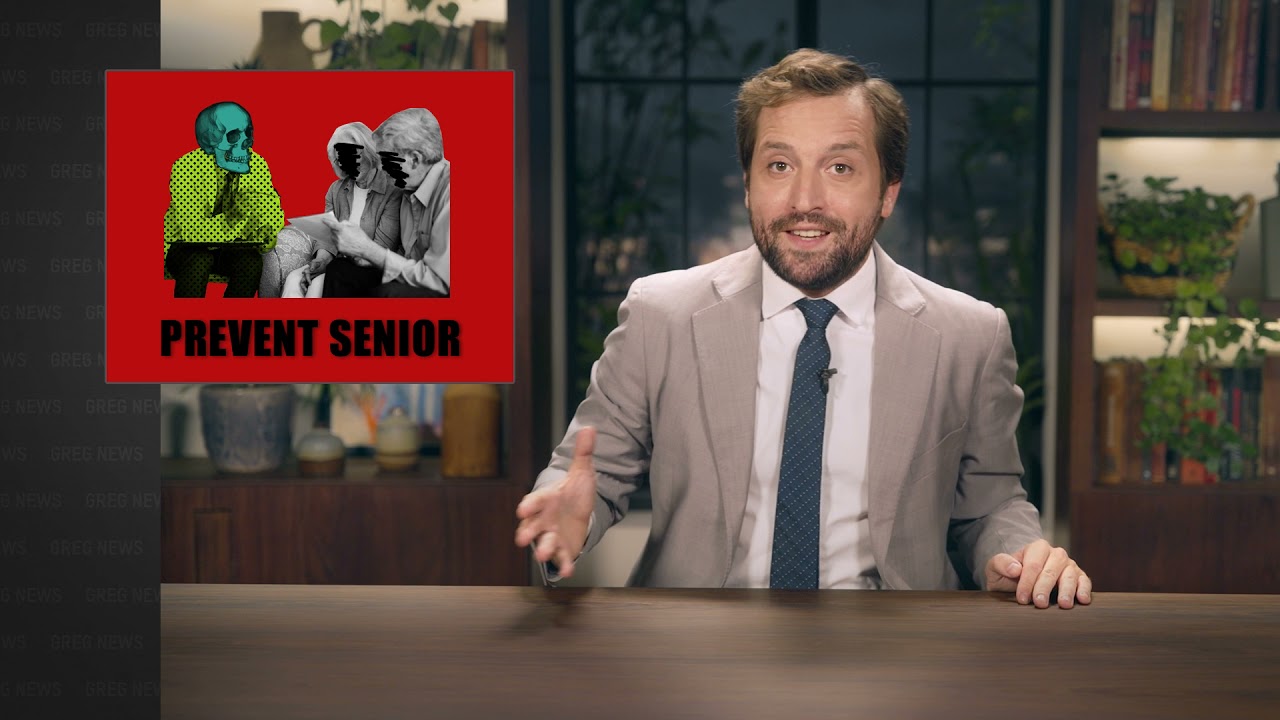
Just look at the Prevent Senior healthcare plan. It is being accused by witnesses of reducing the oxygen of seriously ill patients, conducting illegal medical experiments, and concealing deaths during a study on hydroxychloroquine, which they carried out with the sole purpose of proving its effectiveness. By all indicators, they gave chloroquine to 600 people or so without consent of the patients or their families.
At least nine patients DIED thanks to their "COVID set". And why the doctors at Prevent Senior took this long to talk about it? Due to fear of being fired, plus other forms of retaliation.
Which wouldn't have happened if they were public servants, with stability. So, thinking that public service would be better off with the private sector makes zero sense. Which means that our government's critics are right about one thing: sometimes, the Brazilian government is overly tolerant of people who are clearly incompetent.
Paulo Guedes, for instance. He's been managing Brazil's economy for three years, and hasn't done anything right. In 2020, he said that with 5 billion reais, at most, he'd annihilate COVID.
But he's already spent over 500 billion, and the pandemic hasn't stopped getting worse. He predicted that Brazil's economic recovery would be a "V". So far, it's been a lower-case zeta.
The Greek letter. He said that if he slipped up too much, the dollar could become worth five reais. It blew past five a long time ago.
Almost got to six. Under his management, the real became one of the currencies to lose the most value worldwide. And the Brazilian GDP had one of the worst performances in history.
To quote political analyst MC Carol, "The cock didn't sing, and it wasn't thick at all, I fell head first into false advertising". And despite all of those broken promises, Guedes remains in office. To this day.
In his office, in his chair, while his proposals keep on being assessed by the Congress, as if they deserved any kind of attention. He's there, his fridge full, watching the crisis, while millions of Brazilians are losing their jobs. Any worker who promised this much, yet delivered nothing, would've been fired a long time ago.
Which is why the only administrative reform by Guedes that we should accept would be him reforming his own ministry's administration, giving an example of personal sacrifice for Brazil. It's about time Guedes resigns from the public sector and goes back to minding his privates. That's it for this Greg News.